Party Now, Apocalypse Later Industries

Where creativity went when it said it was going out for cigarettes.
  • Home
  • BOOKS
    • THE ONCE AND FUTURE ORSON WELLES
    • IF ANY OF THESE STORIES GOES OVER 1000 WORDS...
    • ORSON WELLES OF MARS
    • THE DEVIL LIVES IN BEVERLY HILLS
    • A LOSS FOR NORMALCY
    • RIGHT - A NOVEL OF POLITICS
  • PODCASTS
    • Beyond the Cabin in the Woods
    • THE HOLODECK IS BROKEN
    • THE FOURTH WALL
    • As The Myth Turns
    • FRIENDIBALS! - TWO FRIENDS TALKING ABOUT HANNIBAL LECTER
    • DISORGANIZED! A Criminal Minds Podcast
  • MOVIE REVIEWS
  • BLOGS AND MORE
    • Bloggy B Bloggington III, DDS
    • THE HOLODECK IS BROKEN BLOG
    • REALLY GOOD MAN!
  • Home
    • THE ONCE AND FUTURE ORSON WELLES
    • IF ANY OF THESE STORIES GOES OVER 1000 WORDS...
    • ORSON WELLES OF MARS
    • THE DEVIL LIVES IN BEVERLY HILLS
    • A LOSS FOR NORMALCY
    • RIGHT - A NOVEL OF POLITICS
    • Beyond the Cabin in the Woods
    • THE HOLODECK IS BROKEN
    • THE FOURTH WALL
    • As The Myth Turns
    • FRIENDIBALS! - TWO FRIENDS TALKING ABOUT HANNIBAL LECTER
    • DISORGANIZED! A Criminal Minds Podcast
  • MOVIE REVIEWS
    • Bloggy B Bloggington III, DDS
    • THE HOLODECK IS BROKEN BLOG
    • REALLY GOOD MAN!

A Blog About Watching Movies (AKA a Blog in Search of a Better Title)

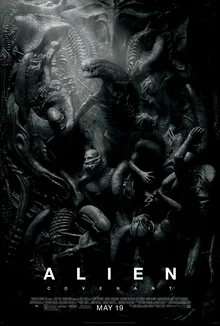
Alien_Covenant_Teaser_Poster.jpg

Alien: Covenant (2017)

Mac Boyle January 5, 2019

Director: Ridley Scott

Cast: Michael Fassbender, Katherine Waterston, Billy Crudup, Danny McBride

Have I Seen it Before: Once in the theater, and once on blu ray.

Did I Like It: I’m pretty effusive about the film in the earlier review above, but considering I’ve only glanced at it a couple of times, maybe it had less of an impact than I originally thought.

The text of this review appeared previously in a blog post entitled “But My, Oh My, How Delicious The Cheeseburgers Will Be: The Future Of Cinema?” published on 05/28/2017.

Saw Alien: Covenant this week. The movie flew under my radar for the longest time, despite my love for the first two films of the series, and my not-quite-hate for Ridley Scott’s previous re-entry into the Alien universe, Prometheus (2012). But, when the opportunity comes to take off work a little early and catch a matinee, I am helpless against the prospect’s siren song*.

So, much to my surprise, the movie is actually good. It’s not an earth shattering revelation of a movie—for such an experience this year, you’re probably going to have to begin and end with Jordan Peele’s debut masterwork, Get Out—but it certainly irons out some of the more forgettable moments that muddied reactions to Prometheus, extending the philosophical rumination on the origins of man in a bleak universe to its natural, psychotic conclusion. It manages to be the kind of head trip that Prometheus so desperately wanted to be, without unravelling into a pointedly turgid lecture more at home in a freshman philosophy course.

And yet, there’s a lot that’s even more familiar about the movie. An egg opens up. The egg spits out a creature that is equal parts spider and Georgie O’Keefe painting. A little guy bursts out of one of the human guys. The little guy grows bigger, uses it secondary head to eat a few other guys. Acid is spilled, airlocks are blown, and everyone goes back to cryosleep, perhaps never to wake up again. It’s the same old story, a fight for love and biological weaponry.

Yes, I’ve seen this movie before. I’ve also eaten plenty of cheeseburgers before**, but it is rare that you eat a cheeseburger that is exceptionally well made, just as it is equally rare that a fairly basic monster movie is made as well as Scott and his crew made Covenant.

And that’s when a borderline-depressing thought occurred to me: the franchise movie is dangerously close to becoming a legitimate form of artistic expression. Sure, this summer we’ll be waylaid by inevitable crap like The Emoji Movie and Michael Bay’s latest attempt to make a Transformers film that isn’t technically a violation of the Geneva convention. But Ridley Scott—a legitimate and respectable filmmaker—has made his plans known to spend a sizable chunk of his twilight years trying to make more Alien movies, an effort many of us can agree he near-perfected in his first attempt nearly forty years ago. Kenneth Branagh went in a few short years from forging full-text productions of the Bard to making Chris Hemsworth a household name in Thor (2011). Sam Mendes made Oscar-bait like American Beauty (1999)***, then made 1 1/2 great Bond movies. Christopher Nolan moved from indie darlings to Batmen, and continues his quest to put the genie back in the bottle with the upcoming Dunkirk. Hell, movie news sites were abuzz just a few months ago with talk that Aaron Sorkin took meetings with Marvel Studios for some unknown project.****

I suppose this all means that original big-budget movies are going to be harder to harder to find. For every Pacific Rim (2013) there’s going to be a Pirates of the Caribbean: One More and Johnny Can Get The Rest of His Wigs Out Of Australia. That’s pretty measurably bad, mainly because I was holding out for 2Dark 2Shadows: Basically Just Mortdecai With Different Opening Titles.

But, it could also mean that the big tentpole movies will be better, on average. That has to be good, right? I mean, an Aaron Sorkin-penned Iron Man 3 would be… Well, it’d have a lot more references to Gilbert and Sullivan than the rest of the movies in the Marvel Cinematic Universe, and that has to count for something, right?


*See my ill-advised venture to watch this years undeniably weird, yet nearly shot-for-shot remake of The Breakfast Club (1985), entitled Saban’s Power Rangers.

**Probably too many; I get it.

***We could go on an on about whether or not American Beauty is a good movie. It’d make a half decent blog, if it weren’t for the fact that my answer would be ¯\_(ツ)_/¯. (Note from 2019: There’s no way American Beauty is any degree of watchable anymore. I’m reasonably sure about that.)

****Yes, every individual named in that paragraph is a man. That’s another issue entirely, and one that Hollywood is working fairly slowly to fix.

Tags alien: covenant (2017), ridley scott, michael fassbender, katherine waterston, billy crudup, danny mcbride, alien series
Comment
Twilight_Zone_-_The_Movie_(1983)_theatrical_poster.jpg

Twilight Zone: The Movie (1983)

Mac Boyle January 5, 2019

Director: John Landis, Steven Spielberg, Joe Dante, George Miller

Cast: Vic Morrow (RIP), John Lithgow, Scatman Crothers, Dan Aykroyd

Have I Seen it Before: I think it’s probably safe to say that I’ve 

Did I Like It: You get four chances to like it, and I would say I get the job done about half the time.

The text of this review appeared previously in a blog post entitled “Do You Want to See Something *Really* Morbid? Why the Ends Almost Never Justify the Means” published on 07/02/17.

I’m a big fan of The Twilight Zone. I’m such a big fan of the show that I’ve been known to suggest fisticuffs whenever the honor of Rod Serling is impugned*. “To Serve Man,” “Nightmare at 20,000 Feet”, “Time Enough at Last”. These are truly great episodes of television.

And yet, efforts to re-capture the magic of the original TV show have often floundered. Sure Zone inspired a pinball machine that is the absolute pinnacle of that art form, but both attempts to bring the television series back—in 1985 and 2002—are less than memorable. Maybe the advent of color removed all magic from the concept**.

When the movie powerhouse of Steven Spielberg and John Landis attempted to make an anthology film based on the series, the reaction to the film was equally tepid. 

In some cases obliquely, and in others much more directly, Twilight Zone: The Movie (1983) offers remakes of four classic episodes of the TV series to varying degrees of effectiveness, and for that matter, sheer horror. 

The strongest segment among them is the last: a manic, claustrophobic redux of the Richard Matheson classic “Nightmare at 20,000 Feet” with John Lithgow as a naturally neurotic replacement for William Shatner. The gremlin on the wing of the plane in this version is far less laughable than the demented Lamb Chop of the original episode, and is more a terrifying, self-aware wraith ready to set up a homestead in your nightmares.

Moving backwards both in chronology and quality, Kathleen Quinlan stars in a re-constructed “It’s a Good Life”, the tale of a young boy with nigh-omnipotent powers and the destruction he leaves in his wake. Joe Dante (Gremlins, Innerspace) brings his penchant for cartoonish malevolence to bear here, but it is an aptitude that doesn’t come to full fruition until Gremlins 2: The New Batch (1990). The ending Dante and company choose for the tale—wherein the kindly school teacher (Quinlan) tries to temper the god-boy’s misanthropy—falls short of the ending that appears in the original episode and skews a little too close to the happy-happy Spielbergian ideal so prevalent in the 80s.

Which makes sense, given that Spielberg’s own entry for the film is such a concentrated package of pathos that it almost warrants a dosage of Humalog packaged with every DVD. Scatman Crothers gives a group of residents at an old folks home the opportunity to reclaim their childhood, quite literally. It’s precious. And that’s all fine. Spielberg’s gonna Spielberg, especially pre-The Color Purple (1985), but you should at least be prepared.

And then there’s director John Landis’ (Animal House, The Blues Brothers) opening entry in the movie. It’s the least conceptually sound of all four stories. One imagines that this is because it has the least to do with one of the original TV episodes. Bill Connor (Vic Morrow) is an unrepentant racist and basket case who finds himself tumbling through time. With each Quantum Leap like jump, he finds himself as a different oppressed minority. At the end, he watches his friends shrug through his disappearance as he is taken away to a concentration camp in Nazi-era Europe.

It’s kind of a muddled mess, although it does have the virtue of having the classic hopeless-turn-as-moral ending that made the TV series famous. There is a reason both for its messiness and its bleak ending. It’s more horrifying than any moment in the finished film, I assure you. 

I made reference to the incident in <last week’s blog>, but in the early hours of July 23, 1982, on the final night of filming for the segment, an accident occurred that took the lives of three actors.

Accounts vary, but these are the generally accepted facts. The final shooting involved a massive sequence that would find Morrow’s character saving two Vietnamese children from a village under attack by American helicopters, after which he would be redeemed and return to his life reformed after only a half-hour or so of trauma. 

With a helicopter hovering nearby and explosions igniting all around them, Morrow crawls out into a small lake with a child in each arm. One of the pyrotechnic explosions caused the rear rotor on the helicopter to fail. The craft spun out of control and crashed into the nearby lake. The pilot and other crew members on board the chopper survived with minor injuries. On the ground, the helicopter decapitated Morrow and one of the child actors, 7-year-old Myca Dinh Le, and crushed the other child actor, 6-year-old Renee Shin-yi Chen. Rolling cameras from at least three different angles caught the whole sequence of events. The internet has archived this footage for all time, because of course it has. Several industrious online editors have even managed to enhance the footage frame-by-frame, because of course they have. I don’t recommend seeking out the footage for yourself. Just… Trust me.

Under “normal” circumstances, this would be a horrifying tragedy, but it gets worse from there. Some insist that Landis—in complete disregard of any semblance of safety—tried to order the lethal helicopter to an altitude even lower than the already dangerous 25 feet it maintained above the ground. Landis denies this, and instead points to the error of a special effects technician and a mis-timed explosion as the sole causes for the accident. The producers and director further disregarded safety and labor laws in a number of other ways. Child actors weren’t supposed to work in such close proximity to that degree of pyrotechnics; the filmmakers did anyway. Child actors weren’t supposed to work at such a late hour; the filmmakers paid their parents under the table. Landis copped to this much but, again, insists to this day that those factors had nothing to do with the actual accident.

NTSB inquiries labeled the event an accident, although they significantly changed their rules regulating helicopters on film sets. Civil cases took several years to settle with the families, while Landis and four other crew members were placed on trial for manslaughter. Amid some degree of controversy in the pre-OJ world, the five were acquitted of any criminal wrongdoing.

Even if I accept Landis’ side of the story and that every moment of the incident was beyond any reasonable control, I can’t imagine having blood on my hands for one of my own silly projects, regardless of how it turned out. Maybe it’s a shocking, potentially overwhelming story, but whenever I think about the Twilight Zone movie and the accident that accompanied it, I try to find some object lesson in the events. Maybe it’s that being creative is great, but being a human being is probably far more important.


*Don’t believe me? I issued just such a challenge on Friday. Twice. I will defend Mr. Serling’s honor, so help me Krom.

**To be fair, I think conversion away from black and white not only diminished attempts at remaking the Zone, but television, film, photography, and the entirety of human civilization. I’m willing to admit I might be alone there.

Tags twilight zone: the movie (1983), john landis, steven spielberg, joe dante, george miller, vic morrow, John Lithgow, scatman crothers, dan aykroyd
Comment
Justice_League_film_poster.jpg

Justice League (2017)

Mac Boyle January 5, 2019

Director: Zack Snyder credited, Joss Whedon with the assist

Cast: Ben Affleck, Gal Gadot, Ciarán Hinds, Henry Cavill

Have I Seen it Before: The better question is whether I’m ever going to feel compelled to watch it again.

Did I Like It: It’s… not the worst. As long as we live in a world with Batman v Superman: Dawn of Justice (2016) or Batman & Robin (1997), we can live secure in that knowledge.

The text of this review appeared previously in a blog post entitled “Okay, Warner Bros. Time for us to have another one of those little chats.” published on 12/03/2017.

Hey, Warner Bros. It’s been a long time. No, I still don’t think the name “Martha” is a sufficient plot development around which to build an entire screenplay, but I don’t want to talk about that. We’re friends; we’ve been friends for a long time. Let’s talk about something else.

So Justice League is a thing. You went waaaaay simpler on the title. That’s good. 

You picked up Joss Whedon for some relief pitching. Tragic why it came to that point, but I think you hired the right guy to finish the job. 

Wonder Woman (the film) and Wonder Woman (the character) are legit, and you doubled down on that. Good; very good. 

Danny Elfman’s doing the score? Is he going to bring back his theme from Batman (1989)? He is? Well, you’ve got a hit on your hands if I’ve ever heard of one.

What’s that? Why wouldn’t you use the Flash you have set up on television? He’s even super dimension-hoppy… Fine, whatever. Flashpoint will sort this all out.

Who’s the villain? Steppenwolf? Like “Born to be Wild”/“Magic Carpet Ride” Steppenwolf? No, he’s a… with horns, you say…? Oh, a helmet. Like the dude at the beginning of Thor: Ragnarok? No, not like that… Why not use Darkseid? You’re wanting to tease that out. :sigh: That’s fine, we can’t blame you for aping a format that certainly has worked for the other guys. Actually, I can blame you for that, but we’ll get to that later.

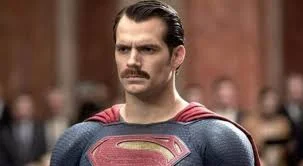
Wait… What’s that about Henry Cavill’s mustache?

An actual frame from the movie.

An actual frame from the movie.

The same frame, unaltered. Don’t look it up. Just trust me.

The same frame, unaltered. Don’t look it up. Just trust me.

Oh, Warner Bros, you sweet, innocent, beautiful summer child. What have we learned?

All Newhart-esque riffs aside, Zack Snyder’s third film with Superman as a character* is out now, and is fine. While it certainly doesn’t have any of the bewilderingly bad choices that Martha v Martha: Dawn of Martha had**, it still isn’t nearly as thrilling as Patty Jenkins’ Wonder Woman, but plays it far safer than the interesting-in-concept, but uneven Man of Steel (2013). Is it a step in the right direction for the floundering DCEU? No. It actually moves the proceedings back to the gestalt of Mommy v Mommy: Mommy of Mommy; as it turns out, Wonder Woman was the step in the right direction. That right direction, as it turns out, would be to make a bunch (and not just one) really watchable movie, then try to bring those disparate elements into a huge crowd pleaser. If only there was somebody out there that had already done this. That would be marvelous.

And that’s where I come in with some thoughts about the future of the DCEU, especially in light of League’s anemic box office. The internet has already buzzed about the possibility, and several news items have indicated that Warner Bros. may be thinking in this direction, but it may be time to abandon the Marvel business model. DC might have had a chance at being the second person to the party, but too many missed opportunities, murky creative strategies, and well, let’s face it, Marthas mean that DC may never truly get it together. The massive superhero movie continuity may not be possible to replicate. Heck, any massive movie continuity is not likely to have the benefit of a Robert Downey Jr. opening salvo, and thus, falter. Just ask the poor, maligned Universal monsters, who—despite their proud tradition of creating the idea of a cinematic shared universe before 1950—have had to endure now two false starts in twice as many years at uniting their stable of characters.

So don’t try, DC. Be weird. Don’t worry about setting up the next movie. In fact, it might be better if you’re no 100% sure what the next movie will even be. That Scorcese-produced Joker movie? I’d rather you didn’t go back to that well, but as long as Jared Leto stays home, I’m in. Flashpoint could cleanse the palette, give Affleck a dignified*** exit, allow Gal Gadot to keep making Wonder Woman movies in perpetuity, and restore Henry Cavill’s upper lip to its once-humanoid glory…

But what do I really want you to do DC? What is the only Christmas wish this boy has on his list?

You know what I’m about to say.

Last year, I wrote <here on the blog> about how I would have preferred DC handle its shared universe. It didn’t involve Affleck, and it didn’t really involve Batman, per se. You didn’t take that course here, but if you are truly giving up the ghost on being Marvel-lite, can I ask for one movie to be included in your increasingly Elseworlds-esque slate…

Unknown-3.jpeg

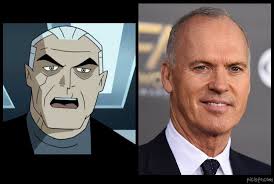
Batman Beyond… with Michael Keaton as Bruce Wayne. You can even bring back Danny Elfman to do the score.

Get that done, Warner Bros., and everything will be forgiven. Including any and all Marthas that may come up between now and then.


*Spoiler alert? Can something be a spoiler alert if the bit of info is built out of pure inevitability? These are the questions I ponder at night when sleep eludes me.

**Although it still did manage to include an irritating tag scene with profoundly miscast Jesse Eisenberg as Lex Luthor.

***He wants a “cool” way out of the role, and presumably never have to talk about it again, but I think the “best Batman to never be in a good Batman movie” can be erased from existence via the Cosmic treadmill, right? 

Tags justice league (2017), zack snyder, joss whedon, ben affleck, batman movies, gal gadot, henry cavill, ciaran hinds
Comment
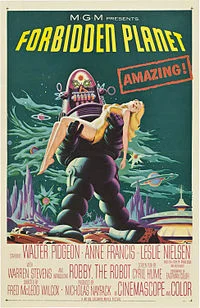
200px-Forbiddenplanetposter.jpg

Forbidden Planet (1956)

Mac Boyle January 5, 2019

Director: Fred M. Wilcox

Cast: Leslie Nielsen, Anne Francis, Walter Pidgeon, and Robby the Robot as Himself

Have I Seen it Before: Many, many times.

Did I Like It: It is the cinematic equivalent of chicken soup. I can’t prove it, but it might be capable of curing disease.

I previously published this review in a previous blog post entitled “Old Stuff, Part Two: Forbidden Planet” on December 17th, 2018.

I’ve always been old. Last week, I wrote about my <undying love for the brothers Marx>, but it doesn’t stop there.  I remain less than convinced that adding sound to motion pictures (or flicker shows, if you prefer) was an entirely good idea.

But, folks, there is some truly great stuff back there in the past, and I’d like to continue sharing some of that stuff with you this week.

Because everybody loves spaceship movies this week, I think there is no better time to introduce you to the spaceship movie. The original, you might say.

I could write—and have, on occasion considered writing—an entire book about Gene Roddenberry. Twenty-five plus years after his death, his legacy as the semi-messianic, borderline Hubbard-esque figure at the center of the Star Trek phenomenon. The truth appears to paint a far different picture of the man. At best, he is the template for James Cromwell’s portrayal of Zefram Cochrane in Star Trek: First Contact (1996)*, at worst he was a credit-hogging charlatan, the worst parts of Trek are the parts for which he is most directly responsible**. 

Nowhere is his status as “visionary” more in question, than when we realize that his precious vision of a semi-militarized, faster-than-light human race comes directly from the MGM science fiction classic, Forbidden Planet (1956).

Commander Adams checks in on a previously thought lost human expedition to the far-off planet Altair IV. There he finds remains of a super-advanced alien civilization, the humans left behind by early exploration to the region, and (because it’s a movie) a pretty girl***. Robots, spaceships, alien planets ensue. Everything you love about Trek (aside from the occasionally non-sensical utopia influences) appears in this movie first. While it’s electronic-synth score places the film firmly as a product of its time, it’s important once again to realize this film originated these tropes. 

The movie transcends these tropes, and rises above the B-movie trappings not only through its innovation of a sub-genre that dominates the Sci-Fi world of today, but also its special effects. It would be hard to fathom that a movie now over 60 years old sports a mixture of model, miniature, process, and optical effects that still hold up today, but somehow they do. It’s almost as if the level of technology used in producing special effects is meaningless, and the real important matter is the care with which those tools are implemented. Miniature models can look great, like in this film, or they can dangle from a string in the works of someone like Ed Wood. I suppose CGI, as well, can be used to terrific effect by the like of…

All right, maybe practical effects work is always better. My bad.

At any rate, if you’re a fan of Star Trek or really any of what we now take for granted in the modern American science fiction film, and you haven’t seen Forbidden Planet, then you need to remember your roots. This might be the point in the article where I recommend various streaming services to find the movie… The thing is, it’s not on Netflix, it’s not on Amazon Prime, nor is it on Hulu. I guess you’ll have to just find it on DVD or Blu Ray, which come to think of it, might need to be a topic for another one of these “old things” blog posts.

Anyway, we may pick up this discussion again next week with some other items to consider. I may move on to some other topics as well. There’s probably some end-of-the-year things I want to ruminate on before 2018 begins, and with it, some changes to this space.


*The writers and producers insist that this isn’t the case, but I imagine that their denials are a bit of self-preservation, as the surviving Roddenberrys had and still have a significant influence over the fan base. I think they could probably admit the Cochrane-Roddenberry connection now, but people just aren’t asking the in-depth questions about movies from twenty years ago that I think should be asked.

**And I also have suspicion that, were he alive today, we’d be having a far different conversation about him.

***Sound familiar? It’s essentially the plot of The Cage, the first, embryonic trailer of The Original Series starring one-time-Jesus, Jeffery Hunter. I’m on to you, Roddenberry. Death will not protect you.

Tags forbidden planet (1956), fred m wilcox, leslie nielsen, anne francis, walter pidgeon, robby the robot
Comment
Solo_A_Star_Wars_Story_poster.jpg

Solo: A Star Wars Story (2018)

Mac Boyle January 5, 2019

Director: Ron Howard, but to get into that story any further might begin the review prematurely.

Cast: Alden Ehrenreich, Woody Harrelson, Emilia Clarke, Donald Glover

Have I Seen it Before: Saw it in the theater. I had long since decided to be excited about it, despite the kerfuffle behind the scenes. It seems like a simpler time, just over six months ago.

Did I Like It: It was fine.

A Han Solo-based prequel seems like an astoundingly bad idea on paper. Do we really need to see how Han (Ehrenreich) and Chewie (Joonas Suotamo, having fully replaced the aging Peter Mayhew since The Last Jedi (2017)) met? Do we need to see the long-fabled gambling match where Lando Calrissian (Glover) loses his prized Millennium Falcon? Do we really need to see the conclusion of a story where, inevitably, Han will learn the virtue of shooting first? Is there need for more elaboration on just what the Kessel Run is? Did we not learn anything from the rationale for the prequel trilogy?

Given it’s pointedly bad idea bona fides, the logical conclusion was to reach out to Phil Lord and Christopher Miller. With The Lego Movie (2014), 21 Jump Street (2012), and hell, 22 Jump Street (2014), they have an unbroken track record of turning wildly stupid pitches into insanely watchable movies. There was reason enough to get excited.

And then Lucasfilm fired them. Apparently they were making the film too watchable, and that didn’t quite fit in with the earnings projections already made to Disney shareholders. They hired Ron Howard. He’s a great director in his own right. He brought Michael Keaton into the movies with Night Shift (1982), and is therefore worthy of our respect. Here, unfortunately, he is a hired gun, and it shows.

As the boy who would be Solo, Ehrenreich never quite feels up to the task, turning in the kind of work that can’t help but bring to mind the trajectory of Brandon Routh, forced to do a tepid impression of Christopher Reeve in Superman Returns (2006). Ehrenreich is charming enough, and we can only hope that there is some nice TV show he can call home in a few years. As Calrissian, Glover equates himself far better, still offering a performance with only flourishes of an impression of Billy Dee Williams, more akin to the work of Chris Pine as Captain Kirk in the recent Star Trek movies.

The film ends up a wildly over-budgeted adaptation of a tie-in novel that might have been written in the mid-90s*. There is even a bewildering cameo jammed into the third act by none other than the crown prince of prequels, Darth Maul (Ray Park), that by all accounts has nothing to do with the actual film at hand, and came off a list of possible reveals that could happen at the end. Even so, the movie is largely fine, and a better way to spend a little over two hours than digging ditches, but it isn’t the film it could have been, and that’s a shame.

Maybe, a la what happened with Richard Donner’s cut of Superman II, we might one day see the best version of this movie. A guy can hope, right?


* The Star Wars line did produce a young Solo trilogy in the 90s, written by the late A.C. Crispin. They trade in a lot of the same story beats as this movie, but remain firmly entrenched in the now defunct Legends canon.

Tags solo: a star wars story (2018), star wars movies, ron howard (sort of), alden ehrenreich, Woody Harrelson, emilia clarke, donald glover
Comment
Groundhog_Day_(movie_poster).jpg

Groundhog Day (1993)

Mac Boyle January 2, 2019

Director: Harold Ramis

Cast: Bill Murray, Andie MacDowell, Chris Elliott, Stephen Tobolowsky

Have I Seen it Before: I’m well-versed in Peak Murray™ 


Did I Like It: This movie really should have everything running against it, and yet it is a career best for all parties involved. It boggles the mind.

The film is nearly perfect, and in fact the only aspect that ages poorly is the song “Weatherman,” wedged into the opening and credits like a lazy, hoary square peg forced into a perfectly round hole. It reeks of a studio note that came to life and terrorized the countryside, but after an IMDB search, I’m horrified to realize it was written by the film’s composer, George Fenton, and director Harold Ramis. RIP, but Harold? If you can hear me, you were Egon, for Christ’s sake. Use your head.

And for every other part, he did. The film is a master’s course in comedy plotting, with not a wasted moment in the film proper. Each moment works on its own, and in turn either sets something up for later on, or pays something else off from before (in some cases, it accomplishes both). It’s theme is pure to the point of crystallization. It engrosses, despite a third act that in less adept hands would be a weirdly soft landing for such a manic tale. While Ghostbusters (1984) will always have a special place in this child of the 80s and 90s, Groundhog Day is the best thing with which Murray or Ramis has ever been associated. It’s often imitated—including, ahem, by me—but here they were working without the net of what had come before.

And there’s no reason—on paper—why any of this should have come to pass. I’m not 100% certain, but I am as sure as I can be that this film was shot out of order. The identical framing and blocking of scenes as Phil Connors (Murray) barrels through a time loop of unknown origins makes me think that the only practical way to shoot would be to get all of the Ned The Head scenes at the same time, the Gobbler’s Knob reports at the same time, or all of the scenes in the B and B at the same time, etc. That each scene has with it a certain amount of sameness, but requires of Murray completely different levels of performance with each iteration. It’s a masterful performance from him, made all the more strangely miraculous when one realizes that Murray and Ramis were not speaking to each other (and indeed, were estranged for most of the rest of Ramis’ life) for the duration of production. The reasons have only been alluded to*, but that the needle-thin precision work needed for this film to avoid being a complete train wreck makes the film all the more of a marvel to behold.


* Maybe Murray hated “Weatherman” as much as I do.

Tags groundhog day (1993), harold ramis, bill murray, peak murray, andie macdowell, chris elliott, stephen tobolowsky
Comment
Inside_Out_(2015_film)_poster.jpg

Inside Out (2015)

Mac Boyle January 1, 2019

Director: Pete Docter

Cast: Amy Poehler, Phyllis Smith, Richard Kind, Lewis Black

Have I Seen it Before: Yes, although I didn’t see it in the theater, which is becoming a recurring trend with me and Pixar films. 

Did I Like It: Pixar takes such delicate care with their films, that they have yet to make an unwatchable film. There’s too much energy and craft on display to fall short of that standard. The true measure of their success is whether or not it sticks with you like a gut punch (a la the Toy Story series) or end up insubstantial confections that begin to disappear the moment the credits begin (a la the Cars series).

I can happily report that this film resides in the prior category. At their best, Pixar films have an ability to convert an otherwise banal situation (checking your bag at the airport, moving, or bedtime) into stories of epic proportions. Synthesizing what feels like an entire lifetime of reading about Junigan archetypes* into what amounts to a road movie, Joy (Amy Poehler), Sadness (Phyllis Smith) and the other emotions in the head of eleven-year-old Riley (Kaitlyn Dias) haphazardly find their way to work together more… efficiently feels like the wrong word, as the most efficient manner for them to conduct their mission would be to have Joy run the show. Instead, they must realize that they are an interdependent system. Each will perish without the others.

It might seem like a simplistic system, narrowing all of human emotions—even for the adults—down to five emotions, but when the borders begin to blur, the story really cuts through and sticks with you long after its over. The happiest memories are usually a response to the saddest, so is the opposite, on and on until a complex human being is created. It makes one think about their own core memories, and the continuum of how one feels about all of those key moments. 

Thus, it’s one of the best Pixar films (and that is pretty impressive company to be among), and worth immediate viewing if you haven’t already done so.


*I honestly have no idea if the film has any relation to true Jungian psychology, but it feels like the intelligent thing to type there, doesn’t it?

Tags inside out (2015), pixar films, pete docter, amy poehler, phyllis smith, richard kind, lewis black
Comment
220px-Star_Trek_VI-poster.png

Star Trek VI: The Undiscovered Country (1991)

Mac Boyle January 1, 2019

Director: Nicholas Meyer

Cast: William Shatner, Leonard Nimoy, DeForrest Kelley, Kevin Spacey Christopher Plummer*

Have I Seen it Before: Well, this is the first film in the Star Trek series I’ve reviewed, so unless we happen to be dealing with a new release, it’s a pretty safe bet that I’ve seen it before.

Did I Like It: It might objectively be the best Star Trek film of all time. Does that mean it is the best Star Trek film of all time, or even the best Star Trek film directed by Nicholas Meyer? Well, that’s a different story.

I’ve written a couple of times in these reviews about timelessness in films. It’s appropriate to broach the subject of the film, because the notion was put into my head by Meyer, and he perfects the reach for a timeless quality in this film. Beyond a few scant special effects that might have been a little ahead of their time, there’s not really an aspect of this movie, from the music, to the cinematography, all the way to the hair styles, there is almost nothing about this film that restricts it to being made in the early 1990s. It’s a marvel to behold, and a phenomenon that Meyer’s other great space-opera Star Trek II: The Wrath of Khan (1982) can’t even claim, even though that is one of my all-time top five movies.

Even the one element that threatens to make the film strictly of its time manages to transcend. Clearly a parable about the end of the Soviet Union (with just a pinch of Watergate-esque intrigue thrown in for good measure), the film is clearly commenting about the end of the 80s and the beginning the 90s. The Klingons have their own version of Chernobyl, unrelenting hostilities are coming to an unfathomable end, and the old guard is to varying degrees uncomfortable with the forthcoming future, or the titular undiscovered country**. But I think it may be a byproduct of living in a political era that could—politely—called “interesting” that the macro machinations of the galaxy here can’t help but feel relevant to the here and now. This is when Star Trek often works the best, and it shows.


* Could you imagine? Don’t. #2017jokesfiresale

** Which is a strange title for this film, if treated to any further scrutiny. The Wrath of Khan was originally called The Undiscovered Country, and as it is an allusion to Hamlet, and specifically death, it feels more appropriate to that film. Here, it is essentially saying that the sometime arduous road to peace only ends in death. Ominous. Mad ominous, folks. 

Tags star trek vi: the undiscovered country, star trek film series, nicholas meyer, william shatner, leonard nimoy, deforrest kelley, christopher plummer
Comment
The_Founder_poster.png

The Founder (2016)

Mac Boyle January 1, 2019

Director: John Lee Hancock

Cast: Michael Keaton, Nick Offerman, John Carroll Lynch, Linda Cardellini

Have I Seen it Before: Yes.

Did I Like It: McDonalds and Michael Keaton? Yes, please, on all fronts.

Michael Keaton not withstanding, the notion that The Social Network (2010) except about hamburgers and french fries instead of the burgeoning frontier of social media seems like it would be kind of a dud. Thankfully, this film benefits a mostly breakneck pacing that forbids the audience to realize they might otherwise be bored by an epic of food service and small-scale real estate deals. The film also has just enough of a wry sense of humor about whether or not the growing of McDonalds was a good development for human society, or an ongoing trash fire. I type that last sentence not so much out of a place of judgment, and more out of a place of self-deprecation, as I could really go for a bag of double cheeseburgers from any of the three McDonalds restaurants within two miles from my house. 

Maybe the subject of the film is sexier than one might originally assume. That’s either a testament to the film, or to cheeseburgers, and I’m honestly not sure which one is the case.

But, as I mentioned above, it also has Michael Keaton in it. History—and frankly, this screenplay—would prefer to have Ray Kroc be a cad at best, and a monster capable of demolishing western civilization as we know it at worst. In the hands of the once and hopefully future Beetlejuice, the man is instead scrappy, and worthy of a heroic role in a movie. He’s a torrent of can-do post-war Americanism, finally realizing that the best kind of people to bring his burgeoning empire to the rest of the world are other scrappers like himself. This quality Keaton brings to the role doesn’t diminish from our sympathy for Richard and Maurice McDonald (Nick Offerman and John Carroll Lynch, respectively) and the tragedy that unfolds as they lose the rights to their own name, or for Ethel Kroc (an unfortunately underused Laura Dern) as she comes to support her husband’s harebrained schemes, but turns out to not be enough for his ego. Naturally, the film streamlines another spouse between Ethel and Joan (Linda Cardellini), but thems the breaks in the biopic game.

It’s going to be a cold day in hell before I don’t recommend a film starring Keaton*, but beyond the casting, The Founder still delivers on everything its promised and is in that pantheon of truly great biopics.


* I’ll admit right now, I still have not seen Clean and Sober (1988), because I’m not terribly in the business of being depressed in a Keaton movie or Jack Frost (1998), probably for the same reason. But so far, the record remains unbroken.

Tags the founder (2016), john lee hancock, michael keaton, the michael keaton theory, Nick offerman, john carroll lynch, linda cardellini
Comment
220px-Dr._No_-_UK_cinema_poster.jpg

Dr. No (1962)

Mac Boyle December 27, 2018

Director: Terence Young

Cast: Sean Connery, Joseph Wiseman, Jack Lord, Ursula Andress

Have I Seen it Before: I’ve seen them all before, let’s get that out of the way right now.

Did I Like It: It’s got some fascinating embryonic charms going for it. Ultimately it’s early Connery, so there’s plenty to like.

Man alive, the opening sequence to this, the first James Bond film, is disconcertingly weird. That isn’t necessarily a bad thing, just hard to ignore. In fact, it is sort of thrilling in a way, as it is clear the once and future EON Productions isn’t yet churning out a product with a winning formula, but actually trying to make a film. This phenomenon will come up a lot in the first several Connery-led pictures.

There are very few things that indeed come fully formed in this initial outing. Q-branch and their wonderful toys are nary heard from, there is no pre-title action set piece , and the gun-barrel shot is truncated and sounds like a flying saucer landed (both a byproduct of the aforementioned embryonic title sequence), and Bond (Connery) is—by his own standards—nearly eligible to join the priesthood. 

What is arrived in its full form is Connery’s Bond. With just the right menace of masculine confidence, wry charm, and the lethal edge in which Roger Moore remained supremely disinterested, Connery owns the role from his first scene. Indeed, that first sequence with Bond and Sylvia Trench (Eunice Gayson*) trading barbs during a round of baccarat may be one of the more prototypical Bond scenes in the canon. Legend (and DVD behind-the-scenes featurettes) have it that the scene from From Russia With Love (1963) where Bond first meets Tatiana Romanova (Daniela Bianchi) is what is used to audition new Bonds before white smoke seeps out of the chimney at EON Productions, but I really think this scene is the much more important test.

The plot is sort of perfunctory, coming together and resolving itself with a simplicity that just isn’t found in some of the later entries. That isn’t much a criticism, though, as I am no baffled by how supremely bored I found myself during the final stretches of the later entries during the tenure of Roger Moore or Pierce Bronsan.

Also, is Felix Leiter (Jack Lord) wearing women’s sunglasses in this movie? Man the sixties were wild, weren’t they?


*Although the role’s dialogue was spoken by the same woman, Nikki van der Zyl, who dubbed over Ursula Andress later in the movie

Tags dr. no (1962), Terence Young, sean connery, Ursula Andress, Joseph Wiseman, Jack Lord, james bond series
Comment
220px-Ghostbusters_ii_poster.jpg

Ghostbusters II (1989)

Mac Boyle December 26, 2018

Director: Ivan Reitman

Cast: Bill Murray, Sigourney Weaver, Dan Aykroyd, Peter MacNicol

Have I Seen it Before: Let’s just assume I’ve seen every movie released in the summer of 1989 about a thousand times.

Did I Like It: It has all the same ingredients as the original, and is still a satisfying meal, but in the end there is nothing like the first taste.

Comedy sequels are rough. Quick, name a good one. You probably didn’t mention Caddyshack 2 (1988). Or Analyze That (2002). Or The Whole Ten Yards (2004). Or Fletch Lives (1989). Smokey and The Bandit II (1980)? Smokey and the Bandit Part 3 (1983)? What’s left that can rise above the absolute laughless masses? The Austin Powers movies? Was the original even that funny after the hazy binge that was the 90s ended? Anchorman 2: The Legend Continues (2013)? Watchable, yes. Funny, sure. But not the same as the original.

So it is too with Ghostbusters II. Many—including much of the cast—have poured cold water over the second film, and I get it. The plot needlessly contrives putting the busters back to square one. There’s too much of Slimer and other elements and choices elevated by the only occasionally good Real Ghostbusters cartoon series. The notion of a Jaeger Statue of Liberty is sort of disappointing in a world that has Kaiju Marshmallow Men.

Although I admit that my soft spot for the movie may be a byproduct of people irrationally loving movies they first saw when they were five years old, but this movie is still Peak Murray, and thus cannot be dismissed entirely. I enjoy it every time I watch it, even if it is not as joy inducing as the original, or even if it is not quite as fresh as the 2016 remake. Watch it, and realize that while it isn’t perfect, it could have been truly embarrassing. That it isn’t in that low pantheon of comedy sequels is certainly worth something.

Tags ghostbusters ii (1989), ivan reitman, bill murray, harold ramis, sigourney weaver, dan aykroyd
Comment
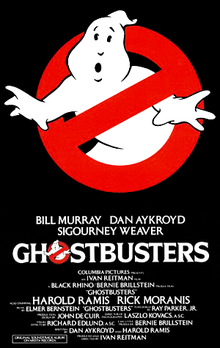
Ghostbusters_(1984)_theatrical_poster.png

Ghostbusters (1984)

Mac Boyle December 26, 2018

Director: Ivan Reitman

Cast: Bill Murray, Dan Aykroyd, Harold Ramis, Sigourney Weaver

Have I Seen it Before: Do you want me to perform it for you?

Did I Like It: Top five, likely. Top ten, definitely.

Ghostbusters fandom is a divided place now, it seems. If you like the original films, the 2016 remake is akin to sacrilege, inciting a series of dumb opinions, many of which coming from people who have never seen the new film. Similarly, to those who really found something to attach themselves to in the new film, the original is less thrilling.

To wit, the question I come to as I start writing this review: Is it possible to like both the original and brand new Ghostbusters? I enjoyed the new film, and never once felt threatened by its existence. This may be one of the prime pieces of evidence supporting the notion that I’m not an entitled man baby, and just like funny movies about people catching ghosts. And yet, the original film is one of my all-time favorites. I hope it isn’t perceived as sexist to prefer the original, because I’m of the mind that ghostbusting must know no borders of race, creed, or gender.

Now that we have that out of the way, I will restrict my comments to the original film.

There’s something special about Bill Murray. With many comic actors—indeed, many of those appear in this film—there is a period where they are at their funniest. Not so with Murray, as while he changes as the years go by, each version of Murray is equally watchable. That being said, the Murray enjoyed by filmgoers in the 80s through the mid-90s is peak Murray. He’s aspirational. Some people my age might have wanted to be James Bond or Michael Jordan, but the kind of people I would most get along with wanted to be like any Bill Murray character, even if they couldn’t quite admit. Laid back, but charismatic. Funny, but no one’s fool. Loved—even if begrudgingly so—by the best of people, and detested by the worst. For someone trying to get by on his wits, Bill Murray is the peak of manliness, and no more so than in this movie.

There’s an interesting extension to the above thought that I realized during this viewing. Any role during this same period that Bill Murray played, Chevy Chase could have played as well, and vice versa. However, when Murray plays the role, he is the heroic scamp, where if Chase portrayed the character, he’d be an irredeemable asshole. If Murray had been in Fletch (1985), it would have been an even better film, and if Chase had played Dr. Peter Venkman, the movie would have suffered within this alternate universe.

While the movie lives and dies by Murray’s presence, the rest of the cast helps elevate the movie to a true classic worthy of eventual remake. In my deep Ghostbuster fandom, I once had occasion to read the original screenplay by Aykroyd and Ramis. The script is fine, but the movie as we have all come to enjoy it is not on the page, it is in the performances. This film is a brilliant low-key comedy wrapped up in the trappings of a summer blockbuster. The blockbuster elements will fade (and in the case of the special effects, already have), but the film will live forever, owing to the bizarre, ineffable alchemy that is the true fun of the movie.

Tags ghostbusters (1984), ghostbusters series, ivan reitman, bill murray, sigourney weaver, Dan Aykroyd, harold ramis, rick moranis
Comment
Aquaman_poster.jpg

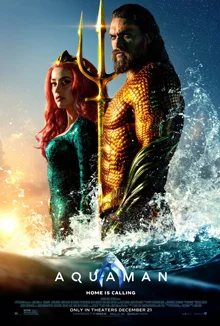
Aquaman (2018)

Mac Boyle December 26, 2018

Director: James Wan

Cast: Jason Momoa, Amber Heard, Patrick Wilson, Nicole Kidman

Have I Seen it Before: It’s hard to see an action movie these days—with their wall-to-wall CGI, bombastic film scores, and framing of shots like their in a gyroscope—and not feel like you’ve been watching the movie many times. Does that begin to answer the question? Probably not. No, I haven’t seen it. At this writing it is a brand new movie. There. Now I’ve answered it.

Did I Like It: I didn’t hate it, which, as it turns out, still manages to bring up the average of post-Nolan DC movies.

I’m not entirely sure why Jason Momoa has spent most of his acting career up until this point being the strong, silent type. I mean, I guess I get the strong part. The man is built like a Joel Schumacher fever dream, but here he gets to let his leading man flag fly, and acquits himself well. He’s often funny, usually charming, and never seems lost in the course of starring in his own movie. That’s not an easy task, especially for someone who has been largely taciturn for much of his acting career.

The movie surrounding him has an odd tone, though. With it’s synthesizer-heavy score, reverse-engineered pseudo-Indiana Jones plot, and the mere presence of Dolph Lundgren* makes this film so thoroughly entrenched in an aesthetic pulled from the 1980s*. With no further context, there’s very little outside of the CGI to indicate that this film was truly made in the second decade fo the 21st century. It’s kind of a refreshing choice, at times. It actually sends my imagination into overdrive about what the film would be like had it been made thirty-plus years earlier. Lundgren would still be in it, although in either the role of Arthur Curry (Momoa) or Orm/Ocean Master (Patrick Wilson, showing up once again to cash some DC money and hopefully not be noticed in the process), while somebody like Sylvester Stallone would be the other role. The imaginary film might have been directed by Stallone as well. The increase in montages for this film would be negligible, if any.

And that might have made it a better movie. The ultimately slapdash fashion in which the film is put together makes me question whether this retro sensibility was either intentional, accidental, or the ongoing trend of studios insisting that all tentpole films be as much like the Guardians of the Galaxy films as possible. Also, the film is an absolute exposition fest. You know it’s going to be a doozy when the film injects a voice over in the first few minutes, but it only gets worse from there. While someone may have decided that this much world building is necessary for a first film set in a world of which audiences likely have little-to-no knowledge, the proceedings are far too weighted down. While this isn’t the annoyingly self-serious Batman v Superman: Dawn of Justice (2016) or the muddled Justice League (2017), it doesn’t quite reach the magnificence of Wonder Woman (2017) or any of the largely superior Marvel films. Keep trying DC, you might yet get it down one of these days.


*Who, by the way, between this and Creed II, is having a renaissance the likes of which we haven’t seen since the one two punch of Masters of the Universe (1987) and The Punisher (1989).

Tags aquaman (2018), james wan, jason momoa, amber heard, patrick wilson, nicole kidman
Comment
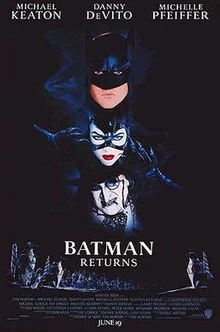
Yes, this poster was up on my wall during childhood. No, this doesn’t mean you can judge me.

Yes, this poster was up on my wall during childhood. No, this doesn’t mean you can judge me.

Batman Returns (1992)

Mac Boyle December 22, 2018

Director: Tim Burton

Cast: Michael “Greatest of All Time” Keaton, Danny DeVito, Michelle Pfeiffer, and Christopher “Yeah, But Imagine If I Had Been Playing The Scarecrow” Walken 

Have I Seen it Before: So, so many times.

Did I Like It: I’ll do you one further. Not only is it a great movie—even if it intentionally plays fast and loose with the core of Batman—it may be damn psychic.

But before I get to the film’s prescience, let’s talk a little bit about the movie in the context of the time it was released. One supposes that Warner Bros. wanted to reassemble as much of the team responsible for Batman (1989) as possible, and were willing to just about anything to get Michael Keaton and Tim Burton to acquiesce where they might have otherwise been disinterested in the prospect of returning to the batcave. 

So Warner Bros. decided to let them do whatever the hell they wanted as long as it featured the Penguin, an action set piece with the Batmobile, and was ready for summer 1992.

They delivered on all of those promises, and went completely nuts with everything else. In a movie essentially meant to entertain children, there sure is a lot of filicide, borderline S&M, and biting of Republican noses*. I can almost see why McDonalds got all bet out of shape in the summer of ’92. Maybe that means I’m getting older, but we’re treated to an unashamedly idiosyncratic movie in place of what could have been a throughly bland summer blockbuster. The Schumacher of it all that was to follow proves pretty conclusively that this movie was a special treat that is unlikely to come 

But in the twenty-five years since the film’s release, it has taken on a new life.

Now, I don’t want to say that there is some modern parable in the story of a woman beset by a crushing degree of sexual violence and harassment, while the rest of society is slowly burning under the caprice of a malevolent homunculi trying to grab all the political power he can before laying siege to everything in sight…

But I could.   


*Watch that movie again and tell me that each and every person supporting The Penguin (DeVito) in his bid for Mayor of Gotham isn’t a Republican, and I’ll be able to tell you haven’t been paying attention. Oswald Means Order, indeed.

Tags batman returns (1992), batman movies, Tim Burton, michael keaton, the michael keaton theory, danny devito, michelle pfieffer, christopher walken
Comment
Watchmen_film_poster.jpg

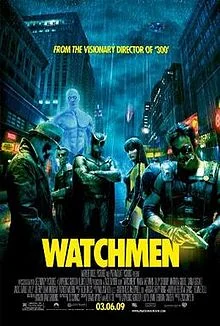
Watchmen (2009)

Mac Boyle December 19, 2018

Director: Zack Snyder

Cast: Jackie Earle Haley, Billy Crudup, Matthew Goode, and Malin Åkerman

Have I Seen it Before: Yeah. I mean, I’ve read the comic book, so there’s not a lot that doesn’t cover both spheres of that particular venn diagram.

Did I Like It: Well… It’s not my least favorite Zack Snyder movie. It may even be my favorite Snyder film. But I’m quickly realizing that this doesn’t answer the question. 


Here are some things I really like about Watchmen:


  • I’m eternally a sucker for alternate histories set in the 1980s. Ultimately, this is going to be granddaddy of that very niche genre.

  • I’m eternally a sucker for characters who can’t/won’t see time in a linear fashion. Billy Pilgrim, The Doctor, Doc Brown, Doctor Manhattan. They are all my kind of folks.

  • The Owlship is a neat vehicle unlike anything seen before or since in comicdom.

  • It’s always worth engaging in a story with no easy answers. Morally reprehensible characters have a point. Likable people make awful choices.

  • The costume choices made in the film subtly hints at the costume design of the Batman films in the 1990s. The armor Ozymandias (Matthew Goode) even has nipples.

Look at that, I eventually got to something I like about the film. There isn’t much there, sadly.

While reading Alan Moore and Dave Gibbons’ original Watchmen comic, I was struck by how good the work is. How comprehensive. How fully-realized. How dense, but in a good way. 

And I remembered how much I didn’t think the movie lived up to that promise. However, now that the film has no sense of anticipation hover around it, it must have improved with age, no?

Sadly, no is right. I went for the Ultimate Cut in this viewing, rationalizing that perhaps with more of Moore and Gibbons’ work injected into the proceedings, things will have improved even more still. Not so, as Snyder’s insistence on transcription is only offset by some his truly baffling choices when he takes a swing at adaptation. Snyder probably shouldn’t shoulder all of the blame for the misfire, as Moore really intended for the work to be unadaptable and appears to have largely succeeded. It is entirely possible that there isn’t a cinematic version of this story that works. The forthcoming HBO series may or may not prove me wrong on that one

Also, I have a confession: I have never quite understood why Tales of The Black Freighter is such an essential part of the story in any format, beyond driving home the fact that in a world where superheroes were real, people would search for escapism in some other kind of story. Sure, there are some parallel qualities to the two stories, but beyond that it just added some depth to frames including Bernard (Jesse Reid). Now with all of the side story cut into the film, everything is just a longer and feels that way, with two feature-length movies fighting for screen time. Even the comic realized a little bit of Black Freighter goes a long way.

I’ve never seen a filmmaker who so wildly veers between tone deaf musical choices, and cues that are way too on the nose. In one of his better sequences—incidentally, the one where there is the most adaptation over transcription—over the montage opening credits, Bob Dylan’s “The Times They Are a-Changin’” pins the tail right on the donkey. On the other end of things, Wagner blaring over the conclusion of the Vietnam War makes me feel like I’ve seen this movie before, because I have. The less said about Leonard Cohen’s “Hallelujah” over the Owlship sex scene, the better off we all are*. I’m not sure why “99 Luftballoons” or “The Sound of Silence” are in this movie, other than they are both catchy and at least one of them would have gotten some serious FM play in 1985.

The cast is all over the place, sadly. Haley does yeoman’s work holding the movie together as what turns out to be the protagonist. Jeffery Dean Morgan—a good actor—is so earnest in every scene he inhabits that the earlier moral ghoulishness never comes across. Billy Crudup is supposed to be sleepwalking through the film, but I can’t quite figure out why everyone else decided to do the same thing.

Snyder may be a good director, but until he makes a film that isn’t irritating at its core, I’m not sure anyone is going to believe it.


*Okay, you want to talk about it? I challenge you to find a more awkward, uncomfortable sex scene in a movie. I don’t want to sound like a prude, but I just got embarrassed with its wanton earnestness. The comic book didn’t have that, I assure you.

Tags watchmen (2009), zack snyder, malin åkerman, jackie earle haley, billy crudup, matthew goode
Comment
220px-Spider-Man_Into_the_Spider-Verse_poster.jpg

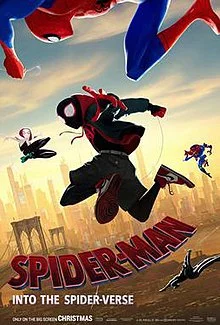
Spider-Man: Into the Spider-Verse (2018)

Mac Boyle December 17, 2018

Director: Bob Perischetti, Peter Ramsey, Rodney Rothman

Cast: Shameik Moore, Jake Johnson, Hailee Steinfeld, Mahershala Ali, Bryan Tyree Henry, Lily Tomlin, John Mulaney, Nicolas Cage, Liev Schreiber

Have I Seen it Before: Have I ever even seen anything like it? Let’s put it this way: I normally only list only four cast members. Here, as there are so many other great ones doing great work here, limiting things to only four felt somehow unfair.

Did I Like It: God, yes.

Why, of why, didn’t Lucasfilm just let Lord and Miller make the Solo movie they wanted to make? They have an absolutely unbroken track record of turning idiotic ideas (The Lego Movie (2014), 21 Jump Street (2012), Cloudy with a Chance of Meatballs (2009)) into insanely watchable movies. They’re involvement here is only tangential, but they manage to turn a pretty good idea into a surprising, wondrous epic that is certainly in the running for best Spider-Man movie ever, best animated movie of the year, and is hands down the best animated feature film featuring superheroes of all time. Batman: Mask of the Phantasm (1993)—a film I dearly love and the previous king of the category—has been dethroned.

Now, transdimensional fiestas, and meta commentary on the sprawling history of a seminal character is more than enough to attract my interest. The animation style, fusing together traditional cel, Pixar-level 3D, and a frenetic appreciation for an era of comic books just ever-so-slightly past both serves the story at every moment, and manages to be entirely new, all at the same time. I tend to stay away from 3d presentations, but when I see this movie again—and I surely will—I may deign to take on an extra pair of glasses for the experience.

That every character—even the supporting ones—has an equal claim to pathos and hilarity is truly remarkable. The cast—as I mentioned above—delivers on this seemingly impossible task. 

Shameik Moore imbues Miles Morales, the film’s newest Spider-Man with such likable charisma, that anyone whole complains about a black Spider-Man is going to find new depths of foolishness in their complaints. All of the clever flash of the movie would fail to come together if Morales’ story and Moore’s performance weren’t among the best parts of a film already filled with best parts.

Among the others, Chris Pine is a perfect amalgam of ever cinematic Spider-Man to date, emphasis on the perfect, while Jake Johnson is a far more schlubby (and dare I say attainable) version of the same. The arc of Johnson’s Parker and his relationship with Morales gives hope to this thirty-something who realizes Spider-men keep getting younger, while I do the opposite. John Mulaney becomes the cartoon character we never knew he was destined to be. While I’m loathe to lump together and put near the end Hailee Steinfeld and Kimiko Glenn as Spider-Gwen and Peni Parker, theirs were the versions of the character I was least familiar with, and the ones I’m most eager to read more about as soon as possible. Even Nicolas Cage comes to play first and get paid second. It’s been a long time, Nic! It almost made me forget about Left Behind (2014), and actually gets me to warm up to the idea of Mandy. 

Go see this movie. It comes with my highest recommendation.

Tags Spider-Man: Enter The Spider-Verse (2018), Spider-Man, Bob Perischetti, Peter Ramsey, Rodney Rothman, Shameik Moore, Jake Johnson, Hailee Steinfeld, John Mulaney, Nicolas Cage, Liev Schrieber, Lily Tomlin, Mahershala Ali, Bryan Tyree Henry, Chris Pine
Comment
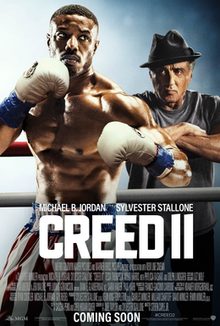
220px-Creed_II_poster.png

Creed II (2018)

Mac Boyle December 13, 2018

Director: Steven Caple Jr.

Cast: Michael B. Jordan, Tessa Thompson, Sylvester Stallone, and Dolph Lundgren

Have I Seen it Before: Well, no… But I’ve seen a Rocky movie before, so in a sense, yes… But don’t let that scare you away.

Did I Like It: Yes. What’s not to like?

Highly dubious spoilers about the film to follow.

Look, even if Ryan Coogler had directed the followup to his transcendent Creed (2015), it probably wouldn’t have been quite as searingly good as the original film, and in that parallel dimension, Black Panther (2018) is directed by some lesser mortal. So, as long as we get that out of the way, Creed II is still pretty terrific. Taking the bones of the most preposterous (not necessarily bad) Rocky movie and making a familiar rehash. But if this series is the Thanksgiving dinner of movies, then I’m glad that we still get a feast every once in a while. It is a delicious meal that cannot help but make one feel good.

It’s predictability may keep it from completely blowing the paint off the walls, but it does manage to throw some curve balls. Adonis is brought low in the second act not by losing his newly won Championship Title to the antagonist, but retaining it in a fight he was well on his way to losing, had not the referee’s ruling disqualified the Baby Drago (Florian Munteanu, who with his quiet anguis may take the title of best actual-boxer to play in these movies). That’s mildly surprising, but when Ivan Drago (Dolph Lundgren, doing easily his best work, lurching through scenes like a coiled snake ready to pounce) throws in the towel ending the final battle between the two younger fighters, my jaw hit the ground. I would have been highly dubious if someone told me that this movie could have easily been called The Redemption of Ivan Drago, but here we are, proving once and for all that if he can change, really, truly, everyone can change.

Cue the end of the United States’ current troubles with Russia, no?

Ahem.

Now, Stallone recently announced (although it wouldn’t be completely out of the question to guess that he might be engaging in contract negotiations through the press) that this will be his swan song as Balboa. I think I’m okay with this. As I mentioned in my review of Creed, I kind of assumed that our last ride with the Stallion had happened years ago, and if this is it, that’s okay. It was nice to get some extra time with him. But, with that doubt in the back of my mind, it might even be better that we may have more time with him yet to come.

Tags creed ii (2018), rocky series, steven caple jr, michael b jordan, tessa thompson, sylvester stallone, dolph lundgren
Comment
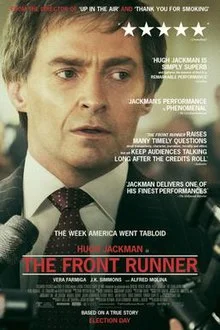
220px-The_Front_Runner.jpg

The Front Runner (2018)

Mac Boyle December 13, 2018

Director: Jason Reitman

Cast: Hugh Jackman, Vera Farmiga, J.K. Simmons, Alfred Molina

Have I Seen it Before: No, but there are times when I feel like I lived it.

Did I Like It: I wanted to. At least we got that pretty rad poster of Hart’s campaign bus driving off a cliff. Of course, that is not the poster I include in this post, wherein Hugh Jackman has the look of a man who has just sharted, but I digress.

A political film is going to have a hard time avoiding making a political point about the time they are released. Even All The President’s Men sheds light (at the time of its release) about recent events. This movie certainly can’t make any claim to the latter goal, as most people would view the 1988 election, the Democratic Primary that year, and Gary Hart himself as a footnote in political history. 

When the film tries to make its statement about the here and now, things get truly muddled, indeed. Is it a #metoo commentary, wherein the shoddy treatment of Donna Rice (Sara Paxton) by the powerful yet clueless Hart (Jackman)? Maybe. There are certainly scenes that would approach that kind of a statement. Are we supposed to look down on the morally compromised journalists as they make their slow embrace of tabloid methods? Again, maybe, but at this particular moment in history, lay off journalists, man, they’re having a rough enough time as it is. Are we supposed to take Hart’s side and lament that this jungle environment ensures that the best and brightest won’t take to public life? Again, maybe, but the point feels like weak sauce in a world that has pointedly moved on from heralding Bill Clinton as any kind of mistreated hero.

I just wish the movie would pick a lane, and that said lane wouldn’t be quite as tone deaf.

It should also bear mentioning that I may be among the worst audiences for a political film, as I keep trying to pick apart the history. Several minor anachronisms run throughout, but the most glaring example comes from right at the beginning. The opening scene takes place at the height of the 1984 Democratic National Convention, with Walter Mondale and Geraldine Ferraro ascending to their eventual status as America’s greatest sacrificial lambs. Hart soberly assesses Mondale’s chances in the fall, and resolves that he will be the one to bring the Democratic Party back from the brink on the next go around. 

We cut to nearly a year before the Iowa caucuses, and the title on screen says “Four Years Later.” It wasn’t four years later. It was barely three years later. That’s just math, Jason Reitman. It doesn’t take a lot to jar me out of believing a political narrative, but even that is pretty egregious.

Shut up, Mac? Yeah, you bet. I’ll get right on that.

Tags the front runner, jason reitman, hugh jackman, vera farmiga, jk simmons, alfred molina
Comment
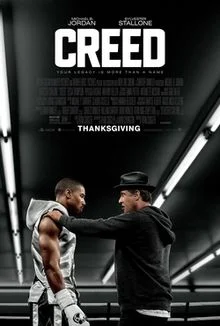
Creed_poster.jpg

Creed (2015)

Mac Boyle December 11, 2018

Director: Ryan Coogler

Cast: Michael B. Jordan, Tessa Thompson, Phylicia Rashad, and (against all odds, as it should be) Sylvester Stallone as Rocky Balboa

Have I Seen it Before: Man, I was there opening weekend.

Did I Like It: What a stupid idea for a movie, and yet it was executed flawlessly.

As the end credits for Rocky Balboa (2006) begin, a feeling always came over me. This is it. This is the end. It was great while it lasted, Rock. Thanks for coming back one last time.

And here we are, again. And man am I glad.

Just to pitch the idea for a seventh Rocky movie takes a certain amount of bravery-to-the-point of insanity, to then turn around and make such a vital, necessary film is an act of subtle, but superlative genius. To wit, this moment that I may be paraphrasing:


ADONIS

Why do you want to be a singer?

BIANCA

It makes me feel alive.

ADONIS says nothing, smiles slightly.


That is amazing. New and fresh and interesting and incisive like a blade.

And yet, it is Rocky through and through. The film is so steeped in the mythology of the previous entries in the series. The whole movie wouldn’t exist without Rocky IV (1985). Rocky would be a completely different character without Rocky V (1990) and Rocky Balboa (2006). Ever wonder who won the top secret fight at the end of Rocky III (1982), well this movie has your answer. Coogler and company love making a great movie, but they love every Rocky just as much. These movies have a format, but when the inevitable third act training montage comes barreling down the tracks, even it is born again, without ever being ashamed of its roots. 

When the book on the greatest directors of all time is finished, Ryan Coogler will get his own chapter, and Black Panther (2018) is only a piece of that.

As sharp as Coogler’s choices are, he would be nowhere without his cast. Michael B. Jordan cements himself as a bona fide movie star while still channeling Carl Weathers just enough. Tessa Thompson is such a fabulous actress, with a naturalistic chameleon quality that I only just now realized she is the same actress from Thor: Ragnarok (2017). And then there is Stallone. Frankly, he deserved the Oscar for this round as Rocky. He so thoroughly abandons any sense of ego he might have once had—and his self-image in the 80s was undeniable—to play a Rocky laid low, but still resolute. That there is more Rocky to explore is staggering.

Just as an aside, a weird moment that I hadn’t fully digested in previous viewings: The moment where Adonis (Jordan) does an impression of Brando from The Godfather (1972). Which leads me to this strange question: In the Rockyverse do both Adrian Balboa and the actress Talia Shire exist? Maybe Creed II (2018) will finally shed some light on that. Maybe it’ll take several more movies before we get that answer. That suits me just fine. Keep ‘em coming, Rock.

Tags Creed (2015), rocky series, ryan coogler, michael b jordan, tessa thompson, phylicia rashad, sylvester stallone
Comment
220px-Rocky_iii_poster.jpg

Rocky III (1982)

Mac Boyle December 11, 2018

Director: Sylvester Stallone

Cast: Sylvester Stallone, Talia Shire, Burt Young, Carl Weathers, Burgess Meredith Mr. T, and Hulk Hogan as essentially himself*

Have I Seen it Before: Honestly, I’ve probably seen it more than any other film in the Rocky series… Which brings me to…

Did I Like It: You’re going to call me crazy, but…

Rocky III may be my favorite of the Rocky films. I really, really enjoy this movie. You might say it’s entirely tied to Survivor’s superlative lets-get-pumped “Eye of the Tiger,” but my appreciation for this movie goes deeper. I own a framed poster of the movie. Now, my wife eventually asked that I take it (or as she refers to it “my framed photo of a greased, half-naked Sylvester Stallone) off the wall, but that’s a story for a different time…

Sure, the original is a classic, and Rocky IV is perhaps the most sublimely ridiculous 80s cornball comic book movie, and the fact that Rocky Balboa (2006) and Creed (2015) were able to get more blood out of that stone (or Rock) is a pretty impressive… But this movie is nearly the perfect distillation of what the Rocky series is. It’s the perfect blend of the heart and the cornball that made the series indelible, and helped it win the Cold War, in that order…

There’s a self-awareness to the proceedings that’s endearing when it isn’t purely entertaining, or more accurately, completely wrong. Mickey (Burgess Meredith) turns to Adrian (Talia Shire) during one of the more bombastic scenes and Another moment I can’t help but chuckle at is the boxing announcers assertion in the lead up to the climactic battle between Rocky (Stallone) and Clubber Lang (Mr. T) that this is “absolutely his last fight, win, lose, or draw.” That’s pretty funny, as I’m still not 100% sure that we’ve seen the Italian Stallion’s last fight… at least outside of the ring.


*Between this and Gremlins 2: The New Batch (1990), I’m surprised to realize how many films I really enjoy feature the once and future Terry Bollea.

Tags Rocky III (1982), rocky series, sylvester stallone, mr t, carl weathers, talia shire, burgess meredith, burt young
Comment
  • A Blog About Watching Movies (AKA a Blog in Search of a Better Title)
  • Older
  • Newer

Powered by Squarespace

Party Now, Apocalypse Later Industries

Where creativity went when it said it was going out for cigarettes.

Where creativity went when it said it was going out for cigarettes.