Party Now, Apocalypse Later Industries

Where creativity went when it said it was going out for cigarettes.
  • Home
  • BOOKS
    • THE ONCE AND FUTURE ORSON WELLES
    • IF ANY OF THESE STORIES GOES OVER 1000 WORDS...
    • ORSON WELLES OF MARS
    • THE DEVIL LIVES IN BEVERLY HILLS
    • A LOSS FOR NORMALCY
    • RIGHT - A NOVEL OF POLITICS
  • PODCASTS
    • Beyond the Cabin in the Woods
    • THE HOLODECK IS BROKEN
    • THE FOURTH WALL
    • As The Myth Turns
    • FRIENDIBALS! - TWO FRIENDS TALKING ABOUT HANNIBAL LECTER
    • DISORGANIZED! A Criminal Minds Podcast
  • MOVIE REVIEWS
  • BLOGS AND MORE
    • Bloggy B Bloggington III, DDS
    • THE HOLODECK IS BROKEN BLOG
    • REALLY GOOD MAN!
  • Home
    • THE ONCE AND FUTURE ORSON WELLES
    • IF ANY OF THESE STORIES GOES OVER 1000 WORDS...
    • ORSON WELLES OF MARS
    • THE DEVIL LIVES IN BEVERLY HILLS
    • A LOSS FOR NORMALCY
    • RIGHT - A NOVEL OF POLITICS
    • Beyond the Cabin in the Woods
    • THE HOLODECK IS BROKEN
    • THE FOURTH WALL
    • As The Myth Turns
    • FRIENDIBALS! - TWO FRIENDS TALKING ABOUT HANNIBAL LECTER
    • DISORGANIZED! A Criminal Minds Podcast
  • MOVIE REVIEWS
    • Bloggy B Bloggington III, DDS
    • THE HOLODECK IS BROKEN BLOG
    • REALLY GOOD MAN!

A Blog About Watching Movies (AKA a Blog in Search of a Better Title)

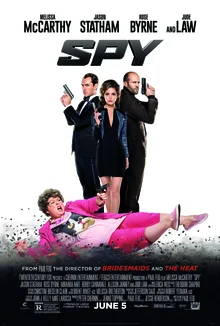
Spy (2015)

Mac Boyle December 10, 2018

Director: Paul Feig

Cast: Melissa McCarthy, Jason Statham, Rose Byrne, Jude Law

Have I Seen it Before: Several times, which I think alone should be testament to the film.

Did I Like It: I mean, just on spec, any film that is making people MAD ON THE INTERNET can’t be all bad, right?

That last sentiment may sound like faintly damning praise, but the virtues of Paul Feig’s paean to the 50-plus years of Bond films (and there is seldom room for references in the film beyond 007) go beyond the fact that Feig’s oeuvre stands as one of the premiere reasons for assholes to wail on the internet (the latest Star Wars movies and the fact that no one likes them being among the others). 

I’m struggling to even think of another satire or spoof of the spy genre that has worked as effectively. Casino Royale (1967) came at the height of the series popularity, but is a woeful mess more known for being extraordinarily useful as a waystation for particularly difficult rounds of The Six Degrees of Kevin Bacon than anything else. Spy Hard (1996) is completely forgettable beyond the rather apt inclusion of a Weird All theme song. And while the first Austin Powers movie might have some charms, what it became has ensured that it’s re-watch value is nil.

Now with Spy, fusing knowing homages to Roger Moore, Sean Connery, and even a bit of Pierce Brosnan in the character of Bradley Fine (Jude Law), but also the later days of Daniel Craig with Rick Ford (Jason Statham). From the cinematography to the music choices, all the way down to small elements of the production design, the viewer feels automatically at home in the Bondian trappings. It also never tries too hard to ingratiate itself in that milieu. It’s perfectly happy being a medium-concept comedy, better made than most in the genre.

Plus, Allison Janney is in it. There’s not a whole lot more else you need to know. 

Tags spy 2015, paul feig, melissa mccarthy, jason statham, rose byrne, jude law
Comment
220px-Dracula1958poster.jpg

Horror of Dracula (1958)

Mac Boyle December 10, 2018

Director: Terence Fisher

Cast: Peter Cushing, Christopher Lee, Michael Gough, Melissa Stribling

Have I Seen it Before: Never. It feels like a glaring omission in my cinematic diet.

Did I Like It: I felt like I was going to like it immensely because, Hammer, and because I tend to like anything more than I would normally, as long as it features Michael Gough.

As I begin to venture through a litany of Dracula films for my duties on Beyond The Cabin in the Woods, I had no idea that I was starting to get cynical, but I most certainly was. I could probably at this point write a pretty passsable Dracula film in my sleep. Harker (or whoever) goes through the Borgo Pass to Castle Dracula. There, he is greeted warmly by the count. From there, spooky happenings transpire. Mina is at the center of things. Rinse. Repeat.

And yet, I’m pleased to report that Horror of Dracula managed to surprise me. I did enjoy the trappings of the Hammer aesthetic, but when it became abundantly clear that Jonathan Harker (John Van Eyssen) has arrived in our story to kill-not assist Dracula—matters are sufficiently flipped upside down that the film never wavered in carrying my attention. While the film doesn’t feel the need to carry on this flipping of the script beyond the first half an hour, it didn’t matter. I was already hooked. Filmed with an almost timeless quality, I often had a hard time beleiving it was filmed in the late 1950s and—sight unseen—I would have placed it in the late 60s or maybe even the early 70s.

Filled with all of the barely-restrained British camp, flowing red paint*, and slyly apt cast you would expect from Hammer, this film—against all of my expectations—has leapfrogged its way into my favorite adaptation of the Stoker novel so far. If you haven’t seen it—as I shamefully hadn’t—take heed of my example and correct your error.


*Including in the first shot, where I almost dared to think it might be too much.

Tags horror of dracula (1958, dracula movies, Christopher Lee Dracula Movies, Terence Fisher, Peter Cushing, Christopher Lee, Michael Gough, Melissa Stribling
Comment
220px-Dracula_movie_poster_Style_F.jpg

Dracula (1931) (English-Language Version)

Mac Boyle December 10, 2018

Director: Tod Browning (the poor man’s James Whale, but we’ll get to that)

Cast: Bela Lugosi, Helen Chandler, David Manners*, Edward Van Sloane

Have I Seen it Before: Zzzzzzzzzzzzzzzzzz.

Did I Like It: I just said, “Zzzzzzzzzzzzzzzzzz.”

Look, I love the classic Universal Monster movies. Bride of Frankenstein (1935) is one of my all-time favorite movies. I could watch Abbott and Costello Meet Frankenstein (1948)** on a loop forever. I even kind of liked The Mummy (2017) because—for all of its faults—it was trying to recapture the original shared universe that these films initially inhabited.

However, not all of the Universal classics—even A-list ones made before they were relegated to the neglected b-side of the Laemmle production empire—are created equal. So, in that spirit, here’s a confession about this granddaddy of all vampire films.

It’s frightfully dull.


Like, it should be a controlled substance, because it’s chemically indistinct from an aggressive, possibly habit-forming sleeping pill. I’ve watched this movie probably a dozen times over the course of my life, and not once have I avoided feeling drowsy by the last half hour. It works like a charm, every time.

Even on this viewing, amped up with a little more caffeine than I perhaps should have consumed, by the time the lady in white starts offering some local children chocolate, I can feel my eyes starting to grow heavy. I persevered through sheer dint of will power, but it was a struggle.

Now “coma-inducing” doesn’t feel like high praise for a film, and on it’s face that is probably correct. On the cutting edge of talking pictures, cinema really hadn’t figured out how to do anything more advanced than a filmed performance of a stage play at this point. Indeed, the film is rather a slavish adaptation of the stage play by Hamilton Deane and John L Balderston, rather than the original novel by Bram Stoker. Every time I see a bat hanging by a string, or an awkwardly blocked scene, I can’t help but think of a stage production that could have used a little bit more time. Also, it should be mentioned, Tod Browning may not have been up to the task of adapting the film. The Spanish-language version of the film—produced using many of the same resources and at the same time as this film—is actually far more striking in its artistic flourishes. To imagine what James Whale could have done with this material. Oy.

But, also, it’s flaws can become kind of endearing. That it lulls me into such deep comfort, that my mind and body thinks its time to sleep may be a virtue. It’s probably not the virtue that the filmmakers would have hoped for, but to be the cinematic equivalent of a warm blanket is at least something.

And then, I can’t help but wonder if the film—and, by extension, Dracula himself—have managed to gain a thorough thrall on me… What have I done while I thought I was sleeping during this movie? Oh, Master… I’ve been loyal. Please don’t kill me!

Ahem.


* Has there ever been a more contract-player-leading-man name than David Manners? Honestly, if you had to guess which b-level milquetoast would eventually become the President of the United States, I wouldn’t have gone with Reagan; this guy would be my pick. Doesn’t matter if Manners is Canadian.

** The only other movie in which Lugosi played the role Count Dracula (and not some vaguely Dracula-ish figure). Now you know, and knowing is half the battle.

Tags dracula movies, dracula (1931), english-language version, tod browning, bela lugosi, helen chandler, david manners, edward van sloane
Comment
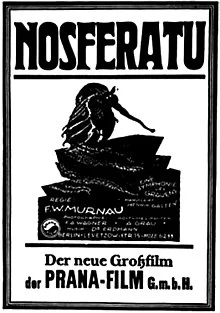
220px-Nosferatuposter.jpg

Nosferatu (1922)

Mac Boyle November 30, 2018

Director: F.W. Murnau

Cast: Max Shreck, and a couple of boatloads of hapless Germans

Have I Seen it Before: Yeah…? Or maybe I just saw Shadow of the Vampire (2000). Time is making memory quite fuzzy in some ways.

Did I Like It:  You know… It doesn’t hold up, and I wonder if that has anything to do with a concept I’ll get to here in just a moment.

Not all silent films are created equal, I suppose. I immensely enjoy the works of Chaplin. Fritz Lang certainly has some game that stands the test of time. D.W. Griffith has done plenty for the art of cinema, especially when you ignore what his films are actually about. And yet, Murnau’s Nosferatu feels disjointed.

But why is that? Maybe its the distinct German-ness of the film that causes things to unravel for this audience of one nearly 100 years later. The music that is attached to most prints you’ll find is all over the place; baroque in bright, idyllic scenes, and flute-heavy for what I imagine were supposed to be the scariest parts. It’s also long winded, when I didn’t think that was possible before the dark wizards at Vitaphone placed their magic on Al Jolson. Don’t even get me started on the day-for-night problems throughout the movie. Maybe Murnau hadn’t grasped how to depict night on film, but ever time one of the inter-titles makes a reference to the phantoms of twilight, the scene looks like it was shot shortly after lunch.

Beyond all of this, I have a theory. Ultimately, I wonder if films—like Nosferatu—that eventually slip into the public domain receive less love than films wherein a still extant copyright holder can profit from their preservation and restoration. For every remastered and polished Blu Ray we get of films like Chaplin’s Modern Times (1936), there are a litany of poorly scored, badly edited, and blotchy copies of films we all own. It’s a shame, too. I do wonder if there is  breathtaking film buried within all of that neglect. It’s reputation seems to think so, I just wish I could get that sense.

Tags nosferatu (1922), fw murnau, max schreck, dracula movies
1 Comment
220px-Rocky_poster.jpg

Rocky (1976)

Mac Boyle November 28, 2018

Director: John G. Avildsen

Cast: Sylvester Stallone, Talia Shire, Burt Young, Burgess Meredith, and lest we forget Carl Weathers

Have I Seen it Before: Probably not as many times as I’ve seen Rocky III (1982). I’m not sure what that says about me.

Did I Like It: Hey, yo… I’m not—like—mentally irregular or nothin’.

I’m going to put a thought out there, and if somebody has a different take on this, I’d love to hear it. But if you haven’t already seen Rocky, then at this point, you’re probably not that interested in it. If you have, you probably already have opinions on not only it, but the entire cottage industry that stemmed from this little seed of a movie. With that, we’ll proceed.

It’s difficult to write about a film like this critically. It’s beloved, and with good reason. It is filled with heart, most of it coming from a single source—Stallone, writing but not quite directing—long before he developed the ego that caused some of his later work to drift into the increasingly absurd and occasionally obnoxious. The original film in the Balboa saga is so steeped in the aesthetic of bleak 70s cinema, but may be one of the most rousing film of all time. Most would say the feel-good streak in American cinema began with Star Wars (1977), but I think it started here and only grew as things progressed into the 80s.

It’s an odd movie to consider in context, though. It spawned (so far) seven sequels. That’s mind boggling if you isolate to yourself to the proceedings of this film. With it throwing its weight around during the ’77 Academy Award, extending its underdog bona fides via Stallone sudden propulsion to stardom, I can’t help but think of it in similar terms to Good Will Hunting (1997). Could you imagine seven sequels to that movie? Actually Good Will Hunting III: The Great Beyond (2005), wherein Matt Damon rips open the space-time continuum with his groundbreaking work at CERN  That would also make Affleck the modern Stallone in my book, which… You know, that actually tracks. 

Tags rocky (1976), rocky series, john g avildsen, sylvester stallone, talia shire, burt young, burgess meredith, carl weathers
Comment
Ghostbusters_2016_film_poster.png

Ghostbusters (2016)

Mac Boyle November 25, 2018

Director: Paul Feig

Cast: Melissa McCarthy, Kristen Wiig, Kate McKinnon, Leslie Jones

Have I Seen it Before: Yes, indeed. More on that in a minute…

Did I Like It: It’s a Ghostbusters movie. Just go with it, guys.

In lieu of my normal write-up, I’m re-printing the blog I posted shortly after originally seeing the film in the theaters. I can’t say any of my original assessment has changed since that initial screening, except for in one element. Home video presentations of the film allow elements of the frame—especially in big effects shots—to leave the frame, seemingly in an attempt to extend whatever 3D work was done in post. I’m not sure if other films have attempted this, but it’s objectively lame. Let a film’s frame be the film’s frame. We’re just now pulling out of the dark ages of pan-and scan, and now we have to deal with this. Ugh. The movie itself is still enjoyable, though…

“Let’s Talk About Ghostbusters, shall we?”

WARNING: Some spoilers ahead.

All this week I went to various older movie theaters, catching matinees and jotting down my thoughts as I went. I’ve got a solid five weeks worth of blog entries out of my little travelogue, and I meant to put the first part of the series out this week…

But my movie theater pieces will start next week. I really want to talk about the last movie I saw this week.

Ghostbusters (2016) is fantastic. It is easily the best movie of the summer (and I spent the last week seeing pretty much everything), and it is without a doubt far superior to the depression shit show a direct-sequel Ghostbusters III would have been had it come to pass.

It’s bright, colorful, and occasionally startling*. The special effects are on point. It’s filled with awesome variations on the original gadgets, and several cool additions to the arsenal. It’s also a completely workable adventure story about four unlikely heroes saving the City of New York from imminent disaster.

In short, it is everything that a Ghostbusters movie needs to be.

Which also means that it was undeniably and consistently funny. Deal with it.

Now, I’m not going to say that the only possible reason you could have to dislike such a film is that you are so blinded by your misogyny you can’t see two feet in front of your face. You’re just going to have to deal with how much you hate women on your own time. 

Okay, some of you may be so attached to your childhood memories of the original that you worry this film will somehow break down the purity of those memories. Let me reassure you. Somewhere around the time that I heard the familiar whine of a proton pack booting up, I felt like a kid again and that feeling didn’t let up until the final post-credits scene**. The movie won’t ruin your childhood; if you’re lucky, it’ll bring you back to it. 

There may be a few quibbles with the movie, but they are so minor as to not warrant reference here. Go see Ghostbusters. Go see it twice.

That all being said, Hollywood: Please don’t remake Back to the Future. I don’t think my mortal human heart could take it.


*Anybody who insists that the original Ghostbusters is actually scary is lying, or was a child when they first saw it and has refused to develop beyond that point in the ensuing thirty years.


**Speaking of that post-tag scene: While I really hope the mentioning of Zuul isn’t meant to telegraph the jumping off point for their next adventure, an amusing exchange happened after the scene that works as a perfect microcosm of the bullshit controversy this movie has attracted just for existing.

Just as the scene ended, one girl, no more than seven years old screamed out with geekish delight, “THAT’S THE VILLAIN FROM THE FIRST MOVIE!”

Immediately, some meathead douchebag right around my age turned his nose up and said, “Uhh… Actually, Zuul was the villain in the second movie.”

This is the problem with guys like this. They’re not only assholes; they’re wrong. For a flash, I thought about defending the child, but then I realized: both she and the movie didn’t need me to defend it. Just go see it.
Tags ghostbusters (2016), ghostbusters series, remakes, paul feig, melissa mccarthy, kristen wiig, kate mckinnon, leslie jones
Comment
215px-The_Cabin_in_the_Woods_(2012)_theatrical_poster.jpg

The Cabin in the Woods (2012)

Mac Boyle November 25, 2018

Director: Drew Goddard

Cast: Kristen Connolly, Chris Hemsworth, Anna Hutchison, Fran Kranz

Have I Seen it Before: Sure.

Did I Like It: What’s not to like?

I know this assessment could potentially get me in trouble with some circles, but here it goes: Drew Goddard’s Cabin in the Woods is not a horror movie. Now with revered films like Get Out (2017), Silence of the Lambs (1991), and Psycho (1960), the “not horror” pronouncement is meant to de-ghettoize the film and give more high-brow audiences permission to like the movie. Here, it’s just true. Cabin… is a high-concept comedy draping itself with horror trappings. 

Unlike other potential candidates for “comedy in horror’s clothing (Scream (1996), Shaun of the Dead (2004), this film drops all pretense at being a true horror film by the time its final act kicks into high gear. In fact, by the film’s climax, it is so jam-packed with references to other films and stories, that it is impossible to be frightened or startled or left uneasy by the film. We’re too much in on the joke by that point.

That is not to level an undue level of criticism against the film, either. The joke is sublimely crafted, but anyone who still insists that it is a horror film at that point is attaching themselves to the trappings of the other section of the films past the point where the film has any interest in it.

And let’s get serious. Six years later, there have not been any grotesquely lame sequels? Or, for that matter, any sequels of any kind? That’s not horror. Prove me wrong.

Tags cabin in the woods, drew goddard, joss whedon, kristen connolly, chris hemsworth, anna hutchison, fran kranz
Comment
220px-Blade_Runner_poster.jpg

Blade Runner (1982)

Mac Boyle November 24, 2018

Director: Ridley Scott

Cast: Harrison Ford, Rutger Hauer, Sean Young, Edward James Olmos

Have I Seen it Before: Yeah…

Did I Like It: …I was really hoping you weren’t going to ask me that.

Ridley Scott’s Blade Runner is just one of those movies… People love it, and they’re not wrong. To have the special effects for any movie still work past six months the initial release of the film in question is something of a small miracle*. The cast is pretty great, and this is prime pre-sleepwalking Harrison Ford. I can see the fusion between postmodern sci-fi and film noir is very particularly designed.

And yet, it’s never all come together in my eyes. It might be that it’s too slow for me—or for that matter, modern audiences—but I’ve enjoyed slower films before. It could also be that the film may still come from that heralded era where films were truly meant to be enjoyed on the big screen, and the home video market was a faded afterthought. Ultimately, though, I think that—even though the special effects are obviously well-crafted—the film’s aesthetic can’t quite reach for any degree of timelessness, and every frame and every sound within the movie screams “THIS MOVIE WAS MADE IN THE 1980s.” Even Ridley Scott’s other great science fiction film of the era—Alien (1979)— can more often than not avoid any sort of fashionable quality and maybe look for a few seconds as if it might have been made any year.

Maybe things will change on this new screening of the film…

And—upon further review—I’m just not that into it, and beyond the reasons I noted above, I’m having a hard time quantifying my apathy. Maybe it’s the music? Maybe it’s the pacing. Maybe all of those elements fuse together and introduce in me some pervasive feeling of unease. I don’t necessarily dislike a movie that wants me to feel ill-at-ease, but I would like to be able to point to something particular that’s making me feel that way. This film just doesn’t do it.

*What’s more, I just can’t buy George Lucas’ argument that he couldn’t have made the prequels until CGI technology reached the “Jurassic Park” phase. All of his Coruscant scenes have been pretty much worked out on Scott’s canvas.

Tags blade runner, ridley scott, harrison ford, rutger hauer, edward james olmos, sean young
Comment
SmartSelect_20181123-164409_Gallery.jpg

The Hunger Games: Mockingjay: Parts 1 (2014) and 2 (2015)

Mac Boyle November 24, 2018

…Too Many Colons: The Rise of the Colon Army

Director: Francis Lawrence

Cast: Jennifer Lawrence, Woody Harrelson, Donald Sutherland, Julianne Moore, and a disturbing drought of Stanley Tucci

Have I Seen it Before: No. Honestly, I’m not sure why, after I genuinely liked The Hunger Games: Catching Fire (2013), but in the current flood of media, it just never came up on the radar.

Did I Like It: I mean… I think I still have some problems with all of the proceedings, but sure.

I’m going to review both of the final movies of this series in one entry, because—and this isn’t exactly a hot take—that’s the way this story should have been presented. 

Since filmmakers split up Harry Potter and the Deathly Hallows (2010 and 2011), we’ve been having to endure the unnecessary elongation of an epic’s final act. Scenes go on forever, fan service is turned up to eleven, and an artificial cliffhanger is injected into a story that never needed or wanted one. 

Now, if I’m being completely honest, patient zero for this phenomenon was actually Back to the Future Part II (1989) and Part III (1990), although those are two films that—when someone derides them—I get irrationally irritated. The splitting—or culling, to borrow a term from this franchise—makes business sense, I suppose. If you have a hot property, why not get two big opening weekends out of your last hurrah, when you can get two for the same price? Good for the shareholders; have yet to hear an argument for why it might be good for the story.

Moving on from the artificial elongation, what we have here is your Typical Part III™, feeding off the momentum of the predecessor, and marching toward and end you can see coming a mile away. It couldn’t possibly be a spoiler to tell you that the Capitol as run by Coriolanus Snow (Donald Sutherland) is brought to its knees and Katniss Everdeen, the titular Mockingjay (Jennifer Lawrence) is at the center of the social upheaval. 

The film delivers on these intrinsic promises, and then succeeds and fails where it tries to play with these expectations. It soars when Katniss sees the sliding standards between Snow and his self-appointed successor Alma Coin (Julianne Moore) and diverts her arrow. It’s less great when she and Haymitch (Woody Harrelson) are all of a sudden on board with a new batch of Hunger Games that would instell cull rich Capitol kids. And it’s even more of a thin attempt to make us feel something out of the blue when it is revealed that Katniss and Peeta (Josh Hutcherson) retreat back to a life in the Victor’s Village, raising their kids, and Katniss appearing  as if she’s become completely numb to the world she helped save.

It could be worse: the werewolf kid could have decided he was madly in love with his jilted lover’s infant daughter. That’s a ridiculous plot line. I’m not sure where I heard that one…

Tags The Hunger Games: Mockingjay: Parts 1 (2014) and 2 (2015), The Hunger Games Series, Francis Lawrence, Jennifer Lawrence, Josh Hutcherson, Woody Harrelson, Donald Sutherland
Comment
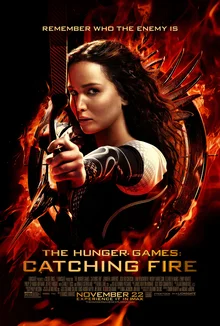
Catching-Fire_poster.jpg

The Hunger Games: Catching Fire (2013)

Mac Boyle November 18, 2018

Director: Francis Lawrence

Cast: Jennifer Lawrence, Josh Hutcherson, and all your cartoon pals.

Have I Seen it Before: Yes, again, strangely I’m not sure under what circumstances.

Did I Like It: Yes, and that much was pretty surprising. Honestly, halfway through the series, I’m not sure why I’m so skeptical about the proceedings on spec.

Not much to say about the film itself, aside from the fact that it suitably raises the stakes (if not the believability, but more on that later) on the character’s plight in slightly predictable ways, and ends with a cliffhanger that propels the action forward in ways I actually found surprising on first blush. General critical consensus would indicate that the film is more self-assured than the first, but I don’t know if I buy this as a particular evolution among the filmmakers, or more of a general byproduct of sequels freeing themselves from large swaths of exposition.

But I have a few more thoughts on my Big Questions(™) regarding the mythology behind these stories.

So, if the world of Panem our future, or some fantasy land about which we’re not supposed to think of the origins? This has led me to some moderate Wikipedia surfing to find that the general consensus is that Panem is, indeed, future America, with the heroic District 12 located in the coal country of West and Regular Virginia, and the Capitol apparently being built over what was once Salt Lake City, Utah. 

This only serves to aggravate my skepticism about the proceedings. Why has anyone thought the actual Hunger Games—except for maybe the exception of Effie Trinket (Elizabeth Banks) and Caesar Flickerman (Stanley Tucci)—were a good idea? I mean, fear, sure. That always helps the bad guys, but the rules were always going to break the whole damn thing down. Does anyone think ahead anymore? Also, and again a question renewed from my Hunger Games review: how does Peeta (Josh Hutcherson) accomplish living this long? He’s a baker and constantly in danger. I’m getting the sinking feeling that there is a possibility the story might illuminate my first question, but have little hope that there’s ever going to be an explanation for Peeta’s longevity.

Tags The Hunger Games: Catching Fire (2013), The Hunger Games Series, Francis Lawrence, Jennifer Lawrence, Josh Hutcherson, Liam Hemsworth, Woody Harrelson
Comment
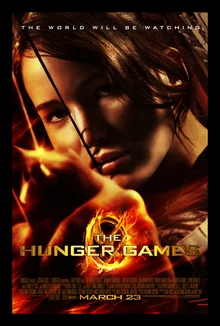
HungerGamesPoster.jpg

The Hunger Games (2012)

Mac Boyle November 17, 2018

Director: Gary Ross

Cast: Jennifer Lawrence, A Hemsworth, Woody Boyd, and a well-paid Stanley Tucci and Elizabeth Banks

Have I Seen it Before: Yes? Did I see it in the theater? I can’t honestly remember.

Did I Like It: I guess, but… Well, we’ll get to that later.

The cinematic adaptation of Suzanne Collins’ first novel in The Hunger Games series is stylishly directed, and the cast is better than one might expect for the material and genre, benefiting from casting a still-unknown Jennifer Lawrence before she became a bona fide movie star, and other performers like Woody Harrelson, Elizabeth Banks, and even Stanley Tucci who might otherwise seem like they were slumming it a bit, appearing in such a YA yarn, but are actually amiable screen presences and professional performers, that you never get the sense that this was anything other than the roles they were meant to play.

And yet…

Here’s my problem, and it actually stems from the books, I suppose, so it’s entirely possible that the filmmakers should get a pass. It is a matter of believability. 

I mean, I think I get that the story is supposed to be a parable tying in elements of the gladiators of ancient Rome, the antebellum south, and thorough reading of the Cliff’s Notes of 1984, but like nobody is happy about the Hunger Games taking place. It puts the powers of the Capitol in doubt, and it’s not like anyone who lives in a District lower than 2 is thrilled with the idea of having to go and fight these things. Why did they agree to all of this? Is there some kind of better explanation for this as the films/novels go on? Maybe I’m in for the whole ride now to find out. Maybe, in that respect, it is less of a flaw than a virtue. I imagine I’ll have thoughts on this issue as things progress.

Also—with a similar level of dubiousness—how did Peeta (Josh Hutcherson) live that long. He should have been out in the initial rush for supplies.

Tags The Hunger Games (2012), The Hunger Games Series, Gary Ross, Jennifer Lawrence, Woody Harrelson, Stanley Tucci, Elizabeth Banks
Comment
220px-Beetlejuice_(1988_film_poster).png

Beetlejuice (1988)

Mac Boyle November 13, 2018

Director: Tim Burton

Cast: Michael (f’ing) Keaton, Winona Ryder, Geena Davis, Alec Baldwin, Jeffery Jones, Glenn Shadix, Robert Goulet, Dick Cavett… Christ, the cast on this picture is bonkers.

Have I Seen it Before: It is a core member of the “VHS tapes I wore down to the point of evaporation during childhood” association. 

Did I Like It: It’s a weird movie, but that’s more of an objective statement, isn’t it?

Beetlejuice—Tim Burton’s second feature—is about death. Again, that seems like a pretty objective statement. Perhaps it is about death in the same way that Young Frankenstein (1974) is about neurosurgery. And yet, over dozens of viewings in the late 80s and early 90s, that never seemed to be what the film was about. If you were to ask me in my first decade of life what the story of the film actually is, and I would probably tell you that some people wander around a movie for the better part of an hour before Michael Keaton shows up and the real movie begins. This may be because a) I was more familiar with the ensuing cartoon series based on the movie, that transformed Beetlejuice (Keaton) and Lydia Deetz (Winona Ryder) from the lecherous demon in search of a suicidal child bride into a pair of wacky pals and b) I wasn’t quite ready to comprehend the idea of death at the age of five.

And yet, I can kind of get where I missed the idea way back when. The whole movie attaches itself to a pointedly nebulous aesthetic. The football team is out of left field, especially when they’re in the last shot of the picture. Why do dead people get sent to Saturn? Why is it a huge public health issue in the deceased community? Why has no one noticed Sand Worms traveling the surface of Saturn? Why did the sandworm appear out of nowhere at the Maitland/Deetz residence? That one’s a bit of deus ex machina, right? Don’t get me started on the fact that this may be the only film in existence which is regularly uncertain about the spelling of its title.

And so the film exists in a state of contradiction, often bewildering, but just as frequently charming. It might be the key case study in my Michael Keaton Theory. (Which postulates that a film is automatically ten percent better than it would have been otherwise. It works wonders in cases like Robocop (2014), and brings the rottentomatoes score of a movie like Multiplicty (1996) into the mid-eighties).

Another thought that only just now occurred to me on this screening: So odd that Burton directed this as sort of a warm up to Batman (1989) and didn’t cast Baldwin as the Dark Knight the next year. I mean, I’m grateful. Baldwin at this point in his career is too-on-the-nose for the “dance of the freaks” Burton was intent to bring to the screen, but the fact that the studio didn’t insist—or, in the alternative, Burton was able to bypass their insistence—is sort of freaky.

Tags beetlejuice, 1980s, 1988, Tim Burton, michael keaton, alec baldwin, winona ryder, geena davis, the michael keaton theory
Comment
220px-Halloween_(2018)_poster.jpg

Halloween (2018)

Mac Boyle October 20, 2018

Director: David Gordon Green

Cast: Jamie Lee Motherfuckin’ Curtis, Judy Greer, Andi Matichak, and Will Patton (my new best friend)

Have I Seen it Before: How could I?

Did I Like It: I loved it, but stop asking me questions about my objectivity.

On spec, the new (and eleventh) film in the Halloween franchise has the potential to be the greatest fan film ever made. Bring Jamie Lee Curtis back. Check. Bring back Nick Castle to play The Shape*. Check. John Carpenter is willing to do the score. Big check. 

Thankfully, the film is even more than just the sum of it’s parts. The Carpenter score is transcendent, not content to merely rehash the themes he wrote 40 years ago, Carpenter and the members of his band add much to the proceedings, and in the process make a soundtrack just as memorable as the original.

With nine movies of obnoxious baggage—sorry, that should read “mythology”—serving only to weigh things down, this new story pointedly ignores (and more often, repudiates) every previous sequel. The Cult of Thorn is gone. Laurie and Michael are not related. Dangertainment is nowhere to be found. Tyler Mane is nowhere to be found. It allows the movie, surprisingly, to not be a Carpenter clone (which, in their own feeble way, every other movie in the franchise has tried to be), but actually becomes a movie that someone not plagued by a completionist’s compulsion might want to watch. There is plenty of fan service to be sure, but I was pleasantly surprised that there was an enjoyable movie in there.

The film also manages to shake itself free from the Weinstein’s grip in both spirit and practice. This film is a direct result of Dimension Films losing the rights to the franchise (and that had all worked out awesome), but where those mid-90s to late-00s films went willingly into the trap of a film that hates women, this new movie is boldly, and with a goodly degree of wit, opting for the other direction.

It’s recently come to my attention that some are upset that the movie ignores the continuity of the other films. Ugh. Let me explain something to those of you out there who might be upset by this. These films have been notorious for throwing away continuity. So by being upset that the other movies aren’t being deferred to, you’re actually ignoring what those other films have been about. Deal with it. This movie is great. Not, Carpenter’s original great (few films are) but definitely one of the better times I have had in the theater with a horror film in recent memory. I think there is a possible context where a reasonable person may not like the film, but dismissing it because it is trying to blaze a new trail (and still celebrate the past) is not that context.


* And, according to some sources, Tony Moran for scenes with Michael Myers unmasked, but at press time the internet has not provided a final answer as to whether he is actually in the film. 

Tags halloween series, Halloween (2018), Horror, David Gordon Green, jamie lee curtis, Will Patton, Judy Greer, Toby Huss
Comment
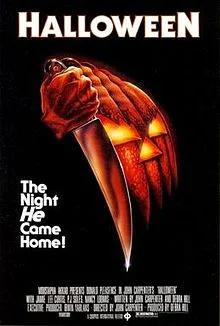
Halloween_(1978)_theatrical_poster.jpg

John Carpenter's Halloween (1978)

Mac Boyle October 11, 2018

In my nearly fevered anticipation for the forthcoming rebootquel Halloween (2018), I thought I might re-watch all of the original series(es). My gushing in this entry leads me to think that I may not have the strength to suffer through Rob Zombie again, to say nothing of Paul Rudd. We’ll see.

Director: John Carpenter’s John Carpenter

Cast: Donald Pleasance, Jamie Lee Curtis, Nancy Loomis, and (ahem.) P.J. Soles.

Have I Seen it Before: I’ve at least seen it as many times as Anchor Bay has released it on either DVD or Blu Ray, so that’s got to put it somewhere in the 100s.

Did I Like It: Oh, how do I count the ways?

It will be supremely difficult to write thoughtful reviews about some of my greatest-of-all-time movies. John Carpenter’s Halloween is one of them. The acting is sublimely modulated cheese, especially with the world’s supreme scene chewer Donald “I SHOT HIM SIX TIMES” Pleasance. The cinematography is perfect. Each frame harnesses a perfect sublime banality, that when the horror really kicks into high gear, the tension is there, but there’s also a palpable sense of tragedy at the same time. The music is so beyond perfect that it a) completely removes any pretext at criticism I might hope to reach for, b) makes the film without this music unimaginable, and c) elevates the sequels and (ugh) remakes into (on average) watchability.

And all of it was made with next to nothing. It is an unbelievable achievement that no amount of sequels, copy-cats or (again, ugh) remakes could hope to replicate, nor ruin.

Now, the long arm of legacy is what this film consistently has to fight against, but if you can put yourself in the mindset of someone living in a universe where the other films don’t exist (a feat which I think is going to become significantly easier in a few weeks), the film is even more unnerving. Here Michael Myers (Will Sandin as a child, Tony Moran unmasked as the adult Myers, and Nick Castle as the form commonly referred to as “The Shape”) isn’t the Freshman Abnormal Psych paper of the latest Rob Zombie films, the scion of the Cult of Thorn, Laurie’s brother, Jamie’s uncle, or budding Dangertainment star*. He was purely a kid—and he could have been any kid you knew growing up—who one day picked up a really sharp knife and never looked back. He slithers through the vast majority of the movie simply watching his prey, and when the moment comes, he zeroes in to take what he wants, simply because he wants it, and should therefore be entitled. He is every man, and if we’ve learned anything recently, he cannot be stopped.

That’s the movie I love, and if you don’t… Well, then fuck you, Rob Zombie.

That may be harsh, but it’s not like I don’t totally mean it. Totally.


*God, when you really unpack Halloween: Resurrection (2002), the more of a headache it becomes.

Tags halloween (1978), halloween series, john carpenter, jamie lee curtis, donald pleasance, nancy loomis, pj soles, 1970s, 1978
Comment
220px-Carrieposter.jpg

Carrie (1976)

Mac Boyle October 3, 2018

Director: Brian De Palma

Cast: Sissy Spacek, Amy Irving, Nancy Allen, Pig’s Blood Travolta*

Have I Seen it Before: I’m almost sure that I have, but I can’t point to when I might have done so. I definitely remember reading the book, if that helps.

Did I Like It: Well, clearly the memorability of the book over the movie should tell us something.

I like Brian De Palma. I really do. I think The Untouchables (1987) is about as great a movie as is ever to exist. Once one has worked out just what the hell is happening in Mission: Impossible (1996), it’s a pretty enjoyable spy thriller. 

And I want to like Carrie. I really do. I get the feeling I wanted to like Carrie just as much as De Palma himself wanted to like the film. Unfortunately, he only seems to be interested in certain parts of the film. 

The climax is the kind of confluence of conflicting POVs that have become De Palma’s bread and butter. While through cultural osmosis, we’ve all seen the moment when Carrie (Spacek) is brought to her semi-final humiliation, but it’s the Rube Goldberg machinations that lead up to that moment and eventually tear everything apart that makes the sequence worth remembering.

Everything else tends to play out with the subtlety and wit of an after-school special. The score—by Pino Donaggio—is all over the place, when it isn’t shamelessly and artlessly aping Bernard Hermann’s score for Psycho (1960). 

And of course, De Palma does seem to be awfully interested in footage of naked women, and there is plenty of it. I’m not a prude, but the tableaus De Palma puts together makes me think that he may not have been the one to properly understand and tell this story. To be fair, King may not have been either, but I digress. I have not seen the 2013 remake, the fact that a woman directed the film does tend to recommend it on at least one level.


*Little known fact, the blood dumped on Carrie during the film’s infamous climax was played by John Travolta’s cousin.

Tags Carrie (1976), Brian De Palma, Sissy Spacek, Amy Irving, Piper Laurie, John Travolta, 1970s, 1976
Comment
220px-Spider-Man_3,_International_Poster.jpg

Spider-Man 3 (2007)

Mac Boyle September 30, 2018

Director: Sam Raimi

Cast: Tobey Maguire, Kirsten Dunst, James Franco, Thomas Haden Church, I think Topher Grace wandered into the movie, and some Black Goo as Himself

Have I Seen it Before: Sure, but certainly fewer times than the rest of the Raimi series.

Did I Like It: Almost uniformly no.

It’s 1995 and I’m seeing Batman Forever for the first time. While I couldn’t quite put my finger on exactly why the film wasn’t working for me (I was, after all, only 10 years old, although with my full-beard you’d never be able to tell), but I knew part of it was that the film was poorer without Danny Elfman’s score, and Elliot Goldenthal’s efforts weren’t measuring up. Why couldn’t the melody of the original theme still be used?

While that is still true, with the jarring addition of Christopher Young’s scores on top of Elfman’s, I am now of the conclusion that keeping the original themes but adding new themes in a hybrid score is kind of a bummer. The music in this movie never quite works. It is, however, not the only thing that doesn’t work.

The movie is so packed with plot (and, for that matter, villains), that the story falls apart under the weight of its own coincidence. The symbiote just happens to crash to Earth not from Peter Parker (Tobey Maguire) and Mary-Jane Watson (Kirsten Dunst) sharing a quiet romantic moment. Flint Marko (Thomas Hayden Church) just happens to wander into a weird sand-based particle accelerator (the movie’s not terribly interested in having me follow what this thing is) at the same time they are testing it. And Eddie Brock (Topher Grace) just happens to wander into a church to beg God to kill Parker at the very same instance Spider-Man is trying to rid himself of the symbiote. Stories have a tendency to trade in efficient happenstance, but this beggars all belief, even in a movie about black alien goo.

Which brings us to Venom. Poor, sad, maligned Venom. Actually, I don’t suppose he is that maligned. He’s too beloved by the Spider-man fan base for his own good. Hence, the studios insistence that Raimi include the character in this film, and it is clearer than most things in life that the director is not into this particular film. In his defense, I too am about as interested in the alien symbiotes (in fact, I’m getting a little tired of typing them in this piece) as Raimi. It also feels like Raimi is by this point sort of done with Spider-man as a whole, and would much rather make a musical romantic comedy. I have no problem with that, and wouldn’t mind watching Raimi’s unfettered spin on such a film, but I kind of wish he had actually found a way to make that movie, instead of offering this half-baked mishmash of conflicting studio memos.

The special effects are improved from the previous entries, however. What's more, they still largely hold up today, much more so than for Raimi’s original outing, Spider-Man (2002). The Sandman/Marko concoction is a pretty impressive creation, keeping his pathos even in amid a torrent of CGI and motion capture, easily much better than the weird kabuki show that surrounded the first film's Green Goblin (Willem Dafoe). Even the sort of awkward creation of Venom may not work in its own right, but still manage to be of a piece with the rest of the trilogy’s visual vocabulary. Unfortunately, all of this refinement in technology isn’t adding up to much.

And yet, still, I may miss Maguire and company in their roles. I would have liked to see a Spider-Man 4, even if it wasn’t to be directed by Raimi, that would have followed the doomed friendship trio of Maguire, Dunst, and maybe Franco, if Harry had lived. I buy them as long-time friends about to be torn apart by lives going in different directions, even here in a movie that doesn’t do them many favors and may tarnish the memory of their better, prior outings. I might miss them a little less in the years since Tom Holland has become a sort of Iron Robin to Robert Downey Jr.’s Iron Man, but still, even with all of this film’s problems, Tobey Maguire may still be my Spider-man, if for no other reason than he when he was not the smoothest high school student, or the in-over-his-head college kid (still not terribly smooth), or the man who realizes life is only going to get harder as time goes on, because when he was all of those things, I was right there with him. A fourth movie might have continued that journey, and led to this entry being an outlying downbeat, instead of a disappointing finale.

Tags Spider-Man 3 (2007), Spider-Man, Sam Raimi, Tobey Maguire, Kirsten Dunst, James Franco, Thomas Haden Church, Topher Grace, 2000s, 2007
Comment
220px-Spider-Man_2_Poster.jpg

Spider-Man 2 (2004)

Mac Boyle September 30, 2018

Director: Sam Raimi

Cast: Tobey Maguire, James Franco, Kirsten Dunst, Alfred Molina

Have I Seen it Before: I’m a man in my 30s. Let’s just assume that I have dutifully seen every film featuring Spider-Man and probably will for the rest of my life.

Did I Like It: Sometimes you just need to work the bugs out before you can really swing.

I’m wondering about my sort of down opinion on Sam Raimi’s first effort with the character, Spider-Man (2002). Is it truly that the first film’s special effects don’t work as well as we may have once thought? Is it true that the superhero origin story never quite translates to the most thrilling movie possible? Or is it the case that when I first saw the original film I was having a bad time in life, and that colors my reactions to this day.

All of them could be a little bit true, and all of those elements are different here in Raimi’s second outing. The special effects are more refined. Rarely do I think of Spider-Man (Tobey Maguire) as an animated character injected into some background plates, and Doc Ock (Alfred Molina) is a nearly-perfect blend of puppetry and performance for most of his shots. The story is more self-assured, even as its protagonist spends much of the film plagued by doubt. And, ultimately, I was in a much better head-space in the summer of 2004 than I was in the spring of 2002, but that should hardly matter for this type of analysis, and yet, it does occur to me.

Some would say this is the best superhero movie of all time, and certainly the best Spider-Man movie to date. I would put it in that same pantheon of best movies, along with Superman (1978), The Dark Knight (2008), or any of the number of the best MCU movies. And yet, I think I may have had an even better time during the recent Spider-Man: Homecoming (2017), although this could be attributed to the Michael Keaton factor™ that I am sure will become an ongoing theme in these reviews. 

The performances are all finely-tuned. Maguire, for all his reputation as a callow Hollywood party boy in real life, manages to bring Parker’s pure-nerdiness to life believably. Alfred Molina brings real humanity to the diminished mindset and tragedy of the film’s villain. Kirsten Dunst doesn’t get a whole lot to do other than be damsel-ish and frequently in distress, which is a shame that only time passing can really illuminate.

But it’s the little moments that work, too: The scene with May and Peter where he confesses (most of) his culpability in Uncle Ben’s (Cliff Robertson) death is quiet and unnerving. In the years that follow the release of these summer blockbusters, the special effects can age rather annoyingly, the pyrotechnics can fail to awe by the time of a second viewing, but a good quiet scene between two good actors will stick around with you, and it’s good that this film has them.

This comes pretty tantalizingly clear in the film’s choice of a final shot. In the original film, we have Spider-Man jumping around the city, off to another adventure. While this film has a certain reprise of that motif, the true last moment is of Mary-Jane, having just run away from her wedding and watching as her true love leaps into danger once more. The look is wistful, and aware. The happiness she felt just half a minute before is already starting to wilt. It’s one of the few times Dunst gets to really go for some acting, and it is the image that remains in my head all of these years later.

Tags Spider-Man 2 (2004), Sam Raimi, Tobey Maguire, Kirsten Dunst, James Franco, Alfred Molina, superhero, Spider-Man, 2000s, 2004
Comment
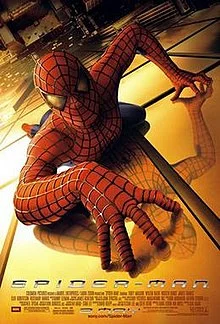
220px-Spider-Man2002Poster.jpg

Spider-Man (2002)

Mac Boyle September 23, 2018

Director: Sam Raimi

Cast: Tobey Maguire, WIllem Dafoe, Kirsten Dunst, James Franco, Dafoe’s Costume

Have I Seen it Before: 

Did I Like It: It’s an incredibly likable movie, no doubt about that. And yet, if it ages this poorly in only 16 years, I worry if the whole thing really holds up as well as I want it to.

Been playing a lot of the new Playstation 4 Spider-Man game. It may yet be one of the greatest open-world games ever produced, and it fills my mind in a way that makes me want to re-watch the web-slinging stories of my youth. That does not—in any sense—mean watching a movie with Andrew Garfield. No offense, but I watched The Social Network (2010). Get it? Web-slinging?

Ahem.

So I proceeded to watch the first foray of the Spider-Man roughly my own age, Tobey Maguire. It is such a well-meaning film, with its lovingly fraternal depiction of just-post 9/11 New York may never fail to reach for the heart of a viewer who was alive and sentient at the time of its initial release. Aside from a few annoyingly studio-locked scenes—and even just a few shots in otherwise fine scenes—the film is refreshingly a New York Movie™, with the city feeling fully a part of the movie, and not just Vancouver trying its damndest to be EveryCity, USA. 

The cast is near perfect. The direction from Sam Raimi (The Evil Dead (1982), Army of Darkness (1992), For Love of the Game (1999)*) is an artist using all of his tools at their peak. Honestly, I think he’s perfected something beyond a montage, where several pieces of disparate footage can play so quickly—and in some places directly on top of each other—that the effect will forever be Raimi-ian.

And yet, watching the movie now, I can really only be consumed with the nitpicks.

Did he dream an animated representation of his DNA re-writing? Was he missing his own DNA for a little bit there? What would that even do to a person?

How do the students of Peter’s high school not put together that the kid who accidentally webbed a cafeteria tray onto Flash Thompson (Joe Manganiello) and the web-slinging hero that soon introduces himself are the same guy?

These are the kind of things you think about when it has been sixteen years since you first see a movie, I guess. But gosh, you can’t dismiss some of the janky CGI this film is filled with, and the less said about the Green Goblin’s (Willem Dafoe)… armor…? the better.

* No, seriously. Look it up.

Tags Sam Raimi, Spider-Man (2002), Tobey Maguire, Willem Dafoe, James Franco, Kirsten Dunst, 2000s, 2002
Comment
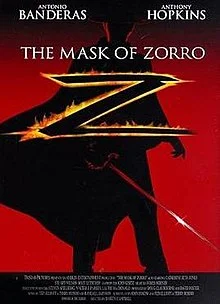
220px-Mask_of_zorro.jpg

The Mask of Zorro (1998)

Mac Boyle September 23, 2018

Director: Martin Campbell

Cast: Anthony Hopkins, Antonio Banderas, Catherine Zeta-Jones, the stuntman for Anthony Hopkins (who I think we can all agree deserves a lot more credit than he’s gotten so far)

Have I Seen it Before: Oh, sure.

Did I Like It: I like it a lot. Had it not been followed by one of the most indifferent sequels in history with The Legend of Zorro (2005), it might be remembered as a more seminal film today.

Anthony Hopkins might not be just a great actor, but also one of the more underrated movie stars in the history of cinema. Sure, he can play Hannibal Lecter and various near-Hannibals with aplomb, but the fact that such a pointedly English actor could convincingly the wit and swashbuckling bravura of Mexican California’s greatest hero. Antonio Banderas as his heir presumptive is pretty intuitive, but the star of Remains of the Day (1993)? On spec, I don’t see it, and yet, he delivers. He delivers so well that the movie lives and dies by his presence. Just see the aforementioned Legend to see how such a film without Hopkins can only generate a lifeless quality.

And yet, while he is the strongest link in the chain, there is one part of the conceit of Hopkins-as-Zorro that takes one out of the movie. At the time of filming in 1997, Hopkins was already 60. It’s pretty clear in the early goings—when Diego’s Zorro is repelling the Spanish oppressors— that he isn’t doing his own stunts.

It’s a minor quibble in movie that works by its own standards. The plot actually tracks for the most part. The bad guys are dastardly. The good guys play out their revenges in a gallant sort of way. The action is all of the firey explosion and clanging saber variety, with nary a pixel of computer generated imagery.  Which also puts it in that rare breed of films that ages in such a way that—without further context—you wouldn’t necessarily guess when it was made*. What more can really be expected of a movie?


* Unless of course you count the obligatory love ballad over a James Horner melody that places it firmly in the shadow of James Cameron’s Titanic (1997), but that is only over the end credits, and should hardly count against the film as a whole.

Tags the mask of zorro, martin campbell, anthony hopkins, antonio bandera, catherine zeta-jones, 1990s, 1998
Comment
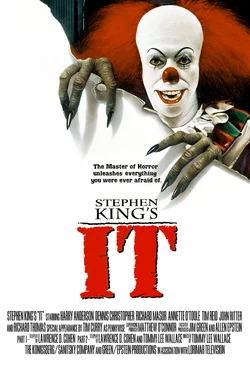
It_1990_Promotional_Poster.JPG

Stephen King's IT (1990)

Mac Boyle September 19, 2018

As long as Beyond The Cabin In The Woods is doing their Stephen King run, I’m thinking entries around this period of time will all have a certain theme. We will re-join our other program already in progress just as soon as we can.

Director: Tommy Lee Wallace

Cast: Tim Reid, Tim Curry, and some White People

Have I Seen it Before: How much time do you have?

Did I Like It: Well…

The TV Movie adaptation of Stephen King’s novel clocks in at 187 minutes (depending on what version of the story you watch) and, in the sober, clear-minded reality of 2018, maybe 6 minutes of unquestionably work. The unfathomable demon that most often appears as Pennywise The Dancing Clown (Tim Curry) only appears for about 20 minutes of the production, and while his performance is the one culturally resonant part of the proceedings, even his returns diminish to the point where the last time we see him as a ghostly apparition just before the Loser’s Club descends to face IT’s “true form,” I am less filled with a sense of dread, and more marveling at Curry’s performance, which is manically magnetic, even when he isn’t given much to do.

But those six minutes, though…

I’ll admit, when this film works best it is merely reaching back into disparate memories I have of catching moments of its original broadcast in 1990. The image of Pennywise instructing the now-adult Henry Bowers (Michael Cole) to “kill them all” particularly did me in. To this day, I’m convinced the evening sky of November 20, 1990 possessed a full moon, and forever ruined me as a human being, and continues to give me just a jot of an adrenaline spike whenever I see a clown, including Bill Skarsgård’s performance in the more recent 2017 adaptation. In truth, the almanac insists that the date in question was waxing crescent. To be frank, the truth only disturbs me more. Was I imagining it? Or was something else happening?

Anyway.

The rest of the performances are made up of slightly mis-cast but amiable presences, made all the more precious by the fact that many of them have since passed on. Harry Anderson doesn’t quite connect with me as the slightly cynical adult Richie Tosier. Honestly, at that point in his career, Bob Saget would have been great in the role, and probably destroyed the American Broadcasting Company, Lorimar Television, and all of Western Civilization in the process. John Ritter is nice to see also, but I can’t help but look at him and feel as if he’s trying to some sort of farce in the piece to play. Jonathan Brandis is just so damned earnest, that I could practically hear the producers of Seaquest DSV typing the phrase “Wesley Crusher of the Ocean” into their Wordstars. 

A few years ago I couldn’t have imagined that I would prefer a new adaptation of King’s story, but here we are. The “original” IT is overlong, but a few chunks of gold are in there for the discerning viewer.

Tags It (1990), Tommy Lee Wallace, 1990, 1990s, Harry Anderson, John Ritter, Tim Curry, Richard Thomas
Comment
  • A Blog About Watching Movies (AKA a Blog in Search of a Better Title)
  • Older
  • Newer

Powered by Squarespace

Party Now, Apocalypse Later Industries

Where creativity went when it said it was going out for cigarettes.

Where creativity went when it said it was going out for cigarettes.