Party Now, Apocalypse Later Industries

Where creativity went when it said it was going out for cigarettes.
  • Home
  • BOOKS
    • THE ONCE AND FUTURE ORSON WELLES
    • IF ANY OF THESE STORIES GOES OVER 1000 WORDS...
    • ORSON WELLES OF MARS
    • THE DEVIL LIVES IN BEVERLY HILLS
    • A LOSS FOR NORMALCY
    • RIGHT - A NOVEL OF POLITICS
  • PODCASTS
    • Beyond the Cabin in the Woods
    • THE HOLODECK IS BROKEN
    • THE FOURTH WALL
    • As The Myth Turns
    • FRIENDIBALS! - TWO FRIENDS TALKING ABOUT HANNIBAL LECTER
    • DISORGANIZED! A Criminal Minds Podcast
  • MOVIE REVIEWS
  • BLOGS AND MORE
    • Bloggy B Bloggington III, DDS
    • THE HOLODECK IS BROKEN BLOG
    • REALLY GOOD MAN!
  • Home
    • THE ONCE AND FUTURE ORSON WELLES
    • IF ANY OF THESE STORIES GOES OVER 1000 WORDS...
    • ORSON WELLES OF MARS
    • THE DEVIL LIVES IN BEVERLY HILLS
    • A LOSS FOR NORMALCY
    • RIGHT - A NOVEL OF POLITICS
    • Beyond the Cabin in the Woods
    • THE HOLODECK IS BROKEN
    • THE FOURTH WALL
    • As The Myth Turns
    • FRIENDIBALS! - TWO FRIENDS TALKING ABOUT HANNIBAL LECTER
    • DISORGANIZED! A Criminal Minds Podcast
  • MOVIE REVIEWS
    • Bloggy B Bloggington III, DDS
    • THE HOLODECK IS BROKEN BLOG
    • REALLY GOOD MAN!

A Blog About Watching Movies (AKA a Blog in Search of a Better Title)

Casino Royale (1967)

Mac Boyle January 2, 2025

Director: John Huston, Ken Hughes, Val Guest, Robert Parrish, Joe McGrath


Cast: Peter Sellers, Ursula Andress, David Niven, Woody Allen, Orson Welles*


Have I Seen It Before: Yes, as one of those rogue Bond-films (I’m using each of those three words rather generously) it wasn’t one of those that I was exposed to on regular TBS Bond-a-thons, but somewhere along the way curiosity alone brought me to it. I remember my mother had a fondness for it, but I’m prepared to write that off mostly to Burt Bacharach. I thought at the time that there were a few laughs, but the whole thing dragged on far too long, which wasn’t especially damning. As a child I thought that about plenty of comedies of the era.


It's entirely possible I didn’t stick around to the end. In fact, that ending being what it is, I’m pretty sure I didn’t. Years later I came back to it. Now I know.


Did I Like It: Let’s start with the positive. A farce revolving around the idea that the world so desperately needs a James Bond that they’ll hand the name and number out to just about anybody isn’t a bad concept. Twenty years ago, if you had asked me what film desperately needed to be remade, I’d put this at the top of the list. Now that we live in a world where Casino Royale (2006) exists, one might think the case would be closed. But a conceptual remake is aching to be done, too. Just leave the Fleming canon right where it is, thank you.


What else… What else? Oh. The DVD includes a 1954 episode of the anthology series Climax!** which was the first attempt to adapt the first Fleming novel. It’s not especially good, either, but is ultimately fascinating. A completist like myself would be incomplete without both of these on his shelf.


That’d be about it. There are a fitful few laughs on display here. I’m even trying to remember them now, and they slip away the moment the film is over. Woody Allen as one of many Bond’s isn’t a bad pitch for 1967, but even that one ought to stay on the shelf in the here and now. Thin material culminates in a brief epilogue taking place in heaven, when one of the Bonds gets his final revenge on the villain of the piece. I’d say I wouldn’t identify the turn here for the sake of spoilers, but you probably wouldn’t believe me if I decided to go the other way.


This may be the most overwrought, overproduced film to be unleashed from an editing bay. I may start petitioning for the retirement of the phrase “too many cooks” and replace it with “too many directors making Royale.” It’s more words, but it feels like more descriptive. I’m paraphrasing, but Gene Siskel once described a good test of the worth of a movie is whether or not you’d rather see a documentary of the same cast having lunch. With Welles and Sellers, that’s an automatic decision from me. The movie may well have been doomed from the start.


*If I’m going to have to list five separate directors, I really ought to be allowed to list a fifth actor. Especially that one.


**Try getting that one by the censors today.
Tags casino royale (1967), james bond series, non eon bond movies, john huston, ken hughes, val guest, robert parrish, joe mcgrath, peter sellers, ursula andress, david niven, woody allen, orson welles
Comment

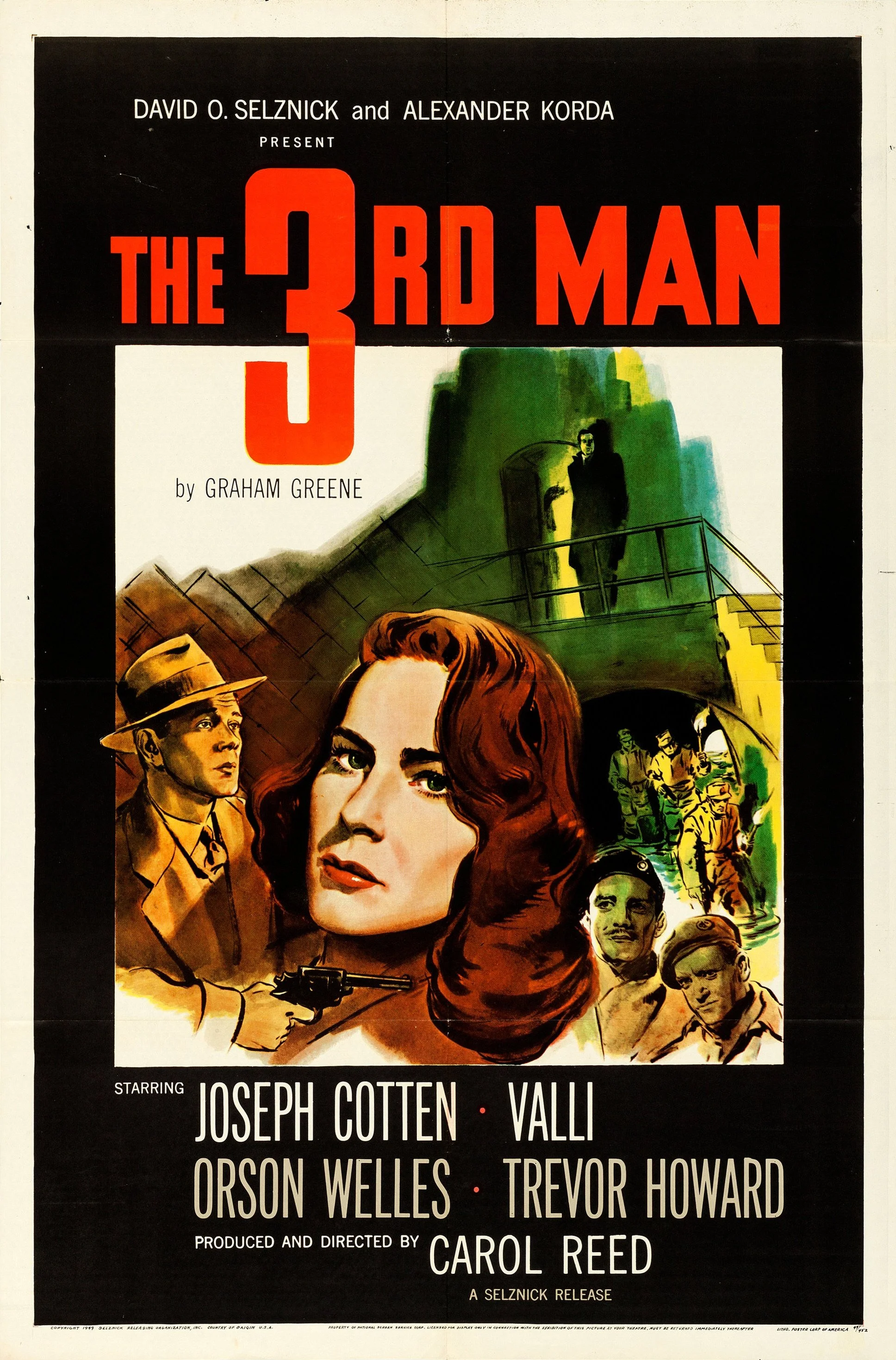
The Third Man (1949)

Mac Boyle July 11, 2023

Director: Carol Reed

Cast: Joseph Cotten, Alida Valli, Orson Welles, Trevor Howard

Have I Seen it Before: Oh, sure. You don’t write three—count ‘em, three—books about Orson Welles without wandering into this one a few times. Still not entirely sure why I didn’t include it in the massive Orson Welles re-watch I did before publishing The Once and Future Orson Welles, other than the fact that Welles didn’t direct the movie. But it should have been, right under scenes from Citizen Kane (1941), its scenes from this one that always make it into quick and dirty Welles retrospectives, along with radio clips from the War of the Worlds, or maybe a commercial or two for Paul Masson.

Did I Like It: When you think of the cream of the crop of film noir, you might want to swing your rhetorical arms for Peter Lorre, or Edward G. Robinson (really, there is a fine line between a gangster movie and film noir, although that Venn diagram can resemble an oval), but this is the A-list standard of the genre.

The cast is perfect, and I’m only kind of talking about Welles. You put a-list talent in a movie, and nearly any genre can transcend. Or, at least, it used to. Throw in a score that flies in the face of every convention, and you’re practically guaranteed to have a classic on your hands.

I was talking with another writer in recent years. They wrote crime novels (or, at least, tried to) and railed at how The Third Man’s crime story doesn’t quite add up. I get talked at a lot—or at least, more frequently than average—about Orson Welles films, and it often starts to resemble the grown ups in Peanuts cartoons trying to talk to me. But here, I could kind of see his point, Martins (Cotten) search for what happened to Harry Lime (Welles) meanders a bit in the middle, to where true enthusiasts of the genre might indeed lose patience.

But you know what? I’ll tell you what I told him. Why does that matter? So much Film Noir is all about mood, and between this film’s zither music and Welles eventual entrance into the picture, there’s more than enough mood to go around. The plot is fine, but it is absolutely not the reason you should have shown up in the first place.

Tags the third man (1949), carol reed, joseph cotten, alida valli, orson welles, trevor howard
Comment

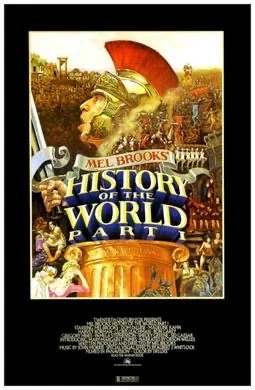
History of the World, Part I (1981)

Mac Boyle May 11, 2023

Director: Mel Brooks

Cast: Mel Brooks, Gregory Hines, Madeline Kahn, Orson Welles

Have I Seen it Before: Oh, sure.

Did I Like It: I usually feel the compulsion to add a few disclaimers as I launch in to any review of a Mel Brooks movie. I’m going to be hard pressed to say he’s got a better movie than Young Frankenstein (1974), and try as I might I’ll never quite care for Spaceballs (1987) if for no other reason than I never really believe that Brooks himself has any interest in making the movie.

Additionally, I can’t help but qualify what is to come and say that I’m almost always convinced that a sketch comedy film can’t help but broadcast to it s viewer that not one single idea contained within is funny enough to support a movie of its own.

So, it’s a bit of a surprise to me that on this viewing, History kind of works. Sure, there are a more than a few dated stabs at humor that ring not only as unfunny, but hateful, but there are also more than few laughs that still work.

Madeline Kahn may be tragically underused in the proceedings, but les we forget that any movie featuring Kahn should probably get a positive review. Without her, Clue (1985) would be a vaguely embarrassing amalgamation of an otherwise engaging cast.

And we’ve got Orson Welles offering narration? Maybe this all can’t overcome the limits of a feature-length series of sketches. Even Monty Python were bringing material from their television work when they worked with the genre, and Meaning of Life has some kind of loose structure keeping things as one idea worth more of our time. Maybe it all feels like Brooks is vaguely embarrassed by each idea, but never quite enough to actually abandon them. But if we’ve got Welles’ voice as our constant throughout the scrambling, it’s safe to say this is probably the classiest examples of the genre.

Tags history of the world - part i (1981), mel brooks, gregory hines, madeline kahn, orson welles
Comment

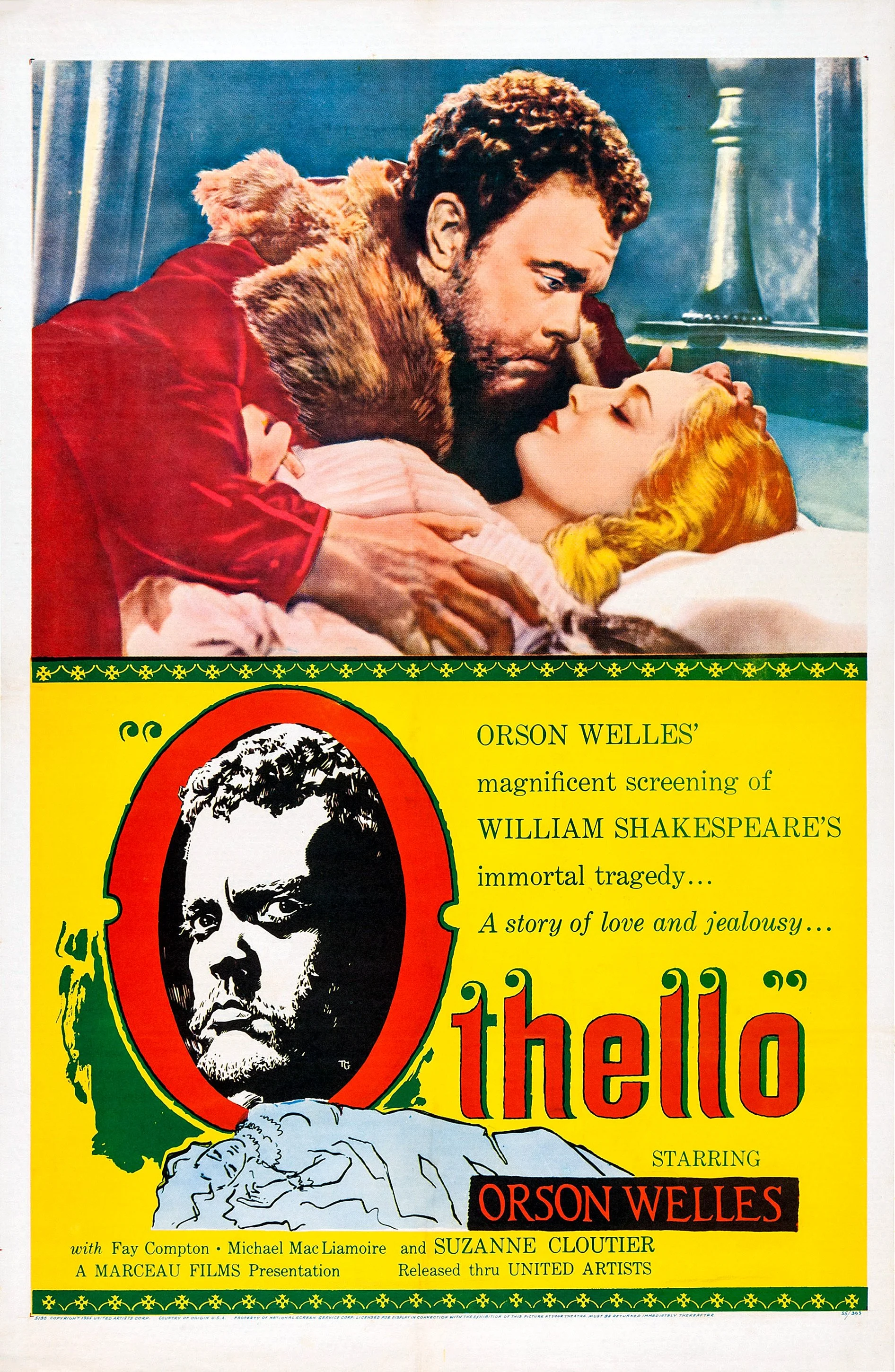
Othello (1951)

Mac Boyle February 13, 2022

Director: Orson Welles

Cast: Orson Welles, Micheál Mac Liammóir, Suzanne Cloutier, Robert Coote

Have I Seen it Before: Sure. I’ve been making jokes about Welles miscasting himself as the tragic Moor for years.

Did I Like It: Surprisingly, Welles only directed three Shakespeare feature adaptations for the screen, and it’s unfortunate that this is the weakest of the trilogy. It is not as clever, fully-formed, or expansive in scope as Chimes at Midnight (1965), nor is it as minimalistic and fully necessary energy as his Macbeth (1948).

The film has all the singular Welles cinematic trademarks. The camera never quite does what one might expect it to, characters talk over each other at a time where sound was treated so insanely delicately that to depict people in the way they might actually speak might tax the technology, and the film ultimately feels unfinished.

I don’t mean to introduce that word “unfinished” as a derogatory. Welles’ film career was so thoroughly cobbled together, that I can’t help but keep my eyes glued to one of his movies as it unfurls. There’s always a measure of panic that any of his films—aside from Citizen Kane (1941) and perhaps Touch of Evil (1958)—will complete unravel before the end credits. As films are hardly ever projected via film any more, his may be the only films where that experience can be beheld in all its glory anymore.

And then there’s that casting problem. It cannot be avoided, and I have a hard time believing it was accepted with any degree of widespread enthusiasm at the time of its release. Then, there might have been any number of men of color who could have brought the Moor to vibrant life for Welles’ camera, but instead Welles’ ego (I can’t imagine it was for the sake of the film’s commercial prospect) prevailed and he both directs and stars in the picture. Then, it feels like the wrong actor in the wrong role (he would have been glorious as Iago—here played by Liammóir), and now it’s just another example of where a modern audience has to parse out just exactly where lies the border between swarthy-face and outright blackface, or more importantly whether thats a distinction without a difference.

Tags othello (1951), orson welles, micheál mac liammóir, suzanne cloutier, robert coote
Comment

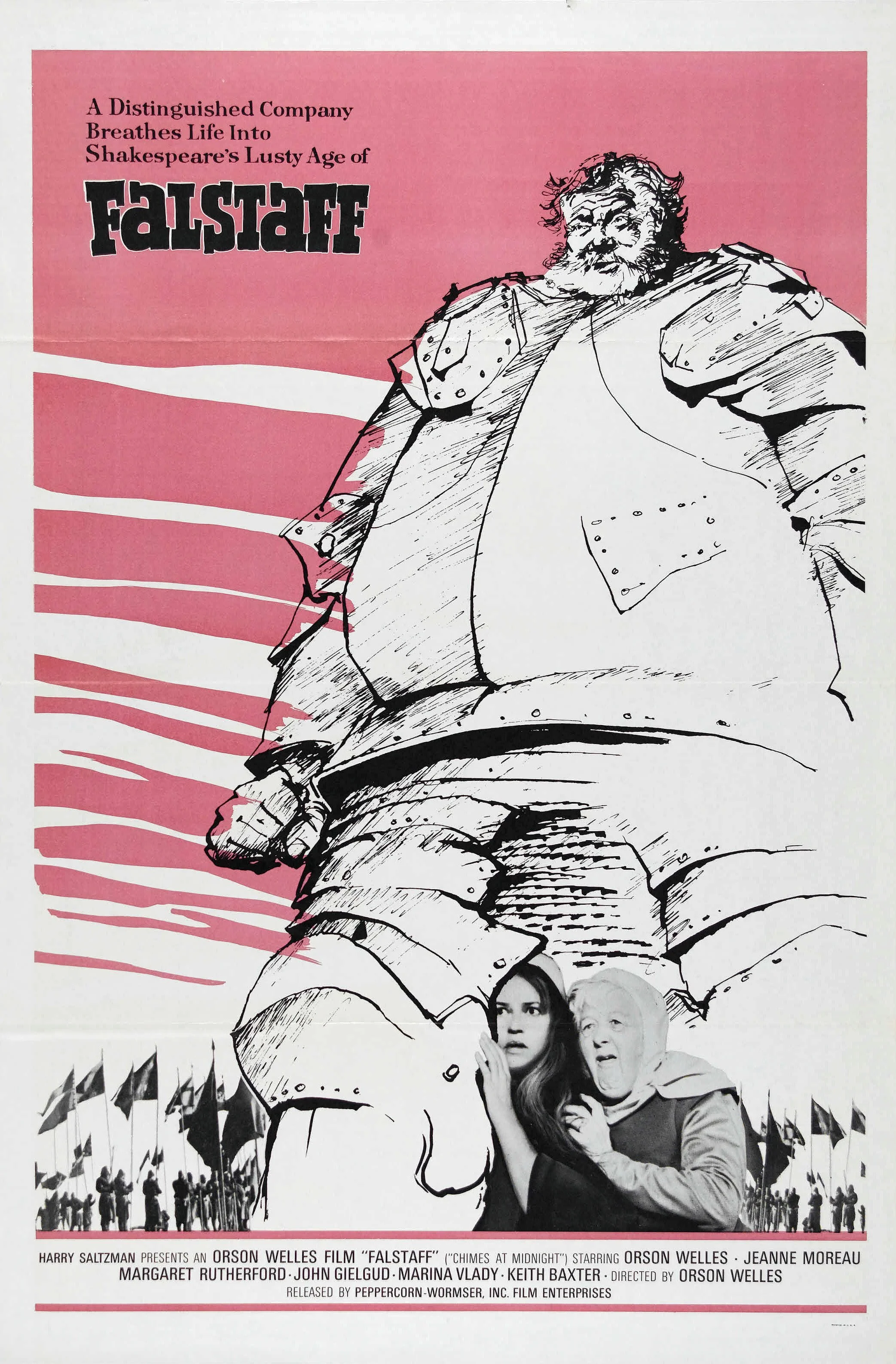
Chimes at Midnight (1965)

Mac Boyle February 8, 2022

Director: Orson Welles

Cast: Orson Welles, Jeanne Moreau, Margaret Rutherford, John Gielgud

Have I Seen it Before: Never. As I type this, this is the last of the films directed by Welles that I’m catching. I know. I’m unforgivably late to a party I myself was largely throwing.

Did I Like It: Welles struggled mightily to bring cinematic vitality to the works of the Bard, sometimes succeeding wildly, (Macbeth (1948)) and sometimes not accomplishing all of his goals as well as the audience might hope (Othello (1951); your mileage may vary).  Here, to play Flastaff—through all his adventures in the Shakespeare Cinematic Universe—was his lifelong ambition. Where as the Moor he was tragically, unavoidably miscast, here it not only seemed as if Welles always wanted to play Shakespeare’s great fool, his entire life may have been orchestrated to give him the opportunity.

The film’s virtues do not stop there. I’ve never thought of Welles as an action director in any sense of the word, but the Battle of Shrewsbury might feel as if it is both too disjointed and goes on too long for the sake of a modern audience, but I would push back against that myopic conclusion. The battle feels real and not some sort of pop culture confection. Film audiences would have likely forgiven Welles for sticking to the stentorian speechmaking, or for succumbing to a bubble gum aesthetic during this sequence, but if there was one thing that Welles ensured he did in his films—even after he was cobbling them together with no resources to speak of—it was to consistently punish those who come to his films with any preconceptions of how a film ought to behave.

Another element that I couldn’t help be struck by: the cinema—at least, the cinema as wielded by Welles—can capture more resolutely the banal tragedy of death better than the stage could ever hope to. His Macbeth and Othello have it as well, but here it is all the more potent. The tale of Falstaff isn’t necessarily meant to be a tragedy, necessarily. But after all the king-making and merry wive-ing is over, he is merely a wooden casket slowly being taken away by horse cart. All people, Welles included*, are heading to such an anticlimactic fate.


*But what this book presupposes is…

Tags chimes at midnight (1965), orson welles, jeanne moreau, margaret rutherford, john gielgud
Comment

Filming Othello (1978)

Mac Boyle February 8, 2022

Director: Orson Welles

Cast: Orson Welles, Micheál Mac Liammóir, Hilton Edwards

Have I Seen it Before: Never. It’s only ever been in any kind of wide release for home video since 2017, long after I had started writing The Devil Lives in Beverly Hills, Orson Welles of Mars or even The Once and Future Orson Welles. I wish I had been able to take it in long long ago.

Did I Like It: My opinion of Welles’ Othello (1951) was, at best, slightly muted (Welles miscast himself, forcing the film to land at the hind end of his Shakespeare features). However, I had a great degree of excitement for this film—produced for West German television and the last feature-length film directed by Welles which he fully completed in his lifetime, it belongs squarely in the realm of his later work. It is cobbled together from material and resources he already had sitting around the house, and thus is footage of a lunch conversation he had with some of the cast members, and footage of him at his moviola. 

And I. Am. Here. For it.

Whenever I am writing the fictional Orson Welles, there’s never less than an ounce of anxiety that I wasn’t getting his voice (or, more honestly, his unique syntax) quite correct. But that’s as it should be. My Orson Welles is a fictional creation, pieces of what is knowable about the man coupled with chunks of pulp heroes thrown in to fill in the gaps. It’s a singular and unusual pleasure just to spend time with the man as he talks quite honestly (strengths along with missed opportunities) about one of his films. We may not get any salacious gossip or a how-to diagram to make his films, but a perfect snapshot of his feelings about the larger portion of his work (Citizen Kane (1941) is not mentioned once in the 84 minute runtime), and with just a hint of his hopes for the future. He never stopped thinking that his next film would be the one to finally surpass Kane and if nothing else, that one characteristic is what drew me to the man as a subject all those years ago.

Tags filming othello (1978), orson welles, micheál mac liammóir, hilton edwards
Comment

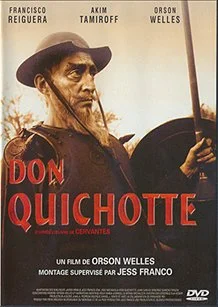
Don Quixote (1992)

Mac Boyle January 30, 2022

Director: Orson Welles

Cast: Francisco Reiguera, Akim Tamiroff, Patty McCormack, Orson Welles

Have I Seen it Before: Oddly enough, yes. While I was doing research on The Devil Lives in Beverly Hills, I had tracked down a copy of this cobbling together of Welles’ great unfinished regret, as its prolonged production would be a minor plot point in the novel

Did I Like It: Now, as I am nearing my time with Welles and the publication of The Once and Future Orson Welles, I have come to revisit it again. In this latest book, there’s a scene where, while excavating a crypt hidden beneath the grave of William Shakespeare, they discover preserved archives. There could be anything on those shelves. Foul papers versions of The History of Cardenio or Love’s Labour Won. Those with which Orson travels see the documents for the potential treasure they are. Orson wants the papers to be left alone. If, after he is gone, someone found pieces of something he had been working on—for instance, the original ending to The Magnificent Ambersons (1942)—it was probably unfinished for a reason. They should just leave it alone.

That also comes from my feelings about this film. Welles mislabeled much of his footage for Don Quixote, fearing that someone might one day try to cut it together against his witches. Here, poor quality footage is cobbled together in something that wants to be meta, but merely becomes even more incomplete than it was when it was a hypothetical film. It is less than the sum of its parts. Sections are narrated by Welles, and other sections are narrated by someone trying to sound a little bit like Welles, but didn’t understand that Maurice LaMarche is a person out in the world who has had the market on that locked down for some time. 

This is a film less than the sum of its parts. Unfortunately it will exist to disappoint for all time. Fortunately, we can all still dream about what Welles’ Don Quixote might have truly been.

So, this is all to say, if I leave some work truly unfinished after I go, please, please, just let it be.

Tags don quixote (1992), francisco reiguera, akim tamiroof, patty mccormack, orson welles
Comment

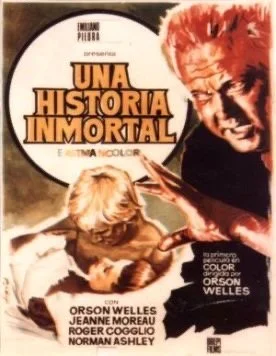
The Immortal Story (1968)

Mac Boyle January 30, 2022

Director: Orson Welles

Cast: Jeanne Moreau, Orson Welles, Roger Coggio, Norman Eshley

Have I Seen it Before: Never. Honestly, this one has always felt like a minor work (perhaps owing to its runtime?) and flew resolutely below my radar.

Did I Like It: I immediately made some assumptions that this would be firmly in that pantheon of latter-day Welles films (along the lines of both F for Fake (1973) and The Other Side of the Wind (2018)) where it must have been made with such a guerrilla mentality that they almost appear cobbled together via 16mm and 8mm film stock, even home video. As his film career well and truly wore out, Welles was cobbling together films from anything he could reach for.

Thus my reactions to the first few minutes (and largely the rest of the film) were filled with pleasant surprises. The opening shot in Macao (Spain, with some Chinese signs strewn about; Welles lived there and had long since struggled to get a production in the US) was made with such a clean, pristine quality, I was immediately certain that this was a film Orson had left unfinished after his death in 1985, and some well-meaning lunkhead got it into their mind to try and release the finished material in something resembling a completed form (for more on this phenomenon, see my review of the released version of Welles’ Don Quixote (1992)).

But it wasn’t. For most of the runtime (slight thought it might be) I thought the film could have been shot at any time. Certainly, the old-age makeup used on Welles during the production are dim, especially when compared to the efforts which still hold up from Citizen Kane (1941). That could be tied directly to the use of color cinematography, for which Welles never really cared. Why Welles really needed any old-age makeup at that point in his life is also a bit beyond me, though.

For one, brief moment (emphasis on the brief). Welles was able to marshal the meager resources he had at his disposal and make an honest-to-God film. One wonders what the man might have been able conjure had he lived a little longer.

Tags the immortal story (1968), orson welles, jeanne moreau, roger coggio, norman eshley
Comment

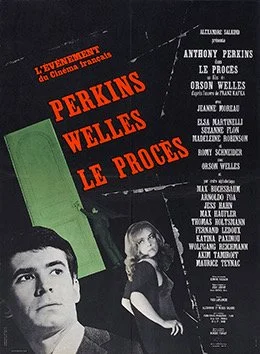
The Trial (1962)

Mac Boyle January 23, 2022

Director: Orson Welles

Cast: Anthony Perkins, Orson Welles, Jeanne Moreau, Romy Schneider

Have I Seen it Before: Never. Hey, some of them have slipped under the radar, and when it comes to a director like Welles, the further on you get in the filmography, the less the DVD/Blu Ray releases are shown love, and the less we may be getting out of the film all together.

Did I Like It: Welles once called it his best movie. We can debate as to whether or not he really believed that, or if he was making the proclamation defensively, whether because of the muted response the film received originally, or whether he was so desperate to move public opinion away from Citizen Kane (1941). 

I think he had to be defensive about it all. To be certain, all of the scenes have that trademark Welles vitality that is only truly noticeable when the contrasting authors of The Magnificent Ambersons (1942) are experienced. Camera angles are arch, people talk over people (unheard of, even this late in Welles career) and everything moves with a vitality that proves once again Welles was never content to just let a scene play out in the manner in which any other, ordinary and mortal director would be content.

Here’s the thing, though. The “pinscreen” opening might have had some unusual quality in the time it was released, but here it feels like a powerpoint presentation masquerading as cinema. I grant that might be more about the time in which I am writing this review than the reality of the quality of the film itself, but I can’t write these words in another time. The beginning becomes a further albatross because it suggests that the entire film is meant to be a dream. I’m not sure if that actually is Welles’ intent or not, but it would certainly explain the films more impressionistic impulses, but then we are left with a question that is unavoidable:

How long can a film sustain itself if it is all meant to be a dream? Do we dream sustained for two hours? Does my current era lack the attention span to allow for a dream that goes on that long? The film certainly has more interest in questions than answers, but if I’m spending the entire time asking the wrong questions, am I the problem, or is it the film?

Tags the trial (1962), orson welles, anthony perkins, jeanne moreau
Comment

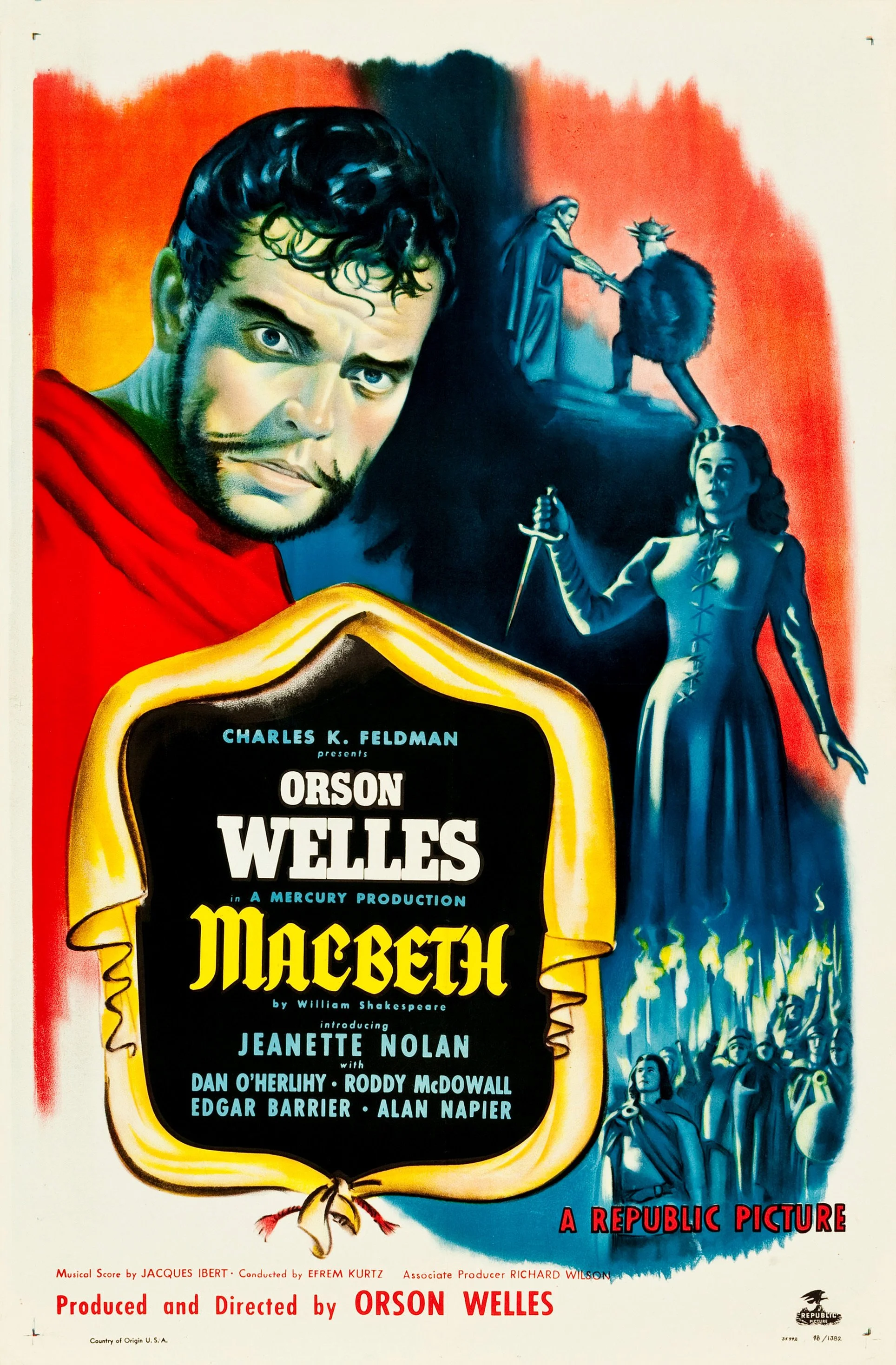
Macbeth (1948)

Mac Boyle January 22, 2022

Director: Orson Welles

Cast: Orson Welles, Jeanette Nolan, Dan O’Herlihy, Roddy McDowall

Have I Seen it Before: Never. I know. I’m a fraud. Do I turn my credentials into you or is there some kind of central office to which I need to mail it.

Did I Like It: I mean, right out of the gate, I’m thinking… Gee, he even managed to give the witches Scottish accents. As the film proceeds, nearly every character (maybe not so much Dan O’Herlihy’s Macduff, but you can’t win them all). You don’t see that in every filmed adaptation of the Scottish play. Hell, at times it feels like the Scottish accent is the single most misappropriated in the history of the motion picture, but then again, that might be mostly tied to Sean Connery and his vague insistence to never play a Scotsman, but instead play every other nationality on the Earth as if they were Scottish.

Here in this film, the big budgets of the studios had departed, and were never to quite return (with the possible exception of Touch of Evil (1958), but this is where the least spoken about parts of Welles’ genius (and he was a genius, despite what the vagaries of Hollywood might have tried to do to it) comes into full, undeniable bloom. 

Even when the money had run out, and the eyes of power not only ignored Welles but were content (and not entirely incorrect) in their assessment that they had destroyed him, he was still committed to making a film that always engages, and often surprises. Welles is—from the film’s first few moments—reaching for something a bit better than the average, and in ways that people would have never noticed/forgiven him. This is a b-movie in the resources brought to bear, but that doesn’t mean it has to accept its lowly status. It will always reach to be one for the ages. Failure is acceptable (it does not fail), but it would be in accepting limitations that things become irretrievably lost.

One note? While Mercury stalwart Jeanette Nolan equates herself well as Lady Macbeth, I can’t help but wonder if Welles had only met Eartha Kitt earlier. Had she played the character, the film just might have been as memorable (if not necessarily better) than Citizen Kane (1941).

Tags macbeth (1948), orson welles, jeanette nolan, dan o’herlihy, roddy mcdowall
Comment

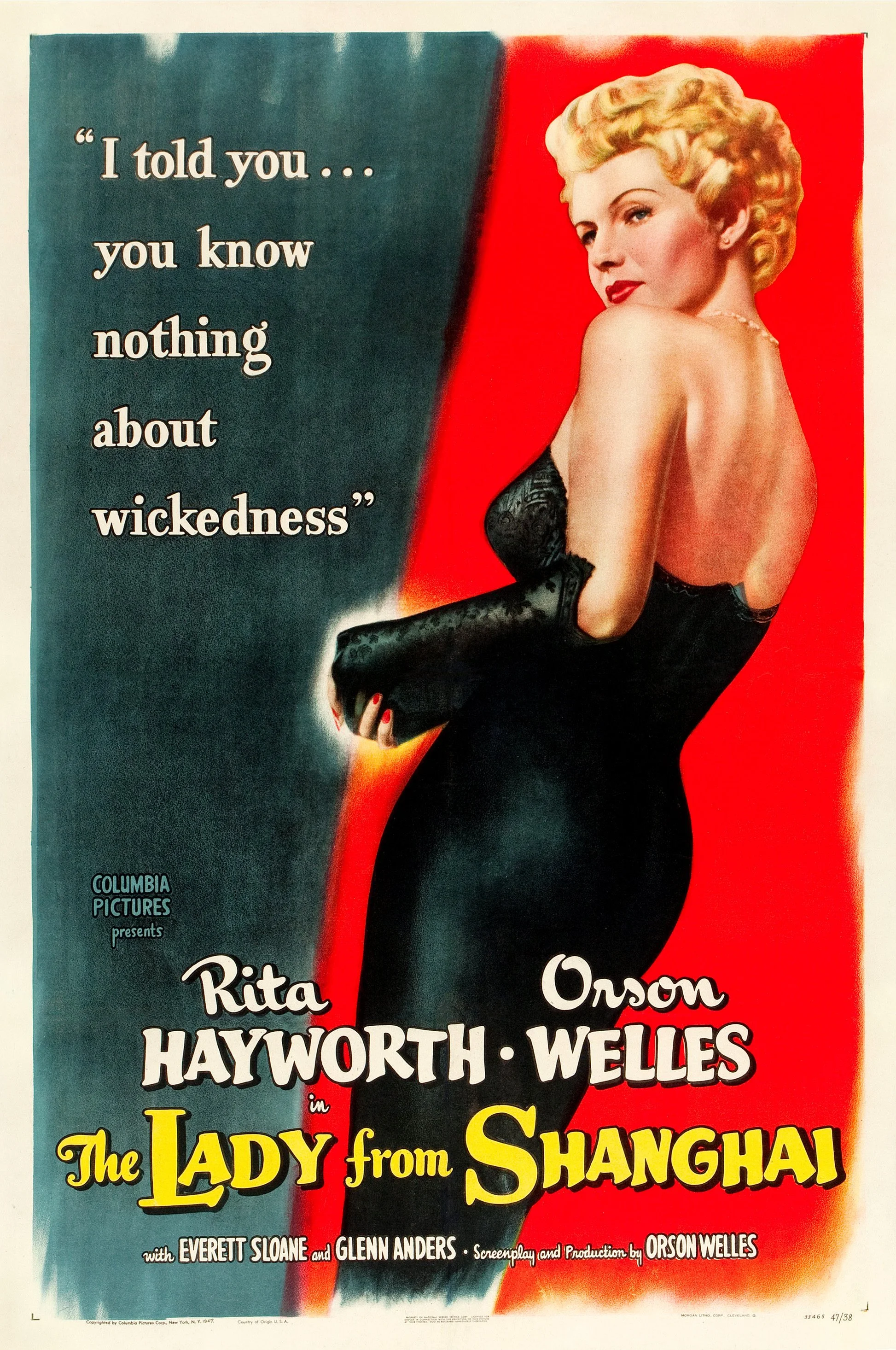
The Lady From Shanghai (1947)

Mac Boyle January 12, 2022

Director: Orson Welles

Cast: Rita Hayworth, Orson Welles, Everett Slaone, Glenn Anders

Have I Seen it Before: Oh, sure.

Did I Like It: Certainly, Citizen Kane (1941) is the film for which Orson Welles is chiefly remembered, but I’ll be damned if this isn’t his best movie. Many of Welles films, theatrical productions and radio broadcasts are intellectual exercises. His name is made in displays of clever form. The stories themselves are incidental. Now, here he’s working with a very basic noir story: Rough and tumble boy more tough than smart meets girl who may very well be descended from sharks. Two or three dead bodies later, and everyone wishes they hadn’t met in the first place.

But this had to be one that Welles felt more than he thought about, and I mean that in the very best way possible. Produced as the marriage between Welles and Hayworth was coming to an end, that alone is worth the above assessment. So many screen pairings of famed Hollywood couples happen when the couple is just starting to fall in love. If what they feel at that moment is real (far from a guarantee), and if they can translate any of that igniting passion to on-screen chemistry (which hardly ever happens) then that display inevitably feels self-conscious on the part of the performers, even if that self-consciousness is only on the part of us as the audience. Seeing a film capturing an—even relatively amicable—end is fascinating and highly unusual**.

Beyond that, and in the best example of what noir tries to do, every piece of the film seems designed to keep the audience off balance, if not outright confuse them, culminating in the famed house-of-mirrors sequence at the film’s climax. Some have complained about that, but I contend its the film’s greatest strength. We’re not supposed to feel like things are adding up. Why else would Welles have had Hayworth chop off most of her hair and dye what remained blonde?


*Although there is at least an argument to be made that he is better known to future generations as the inspiration for Maurice LaMarche’s portrayal of The Brain… And even that reference may not be all that hip for the kids of today, which is a complete shame.

**The only other example I can readily think of would be Woody Allen’s Husbands and Wives (1992)… And there wasn’t anything amicable about that. Infinitely more fascinating on that front, but you probably ought not hold your breath for me writing a review on that film.

Tags the lady from shanghai (1947), orson welles, rita hayworth, everett sloane, glenn anders
Comment

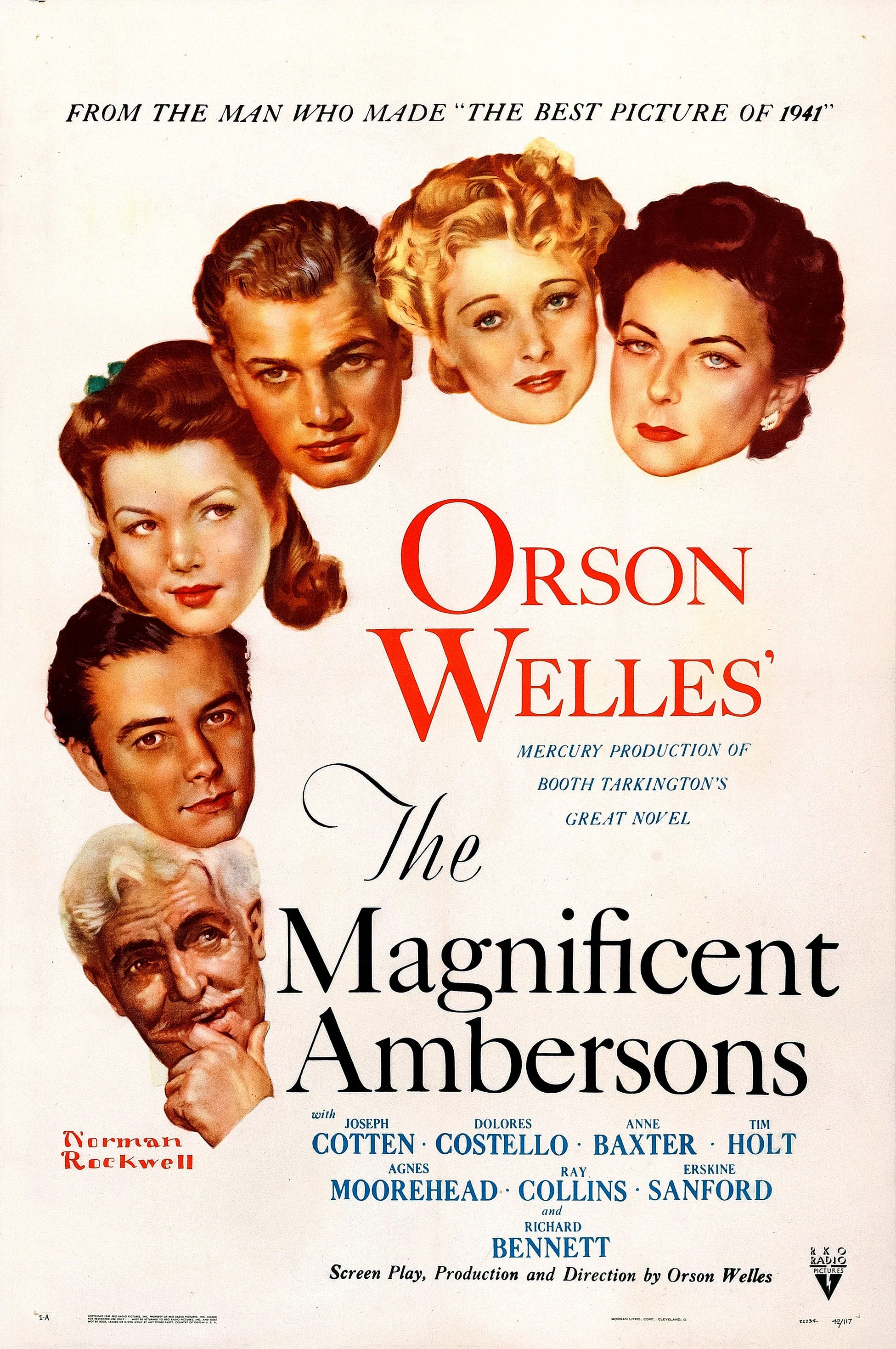
The Magnificent Ambersons (1942)

Mac Boyle January 8, 2022

Director: Orson Welles

Cast: Joseph Cotten, Dolores Costello, Anne Baxter, Tim Holt*

Have I Seen it Before: Yes, but it’s been a number of years. I was probably a teenager when I first watched it, because, I was, ultimately, that teenager.

Did I Like It: I may be a bad fan of the films of Orson Welles, despite my compulsive need to do homework on the subject. I’ve never fully bought in to the great tragedy of Ambersons. When I first saw it, the whole affair seemed just a bit to twee to get truly invested in, and what’s more, I couldn’t possibly imagine an ending different from the one presented in the theatrical cut.

So I return to the film now. My eye—to say nothing of my taste—is a little more sophisticated. Perhaps the experience will be a bit different now.

And it is, sort of. The story of the Ambersons and their tragedy is just a bit too precious for me, still. In all fairness, it had that quality when I finally brought myself to read the Booth Tarkington novel a few years back, in an effort to gai na bit more insight into the Welles mindset.

But that’s not the point of this film, or any early Welles film, ultimately. Content is incidental. Had he bowed to studio pressure and made War of the Worlds as a feature after he was brought to Hollywood, it would have been the technique behind that story that made a classic film. Citizen Kane (1941) is much the same way. And so is Ambersons. 

Which is what makes the truncated ending so odd to me now. The film has long stretches that are just as vibrant and unexpected as Kane, but it’s all punctuated by one of the more blandly staged scenes of the era. It sticks out like a sore thumb. I really don’t know why a studio would have taken a film away from Welles, especially during this period**. A Welles film not directed by Welles misses the entire point of the exercise.


*For all of the film’s issues, I’ll never understand why Welles himself didn’t play the adult George. He was still the right age at the time. Then again, my main complaint about depictions of Welles in the 30s and 40s is that he always seems far older than a man in his 20s. Maybe he was never very boyish. It would be hard to go from even the younger version of Kane to someone so impish.

**All right, I kind of get it. Any responsible leader of business would probably have a hard time giving Welles a blank check twice at that point in time.

Tags the magnificent ambersons (1942), orson welles, joseph cotten, dolores costello, anne baxter, tim holt
Comment

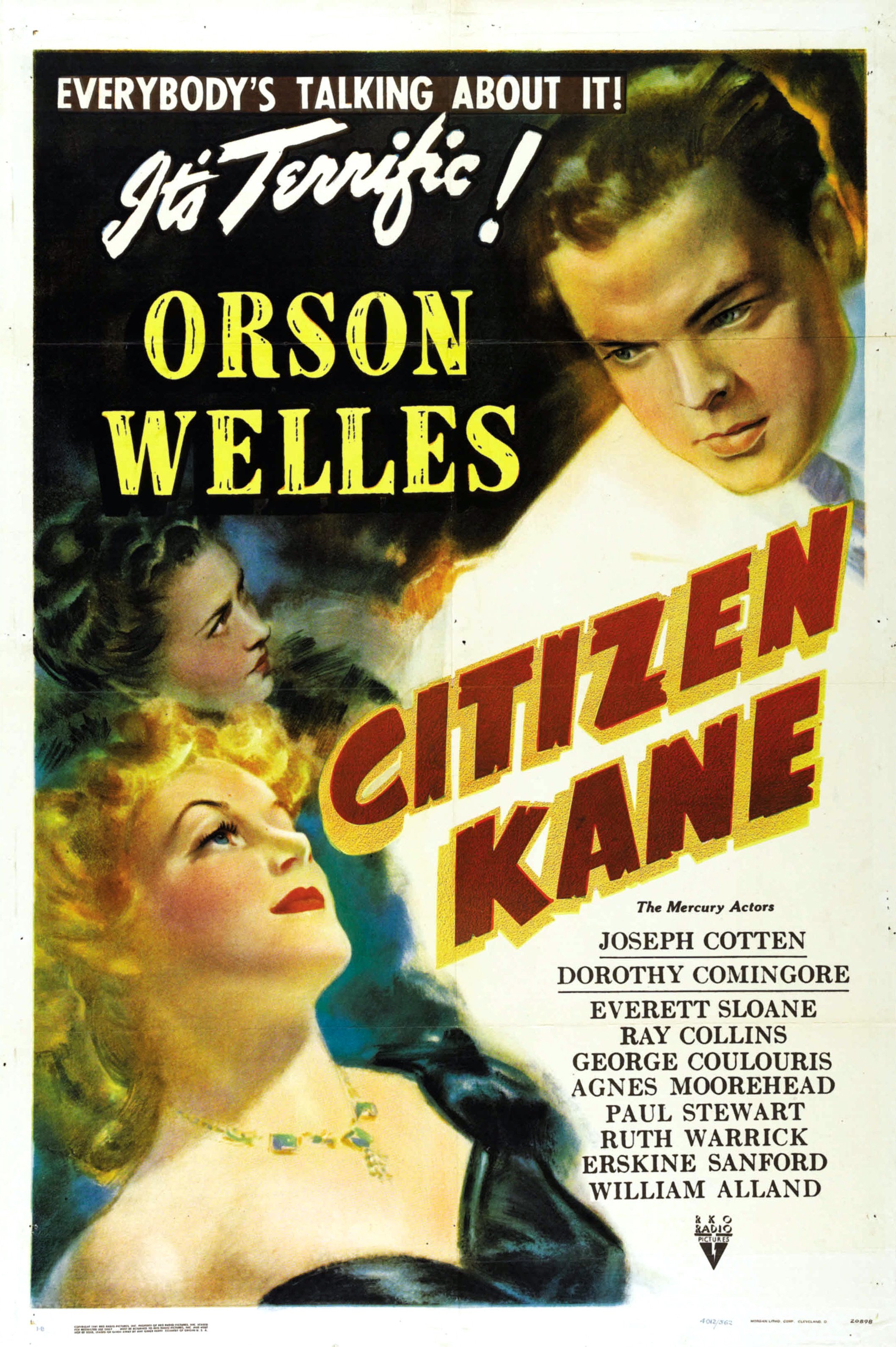
Citizen Kane (1941)

Mac Boyle January 8, 2022

Director: Orson Welles

Cast: Orson Welles, Joseph Cotten, Dorothy Comingore, Everett Sloane

Have I Seen it Before: Silly question at this point, right?

Did I Like It: I usually get a bit trigger-shy when writing up a review of any unusually iconic film. What is left to say about some films? This goes doubly for a film like this. 

I could write about the story of the making of the film, arguably more famous than the film itself. In an oblique way, I probably already have. I could write about the psychology on display, but that would probably not cover the 300-word minimum of these reviews. 

There’s probably a book someone (please, not me) somewhere (please, somewhere else) somewhen (please, let’s give it a few years) should write about how its allegedly Donald Trump’s favorite movie, which only really tells me that—in addition to all manner of things—the former president doesn’t understand 

On that note, it’s usually not a bad idea to distrust practically anyone—save for perhaps the recently departed Peter Bogdanovich*—who claims this is their favorite film. Met with a rather infamous degree of commercial hostility on its initial release, its not hard to imagine that far fewer people have actually seen it than claim to have done so**. 

So, about the film. I think Welles would be the first to admit that the story is on the main, fairly melodramatic. Big tycoon careens through his life, pretty much destroying everything he even thinks about touching, and in the end it’s largely because he never wanted to be rich and just wanted to spend a little more time with his sled.

Sad, yes. Earth shattering? Hardly. It helps that the film’s plot is constantly in a state of deconstructing and reconstituting itself, but even that only pushes the film into the unusual-but-not-quite-unique realm. Any film interested in tapping into the literary attributes of novels*** would opt for a similar structure. Kurosawa comes to mind.

The true strengths of the film, which go far beyond anything having to do with the sled lie with the technical craft on display. While the true possibility—and, clearly, the horrible potential—of silent film was ushered by The Birth of a Nation (1915) and for my money, perfected by Modern Times (1936), sound film had wallowed as not much more than turgid recordings of stage productions. See Dracula (1931) and yes, even—with all its strengths—The Great Dictator (1940). This film finally made the argument for the sound picture (barely ten years after the technology was seemingly perfected) by showing what all of the tools of cinema could do if brought to bear. Deep focus, optical printing, miniature, matte paintings, all are harnessed to tell a story not of fantasy, but of human tragedy. Few think of Citizen Kane as a special effects film, but that’s what it is. One of the key scenes where Kane (Welles) fires his old friend Jed Leland (Cotten) is heralded as a great example of deep focus, but that’s not what’s happening. The two characters are shot at different times, and optically forged together in a single frame of film. People complain about our highly technological style of making films where actors don’t ever have to be in the same room, but they’ve been innovating those methods for 80 years! It’s even COVID compliant!

That’s the film’s secret: it is a great film. It demands to be studied and learned about for its cinematic attributes. If you haven’t seen it, I’m not sure how you’ve made it this far on the site, but you should. If you’ve seen it before, it never really took hold with you, and you love cinema, then you need to see it again. And again. And read books about it. Then listen to the commentary tracks on the DVD. Go back to it as often as possible. I know I have.


*During my rewatch of the film this week, I did the regular film, and the commentary track from Roger Ebert, but somehow didn’t take in Bogdanovich’s track. May have to make amends for that sometime soon.

**I was on a podcast once where I had joked about never seeing the film. One of the other people on the panel cried, as if it finally connected us, “Me too!” They were aware of my other work. They had even reacted to my social media posts when I went to a 75th anniversary screening back in 2016. They were (and one imagines, still are) an idiot. I didn’t think that my review of this film would end up as a compare and contrast of my irritation with this person, and a few comments of Trump, but here we are, 2021.

***Has anyone ever tried to novelize Kane? Feels vaguely sacrilegious to even entertain such an idea, but it could be an interesting intellectual exercise. Let’s make that another project I should never again entertain. 

Tags citizen kane (1941), orson welles, joseph cotten, dorothy comingore, everett sloane
Comment

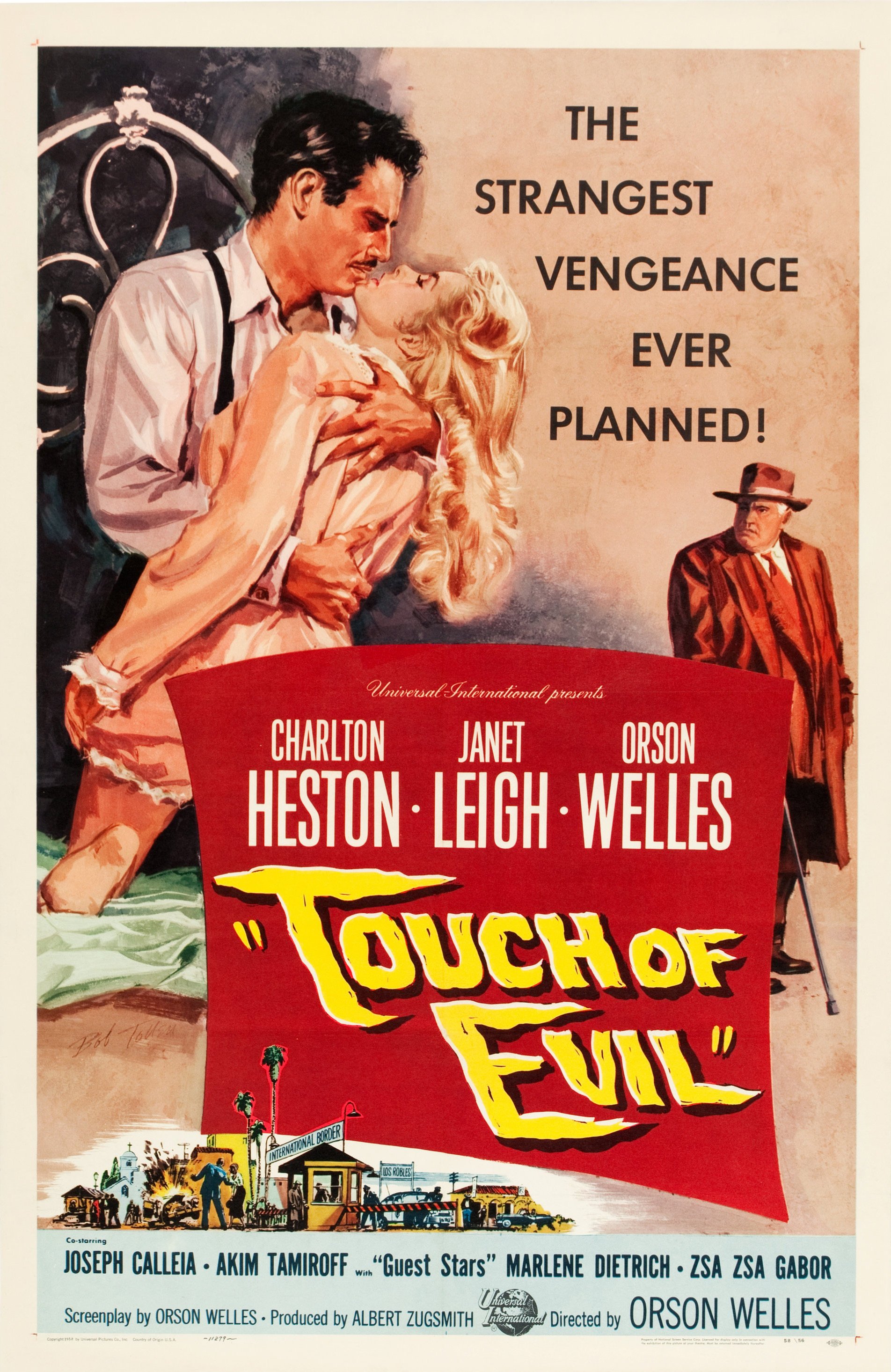
Touch of Evil (1958)

Mac Boyle December 12, 2021

Director: Orson Welles

Cast: Charlton Heston, Janet Leigh, Marlene Dietrich, Orson Welles

Have I Seen it Before: Oh, sure. But I’m relatively certain I haven’t seen it since release of the restored version in 2008, which brought the film closer to the version detailed in Welles’ long-ignored notes made after Universal took the film away from him*.

Did I Like It: There are two things that stick in my mind most about this, one of Welles’ few studio-backed films. First, the conversation in Ed Wood (1994) between Wood (Johnny Depp) and Welles (Vincent D’Onofrio, but voiced by Maurice LaMarche**) where Welles complains that he’s about to make a thriller at Universal, and they’re insisting he cast “Charlton Heston as a Mexican.” Even Wood wouldn’t go that far. Essentially, this movie has all the trappings of a B-movie, and that is by no means meant as a dig. Gleeful, energetic, and as innovative as the form will allow (as directed by one of the few verifiable genius to have ever helmed a picture), it still is probably aggressively mis-cast, and every moment is meant to tantalize. It’s not art; it is pure entertainment.

And just as there’s nothing wrong with a film being a B-picture, there’s also nothing wrong with it being made for the sole purpose of entertainment. That’s because the second thing that always sticks in my mind about the movie is that opening shot. If ever a movie about corruption and explosions could reach for art, it was under this man and it would be this movie.


*If there’s one thing Orson Welles knew how to do, it was get a film taken away from him.

**Incidentally—and you know I’ve given this question at least an inch of thought—this is the best casting of Welles ever.

Tags touch of evil (1958), orson welles, charlton heston, janet leigh, marlene dietrich
Comment
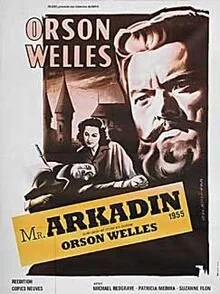
220px-Poster3_Orson_Welles_Mr._Arkadin_Confidential_Report.jpg

Mr. Arkadin AKA Confidential Report (1955)

Mac Boyle November 4, 2019

Note: For the purpose of this review I watched the so-called “comprehensive” edition released in 2006.

Director: Orson Welles

Cast: Orson Welles, Robert Arden, Paola Mori, Akim Tamiroff

Have I Seen it Before: Never. That’s embarrassing enough and puts my reputation as the world’s only semi-pro Orson Welles historian, but I did manage to read the novel before getting around to the Criterion Edition DVD. God bless, Criterion, giving a fella something to read packaged with the DVD.

Did I Like It: Sure. What’s not to like?

This feels like a transition film for Welles. Gone are they heady days of playing with the biggest train set imaginable, as Welles once referred to working within the high-budget studio system. He would still go on to make Touch of Evil (1958) a few years after Arkadin, but the days of wine and roses are gone. He’s beginning to embrace the grittier, pseudo-documentary aesthetic that would come to dominate his final films like F For Fake (1973) and The Other side of the Wind (2018). And yet, there are long stretches where it feel like Welles is reaching for and more than often actually attaining the visual polish of the days when he was still a wunderkind.

Now, I understand that this is a prime example of one of Welles’ films that was so severely compromised that it could only be salvaged now by a bit of luck and the hard work of cineastes, but even so there’s something sort of tragic about the sound design of films of the era. Dialogue in motion pictures was barely twenty years old at the time, and the syncing of ADR is never quite right. That technology would still take a number of years, and even today can be a little wobbly without the use of computers.

As he continued to lose the resources of the major studios, he compensates by becoming more experimental. The camera flows through scenes like a swinging pendulum, which would have been unimaginable during his time on Citizen Kane (1941) or The Magnificent Ambersons (1942), and really unimaginable for any film at all.

And so I’m left with the same rolling wonder that I’m left with after most of the man’s movies.

What would the movie had been like if he had gotten all of the resources he needed?

Tags mr arkadin aka confidential report (1955), orson welles, robert arden, paola mori, akim tamiroff
Comment
220px-The_Stranger_(film).jpg

The Stranger (1946)

Mac Boyle August 11, 2019

Director: Orson Welles

Cast: Edward G. Robinson, Loretta Young, Orson Welles, Philip Merivale

Have I Seen it Before: The answer to that question may be longer than the review itself.

I bought a copy of this film on DVD many years ago. Life happened, I bought other DVDs, and somehow I never got around to watching it. At some point, it became a weird totem in my life. On the verge of some great life change, I would finally break down and watch it. Cut to four years later, an old life is falling apart around me and I’m on the eve of starting a job that may well end up filling the rest of my life.

Now, this next part—an ironies of all ironies—is going to sound like diversion, but it’s all part of the story: this is the only film Welles directed that was bonafide box office hit upon its release. Despite that financial success, it’s also the only Welles film that not only slipped into the public domain, but so lapsed while Welles was still alive.

Since The Stranger is in public domain, the DVD copy turned out to be absolute garbage. It’s a copy of a copy of a copy of a VHS version that was pulled from a 16mm print that had probably seen better days in the 90s when it was originally created. Flummoxed beyond all reason that I had waited so long to watch what turned out to be a trash release from a fly-by-night DVD label, I threw the disc in the trash*.

Actually, I threw it out a window in a fit. Not wanting to litter, I went out and retrieved it from the yard before eventually throwing it in the trash.

This is all to say that I’ve only seen about ten minutes of the movie in the past.

But enough about my struggles to find a decent copy of the film or Welles’ historical struggles in the movie business, a topic I could—and have and will—go on about at length. Let’s talk about the movie.

Did I Like It: Now, I can say that—despite the shoddy quality of the presentation*—the film is one hell of a firecracker. 

The notion that a prominent Nazi war criminal might now seem like a historical oddity (or at least it did until the last few years, but I digress), but in 1946 when this film was released, it’s easy to imagine people emerging from a theater not 100% sure their neighbors or even their spouses might be refugees of the third reich.

Which, I suppose would account for much of the paranoia that permeated America over the next several decades. 

But seriously, though, that moment where Kindler/Rankin idly draws a swastika on a telephone pad is one of the more deliciously subtle displays of archvillainy in the movies. By the time he’s casually telling his new bride that he intends to kill her, it’s lethal believability is unassailable.

This film, along with Touch of Evil (1958) and The Lady of Shanghai (1947) cement Welles’ credentials as a thriller filmmaker among the ranks of Hitchcock. It’s more of a tragedy that the Hollywood system was so intent on limiting the man, he might have made more films in this vein and had a truly unrivaled catalogue of work as his legacy.


*And it is truly odious. The film ends and a laughable commercial for the fly-by-night DVD imprinter is immediately run, along with credits for that commercial. There’s even a little watermark that occasionally appears throughout the film, which makes me feel like I discovered the movie on late-night cable. All right, I suppose that quality has something resembling charm.

Tags the stranger (1946), orson welles, edward g robinson, loretta young, phillip merivale
Comment
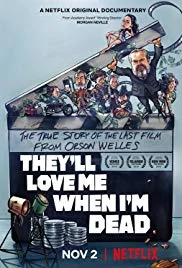
MV5BMjEwNzExNzU2Ml5BMl5BanBnXkFtZTgwMjIyNDI0NjM@._V1_UX182_CR0,0,182,268_AL_.jpg

They'll Love Me When I'm Dead (2018)

Mac Boyle August 5, 2019

Director: Morgan Neville

Cast: Peter Bogdanovich, Oja Kodar, Orson Welles, Steve Ecclesine

Have I Seen it Before: Pieces of F for Fake (1973), The Other Side of the Wind (2018), and The Battle Over Citizen Kane (1996) abound, so ultimately, if you’ve seen one (or in this case, three) documentary about or inspired by Orson Welles, then you’ve probably seen them all.

Did I Like It: I’m on the record not thinking much of The Other Side of the Wind. I’m prepared to write most of it off to the film being just too experimental for its own good, and even more prepared to write off the parts of the film that don’t work to the fact that the finished product is only partially Orson’s. It also doesn’t help that a the cavalcade of egos haunted the film long after Welles’ “death*” and the byzantine path the film took to release may have diminished any true auteur quality the picture might have hoped for in a world when it was released in Welles’ lifetime.

And so I come to this film with a lot more interest than I did in that which inspired it. There’s much more drama in the failing of the film than in the film itself. Fusing Fake and Wind, this film comes together much more coherently than either. As a byproduct, It becomes it slightly less magical than Fake, but a little easier to swallow than Wind.

What’s more? It makes me want to watch Wind again. If this is truly the way to understand Welles in his own voice, then it might be necessary. Maybe that makes this movie nothing more than an extended trailer for Wind, but if that is the beginning and end of its ambition, then it more than ably attained its goals. 


*What one of my books presupposes is… Maybe he didn’t? #stayonbrand

Tags they'll love me when i'm dead (2018), morgan neville, peter bogdanovich, oja kodar, orson welles, steve ecclesine
1 Comment
220px-Film_Poster_for_The_Other_Side_of_the_Wind.jpg

The Other Side of the Wind (2018)

Mac Boyle August 4, 2019

Director: Orson Welles

Cast: John Huston, Oja Kodar, Peter Bogdanovich, Susan Strasberg

Have I Seen it Before: Never. Even better still, I’ve devoted more than a little of my life’s work to the notion that I would never see it, and that the film might not actually exist.

Did I Like It: There’s plenty to like. There’s plenty that befuddles. There’s plenty that disappoints.

In short, it is an Orson Welles film.

After Citizen Kane (1941), Welles never got full dominion over a film project. Towards the end of his career, he was cobbling together film projects from whatever favors and hustle he had left. Like the last film released in his lifetime, F for Fake (1973), this posthumous release feels profoundly stitched together like the cinematic equivalent of a frayed, but lovingly stitched together quilt.

In Fake, the discordant quality gave the film a quality of having a protracted conversation with Welles, bobbing along with the history and passions that might flit through his mind at any given moment. Here, whether because the end result is at best an indirect product from Welles, or because the limited format just doesn’t serve a fictional narrative, the results are more muddled.

Welles was smart enough to know the limitations of his resources, and manages to create the context of a film that could have this disjointed structure, a fly-on-the-wall mockumentary shot mostly by eager film students (one imagines you couldn’t swing your arms in early 70s LA and find such a group of cinephiles) about a legendary film director (Huston) at the height of his legend, but the end of his career. So, even when the film isn’t particularly interested in making sense, it at least has some kind of logical consistency.

The figure of Jake Hannaford is certainly the most interesting, but illusive figure in the film. Is he a shade of Huston, the actor portraying him? He has the gate, tone, mannerisms, and some of the background, sure, but that seems to pat of an answer, and Huston doesn’t seem like the kind of man who would have enough sense of humor about himself to appear in something akin to a farce wherein he is largely the butt of the joke.

Is he the figure the film would present to us? A musing as to what Hemingway would have been like had he gone into stagecraft and bull fighting instead of writing and bull fighting? There are certainly enough trappings that one would be forgiven for thinking so.

Is Hannaford Welles himself? Almost certainly, and there is just enough of the other two possibilities to disingenuously—and probably unsuccessfully—put people off the scent. Most of Welles’ protagonists, from Kane through the corrupt cop Quinlan of Touch of Evil (1958) were a bit Welles. Any other argument doesn’t hold a whole lot of water.

What also doesn’t hold a lot of water is Hannaford’s film-within-the-film. It’s clear he’s trying to ape the style of European art films that surrounded his exile, but in the attempt to satirize there’s not much to it, where those other films at least have a reason to exist. It’s clear that—between this and Fake—that he is enamored of his mistress, Kodar, but here presence always feels more boring than it should be, which is impressive considering her role is essentially pornographic. He also hinges a significant performance out of an actress who isn’t really an actress (Cathy Lucas), merely in an attempt to take a shot at longtime frenemy Peter Bogdanovich and his relationship with Cybill Shepherd. I’ll allow for the possibility that I may not get the joke, but especially where Kodar is concerned it feels like a betrayal of his previous aesthetic insistence that sex could only exacerbate the fakeness of a narrative film. That may be the problem: the whole film is too misogynistic and lionizing of that misogyny—when it isn’t barely holding together as an actually movie—to fully recommend. 

Tags the other side of the wind (2018), orson welles, john huston, oja kodar, peter bogdanovich, susan strasberg
Comment
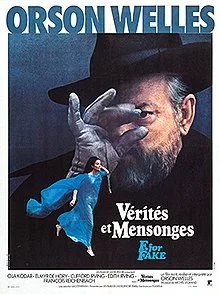
220px-F_for_Fake_poster.jpg

F For Fake (1973)

Mac Boyle July 11, 2019

Director: Orson Welles

Cast: Orson Welles, Oja Kodar, Elmyr de Hory, Clifford Irving

Have I Seen it Before: A few times.

Did I Like It: And I like it more each and every time.

F For Fake is the final finished film released during the legendary director’s lifetime. And, yet, to call it a complete film is misleading. It’s a Frankenstein’s monster. Is it a straight-ahead documentary about infamous art forger de Hory? Yes. But, oddly enough, that film was actually shot by François Reichenbach*, with Welles hired to edit the finished product. This is a common theme for the later parts of his career. 

Not content to simply rest on that interesting subject, is this also an essay on Welles’ notions of  fakery in the larger sense? Also, yes. He saw the opportunity when de Hory’s biographer—Irving—became embroiled in an even larger fakery scandal involving a counterfeit ghost-written autobiography of Howard Hughes, and widened his lens. Throughly in the spirit of things, he concots a story about the mysterious Oja Kodar’s swindle of an irate Pablo Picasso that—spoilers—turns out to be a complete fabrication on the part of Welles himself. This might have been a more thorough surprise for this reviewer if I wasn’t pointedly aware that Kodar had been Welles’ traveling companion and mistress during the last years of his life. This is the trouble with having written two books and counting about Welles, so I’m imagining the reveal has a lost more mirth for the general audience both at large and at the time.

Is it also the closest thing we’re ever going to get to an auto-documentary? Still yes, Welles introspects just enough to analyze his own epic, Martian-related role in the annals of fakery. There’s just enough of the melancholy and futility Welles was famed to have in his last decades to feel honest, but not so much that it feels as if it is self-indulgent.

And that’s where the film’s genius fully gels. Yes, it is cobbled together from disparate parts, but that actually gives the proceedings a lively pace that other documentaries would have been unable to imagine. It’s almost like what I would imagine it to be like if you had a long conversation with Welles over a meal on a day when he was in a better than average mood. That’s a fascinating vibe for a disorganized film to capture. It may, in fact, be my favorite film Welles ever directed.

You read that right.


*For the record, a great super villain name if ever I’ve heard one.

Tags f for fake (1973), orson welles, oja kodar, elmyr de hory, clifford irving
Comment
220px-Battleovercitizenkanekdvd.jpg

The Battle Over Citizen Kane (1996)

Mac Boyle July 9, 2019

Director: Michael Epstein, Thomas Lennon

Cast: David McCullough, Orson Welles, William Randolph Hearst, Richard Ben Cramer

Have I Seen it Before: Oh, God Yes.

Did I Like It: Like is such a pedestrian term. There are few films—and certainly fewer documentaries—that so thoroughly injected itself into my DNA.

On its surface, The Battle Over Citizen Kane is an almost shallow examination about the beautiful, perfect wreck that was Orson Welles’ first feature motion picture Citizen Kane (1941). I’m one of the unusual people that might view this as a vice, but I can also sense that it is not an objective flaw, and certainly not a fatal one.

Really, the film was made at exactly the right time. Twenty years ago, plenty of people who worked with Orson were still alive and their memories incredibly sharp. It may have been one of the last opportunities to get first-person narratives of Welles during those early, heady years. All of the talking heads regarding Hearst are from historians or biographers, and while they have interesting insight, they are far less vibrant than the insights into Welles.

And then there’s that one shot at the very end of the film that—more than any other element in life—caused me to spend more time than I would have liked questioning a creative life. Orson puts it bluntly. Spending all of your time begging for the things you need to realize your vision was a terrible way to spend a life. He wished he could have done anything else.

As raw B-roll of an interview, the moment very well may have been an aside. It wouldn’t have been worthy of note other than a vague sense that Welles had a melancholy streak later in life. As the thesis of an entire film, it’s chilling. It is expert-level documentary filmmaking.

And yet, as I watch the documentary now, I’m struck by another talking head from the man himself. It appears to be from the same interview filmed just a few years before his death, and he seems amused by the scrambling train wreck that his life had become. That might be an important thing for me to remember, both as I keep telling my version of Orson’s story, and in my own life. It’s absolutely possible to be both amused and have regret fro the more seminal moments of ones life. There’s even an extra moment in that moment at the end where he says he can’t regret his regrets, because it was like staying married to a woman he might not have otherwise. He loved the movies, and it wasn’t that he couldn’t walk away from it. He wouldn’t.

Everyone wants you to think the story of Orson Welles is a tragedy. Sure, there is unrealized potential over the course of his life, but I’m not so sure he felt the whole thing was a tragedy. Not all of it.

Tags the battle over citizen kane (1996), michael epstein, thomas lennon, david mccullough, orson welles, william randolph hearst, richard ben cramer
Comment

Powered by Squarespace

Party Now, Apocalypse Later Industries

Where creativity went when it said it was going out for cigarettes.

Where creativity went when it said it was going out for cigarettes.