Party Now, Apocalypse Later Industries

Where creativity went when it said it was going out for cigarettes.
  • Home
  • BOOKS
    • THE ONCE AND FUTURE ORSON WELLES
    • IF ANY OF THESE STORIES GOES OVER 1000 WORDS...
    • ORSON WELLES OF MARS
    • THE DEVIL LIVES IN BEVERLY HILLS
    • A LOSS FOR NORMALCY
    • RIGHT - A NOVEL OF POLITICS
  • PODCASTS
    • Beyond the Cabin in the Woods
    • THE HOLODECK IS BROKEN
    • THE FOURTH WALL
    • As The Myth Turns
    • FRIENDIBALS! - TWO FRIENDS TALKING ABOUT HANNIBAL LECTER
    • DISORGANIZED! A Criminal Minds Podcast
  • MOVIE REVIEWS
  • BLOGS AND MORE
    • Bloggy B Bloggington III, DDS
    • THE HOLODECK IS BROKEN BLOG
    • REALLY GOOD MAN!
  • Home
    • THE ONCE AND FUTURE ORSON WELLES
    • IF ANY OF THESE STORIES GOES OVER 1000 WORDS...
    • ORSON WELLES OF MARS
    • THE DEVIL LIVES IN BEVERLY HILLS
    • A LOSS FOR NORMALCY
    • RIGHT - A NOVEL OF POLITICS
    • Beyond the Cabin in the Woods
    • THE HOLODECK IS BROKEN
    • THE FOURTH WALL
    • As The Myth Turns
    • FRIENDIBALS! - TWO FRIENDS TALKING ABOUT HANNIBAL LECTER
    • DISORGANIZED! A Criminal Minds Podcast
  • MOVIE REVIEWS
    • Bloggy B Bloggington III, DDS
    • THE HOLODECK IS BROKEN BLOG
    • REALLY GOOD MAN!

A Blog About Watching Movies (AKA a Blog in Search of a Better Title)

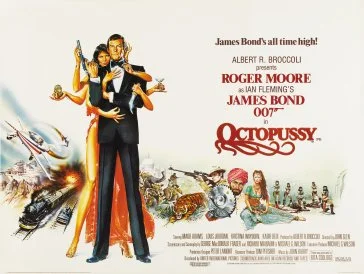
Octopussy (1983)

Mac Boyle January 2, 2025

Director: John Glen

Cast: Roger Moore, Maud Adams, Louis Jourdan, Kristina Wayborn

Have/ I Seen it Before: Sure. TBS, the 90s. That whole bit. Felt a little bit weird writing down the title on a VHS label, but that’s how one started to amass their movie collection with a $5.00 allowance.

I sometimes wonder if re-watching some of these films on those VHS recordings might have a little charm to them. Would it be a delight to take a bathroom break in the middle of this film to see a commercial for the Bigfoot Pizza and In The Mouth of Madness (1995). I may never again see a movie that way again. I’m oddly wistful about that in this moment.

Did I Like It: I’m stalling, aren’t I? There’s a lot of this film that works. Moore in his element, doing switcheroos on Fabregé and making googly eyes at a woman far classier than him. There are several mildly funny digs at the state of the competition—namely Never Say Never Again (1983)—although I may have been reading too much into the “REAL BOND” sign oddly hanging over Moore’s head at one point, and it seems like they’re using about twenty percent more of the Monty Norman theme than the average.

Then there’s the clown thing. I’ve made no secret of how little I think of shooting Ian Fleming’s borderline sociopathic spy into space. It was such a dimly-considered chase of where the movies were in that moment. But in this one, the man gets out of a sticky situation with a nuclear bomb by dressing as a god damned clown. In Moonraker (1979) he tries to take a page out of Luke Skywalker. Here, for no other reason than Moore is a little bored in the role*, decides to start saving the world using Charlie Chaplin’s playbook.

I do dislike that more than the space thing. Sorry, Sir Roger.

*And might have been well-advised to bow-out after the far superior For Your Eyes Only (1981).

Tags octopussy (1983), john glen, roger moore, maud adams, louis jourdan, kristina wayborn, james bond series
Comment

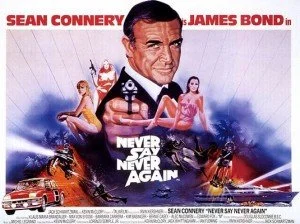
Never Say Never Again (1983)

Mac Boyle January 2, 2025

Director: Irvin Kershner


Cast: Sean Connery, Klaus Maria Brandauer, Max von Sydow, Kim Basinger


Have I Seen It Before: Although largely ignored in the canon—what with it being the strangest bit of counter-programming ever committed to screen—I have the strongest memory of picking up a VHS copy* from Suncoast** and marveling that there could be a lost Sean Connery Bond to marvel at…


Did I Like It: And then I didn’t think much of it. I’ve often wondered if my initial reaction to a Bond film is largely dominated not by the star at hand, or the villain with which he grapples, but instead the music on display. I can forgive a lot from A View to Kill (1985) because it is propelled forward by Duran Duran, but never quite sign on board with The Spy Who Loved Me (1977) because Carly Simon’s song brings the series into a fitful romantic mode, despite never realizing that there is almost nothing romantic about the protagonist of these films. Here, not only am I robbed of any sort of memorable tune, but (for clearly understandable reasons) there is no gun barrel and no Monty Norman in earshot. It never quite feels right.


In subsequent years, I’ve revisited the film and found it—despite my knee-jerk reactions to its deficiencies—to be above average for this era of Bond films. Connery is good, his late-period heyday just over the horizon and his eventual somnambulism in the final years of his career still a good ways off. Had fate been reversed and Roger Moore had starred in this film, it would be far easier to dismiss.


And then we become to the real crux of the matter. It can be a little easy to offer film criticism by way of comparison, but this film exists only to be compared to other films. It is a remake of possibly Connery’s weakest canonical film, Thunderball (1965), and was released within a few months of Octopussy (1983). So, where does Never rank among this traffic jam of movies? It’s a faster-paced movie than Thunderball, which counts for some. Is it better than Octopussy? Well, Sean Connery never dresses as a clown in this film. Hell, he could have dusted off the weird outfit from Zardoz (1974) and he still wouldn’t have done what Roger did that year.

But that’s probably a discussion for a different review.


*Kids, ask your parents.


**Kids, ask your parents, and weep for how good you could have had it.

Tags never say never again (1983), irvin kershner, sean connery, klaus maria brandauer, max von sydow, kim basinger, james bond series, non eon bond movies
Comment

Casino Royale (1967)

Mac Boyle January 2, 2025

Director: John Huston, Ken Hughes, Val Guest, Robert Parrish, Joe McGrath


Cast: Peter Sellers, Ursula Andress, David Niven, Woody Allen, Orson Welles*


Have I Seen It Before: Yes, as one of those rogue Bond-films (I’m using each of those three words rather generously) it wasn’t one of those that I was exposed to on regular TBS Bond-a-thons, but somewhere along the way curiosity alone brought me to it. I remember my mother had a fondness for it, but I’m prepared to write that off mostly to Burt Bacharach. I thought at the time that there were a few laughs, but the whole thing dragged on far too long, which wasn’t especially damning. As a child I thought that about plenty of comedies of the era.


It's entirely possible I didn’t stick around to the end. In fact, that ending being what it is, I’m pretty sure I didn’t. Years later I came back to it. Now I know.


Did I Like It: Let’s start with the positive. A farce revolving around the idea that the world so desperately needs a James Bond that they’ll hand the name and number out to just about anybody isn’t a bad concept. Twenty years ago, if you had asked me what film desperately needed to be remade, I’d put this at the top of the list. Now that we live in a world where Casino Royale (2006) exists, one might think the case would be closed. But a conceptual remake is aching to be done, too. Just leave the Fleming canon right where it is, thank you.


What else… What else? Oh. The DVD includes a 1954 episode of the anthology series Climax!** which was the first attempt to adapt the first Fleming novel. It’s not especially good, either, but is ultimately fascinating. A completist like myself would be incomplete without both of these on his shelf.


That’d be about it. There are a fitful few laughs on display here. I’m even trying to remember them now, and they slip away the moment the film is over. Woody Allen as one of many Bond’s isn’t a bad pitch for 1967, but even that one ought to stay on the shelf in the here and now. Thin material culminates in a brief epilogue taking place in heaven, when one of the Bonds gets his final revenge on the villain of the piece. I’d say I wouldn’t identify the turn here for the sake of spoilers, but you probably wouldn’t believe me if I decided to go the other way.


This may be the most overwrought, overproduced film to be unleashed from an editing bay. I may start petitioning for the retirement of the phrase “too many cooks” and replace it with “too many directors making Royale.” It’s more words, but it feels like more descriptive. I’m paraphrasing, but Gene Siskel once described a good test of the worth of a movie is whether or not you’d rather see a documentary of the same cast having lunch. With Welles and Sellers, that’s an automatic decision from me. The movie may well have been doomed from the start.


*If I’m going to have to list five separate directors, I really ought to be allowed to list a fifth actor. Especially that one.


**Try getting that one by the censors today.

Tags casino royale (1967), james bond series, non eon bond movies, john huston, ken hughes, val guest, robert parrish, joe mcgrath, peter sellers, ursula andress, david niven, woody allen, orson welles
Comment

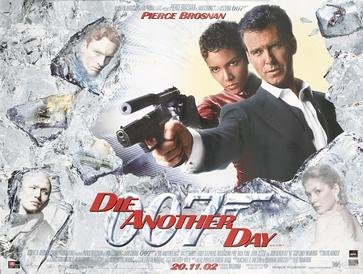
Die Another Day (2002)

Mac Boyle December 18, 2024

Director: Lee Tamahori


Cast: Pierce Brosnan, Halle Berry, Toby Stephens, Rosamund Pike


Have I Seen It Before: Yes, but you know what? I’m reasonably sure this was the only Bond film since Goldeneye (1995) that I didn’t see in the theater. I actually followed the production a little bit, it coming about in that era when one could passively take an interest in a developing film. And yet, when the film came out, I was probably dealing with just a little bit too much disappointment and heartache that winter—I’m looking in your direction, Star Trek Nemesis (2002)--to even bring myself to a second-run theater.


Did I Like It: It’s Brosnan’s worst film, right? One could make an argument for The World Is Not Enough (1999) but all of those arguments feel wrong. But as much as I can complain about the film and lament it as a dissonant note for the Irishman to leave on, there is plenty to like here.


The opening plot developments—which see 007 (Brosnan) captured on a mission to North Korea—are pretty brilliant on two fronts. First, it lays Bond low so that he can spend the rest of the film clawing his way back. Right there you have some forward momentum that can separate the pretty good Bond adventures from the positively dreary ones. Second, without dwelling on the matter too much, it gives a rationale for a post-9/11 Bond story by implying he was a prisoner during that moment in time.


His eventual release from the North Korean prison gives Brosnan some of his best moments as the character. Never has a man had such (embarrassingly aspirational) swagger as when he uses the power of his mind to overcome long-term scorpion venom exposure, very real PTSD, and malnutrition to escape a British prison and check in to the finest hotel in Hong Kong while still dripping wet and wearing hospital clothes. There is something so quintessentially Bond about him walking into that hotel like he owns the place that I’m almost prepared to view the whole film positively.


But then things go differently. The film’s in a spot of trouble by the time we get a needle drop of “London Calling” (I tend to imagine a British audience rolling their eyes, and I am right there with them). A scene with Q (John Cleese) serves more as a wacky obituary for Desmond Llewelyn. Then there’s Madonna. I don’t get Madonna. I never have. I’ve certainly never bought her in any film role outside of maybe A League of Their Own (1992). I even kind of like her theme song—and feeling the theme song will paper over large parts of some other films in the series—but the moment she shows up in the film as a fencing instructor, we are firmly in Roger Moore territory. Then there’s an Ice Hotel, an invisible car, and a parasailing sequence that I can’t imagine anyone would have been happy with twenty-plus years ago. It was almost as if Joel Schumacher had directed the whole thing*.


Which is right about when this film becomes clear in my head. The first half is a pretty good Fleming-heavy Connery film made with some allowances for modern audiences. The second half is a love-fest for Moore, which was never going to play with me. That’s not the worst notion to have when considering how to celebrate the series 40th anniversary. If they could have only managed to blend the two elements a bit better, the film wouldn’t feel as if it were lurching in tone. As EON looks to Bond 26, there’s room for flashes of Moore-fun in the post-Craig era. Just leave the parasailing behind. Please.


*I’m strangely not reflexively opposed to the impossible idea of Schumacher directing a Moore film in the 80s…

Tags die another day (2002), lee tamahori, james bond series, pierce brosnan, halle berry, toby stephens, rosamund pike
Comment

Moonraker (1979)

Mac Boyle December 16, 2024

Director: Lewis Gilbert


Cast: Roger Moore, Lois Chiles, Michael Lonsdale, Richard Kiel


Have I Seen It Before: Yes. Yes, I have. Must I say more?


I just checked with the proprietor of the site and yes, apparently, I must say more.


I must have first seen it during a TBS marathon of the films, which I dutifully recorded on VHS, and clearly didn’t think much of it even back in the far-flung 90s because my strongest recollection of the film is that I labeled that VHS tape (I think I used an LP tape) along with License to Kill (1989) “Moonwaker.” Thirty years later, I still think that’s a better title. All of eleven years old, and I’ve already got notes for improvements.


Did I Like It: Where to begin? Let’s start with the positive. Almost none of the Bond films have missed the mark with their pre-title sequence. And the skydiving duel between Bond (Moore, looking as if he’s just about ready to check out of the role, despite the fact that he’s going to do three more) and Jaws (Kiel, more on him later) is about as good as any of Moore’s openings.


Now that we have that out of the way. Bond is in space. Space. Spaaace. Fleming would rise from the grave and have a heart attack all over again. And the only reason Bond becomes Britain’s first man in space, is because Star Wars – Episode IV: A New Hope (1977) and Close Encounters of the Third Kind (1977)* made huge money and there are moments where Cubby Broccoli had all the creativity of a mimicking parrot.


Some might applaud the visuals during the film’s inexplicable third act, but aside from Ken Adam’s always delightful set design, all this film can offer is a barely warmed over riff on Star Wars. That film was a symphony of sounds that still dominates genre filmmaking, but the laser fire on display here is one step removed from someone dubbing in “Pew!” sounds.


And then there’s Jaws. One of the most menacing villains in the movies not only finds love (I’m not opposed to it) but it turns him into an ally because… well, the film has to have some kind of an ending, right?


The rest of the film is a humdrum Bond adventure, painted by largely by numbers. Where it isn’t baffling bad, it’s content to be middle-quality. I might be more mad about that than anything else.


But you want to know what really struck me on this viewing? I look at the sight of a megalomaniacal industrialist in love with rockets and space travel, bedraggled by what he sees as humanity’s twilight, which will only lead him to be the MC for the apocalypse. And then I start watching the movie. It’s not possible that old what’s his name saw this movie as a child and decided that was all he ever wanted to be… Right? It could be, though. What have we done?


*Urban legend insists that Spielberg himself campaigned hard to direct this one, only to get nowhere with EON. Could you imagine? They’d have reined him in and it would have been just as much of a disaster, but he might have been spared the indignity of 1941 (1979).

Tags moonraker (1979), james bond series, lewis gilbert, roger moore, lois chiles, michael lonsdale, richard kiel
Comment

The World Is Not Enough (1999)

Mac Boyle December 15, 2024

Director: Michael Apted

Cast: Pierce Brosnan, Sophie Marceau, Robert Carlyle, Denise Richards

Have I Seen it Before: Oh, sure. It was twenty-five years ago, and I can’t remember the precise details about that Christmas season, but I do have the distinct memory of being stuck at the mall for a number of hours, and managed to pull away from whatever was going on to go catch a screening.

Did I Like It: As with most of the Pierce Brosnan Bond films, twenty-five years ago I remember thinking that the post-gun barrel pre-title sequence was a well-crafted little thriller. The succeeding film meanders through perfunctory scenes, punctuated by an occasional ambition to give some depth to Bond that was never going to be fully realized until they were able to re-boot things entirely with Casino Royale (2006).

I’m pretty much feeling that same way now. Renard (Carlyle) is an interesting villain, but oddly enough may have worked better in a novel than it does in film. Having him already essentially dead might have fueled several good chapters trying to get into the head of someone who has already died but is losing sensation after sensation as he slowly loses consciousness. In a film, it removes any sort of pretense to tension, and makes him essentially invulnerable for those moments where he has to exchange blows with Brosnan.

Dame Judi Dench clearly wielded her power well going into this film. Having a number of juicy scenes to play in Goldeneye (1995), she spent most of Tomorrow Never Dies (1997) doing control-room schtick that wouldn’t have challenged Bernard Lee or Robert Brown in earlier films. Here, she has a very real role in the story and even plays into the action as it unfolds. Yet another example of the series’ ambitions that were waiting for Craig.

On the “Bond Girl”* front, it is a mixed bag. Sophie Marceau plays an interesting character, archly named in the best Bond tradition. She is full of as close to surprises as this era of the franchise is likely to get, and Marceau clearly understand the best parts of the assignment at hand. Then there’s Denise Richards. Whoo, boy. It’s not so much that she’s bad casting for a nuclear scientist (she is, but at least she has a good sense of humor about it, as evidence by her later appearances on 30 Rock), but it is that her performance is so perfunctory that she makes Britt Eklund and Tanya Roberts look like possible heirs to… Well, Dame Judi Dench, now that I think about it.

*It almost feels like that term should be trademarked, no?

Tags the world is not enough (1999), james bond series, michael apted, pierce brosnan, sophie marceau, robert carlyle, denise richards
Comment

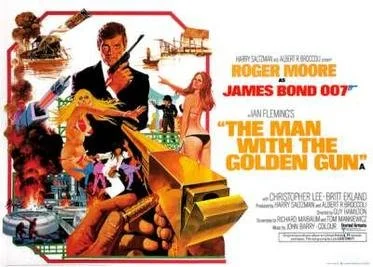
The Man With the Golden Gun (1974)

Mac Boyle December 15, 2024

Director: Guy Hamilton


Cast: Roger Moore, Christopher Lee, Britt Ekland, Maud Adams


Have I Seen It Before: Oh, sure. Oddly enough, I think this may be the film in the canon I’ve seen the least. (Octopussy (1983) may be in close competition).


Did I Like It: I’m honestly not sure why that’s the case, as I tend to be a bit of a contrarian about Moore’s time in the tuxedo and Walther PPK. This is almost universally reviled as Moore’s worst at-bat (usually uttered in the same breath with A View To A Kill (1985).


But I really like (well… sort of like) A View To A Kill, and dare I say I liked large swaths of this one, too. It might be the villain at the center of it all. Christophers Walken and Lee were born to play Bond villains, and acquit themselves well. Throw in the fact that Lee’s Scaramanga has a ruthless, simple ambition and plan (at least in the first half of the film) that makes it one of the more solid Fleming adaptations starring Moore.


Even when the film settles into the old hoary Bond cliches, it’s not all bad. There’s a Macguffin of a device that makes solar power work which is somehow simultaneously silly on its own and so of-the-moment that it must have felt passe by the time The Spy Who Loved Me (1977) arrived in theaters. I may owe Tomorrow Never Dies (1997) an apology for the side-eye I gave it when I remembered that the whole plot hinged on a GPS device.


The theme song, sung by Lulu and with music by the Bond music GOAT John Barry is dismissed so perpetually (even by Barry himself) but after having the other Bond themes on regular re-play, I found it one oddly fresh again. Sure, it’s lyrics are a listing of various plot elements, but that can be fun, too. If we didn’t have this title theme, we might not have had the various rap tracks recounting movie plots throughout the 80s and 90s. Lulu walked so Partners in Kryme could run. If you know, you know.


I’m honestly not entirely sure why both View and this one are consistently ranked at the bottom of Moore’s efforts.


Then I see Sherriff J.W. Pepper (Clifton James). Again, apparently. Where he might have made sense in Live and Let Die (1973) (I’m being generous here) it’s a real bummer to find him becoming not only a recurring character here, but just a little bit of a partner in crime (or kryme) for a moment. I can’t explain away Pepper, but I’ll be damned if I didn’t crack a smile when his wife (Jay Sidow) wants to buy a Hong Kong Elephant trinket and he grumbles “Elephants! We’re Democrats, Maybelle.”

I didn’t think I would be this forgiving as I march through Moore’s films. Could this possibly hold up? Oh, no… (checks notes) I’m going to have to review Moonraker (1979) now, aren’t I?

Tags the man with the golden gun (1974), james bond series, guy hamilton, roger moore, christopher lee, britt ekland, maud adams
Comment

Tomorrow Never Dies (1997)

Mac Boyle December 7, 2024

Director: Roger Spottiswoode

Cast: Pierce Brosnan, Jonathan Pryce, Michelle Yeoh, Teri Hatcher

Have I Seen it Before: Oh, yes. In that far flung winter of 1997, I actually lost ten bucks to Ben Owen, when I bet him that this would be the bigger film than the other wide release that weekend, beating out a little film that already had a reputation of going significantly over budget and being delayed by the studio.

The movie was Titanic (1997).

I bet against Cameron, and I got what I deserved. But you’re damned right I was in the theater for this one on opening weekend, for all the good it did me.

Did I Like It: I’ve kind of soured on Brosnan’s films in the series in recent years. The more interesting parts of his four films were greatly improved on by Daniel Craig’s films, and the worst impulses adopted too much of Roger Moore for my taste. It was entirely possible that this era of the series best contributions would be to video games more than anything else. I’ll be honest that I thought I would just have this movie on in the background*, but I found the pre-title sequence to be a delight and was drawn into the film.

But then I kind of lost interest in a mishmash of truly terrible CGI and Teri Hatcher. I was getting a little bored. This wasn’t helped very much by the occasional diving sequence, which can absolutely suck the life out of otherwise great Bond films. Just ask Thunderball (1965). That is probably pretty close to the review I would have given the film in the 90s.

But the film is not without its charms. And by that I mean Michelle Yeoh. She more than equals Brosnan’s swagger and ability. All of the times the Eon powers that be threatened to offer Bond spinoffs, I really wish they would have pulled the trigger here. More Yeoh is good for everyone.

*I’d probably be first in line to see if the film re-entered theaters for any spell of time. I could win that ten bucks back yet.

Tags tomorrow never dies (1997), james bond series, roger spottiswoode, pierce brosnan, jonathan pryce, michelle yeoh, teri hatcher
Comment

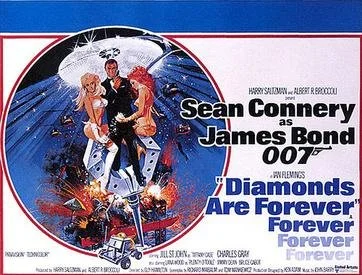
Diamonds Are Forever (1971)

Mac Boyle December 7, 2024

Director: Guy Hamilton

Cast: Sean Connery, Jill St. John, Charles Gray, Lana Wood

Have I Seen it Before: Sure.

Did I Like It: There’s a moment in the TV series Timeless, which I didn’t really enjoy, where the timeline gets altered and there are more Sean Connery-starring Bond movies than there were in our timeline. That part I found delightful. So, it is supremely strange that I find myself in the strange position of wishing that Connery had been in the series more, and somehow wishing that he had been in one less entry.

The movie already runs at a bit of a deficit, as it is trying even harder than most to ape the singular success of Goldfinger (1964). It probably isn’t nearly as egregious as A View to A Kill (1985) in that regard—that movie nearly did a find and replace of Goldfinger’s script—but it is a terrible impulse of the franchise to imitate the the third entry.

But that’s not the real problem. The problem is Connery himself. Lore around the movie indicated that Connery didn’t want to be there, despite the huge payday, and its difficult to not see that in his listless final (authorized, non-video game) performance as the superspy. He looks tired, and significantly older than he did in You Only Live Twice (1967) and even later in Never Say Never Again (1983).

Then again, the film’s screenplay doesn’t give him much to work with. The opening—usually the best part of even the worst films in the series—at least seems nominally propelled from the ending of On Her Majesty’s Secret Service (1969) with Bond (Connery) searching for revenge against Blofeld (Gray). Anything less would have felt like a cheat, but when it turns out that Blofeld survived Bond’s ministrations in the third act of the film, it isn’t a horrifying revelation for Bond. It’s barely a plot point.

Tags diamonds are forever (1971), james bond series, guy hamilton, sean connery, jill st john, charles gray, lana wood
Comment

On Her Majesty's Secret Service (1969)

Mac Boyle December 7, 2024

Director: Peter R. Hunt


Cast: George Lazenby, Diana Rigg, Telly Savalas, Bernard Lee


Have I Seen It Before: Oh, sure.


Did I Like It: If you’ve seen the film, or any of the Bond series, you probably have some vague opinion about this one, even if you haven’t seen it. Is it any good, being an aberration in the series? Is George Lazenby worth watching? Does the ending even work?


Take away the storytelling aberration of having three different Bonds in successive films, and this film manages to succeed where so many other of the films struggle. It’s a solid adaptation of Fleming’s original novel. It is low on gadgets, high on plot, and feels of a piece with a longer story told about a man who has a very strange job and doesn’t think he’s going to live very long. It is a sweeping action epic, careening towards an understanded, but inevitable tragic ending. It is also the one key argument against the whole “James Bond is just a code name, and each time the actor changes, it is a new character” theory*, before Skyfall (2012) closed the book on it forever.


I’ll admit that I’ve even proffered an opinion or two on the topic of the one and done Bond, and I’m surprised to admit some of my opinions may have changed. I’ve always said that if Sean Connery has stuck it out through this film, it would have been the best in the series, even besting From Russia With Love (1963). I’m not so sure that I believe that anymore. I believe in the final act that Lazneby’s Bond loves Tracy (Rigg). He treats her tenderly, even if there is a fundamental layer of condescending chauvinism to his affections that is true to the characters, sort of like when I have beaming pride that my cat’s meows have a growing and meaningful vocabulary behind them. Connery’s whole screen presence couldn’t have hoped to reach for that pathos. It would have played as a comedy, and an awkward one at that.


By the same token, Lazenby is at points earlier in the film awkward in the role. He’s not quite so suave, so untroubled by the insanity of the world around him. Just as Connery couldn’t have played the final scene in this movie, Lazenby would have been hopelessly at sea trying to sell the character with the same level of movie star gravitas as Connery did in the opening scenes of Dr. No (1962).


The problem with the film, ultimately, is Lazenby’s short tenure with the role. Had he stuck around, he very well might have grown into his role both as Bond and as a movie star generally**. Thankfully, this longing for someone to bring that tragedy to ruthless life is sated when Daniel Craig covered large parts of the material in Spectre (2015) and especially in No Time To Die (2021).


*How so? I’m so glad you asked, and a little hesitant to include it in the review proper. Tracy dies at the end of the film. In For Your Eyes Only (1981) Moore’s Bond visits Tracy’s grave. That’s the big one. There are a number of references beyond that that are less specific. I imagine I’ll have more to say about that in my immediately forthcoming review for Diamonds Are Forever (1971).


**Although him in Moonraker (1979) would still be a chore in any universe.

Tags on her majesty's secret service (1969), peter r hunt, george lazenby, diana rigg, telly savalas, bernard lee, james bond series
Comment

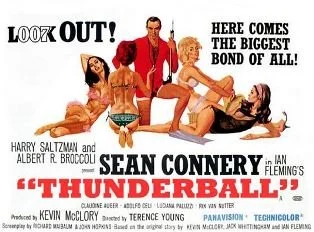
Thunderball (1965)

Mac Boyle December 2, 2024

Director: Terence Young


Cast: Sean Connery, Claudine Auger, Adolfo Celi, Luciana Paluzzi


Have I Seen It Before: Oh, sure. I even remember being a little guy and trying to build a version of the miniature rebreather out of Lego, being disappointed that it didn’t really work, and then slowly realizing that the real one probably didn’t work either.


Did I Like It: I want to like it far better than I do. Connery is here, which improves matters more than a little bit, and he’s even young and fit, which should move the film ahead of Diamonds are Forever (1971) and Never Say Never Again (1983). Sure, the film is a little slavishly devoted to Goldfinger (1964), when I personally prefer From Russia With Love (1963). But that should all lead to a bit of fun, right?


There might be an impulse to view the film through some jaundiced eyes, as the byzantine nature of the rights associated with many of this film’s concepts quickly doomed everything after the Connery era to the episodic buffoonery that have proved to be the series’ worst impulses over the years. If there was one book in the Fleming canon to wait for years to see adaptation, I might have preferred this one wallow for years—certainly not be adapted twice—and we get a Casino Royale with Connery*.


But judging a film based on the studio politics and litigation surrounding it is kind of like dismissing Sam Raimi’s Spider-Man (2002) because we could have gotten a James Cameron version of the film**. I think it’s just that the film is so water-logged that it occasionally forgets to be an action film. We can marvel at some underwater photography, but scuba-based fist- and gunfights are a trifle bore. John Barry’s score is pulling extra duty, having to occasionally go up tempo to remind us we ought to be thrilled when the footage forgot, and even that sweeping music gets exhausted and settles into a cozy, and unremarkable nap.


*Yes, that would mean we probably would not have Casino Royale (2006), or worse yet a Craig-starring Thunderball, but you’ll note I said I might have preferred it that way.


**I mean, I would like to see that, but Raimi will more than do in a pinch.

Tags thunderball (1965), terence young, sean connery, claudine auger, adolfo celi, luciana paluzzi, james bond series
Comment

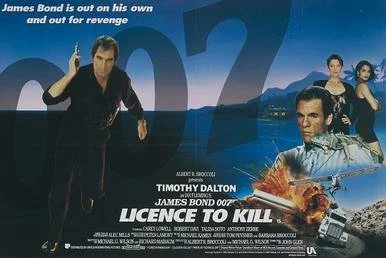
Licence to Kill (1989)

Mac Boyle November 27, 2024

Director: John Glen


Cast: Timothy Dalton, Carey Lowell, Robert Davi, Talisa Soto


Have I Seen It Before: Oh, sure. I was a boy and I had access to TBS. That’s the usual way one takes in the entire Bond canon. It was strange that I took that in just as Goldeneye (1995) was approaching its theatrical run, which meant this film was the most recent release in the series. Even then, it felt like a relic from some other era.


Did I Like It: I’ve been dreading re-watching this one a little bit. I’m so enamored of The Living Daylights (1986) and remembered as a boy not liking this one nearly as much that I’d be really underwhelmed in the here and now. While I don’t find this to nearly be the nearly-perfectly calibrated Bond-delivery device that Daylights remains, it is good. Quite good. My long-held belief that Dalton walked so that Daniel Craig could later run remains undiminished. The attempt at actually bringing the Fleming books to life is on full display, as this is ultimately closer in spirit and plot developments to the novel Live and Let Die than the film which shares its name.


The film is not without its more whimsical Bond-fun, opposed to what its reputation might suggest. It’s a delight to see Desmond Llewelyn’s Q get to do far more and serve the second act (that part of many Bond movies which can become interminable) far more than he is normally allowed.


Even one of the often annoying habits of the series is indulged with in a mostly pleasing, ultimately subtle way. The series can’t help but follow the trend of successful recently movies. Star Wars: Episode IV – A New Hope (1977) is huge, and we get Moonraker (1979). Still not happy about that one, forget that it all happened before I was born. Batman Begins (2005) revitalizes a flagging franchise, and we go back to the beginning with Casino Royale (2006). Thank God. Here, though, while one might get a bland feeling from the drug trafficking plot, I can’t help but notice that Michael Kamen replaces John Barry*, and both Robert Davi and Grand L. Bush appear in parts of varying sizes. Tell me this film isn’t the way it is due in no small part to Die Hard (1988), and I’ll just be forced to shake my head.


The positives outweigh the negatives, though, and I can’t help but lament the fact that we didn’t get more outings with Dalton. The series would likely not have taken the shape it has now if he had, but one more might have been nice. His Goldeneye would have been something.


*Should anyone have replaced John Barry? Fair question. One also gets the sense that by the time we got to the 21st century, even the series itself is attempting to mimic Barry’s sweeping scores.

Tags licence to kill (1989), john glen, timothy dalton, carey lowell, robert davi, talisa soto, james bond series
Comment

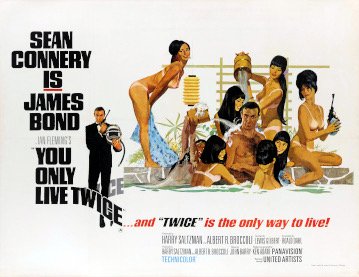
You Only Live Twice (1967)

Mac Boyle April 17, 2022

Director: Lewis Gilbert

Cast: Sean Connery, Akiko Wakabayashi, Mie Hama, Tetsurō Tamba

Have I Seen it Before: Oh, sure.

Did I Like It: And yet, beyond <Dr. No (1962)>, <From Russia with Love (1963)>, and <Goldfinger (1964)>, I make a suspicious habit of not keeping Connery’s other three (official, and unofficial, for that matter) outings as Bond on regular rotation.

People might complain about Connery’s performance in the role, as he felt like he was at the end of his time in the role (he skipped out on On Her Majesty’s Secret Service (1969)), but I don’t see it. There’s something so singular about Connery in the role that even while Daniel Craig unassailably did more with the role than anyone else, I still picture Connery (even with his series of weird hairpieces) in the role before anyone else.

The plot is fine—it’s no sin for a Bond film to feel just a wee bit interminable, I love them, but the vast majority of they are a slog in the middle—and there’s scarcely better casting for a Bond villain in general (and Ernst Stavro Blofeld, specifically) than Donald Pleasance. It’s an exotic travelogue, the theme song (from Nancy Sinatra) was an absolute banger, even before Mad Men made it the stinger of their greatest season.

Is there anything else one needs from a Bond film? I’m racking my brain as I type this to quantify why this is one of the also-ran Bond films. It shouldn’t be. It’s just weird enough (and, for that matter, just early enough in the saga) that it doesn’t fall into the occasional problem Bond films have where some entries so, desperately want to be Goldfinger (1964) in every measurable way.

I guess that means You Only Live Twice is actually one of the all-time greats… That’s the thing I’m realizing as I watch some of these for these reviews: some of the entries I have spent this whole time discounting have been my favorite this whole time.

Tags you only live twice (1967), lewis gilbert, sean connery, akiko wakabayashi, mie hama, tesurō tamba, james bond series
Comment
5097A2C6-C348-469F-99B4-1CBCCFDBD07B.jpeg

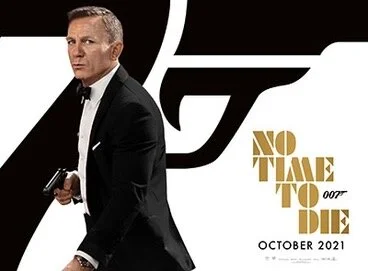
No Time To Die (2021)

Mac Boyle October 17, 2021

Director: Cary Joji Fukunaga

Cast: Daniel Craig, Rami Malek, Léa Seydoux, Lashana Lynch

Have I Seen it Before: Where to even begin with a question like that? The film was originally scheduled to be released in April of 2020. I had even scheduled some time off to make a day of it.

We all know what happened there.

In fact, this is the first new movie* since Birds of Prey (2020) I’ve seen in the theater. This is also the first new movie showing only in theaters that I had any interest in seeing immediately. When it comes to Bond, it feels like the biggest screen possible is the way to go, so I booked a seat on Monday afternoon at the biggest theater I could find…

…and it was nearly abandoned, because the world is still pretty fucked up, right? It’s almost as if the theatrical experience is less about the collective experience** of a film and more about the seeing epic cinematography on the largest palette possible in a room that naturally eschews distractions.

I’m also struck by the little pieces of the theatrical experience. Seeing a melange of trailers, and being thoroughly disinterested in some (Jackass Forever) and being completely entranced by others which had not really been on my radar up until that point (Last Night in Soho). It had also been an astonishingly long time since I sat in a dark room, waiting for things to get started, and the prevailing thought I have racing through my mind is: “Did I forget to lock my car? I’m not going all the way out to the parking lot to check.

It was almost like it was early 2020 again. If only for a moment.

Did I Like It: Whew. After all that, is there anything left to talk about?

Plenty.

I’ve always thought On Her Majesty’s Secret Service (1969) was a throughly underrated entry in the Bond series. It’s scope is top-notch, it’s (relatively) grounded story harkens to the best that Ian Fleming’s books had to offer. The final moment is heartbreaking, and only undercut by the fact that Connery isn’t in the role so we could watch what was left of his heart break. He could have also torn through Diamonds Are Forever (1971) like a wild animal, instead of what we got… Even if Lazenby had either decided or been allowed to stick around in the role, that wrenching pathos might have been there in retrospect. Given that he was a one-off, that moment doesn’t quite reach the heights it could have.

Well, now we’re here.

I might say that this film owes a bit too much to Service, having to create at least part of its context through references to that earlier film’s dialogue and soundtrack. This is ultimately a minor complaint, because Craig’s longevity in role establishes that context in spades. It makes the story of his Bond a complete one, and earns that pathos.

There had always been a disconnect in the series (both in print and on film) where Bond’s more prurient impulses are often written off to an acute sense of mortality, but there’s never a moment where his continuing, perpetual survival is in doubt. That’s no longer the case. The film might be a little on the engorged side, and this only serves to make the climax perhaps an inch too intricate for its own good, but those are minor concerns, especially when we’re less than twenty years away from Die Another Day (2002).

I don’t know where the series may go from here, but I’m delighted by the possibilities. I stayed until the very end of the credits to ensure that, indeed, “James Bond will return.” 

Some might complain about a degree of demasculinization for the character, but I’m not with this line of thinking in the slightest. I’ve been walking a little bit taller and a bit more confidently now, days after I took in the film. Both this film and Craig’s time in the role will be remembered as all-time heights for the series. I’d say the potential complainers need to get over themselves, but I don’t need to tell them that. They’re going to get over it all on their own without my help.


*Since getting my full round of vaccinations, I have been to anniversary screenings of Fargo (1996) and Star Trek IV: The Voyage Home (1986).

**Come to think of it, more often than not, the majority of other people are a thing to endure in a movie theater. In this instance, all I needed was one person to blurt out something along the lines of “This kinda crap would never have happened when Roger Moore was around!” to bring down the whole experience.
Tags no time to die (2021), cary joji fukunaga, daniel craig, rami malek, lea seydoux, lashana lynch, james bond series
Comment
Another poster up at my house. While in quarantine, this has been all I could see while working at the day job.

Another poster up at my house. While in quarantine, this has been all I could see while working at the day job.

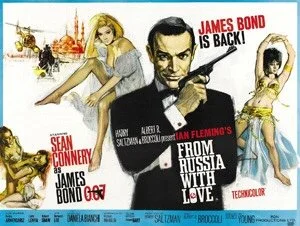
From Russia With Love (1963)

Mac Boyle March 6, 2021

Director: Terence Young

Cast: Sean Connery, Daniela Bianchi, Pedro Amendáriz, Robert Shaw

Have I Seen it Before: Oh. Many, many times.

Did I Like It: For so many years, there wasn’t even much of a contest. Before some (underline, some) of the recent Daniel Craig entries, this was the best Bond movie ever made by several kilometers*. For my money, it still is the absolute gold standard of the franchise. 

And it can be hard to describe—to the uninitiated—why that is. There are few gadgets on display here. The iconic Aston Martin is still a film away. The main villain operates in the shadows, and the actual antagonists of the story are in roles that would normally be filled by henchmen as the franchise continued. To tell the truth, as a young lad I think this was very near the bottom of the list. Goldeneye (1995) was my jam. Boys do tend to have an affinity for whoever played Bond when they were about 10. We were all young fools, once.

It is the most faithful adaptation of one of Fleming’s original novels. That might account for some of it, but convincing oneself that the Fleming books are holy texts which should never have been deviated from is probably dangerous territory, and at minimum would preclude one from accepting Idris Elba as the next successor to the role, which he should 100% be. Don’t @ me.

Producer Albert Broccoli said that this is where the Bond formula was perfected, but I say that is bunk. If you want the formula perfected (before it was summarily regurgitated, you have to wait for Goldfinger (1964). This film’s true strength is that there was no formula yet. EON and Terence Young and the cast were content to make an actual movie the best way they knew how. By the time Thunderball (1965) came around, the whole affair had become a cottage industry.

With this movie, the chemistry between Connery and Bianchi (completely dubbed over, in the grand tradition of early Bond) is palpable. Those henchmen are both memorable villains without veering too much into cartoon territory. And Connery is never better in the role. He’s a man working the problems of his adventure out. There’s a mind at work, not a strange, inhuman superhero who is never in any danger.

If only the other Bond films could have pulled off that trick. At least Moonraker (1979) would have been a hell of a different picture.


*Felt weird to go with “miles” there, when we’re talking about 007.

Tags from russia with love (1963), terence young, james bond series, sean connery, daniela bianchi, pedro amendáriz, robert shaw
Comment
729853C9-47B2-42C0-8902-8958C761850E.jpeg

Spectre (2015)

Mac Boyle December 26, 2020

Director: Sam Mendes

Cast: Daniel Craig, Christoph Waltz, Léa Seydoux, Ben Whishaw

Have I Seen it Before: Sure.

Did I Like It: Does the plot of a Bond movie really matter? If they do, then this one suffers a bit. It tries to ape the “greatest villain reimagined” motif that The Dark Knight (2008) made de rigueur and movies like Star Trek Into Darkness (2013) drove into the ground. The story of the resurgence of Blofeld (Waltz) feels like it has come too late to the party to be anything other than lame. Bond movies are no stranger to feebly chasing after the current moviegoing trends, with equally shaky results. I refer the jury to Moonraker (1979).

Really, truly, the film is actually too late for two separate parties. The Spectre aspects of the Bond mythology had spent decades tied into endless copyright disputes by the time Roger Moore had taken over the tux and martini. Corporate mergers collided with the death of intransigent rights holders so that every possible atom of the Bond property could once again be wielded by EON Productions. Did they try to bring us a new version of Spectre and Blofeld, re-combining the parts we knew into something new? No, they tried to retcon the man and the organization as the mastermind of every event in the Daniel Craig era. The results, as I have said, are still somewhat awkward.

And yet, I may be beyond complaining about Bond movies at this point. Maybe its that No Time To Die feels further and further away the more it is delayed. Maybe I’m just—like Craig—mellowing in my old age. Maybe its that at its core, all I need from a Bond is some gadgets, a couple of set pieces, and a man at the center of it all that exudes such confidence and swagger forging the fantasy that a human could walk the Earth completely divorced from the notions of angst or klutzyness. It’s an enduring—if admittedly toxic—fantasy in machismo. Each of the actors in the role had that ineffable quality, and Craig has had it in spades throughout his tenure, and in great supply here. It can keep a Bond movie afloat, and this one manages.

Tags spectre (2015), james bond series, sam mendes, daniel craig, christoph waltz, léa seydoux, ben whishaw
Comment
220px-Live_and_Let_Die-_UK_cinema_poster.jpg

Live and Let Die (1973)

Mac Boyle April 15, 2020

Director: Guy Hamilton


Cast: Roger Moore, Yaphet Cotto, Jane Seymour, Geoffrey Holder


Have I Seen it Before: Yeah…


Did I Like It: And so, we renew my vow to not be all that into the Roger Moore reign behind the wheel of the Aston Martin from Q Branch (or, as he so often inexplicably drives, a Lotus Esprit).


Things start off on a rocky note. One wants to give credit to Moore for making the dauntingly bold gambit of taking over for Sean Connery, especially when the last fellow to try that has spent most of the last fifty years pilloried for his efforts. But when the assignment from M comes not during a meeting at MI-6. This precludes the possibility of this new Bond having his moment with Desmond Llewellyn’s Q, which makes it hard to accept this as a Bond film at all, even if the gun barrel sequence helps. But far more unsettling is tiny little farce that plays out while Bond is trying to keep M (Bernard Lee) from realizing that he has a woman over. It’s so, un-Bondian. The literary Bond or even Connery’s Bond (and let’s get real, Lazenby wouldn’t give a shit, either) wouldn’t be so coy about relations with a woman. Maybe The Saint would be that precious, and that’s probably the problem.


But let’s talk about Racism! The film makes that fatal flaw of several of Moore’s later outings by trying to imitate another genre, in this case the blaxploitation films of the 1970s. But when the film is exclusive authored by white filmmakers, all we get here are the trappings, but none of the authentic style. 


But more importantly, let’s talk about sexism! Now that may seem like a strange criticism for a Bond movie. If I wasn’t budgeting for a certain amount of sexism, I probably should have watched a film from some other series. But every black man seems to be cunning, when the few scant women of color—mainly Rosie Carver (Gloria Hendry)—screech and faint their way through the movie. I can roll my eyes at the Stacy Suttons and Christmas Joneses of the world as much as the next guy, as their faux over capability beggars all believability, but a little bit of agency wouldn’t hurt, especially when by this point the series had a plenty of relatively self-possessed heroines. Even Jane Seymour has more of a certain serene aptitude about her.


That whole penultimate act, though… And that’s before I even approach the unslightly beginning of what would become the epic tragedy that is Sherriff J.W. Pepper (Clifton James). Roaring through the marshes of Louisiana is not exactly the Baccarat (or Poker) table at the Royale, but a Bond movie needs to be a little more exotic than that. Even Diamonds Are Forever (1971) brought Bond down to the banal world of the United States, but at least had the good sense of placing him in Las Vegas, a place I might believe to see a character like Bond. And here, Bond lifts himself out of his dilemma with Mr. Big’s (Cotto) henchmen with all of the lethality of Bugs Bunny.


Your individual feelings about this film will likely be tied directly to how you feel about Moore as Bond. Thus, if he’s your man with the License To Kill, then this is likely to be a highlight. For me, it’s just a portent of far worse things to come.

Tags live and let die (1973), james bond series, guy hamilton, roger moore, yaphet kotto, jane seymour, geoffrey holder
Comment
The_Living_Daylights_-_UK_cinema_poster.jpg

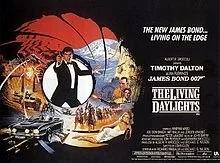
The Living Daylights (1987)

Mac Boyle April 14, 2020

Director: John Glen


Cast: Timothy Dalton, Maryam d’Abo, Joe Don Baker, Jeroen Krabbé


Have I Seen it Before: I could keep going over the mid-90s heyday of the TNT Bond marathon and how it steeped me all things 007 during the height of the Pierce Brosnan era. Let’s just leave it at the fact that I’ve seen all of them.


Did I Like It: First of all, I like Timothy Dalton a lot. Screw you if you can’t deal with that.


This has almost nothing to do with the fact that he is in The Rocketeer (1991) and therefore deserves an appropriate level of adulation. Well, I’m pretty sure it has nothing to do with that. In truth, before Daniel Craig come on to the scene, Dalton was doing the brave and thankless work of picking up the pieces from the Roger Moore era and bringing the material back to its Ian Fleming core. Dalton even kind of looks like Hoagy Carmichael, long mentioned as the closest real-world equivalent for the look of the literary Bond.


This isn’t to say that Ian Fleming is a faultless paragon of literary virtue. Far from it, but when the film series was more interesting in adapting the Bond of the books, the films became much more interesting and far less fixated on reliving the format solidified by Goldfinger (1964).


The plot works, and even manages to keep me engaged through the long second act of Bond films, where you are most likely to find me slowly nodding off. The less said about the need of 1980s action cinema to turn the Mujahedeen into quirky allies the better, as that routine had a shelf life of about fifteen years before Bond would be sent to snuff out Kamran Shah (Art Malik) in my personal Timothy Dalton fan fiction*. 


The gadgets are great, aside from the racist-in-a-way-that-only-Ian-Fleming-would-like Ghetto Blaster. Sinful even more so because it has no role in the plot to follow, but the key chain and the Aston Martin V8 Vantage absolutely slaps. I will have words with anyone who says otherwise. A-ha’s title track is a toe-tapper, but the last time John Barry would hold a baton for a Bond film deserves much more of a moment in cinematic history than this film enjoys. The opening sequence that sees Bond the only survivor of a training exercise gone wrong is actually one of my favorite opening sequences, made only better by the fact that the rest of the film is imminently watchable.


Top all of that off with the realization that the death of Necros (Andreas Wisniewski) is the direct inspiration for one of my personal favorite pieces of short fiction I ever wrote, “50 Miles to Somewhere North of Cambodia.”


Is it possible The Living Daylights is actually one of my favorite Bond films. I’m going to call it. Yeah. It’s definitely up there with the Craig films for me, and even up there with the early Connery films. I’m owning that from now on.


*Which doesn’t exist. I assure you.

Tags the living daylights (1987), john glen, timothy dalton, maryam d'abo, joe don baker, jeroen krabbé, james bond series
Comment
220px-Skyfall_poster.jpg

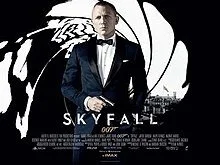
Skyfall (2012)

Mac Boyle April 11, 2020

Director: Sam Mendes

Cast: Daniel Craig, Judi Dench, Javier Bardem, Ralph Fiennes

Have I Seen It Before?: It’s actually the only Bond film that I managed to talk my wife into seeing in the theater. I can report that she thought it was “okay.”

Did I like it?: As I continued to read through Nobody Does It Better: The Complete, Uncensored, Unauthorized Oral History of James Bond, I was mystified that somehow this film has reduced in estimation by the viewing community at large.

Is it quite as good as Casino Royale (2006)? That’s one of those classic comparisons that is in equal measures resoundingly unfair and completely unavoidable. Royale is the first legitimate interpretation of a Fleming novel since probably Goldfinger (1964) but really, truly From Russia With Love (1963). This movie doesn’t bother to do what every other Bond film does and try to synthesize the most time-worn wisps of a story around the barest elements of the Fleming canon. This one somehow re-examines the modern Bond and the literary Bond and manages to create something that Fleming would have been proud of. Or at least, something Fleming would have gotten embroiled into a decades long copyright that would make many of the subsequent films worse for the effort. Some might complain that we jumped from Bond’s earliest missions to the period in time when he desperately wants to hang up his Walther forever, but if I understand the realities of the 00-unit in the Fleming books, the limited shelf life fits.

Notice how I didn’t really answer the question? I don’t want to pick between these two. They’re the best (so far) in a run for Craig where the weak links in the chain would be the best film another Bond could ever hope to do.

So, let’s dwell on what the film does astonishingly well. The theme song from Adele is the greatest Bond opener since at least the brief experiment with New Wave during the bridge between Roger Moore and Timothy Dalton, and really, truly since Shirley Bassey last graced us with her presence in Moonraker (1979). I mean, it may be my favorite Bond theme ever, and that is some rarified company.

And then there is that ending. No, not the extended sequence borrowing heavily from Home Alone (1990) that some people seem bent out of shape about, although I have a feeling people would be more bothered by it if the original long-shot plan of having Sean Connery play the groundskeeper, Kincade (Albert Finney)*. I speak more of that final sequence where Craig abandons the prequel elements of his films up until that point and goes through the gauntlet of M’s (Ralph Fiennes) leather door to be finally a fully-formed Bond.

“Are you ready to get back to work?”

“With pleasure.”

Sure beats the hell out of “I thought Christmas only comes once a year” as far as last lines in Bond films is concerned.

Now if only that next film had capitalized on the promise laid here a little better. That would’ve been great.


*The notion that Connery would somehow skip out on Indiana Jones and the Kingdom of the Crystal Skull (2008) but instead come out of retirement for an EON production is mystifying beyond my previous capacity for understanding. By all accounts—and the oral history mentioned above makes no reference to the notion—the Broccoli’s abandoned the notion before even approaching Connery. But what if they had gone completely crazy on the idea. They could have absolutely unified the continuity of the entire series if they slapped Pierce Brosnan in the Javier Bardem role? Yes, the movie would be an astonishing mess, and most of the 90s Bond movies would somehow mean even less, but we’d probably still be talking about it.

Tags skyfall (2012), james bond series, sam mendes, daniel craig, judi dench, javier bardem, ralph fiennes
Comment
220px-Quantum_of_Solace_-_UK_cinema_poster.jpg

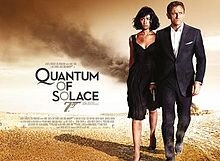
Quantum Of Solace (2008)

Mac Boyle March 30, 2020

Director: Mark Forster


Cast: Daniel Craig, Olga Kurylenko, Mathieu Amalric, Judi Dench


Have I Seen it Before: Oh, sure.


Did I Like It: But I only think I’ve seen it once in the theater, and then again when I acquired the DVD*. That’s telling. It is a step down from the absolute transcendence that was Casino Royale, and it’s storyline is all afterthought material from that preceding film. The Bond films have quite rightly not needed to feed into material from the previous film, and even only occasionally tried to have any kind of continuity at all. The best Bond films are so fully themselves that the confidence of the filmmakers and the confidence of the main character fuse into one entity. 


Also, the successor to Royale may have always been doomed to be a letdown simply because it follows what might very well be the best films of their series, see Star Trek III: The Search for Spock (1984), The Dark Knight Rises(2012), or Star Wars Episode VI: Return of the Jedi (1983) for other examples.


But, as with all of those perfectly fine films above, this film probably gets an objectively bad rap. The direction from Mark Forester, then most famous for Stranger Than Fiction (2006), brings a precise visual scheme to the proceedings makes this look like no other Bond film before or since. Also, while the story is beholden to another movie, it definitely taps into that pure Fleming essence that Craig has tapped into so thoroughly. And I love the opening titles and theme song. That alone can go a long way towards leading me to feel more favorable about a particular Bond outing.


Were this an entry in any other Bond actor tenure (including Sean Connery) it would have been one of the best Bond films of all time. Sadly, it must become Craig’s weak link. One movie would have to be, and if this is the nadir, Craig’s status as the greatest since Connery will stand for all time.

*You can tell (minus the weird exception of Diamonds are Forever (1971)) which Bond films I enjoy the most by which I own on blu-ray. Casino Royale (2006), Skyfall (2012), From Russia With Love (1963), A View To A Kill (1985). This one I only have on DVD.

Tags quantum of solace (2008), james bond series, mark forster, daniel craig, olga kurylenko, mathie amalric, judi dench
Comment
  • A Blog About Watching Movies (AKA a Blog in Search of a Better Title)
  • Older
  • Newer

Powered by Squarespace

Party Now, Apocalypse Later Industries

Where creativity went when it said it was going out for cigarettes.

Where creativity went when it said it was going out for cigarettes.