Party Now, Apocalypse Later Industries

Where creativity went when it said it was going out for cigarettes.
  • Home
  • BOOKS
    • THE ONCE AND FUTURE ORSON WELLES
    • IF ANY OF THESE STORIES GOES OVER 1000 WORDS...
    • ORSON WELLES OF MARS
    • THE DEVIL LIVES IN BEVERLY HILLS
    • A LOSS FOR NORMALCY
    • RIGHT - A NOVEL OF POLITICS
  • PODCASTS
    • Beyond the Cabin in the Woods
    • THE HOLODECK IS BROKEN
    • THE FOURTH WALL
    • As The Myth Turns
    • FRIENDIBALS! - TWO FRIENDS TALKING ABOUT HANNIBAL LECTER
    • DISORGANIZED! A Criminal Minds Podcast
  • MOVIE REVIEWS
  • BLOGS AND MORE
    • Bloggy B Bloggington III, DDS
    • THE HOLODECK IS BROKEN BLOG
    • REALLY GOOD MAN!
  • Home
    • THE ONCE AND FUTURE ORSON WELLES
    • IF ANY OF THESE STORIES GOES OVER 1000 WORDS...
    • ORSON WELLES OF MARS
    • THE DEVIL LIVES IN BEVERLY HILLS
    • A LOSS FOR NORMALCY
    • RIGHT - A NOVEL OF POLITICS
    • Beyond the Cabin in the Woods
    • THE HOLODECK IS BROKEN
    • THE FOURTH WALL
    • As The Myth Turns
    • FRIENDIBALS! - TWO FRIENDS TALKING ABOUT HANNIBAL LECTER
    • DISORGANIZED! A Criminal Minds Podcast
  • MOVIE REVIEWS
    • Bloggy B Bloggington III, DDS
    • THE HOLODECK IS BROKEN BLOG
    • REALLY GOOD MAN!

A Blog About Watching Movies (AKA a Blog in Search of a Better Title)

Scream 4 (2011)

Mac Boyle April 8, 2022

Director: Wes Craven

Cast: David Arquette, Neve Campbell, Courteney Cox, Emma Roberts

Have I Seen it Before: For whatever reason, I have a strong memory of seeing the film at some point, but just like with Scream 3 (2000) I have no memory as I begin this screening of who the killer is. So, I guess it’s all new to me again.

Did I Like It: Which clearly means the film didn’t make much of an impression at the time, right?  While Craven and company probably left well enough alone for long enough after forcing the series into the shape of a trilogy, and there should probably be enough to say about the state of horror at that moment, right?

Well, is there that much new in horror in 2011? You have the Paranormal Activity (2007), and by that point even the Saw (2004) franchise, and not a lot else. Aside from some nascent film nerds/vloggers, the film doesn’t veer into the territory of found footage. There is even less to be said for the rise of torture porn. Although, if Scream 4 had come hot on the heels of Scream 3 in the early 2000s, I could easily see this sequel being weighed down by the unrelenting wave of The Blair Witch Project (1999). 

We’re all got off light that stuff like The Human Centipede (2009) didn’t more thoroughly enter the collective consciousness. For a number of reasons. If there’s a reference to that kind of crap in this film, my memory blissfully omitted it.

The most damning thing I think I have to say about the film is that I reach the end of the review with not enough to say to meet the length requirements for these reviews. It doesn’t have enough to say to recommend itself, and I don’t have much to say about it in turn. An endless unravelling sequence taking the piss out of endless sequels in the film’s opening minutes don’t justify the whole affair. It’s a shame—but not an unrelenting one—that Craven ended his career with something just bereft enough of innovation to be… fine.
Tags scream 4 (2011), wes craven, scream series, david arquette, neve campbell, courtney cox, emma roberts
Comment

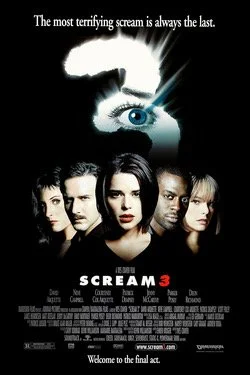
Scream 3 (2000)

Mac Boyle April 8, 2022

Director: Wes Craven


Cast: David Arquette, Neve Campbell, Courtney Cox Arquette, Patrick Dempsey


Have I seen it Before: …yes?


Did I Like it: And the answer to that question brings us to the real answer to this one. Scream 3 is so intangible that if I have seen it at some point in the last twenty years, then at the very least its final act has completely disappeared from my memory. That at least maintained that singular quality of the series, where I am watching through the proceedings and I’m legitimately certain that everyone is the killer*, and I’m never quite on target.

So, the essential fun of a Scream movie is present, but whereas Scream 2 (1997) felt like the natural follow up to the original, this film is consistently trying to make a case for itself, but the parts never quite equal—to say nothing of exceeding—their sum. Horror trilogies aren’t really a thing (indeed, even this series shed those confines at the earliest opportunity), so making a comment about the conventions of a cinematic triptych ring hollow. The jokes about Hollywood of the late-90s/early-00s ring hollow either due to age or the fact that they weren’t terribly inspired to begin with.

Ultimately, the film is left to rely on its slasher bona fides, which have never (and as yet, will never) be the series best foot to put forward.


Much of these elements failed to inspire much memory in me, so I’m willing to answer the first question by saying, ultimately, I had somehow missed Scream 3 for all of these years… And it was some mild fun to take it for what I’m 65% sure is the first time. 

Which then brings us to Scream 4 (2011), which isn’t going to get off as light.


*Including series protagonists Sydney (Campbell), Gale (Cox Arquette), and Dewey (Arquette), all of whom I’m strangely holding out hope will eventually pick up the mask, voice changer, and whatever sharp object is nearby in one of these movies.

Tags scream 3 (2000), wes craven, scream series, david arquette, neve campbell, courtney cox arquette, patrick dempsey
Comment

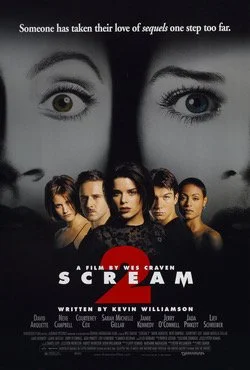
Scream 2 (1997)

Mac Boyle April 8, 2022

Director: Wes Craven

Cast: David Arquette, Neve Campbell, Courteney Cox, Sarah Michelle Gellar

Have I Seen it Before: Yes? Of all the sequels to Scream (1996), this is the one for which I have the most memory.

Did I Like It: Honestly, this one just might be the best film in the series. Let’s review that statement for a bit. Scream 2 is not just the best Scream sequel (that I’ve seen so far; watch this space for the latest Scream (2022). It is even better than the original. 

The first film tries to play with the tropes of the genre, sure, but mainly accomplished being a dim echo of Halloween (1978). Here, perhaps the horror sequel as a species is low-hanging fruit, but that just means there should be more hits than misses. Sure, it can be difficult to reckon with the fact, in iffy tradition, this one comes back around to the fact that often, people of color (Jada Pinkett and Omar Epps) are the first to die in horror and sci-fi**, the fact that the world of Woodsboro even has black people is at least a step in the right direction.

It does hit more than it misses, but that is not the film’s secret weapon. When it comes to the various villains of the franchise, Skeet Ulrich, Scott Foley, Emma Roberts and… ?*, is there any casting of a horror movie heavy that is better than Laurie Metcalf as mother Loomis? If there is, I can’t think of it. Sure, Timothy Olymphant shows up and fills a Billy-esque role in the proceedings, but he is incidental, which only makes the mystery all the more satisfying.


*I’m thinking Neve Campbell’s got to step up. Maybe, maybe David Arquette.

**Commenting on it feels like a hoary cliche itself, and I think the far more reliable trend is that people of color are often dying in service of white people, which doesn’t make anything any better.

Tags scream 2 (1997), wes craven, scream series, david arquette, neve campbell, courtney cox, sarah michelle gellar
Comment

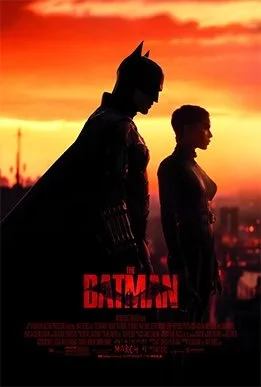
The Batman (2022)

Mac Boyle April 8, 2022

Director: Matt Reeves

Cast: Robert Pattinson, Zoë Kravitz, Paul Dano, Jeffrey Wright

Have I Seen it Before: Well, that’s the real thing, isn’t it?

Did I Like It: It’s actually taken me weeks to get around to this review. Part of it is a full plate. Part of it is the whole thing has been marinating in my head.

The Batman is quite good. It’s shot, cast, and mostly written well. It is the only Batman film to be fueled primarily by a legitimate, if uncomplicated detective story. We all know who the Riddler (Dano) is, and the secret identity of the Batman hasn’t been had an ounce of mystery to it since the concluding panels of “The Case of the Chemical Syndicate” in 1939. And yet, Batman uses all of his skills in equal measure here.

I am happy to report that at no point does Martha Wayne drop her pearls, and while (spoiler) The Joker (Barry Keoghan) does appear in the film, Reeves shows a remarkable amount of restraint in both not making the Clown Prince a central part of the movie, and cutting his far more interesting—if ultimately redundant—scene.

It’s third act becomes a little incoherent, which puts it in good company. The end of nearly every film—with the arguable exception of The Dark Knight (2008)—to feature the Caped Crusader buckles a bit under even mild scrutiny. Why was the Joker climbing up the Cathedral in Batman (1989)? How were an army of trained missile-armed Penguins supposed to help Danny DeVito get his political revenge in Batman Returns (1992)? How did Jim Carrey manage to get that massive lair to do… mind control? The fact that I’m still—a couple of weeks after viewing the film—still not sure exactly what Batman was needing to do as the with the electrical discharges in the arena, and the city of Gotham really only seemed flooded when there were interesting shots of Batman doing things among water, and dry as a bone when he and Selina Kyle had to have a parting scene in a graveyard. 

We’ve had good Batman films before. There’s really no excuse to not make one anymore. But there’s so much here we have seen before, and yet so much unexplored potential on screen for the character. What do I want out of a Batman film, now that I’ve had literally every part of The Long Halloween reconstituted on the movie screen? I want the Neal Adams Batman. I want a grey costume (with a yellow oval, so sit down, Mr. Snyder). I want a giant penny and an even giant-er T-Rex in the Batcave*. Really? I want it to be called The Caped Crusader. It’s entirely possible I may just want to watch <Batman (1966)> again. That’s always possible.

I may have to wait a bit longer. In the meantime, I’ll take as many stories in Gotham as Matt Reeves can dole out.


*I do not want to see Martha Wayne drop her pearls ever again in a movie or television series. So, good on ya, Mr. Reeves.

Tags the batman (2022), matt reeves, robert pattinson, zoë kravitz, paul dano, jeffrey wright
Comment

Labyrinth (1986)

Mac Boyle April 8, 2022

Director: Jim Henson

Cast: David Bowie, Jennifer Connelly, Toby Froud, Brian Henson

Have I Seen it Before: Yes, and I can’t 100% remember when it might have happened. I missed it in my youth entirely, and by the time I did catch it in my 20s, my brain wasn’t in a place to take in any level of magic like Henson had to offer at the height of his powers.

Did I Like It: And I still think I may have missed the moment where this film would have burrowed into my brain in the way for which it was designed. Every moment is visually interesting (even the stuff that doesn’t quite work, i.e. some rudimentary CGI in the film’s early moments). Henson never stopped innovating, even if this squarely falls in the category of films where Henson took himself too seriously. I wouldn’t insist he only make the goofiest of Muppet movies, but I certainly know where my preferences lie.

I don’t dislike Bowie, but he’s never been a big part of my life, so the film already runs at a disadvantage. I enjoy Connelly a great deal, but I’m mainly thinking of her work in The Rocketeer (1991).

Which brings me to the thing about the film I just can’t—regardless of my generally unwavering respect for Henson and his work—wrap my head around. No, it’s not that the film never feels like it is anything other than an `80s film. It’s far more unnerving than that, although that would normally be enough for me to look down on a film. I’m reasonably sure we’re supposed to be swept away by the imagination and fantasy of the proceedings, but are we not also supposed to be pointedly creeped out by Jareth (Bowie) spending most of the film’s runtime leering after a teenage girl (Connelly)? It’s difficult to try to view the idea of marriage between these two characters as anything other than prurient when the aggressor is one of the most sexual figures ever to rise to the height of pop cultural consciousness.

Yes, it is quite clear either the movie missed me at the time it might have hit me harder, or I may be missing the point of the film entirely now. Nevertheless, there is a disconnect. 

Tags labyrinth (1986), jim henson, david bowie, jennifer connelly, toby froud, brian henson
Comment

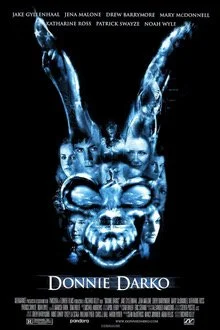
Donnie Darko (2001)

Mac Boyle March 7, 2022

Director: Richard Kelly

Cast: Jake Gyllenhaal, Jena Malone, Maggie Gyllenhaal, James Duval

Have I Seen it Before: I don’t think you get through college in the early `00s without having seen it.

Did I Like It: Seeing the film nearly twenty years after my first viewing, I’m still digesting (and probably will until I soon record an episode of Beyond the Cabin in the Woods) it all, and the only thing I can confidently say as I type these words is that I’m not sure if I ever did, but I am glad I did not watch the director’s cut of the film here.

To read descriptions of that longer version online, any ounce of subtext was sucked out of the film and we are left at the end knowing precisely the why and how of the jet engine and how Donnie (Jake Gyllenhaal) fits into the whole mythos. 

And that would have been terrible. The film might very well be operating solely on its affectations, but the best way I can possibly observe the film through that lens is that those affectations give the film a certain charm. Removing all of the subtext makes it an exceedingly intricate time travel story.

Now far be it for me to look my nose down on an exceedingly intricate time travel story, but at a certain point if you’re having to rely on long passages from a book that doesn’t actually exist, you may have focused less on a work of cinema and veered into a powerpoint presentation. It’s not the same thing. 

But enough about what the version of the film I watched wasn’t, how did the theatrical cut hold up? It might be a film that’s singularly built for people in their twenties, and while the lilting Gary Jules cover of “Mad World” still has a haunting quality, and Donnie is never more heroic than when he calls Patrick Swayze’s preening self-help-guru-with-a-secret the Anti-Christ, the whole thing doesn’t hit like it used to. As you get older, it may very well be harder to appreciate new art. I’m just a little disappointed that art I used to enjoy is hard to hold onto.

Tags donnie darko (2001), richard kelly, jake gyllenhaal, jena malone, maggie gyllenhaal, james duval
Comment

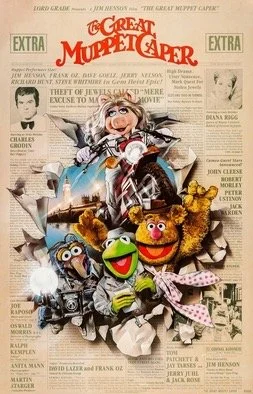
The Great Muppet Caper (1981)

Mac Boyle March 7, 2022

Director: Jim Henson

Cast: Jim Henson, Frank Oz, Dave Goelz, Jerry Nelson

Have I Seen it Before: Oh, sure. A VHS recording from a local UHF station in the `80s became a regular staple in my house growing up. As much as I had uncertainty that I actually had seen The Muppet Movie (1979) in the past, that doubt was completely absent here.

Did I Like It: I can feel the criticisms of this movie as I watch it. It’s too jokey. It’s too irreverent. It’s too—dare I say it—clever?

Those people are wrong. The entirety of Henson’s output has been a concerted fight between goofing off (anything with the proper Muppets) and more earnest whimsy (anything Disney decided wasn’t worth buying after Henson died). This is the peak of that former mold, and it is in every way authored by Henson. Whereas The Muppet Movie (1979) had to shoulder the not insignificant burden of proving that the Muppets could even conceivably work on the silver screen, everyone could relax here and dwell on the absurdity that are the confines of a movie. Preposterously bad casting of family members (a running gag has Fozzie (Oz) and Kermit (Henson) as twin brothers) , credits (“Nobody reads those names anyway, do they?” “Sure. They all have families.”) and the very notion of exposition (“It has to go somewhere.”). All of it is picked apart directly in the movie and singularly fuels the best parts of the Muppet’s sense of humor in movies to come.

But in that wry sense of the absurd, in that chasing of the laugh, the film doesn’t try to shed the things that made the Muppets beloved in the first place. The Happiness Hotel might very well be the nastiest hotel that the movies have ever brought us (I include The Overlook from The Shining (1980) in that calculus), but who wouldn’t want to stay there when Dr. Teeth (Henson) the Electric Mayhem (feat. Rowlf (also Henson*) are around? It’s not just that the Muppets are lovable, it’s impossible to not want to be around the characters whenever possible.


*My working theory after also spending some time watching The Muppet Show? Dr. Teeth is merely a vaguely humanesque suit that Rowlf wears for certain gigs

Tags the great muppet caper (1981), muppet movies, jim henson, frank oz, dave goelz, jerry nelson
Comment

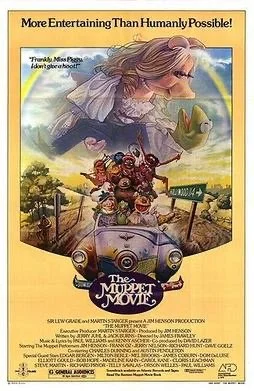
The Muppet Movie (1979)

Mac Boyle March 7, 2022

Director: James Frawley

Cast: Jim Henson, Frank Oz, Jerry Nelson, Richard Hunt

Have I Seen it Before: You know… I can only say I’m kind of sure I have. Large portions call up a memory, but others are a complete blank. Ours may have been more of a The Great Muppet Caper (1981) house.

Did I Like It: Is it even possible to dislike the Muppets? Especially in that uniquely, brazenly period of cascading creativity when Jim Henson wielded these characters to their maximum potential?

No one would have been considered controversial if they spent the `70s convinced that Kermit (Henson) and company were a phenomenon that could not move beyond the scope of television shows like Sesame Street and The Muppet Show. They are funny, and they are cute. But can anything surpass the confines of television when, by their very nature have to be shot from the waist up?

That wasn’t enough for Henson*. He proceeded to make a movie that is just as funny and charming as his television work, but credibly lets the characters inhabit the big screen. Cameos abound, and any movie filled with that many famous people would be almost automatically considered a case of subtraction by addition. But here, it’s somehow both expected and adds to the material. Everyone fits into the movie like. puzzle piece, and it’s just an absolute head scratcher that Orson Welles didn’t end up guest starring on The Muppet Show, considering how fond he was of Henson’s work.

And what’s more, this is just the opening salvo in Henson’s brief quest to see just how far his deceptively simple puppets could go. One could only imagine how far he might have gone if he had lived just a bit longer.


* He didn’t direct the film or write it, but anyone who thinks he’s not the author of any Muppet production prior to his death is kidding themselves.

Tags the muppet movie (1979), muppet movies, james frawley, jim henson, frank oz, jerry nelson, richard hunt
Comment

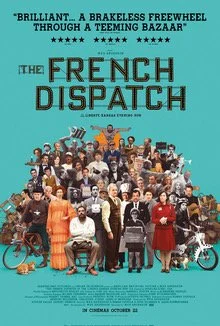
The French Dispatch (2021)

Mac Boyle February 25, 2022

Director: Wes Anderson

Cast: Benicio del Toro, Adrien Brody, Tilda Swinton, Léa Seydoux

Have I Seen it Before: No… Although I did spend 2021 reading most of every edition printed in that year of The New Yorker, so even before the first frame reached my eyes, the film felt familiar.

Did I Like It: It’s a bit sad to report that—unlike the rest of Anderson’s films—this film is merely equal to the sum of its parts. It is meticulously designed. To receive anything less from Anderson would feel like a betrayal. It is persistently charming, and more than occasionally quite amusing. There are few filmmakers working today who work at every level of the filmmaking process to eschew viewer’s expectations of how a film should be put together.

Beyond his normal bag of tricks, Anderson does reach for new surprises beyond putting out the most singularly twee films ever imagined. Several shots in “The Private Dining Room of the Police Commissioner” credibly look like they might have actually been shot in the 1940s. Has any modern director convincingly made a film which feels as if it could have been shot at any other time than the precise moment in which it was produced? A timeless quality will help the film age better than most.

Some might be put off by the aspect ratio, but looking at the shot composition as something akin to the column inches of a publication makes the entire affair fit together like a meticulously crafted work of art, which serves as more evidence that Anderson has once again hit its target.

And yet, not all of the film adds up in a completely satisfying manner. The connective through-line for the film—involving the death of Dispatch publisher Arthur Howitzer Jr. (Bill Murray, channeling the same understated energy he has brought to a number of Anderson’s films)—is the least engaging main plot of any film in Anderson’s oeuvre. The sudden switch to animation feels jarring. I can’t imagine Anderson didn’t mean to do it that way, but it doesn’t feel as if he did… which does ten to fly in the face of the ethos of the whole film.

And yet, I can’t say I didn’t dislike the film entirely, either. I don’t know if I could stand to read one more word of The New Yorker, but I wouldn’t mind thumbing through an issue or two of the Dispatch. If the slavish homage can outpace the source, then the flaws of either may not matter anymore.

Tags the french dispatch (2021), wed anderson, benicio del toro, adrien brody, tilda swinton, léa seydoux
Comment

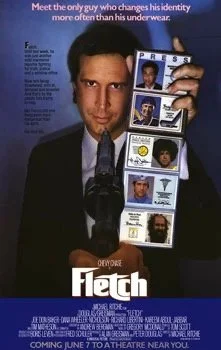
Fletch (1985)

Mac Boyle February 25, 2022

Director: Michael Ritchie

Cast: Chevy Chase, Joe Don Baker, Dana Wheeler-Nicholson, Tim Matheson

Have I Seen it Before: Most definitely. Here’s an odd moment of stupidity from my past: I’m at an opening night screening of The Lord of the Rings: The Fellowship of the Ring (2001). When Frodo (Elijah Wood) identifies himself as Mr. Underhill, I am the only voice in the theater who barks out a beat of laughter. I did this because I was reminded of this film.

Did I Like It: If a movie star’s greatest film is ultimately that movie for which they were most present during their performance, I have a very dim view for any other film being Chase’s greatest. There are any number of films (and more than a few episodes of my beloved Community) where he is demonstrably asleep at the wheel, and I’m not even entirely sure any of the various Clark Griswold outings would count.

Clark Griswold is a put upon family man, Fletch (or at least, the Fletch presented in this film, as opposed to the Fletch of numerous Gregory McDonald) is a quip machine who is perpetually in matters just over his head. Now, which one of these men do you think is more firmly in Chase’s wheelhouse? I’ll wait for my answer.

This is not to say that the film is without—or even manages to avoid being riddled with—flaws. Is anyone buying the idea that Tim Matheson and Chevy Chase are the same build, and that that is enough to prop up the plot here? It was enough to work in the McDonald novel, but I would have liked to have seen a little more-than-perfunctory work on adapting the novel, so as to not let such a glaring plot hole run throughout the entire proceedings. Also, as much as Kareem Abdul-Jabbar is (with his Sherlockian streak) a delightful and welcome presence in a comedy film, the basketball fantasy sequence could have been pulled right out, the film wouldn’t have suffered, and we would have been speared a fearful portent of the comedic dead weight Chase was doomed to become.

Tags fletch (1985), michael ritchie, chevy chase, joe don baker, dana wheeler-nicholson, tim matheson
Comment

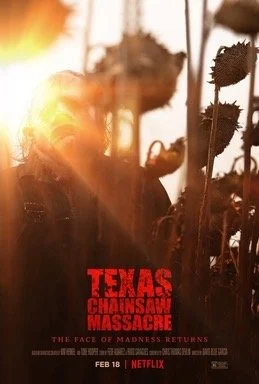
Texas Chainsaw Massacre (2022)

Mac Boyle February 25, 2022

Director: David Blue Garcia

Cast: Sarah Yarkin, Elsie Fisher, Mark Burnahm, Moe Dunford

Have I Seen it Before: Never. I honestly only have the vaguest of memories of the first film (1974) and the remake (2003).

Did I Like It: That all being said, the film immediately operates from a disadvantage in that it is slavishly following current trends in horror. Having a legacy sequel is one thing, and I’ve largely enjoyed the trend (even if it has become ubiquitous for every franchise under the sun) but entire swaths of this movie are pulled directly from the far more innovative Halloween (2018). That leaves the film with not much to prop it up other than being purely derivative. There are few moments in this film that feel derivative.

Come to think of it, does this really qualify as a legacy sequel? There are two characters here who appear in the original The Texas Chain Saw Massacre (1974), and they are both portrayed by different actors. John Larroquette returns as the narrator, but if that makes it count, it’s a marginal call at best.

In truth, the only elements which feel at all fresh (I would’t go as far as to say original) are parts that don’t add up. The various adventures of Leatherface (Burnham) have always reached for the truly disgusting. That’s their appeal. Aside from a brief flash of a chainsaw-as-penis metaphor and an unfortunate mishap with a sewer pipe, this film is tame. 

It’s been a few days since my screening of the film, and I can’t quite wrap my head around the rationale for why these young people have descended upon the town of Harlow? How did they get the money together to buy up this town? There’s also a moment where, just before becoming so much fodder for Leatherface’s chainsaw, that one of the cell-phone wielding goons threatens to cancel the maniac. Is this movie some millenlial-real-estate-fever-dream? Or is it trying to own the libs? Do I want either of these films?

When the film isn’t derivative, unnervingly tame, or inexplicable, well, it’s probably over at that point because there isn’t anything else to it. You may have already paid for the film, given its Netflix distribution, so it does still qualify as an hour and a half spent with more enjoyment than ditch digging, but not by much.

Tags texas chainsaw massacre (2022), leatherface movies, david blue garcia, sarah yarkin, elsie fisher, mark burnham, moe dunford
Comment

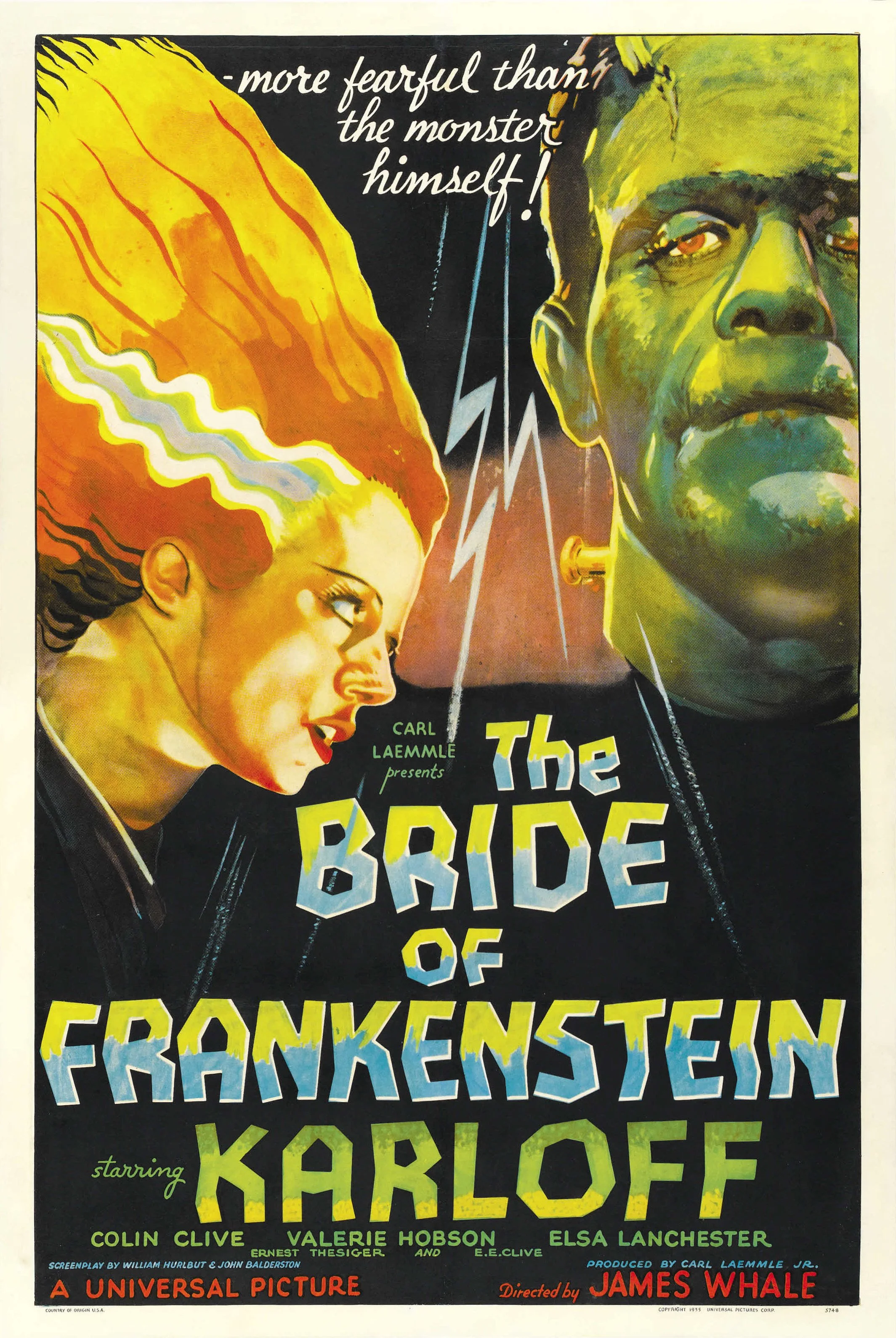
Bride of Frankenstein (1935)

Mac Boyle February 25, 2022

Director: James Whale

Cast: Boris Karloff, Colin Clive, Ernest Thesiger, Elsa Lancaster

Have I Seen it Before: Many, many times. My earliest memory of the film ties directly to a Universal Monsters coloring book released in the 1990s. At this point, I just need to find another copy of that thing, right? Beyond that, I plum wore out a VHS recording from Turner Classic Movies. One of the more purely delightful moviegoing experiences in my life was going to a library-hosted* screening of the film in the early 00s**. When I first joined Beyond the Cabin in the Woods, this was my first choice for a movie for the polterguides to watch. The idea that it has taken this long to re-watch the film since starting these reviews in 2018 is kind of flabbergasting, but after watching <Abbott and Costello Meet Frankenstein (1948)> for my guest spot on Horror Hangover, I just couldn’t help myself.

Yes. Yes, I have seen Bride of Frankenstein before.

Did I Like It: There’s isn’t much more I can do to tip my hand after that previous section and its myriad footnotes. Bride is the greatest of the Universal Monster movies, is in my top 10 films of all time, and may just edge out Halloween (1978) as my favorite horror movie of all time***.

It is weird. It is funny far more often than it has any right to be. Every character, from Mary Shelley (Lancaster) in he film’s prologue, all the way to the Bride’s (Lancaster, again) arrival in the finale—is more interesting and vibrant than the one who appeared just before. The film is heartbreaking and often filled with a perfectly packaged, unrelenting sense of dread.

And it accomplishes all of this in the span of 75 minutes. If a measure of cinematic efficiency—with pleasures-over-runtime being the metric—is at all a fair judge of film, then this is the single most efficient feature film ever made.

If you haven’t seen this movie before, you must stop everything you are doing and watch it now. If it’s been a while, you need to drop everything and be reminded how truly good it is. If you’ve watched it recently, there is no harm in giving it another go, just as a treat.


*It’s honestly at the core of a lot of the work I’m trying to do at the moment, now that I’m thinking about it.

**It had been a date, no less. Needless to say, things didn’t work out. The films of James Whale may not be the opening romantic salvo that I always thought they should be, but I’m blessed to have ended up with someone who at least tolerates the Universal Monsters.

***Such rankings are arbitrary. At any given moment, this movie or Halloween is superior. They both rank, and very likely may be equal in their superlative quality.

Tags bride of frankenstein (1935), james whale, frankenstein films, universal monsters, boris karloff, colin clive, ernest thesiger
Comment

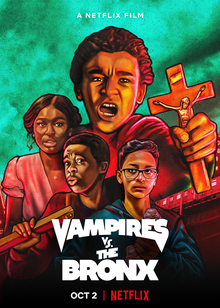
Vampires vs. The Bronx (2020)

Mac Boyle February 25, 2022

Director: Oz Rodriguez

Cast: Jaden Michael, Gerald W. Jones, III, Gregory Diaz, IV, Sarah Gadon

Have I Seen it Before: Never. Had it not been for Horror Hangover, on which I will guesting here presently, the film likely would have flown right under my radar.

Did I Like It: First of all, if Jaden Michael isn’t on the short list for an eventual live-action interpretation of Miles Morales, or if Marvel takes too long so that he would age out of the role, then there isn’t really any justice in this world.

There isn’t any justice in this world, is there?

I can’t readily think of a film which presents a vampire tale with the same perfect blend of irreverence and actual genre acumen which Edgar Wright brought to Shaun of the Dead (2004), or even Mel Brooks did for the classic Universal Frankenstein films in Young Frankenstein (1974). 

There is nothing to not love in the film, so much so that it could have rested on the laurels of its cast and care with vampires to get the job done. However, the filmmakers have managed to also pull off the impossible, and add a new layer to the vampire mythos, a concept so desiccated that if you had told me there was anything new under the sun*, I would have scoffed and probably made a point not to catch the film at all.

One of the themes of the original novel, Dracula (and to a lesser extent, cinematic interpretations of that story including Nosferatu (1922), Dracula (1931), and Bram Stoker’s Dracula (1992)) was how the Count’s manipulation of real estate was just as insidious as any of his hematophagy, as his foreign influence on the Western world was a specter in and of itself. Here, this idea is inverted and the gentrification of close-knit neighborhoods is seen as the first step of true horror. It’s such a simple idea, I can’t imagine the filmmakers didn’t sit around wondering if it hadn’t been already done before.


*Sometimes you just have to accept the inevitable word choice that’s coming straight at you. Sometimes you can fight that inevitability. This was definitely one of the first type.

Tags vampires vs the bronx, oz rodriguez, jaden michael, gerald w jones iii, gregory diaz iv, sarah gadon
Comment

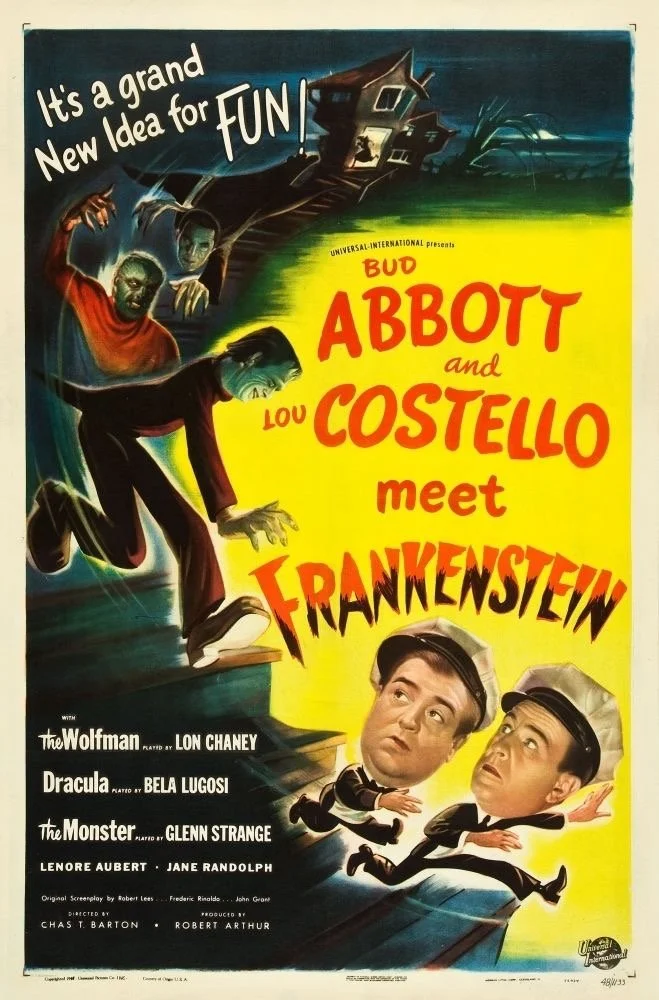
Abbott and Costello Meet Frankenstein (1948)

Mac Boyle February 25, 2022

Director: Charles Barton

Cast: Bud Abbott, Lou Costello, Lon Chaney, Jr., Bela Lugosi

Have I Seen it Before: Oh, yes. Delighted to finally have an excuse to screen it again.

Did I Like It: I may have tipped my hand with the answer to the previous question.

This film is strange. On paper, there is literally no reason why it should work. The Universal Monsters had already run their course, going through the basest, pulpy motions of endless monster mashups. Abbott and Costello were at the beginning of the unravelling of their partnership. It could have been an absolute disaster. 

And yet, it’s one of, if not the best of both the Universal Monster* and Abbott and Costello movies**. For one thing, it works as both a horror movie and comedy of the period. But far more importantly, is that for one final hurrah, it feels like Universal finally started caring about its stable of monsters again. Previously, the films had descended into increasingly lazy monster rallies, but here, even though it reaches the heights of ridiculousness, it’s actually a halfway decent finale for the characters. The Wolf Man (Chaney), the Frankenstein’s Monster (Glenn Strange, the record holder for the role) and Dracula (Lugosi) meet a final enough end for which none of the other films in the series could reach.

The only way the film could have been any better was if Karloff had played the Monster, but that was probably too much to hope far. That we got Lugosi back in the role that made him immortal is more than enough to recommend it. Now that I think about it, there really isn’t anything to not recommend the film. If the slightly stupid title puts you off, please, do get over yourself.


*I’m never going to not vote for Bride of Frankenstein (1935) on that front, but the argument could certainly be made. This film is unassailably in the top five.

**Can you really discount The Naughty Nineties (1945), as it contains the archival (for lack of a better term) version of their performance of “Who’s on first?” 

Tags abbott and costello meet frankenstein (1948), charles barton, universal monsters, abbot and costello movies, bud abbott, lou costello, lon chaney jr, bela lugosi
Comment

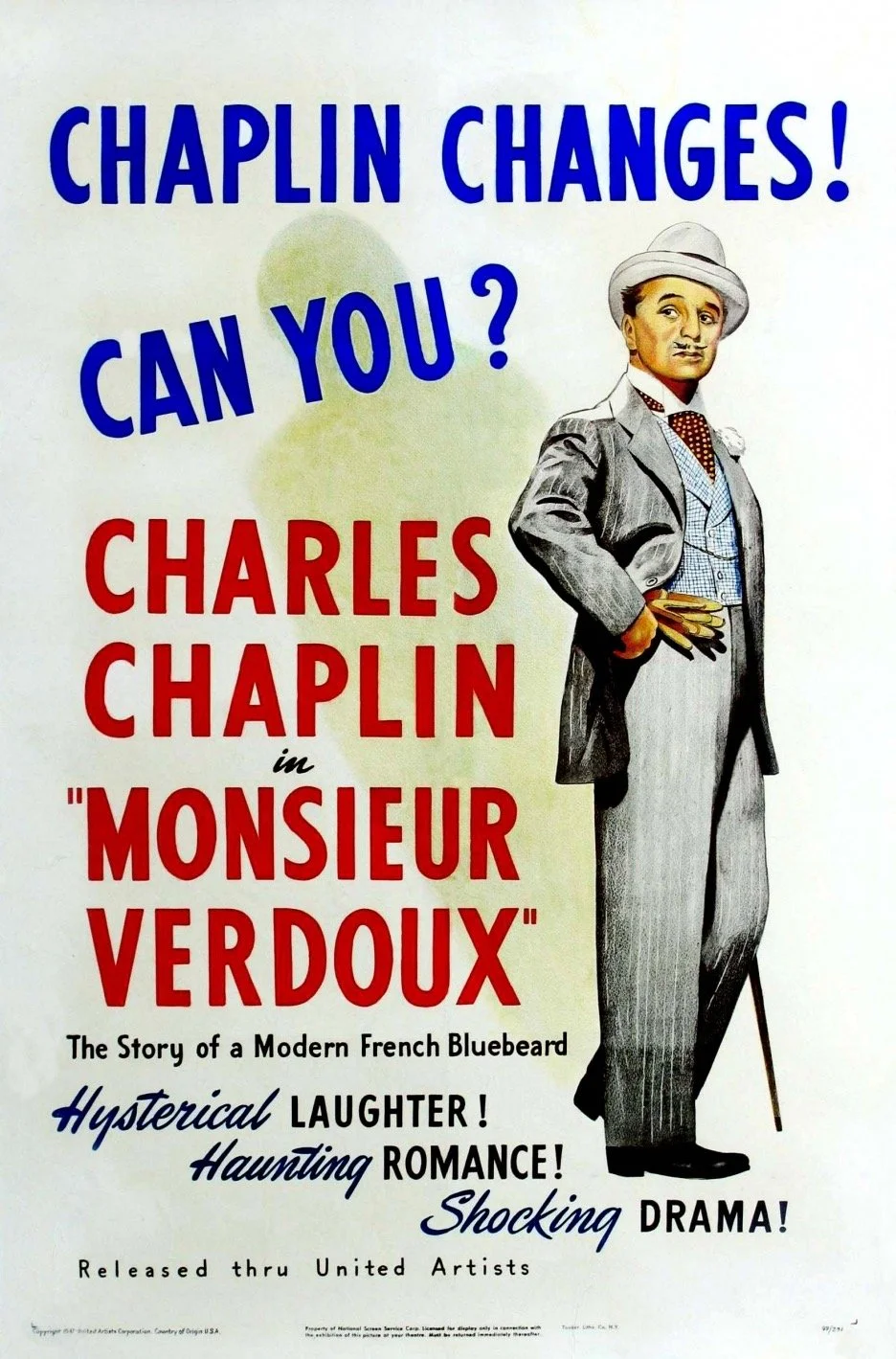
Monsieur Verdoux (1947)

Mac Boyle February 13, 2022

Director: Charlie Chaplin

Cast: Charlie Chaplin, Martha Raye, William Frawley, Marilyn Nash

Have I Seen it Before: Oh, certainly. I don’t think there’s ever been (nor will there be in the future) a film which possesses a title card which would wind up inspiring so much of my other work. “An Original Story written by CHARLES CHAPLIN (Based on an idea by Orson Welles).” So much passive-aggression in fourteen words. There had to be a whole novel there, right?

Did I Like It: I understand why this film was initially (and let’s face it, now) met with a lot of hostility. It’s such a thoroughly bleak film, both in the ethos of its main character and it s ultimate conclusions about the pitch-black nature of humanity. It’s in such a sharp contrast to The Great Dictator (1940), the only film conceivable which is both about Adolf Hitler, and deeply life affirming. Was Chaplin so horrified by the revelations of just how bad the Nazis were that he had to make another movie reflecting the very worst of humanity to square him with the cosmos?

As much as Dictator feels like an exceptionally adept initial full talkie for Chaplin, this one feels locked down and restricted by the sound equipment. the editing, too, is repetitive. How many times do I need to see the establishing shot of the trucks of the train with the same musical cue? 

And yet, it’s still a fascinating film. Chaplin himself—and students of film—have accepted that Chaplin ceased his famed Little Tramp character with Modern Times (1936), even though the Barber character from Dictator is demonstrably so similar to the Tramp, that I think I know what’s really up. But here’s a thought: Verdoux is the Tramp, too. He changed the mustache later in life, and the terrible crushing reality of the world got to him, and he eventually met his end at the end of a guillotine blade, but in the way he moves and interacts with people I don’t see a new character, and I don’t see Chaplin bringing his personality to the role.

I see the Tramp, more so than I saw him in Limelight (1952). It’s a weird way for the little fellow to go out, but there’s something bold about giving such a beloved character such a depressing end.

Tags monsieur verdoux (1947), charlie chaplin, charlie chaplin movies, martha raye, william frawley, marilyn nash
Comment

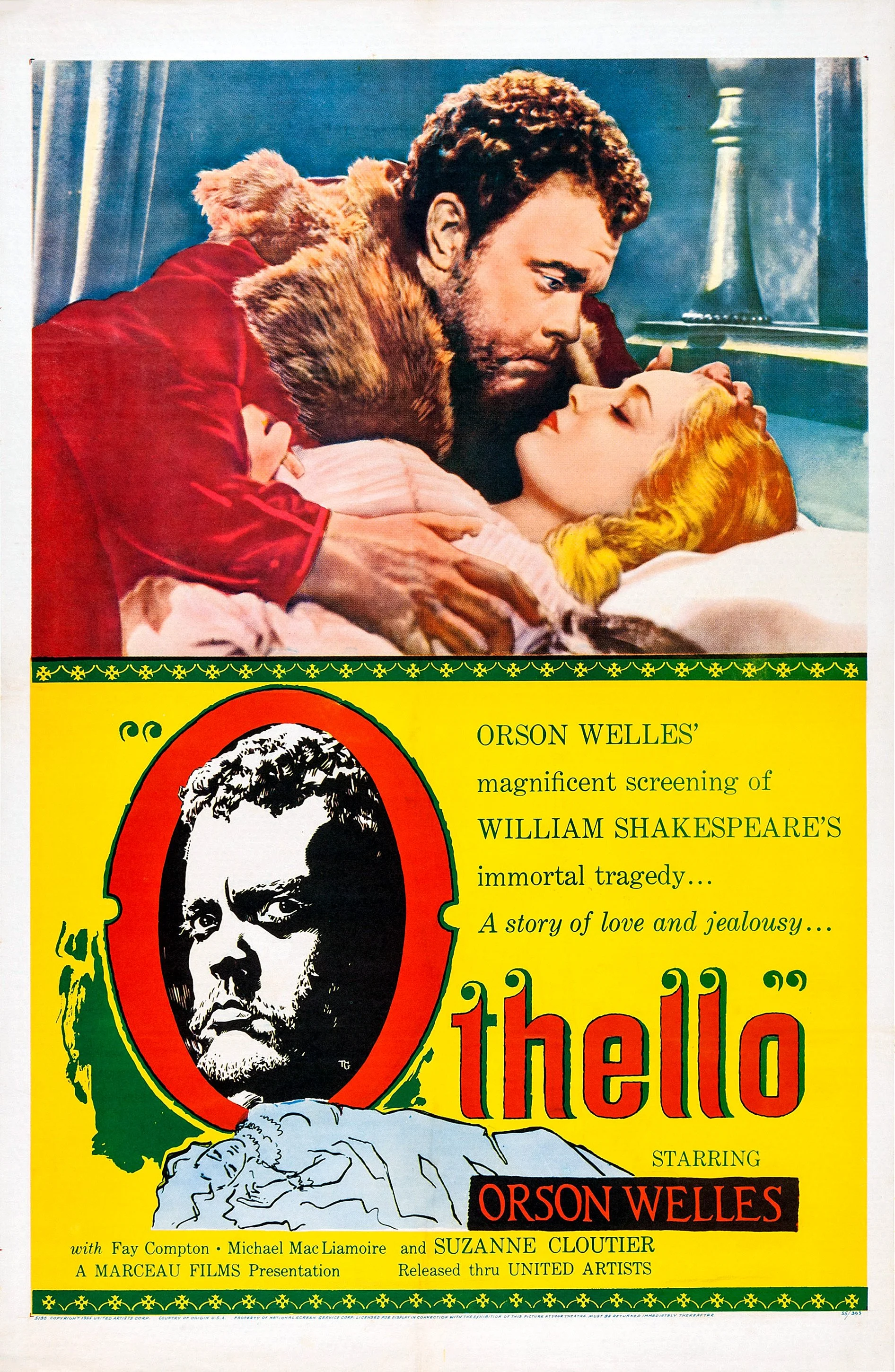
Othello (1951)

Mac Boyle February 13, 2022

Director: Orson Welles

Cast: Orson Welles, Micheál Mac Liammóir, Suzanne Cloutier, Robert Coote

Have I Seen it Before: Sure. I’ve been making jokes about Welles miscasting himself as the tragic Moor for years.

Did I Like It: Surprisingly, Welles only directed three Shakespeare feature adaptations for the screen, and it’s unfortunate that this is the weakest of the trilogy. It is not as clever, fully-formed, or expansive in scope as Chimes at Midnight (1965), nor is it as minimalistic and fully necessary energy as his Macbeth (1948).

The film has all the singular Welles cinematic trademarks. The camera never quite does what one might expect it to, characters talk over each other at a time where sound was treated so insanely delicately that to depict people in the way they might actually speak might tax the technology, and the film ultimately feels unfinished.

I don’t mean to introduce that word “unfinished” as a derogatory. Welles’ film career was so thoroughly cobbled together, that I can’t help but keep my eyes glued to one of his movies as it unfurls. There’s always a measure of panic that any of his films—aside from Citizen Kane (1941) and perhaps Touch of Evil (1958)—will complete unravel before the end credits. As films are hardly ever projected via film any more, his may be the only films where that experience can be beheld in all its glory anymore.

And then there’s that casting problem. It cannot be avoided, and I have a hard time believing it was accepted with any degree of widespread enthusiasm at the time of its release. Then, there might have been any number of men of color who could have brought the Moor to vibrant life for Welles’ camera, but instead Welles’ ego (I can’t imagine it was for the sake of the film’s commercial prospect) prevailed and he both directs and stars in the picture. Then, it feels like the wrong actor in the wrong role (he would have been glorious as Iago—here played by Liammóir), and now it’s just another example of where a modern audience has to parse out just exactly where lies the border between swarthy-face and outright blackface, or more importantly whether thats a distinction without a difference.

Tags othello (1951), orson welles, micheál mac liammóir, suzanne cloutier, robert coote
Comment

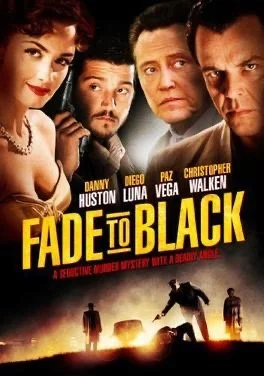
Fade to Black (2006)

Mac Boyle February 8, 2022

Director: Oliver Parker

Cast: Danny Huston, Diego Luna, Paz Vega, Christopher Walken

Have I Seen it Before: Never. I think film land would forgive me for blanching at imaginary tales featuring a fictional Orson Welles (Huston). One does not want to pollute the reservoir.

Did I Like It:  I’m going to be the wrong audience for this film, right? It’s kind of like a magician trying to do tricks for another magician. This actually does happen in this film, and the notion that Welles would be flummoxed by anyone attempting slight of hand in front of him was something I wouldn’t have done… because it’s ridiculous. This goes double for the moment where he discusses “self-esteem” with another character. I’m not entirely sure anyone ever used the term “self-esteem” before 1975, and I have a real problem with Welles being concerned with it at all in 1947.

On spec, Danny Huston feels like the wrong casting for Orson, and I’m struck by how badly cast he is as the film unfurls. Can anyone—let’s put me aside for a moment—not look at Mr. Huston and think he not only doesn’t look or sound a bit like Welles, but instead is a dead ringer for his father—and Welles contemporary and leading man in The Other Side of the Wind (2018)— John Huston. There are plenty of actors who have portrayed Welles who didn’t quite fit the bill of the man, but none of them are a dead-ringer for another iconoclastic filmmaker of the time.

Also, the notion that he started to get fat only because Rita Hayworth left him? It’s the kind of pat thing that makes an idea like Rosebud the last thing anyone discusses when talking about Citizen Kane (1941).

So, yes. I have some notes.

Let’s try to look at the film objectively, as if I were not me, and the subject matter of this film was any other subject matter. The film is shot with all of the bland panache of a made-for-cable-movie which would be forgotten virtually the instant the next block of programming takes over. The murder mystery story is utterly pedestrian, and I don’t care a bit when the murderer is revealed. Sequences that place Welles in the middle of post-war Italy have a certain verisimilitude, and I think that may be the most damnable faint praise I can offer the film: it works best when Welles and its genre trappings are incidental to the proceedings.

Tags fade to black (2006), oliver parker, danny huston, diego luna, paz vega, christopher walken
Comment

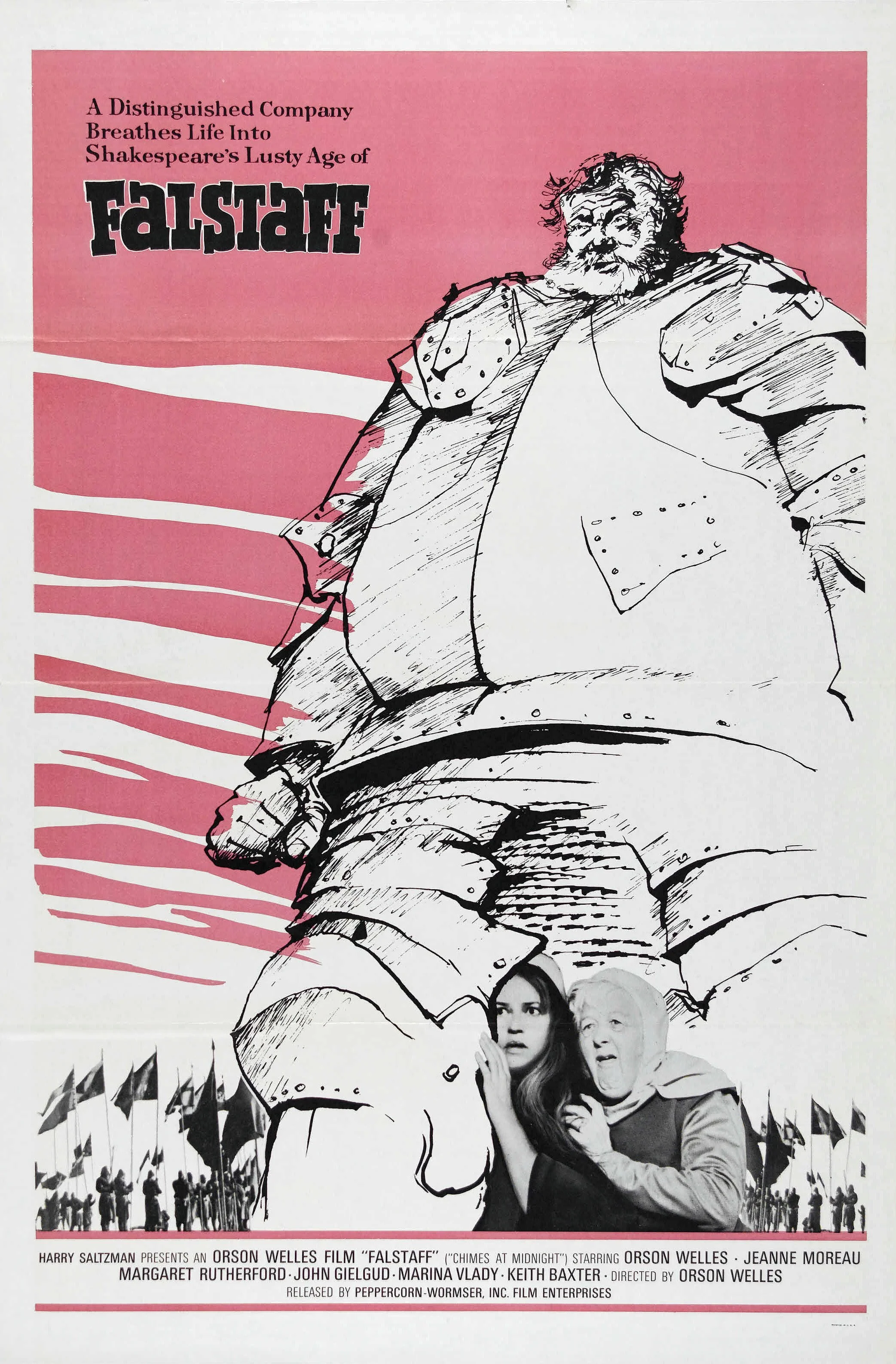
Chimes at Midnight (1965)

Mac Boyle February 8, 2022

Director: Orson Welles

Cast: Orson Welles, Jeanne Moreau, Margaret Rutherford, John Gielgud

Have I Seen it Before: Never. As I type this, this is the last of the films directed by Welles that I’m catching. I know. I’m unforgivably late to a party I myself was largely throwing.

Did I Like It: Welles struggled mightily to bring cinematic vitality to the works of the Bard, sometimes succeeding wildly, (Macbeth (1948)) and sometimes not accomplishing all of his goals as well as the audience might hope (Othello (1951); your mileage may vary).  Here, to play Flastaff—through all his adventures in the Shakespeare Cinematic Universe—was his lifelong ambition. Where as the Moor he was tragically, unavoidably miscast, here it not only seemed as if Welles always wanted to play Shakespeare’s great fool, his entire life may have been orchestrated to give him the opportunity.

The film’s virtues do not stop there. I’ve never thought of Welles as an action director in any sense of the word, but the Battle of Shrewsbury might feel as if it is both too disjointed and goes on too long for the sake of a modern audience, but I would push back against that myopic conclusion. The battle feels real and not some sort of pop culture confection. Film audiences would have likely forgiven Welles for sticking to the stentorian speechmaking, or for succumbing to a bubble gum aesthetic during this sequence, but if there was one thing that Welles ensured he did in his films—even after he was cobbling them together with no resources to speak of—it was to consistently punish those who come to his films with any preconceptions of how a film ought to behave.

Another element that I couldn’t help be struck by: the cinema—at least, the cinema as wielded by Welles—can capture more resolutely the banal tragedy of death better than the stage could ever hope to. His Macbeth and Othello have it as well, but here it is all the more potent. The tale of Falstaff isn’t necessarily meant to be a tragedy, necessarily. But after all the king-making and merry wive-ing is over, he is merely a wooden casket slowly being taken away by horse cart. All people, Welles included*, are heading to such an anticlimactic fate.


*But what this book presupposes is…

Tags chimes at midnight (1965), orson welles, jeanne moreau, margaret rutherford, john gielgud
Comment

The Last Picture Show (1971)

Mac Boyle February 8, 2022

Director: Peter Bogdanovich

Cast: Timothy Bottoms, Jeff Bridges, Ellen Burstyn, Cybill Shepherd

Have I Seen it Before: Yes. I have the most fleeting of memories of catching it on TCM at some point in the early `00s or late `90s. At the time, it didn’t really connect with me. That was likely because I was living through my own, twisted variation of the story at the time, in so much as I was young and so singularly obsessed with my life as it presented itself at that moment.

Did I Like It: It must have been difficult to be Peter Bogdanovich. He came to filmmaking by way of film history, and chiefly as an acolyte of Orson Welles. Here, he was viewed as a young auteur who may never outpace this early success. Toward the end of his career, he was still talking about Welles, and even committing his anecdotes to film, with The Cat’s Meow (2001). Here, too, he became so enmeshed in McMurtry’s world, that he left his wife for the ingenue he had discovered to play Jacy Farrow, the most calamitous temptress in southern literature since Scarlett O’Hara. He’s always been a filmmaker dictated to by others; a passenger in his own career.

But, as with the discovery of Shepherd, Bogdanovich is swinging for the fences in every aspect of the film. Ever actor is perfectly cast (I hesitate to single any particular performer out for attention, but I will say that when I read that Cloris Leachman won the Oscar for Best Supporting Actress, I may have visibly nodded, even though no one was in the room at the time) The cinematography is stark, wielding the stark contrasts of black and white photography far more clearly than any color photography could ever hope to… It all brings to mind one other, young filmmaker who was able t ogive everything to a film so early in their career.

Even now, I can’t help but compare him to Orson Welles. It must have been hard to be Peter Bogdanovich.

Tags the last picture show (1971), peter bogdanovich, timothy bottoms, jeff bridges, ellen burstyn, cybill shepherd
Comment

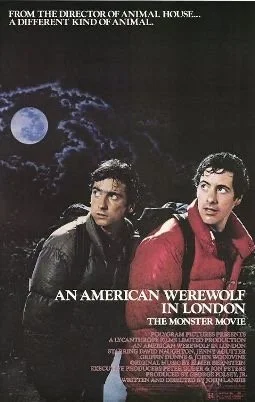
An American Werewolf in London (1981)

Mac Boyle February 8, 2022

Director: John Landis

Cast: David Naughton, Jenny Agutter, Griffin Dunne, John Woodvine

Have I Seen it Before: Never.

Did I Like It: I hesitate to start a review focusing on elements ancillary to the film in question, but on the other hand, the impulse has never stopped me, so: 

John Landis is an asshole.

He raised (or, I suppose, failed to raise, and only really succeeded in over-validating) an unrepentant sexual assaulter. He killed three people*. And if you happen to have seen the recent episode of The Movies That Made Us, focusing on Coming to America (1988), he absolutely has a ridiculously inflated view of himself** for someone who hasn’t made a demonstrably watchable film in over thirty years.

So, where does that leave this film? Celebrated as a great of the genre, I am going to—with the above context certainly making an argument that my criticism may be coming from a certain perspective—push back on that narrative.

This film is one exquisite werewolf transition, surrounded by an hour and a half of a movie that barely registers. The travel story is pedestrian. The relationship between David (Naughton) and Alex (Agutter) is preposterous from the moment they first see each other straight through to its tragic end. It isn’t funny. It isn’t scary. If Landis doesn’t know what it is, I’m not particularly inclined to help him find out.

And that werewolf transition? Entirely the work of Rick Baker, who deserves all the plaudits. Forget John Landis. For that matter, feel free to only enjoy clips of the film. Your life will be better for it.


*I probably ought to mention that he was found innocent of any criminal responsibility for the Twilight Zone (1983), but any reading of the details of that incident paint a fairly clear picture that he created the atmosphere where safety took a back seat to getting the shot done.

**He refused to identify who he was during his interview, after which the makers of the series helpfully introduced a supercut of other directors over the course of the series helpfully introducing themselves, many of them far better filmmakers, happily introducing themselves in deference to the form.

Tags an american werewolf in london (1981), john landis, david naughton, jenny agutter, griffin dunne, john woodvine
Comment
  • A Blog About Watching Movies (AKA a Blog in Search of a Better Title)
  • Older
  • Newer

Powered by Squarespace

Party Now, Apocalypse Later Industries

Where creativity went when it said it was going out for cigarettes.

Where creativity went when it said it was going out for cigarettes.