Party Now, Apocalypse Later Industries

Where creativity went when it said it was going out for cigarettes.
  • Home
  • BOOKS
    • THE ONCE AND FUTURE ORSON WELLES
    • IF ANY OF THESE STORIES GOES OVER 1000 WORDS...
    • ORSON WELLES OF MARS
    • THE DEVIL LIVES IN BEVERLY HILLS
    • A LOSS FOR NORMALCY
    • RIGHT - A NOVEL OF POLITICS
  • PODCASTS
    • Beyond the Cabin in the Woods
    • THE HOLODECK IS BROKEN
    • THE FOURTH WALL
    • As The Myth Turns
    • FRIENDIBALS! - TWO FRIENDS TALKING ABOUT HANNIBAL LECTER
    • DISORGANIZED! A Criminal Minds Podcast
  • MOVIE REVIEWS
  • BLOGS AND MORE
    • Bloggy B Bloggington III, DDS
    • THE HOLODECK IS BROKEN BLOG
    • REALLY GOOD MAN!
  • Home
    • THE ONCE AND FUTURE ORSON WELLES
    • IF ANY OF THESE STORIES GOES OVER 1000 WORDS...
    • ORSON WELLES OF MARS
    • THE DEVIL LIVES IN BEVERLY HILLS
    • A LOSS FOR NORMALCY
    • RIGHT - A NOVEL OF POLITICS
    • Beyond the Cabin in the Woods
    • THE HOLODECK IS BROKEN
    • THE FOURTH WALL
    • As The Myth Turns
    • FRIENDIBALS! - TWO FRIENDS TALKING ABOUT HANNIBAL LECTER
    • DISORGANIZED! A Criminal Minds Podcast
  • MOVIE REVIEWS
    • Bloggy B Bloggington III, DDS
    • THE HOLODECK IS BROKEN BLOG
    • REALLY GOOD MAN!

A Blog About Watching Movies (AKA a Blog in Search of a Better Title)

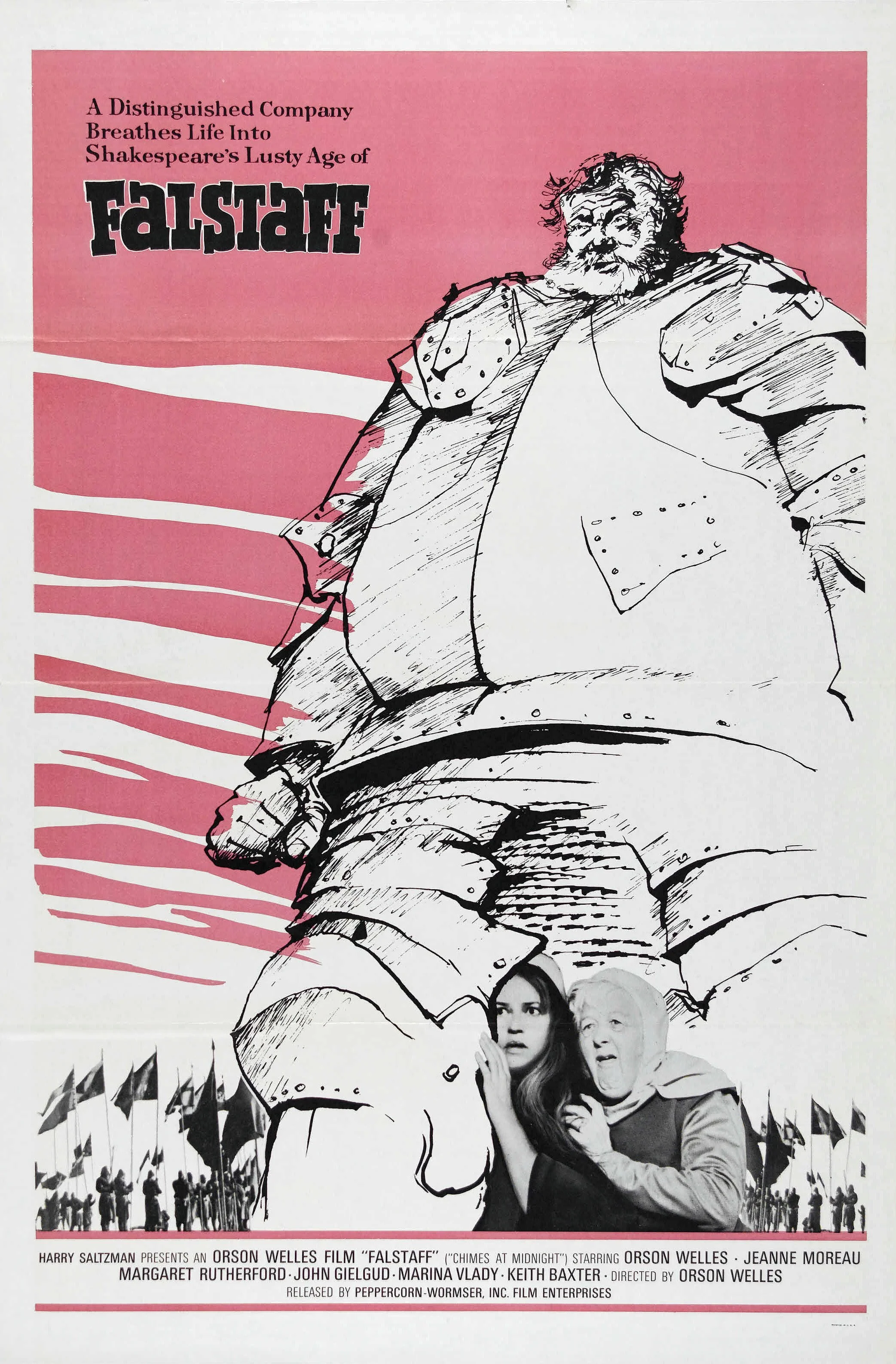
Chimes at Midnight (1965)

Mac Boyle February 8, 2022

Director: Orson Welles

Cast: Orson Welles, Jeanne Moreau, Margaret Rutherford, John Gielgud

Have I Seen it Before: Never. As I type this, this is the last of the films directed by Welles that I’m catching. I know. I’m unforgivably late to a party I myself was largely throwing.

Did I Like It: Welles struggled mightily to bring cinematic vitality to the works of the Bard, sometimes succeeding wildly, (Macbeth (1948)) and sometimes not accomplishing all of his goals as well as the audience might hope (Othello (1951); your mileage may vary).  Here, to play Flastaff—through all his adventures in the Shakespeare Cinematic Universe—was his lifelong ambition. Where as the Moor he was tragically, unavoidably miscast, here it not only seemed as if Welles always wanted to play Shakespeare’s great fool, his entire life may have been orchestrated to give him the opportunity.

The film’s virtues do not stop there. I’ve never thought of Welles as an action director in any sense of the word, but the Battle of Shrewsbury might feel as if it is both too disjointed and goes on too long for the sake of a modern audience, but I would push back against that myopic conclusion. The battle feels real and not some sort of pop culture confection. Film audiences would have likely forgiven Welles for sticking to the stentorian speechmaking, or for succumbing to a bubble gum aesthetic during this sequence, but if there was one thing that Welles ensured he did in his films—even after he was cobbling them together with no resources to speak of—it was to consistently punish those who come to his films with any preconceptions of how a film ought to behave.

Another element that I couldn’t help be struck by: the cinema—at least, the cinema as wielded by Welles—can capture more resolutely the banal tragedy of death better than the stage could ever hope to. His Macbeth and Othello have it as well, but here it is all the more potent. The tale of Falstaff isn’t necessarily meant to be a tragedy, necessarily. But after all the king-making and merry wive-ing is over, he is merely a wooden casket slowly being taken away by horse cart. All people, Welles included*, are heading to such an anticlimactic fate.


*But what this book presupposes is…
Tags chimes at midnight (1965), orson welles, jeanne moreau, margaret rutherford, john gielgud
Comment

The Last Picture Show (1971)

Mac Boyle February 8, 2022

Director: Peter Bogdanovich

Cast: Timothy Bottoms, Jeff Bridges, Ellen Burstyn, Cybill Shepherd

Have I Seen it Before: Yes. I have the most fleeting of memories of catching it on TCM at some point in the early `00s or late `90s. At the time, it didn’t really connect with me. That was likely because I was living through my own, twisted variation of the story at the time, in so much as I was young and so singularly obsessed with my life as it presented itself at that moment.

Did I Like It: It must have been difficult to be Peter Bogdanovich. He came to filmmaking by way of film history, and chiefly as an acolyte of Orson Welles. Here, he was viewed as a young auteur who may never outpace this early success. Toward the end of his career, he was still talking about Welles, and even committing his anecdotes to film, with The Cat’s Meow (2001). Here, too, he became so enmeshed in McMurtry’s world, that he left his wife for the ingenue he had discovered to play Jacy Farrow, the most calamitous temptress in southern literature since Scarlett O’Hara. He’s always been a filmmaker dictated to by others; a passenger in his own career.

But, as with the discovery of Shepherd, Bogdanovich is swinging for the fences in every aspect of the film. Ever actor is perfectly cast (I hesitate to single any particular performer out for attention, but I will say that when I read that Cloris Leachman won the Oscar for Best Supporting Actress, I may have visibly nodded, even though no one was in the room at the time) The cinematography is stark, wielding the stark contrasts of black and white photography far more clearly than any color photography could ever hope to… It all brings to mind one other, young filmmaker who was able t ogive everything to a film so early in their career.

Even now, I can’t help but compare him to Orson Welles. It must have been hard to be Peter Bogdanovich.

Tags the last picture show (1971), peter bogdanovich, timothy bottoms, jeff bridges, ellen burstyn, cybill shepherd
Comment

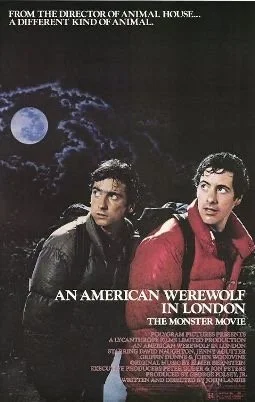
An American Werewolf in London (1981)

Mac Boyle February 8, 2022

Director: John Landis

Cast: David Naughton, Jenny Agutter, Griffin Dunne, John Woodvine

Have I Seen it Before: Never.

Did I Like It: I hesitate to start a review focusing on elements ancillary to the film in question, but on the other hand, the impulse has never stopped me, so: 

John Landis is an asshole.

He raised (or, I suppose, failed to raise, and only really succeeded in over-validating) an unrepentant sexual assaulter. He killed three people*. And if you happen to have seen the recent episode of The Movies That Made Us, focusing on Coming to America (1988), he absolutely has a ridiculously inflated view of himself** for someone who hasn’t made a demonstrably watchable film in over thirty years.

So, where does that leave this film? Celebrated as a great of the genre, I am going to—with the above context certainly making an argument that my criticism may be coming from a certain perspective—push back on that narrative.

This film is one exquisite werewolf transition, surrounded by an hour and a half of a movie that barely registers. The travel story is pedestrian. The relationship between David (Naughton) and Alex (Agutter) is preposterous from the moment they first see each other straight through to its tragic end. It isn’t funny. It isn’t scary. If Landis doesn’t know what it is, I’m not particularly inclined to help him find out.

And that werewolf transition? Entirely the work of Rick Baker, who deserves all the plaudits. Forget John Landis. For that matter, feel free to only enjoy clips of the film. Your life will be better for it.


*I probably ought to mention that he was found innocent of any criminal responsibility for the Twilight Zone (1983), but any reading of the details of that incident paint a fairly clear picture that he created the atmosphere where safety took a back seat to getting the shot done.

**He refused to identify who he was during his interview, after which the makers of the series helpfully introduced a supercut of other directors over the course of the series helpfully introducing themselves, many of them far better filmmakers, happily introducing themselves in deference to the form.

Tags an american werewolf in london (1981), john landis, david naughton, jenny agutter, griffin dunne, john woodvine
Comment

Filming Othello (1978)

Mac Boyle February 8, 2022

Director: Orson Welles

Cast: Orson Welles, Micheál Mac Liammóir, Hilton Edwards

Have I Seen it Before: Never. It’s only ever been in any kind of wide release for home video since 2017, long after I had started writing The Devil Lives in Beverly Hills, Orson Welles of Mars or even The Once and Future Orson Welles. I wish I had been able to take it in long long ago.

Did I Like It: My opinion of Welles’ Othello (1951) was, at best, slightly muted (Welles miscast himself, forcing the film to land at the hind end of his Shakespeare features). However, I had a great degree of excitement for this film—produced for West German television and the last feature-length film directed by Welles which he fully completed in his lifetime, it belongs squarely in the realm of his later work. It is cobbled together from material and resources he already had sitting around the house, and thus is footage of a lunch conversation he had with some of the cast members, and footage of him at his moviola. 

And I. Am. Here. For it.

Whenever I am writing the fictional Orson Welles, there’s never less than an ounce of anxiety that I wasn’t getting his voice (or, more honestly, his unique syntax) quite correct. But that’s as it should be. My Orson Welles is a fictional creation, pieces of what is knowable about the man coupled with chunks of pulp heroes thrown in to fill in the gaps. It’s a singular and unusual pleasure just to spend time with the man as he talks quite honestly (strengths along with missed opportunities) about one of his films. We may not get any salacious gossip or a how-to diagram to make his films, but a perfect snapshot of his feelings about the larger portion of his work (Citizen Kane (1941) is not mentioned once in the 84 minute runtime), and with just a hint of his hopes for the future. He never stopped thinking that his next film would be the one to finally surpass Kane and if nothing else, that one characteristic is what drew me to the man as a subject all those years ago.

Tags filming othello (1978), orson welles, micheál mac liammóir, hilton edwards
Comment

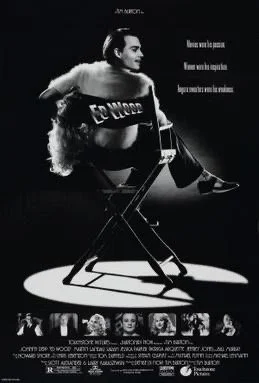
Ed Wood (1994)

Mac Boyle January 30, 2022

Director: Tim Burton

Cast: Johnny Depp, Martin Landau, Sarah Jessica Parker, Patricia Arquette

Have I Seen it Before: Big time.

Did I Like It: If you’ve known me for any length of time, you’ve probably heard about my affinity for Tim Burton’s likely most famous film, Batman (1989). I’ve owned it in five different formats, and have probably watched it more than any other film in history…

But it isn’t my favorite Tim Burton film. Not by a long shot.

The story of Edward D. Wood, Jr. isn’t a very nice story. A man with not a lot of talent doesn’t let that stop him, he proceeds to make movies despite that lack of talent, and the pursuit of those dreams did not bring him fortune, or glory, or even some mild sense of fulfillment. They only exacerbated his alcoholism and left him to die in squalor.

But the film stops before any of the truly tragic realities of Wood’s life can creep into the frame (indeed, they are mentioned only in codas before the end credits). It is a story about hope springing eternal against all odds (and even reality). It’s uplifting, and it’s about friendship at its core. Johnny Depp is never more reserved (or, for that matter, better) than he is in the title role, and Landau’s well-deserved Oscar for his turn as an at-the-end-of-his-rope Bela Lugosi makes this Burton’s strangest and most personal film, when it really should lay claim to neither.

I’m not even all that weirded out that for one of the few times (the others being, naturally Sweeney Todd: The Demon Barber of Fleet Street (2007) and oddly, Miss Peregrine’s Home for Peculiar Children (2016)) when Danny Elfman is not orchestrating the score for a Burton film. I mean, I’m a little weirded out, just not a lot.

Also, with the one two punch of Vincent D’Onofrio’s face and Maurice LaMarche’s voice, this film contains the most believable, fictional portrayal of Orson Welles on film.

That doesn’t just count for something; it counts for a great deal.

Tags ed wood (1994), tim burton, johnny deep, martin landau, sarah jessica parker, patricia arquette
Comment

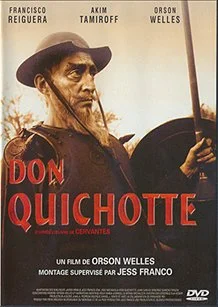
Don Quixote (1992)

Mac Boyle January 30, 2022

Director: Orson Welles

Cast: Francisco Reiguera, Akim Tamiroff, Patty McCormack, Orson Welles

Have I Seen it Before: Oddly enough, yes. While I was doing research on The Devil Lives in Beverly Hills, I had tracked down a copy of this cobbling together of Welles’ great unfinished regret, as its prolonged production would be a minor plot point in the novel

Did I Like It: Now, as I am nearing my time with Welles and the publication of The Once and Future Orson Welles, I have come to revisit it again. In this latest book, there’s a scene where, while excavating a crypt hidden beneath the grave of William Shakespeare, they discover preserved archives. There could be anything on those shelves. Foul papers versions of The History of Cardenio or Love’s Labour Won. Those with which Orson travels see the documents for the potential treasure they are. Orson wants the papers to be left alone. If, after he is gone, someone found pieces of something he had been working on—for instance, the original ending to The Magnificent Ambersons (1942)—it was probably unfinished for a reason. They should just leave it alone.

That also comes from my feelings about this film. Welles mislabeled much of his footage for Don Quixote, fearing that someone might one day try to cut it together against his witches. Here, poor quality footage is cobbled together in something that wants to be meta, but merely becomes even more incomplete than it was when it was a hypothetical film. It is less than the sum of its parts. Sections are narrated by Welles, and other sections are narrated by someone trying to sound a little bit like Welles, but didn’t understand that Maurice LaMarche is a person out in the world who has had the market on that locked down for some time. 

This is a film less than the sum of its parts. Unfortunately it will exist to disappoint for all time. Fortunately, we can all still dream about what Welles’ Don Quixote might have truly been.

So, this is all to say, if I leave some work truly unfinished after I go, please, please, just let it be.

Tags don quixote (1992), francisco reiguera, akim tamiroof, patty mccormack, orson welles
Comment

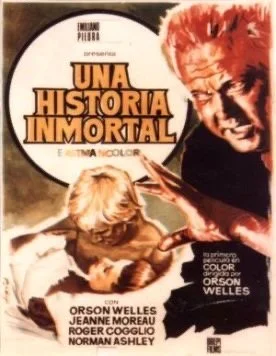
The Immortal Story (1968)

Mac Boyle January 30, 2022

Director: Orson Welles

Cast: Jeanne Moreau, Orson Welles, Roger Coggio, Norman Eshley

Have I Seen it Before: Never. Honestly, this one has always felt like a minor work (perhaps owing to its runtime?) and flew resolutely below my radar.

Did I Like It: I immediately made some assumptions that this would be firmly in that pantheon of latter-day Welles films (along the lines of both F for Fake (1973) and The Other Side of the Wind (2018)) where it must have been made with such a guerrilla mentality that they almost appear cobbled together via 16mm and 8mm film stock, even home video. As his film career well and truly wore out, Welles was cobbling together films from anything he could reach for.

Thus my reactions to the first few minutes (and largely the rest of the film) were filled with pleasant surprises. The opening shot in Macao (Spain, with some Chinese signs strewn about; Welles lived there and had long since struggled to get a production in the US) was made with such a clean, pristine quality, I was immediately certain that this was a film Orson had left unfinished after his death in 1985, and some well-meaning lunkhead got it into their mind to try and release the finished material in something resembling a completed form (for more on this phenomenon, see my review of the released version of Welles’ Don Quixote (1992)).

But it wasn’t. For most of the runtime (slight thought it might be) I thought the film could have been shot at any time. Certainly, the old-age makeup used on Welles during the production are dim, especially when compared to the efforts which still hold up from Citizen Kane (1941). That could be tied directly to the use of color cinematography, for which Welles never really cared. Why Welles really needed any old-age makeup at that point in his life is also a bit beyond me, though.

For one, brief moment (emphasis on the brief). Welles was able to marshal the meager resources he had at his disposal and make an honest-to-God film. One wonders what the man might have been able conjure had he lived a little longer.

Tags the immortal story (1968), orson welles, jeanne moreau, roger coggio, norman eshley
Comment

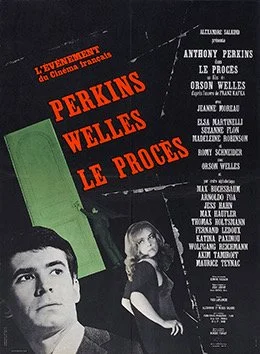
The Trial (1962)

Mac Boyle January 23, 2022

Director: Orson Welles

Cast: Anthony Perkins, Orson Welles, Jeanne Moreau, Romy Schneider

Have I Seen it Before: Never. Hey, some of them have slipped under the radar, and when it comes to a director like Welles, the further on you get in the filmography, the less the DVD/Blu Ray releases are shown love, and the less we may be getting out of the film all together.

Did I Like It: Welles once called it his best movie. We can debate as to whether or not he really believed that, or if he was making the proclamation defensively, whether because of the muted response the film received originally, or whether he was so desperate to move public opinion away from Citizen Kane (1941). 

I think he had to be defensive about it all. To be certain, all of the scenes have that trademark Welles vitality that is only truly noticeable when the contrasting authors of The Magnificent Ambersons (1942) are experienced. Camera angles are arch, people talk over people (unheard of, even this late in Welles career) and everything moves with a vitality that proves once again Welles was never content to just let a scene play out in the manner in which any other, ordinary and mortal director would be content.

Here’s the thing, though. The “pinscreen” opening might have had some unusual quality in the time it was released, but here it feels like a powerpoint presentation masquerading as cinema. I grant that might be more about the time in which I am writing this review than the reality of the quality of the film itself, but I can’t write these words in another time. The beginning becomes a further albatross because it suggests that the entire film is meant to be a dream. I’m not sure if that actually is Welles’ intent or not, but it would certainly explain the films more impressionistic impulses, but then we are left with a question that is unavoidable:

How long can a film sustain itself if it is all meant to be a dream? Do we dream sustained for two hours? Does my current era lack the attention span to allow for a dream that goes on that long? The film certainly has more interest in questions than answers, but if I’m spending the entire time asking the wrong questions, am I the problem, or is it the film?

Tags the trial (1962), orson welles, anthony perkins, jeanne moreau
Comment

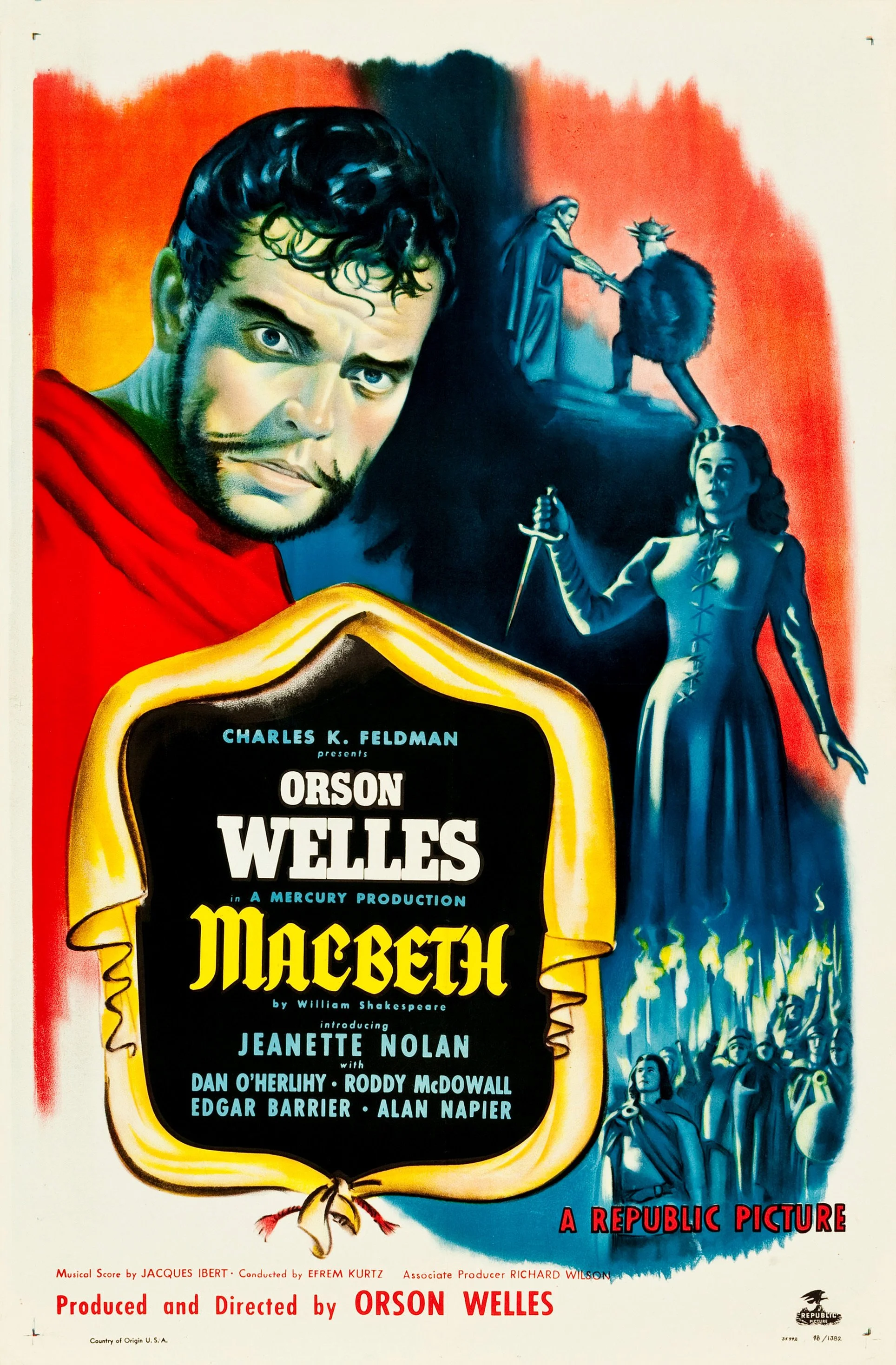
Macbeth (1948)

Mac Boyle January 22, 2022

Director: Orson Welles

Cast: Orson Welles, Jeanette Nolan, Dan O’Herlihy, Roddy McDowall

Have I Seen it Before: Never. I know. I’m a fraud. Do I turn my credentials into you or is there some kind of central office to which I need to mail it.

Did I Like It: I mean, right out of the gate, I’m thinking… Gee, he even managed to give the witches Scottish accents. As the film proceeds, nearly every character (maybe not so much Dan O’Herlihy’s Macduff, but you can’t win them all). You don’t see that in every filmed adaptation of the Scottish play. Hell, at times it feels like the Scottish accent is the single most misappropriated in the history of the motion picture, but then again, that might be mostly tied to Sean Connery and his vague insistence to never play a Scotsman, but instead play every other nationality on the Earth as if they were Scottish.

Here in this film, the big budgets of the studios had departed, and were never to quite return (with the possible exception of Touch of Evil (1958), but this is where the least spoken about parts of Welles’ genius (and he was a genius, despite what the vagaries of Hollywood might have tried to do to it) comes into full, undeniable bloom. 

Even when the money had run out, and the eyes of power not only ignored Welles but were content (and not entirely incorrect) in their assessment that they had destroyed him, he was still committed to making a film that always engages, and often surprises. Welles is—from the film’s first few moments—reaching for something a bit better than the average, and in ways that people would have never noticed/forgiven him. This is a b-movie in the resources brought to bear, but that doesn’t mean it has to accept its lowly status. It will always reach to be one for the ages. Failure is acceptable (it does not fail), but it would be in accepting limitations that things become irretrievably lost.

One note? While Mercury stalwart Jeanette Nolan equates herself well as Lady Macbeth, I can’t help but wonder if Welles had only met Eartha Kitt earlier. Had she played the character, the film just might have been as memorable (if not necessarily better) than Citizen Kane (1941).

Tags macbeth (1948), orson welles, jeanette nolan, dan o’herlihy, roddy mcdowall
Comment

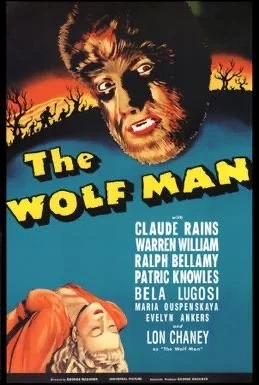
The Wolf Man (1941)

Mac Boyle January 22, 2022

Director: George Waggner

Cast: Lon Chaney Jr., Claude Rains, Bela Lugosi, Warren William

Have I Seen it Before: Oh, sure. Although my strongest memories of the film probably come from a Universal Monsters coloring book I got in the early 90s. I had some really great times with that coloring book. Now I wish I had just gone over it in grey and black and hadn’t used any of the other colors…

Did I Like It: Interesting that Chaney is perhaps the saddest-sack movie star who ever lived (imagine if he had ever played Willy Loman), and somehow Forrest Gump-ed his way into being the Nick Fury of the Universal Monsters, that first shared cinematic universe. 

He’s certainly affecting in that capacity, and managed to do so over the course of five films in the roll, the longest sustained run in the Universal canon, and it still feels like the horror series is a something of a priority for the studio, even if James Whale has since retired from the motion pictures and the peak of the series is now firmly in the past. Yes, the entire affair has a bit of a feel of a TV special (see the opening titles), but the photography is interesting, and the ending where Sir John (Rains) unknowingly killed his son is deeply and tragic, and the film certainly reaches for a “less is more” aesthetic with its werewolf transformation.

And yet, by about minute 56 in the film, I’m bored. That’s not a great sign, considering that the film will be over in just over 10 more minutes. Chaney’s pathos cannot hope to hold up in comparison to that of Karloff, and the atmosphere is largely perfunctory, which leave it in the shadow of even Dracula (1931), which is saying quite a bit.

Tags the wolf man (1941), universal monsters, george waggner, lon chaney jr, claude rains, bela lugosi, warren william
Comment

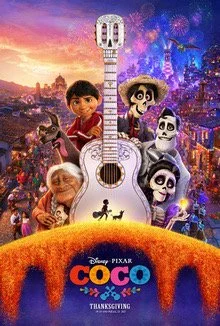
Coco (2017)

Mac Boyle January 17, 2022

Director: Lee Unkrich

Cast: Anthony Gonzalez, Gael Garcia Bernal, Benjamin Bratt, Alanna Ubach

Have I Seen it Before: Nope. I can’t even claim that COVID has thrown my more recent movie consumption out of whack. This one came from the before times, and I’ve had a Disney+ subscription since halfway through the first season of The Mandalorian. I’m behind on all things Pixar and it’s making me feel weird.

Did I Like It: There’s more than enough written about Pixar’s unique ability to make people cry within the first few minutes of a movie. I don’t want to talk about that, mainly because its been talked about death, but really mainly because I’m a robot and my creators forgot to build me with the ability to have my emotions seep out of my eyes*.

What I do want to talk about is the unique ability of Pixar movies to confound expectations in their storytelling. At about the five-minute mark in this film—just at the crest of Lora’s first set of tears—I felt like I was going to be done with the film. Ernesto de la Cruz (Bratt) is Miguel’s (Gonzalez) great-great-grandfather and the one excised from the family history. I’m one of those people that write the rest of the film far too quickly, and the Pixar folks see me coming a mile away every time. There’s a perfectly acceptable kids movie filled with Day of the Dead imagery and filled with Latin music about embracing your true destiny and bring music back to your begrudging family. This movie is ready to go straight for the throat and expose the pulsating jugular and try to say something about how long and anger can be so interchangeable as to practically be quantum states.


*Which wouldn’t be a terribly pitch for a new Pixar movie, while we’re on the topic…

Tags coco (2017), pixar films, lee unkrich, anthony gonzalez, gael garcia bernal, benjamin bratt, alanna ubach
Comment

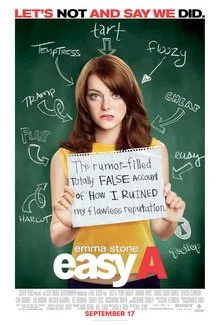
Easy A (2010)

Mac Boyle January 17, 2022

Director: Will Gluck

Cast: Emma Stone, Penn Badgley, Amanda Bynes, Thomas Haden Church

Have I Seen it Before: Oh, sure.

Did I Like It: She might just be a little bit beyond it now—especially as she’s already done her near-obligatory superhero film tour of duty with The Amazing Spider-Man (2012) and The Amazing Spider-Man 2 (2014)—but Emma Stone would have made a great Barbara Gordon. Ah, well. Given the once and future Batgirl’s struggles to find her way to the big screen, it was never meant to be. I promised myself this review would devote fewer than 100 words to Barbara Gordon, and I am in imminent danger of breaking that limit.

That is all to say that had this film only had Stone’s up-until-that-point-undiscovered star power to fuel it. More than enough teen movies and romantic comedies are content to hinge their success or failure on chemistry or star power, and plenty of them get the job done well enough. Thankfully, there’s a big vibe of being delightfully smarter than everyone else in the room* throughout the film. Even reaching for such a quality immediately puts this film ahead of the average film in either genre. Far more valuably, though to the quest of being a memorable comedy, is an insistent vein of absurdism throughout. Some might claim the non sequitur is a weaker form of humor, but those people are wrong, and even they are going to enjoy the film. That’s the real strength: there’s something here for everyone, and no one has to feel like they’re slumming it. 


*In case you were wondering, that’s where the big Barbara Gordon energy comes into the proceedings for me. It should for you, too. I *really* shouldn’t have dived right into the writing of this review right after reading a lot of Batgirl movie news.

Tags easy a (2010), will gluck, emma stone, penn badgley, amanda bynes, thomas haden church
Comment

You’ve Got Mail (1998)

Mac Boyle January 17, 2022

Director: Nora Ephron

Cast: Tom Hanks, Meg Ryan, Parker Posey, Greg Kinnear

Have I Seen it Before: Many, many times. Greg Kinnear’s character might have seeped into my brain a little bit.

Did I Like It: Remember when this movie was released and it seemed like it was a love story for the foreseeable future? Dial up connections, America On-Line, and the impenetrable power of the large bookstore chain.

Now, it’s possibly even more quaint than its ancestors The Shop Around the Corner (1940) and In the Good Old Summertime (1949). A subsequent, more current remake of the film would only work as a horror movie. Which now that I think about it, I need to go make a note in another document… The Greg Kinnear character can still use AOL if it makes everyone feel a sense of unearned of comfort.

On that note, I’m struggling to think of a film more designed to—and succeeds to—comfort from moment to moment. Hanks and Ryan—the end result of a long-dormant government experiment to create beings of pure likability—are at the top of their collective game*, and that’s in a film where demonstrably, Hanks is playing the villain. Imagining a world where everyone from the corporate fat cat to the plucky underdog is fueled entirely by being good with a turn of phrase when they’re not eye-ball deep in a book is more romance than anyone ought to get from a single movie.

And sure, the triumph of true love against odds in a world of increasingly impersonalized communications has its charms, but that ain’t what keeps me coming back to the movie.


*Yep, I’m putting this one ahead of When Harry Met Sally (1989) and Sleepless in Seattle (1993). Come and fight me about Nora Ephron films, if you feel the need.

Tags you’ve got mail (1998), nora ephon, tom hanks, meg ryan, parker posey, greg kinnear
Comment

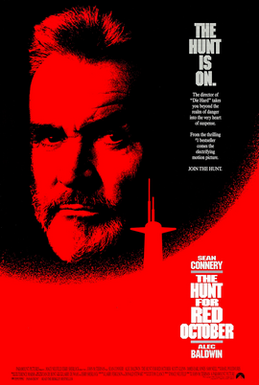
The Hunt for Red October (1990)

Mac Boyle January 17, 2022

Director: John McTiernan


Cast: Sean Connery, Alec Baldwin, Scott Glenn, James Earl Jones


Have I Seen it Before: Yup.


Did I Like It: So, lately I’ve been listening to many of the later (read: preposterously impossible to be adapted to film) Tom Clancy novels via audio book and before we get into this film, I think now is as good a time as any to get some things off my chest. Never have I ever been through such a more progressively ridiculous set of events in my life, and I include both the COVID-19 pandemic, and the Trump presidency in that statement. Why have I subjected myself to these interminable tomes? Well, I had purchased Clear and Present Danger and The Sum of All Fears (read, those Clancy books which were begrudgingly—by all parties—adapted to film) on Audible and with my reading goal for 2021 well passed, I could take some chances on some books I only bought on an ill-defined impulse. By the time I was in the middle of Fears—which at least partially hinges on a subplot involving Ryan’s bout of erectile dysfunction*--I was “Jim-ing” an unseen camera so often, that John Krasinski’s eventual casting finally made sense. I kept going because the knowledge that Ryan’s supreme intelligence and only-honest-man-in-town-ness propels him into the Presidency… for reasons. It’s time I’ll never get back, and by the time of Executive Orders when Ryan addresses the nation and applauds his fellow citizens for making responsible decisions for themselves in the efforts to stem an outbreak of airborne Ebola, I laughed so hard at my car’s stereo, I fear I may have hurt my Honda Civic’s feelings.


Tom Clancy is garbage. He continues to be garbage, and he’s been dead for nearly ten years.


But, here’s the good news! None of the later—and even occasionally posthumous—absurdities of the saga of John Patrick Ryan are here. This is a brilliantly constructed spy thriller, where Jack Ryan (Baldwin – could you imagine him, or for that matter Harrison Ford, Ben Affleck, Chris Pine, or Krasinski portraying Clancy’s latter-day Reaganesque fever dream of a President?) is the perpetually under-estimated smartest man in the room… or boat.


While I might say that the story ultimately halts more than it concludes, the trip to that anti-climax is engaging enough, and all of the people involved aren’t bringing to the proceedings the same baggage as the source material** that it’s extraordinarily difficult not to like the film, despite my steadily increasing antipathy for the character.


*Clancy sure knew his audience. I’ve got to give him that.

**To be fair, part of the film’s strength is that the direct source material is far and away Clancy’s strongest book. It came before he started to buy his own press.

Tags the hunt for red october (1990), john mctiernan, sean connery, alec baldwin, scott glenn, james earl jones, tom clancy movies
Comment

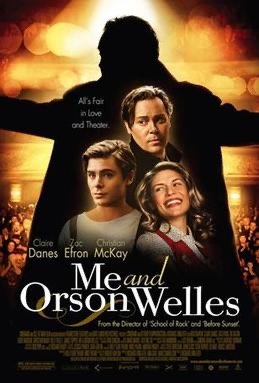
Me and Orson Welles (2008)

Mac Boyle January 17, 2022

Director: Richard Linklater

Cast: Zac Efron, Christian McKay, Claire Danes, Ben Chaplin

Have I Seen it Before: I mean, yeah…

Did I Like It: There are any number of films—both narrative and documentary—about the making of Citizen Kane (1941), the War of the Worlds broadcast, and Orson Welles’ long slow slalom through increasing cultural ambivalence. I’ve watched pretty much all of them, so it is nice to spend a little time with the man before he is a household name. Focusing in on the rehearsals and performance of his famed fascist Julius Caesar ensures that there will likely never be another film treading over the same material. The film’s attempts to recreate that singular production bring us as close to witnessing that event as we possibly can. Linklater fills the film with a vital energy, where a lesser director might have let the material and setting speak for itself.

Except, the film isn’t really about him. Which is fine, as McKay gets the voice and cadence of Welles right, but as with so many who have tried to play him in the years leading up to the making of Kane, he’s already far too old to play Welles. He apparently has played the role occasionally in stage productions, and he might very well be the best possible performer for Welles post-The Stranger (1946) and pre-Touch of Evil (1958). It also helps that Efron makes a level-headed play for material beyond the teeny-bopper fare that brought him initial fame. He brings a refreshing earnestness to the stock character type of the wide-eyed boy who  wants to be a big star. It truly is an engaging depiction of life in the theater, and infuses the notion with just enough realistic romance that even I can feel a bit wistful for not having pursed such a life. His chemistry during a flirtation which never quite blooms into a romance with Clare Danes left me not once dwelling on their staggering age difference… until sitting down to type this review.

Tags me and orson welles (2008), richard linklater, zac efron, christian mckay, claire danes, ben chaplin
Comment

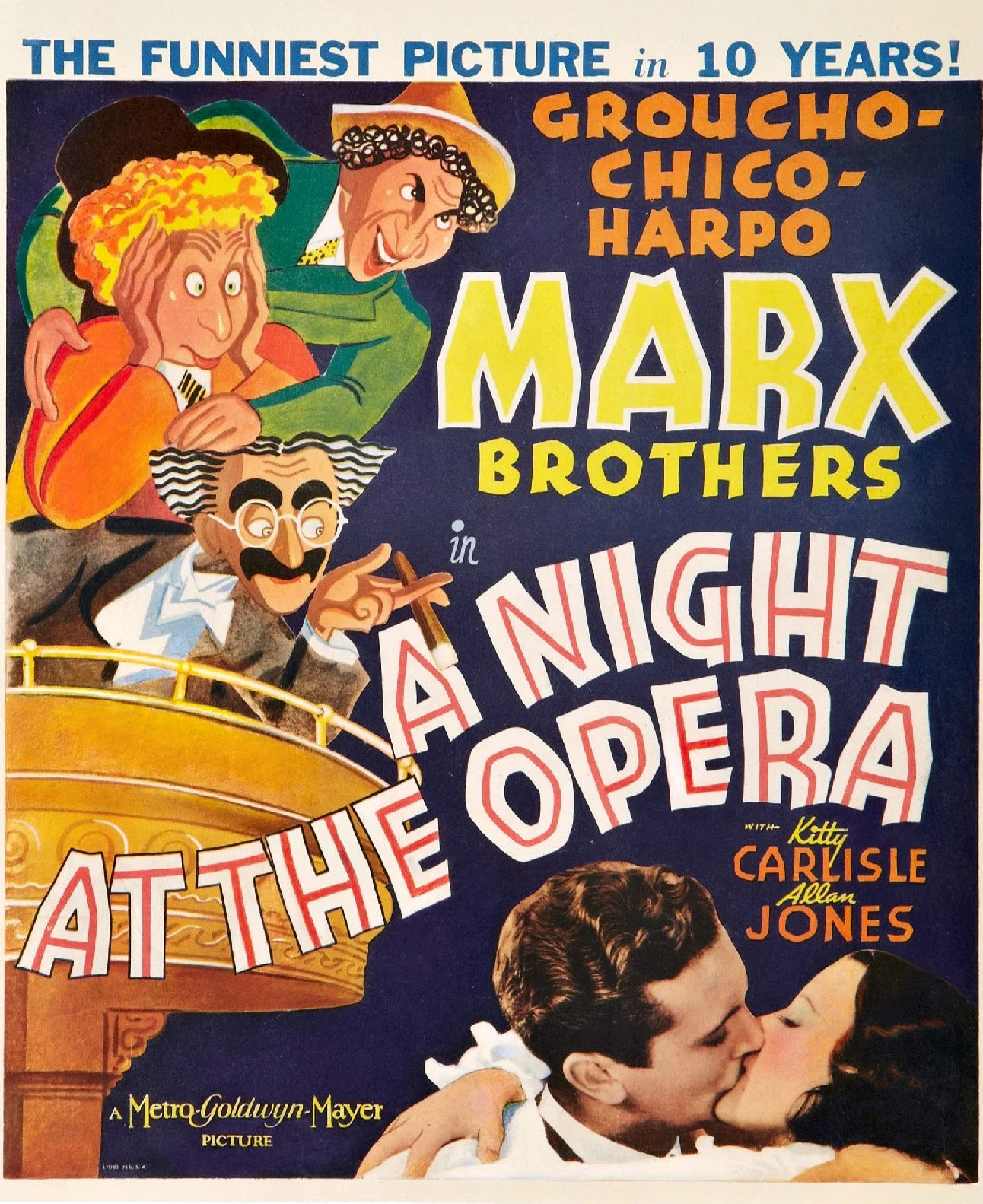
A Night at the Opera (1935)

Mac Boyle January 12, 2022

Director: Sam Wood

Cast: Groucho Marx, Chico Marx, Harpo Marx, Kitty Carlisle

Have I Seen it Before: For the kid who watched more Turner Classic Movies than MTV in the `90s, it would have been hard to miss.

Did I Like It: I’ve often mentioned that, while enjoyable, the larger majority of the Marx Brothers films fall into that trap that a lot of early sound films fell into, where they are so irretrievably locked into the massive new equipment needed to record the sound* that all they can really do is recorded stage performances. Their movies so often stop entirely for musical numbers that aren’t so much a part of the story trying to be woven, but more akin to a follies revue, which can drag down the proceedings at times**.

This limitations probably works in the Brothers’ favor. Chico and Groucho are simmering cauldrons of snappy dialogue, so much so that if you aren’t certain you are going to have a pretty good time by the first time Grouch says something, then you’re lying. Still, they never would have worked on film during the silent era.

Well, Harpo would. So much so that—as much as I would want to talk about the greatness of Groucho—I think this review should be a celebration of everything that is Harpo. How good is Harpo? Consider the scene in the film where he, Chico and Ricardo Baroni (Allan Jones, pulling Zeppo duties for the proceedings) are being served pasta while being stowaways on an ocean liner. Chico smirks through the event, like he does through pretty much every scene he ever committed to film. Baroni blandly stares his way through getting a plate, impatiently waiting for the next opportunity to croon. In the high peak of the Depression, Harpo looks at that plate of spaghetti with such a longing that the noodles are liable to solve every problem he ever had. Even Chaplin couldn’t sell that level of hunger in The Gold Rush (1925). If you beat Chaplin at the Tramp game, you’re the greatest of all time. I bow before you, Harpo, and so does Charlie.


*More recently, some scenes shot in IMAX had something of the same problem. Maniacally motion-driven films suddenly got locked down to a static shot when “something big”(tm) had to happen.

**I can’t be the only one who fast forwards through 95% of the music guests on Saturday Night Live, right?

Tags a night at the opera (1935), sam wood, marx brothers movies, groucho marx, chico marx, harpo marx, kitty carlisle
Comment

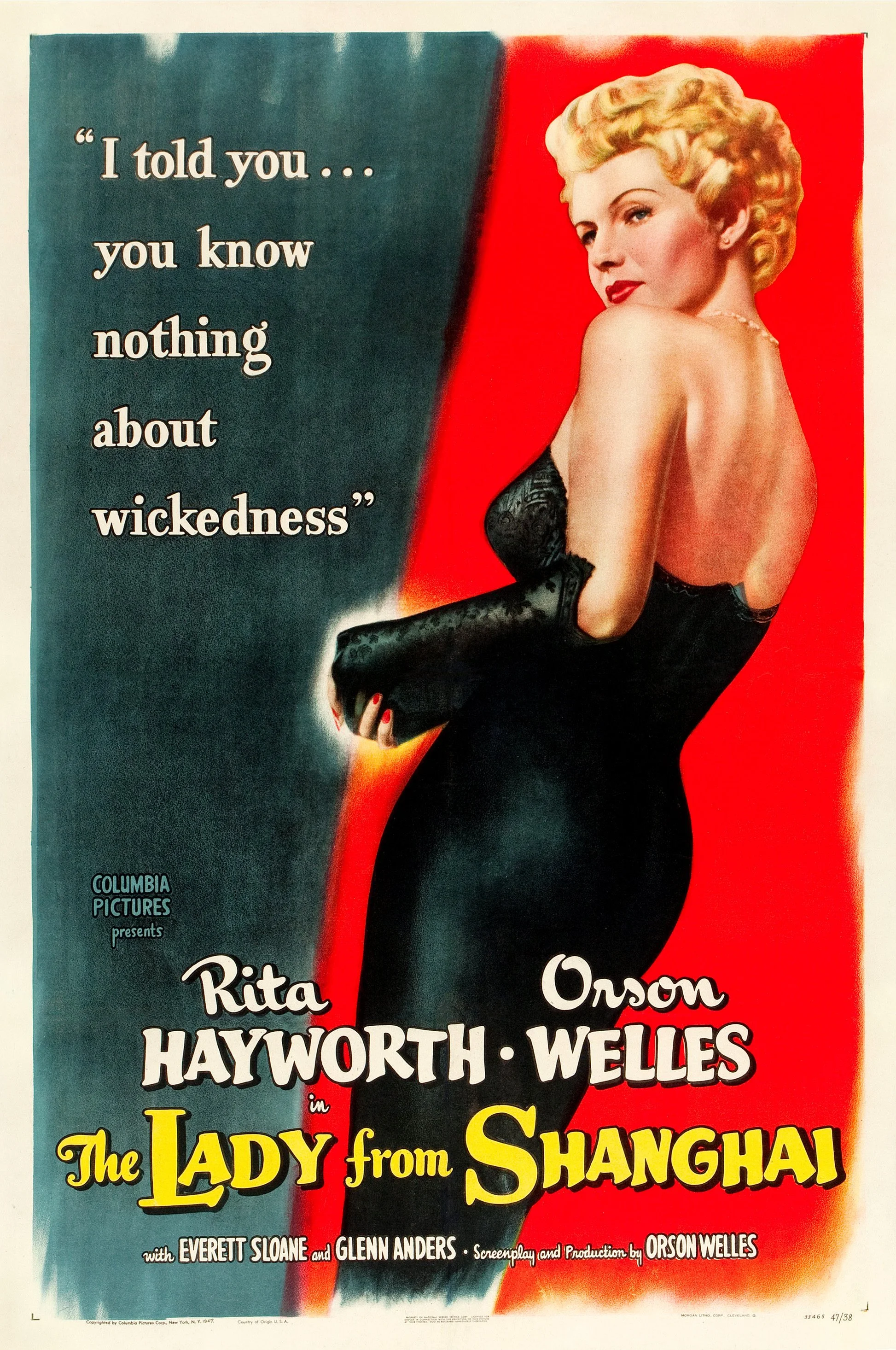
The Lady From Shanghai (1947)

Mac Boyle January 12, 2022

Director: Orson Welles

Cast: Rita Hayworth, Orson Welles, Everett Slaone, Glenn Anders

Have I Seen it Before: Oh, sure.

Did I Like It: Certainly, Citizen Kane (1941) is the film for which Orson Welles is chiefly remembered, but I’ll be damned if this isn’t his best movie. Many of Welles films, theatrical productions and radio broadcasts are intellectual exercises. His name is made in displays of clever form. The stories themselves are incidental. Now, here he’s working with a very basic noir story: Rough and tumble boy more tough than smart meets girl who may very well be descended from sharks. Two or three dead bodies later, and everyone wishes they hadn’t met in the first place.

But this had to be one that Welles felt more than he thought about, and I mean that in the very best way possible. Produced as the marriage between Welles and Hayworth was coming to an end, that alone is worth the above assessment. So many screen pairings of famed Hollywood couples happen when the couple is just starting to fall in love. If what they feel at that moment is real (far from a guarantee), and if they can translate any of that igniting passion to on-screen chemistry (which hardly ever happens) then that display inevitably feels self-conscious on the part of the performers, even if that self-consciousness is only on the part of us as the audience. Seeing a film capturing an—even relatively amicable—end is fascinating and highly unusual**.

Beyond that, and in the best example of what noir tries to do, every piece of the film seems designed to keep the audience off balance, if not outright confuse them, culminating in the famed house-of-mirrors sequence at the film’s climax. Some have complained about that, but I contend its the film’s greatest strength. We’re not supposed to feel like things are adding up. Why else would Welles have had Hayworth chop off most of her hair and dye what remained blonde?


*Although there is at least an argument to be made that he is better known to future generations as the inspiration for Maurice LaMarche’s portrayal of The Brain… And even that reference may not be all that hip for the kids of today, which is a complete shame.

**The only other example I can readily think of would be Woody Allen’s Husbands and Wives (1992)… And there wasn’t anything amicable about that. Infinitely more fascinating on that front, but you probably ought not hold your breath for me writing a review on that film.

Tags the lady from shanghai (1947), orson welles, rita hayworth, everett sloane, glenn anders
Comment

RKO 281 (1999)

Mac Boyle January 11, 2022

Director: Benjamin Ross

Cast: Liev Schreiber, James Cromwell, Melanie Griffith, John Malkovich

Have I Seen it Before: I was probably the only 15 year old on the planet who practically gasped when he saw an ad for the film on HBO, and then ensured he stayed home on a Friday night to watch it as it first aired. It was shortly after first seeing this film that the idea occurred to me of trying to graft a fantastical adventure onto the War of the Worlds broadcast. Twenty-plus years later, I’m just now culminating those flitting ideas that this movie put in my head.

Did I Like It: Ultimately, trying to force this story, with all of the implications for Welles (Schreiber) future and the support of Hearst’s (Cromwell) life diminishes things a little bit. Despite ominous hints that he’ll never top the achievement of Citizen Kane (1941), it largely paints Welles as triumphant at the end of the picture. Mank (2020) tries its level-headed best to take Mankiewicz’s (Malkovich) side in the conflict. The Battle Over Citizen Kane (1996) covers the topic more thoroughly, and more hauntingly.

But I can’t not love this film. So many depictions of Welles depict him as a pillar of pure—some times tragic, sometimes conniving—genius. This film occasionally has the gall (let’s face it, honesty) to depict him as a fairly young kid who can’t help but doubt his own ability to get the job done. That makes Welles as depicted by Schreiber feel close to what I imagine a twenty-five year old kid with self-destructive impulses given the freedom to do whatever he wanted in Hollywood, however briefly. That feeling helps to offset the unavoidable reality that of all the people to depict Welles on film, Schreiber looks and sounds like the imminently recognizable Welles the least. Come to think of it, only Cromwell and Griffith have any resemblance to the people they depict. Does it really count as a weakness? By all rights it should take me out of the film, but the proceedings manage to hold up just fine.

Tags rko 281 (1999), benjamin ross, liev schrieber, james cromwell, melanie griffith, john malkovich
Comment

Rambo: Last Blood (2019)

Mac Boyle January 10, 2022

Director: Adrian Grünberg

Cast: Sylvester Stallone, Paz Vega, Sergio Peris-Mencheta, Adriana Barraza

Have I Seen it Before: Nope. Reviews were pretty toxic so it just floated right past me.

Did I Like It: And I’m not entirely certain it deserves such a toxic review. It is no worse than my memories of the next most recent entry in the series, Rambo (2008), and I’d challenge another series whose clear heyday was in the 80s to make an entry that doesn’t serve to completely embarrass everyone involved. John Rambo kills a lot of people in an endless series of squib explosions and with an uncontrollable ferocity. It’s not like the recipe for one of these films is complex. One might feel the need to complain about the racist undercurrent through the film, but that probably disingenuously ignoring the rest of the franchise.

I say the movie only manages to avoid complete embarrassment, because it isn’t like I don’t feel a little bit bad for Stallone at the end of this one. For anyone looking for anything remotely on the same scale as Ryan Coogler’s Creed (2015), prepare yourself for disappointment. Then again, those constantly expecting a film as good as Creed are going to spend the majority of their movie-going time living with disappointment. Did we need to know more about what happened to John Rambo (Stallone) after he returned to his family home? Better yet, did we need this film to leave things open for yet another improbably sequel? The story seems so incidental to the character as depicted in First Blood (1982) that I can’t help but wonder if this was a script languishing in some B-movie producers library before someone got around to doing a Control-F and replacing Rambo with a role that could have easily been played by any aging action star.

I can’t seem to find any reference to back it up, but I have the strongest memory that at some point that there was plan to have Rambo square off with an alien invader. Now that would have been a film worth writing home about.

Tags rambo last blood (2019), adrian grünberg, rambo movies, sylvester stallone, paz vega, sergia peris-menchetta, adriana barraza
Comment

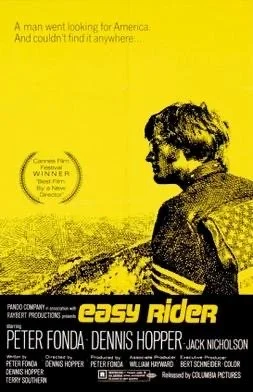
Easy Rider (1969)

Mac Boyle January 10, 2022

Director: Dennis Hopper

Cast: Peter Fonda, Dennis Hopper, Jack Nicholson, Karen Black

Have I Seen it Before: Yeah…

Did I Like It: This film might very well be the single greatest argument for the auteur theory. The entire experience is what one imagines having a conversation with Dennis Hopper must have been like, especially at that time. It’s digressive and almost always chaotic. The only real passages which feel like a real movie taking flight are those where Jack Nicholson incontrovertibly introduced himself to the world as a movie star for the ages. 

And yet, there are occasional moments of profundity. The palpable discomfort—their most rational thought by the time the film comes to a sudden stop—of the nonconformist has never and likely will never be depicted with such lethal efficiency. Even if the complaints of the so-called normal people have become somewhat quaint—to say nothing of the fact that Hopper’s own politics would take a 180 degree turn over the years—the feelings associated with those interactions keep the film surprisingly fresh, more than fifty years later.

Also, after an hour and a half, it still feels like it’s gone on far too long and you’re not entirely sure what the whole thing was about. The prolonged sequence in New Orleans is so aggressively odd, that I’m left wondering if Hopper was a genius, a madman, both, or an absolutely bore pretending to be brilliant and insane. In an effort to try and answer to that question, I even went ahead and listened to Hopper’s commentary tracks. Aside from his warm remarks about Phil Spector, I’m no closer to understanding the man or the film for which he is most remembered.

Maybe that’s the point? Perhaps Hopper hated being pigeonholed so much that his film about rebellion couldn’t help but rebel against the idea of being much of a movie at all.

Tags easy rider (1969), dennis hopper, peter fonda, jack nicholson, karen black
Comment
  • A Blog About Watching Movies (AKA a Blog in Search of a Better Title)
  • Older
  • Newer

Powered by Squarespace

Party Now, Apocalypse Later Industries

Where creativity went when it said it was going out for cigarettes.

Where creativity went when it said it was going out for cigarettes.