Party Now, Apocalypse Later Industries

Where creativity went when it said it was going out for cigarettes.
  • Home
  • BOOKS
    • THE ONCE AND FUTURE ORSON WELLES
    • IF ANY OF THESE STORIES GOES OVER 1000 WORDS...
    • ORSON WELLES OF MARS
    • THE DEVIL LIVES IN BEVERLY HILLS
    • A LOSS FOR NORMALCY
    • RIGHT - A NOVEL OF POLITICS
  • PODCASTS
    • Beyond the Cabin in the Woods
    • THE HOLODECK IS BROKEN
    • THE FOURTH WALL
    • As The Myth Turns
    • FRIENDIBALS! - TWO FRIENDS TALKING ABOUT HANNIBAL LECTER
    • DISORGANIZED! A Criminal Minds Podcast
  • MOVIE REVIEWS
  • BLOGS AND MORE
    • Bloggy B Bloggington III, DDS
    • THE HOLODECK IS BROKEN BLOG
    • REALLY GOOD MAN!
  • Home
    • THE ONCE AND FUTURE ORSON WELLES
    • IF ANY OF THESE STORIES GOES OVER 1000 WORDS...
    • ORSON WELLES OF MARS
    • THE DEVIL LIVES IN BEVERLY HILLS
    • A LOSS FOR NORMALCY
    • RIGHT - A NOVEL OF POLITICS
    • Beyond the Cabin in the Woods
    • THE HOLODECK IS BROKEN
    • THE FOURTH WALL
    • As The Myth Turns
    • FRIENDIBALS! - TWO FRIENDS TALKING ABOUT HANNIBAL LECTER
    • DISORGANIZED! A Criminal Minds Podcast
  • MOVIE REVIEWS
    • Bloggy B Bloggington III, DDS
    • THE HOLODECK IS BROKEN BLOG
    • REALLY GOOD MAN!

A Blog About Watching Movies (AKA a Blog in Search of a Better Title)

4A9D2A3F-E49E-4D4F-B4B5-AD6EC5C98D0D.jpeg

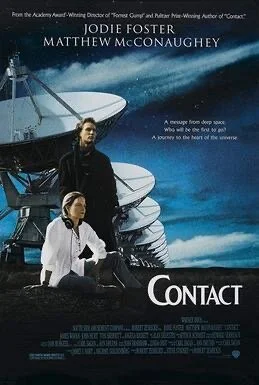
Contact (1997)

Mac Boyle November 22, 2020

Director: Robert Zemeckis

Cast: Jodie Foster, Matthew McConaughey, James Woods, John Hurt

Have I Seen it Before: Certainly. However, this particular screening came about after the recent news that the Arecibo Observatory in Puerto Rico is being decommissioned after suffering recent structural difficulties. Lora mentioned such news was doubly sad, as it was the location for the opening scenes of the film. I insisted that the film actually started with Jodie Foster discovering the Vega signal at the Very Large Array in New Mexico.

She was right; I was wrong. I apparently hadn’t remembered the film in much detail. It’s entirely possible that I have clearer memories of the trailer than I did of the film itself. And it wasn’t exactly like I saw it once in the theater and haven’t looked at it since. I’m pretty sure I’ve seen at least once in the last ten years. The human mind is weird.

Did I Like It: I’m happy to report that my lack of memory for the film had nothing to do with its quality. Far before Zemeckis decided to be content with being the least interesting filmmaker addicted to the WETA workshop, he was able to follow up the cultural permeation of Forrest Gump (1994) and the singular crowd-pleasing qualities of Back to the Future (1985) with the kind of meaty, thoughtful science fiction movie that best recommends the genre. Films that were common in an age of 2001: A Space Odyssey (1968) and Planet of the Apes (1968)* and are rare enough now, give or take an Arrival (2016) or two**.

McConaughey may be a member of that breed of movie stars who is almost entirely personality. That’s not necessarily a bad thing, especially here where Foster is allowed to give the far more nuanced and interesting performance. Had it been another actor portraying her love interest (or, for that matter, a less confident screen presence than Foster herself) Zemeckis and the studio might have been tempted to let the man overpower the woman in the frame. 

How many science fiction films lead one to talk about the performances as the central feature?


*Between those two and the superlative second season of the original Star Trek, sci-fi may not have seen a better tonnage crossed with quality year than the year Apollo 8 finally moved the idea of landing on the moon from the purely theoretical to the imminently possible. 

**You may want to bring up Interstellar (2014), but for my money Inception (2010) was far more thought-provoking.

Tags contact (1997), robert zemeckis, jodie foster, matthew mcconaughey, james woods, john hurt
Comment
58186C22-6D74-4B7C-95C8-4E8576CCB590.jpeg

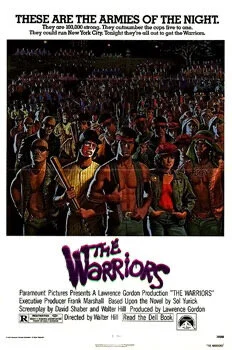
The Warriors (1979)

Mac Boyle November 16, 2020

Director: Walter Hill

Cast: Michael Beck, James Remar, Dorsey Wright, Brian Tyler

Have I Seen it Before: Never. Honestly, aside from the wobbly PS2 video game in 2005 was a trip to Wal Mart around that same time. College weekends would be spent like that sometimes, just going to Wal Mart, ostensively to grab groceries, but ultimately to go neck-deep in the five dollar DVD pit to see if we could unearth any hidden gems. My friend looked through the offerings and lamented that the one movie he could really go for in that moment was The Warriors, which I had never heard of.

Then he managed to stumble upon that very same movie. We couldn’t entirely rule out the possibility that the Wal Mart was alive, heard his plea, and supplied his wish. I mean, as the video game had been recently released, a special edition DVD was a no-brainer for Paramount, so that’s the Occam’s Razor explanation. 

Although I wouldn’t be caught dead in one now, trips to Wal Mart really allowed for magic once.

Did I Like It: I think so, for the most part. It’s thoroughly attached to a B-movie sensibility that can lend the proceedings an earnest, enjoyable energy, and the performances surrounding it don’t descend to camp for camp’s sake. It also uses its limited budget to paint an image in its minimalism of a future which is as believable now as it might have been forty years ago. 

The writing is simple, but that works to its advantage. There’s not an ounce of fat or self-indulgence when the story has a laser focus on the gang trying to get back to Coney Island after receiving exclusive blame for the assassination of a rival gang leader.

But I don’t get the comic book motif. I get it even less than I did when it was used in Hulk (2003). At least in that film it was based a on a comic book. Here, it was just baffling and distracting.

Tags the warriors (1979), walter hill, michael beck, james remar, dorsey wright, brian tyler
Comment
328C2B76-DA74-4434-A555-35FC13706BDE.png

Master and Commander: The Far Side of the World (2003)

Mac Boyle November 15, 2020

Director: Peter Weir

Cast: Russell Crowe, Paul Bettany, James D’Arcy, Robert Pugh

Have I Seen it Before: Never, and I’m not entirely sure why. It was Oscar bait in one of those years where I saw everything, regardless of whether it was award worthy or not. Hell, I saw Gigli (2003) twice*, what was stopping me here?

Did I Like It: Right out of the gate, I can tell I’m going to forgive this movie any number of sins it might commit for the rest of its runtime. I was first introduced to the idea by the DVD commentaries of Nicholas Meyer, but I fully admit someone else may have originated from someone else. Nearly every movie that is set in a historical—or for that matter, fantastical—era naturally gravitates to be a product the age in in which it is made. Between the choices in cinematography, costuming, and dialogue choices, one can guess when a film was made within about five years. Hell, choices in hairdressing alone can tip a film’s hand almost immediately.

I don’t know if this film will continue to age as well, but it could have easily been made last year, or even thirty years ago, instead being only seventeen years old. All too often, the artists behind cinema produce their work aiming only at the initial exhibition. Every movie ever made is going to spend the near totality of its existence on TVs in the years to follow. More filmmakers should have in the back of their mind how their films will play in the years to come. Weir should be commended for this.

The story might be faulted for being too simple, but I think it is another secret strength. If the plot can be whittled down to its basic elements (the British ship has some problems while hunting an enemy French vessel, prevails honorably, but at a cost) then the delicate work of the photography and other artistry can shine through.

*Although only once in the theater. Even I have my limits.

Tags master and commander the far side of the world (2003), peter weir, russell crowe, paul bettany, james d’arcy, robert pugh
Comment
3DBC7A38-7C14-4F89-8CBA-FA0070B0D2C1.jpeg

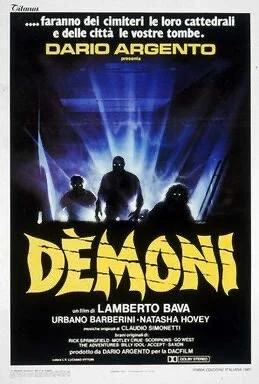
Demons* (1985)

Mac Boyle November 15, 2020

Director: Lamberto Bava

Cast: Urbano Barberini, Natasha Hovey, Karl Zinny, Paola Cozzo

Have I Seen it Before: Never. The Blu Ray itself is a relic from a time—as I’ve mentioned in recent reviews—when horror movies had become a chore and I cast a wide net for possible titles in service of that chore. As I’m trying to work my way through a stack of DVDs and Blu Rays I had been acquiring over the last several years but had never watched, I inevitably would come to this one.

Did I Like It: No.

I’l assume you—or at least the minimum word count I have set for these posts—are wanting more. As I mentioned, I have had a certain ambivalence towards horror lately, finding myself unable to find anything more in the genre other than the basest impulses which have continued to ghettoize the genre.

I came into the proceedings with a modicum of hope. Dario Argento lent his name to the proceedings, and his a pedigree not to be blithely dismissed. Also, my recent screening of Drag Me to Hell (2009) had turned out to be far more enjoyable than I would have initially thought. What’s more, the notion of taking in a cult film like this—especially one which had not been so thoroughly vetted by film culture at large can be excited.

And things started out well enough. The notion that people who go see a horror movie in the theater are not safe is a clever enough one, although in 2020 safety in the theater is no laughing matter. Making the theater and the movie these people are watching cured in its own right is a perfectly fine way to start off a horror film. Had it delivered on any of its promise, I could see moviegoers in the 1980s having more trouble than average trying to rationalize themselves out of their own fears.

Unfortunately, the rest of the film is average makeup and gore, strung together by—at best—overly enthusiastic performances. If you like that sort of thing, or a soundtrack of metal standards that would be resoundingly dubbed “classic rock” these days, then you will find something to enjoy in the film.

If not, the film doesn’t add up to be more than the sum of it’s parts. Sadly, it’s something less than.

*Titled “Dèmoni” in the original Italian.

Tags demons (1985), lamberto bava, urbano barberini, natasha hovey, karl zinny, paola cozzo
Comment
74949DBB-AD9C-4345-AE2D-877C0AD5C984.jpeg

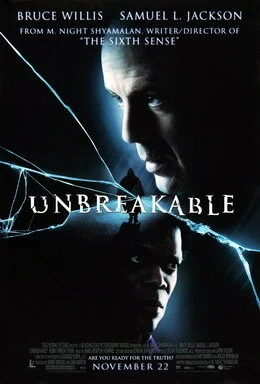
Unbreakable (2000)

Mac Boyle November 13, 2020

Director: M. Night Shyamalan

Cast: Bruce Willis, Samuel L. Jackson, Robin Wright-Penn, Spencer Treat Clark

Have I Seen it Before: Oh, man. It’s one of those key movie watching experiences of my life. It is the late fall of 2000. Florida is doing its very best to tear apart western civilization. I am sixteen and the notion that I can just go to the movies without having to concoct some kind of labyrinthine plan to physically get there* is a novel experience. Sure, the eventual twist ending (the first sign that Shyamalan would never be able to shake the need to include them) but at that moment, the film played me like a harp.

I spent the next several weeks insisting to anyone who would talk to me for longer than thirty seconds that they must go and see it. Many did; few liked it as much as I did, with the possible exception of Bill Fisher. We then spent the next two years trying to tap into the films vein in our own way.

Did I Like It: I may have tipped my hand a bitIt is, without a doubt, Shyamalan’s best film. Sure The Sixth Sense (1999) has its charms, Signs (2002) shows an unusual level of restraint, and Split (2017) is quite good (although it benefits highly from its connection to this film). But this is the purest, most direct version of what Shyamalan has to offer the movies.

It’s attempt at depicting a world where superheroes could be real dominated my imagination for a very long time. It’s story of a man coming to embrace the best parts of himself, which he had spent a lifetime trying to ignore is something that still sticks in my craw every time I watch it now. I would not be me without this movie.

I’d say something more about the film, but there’s very little chance any additional words would be equal to my feeling and esteem for it.

Tags unbreakable (2000), unbreakable series, m night shyamalan, bruce willis, samuel l jackson, robin wright, spencer treat clark
Comment
323FB21F-BA58-4A28-94D6-CECB03B0EE3E.jpeg

Drag Me to Hell (2009)

Mac Boyle November 13, 2020

Director: Sam Raimi

Cast: Alison Lohman, Justin Long, Lorna Raver, Dileep Rao

Have I Seen it Before: Never. Odd side note, this has been another one of those DVDs that have been sitting on my shelf for years, and no kidding, until a few days ago it had still been shrink-wrapped with Hastings wrapping. Remember Hastings? Well there hasn’t been one around in over four years, and I’m almost positive I purchased this particular volume while I still lived relatively close to such a store, and that’s been eight years. I’m even willing to venture a guess that I bought it closer to 2010. So, I’ve just had this DVD sitting on various shelves through no less than four homes.

The things we can all find time for this year... At least the disc worked. There’d be no way to return it anymore.

Did I Like It: So, for reasons that would take the interested only a few moments to find, I’ve had a bit of a complicated relationship with horror these last few years. For a while there, the mere act of watching a horror movie had become a mind-numbing chore. Said chore had gone on for so long that I was beginning to get a very jaded view of the genre. I’ll still have undying affection for Halloween (1978) and even recent fare like Us (2019). So many people have desperately wanted to elevate horror to something high-minded and lofty, when at it’s best, it is nothing more or less than a carnival attraction. It works best when analyzed least, and instead felt viscerally.

But I’m pleased to report that this film is a brilliant roller coaster. Raimi—having shaken off the obvious burden his Spider-Man films had become—is working at the top of his game. He’s not afraid of camp. He’s not afraid of camp when its needed. He’s not afraid of a good jump scare here and there. He’s not afraid to let us enjoy ourselves.

And it works. For 99 minutes I forgot I had become a horror grump. That’s more than enough to recommend.

Tags drag me to hell (2009), sam raimi, alison lohman, justin long, lorna raver, dileep rao
Comment
Dunkirk_Film_poster.jpg

Dunkirk (2017)

Mac Boyle November 9, 2020

Director: Christopher Nolan


Cast: Fionn Whitehead, Tom Glynn-Carney, Jack Lowden, Harry Styles


Have I Seen it Before: Yes. It ran briefly here in town at the local arthouse theater, and in 35mm no less. It’s been so long since I’ve been able to be in any theater, that I can only dimly remember missing seeing films projected with actual film.


I’ve said it before, and I’ll say it again: This is a strange year.


Did I Like It: There are two categories, to my mind, of Nolan films. Those I admire, and those I enjoy (and admire).


It’s hard not to like his Batman movies, even the demonstrably wobbly <The Dark Knight Rises (2012)>. Inception (2010) allowed the director to scratch his James Bond itch when the Brocollies were not likely to let him take their livelihood out for a spin.


While Interstellar (2014) is hard to see as anything other than an attempt to channel Stanley Kubrick. It is admirable, but it’s never really on my active re-watch list. I remember thinking The Prestige (2006) was well made, but haven’t watched it since.


So where does Dunkirk rest on the Nolan spectrum? 


It certainly continues his unbroken streak* of producing epic, imminently believable big-budget films. The camera—and by extension, the audience—can be overwhelmed by the massive oceans and befuddling aerial photography. I mentioned earlier that Nolan is trying to channel Kubrick, and that may have seemed like a dig, but no one is more successful than he in their imitations. He understands the camera like Kubrick did. He makes big—and far more intelligent than we probably deserve—entertainments like Kubrick did. 


And, frankly, like Kubrick sometimes did, he’s made a film here that is impressive, but distressingly distant from its audience. I’ll admit perhaps that it’s distinctly English sensibility may be slightly alienating to this American, but that isn’t fair. A modern audience might look on it as a nearly silent film (Nolan reportedly wanted to shoot the sprawling epic with no script, but was talked out of such a bold gambit) and blanche. I wouldn’t, and if I did, that would be unfair, too.


But sometimes criticism isn’t fair, it is a snapshot of a feeling in that moment, and so Dunkirk is moved conclusively into the admirable, but not quite as enjoyable as one hopes when greeted by the Syncopy vanity card. 


*No, I haven’t seen Tenet (2020) yet, and until it hits home media or there is a widespread, proven vaccine, you shouldn’t either.

Tags dunkirk (2017), christopher nolan, fionn whitehead, tom glynn-carney, jack lowden, harry stles
Comment
2D79BD48-F907-4255-AA37-BD7394633F34.jpeg

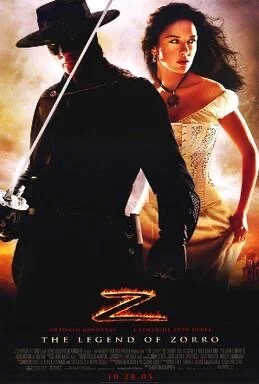
The Legend of Zorro (2005)

Mac Boyle November 4, 2020

Director: Martin Campbell

Cast: Antonio Banderas, Catherine Zeta-Jones, Rufus Sewell, Nick Chinlund

Have I Seen it Before: Yes? I remember holding the DVD in my hand once about ten years ago, but the movie disappeared from my memory as quickly as the movie finished. It came across my Prime Video suggestions, and while I didn’t have very high expectations for it, but I thought it would be a welcome distractions from the more uncertain hours of the aftermath of the 2020 election.

Then the plot (or at least the first few and last few minutes) turned out to revolve around a contentious vote with the possibility of violence in the streets erupting at any moment.

Whoops.

Did I Like It: On a positive note, I’ll probably forget again the film entirely pretty quickly. It’s difficult to quantify precisely why this movie falls so aggressively short of the imminently enjoyable <The Mask of Zorro (1998)>. That is mainly because there are so many to choose from.

The previous film’s plot was a firecracker of a revenge story, while this one wanders in and out of the process of making California a state (as noted above) and a divorce story that runs far faster than it ought to if we’re to have any hope of caring as much about Elena (Zeta-Jones) and Alejandro (Banderas) as we had tingly feelings for them in the original film.

There’s a lazy detachment to most of the pyrotechnics, leaning heavy on needless green screens and mystifying CGI, where the first was a masterclass in good stuntwork and well choreographed swordplay. Things got so bad that I actually said, “Oh no” after a particularly dodgy flourish from Banderas. The less said about the boring train sequence in the climax, the better. Anyone who complained about anything in <Back to the Future Part III (1990)> owes Robert Zemeckis an apology.

And then there’s this story. I think plenty of the guff screenwriters Alex Kurtzman and Roberto Orci have received is pretty overblown. Their work on the original <Star Trek (2009)> holds up, and despite some people’s problems with Kurtzman’s stewardship of the Trek franchise, I think things have been working out splendidly. Maybe Orci is the problem, if he were the dominant force here. As I mentioned above, the storyline is soggy and uninteresting in its own right, regardless of comparisons to the original film. But it’s the stupidity with which the film is treated which makes the film truly irritating. Historical inaccuracies are a reality when one tries to fit real history into an adventure story, or any fiction, really. I know this much for certain. As long as one roughly tries to get things right, or knows to get fuzzy with only the more arcane details, I can forgive plenty. 

But Abraham Lincoln presiding over the ceremony formalizing California statehood? Tell me, do former one term Congressmen the ones they send to finish up making states? Oh, I see. I’m supposed to believe Lincoln is president when the film takes great pains in its opening few seconds to remind me the film takes place in 1850? That’s the kind of glaring historical boner that a school child would have been able to pick out. Unbelievably stupid and needless. Maybe it wasn’t Orci and Kurtzman who made that call, but whoever did was stupid in the extreme.

It was enough to make me want to check election returns again.

Tags the legend of zorro (2005), martin campbell, antonio banderas, catherine zeta-jones, rufus sewell, nick chinlund
Comment
772FF5BC-C87D-4095-A52B-36327F540865.jpeg

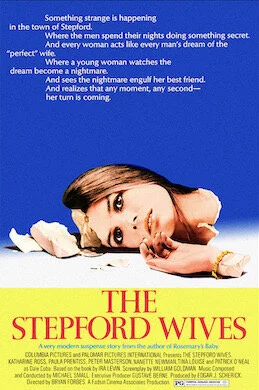
The Stepford Wives (1975)

Mac Boyle November 4, 2020

Director: Bryan Forbes

Cast: Katharine Ross, Paula Prentiss, Peter Masterson, Nanette Newman

Have I Seen it Before: Never. I have a vague memory of seeing the remake during one of those summers when I just ended up seeing everything, but only just now have come around to watching the original, and that DVD has been sitting on my shelf for 8 years.

Did I Like It: Okay, so it’s a little weird to write this review right now. I watched it yesterday, which was Election Day 2020. Today is odd. One would be forgiven if they read this in years to come, they might think that other issues are really at play here

But with that being said: white people are the worst. Issues of race are hinted at and alluded to by the end of the film, and Jordan Peele took the spirit of this film and ran with it in Get Out (2017), but the problems these characters face wouldn’t happen to anyone other than white people. We’re pretty terrible, and that doesn’t even begin to get into our voting behaviors*.

I don’t think anyone should be murdered and replaced by more docile robots, for the record, but I can’t help but find the protagonists of the story somewhat unsympathetic. They’re yearning for self-actualization at the forefront of second or third wave feminism is good, but with their upper-class trappings, are they not—to follow the film’s central metaphor all the way through—just as guilty of keeping people down?

That, combined with the schmaltzy, almost TV-movie-of-the-week milieu of the film, I can’t stop thinking about the film and its setting, even though it’s becoming increasingly clear I may have missed the point.

I think that’s actually a positive review, as it turns out.

*All right, so this will get a little into the election. Polling shows that 20% of Trump voters this cycle lied to their friends about voting for him. That means both you and I (assuming you were a Biden supporter—if you’re not, how the hell did you get here?) have friends who are far fascistic and racist (among other things) than they let on. Where’s the horror movie about that? Oh, right. Get Out. Withdrawn.

Tags the stepford wives (1975), bryan forbes, katharine ross, paula prentiss, peter masterson, nanette newman
Comment
74EABB84-9890-4565-B181-DCA126F47957.png

The Witches (2020)

Mac Boyle November 1, 2020

Director: Robert Zemeckis

Cast: Anne Hathaway, Octavia Spencer, Stanley Tucci, Chris Rock

Have I Seen it Before: Nope. Oddly enough, had 2020 turned out like some kind of normal year, I probably would not have felt much of an impetus to watch it, but as I apparently have already paid for the movie with my HBO subscription, then I might as well take the plunge.

Did I Like It: So let us begin with the headline. The new remake of The Witches is not the earworm the original adaptation of the film became. It will likely be forgotten pretty quickly as everyone associated with the film has done better work before and will likely to better work in the future.

And that’s not the worst thing in the world.

I actually applaud the film for not trying to re-create the “girl trapped in a painting” scene featured in both the book and the original film. It’s the most memorable part of that previous movie, and any attempt to recreate it is a fool’s errand. When the Society for the Prevention of Cruelty to Children displays a tableau with child statues in the hotel, I did wonder if there were actual kids trapped in those figures, though.

Changing the setting to the American south of the 1960s is a dollop of inspiration, adding a layer of more banal—and unsettlingly real—evil to the proceedings. It would have been nice for that subtext to have been brought to the surface just a bit more, but keeping the setting in England and Norway would have been simply more of the same.

This new film also tries to correct for past mistakes, by (spoiler alert) keeping the hero (Jahzir Kadeem Bruno as a child and new mouse, Chris Rock as his older self) a mouse at the end of the story. Sadly, this film can’t quite pull the trigger on the bittersweet quality of Roald Dahl’s work. In the book, it’s clear our hero will only live for a few more years, to say nothing of the realization that poor Bruno Jenkins (Codie-Lei Eastick) was probably killed by his mousephobic parents. Here, it looks like our hero may live far longer than any other mouse, and Bruno gets to join him and Grandma (Spencer) in their witch-hunting adventures. Perhaps the truly downer endings in children’s literature will never find their way out of the pages of books. Only the bookish kids can be trusted with the reality that sometimes bad things happen.

The rest of the movie is, unfortunately, a litany of disappointments. 

I’m as certain as I can be without a confession to this effect, but it sounded not only like Alan Silvestri phones his score in, but that the entirety of his orchestrations were culled from deleted tracks he wrote for any number of Avengers movies.

It’s always nice to see—or at least hear—Kristen Chenoweth in a film. And yet, her role as another human transformed into a mouse before the events of the film feels too forced in before it turns out she isn’t going to be given anything to do. A girl-mouse is a fine enough idea—why not make the hero female? Only boys can plaintively wail “Grandma!” and do the legwork of getting the mouse-maker formula into the witches’ soup?

Tags the witches (2020), robert zemeckis, anne hathaway, octavia spencer, stanley tucci, chris rock
Comment
Heatposter.jpg

Heat (1995)

Mac Boyle October 24, 2020

Director: Michael Mann


Cast: Al Pacino, Robert De Niro, Tom Sizemore, Val Kilmer


Have I Seen it Before: No.


Did I Like It: I think for the most part, sure. It is perhaps the seminal crime movie of its age, having an indelible influence on the works of Christopher Nolan, especially The Dark Knight (2008) and Inception (2010)*. In a way that only filmmaker like Mann—and later Nolan—could, the film captures crime and law enforcement in a simultaneously epic and believable way. 


De Niro and Pacino have shown up to work in the film, and indeed it is the last example I can readily come up with where it didn’t seem like they were just showing up on set to pick up a check. Pacino might be particularly amped up to the peak of his late-stage-rage, but that can be fun to watch in the proper context. The rest of the cast, too, is at their best, with even bit parts being inhabited by actors I would watch do other things, all performing at the top of their game. Although it’s hard to watch Hank Azaria do much while I’ve been doing a Simpsons re-watch and not think of the character work he has done there.


But there is just something about the work of Mann that skips over the virtues and keeps everything from being as great as it might be. There’s a mannered, fashionable quality to his films. It keeps Manhunter (1986) from joining the pantheon of other great, Hannibal Lecter adaptations. It kept Public Enemies (2009) from being watchable beyond a sleep aid. Here, you have bank robbery sequences that are as good as anything ever committed to film. The tension never lets up, and never a second is wasted. Then, you have longer music interludes that seem soggy. Composer Elliot Goldenthal can do action music better than anyone, but his emotional beats just don’t work. See Batman Forever (1995) for other examples of Val Kilmer films from 1995 which suffered a similar fate. There are scenes of characters talking around but not to their significant others that feel like they were filmed on a cheap set instead of a real city. 


Then again, that may just be the way L.A. is. 


Those take me right out of the film, but you can’t fault the film for working when it does, because at those moments it is transcendent.


*Seriously, take away the dream-based science fantasy of that later film, and Inception practically is a remake of Heat. For that matter, there’s a reason Willima Fichtner plays the banker. I’ll let you decide which movie I’m talking about.

Tags heat (1995), michael mann, al pacino, robert de niro, tom sizemore, val kilmer
Comment
220px-Fahrenheit_11-9.png

Fahrenheit 11/9 (2018)

Mac Boyle October 24, 2020

Director: Michael Moore


Cast: Michael Moore, Donald Trump, Hillary Clinton, Kellyanne Conway


Have I Seen it Before: No. For some reason I’ve been avoiding Moore’s movies for the last sixteen years or so. It was almost like I didn’t want to jinx anything…


Did I Like It: I don’t disagree with Michael Moore, but I can’t help but think that the key feature of one of his documentaries is their inability to change their targets, or the people effected by them. Roger Smith might quickly not have been the chairmen of GM anymore, but George W. Bush won his second term, Capitalism doesn’t show any signs of going away, and the if the NRA is in trouble, it has very little to do with anything that happened in Bowling for Columbine (2002). If we all tried real hard, maybe we could ignore the man from Flint’s treatment of our odious 45thPresident, and maybe they both would go away?


The film is ultimately unfocused. While the opening act zeroes in on Trump with Moore’s usual tools, things take a turn for a long stretch to be about poisoned water in Flint, Michigan. Admittedly, that is a huge issue, and if there is a documentary to be made on the topic Moore would be uniquely qualified and positioned to make it, I’m just a little surprised that it is nothing more than a digression in a large movie. Then, the movie switches to a prolonged discussion of the teachers strikes. Then goes back to Flint and complaints about Obama’s response. It then touches on the rise of Trump again, before swinging back to a quick hit on the immediate post-9/11 America, which is kind of like having to sit through the stuff from the new album before Billy Joel finally gets around to “We Didn’t Start The Fire.” All, fair, but where is Trump in most of the film? Had Bush been this absent from Fahrenheit 9/11 (2004), then, hell… Maybe John Kerry would have won? Maybe a soft Moore movie is just what America needs.


Maybe that’s why it didn’t take America’s collective imagination by storm that lack of focus. After COVID, these issues are still important, but it’s not the thing that wakes us up in the morning. Nearly twenty years later, Fahrenheit 9/11 seems quaint. It took all of two years for this one to feel like it is a museum piece.


Moore may not be the guy to meet this moment. As damning as he is of the right, he’s also always been dimly suspicious of the Democratic Party as well. As soon as things are concluded (?) with Flint, Moore turns his attention to the entrenched interests of that party. The failings of the party are, again, a completely valid issue. It probably had more bite and value ahead of the 2018 midterm elections. However, in the age of Trump, and as I write this, we are less than two weeks away from our best opportunity to get him out of the White House. We’re on fire now and trying to dismantle the Democratic Party is like arguing about how the paintjob might be ruined by the house. Let’s put out the fire first, then we can try to make the Democratic party—and Democracy itself—better. A pox on both of the houses is exactly how the other guy is winning.


Maybe I just outgrew that 20-year-old kid who decided to go see Fahrenheit 9/11 after Spider-Man 2 (2004). Sometime around the point where Moore tries to indicate Americans should set themselves on fire, I’m almost sure I should have outgrown him a long time ago.

Tags fahrenheit 11/9 (2018), michael moore, donald trump, hillary clinton, kellyanne conway
Comment
220px-Borat_2_poster.jpeg

Borat Subsequent Moviefilm (2020)

Mac Boyle October 24, 2020

Director: Jason Woliner


Cast: Sacha Baron Cohen, Maria Bakalova, Dani Popescu, Tom Hanks (no, really)


Have I Seen it Before: Ah, yes, the pleasure of taking in a new movie in 2020. The movie business is hurting. Movie theaters are hurting more. Maybe there will be a new day soon when we can all be sort of annoyed by the one-two punch of being sold premium theater chain memberships and softball trivia questions. But for now, I’m glad some studios are understanding that streaming options are a good way to start digging their way out of an unfortunate hole. 


But that’s not what this review is about.


Did I Like It: The element that keeps the original Borat (2006) still fresh, after the individual jokes have lost their shock value, is Cohen’s perhaps insane commitment to the bit at hand. His fearlessness cannot be duplicated, just as his catchphrases rendered his most famous character fairly neuter.


And it is clever the way we get the Kazakh journalist back, with him realizing that he has become too well-known for his previous style of antics. The man who hides behind his characters now hides behind new disguises, and we’re off to the races.


But it isn’t as fearless as it once was. There isn’t the preposterous high of Borat (Cohen) wrestling naked with Azamat Bagatov. He’s older now, and tamer, while the kind of people he is imitating and the kind of people he exposes have metastasized everywhere. The film is funny enough, and timelier than I would have expected, but I do wonder if there will be anything to see here within a couple of years.


The one thing I am struck by, and I keep coming back to in the days since viewing the film, is how life-affirming it turned out to be.


I know. I was surprised as well.


Borat himself softens a bit within a certain limitation, growing to accept his daughter (Bakalova, getting to do the kind of stealth prank work that Cohen might be too high-profile for anymore) and fitfully move his country out of their medieval views, but he is hardly a saint after the credits kick in. The real unlikely hero of this unlikely sequel is Holocaust survivor Judith Dim Evans. So many people Borat has met over the years fall to the occasion of being the worst possible example of a human being. As Borat enters her synagogue dressed as Borat’s idea of a Jew, she has absolutely earned the right to meet his nonsense with anger. Instead, she talks to Borat and meets him with love. Even Cohen can’t keep the act up against this towering pillar of humanity. It’s heartbreaking to learn she has passed away since filming her scenes for the film.


Oh, yeah. The Giuliani sequence? Far more horrifying than the news is letting you believe, and not improved at all by the fact that America’s Mayor may not know how old Tutar is supposed to be.

Tags borat subsequent moviefilm (2020), jason woliner, sacha baron cohen, maria bakalova, dani popescu, tom hanks
Comment
220px-Bonnie_and_Clyde_(1967_teaser_poster).jpg

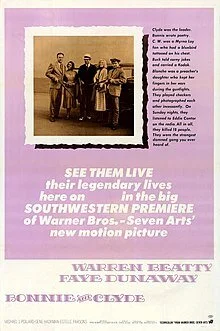
Bonnie and Clyde (1967)

Mac Boyle October 21, 2020

Director: Arthur Penn


Cast: Warren Beatty, Faye Dunaway, Gene Hackman, Michael J. Pollard


Have I Seen it Before: Never. I know. I’m behind.


Did I Like It: There’s a problem with coming up in a generation outside the film that in many ways defines it. When it premiered, Bonnie and Clyde was the vanguard of a new Hollywood. It shocked sensibilities and redefined not just the content in films, but what films could be…


Then, ten years later Star Wars (1977) came out and we all decided to go in a completely different direction. It feels like that might be a point for a different review, but Star Wars is the movie that defined my generation’ sensibilities, like it or not. there’s a debate to be had as to whether or not that’s a good bad thing, but here I feel lost. The movie is so tame. 


It is violent, and in what I can only imagine is a realistic manner, but not nearly as violent as anything Quentin Tarantino would come up with in subsequent years. 


It is, I suppose, brazen about sex for its time, but not in any way more scintillating than what you would find on a primetime network procedural now.


It strives to take the sheen off of Hollywood phoniness. The performances are largely naturalistic, but you can blindly stab at your Netflix queue to find films that toil in its shadow, and for all of its grittiness, it’s hard to believe people that look like Beatty and Dunaway are anything other than movie stars.


All of this is not the film’s fault, aside from the fact that I am expected to do the work of imagining what a visceral experience it must have been fifty years ago. I just wish I had seen it when it felt like the beginning of something new, not when it had long since become something quaint.

Tags bonnie and clyde (1967), arthur penn, warren beatty, faye dunaway, gene hackman, michael j pollard
Comment
9793C9A5-AA8C-41B3-B04F-EA1FC913B320.jpeg

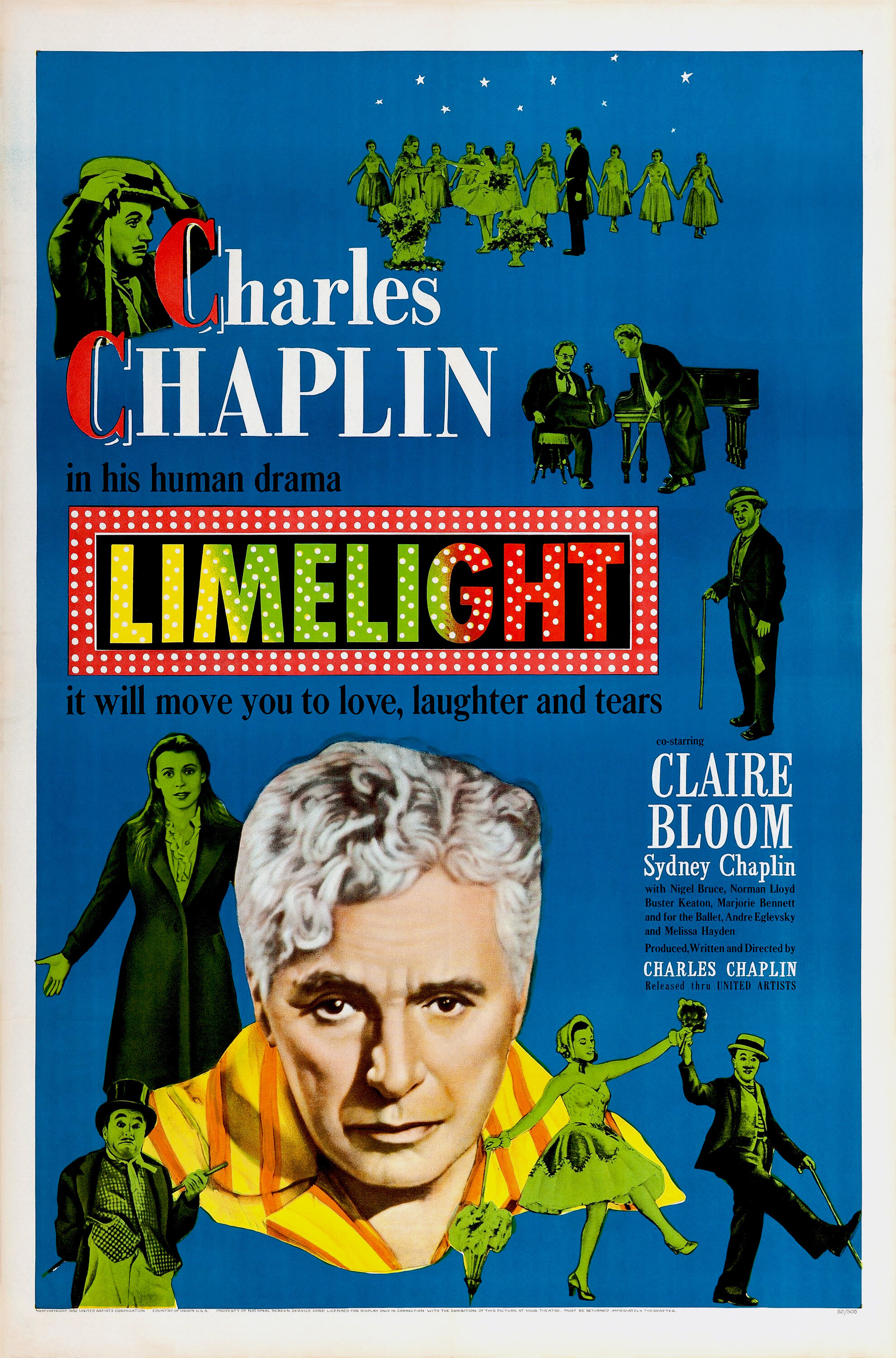
Limelight (1952)

Mac Boyle October 20, 2020

Director: Charles Chaplin

Cast: Charles Chaplin, Claire Bloom, Nigel Bruce, Buster Keaton

Have I Seen it Before: Sure. Hell, I predicated a few elements of some work I’ve done in years past on it.

Did I Like It: In the pantheon of late-period (read: talkie) Chaplin films, I’m tempted to say it resides in the middle of the pack. It isn’t the clever deconstruction of his previous work, like Modern Times (1936)*. It isn’t the resounding, moral, and political satire that is The Great Dictator (1940). It isn’t the absolutely nihilistic black comedy of Monsieur Verdoux (1947)**.

But it is fascinating.

The immediate read of the film is to view it as the most autobiographical of Chaplin’s work. Chaplin himself rejected that interpretation as shallow and fundamentally wrong, and I tend to agree for the most part. The tale of an intermittently successful stage comedian down on his luck is not his story. Even in exile, there was hardly a soul who would claim he wasn’t the top film comedian of his or any other age. The thought that Calvero is an analogue for the largely absent Charles Chaplin Sr. is easy to see. The sometimes inadequate love he has for the fragile and occasionally self-destructive Terry (Bloom) has a clear connection to Chaplin’s poor mother.

That being said, it’s hard not to look at Terry and also see just a bit of Oona in her as well. Is this film a quiet confession that he thought his final wife might have been happier with a younger man? Hard to say, but trying to read that much into the film is probably missing the point. How many times were you going to get an opportunity to see Chaplin and Buster Keaton share the screen?

*A hybrid talkie, to be sure, but definitely Chaplin’s first, begrudging step into the technological standard of film from then on.

**A challenging films to watch and, for that matter, spell. If I didn’t have to do it several dozen times in a previous work, I may never have gotten the hang of it without having to look it up.

Tags limelight (1952), charlie chaplin movies, charlie chaplin, claire bloom, nigel bruce, buster keaton
Comment
EB5083F7-7624-44BC-A5AF-D354AE95CCDD.jpeg

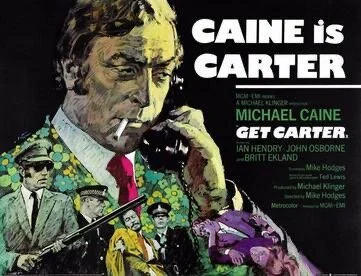
Get Carter (1971)

Mac Boyle October 20, 2020

Director: Mike Hodges

Cast: Michael Caine, Ian Hendry, Britt Ekland, John Osborne

Have I Seen it Before: Never, but oddly enough, I have the most profound memory of, the year 2000. I was a high school sophomore, knew I wanted to make movies, and the generally reviled remake with Stallone in the title role was released. In the absolutely transcendent collection of screenplays housed at the Tulsa Central Library* was a tiny paperback printing of the screenplay for this film. Absorbing every script I could get my hands on, I read it cover to cover. It seemed so cool, being lethal and uncaring, and more than willing to smooth everything over by throwing a few notes at the malcontents.

Those are the sorts of things with which a sixteen-year-old is impressed.

Did I Like It: And Caine is the height of cool in the movie as presented. Scowling and snakelike, it’s easy to forget with turns as Alfred Pennyworth and Ebenezer Scrooge to Muppets, it’s hard to forget he would have made a gutsy, spot-on James Bond back in the day.

The film, too, largely threads that tricky needle of appearing largely timeless. With it’s possibly British preoccupation with shadowy photography and subdued fashions, there are a few fleeting moments where the film feels like a product of the early seventies, but it is an early seventies that feels closer to our own time. It is a thin, ruthless film, not unlike it’s hateful protagonist.

But then, it also has a finale that is equal parts inevitable and surprising. For all of his bluster, Carter (Caine) is obliterated despite his successful revenge. Can a film be bleakly violent, and absolutely hopeless in its outlook, and somehow still deeply moral in its handling of fate? Probably not anymore.

And, in case you think that is more “old man yelling at a cloud” fodder, that was probably (and I thought was) true back in 2000 when Stallone took over the role and I was sixteen.

*Which, naturally, in the name of progress and renovation has been relegated to their basement, as some of the volumes clearly don’t look like they were published in the last six months. The books are still available, just not available to browse, so that the library can also have a flight simulator, apparently. It’s a crying shame. In other news: old man yells at cloud.

Tags get carter (1971), mike hodges, michael caine, ian hendry, britt ekland, john osborne
Comment

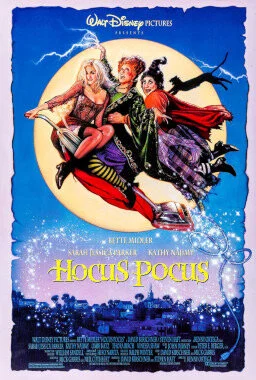
Hocus Pocus (1993)

Mac Boyle October 20, 2020

Director: Kenny Ortega

Cast: Bette Midler, Sarah Jessica Parker, Kathy Najimy, Thora Birch

Have I Seen it Before: Oh, sure. But I may be one of those people who didn’t come to the film on numerous airings on cable. It had an odd effect on me back then, but it’s possible a film which is unassailably played for laughs somehow unsettles a child under the age of ten. One might say there is something I saw it in the theater. Which, blah, blah, blah, I miss going to. I’d go to see almost anything, if it wasn’t a wildly irresponsible thing to do.

Cut to this very film being run at the local drive in currently, and me not wanting to go anyway. We’re all a big puddle of contradictions, no?

Did I Like It: It is, easily, the second-best Halloween-themed, non-cell-animated, Disney film of 1993.

That reads as a dig, I’m sure, but I’m pretty sure I intended it as a pledge of allegiance to The Nightmare Before Christmas (1993). The film is amiable enough, and objectively has the same kind of broad comedic mugging one might have experienced in a bygone era from either the Marx Brothers, Abbott, or Costello. It also has an early Amblin-esque energy about it that, while it never reaches for the pathos Spielberg could so easily achieve, even in his worst movies, it is as winning a framework to deliver entertainment as any.

Ultimately, I can’t fault a film entirely when both a) it clearly isn’t/wasn’t made for me and b) the three leads appear to be having a great deal of fun in their shenanigans. It’s little touches that capture my imagination after all these years, though. Primarily the delight in seeing Doug Jones do anything, but the idea that Garry and Penny Marshall are playing a married couple when they were, in fact, siblings, is definitely one of those strange quirks of cinema that one can’t help but dwell upon.

Tags hocus pocus (1993), kenny ortega, bette midler, sarah jessica parker, kathy najimy, omri katz
Comment
BCDD6AA1-7EE2-42C3-ABBB-486002A37D71.jpeg

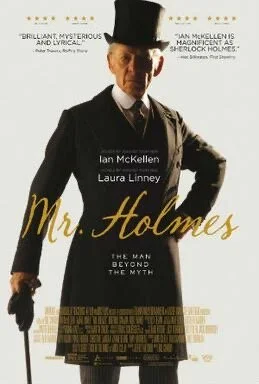
Mr. Holmes (2015)

Mac Boyle October 20, 2020

Director: Bill Condon

Cast: Ian McKellen, Laura Linney, Milo Parker, Hiroyuki Sanada

Have I Seen it Before: Never. It’s been a sealed Blu Ray sitting on my shelf for years. As it stood, I made a conscious decision to avoid any and all Holmes pastiches, as I was busy making my own. Now, with that project nearly a year behind me, and God only knows when I will break down and return to it in some fashion, I’ve taken the opportunity to dip my toe back in the pool.

Did I Like It: Really, quite a bit. The character of Holmes is almost universally depicted as being a refined alloy of logic and ability. Even Doyle only occasionally made his detective human. The Seven-Per-Cent Solution (1976) gives him some foibles, but this is the first (and last, given his age) we see the man as someone with regret and feeling for his fellow human beings. 

McKellan cuts a believable figure at various stages of Holmes as an older man. Surely some of it is aided by makeup, but it is subtle work and I believe the man in his seventies is a distinctly different figure than what he is like at his nineties. A lot of it is in the performance. He is spry and vital in the film’s flashbacks, and withered and struggling during the main storyline. It’s an impressive performance. Eagle-eyed fans of the Sherlockana will pick up on Nicholas Rowe—of Young Sherlock Holmes (1985) fame—as Holmes in the movie old Sherlock takes in. Two Sherlocks for the price of one. You’d have to go to, well, my own work to get that kind of a bargain.

But the question persists: is it a good Sherlock film. Seeing the old man passing his time as bee-keeper is interesting enough as a character study, but sleuthing must be afoot if we’re going to spend time with him, no? I’m happy to report the mystery is quite good, but again, of a more personal nature. It doesn’t artificially insert him in his retirement into palace intrigue, it just puts what is left of his skills to the test and believably sells the tension of the story.

It will read strangely, but I am glad I waited to finally see this one. Had I watched it before The Fourth Wall, it may have stymied my creative instincts. As it stands now, I was able to take in the story on its own terms and instead just enjoy it.

Tags mr holmes (2015), sherlock holmes movies, bill condon, ian mckellan, laura linney, milo parker, hiroyuki sanada
Comment
B7344AD4-233C-4360-817A-5010571C9834.jpeg

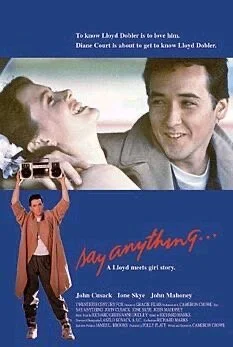
Say Anything… (1989)

Mac Boyle October 20, 2020

Director: Cameron Crowe

Cast: John Cusack, Ione Skye, John Mahoney, Lili Taylor

Have I Seen it Before: Sure. In fact, it was after this screening I realized how much the film floated around in my head at that certain point in the early 2000s when I was that same age as Lloyd (Cusack) and Diane (Skye). Long, long ago, in the earliest days of Party Now, Apocalypse Later Industries where I thought the vanity card would feature a Lloyd stand in with his Peter Gabriel-infused boom box held high, only to have his leading lady breeze into frame, give him a perfunctory kiss on the cheek, reach for the controls of the radio, turn it to ACDC (or some other appropriate mood killer, probably Kiss, if I’m remembering the details of that far-flung era correctly) and head-bang her way back out of frame.

Did I Like It: That is, to bring up two points I feel about the film:

First, that moment with the boom box is, for all of it’s iconic significance in the landscape of romantic comedies, its a pretty perfunctory moment within the context of the film. To say nothing of the fact that it flies in the face of the very real affection that Lloyd and Diane enjoy, and depicts Lloyd at his least heroic, most obsessive low.

Second, and this speaks to the ultimate strength of the film, is that it singularly touches upon every type of person who orbits the subject of love. Other romantic comedies latch onto laser focus for their leads, and thus they lose their luster relative to your experience at the moment. If you aren’t slowly but surely falling in love with your best friend, then When Harry Met Sally (1989) may not always work. If you aren’t running the long con an amensiac, then While You Were Sleeping (1995) may not be the film for you anymore. If you aren’t ultimately a toxic person in a relationship that is somehow even more toxic, then I’m not sure how either Annie Hall (1977) or Manhattan (1979) is anything but uncomfortable*. But we have all, at one time or another, been some variation of Lloyd, some version of Diane, a riff on Corey (Taylor), and even a Joe (Loren Dean) on occasion. As we grow older, give or take a dollop of hair dye or an indictment, we might realize we’ve become Mr. Court (Mahoney). Don’t lie; you know you have. Thus, this film is evergreen for any time you might watch it, regardless if you might be the one holding the boom box or the one listening.

*As I type all of that, I may be just now realizing that all romantic comedies are a little weird.

Tags say anything (1989), cameron crowe, john cusack, ione skye, john mahoney, lili taylor
Comment
3E5CC4FD-4526-499E-9A26-DC2318FFCF28.png

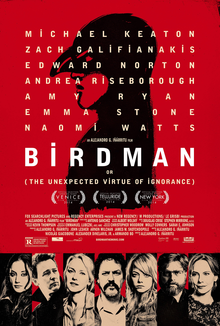
Birdman or (The Unexpected Virtue of Ignorance) (2014)

Mac Boyle October 20, 2020

Director: Alejandro G. Iñárritu

Cast: Michael Keaton, Zach Galifanakis, Edward Norton, Emma Stone

Have I Seen it Before: I mean, with the Keaton Quotient (tm) alone, you knew I was going to be there as soon as it came to the local art house theater.

Did I Like It: There’s something stealthy about the appeal of this film. A film is about the state of the current state of the American stage and celebrity. It weaves in a pointedly honest depiction of mental illness with the fiction of Raymond Carver. How would such heady material be able to not only zero in on a wide audience, but end up with the Academy Award?

Well, it certainly helps that it has the cultural oddity of Keaton starring as a role only he could, that of an aging movie star whose biggest claim to fame was being walking away from a major superhero franchise in the 1990s.

It sure worked on me. The film makes fun of the people that adore Thomson for his past glories, and, well... It me. And a bunch of those types of people (again, read: me) don’t have a sense of humor about themselves. They should. We’re ridiculous.

And if the film weren’t as successful as it were, then it might feel like a bait and switch. Equal parts audacious and clever, the mere fact that the film is able to simulate the entire affair taking place in one shot would be enough to recommend it. But if it were more traditionally shot, and didn’t feature one of my favorite film actors goofing on himself, then the film would still be worth a watch. Maybe purveyors of pop culture shouldn’t reach for artistic excellence, as some of the characters in the film suggest. I just like that I can go see something that advertises itself as a superhero film, and get a little bit extra for my ticket/blu ray purchase.

Plus, I have a working theory that owing to the cathartic experience of this film, Keaton warmed up to the idea of returning to superhero films, thus the delight of Spider-Man: Homecoming (2017) and the coming wonder that is his return as the Caped Crusader, which if you’ve been reading this space over the last several years, that has been my raison d’ete du cinema.

Tags birdman or (the unexpected virtue of ignorance) (2014), alejandro g. iñárritu, the michael keaton theory, michael keaton, zach galifinakis, edward norton, emma stone
Comment
  • A Blog About Watching Movies (AKA a Blog in Search of a Better Title)
  • Older
  • Newer

Powered by Squarespace

Party Now, Apocalypse Later Industries

Where creativity went when it said it was going out for cigarettes.

Where creativity went when it said it was going out for cigarettes.