Party Now, Apocalypse Later Industries

Where creativity went when it said it was going out for cigarettes.
  • Home
  • BOOKS
    • THE ONCE AND FUTURE ORSON WELLES
    • IF ANY OF THESE STORIES GOES OVER 1000 WORDS...
    • ORSON WELLES OF MARS
    • THE DEVIL LIVES IN BEVERLY HILLS
    • A LOSS FOR NORMALCY
    • RIGHT - A NOVEL OF POLITICS
  • PODCASTS
    • Beyond the Cabin in the Woods
    • THE HOLODECK IS BROKEN
    • THE FOURTH WALL
    • As The Myth Turns
    • FRIENDIBALS! - TWO FRIENDS TALKING ABOUT HANNIBAL LECTER
    • DISORGANIZED! A Criminal Minds Podcast
  • MOVIE REVIEWS
  • BLOGS AND MORE
    • Bloggy B Bloggington III, DDS
    • THE HOLODECK IS BROKEN BLOG
    • REALLY GOOD MAN!
  • Home
    • THE ONCE AND FUTURE ORSON WELLES
    • IF ANY OF THESE STORIES GOES OVER 1000 WORDS...
    • ORSON WELLES OF MARS
    • THE DEVIL LIVES IN BEVERLY HILLS
    • A LOSS FOR NORMALCY
    • RIGHT - A NOVEL OF POLITICS
    • Beyond the Cabin in the Woods
    • THE HOLODECK IS BROKEN
    • THE FOURTH WALL
    • As The Myth Turns
    • FRIENDIBALS! - TWO FRIENDS TALKING ABOUT HANNIBAL LECTER
    • DISORGANIZED! A Criminal Minds Podcast
  • MOVIE REVIEWS
    • Bloggy B Bloggington III, DDS
    • THE HOLODECK IS BROKEN BLOG
    • REALLY GOOD MAN!

A Blog About Watching Movies (AKA a Blog in Search of a Better Title)

Dirty Harry (1971)

Mac Boyle January 15, 2025

Director: Don Siegel


Cast: Clint Eastwood, Andy Robinson, Harry Guardino, John Vernon


Have I Seen It Before: Yes, at some point. Although I’ll admit that I was drawn to the film less for Eastwood’s iconic portrayal of Callahan, and more as an avowed Deep Space Nine fan, I showed up for Andy Robinson’s (Andrew J. Robinson, to his friends) turn as “the killer.”


Is that the most desperately nerdy reason to watch an Eastwood film? It might be, but I also can’t imagine I’m the only one that came to the film that way.


Did I Like It: And there is certainly something to be said for that performance. Robinson is cowardly, dastardly, sniveling, and any other adjective you might use to describe a cartoon heavy, all with still making the Killer always seem as if he is some kind of horrid mutation of a human, but human nonetheless. The pitch-black soul he brings to the film makes a misanthrope like Harry (Eastwood) never seem like he is anything other than the bad guy.


Is Harry Callahan a complete misanthrope? Characters around him certainly seem to think so. But he is kind to his partner and his wife, even though he never really wanted the partner around to begin with. He doesn’t have a chip on his shoulder reflexively, every chip was placed there by someone looking for an easy way out of responsibility. All of that preceding paragraph may start to make one think that I’m somehow going to change my own politics and start talking to empty chairs onstage. Let me assure you, if Harry could get over his own dick for a moment, he might have avoided an honest screw up by putting the heat on the Killer without a search warrant or probable cause, allowing him to be released. Harry is really dumb, but he means well. I offer into evidence his final action in the film, chucking his badge into the water. How does Magnum Force (1973) begin? Him fishing for a badge? Only one way to find out, I suppose.
Tags dirty harry (1971), dirty harry films, don siegel, clint eastwood, andy robinson, harry guardino, john vernon
Comment

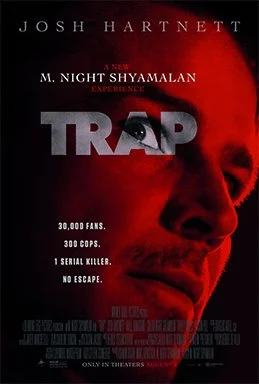
Trap (2024)

Mac Boyle January 15, 2025

Director: M. Night Shyamalan


Cast: Josh Hartnett, Ariel Donoghue, Saleka Night Shyamalan, Hayley Mills


Have I Seen It Before: Never. If it doesn’t play at Circle, and it isn’t on the schedule for Beyond the Cabin in the Woods, I’m going to have to make a real effort to catch it in theaters.


Did I Like It: Lora said the best thing about this film, and I have not seen the thought expressed anywhere else. So, it needs to be shared:


The real twist in the film is that they got Hayley Mills out of retirement to spring a trap on a parent.

Now everybody can see why I married her.


But to the question of just what the twist is. There are a couple of minor turns of fate that change the course of the movie, but no real moment where the entirety of the movie you’ve just been watching suddenly becomes an entirely different movie. Maybe the minor debacle of Glass (2019) scared him off thing that made his famous, but I couldn’t help but think it showed a great degree of restraint to not make it so that the killer’s wife (Allison Pill) was in on the killings the whole time, or the whole family, or FBI profiler Josephine Grant (Mills, trapping parents left and right) was actually Cooper’s (Hartnett) mother… Or, I don’t know… The whole concert was populated by aliens. I applaud M. Night from moving on from this construction. Now if only I as a viewer could get out of the mode where I’m trying to second guess the plot as it unfurls. It’s the least I could do for him, but that would be the precise moment he drops a new twist ending on us.


Hartnett is the film’s real secret strength. Channeling the right amount of at-his-peak John Ritter, he feels perfectly harmless for the film’s opening act, and the performance increasingly makes him seem both terrifying and brilliant in the implementation of that terror.


And it’s good that Hartnett’s performance makes him seem smart, because the plot reflexively swings for lucky breaks as opposed to deserving—even in a sick sort of way—to get out of his predicament. It’s truly a merely serviceable screenplay that keeps this from being great.

Tags trap (2024), m night shyamalan, josh hartnett, ariel donoghue, saleka night shyamalan, hayley mills
Comment

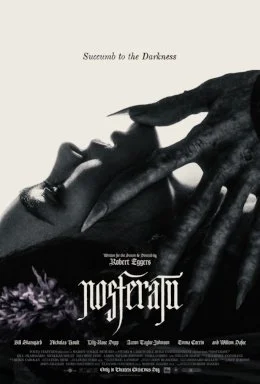
Nosferatu (2024)

Mac Boyle January 8, 2025

Director: Robert Eggers

Cast: Bill Skarsgård, Nicholas Hoult, Lily-Rose Depp, Aaron Taylor-Johnson

Have I Seen it Before: Nope. Brand new movie. First episode of a new season of Beyond the Cabin in the Woods. Interesting enough, a day before actually sitting down to watch the movie, I was volunteering at the theater and had to help somebody kick out some pathologically disruptive kids from a screening. So, I can cross that one off my bucket list?

Did I Like It: There’s probably not a whole lot new one can do with an adaptation of Dracula. The tentacles of that story seep into so much that if you’re alive in any way, you could probably guess where the story is going. There’s not even that much new anyone can do as a riff to Nosferatu (1922). Nothing will ever be quite as unnerving as the sight of Max Shreck as Count Orlock, especially when it was abundantly clear that there was no special effects as we understand them to convert a man into some kind of unspeakable creature of the night.

That all being said, Eggers immediately makes the case for his version of the story to need to exist. It is filled with atmosphere and the kind of concerted visual filmmaking that made up the best of the silent films, and is almost uniformly not on the menu for newly made movies.

Much has been made of the film’s disinterest in offering a riff on the original Orlock. Some say that the character as he appears in this film has little to do with what we have traditionally come to imagine when presented with vampires, but honest to God those people aren’t thinking things through very much. This Orlock is the first—with the possible exception of some early scenes with Gary Oldman in Bram Stoker’s Dracula (1992)—that looks like he might have once lived as Vlad the Impaler. That would be enough to consider the film something of a fascinating experience, but I also can’t get over Skarsgård’s performance in this film. There is no trace of Pennywise or any of his other performances here, so much so that I honestly didn’t realize it was Skarsgård until the end credits. Even Karloff and Lugosi ended up playing mild variations of a static screen persona in their varied careers. We may have found a new master of horror, who can disappear so completely into a role. What can’t he play?

Tags nosferatu (2024), dracula movies, robert eggers, bill skarsgård, nicholas hoult, lily-rose depp, aaron taylor-johnson
Comment

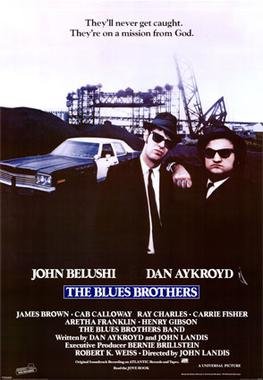
The Blues Brothers (1980)

Mac Boyle January 8, 2025

Director: John Landis


Cast: John Belushi, Dan Aykroyd, James Brown, Cab Calloway


Have I Seen It Before: Oh, sure. Having parents who hailed from Mount Prospect, the BluesMobile was always a delightful chuckle growing up. Also put it in my mind that buying an old police car at auction would be a great way to get a vehicle that doesn’t look like much, but still has all the best parts and maintenance.


Maybe I took the wrong things away from this one.


Did I Like It: I look at a movie directed (and in this case largely written) by John Landis, and my immediate instinct is to not like. It sure helps that he hasn’t really made a watchable movie in thirty years, but his early stuff sure does throw me for a loop. You might come to his defense for what happened on the set of Twlight Zone: The Movie (1982), but giving the maximum weight to any kind of acquittal, the man always seemed to be so full of himself, so supremely confident that the movie he is making at that moment is worthy of any (and I do mean any) sacrifice that it gives the entire catalog a sour taste.


And then there’s the whole exercise that is The Blues Brothers. I remember reading in George Carlin’s final book that he had a wide-ranging apathy for a lot of the Saturday Night Live crowd, as he (and I’m wildly paraphrasing) couldn’t see why a bunch of white guys had anything about which to sing the blues. I would have counted myself among the fans of the film up until the moment I read that, and afterwards, wondering if that was part of the problem.


Then, finally, there is the question of whether or not any sketch from SNL should ever be flattened to the point that it runs over 90 minutes. To say nothing of the more than 120 minutes this asks us to endure. Wayne’s World (1992) works, but does anything else really work?


All of that comes together, and I should be firmly ambivalent about the film these days. And yet, the thing moves along at a clip and is a delight. It helps that Belushi and Aykroyd often take a back seat to other legendary musicians as things unfurl. It’s not quite as funny as I might have remembered, but it has more than enough attitude to compensate.

Tags the blues brothers (1980), snl movies, john landis, john belushi, dan aykroyd, james brown, cab calloway
Comment

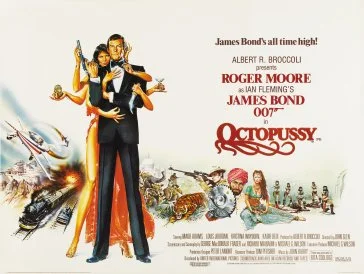
Octopussy (1983)

Mac Boyle January 2, 2025

Director: John Glen

Cast: Roger Moore, Maud Adams, Louis Jourdan, Kristina Wayborn

Have/ I Seen it Before: Sure. TBS, the 90s. That whole bit. Felt a little bit weird writing down the title on a VHS label, but that’s how one started to amass their movie collection with a $5.00 allowance.

I sometimes wonder if re-watching some of these films on those VHS recordings might have a little charm to them. Would it be a delight to take a bathroom break in the middle of this film to see a commercial for the Bigfoot Pizza and In The Mouth of Madness (1995). I may never again see a movie that way again. I’m oddly wistful about that in this moment.

Did I Like It: I’m stalling, aren’t I? There’s a lot of this film that works. Moore in his element, doing switcheroos on Fabregé and making googly eyes at a woman far classier than him. There are several mildly funny digs at the state of the competition—namely Never Say Never Again (1983)—although I may have been reading too much into the “REAL BOND” sign oddly hanging over Moore’s head at one point, and it seems like they’re using about twenty percent more of the Monty Norman theme than the average.

Then there’s the clown thing. I’ve made no secret of how little I think of shooting Ian Fleming’s borderline sociopathic spy into space. It was such a dimly-considered chase of where the movies were in that moment. But in this one, the man gets out of a sticky situation with a nuclear bomb by dressing as a god damned clown. In Moonraker (1979) he tries to take a page out of Luke Skywalker. Here, for no other reason than Moore is a little bored in the role*, decides to start saving the world using Charlie Chaplin’s playbook.

I do dislike that more than the space thing. Sorry, Sir Roger.

*And might have been well-advised to bow-out after the far superior For Your Eyes Only (1981).

Tags octopussy (1983), john glen, roger moore, maud adams, louis jourdan, kristina wayborn, james bond series
Comment

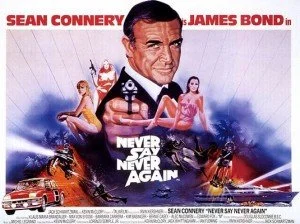
Never Say Never Again (1983)

Mac Boyle January 2, 2025

Director: Irvin Kershner


Cast: Sean Connery, Klaus Maria Brandauer, Max von Sydow, Kim Basinger


Have I Seen It Before: Although largely ignored in the canon—what with it being the strangest bit of counter-programming ever committed to screen—I have the strongest memory of picking up a VHS copy* from Suncoast** and marveling that there could be a lost Sean Connery Bond to marvel at…


Did I Like It: And then I didn’t think much of it. I’ve often wondered if my initial reaction to a Bond film is largely dominated not by the star at hand, or the villain with which he grapples, but instead the music on display. I can forgive a lot from A View to Kill (1985) because it is propelled forward by Duran Duran, but never quite sign on board with The Spy Who Loved Me (1977) because Carly Simon’s song brings the series into a fitful romantic mode, despite never realizing that there is almost nothing romantic about the protagonist of these films. Here, not only am I robbed of any sort of memorable tune, but (for clearly understandable reasons) there is no gun barrel and no Monty Norman in earshot. It never quite feels right.


In subsequent years, I’ve revisited the film and found it—despite my knee-jerk reactions to its deficiencies—to be above average for this era of Bond films. Connery is good, his late-period heyday just over the horizon and his eventual somnambulism in the final years of his career still a good ways off. Had fate been reversed and Roger Moore had starred in this film, it would be far easier to dismiss.


And then we become to the real crux of the matter. It can be a little easy to offer film criticism by way of comparison, but this film exists only to be compared to other films. It is a remake of possibly Connery’s weakest canonical film, Thunderball (1965), and was released within a few months of Octopussy (1983). So, where does Never rank among this traffic jam of movies? It’s a faster-paced movie than Thunderball, which counts for some. Is it better than Octopussy? Well, Sean Connery never dresses as a clown in this film. Hell, he could have dusted off the weird outfit from Zardoz (1974) and he still wouldn’t have done what Roger did that year.

But that’s probably a discussion for a different review.


*Kids, ask your parents.


**Kids, ask your parents, and weep for how good you could have had it.

Tags never say never again (1983), irvin kershner, sean connery, klaus maria brandauer, max von sydow, kim basinger, james bond series, non eon bond movies
Comment

Casino Royale (1967)

Mac Boyle January 2, 2025

Director: John Huston, Ken Hughes, Val Guest, Robert Parrish, Joe McGrath


Cast: Peter Sellers, Ursula Andress, David Niven, Woody Allen, Orson Welles*


Have I Seen It Before: Yes, as one of those rogue Bond-films (I’m using each of those three words rather generously) it wasn’t one of those that I was exposed to on regular TBS Bond-a-thons, but somewhere along the way curiosity alone brought me to it. I remember my mother had a fondness for it, but I’m prepared to write that off mostly to Burt Bacharach. I thought at the time that there were a few laughs, but the whole thing dragged on far too long, which wasn’t especially damning. As a child I thought that about plenty of comedies of the era.


It's entirely possible I didn’t stick around to the end. In fact, that ending being what it is, I’m pretty sure I didn’t. Years later I came back to it. Now I know.


Did I Like It: Let’s start with the positive. A farce revolving around the idea that the world so desperately needs a James Bond that they’ll hand the name and number out to just about anybody isn’t a bad concept. Twenty years ago, if you had asked me what film desperately needed to be remade, I’d put this at the top of the list. Now that we live in a world where Casino Royale (2006) exists, one might think the case would be closed. But a conceptual remake is aching to be done, too. Just leave the Fleming canon right where it is, thank you.


What else… What else? Oh. The DVD includes a 1954 episode of the anthology series Climax!** which was the first attempt to adapt the first Fleming novel. It’s not especially good, either, but is ultimately fascinating. A completist like myself would be incomplete without both of these on his shelf.


That’d be about it. There are a fitful few laughs on display here. I’m even trying to remember them now, and they slip away the moment the film is over. Woody Allen as one of many Bond’s isn’t a bad pitch for 1967, but even that one ought to stay on the shelf in the here and now. Thin material culminates in a brief epilogue taking place in heaven, when one of the Bonds gets his final revenge on the villain of the piece. I’d say I wouldn’t identify the turn here for the sake of spoilers, but you probably wouldn’t believe me if I decided to go the other way.


This may be the most overwrought, overproduced film to be unleashed from an editing bay. I may start petitioning for the retirement of the phrase “too many cooks” and replace it with “too many directors making Royale.” It’s more words, but it feels like more descriptive. I’m paraphrasing, but Gene Siskel once described a good test of the worth of a movie is whether or not you’d rather see a documentary of the same cast having lunch. With Welles and Sellers, that’s an automatic decision from me. The movie may well have been doomed from the start.


*If I’m going to have to list five separate directors, I really ought to be allowed to list a fifth actor. Especially that one.


**Try getting that one by the censors today.

Tags casino royale (1967), james bond series, non eon bond movies, john huston, ken hughes, val guest, robert parrish, joe mcgrath, peter sellers, ursula andress, david niven, woody allen, orson welles
Comment

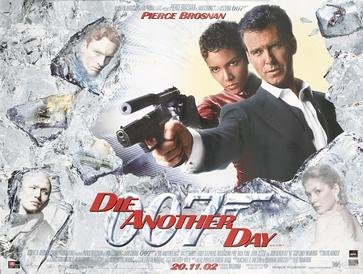
Die Another Day (2002)

Mac Boyle December 18, 2024

Director: Lee Tamahori


Cast: Pierce Brosnan, Halle Berry, Toby Stephens, Rosamund Pike


Have I Seen It Before: Yes, but you know what? I’m reasonably sure this was the only Bond film since Goldeneye (1995) that I didn’t see in the theater. I actually followed the production a little bit, it coming about in that era when one could passively take an interest in a developing film. And yet, when the film came out, I was probably dealing with just a little bit too much disappointment and heartache that winter—I’m looking in your direction, Star Trek Nemesis (2002)--to even bring myself to a second-run theater.


Did I Like It: It’s Brosnan’s worst film, right? One could make an argument for The World Is Not Enough (1999) but all of those arguments feel wrong. But as much as I can complain about the film and lament it as a dissonant note for the Irishman to leave on, there is plenty to like here.


The opening plot developments—which see 007 (Brosnan) captured on a mission to North Korea—are pretty brilliant on two fronts. First, it lays Bond low so that he can spend the rest of the film clawing his way back. Right there you have some forward momentum that can separate the pretty good Bond adventures from the positively dreary ones. Second, without dwelling on the matter too much, it gives a rationale for a post-9/11 Bond story by implying he was a prisoner during that moment in time.


His eventual release from the North Korean prison gives Brosnan some of his best moments as the character. Never has a man had such (embarrassingly aspirational) swagger as when he uses the power of his mind to overcome long-term scorpion venom exposure, very real PTSD, and malnutrition to escape a British prison and check in to the finest hotel in Hong Kong while still dripping wet and wearing hospital clothes. There is something so quintessentially Bond about him walking into that hotel like he owns the place that I’m almost prepared to view the whole film positively.


But then things go differently. The film’s in a spot of trouble by the time we get a needle drop of “London Calling” (I tend to imagine a British audience rolling their eyes, and I am right there with them). A scene with Q (John Cleese) serves more as a wacky obituary for Desmond Llewelyn. Then there’s Madonna. I don’t get Madonna. I never have. I’ve certainly never bought her in any film role outside of maybe A League of Their Own (1992). I even kind of like her theme song—and feeling the theme song will paper over large parts of some other films in the series—but the moment she shows up in the film as a fencing instructor, we are firmly in Roger Moore territory. Then there’s an Ice Hotel, an invisible car, and a parasailing sequence that I can’t imagine anyone would have been happy with twenty-plus years ago. It was almost as if Joel Schumacher had directed the whole thing*.


Which is right about when this film becomes clear in my head. The first half is a pretty good Fleming-heavy Connery film made with some allowances for modern audiences. The second half is a love-fest for Moore, which was never going to play with me. That’s not the worst notion to have when considering how to celebrate the series 40th anniversary. If they could have only managed to blend the two elements a bit better, the film wouldn’t feel as if it were lurching in tone. As EON looks to Bond 26, there’s room for flashes of Moore-fun in the post-Craig era. Just leave the parasailing behind. Please.


*I’m strangely not reflexively opposed to the impossible idea of Schumacher directing a Moore film in the 80s…

Tags die another day (2002), lee tamahori, james bond series, pierce brosnan, halle berry, toby stephens, rosamund pike
Comment

Moonraker (1979)

Mac Boyle December 16, 2024

Director: Lewis Gilbert


Cast: Roger Moore, Lois Chiles, Michael Lonsdale, Richard Kiel


Have I Seen It Before: Yes. Yes, I have. Must I say more?


I just checked with the proprietor of the site and yes, apparently, I must say more.


I must have first seen it during a TBS marathon of the films, which I dutifully recorded on VHS, and clearly didn’t think much of it even back in the far-flung 90s because my strongest recollection of the film is that I labeled that VHS tape (I think I used an LP tape) along with License to Kill (1989) “Moonwaker.” Thirty years later, I still think that’s a better title. All of eleven years old, and I’ve already got notes for improvements.


Did I Like It: Where to begin? Let’s start with the positive. Almost none of the Bond films have missed the mark with their pre-title sequence. And the skydiving duel between Bond (Moore, looking as if he’s just about ready to check out of the role, despite the fact that he’s going to do three more) and Jaws (Kiel, more on him later) is about as good as any of Moore’s openings.


Now that we have that out of the way. Bond is in space. Space. Spaaace. Fleming would rise from the grave and have a heart attack all over again. And the only reason Bond becomes Britain’s first man in space, is because Star Wars – Episode IV: A New Hope (1977) and Close Encounters of the Third Kind (1977)* made huge money and there are moments where Cubby Broccoli had all the creativity of a mimicking parrot.


Some might applaud the visuals during the film’s inexplicable third act, but aside from Ken Adam’s always delightful set design, all this film can offer is a barely warmed over riff on Star Wars. That film was a symphony of sounds that still dominates genre filmmaking, but the laser fire on display here is one step removed from someone dubbing in “Pew!” sounds.


And then there’s Jaws. One of the most menacing villains in the movies not only finds love (I’m not opposed to it) but it turns him into an ally because… well, the film has to have some kind of an ending, right?


The rest of the film is a humdrum Bond adventure, painted by largely by numbers. Where it isn’t baffling bad, it’s content to be middle-quality. I might be more mad about that than anything else.


But you want to know what really struck me on this viewing? I look at the sight of a megalomaniacal industrialist in love with rockets and space travel, bedraggled by what he sees as humanity’s twilight, which will only lead him to be the MC for the apocalypse. And then I start watching the movie. It’s not possible that old what’s his name saw this movie as a child and decided that was all he ever wanted to be… Right? It could be, though. What have we done?


*Urban legend insists that Spielberg himself campaigned hard to direct this one, only to get nowhere with EON. Could you imagine? They’d have reined him in and it would have been just as much of a disaster, but he might have been spared the indignity of 1941 (1979).

Tags moonraker (1979), james bond series, lewis gilbert, roger moore, lois chiles, michael lonsdale, richard kiel
Comment

The World Is Not Enough (1999)

Mac Boyle December 15, 2024

Director: Michael Apted

Cast: Pierce Brosnan, Sophie Marceau, Robert Carlyle, Denise Richards

Have I Seen it Before: Oh, sure. It was twenty-five years ago, and I can’t remember the precise details about that Christmas season, but I do have the distinct memory of being stuck at the mall for a number of hours, and managed to pull away from whatever was going on to go catch a screening.

Did I Like It: As with most of the Pierce Brosnan Bond films, twenty-five years ago I remember thinking that the post-gun barrel pre-title sequence was a well-crafted little thriller. The succeeding film meanders through perfunctory scenes, punctuated by an occasional ambition to give some depth to Bond that was never going to be fully realized until they were able to re-boot things entirely with Casino Royale (2006).

I’m pretty much feeling that same way now. Renard (Carlyle) is an interesting villain, but oddly enough may have worked better in a novel than it does in film. Having him already essentially dead might have fueled several good chapters trying to get into the head of someone who has already died but is losing sensation after sensation as he slowly loses consciousness. In a film, it removes any sort of pretense to tension, and makes him essentially invulnerable for those moments where he has to exchange blows with Brosnan.

Dame Judi Dench clearly wielded her power well going into this film. Having a number of juicy scenes to play in Goldeneye (1995), she spent most of Tomorrow Never Dies (1997) doing control-room schtick that wouldn’t have challenged Bernard Lee or Robert Brown in earlier films. Here, she has a very real role in the story and even plays into the action as it unfolds. Yet another example of the series’ ambitions that were waiting for Craig.

On the “Bond Girl”* front, it is a mixed bag. Sophie Marceau plays an interesting character, archly named in the best Bond tradition. She is full of as close to surprises as this era of the franchise is likely to get, and Marceau clearly understand the best parts of the assignment at hand. Then there’s Denise Richards. Whoo, boy. It’s not so much that she’s bad casting for a nuclear scientist (she is, but at least she has a good sense of humor about it, as evidence by her later appearances on 30 Rock), but it is that her performance is so perfunctory that she makes Britt Eklund and Tanya Roberts look like possible heirs to… Well, Dame Judi Dench, now that I think about it.

*It almost feels like that term should be trademarked, no?

Tags the world is not enough (1999), james bond series, michael apted, pierce brosnan, sophie marceau, robert carlyle, denise richards
Comment

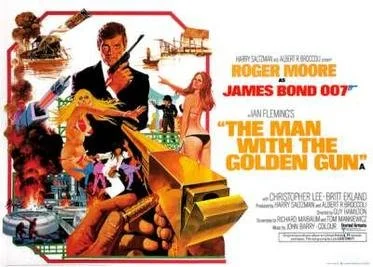
The Man With the Golden Gun (1974)

Mac Boyle December 15, 2024

Director: Guy Hamilton


Cast: Roger Moore, Christopher Lee, Britt Ekland, Maud Adams


Have I Seen It Before: Oh, sure. Oddly enough, I think this may be the film in the canon I’ve seen the least. (Octopussy (1983) may be in close competition).


Did I Like It: I’m honestly not sure why that’s the case, as I tend to be a bit of a contrarian about Moore’s time in the tuxedo and Walther PPK. This is almost universally reviled as Moore’s worst at-bat (usually uttered in the same breath with A View To A Kill (1985).


But I really like (well… sort of like) A View To A Kill, and dare I say I liked large swaths of this one, too. It might be the villain at the center of it all. Christophers Walken and Lee were born to play Bond villains, and acquit themselves well. Throw in the fact that Lee’s Scaramanga has a ruthless, simple ambition and plan (at least in the first half of the film) that makes it one of the more solid Fleming adaptations starring Moore.


Even when the film settles into the old hoary Bond cliches, it’s not all bad. There’s a Macguffin of a device that makes solar power work which is somehow simultaneously silly on its own and so of-the-moment that it must have felt passe by the time The Spy Who Loved Me (1977) arrived in theaters. I may owe Tomorrow Never Dies (1997) an apology for the side-eye I gave it when I remembered that the whole plot hinged on a GPS device.


The theme song, sung by Lulu and with music by the Bond music GOAT John Barry is dismissed so perpetually (even by Barry himself) but after having the other Bond themes on regular re-play, I found it one oddly fresh again. Sure, it’s lyrics are a listing of various plot elements, but that can be fun, too. If we didn’t have this title theme, we might not have had the various rap tracks recounting movie plots throughout the 80s and 90s. Lulu walked so Partners in Kryme could run. If you know, you know.


I’m honestly not entirely sure why both View and this one are consistently ranked at the bottom of Moore’s efforts.


Then I see Sherriff J.W. Pepper (Clifton James). Again, apparently. Where he might have made sense in Live and Let Die (1973) (I’m being generous here) it’s a real bummer to find him becoming not only a recurring character here, but just a little bit of a partner in crime (or kryme) for a moment. I can’t explain away Pepper, but I’ll be damned if I didn’t crack a smile when his wife (Jay Sidow) wants to buy a Hong Kong Elephant trinket and he grumbles “Elephants! We’re Democrats, Maybelle.”

I didn’t think I would be this forgiving as I march through Moore’s films. Could this possibly hold up? Oh, no… (checks notes) I’m going to have to review Moonraker (1979) now, aren’t I?

Tags the man with the golden gun (1974), james bond series, guy hamilton, roger moore, christopher lee, britt ekland, maud adams
Comment

Tomorrow Never Dies (1997)

Mac Boyle December 7, 2024

Director: Roger Spottiswoode

Cast: Pierce Brosnan, Jonathan Pryce, Michelle Yeoh, Teri Hatcher

Have I Seen it Before: Oh, yes. In that far flung winter of 1997, I actually lost ten bucks to Ben Owen, when I bet him that this would be the bigger film than the other wide release that weekend, beating out a little film that already had a reputation of going significantly over budget and being delayed by the studio.

The movie was Titanic (1997).

I bet against Cameron, and I got what I deserved. But you’re damned right I was in the theater for this one on opening weekend, for all the good it did me.

Did I Like It: I’ve kind of soured on Brosnan’s films in the series in recent years. The more interesting parts of his four films were greatly improved on by Daniel Craig’s films, and the worst impulses adopted too much of Roger Moore for my taste. It was entirely possible that this era of the series best contributions would be to video games more than anything else. I’ll be honest that I thought I would just have this movie on in the background*, but I found the pre-title sequence to be a delight and was drawn into the film.

But then I kind of lost interest in a mishmash of truly terrible CGI and Teri Hatcher. I was getting a little bored. This wasn’t helped very much by the occasional diving sequence, which can absolutely suck the life out of otherwise great Bond films. Just ask Thunderball (1965). That is probably pretty close to the review I would have given the film in the 90s.

But the film is not without its charms. And by that I mean Michelle Yeoh. She more than equals Brosnan’s swagger and ability. All of the times the Eon powers that be threatened to offer Bond spinoffs, I really wish they would have pulled the trigger here. More Yeoh is good for everyone.

*I’d probably be first in line to see if the film re-entered theaters for any spell of time. I could win that ten bucks back yet.

Tags tomorrow never dies (1997), james bond series, roger spottiswoode, pierce brosnan, jonathan pryce, michelle yeoh, teri hatcher
Comment

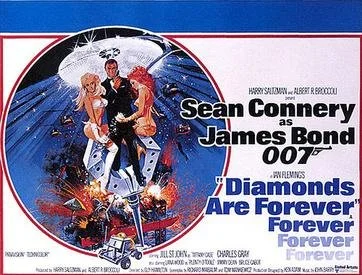
Diamonds Are Forever (1971)

Mac Boyle December 7, 2024

Director: Guy Hamilton

Cast: Sean Connery, Jill St. John, Charles Gray, Lana Wood

Have I Seen it Before: Sure.

Did I Like It: There’s a moment in the TV series Timeless, which I didn’t really enjoy, where the timeline gets altered and there are more Sean Connery-starring Bond movies than there were in our timeline. That part I found delightful. So, it is supremely strange that I find myself in the strange position of wishing that Connery had been in the series more, and somehow wishing that he had been in one less entry.

The movie already runs at a bit of a deficit, as it is trying even harder than most to ape the singular success of Goldfinger (1964). It probably isn’t nearly as egregious as A View to A Kill (1985) in that regard—that movie nearly did a find and replace of Goldfinger’s script—but it is a terrible impulse of the franchise to imitate the the third entry.

But that’s not the real problem. The problem is Connery himself. Lore around the movie indicated that Connery didn’t want to be there, despite the huge payday, and its difficult to not see that in his listless final (authorized, non-video game) performance as the superspy. He looks tired, and significantly older than he did in You Only Live Twice (1967) and even later in Never Say Never Again (1983).

Then again, the film’s screenplay doesn’t give him much to work with. The opening—usually the best part of even the worst films in the series—at least seems nominally propelled from the ending of On Her Majesty’s Secret Service (1969) with Bond (Connery) searching for revenge against Blofeld (Gray). Anything less would have felt like a cheat, but when it turns out that Blofeld survived Bond’s ministrations in the third act of the film, it isn’t a horrifying revelation for Bond. It’s barely a plot point.

Tags diamonds are forever (1971), james bond series, guy hamilton, sean connery, jill st john, charles gray, lana wood
Comment

On Her Majesty's Secret Service (1969)

Mac Boyle December 7, 2024

Director: Peter R. Hunt


Cast: George Lazenby, Diana Rigg, Telly Savalas, Bernard Lee


Have I Seen It Before: Oh, sure.


Did I Like It: If you’ve seen the film, or any of the Bond series, you probably have some vague opinion about this one, even if you haven’t seen it. Is it any good, being an aberration in the series? Is George Lazenby worth watching? Does the ending even work?


Take away the storytelling aberration of having three different Bonds in successive films, and this film manages to succeed where so many other of the films struggle. It’s a solid adaptation of Fleming’s original novel. It is low on gadgets, high on plot, and feels of a piece with a longer story told about a man who has a very strange job and doesn’t think he’s going to live very long. It is a sweeping action epic, careening towards an understanded, but inevitable tragic ending. It is also the one key argument against the whole “James Bond is just a code name, and each time the actor changes, it is a new character” theory*, before Skyfall (2012) closed the book on it forever.


I’ll admit that I’ve even proffered an opinion or two on the topic of the one and done Bond, and I’m surprised to admit some of my opinions may have changed. I’ve always said that if Sean Connery has stuck it out through this film, it would have been the best in the series, even besting From Russia With Love (1963). I’m not so sure that I believe that anymore. I believe in the final act that Lazneby’s Bond loves Tracy (Rigg). He treats her tenderly, even if there is a fundamental layer of condescending chauvinism to his affections that is true to the characters, sort of like when I have beaming pride that my cat’s meows have a growing and meaningful vocabulary behind them. Connery’s whole screen presence couldn’t have hoped to reach for that pathos. It would have played as a comedy, and an awkward one at that.


By the same token, Lazenby is at points earlier in the film awkward in the role. He’s not quite so suave, so untroubled by the insanity of the world around him. Just as Connery couldn’t have played the final scene in this movie, Lazenby would have been hopelessly at sea trying to sell the character with the same level of movie star gravitas as Connery did in the opening scenes of Dr. No (1962).


The problem with the film, ultimately, is Lazenby’s short tenure with the role. Had he stuck around, he very well might have grown into his role both as Bond and as a movie star generally**. Thankfully, this longing for someone to bring that tragedy to ruthless life is sated when Daniel Craig covered large parts of the material in Spectre (2015) and especially in No Time To Die (2021).


*How so? I’m so glad you asked, and a little hesitant to include it in the review proper. Tracy dies at the end of the film. In For Your Eyes Only (1981) Moore’s Bond visits Tracy’s grave. That’s the big one. There are a number of references beyond that that are less specific. I imagine I’ll have more to say about that in my immediately forthcoming review for Diamonds Are Forever (1971).


**Although him in Moonraker (1979) would still be a chore in any universe.

Tags on her majesty's secret service (1969), peter r hunt, george lazenby, diana rigg, telly savalas, bernard lee, james bond series
Comment

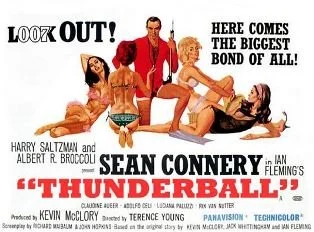
Thunderball (1965)

Mac Boyle December 2, 2024

Director: Terence Young


Cast: Sean Connery, Claudine Auger, Adolfo Celi, Luciana Paluzzi


Have I Seen It Before: Oh, sure. I even remember being a little guy and trying to build a version of the miniature rebreather out of Lego, being disappointed that it didn’t really work, and then slowly realizing that the real one probably didn’t work either.


Did I Like It: I want to like it far better than I do. Connery is here, which improves matters more than a little bit, and he’s even young and fit, which should move the film ahead of Diamonds are Forever (1971) and Never Say Never Again (1983). Sure, the film is a little slavishly devoted to Goldfinger (1964), when I personally prefer From Russia With Love (1963). But that should all lead to a bit of fun, right?


There might be an impulse to view the film through some jaundiced eyes, as the byzantine nature of the rights associated with many of this film’s concepts quickly doomed everything after the Connery era to the episodic buffoonery that have proved to be the series’ worst impulses over the years. If there was one book in the Fleming canon to wait for years to see adaptation, I might have preferred this one wallow for years—certainly not be adapted twice—and we get a Casino Royale with Connery*.


But judging a film based on the studio politics and litigation surrounding it is kind of like dismissing Sam Raimi’s Spider-Man (2002) because we could have gotten a James Cameron version of the film**. I think it’s just that the film is so water-logged that it occasionally forgets to be an action film. We can marvel at some underwater photography, but scuba-based fist- and gunfights are a trifle bore. John Barry’s score is pulling extra duty, having to occasionally go up tempo to remind us we ought to be thrilled when the footage forgot, and even that sweeping music gets exhausted and settles into a cozy, and unremarkable nap.


*Yes, that would mean we probably would not have Casino Royale (2006), or worse yet a Craig-starring Thunderball, but you’ll note I said I might have preferred it that way.


**I mean, I would like to see that, but Raimi will more than do in a pinch.

Tags thunderball (1965), terence young, sean connery, claudine auger, adolfo celi, luciana paluzzi, james bond series
Comment

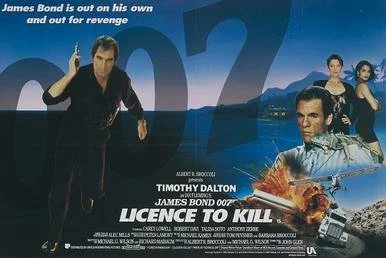
Licence to Kill (1989)

Mac Boyle November 27, 2024

Director: John Glen


Cast: Timothy Dalton, Carey Lowell, Robert Davi, Talisa Soto


Have I Seen It Before: Oh, sure. I was a boy and I had access to TBS. That’s the usual way one takes in the entire Bond canon. It was strange that I took that in just as Goldeneye (1995) was approaching its theatrical run, which meant this film was the most recent release in the series. Even then, it felt like a relic from some other era.


Did I Like It: I’ve been dreading re-watching this one a little bit. I’m so enamored of The Living Daylights (1986) and remembered as a boy not liking this one nearly as much that I’d be really underwhelmed in the here and now. While I don’t find this to nearly be the nearly-perfectly calibrated Bond-delivery device that Daylights remains, it is good. Quite good. My long-held belief that Dalton walked so that Daniel Craig could later run remains undiminished. The attempt at actually bringing the Fleming books to life is on full display, as this is ultimately closer in spirit and plot developments to the novel Live and Let Die than the film which shares its name.


The film is not without its more whimsical Bond-fun, opposed to what its reputation might suggest. It’s a delight to see Desmond Llewelyn’s Q get to do far more and serve the second act (that part of many Bond movies which can become interminable) far more than he is normally allowed.


Even one of the often annoying habits of the series is indulged with in a mostly pleasing, ultimately subtle way. The series can’t help but follow the trend of successful recently movies. Star Wars: Episode IV – A New Hope (1977) is huge, and we get Moonraker (1979). Still not happy about that one, forget that it all happened before I was born. Batman Begins (2005) revitalizes a flagging franchise, and we go back to the beginning with Casino Royale (2006). Thank God. Here, though, while one might get a bland feeling from the drug trafficking plot, I can’t help but notice that Michael Kamen replaces John Barry*, and both Robert Davi and Grand L. Bush appear in parts of varying sizes. Tell me this film isn’t the way it is due in no small part to Die Hard (1988), and I’ll just be forced to shake my head.


The positives outweigh the negatives, though, and I can’t help but lament the fact that we didn’t get more outings with Dalton. The series would likely not have taken the shape it has now if he had, but one more might have been nice. His Goldeneye would have been something.


*Should anyone have replaced John Barry? Fair question. One also gets the sense that by the time we got to the 21st century, even the series itself is attempting to mimic Barry’s sweeping scores.

Tags licence to kill (1989), john glen, timothy dalton, carey lowell, robert davi, talisa soto, james bond series
Comment

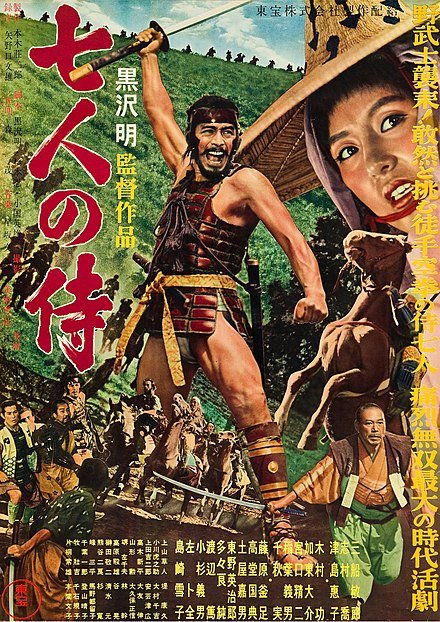
Seven Samurai (Shichinin no Samurai) (1954)

Mac Boyle November 27, 2024

Director: Akira Kurosawa


Cast: Toshiro Mifune, Takashi Shimura, Keiko Tsushima, Isao Kimura


Have I Seen It Before: Oh, sure. That time in every boy’s life when he wants to insist to the world that he’s seen all the right movies* inevitably led me to this one. At the time, I found it interminable and tried to just nod along when others raved about its fundamental qualities.


Yes, this is going to be one of those reviews where I spend at least part of our time not reviewing the movie at hand, and more reviewing my simultaneous adolescent pretension and insecurity.


Did I Like It: It is still very, very long. So long that the intermission in the middle feels less like a reprieve and more like just one more way to extend the runtime.


This is not to say I didn’t enjoy the film more than I did twenty-plus years ago. It’s influence on subsequent films can’t be denied. The performances are terrific, especially Takashi Shimura as the leader of the seven. There’s always a risk that the samurai might start to blend together as the adventure unfurls, but each is distinctive in their personality and how they come across on camera. The scope is undeniably epic.


So epic, in fact, that an American might get a little lost in the proceedings. I get the sense that this is arguably Kurosawa’s most beloved film because it is so quintessentially Japanese. This is more than just a simple adventure story, but a sprawling meditation on Japanese cultural identity. It can feel a little loaded to the uninitiated. That’s all right, I am perfectly content to be a polite guest within this film.


So, where does that leave us so far as a recommendation? I’d honestly start with Yojimbo (1961) or Sanjuro (1962). If you are at all meant to have a taste for the adventure films of Kurosawa, this will light the fire. From there, The Hidden Fortress (1958) will continue to hook you. After that, you might be ready for the feast that is Seven Samurai.**


*That impulse doesn’t really go away, apparently…


**Yeah, I noticed that those are in ascending length, too. Americans can’t entirely help being American.

Tags seven samurai (1954), akira kurosawa, toshiro mifune, takashi shimura, keiko tsushima, isao kimura
Comment

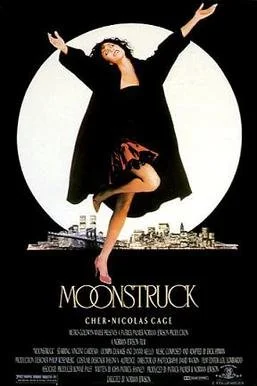
Moonstruck (1987)

Mac Boyle November 22, 2024

Director: Norman Jewison


Cast: Cher, Nicolas Cage, Vincent Gardenia, Olympia Dukakis


Have I Seen It Before: Never! In one of those weird twists of fate for that particular evening, had I seen it before I might not have even seen it then. (This will mean nothing to you.)


Did I Like It: Is it weird to marvel that a film written by an Irish-American and directed by a English Canadian can make a film that feels so authentically Italian*? Brooklyn Heights feels so believably lived in as a neighborhood in this film, I’m more than a little surprised that Cage is the only Coppola involved in the proceedings.

Feeling as if one is spending time in Brooklyn Heights alone would probably be enough to recommend the film, but there is thankfully quite a lot else going on here, and it is all deceptively simple. The film would have been forgiven for giving into the impulse to make the third act nothing more than a farce. I might have even enjoyed it if it had, but to what some might seem an anti-climax instead becomes a symphony of believable and earned character work. The plot is moved along by facial expressions, not ornate turns of fate.

The performances are key here. The vagaries of the ensuing decades might make one (read: me) giggle a little inappropriately the moment Nicolas Cage shows up on screen, but for his presence and the ultimate truth that this is an ensemble piece, it can’t help but be Cher’s movie throughout. Is there another pop diva who has had a more consistently successful career as a film actress? You might be tempted to throw Barbara Streisand in my face, but Streisand has always played herself. I’d challenge you to find too much similarity between Cher’s character here and her work in either The Witches of Eastwick (1987), or Mermaids (1990). Hell, she doesn’t even have to sing at any point in the movie—or the end credits—to justify her presence here.

*Fair question: What the hell do I know about anything being authentically Italian?

Tags moonstruck (1987), norman jewison, charles fleischer, nicolas cage
Comment

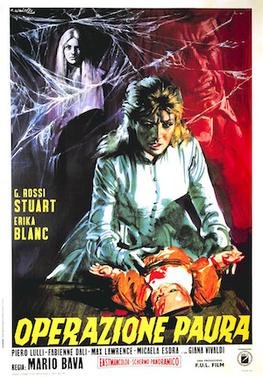
Kill, Baby, Kill (1996)

Mac Boyle November 22, 2024

Director: Mario Bava


Cast: Giacomo Rossi Stuart, Erika Blanc, Piero Lulli, Fabienne Dali


Have I Seen It Before: Never. Had it not been name-dropped by Lydia Deetz (Winona Ryder) in this year’s Beetlejuice Beetlejuice (2024), I might not have ever come to it.


Did I Like It: I want to like Italian horror. I really, really do. Can you help me like it? I would really like some help.


This particular film is well-loved (hence the recommendation from the spooky girl to end all spooky girls), but I just don’t get it. I think the problems are two-fold, and only partially my fault.


For one, I think there’s a tendency in Italian horror to favor mood setting over any kind of actual tension, fear, or even terror. There’s plenty of that mood-setting on display here, but it leaves the entire movie feeling like a Halloween party I am begrudgingly attending as opposed to a scary movie. It actually serves to clarify my somewhat paradoxical feelings on Halloween at large. I love a good scary movie, but I’ve had my fill of costume parties.


Secondly, whatever moments of dread for which the film earnestly reaches feels like it has been aped to death by other, later (and themselves, generally underwhelming) American horror films. The 19th century setting? Check. The long dead child haunting characters unable to see more than two feet in front of them? Check. The occasional interruptions by disembodied child laughter? Double check. Hell, American films were already putting that one to barely tolerated use in Robert Wise’s The Haunting (1963), so now I’m left sitting here wondering if the Americans stole from the Italians, or if it was the other way around. Either way, it’s pretty clear that I’ve been long since ruined for whatever charms the film might have had to offer.

Tags kill baby kill (1966), mario bava, ciacomo rossi stuart, erika blanc, Piero Lulli, fabienne dali
Comment

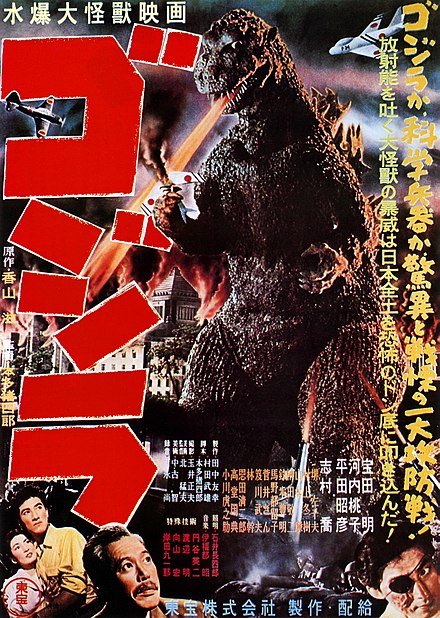
Godzilla (1954)

Mac Boyle November 22, 2024

Director: Ishirō Honda

Cast: Akira Takarada, Momoko Kōchi, Akihiko Hirata, Takashi Shimura

Have I Seen It Before: I want to say yes, but in my dim memory, I might have seen any number of films in the series, or even parts of Godzilla: King of the Monsters (1956). I’ll be honest, the series never meant all that much to me. Godzilla Minus One (2023) changed all that.


Did I Like It: No review of the film will be complete without talking about suitmation. Essentially abandoned by even the powers-that-be at Toho by now, and having spent years looking blissfully silly to almost everyone, there is something to be said for the innovations on display here, to say nothing of the fact that of all large-scale effects photography, climbing into a rubber suit seems like the only one in which there is a risk of dehydration on the part of the performers. Here, it is put to far greater effect than I am guessing you are imagining. The trick is making sure scale works for you, not against you. The less your Kaiju interacts with buildings that can’t help but look like carboard boxes, the better. Setting a scene in a giant, radioactive footprint of your monster at least helps me believe that the creature might actually be that big. I was prepared to laugh at the special effects, but they are surprisingly effective, even before I start grading on a curve for 70 years hence.


The movie’s political message is lean, and well argued, especially for a concept that involves a giant lizard breathing fire down on the world. If indeed I had any complaint its that the metaphor takes a front seat here, as opposed to in Godzilla Minus One, where the human element leapfrogs both the post-war meditations and the monster that wrought them.

Tags godzilla (1954), godzilla movies
Comment
  • A Blog About Watching Movies (AKA a Blog in Search of a Better Title)
  • Older
  • Newer

Powered by Squarespace

Party Now, Apocalypse Later Industries

Where creativity went when it said it was going out for cigarettes.

Where creativity went when it said it was going out for cigarettes.