Party Now, Apocalypse Later Industries

Where creativity went when it said it was going out for cigarettes.
  • Home
  • BOOKS
    • THE ONCE AND FUTURE ORSON WELLES
    • IF ANY OF THESE STORIES GOES OVER 1000 WORDS...
    • ORSON WELLES OF MARS
    • THE DEVIL LIVES IN BEVERLY HILLS
    • A LOSS FOR NORMALCY
    • RIGHT - A NOVEL OF POLITICS
  • PODCASTS
    • THE HOLODECK IS BROKEN
    • Say Something Nice!
    • THE FOURTH WALL
    • Beyond the Cabin in the Woods
    • FRIENDIBALS! - TWO FRIENDS TALKING ABOUT HANNIBAL LECTER
    • As The Myth Turns
    • DISORGANIZED! A Criminal Minds Podcast
  • MOVIE REVIEWS
  • BLOGS AND MORE
    • Bloggy B Bloggington III, DDS
    • THE HOLODECK IS BROKEN BLOG
    • REALLY GOOD MAN!
  • Home
    • THE ONCE AND FUTURE ORSON WELLES
    • IF ANY OF THESE STORIES GOES OVER 1000 WORDS...
    • ORSON WELLES OF MARS
    • THE DEVIL LIVES IN BEVERLY HILLS
    • A LOSS FOR NORMALCY
    • RIGHT - A NOVEL OF POLITICS
    • THE HOLODECK IS BROKEN
    • Say Something Nice!
    • THE FOURTH WALL
    • Beyond the Cabin in the Woods
    • FRIENDIBALS! - TWO FRIENDS TALKING ABOUT HANNIBAL LECTER
    • As The Myth Turns
    • DISORGANIZED! A Criminal Minds Podcast
  • MOVIE REVIEWS
    • Bloggy B Bloggington III, DDS
    • THE HOLODECK IS BROKEN BLOG
    • REALLY GOOD MAN!

A Blog About Watching Movies (AKA a Blog in Search of a Better Title)

IMG_4267.JPG

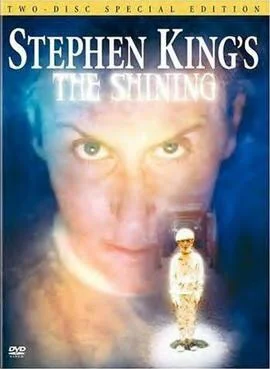
The Shining (1997)

Mac Boyle August 26, 2018

Director: Mick Garris

Cast: Rebecca De Mornay, Steven Weber, Melvin Van Peebles, Courtland Mead, some truly awful mid-90s CGI.

Have I Seen It Before: The mere notion of watching it up until my deep-dive into Shining-ology this week seemed ridiculous. And yet, here I am.

People often complain when a filmed adaptation is released, if the subsequent work doesn’t strictly adhere to the source material. Those who adore Stephen King’s original novel The Shining decry Stanley Kubrick’s 1980 film of the same name. King himself is among the most prominent of this ilk. I tend to disagree with them, both in general and specifically in this case. There’s something interesting about a true adaptation, that a transcription just can’t quite accomplish. See Watchmen (2009) for a pretty perfect example of this phenomenon.

But, King was unhappy with the Kubrick film and he thought he could do better. So he tried. He managed to retrieve the rights to his own novel from Kubrick (for a price that various sources indicate was 2 million dollars, and an agreement that King cool it with his criticism of the original film), wrote a 4 1/2 hour teleplay, and had the company film the thing in Stanley Hotel, the same inn that had inspired him to

It’s a TV miniseries from the 90s. Thus, it has what you would think for production values (to say nothing of the special effects), and the acting to back it up. One particularly egregious example is a series of helicopter tracking shots following the Torrance’s to the Overlook. Kubrick already mastered such a shot with the opening of his movie. Inviting the comparison by trying to work in the same milieu isn’t doing your movie any favors. It is not of quality anywhere near the Kubrick original, even if it is occasionally slavish to the novel.

But that shouldn’t surprise you. What might surprise you is the points where King actually diverts from his novel. An extended epilogue is attached, showing Dick Hallorann (Melvin Van Peebles) very much a part of the surviving Torrance’s lives. Young Danny (Courtland Mead) is graduating from High School, and as it turns out, he looks exactly like his vision from many years ago of his imaginary friend, Tony (Wil Horneff). Yikes.

Elsewhere, the smoky wreck of the Overlook is being rebuilt. Dun dun dun. Sorry, Mr. King. Your old friend Kubrick had the Overlook still standing at the end of his version of your story. It may work better, but the complaint of a poor adaptation rings false with this decision. You desperately want Jack Torrance (Steven Weber) to be something of a sympathetic figure, but negating his sacrifice by rebuilding the hotel is a little like those helicopter shots of the VW Bug: It’s been done before.
Tags the shining, Steven Weber, 1990s, Rebecca De Mornay, 1997, Courtland Mead, Mick Garris, Melvin Van Peebles
Comment
220px-2001_A_Space_Odyssey_(1968).png

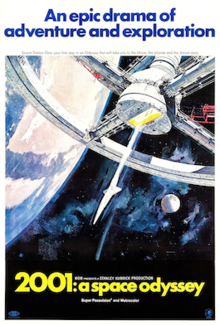
2001: A Space Odyssey (1968)

Mac Boyle August 24, 2018

Director: Stanley Kubrick

Cast: Keir Dullea, Gary Lockwood, Douglas Rain, William Sylvester, and Star Child (who looks at us from the cosmos and judges us with his big, second-hand Dullea eyes)

Have I Seen it Before: Can one truly see this movie? Is it more important to experience it…? These are the questions I have now. The answer is, yes, it must be experienced. So there. One less question.

Did I Like It: Over the years, I have to come to appreciate the movie, but until now I don’t think I ever truly got it.


We are all Star Child.

Wait, wait. Come back. I’m going somewhere with this.

I’ve often felt that my own movie-watching experience has been wildly warped by never seeing a vast majority of films in the way they were intended to be viewed—on the largest screen possible, and with a crowd engaged in a shared experience. Indeed, until the wide availability of DVDs in the mid-90s, VHS probably ruined most movies before they had a chance to breathe. I first saw Blade Runner (1982) on a Blockbuster-rental cassette that had already lived past its usefulness before I pressed play, and I don’t think I’ve yet to properly appreciate the movie for what it is. Movies like Independence Day (1996) or Armageddon (1998) are especially vulnerable to showing their flaws when stripped down for presentation on a TV. Even Star Wars (1977) was a wildly different movie seeing it in the theater in its 1997 special edition than it was over dozens of times on tape. 

When I first saw 2001 as a kid, I similarly didn’t get it. In fact, I kinda hated it. Nothing happens for long stretches of time, and that intermission? Give me a break. In those intervening years, I read the concurrently-developed novel by Arthur C. Clarke and gain at least a semblance of understanding as to what Kubrick was showing us. As I grow older still, I can appreciate that an array of special effects—that were then still in very much a beta-version back then—still hold up today.

But until the planets appeared to align in the opening titles, I became a believer. This movie was never meant to be merely watched, it was meant to be experienced. Everything has been a lame pretender to the intent of Kubrick and co.

The movie is far from boring, as is often the case of criticism leveled at it. It just hasn’t been experienced correctly. Even the intermission—maddening on spec for a not quite 2 1/2 hours in length—the glowing ethereal quality of the black screen didn’t indicate the absence of material, but instead (I shit you not) almost resembled a monolith.

Kubrick knew exactly what he was doing. That being said, he is a filmmaker in every sense of the word. He’s never been terribly interested in working as a dramatist; if he had, he would have eschewed movies for the stage. Thus, the few and far between scenes that involve people talking to one another are probably the least interesting. That’s okay, because there’s a good forty-five minutes (I think, I didn’t actually time the thing) before any human as we understand them speaks. By the time Dave Bowman (Kier Dullea approaches Jupiter and takes his trip beyond the infinite, I nearly had a panic attack form the breathtaking images presented to me in such a new fashion. 

I’m a believer in this movie now, but it must be seen in the proper context.

If you happen to read this while the movie is still in its limited re-release, or if by some miracle you have the opportunity to see it in 70MM in one of the few venues equipped for such an exhibition, please go. Honestly, I don’t think you’ve really seen this movie yet, even if you’ve watched it a dozen times.

My only complaint? To this day, I don’t understand why Heywood Floyd (William Sylvester)—a reportedly experienced space traveller stares at the instructions for the zero-gravity toilet for what seems like an entire reel of film?Minor quibble. Do with it what you will.

Tags 2001: A Space Odyssey, stanley kubrick, keir dullea, gary lockwood, starchild, 1968, 1960s
Comment
220px-The_Shining_(1980).png

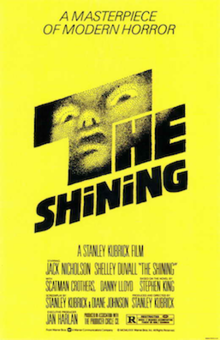
The Shining (1980)

Mac Boyle August 19, 2018

Director: Stanley Kubrick

Cast: Jack Nicholson, Shelley Duvall, Danny Lloyd, Scatman Crothers

Have I Seen it Before: I’ve always been the watcher of this movie…

Did I Like It: What’s not to like? Yes, Mr. King, we’ve already heard from you.

Before making films, Stanley Kubrick was one of the premiere still photographers in the world. As a filmmaker, he never seemed particularly interested in being a dramatist, and stayed firmly entrenched in his roots. Thus, as a director he ends up being more of an impressionist, if one can be such and still make studio pictures. Thus, the film is a Rorschach test, providing any watcher with exactly what they want to see (see Room 237 (2012)). And thus, it’s only partially an adaptation of the original King novel.

Kubrick, though fills his movie with general dread for as long as he can, and then erupts the film King throughout his work has been very interested in mythology, perhaps at the expense of actual horror. Kubrick just wants us to feel the horror, and for my money, he mostly succeeds, while at the same time giving us far more (although perhaps not as much as some others would have us believe) to chew on.

Much has been made of King’s displeasure with the book, and beyond the reality that Kubrick’s movie is not a faithful adaptation, I just don’t see it. He has—at times—complained about how he believed Jack Torrance as played by Jack Nicholson appears to be a madman from the first frame, making his transformation to axe-wielding maniac more of a tragedy. Aside from a simmering hostility that Nicholson seems to have as part and parcel of his film persona, I just don’t quite see it. 

King’s book is a fine book, but not his best. Whereas with the film—with the sheer depth of analysis that can be made about the movie is staggering—is a far more memorable experience.

Tags the shining, stanley kubrick, jack nicholson, shelley duvall, scatman crothers, 1980, 1980s
Comment
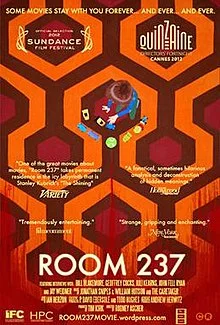
220px-Room_237_(2012_film).jpg

Room 237 (2012)

Mac Boyle August 19, 2018

Director: Rodney Ascher

Cast: Bill Blakemore, Geoffrey Cocks, Juli Kearns, John Fell Ryan

Have I Seen it Before: Yes. I’m curious to see if I have the same reaction to it on the second go around.

Did I Like It: To ask that question, you almost have to reckon with whether or not you believe anything in the movie. I land somewhere in the middle of this question (which I’ll get to in a minute), but thus I land somewhere in the middle of the question of whether or not I like it.


“Now, if you’ll allow me to make a little bit of a link here…”

And with that quote, we’re off to the races.

Okay. So. Room 237. A lot of ideas in the film. In some case, I may be using the term “ideas” loosely in some cases. 

Visually, I think the film is by and large lackluster. Aside from some rather standard b-roll, and a few bordering-on-clever weaves into other works of the Kubrick oeuvre, the film plays out largely like a podcast (which seems like a strange criticism coming from me, but I’m not putting my stuff out on Blu Ray). It floats along on its ideas, and the ideas only occasionally enthrall, and even more rarely fully persuade.

The theories about Stanley Kubrick’s The Shining (1980) put forward include: 

  • That the film is Kubrick’s attempt to deal with mythological idea, specifically that of the Minotaur (I think)

  • That the film is a dissertation on the Holocaust.

  • That the film is a dissertation on the genocide of Native Americans.

  • That the film is Kubrick’s confession (for lack of a better term) for having participated in some level of fakery surrounding the Apollo 11 moon landing in 1969.

Naturally, that last claim is the hardest one to swallow, but each seems to be grasping at straws. 

And yet…

The fundamental knowledge of Stanley Kubrick as such a particular, exacting filmmaker, forever possessing the still photographer’s eye for every detail in the frame, some of the things these various interviewees bring up are thought provoking. To illustrate the general arc of my thinking on some of these questions, I present the rhetorical process I went through on the question of lunar fakery:

  1. Do I think that the moon landing was faked? Of course not.

  2. Do I think that it’s possible that some of the footage (especially the near-live footage of Armstrong) might have been goosed or sweetened with the assistance of Hollywood magic? Possibly.

  3. Do I think that Stanley Kubrick would have had the skills to get such a job done? Sure.

  4. Do I wonder why Danny (Danny Lloyd) is wearing that Apollo 11 sweater? Hey, yeah. That is weird. Why would Kubrick put such a specific thing in the movie?

  5. Is it possible that Stanley Kubrick was just fucking with us? …Yeah. That seems like the Occam’s Razor explanation.

Tags Room 237, Documentary, 2012, 2010s, the shining
Comment
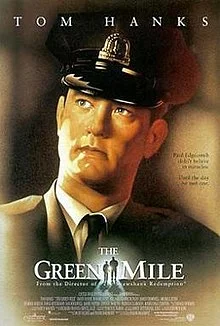
220px-The_Green_Mile_(movie_poster).jpg

The Green Mile (1999)

Mac Boyle August 16, 2018

Director: Frank Darabont

Cast: Tom Hanks, Michael Clarke Duncan, Bonnie Hunt, Sam Rockwell

Have I Seen it Before: Several times, but not nearly as much as that other prison-set Frank Darabont-directed movie based on a Stephen King story.

Did I Like It: I think it’s objectively a depressing movie, so why do I always feel a little uplifted by it the end. Must say more about me than about the movie itself.

There is—to my mind—only one problem with this film. I don’t for one second believe that Dabbs Greer is an elderly Tom Hanks. That being said, somewhere out there in the multiverse is a version of me who watches this film and wishes that they hadn’t put Tom Hanks in old age makeup. So, in the end, art is often about living with imperfections.

Beyond that, the film is great. A year before Patrick Stewart relented to play Charles Xavier in X-Men (2000), Michael Clarke Duncan had the rare distinction of being born to play a particular role in John Coffey. Hanks is Hanks, which may sound like slightly damning praise, but who doesn’t want to watch Tom Hanks in a movie. The rest of the cast is perfection, right down to the slimy Doug Hutchinson playing the odious Percy Wetmore. Between this film and Galaxy Quest being released in the same year, I am struggling to find a one-two punch that introduced a screen persona more efficiently than Sam Rockwell.

A well-cast movie is one thing, but in truth not much of anything if the writing and directing aren’t there. See Justice League (2017) (minus the tag scene) for a pretty good example. Here, Frank Darabont’s skills are unassailable. It’s a shame that he hasn’t directed a movie since The Mist (2007). It’s an even bigger shame that he was fired as showrunner on The Walking Dead after its first—and only watchable—season. It’s yet a bigger shame still that George Lucas relegated Darabont’s draft for Indiana Jones and the Kingdom of The Crystal Skull (2008) to the scrap pile. 

It’s a pretty miraculous film that deals with the guards of death row, and still make me want to somehow know these people in real life. They are decent, and in a time with little decency to show for it, that is uplifting, even in the face of tragedy.

Also, and on a slightly unrelated note: I think this book informs this first season of Castle Rock more than any other King work. At press time, there are still a few more episodes left to air. Let's see if I'm right.

Tags the green mile, frank darabont, tom hanks, michael clarke duncan, sam rockwell, Bonnie Hunt, 1999, 1990s, Drama
Comment
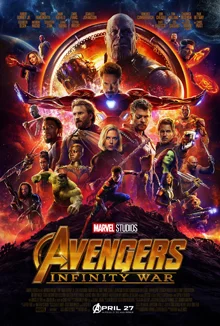
Avengers_Infinity_War_poster.jpg

Avengers: Infinity War (2018)

Mac Boyle August 14, 2018

Director: Anthony Russo, Joe Russo

Cast: Robert Downey, Jr, Chris Hemsworth, Chris Pine, Chris Pratt, Criss Cross, Your Mom

Have I Seen it Before: Oh, sure. I’m hip to the new movies the kids like.

Did I Like It: What’s not to like? Is that damning praise? I’m not sure.

I remember when X-Men (2000) was coming down the pike sometime in the last millennium. Everyone had a fear that it would be impossible to tell a coherent—to say nothing of interesting—superhero story that would have to serve as many ten characters within one finite runtime.

It seems like such quaint times now, and I’ll leave you wonder if I’m only talking about Marvel movies.

At any rate, the second sequel to The Avengers (2012) reaches to incorporate nearly every corner of the decade-old Marvel Cinematic Universe, breaching the divide between—by my count—nine different franchises, eighteen different films, and thirty-three different characters.

And it mostly succeeds. On second viewing of the film, the does feel a little bit like it is three separate Marvel ensemble movies lightly edited together. Few characters get an arc, and even those that do have a decidedly unfinished quality. Which, admittedly, is by design.

The film sings in the final act when the disparate plots begin to coalesce, but the filmmakers are playing us for fools. The carpet is quickly pulled out from under us, and we are left only with the hope that they can turn things around for the universe in the next movie, the knowledge that there will be a next movie, and the absolute certainty that Marvel and Disney aren’t going to stop making Black Panther movies.

Man, those final minutes are wrenching, even if we have a growing suspicion to its impermanence. Even other, similar downer endings (The Empire Strikes Back (1980), and Back to the Future Part II (1989) immediately come to mind) go out of their way to let us know how things will eventually be put right. This one just cuts to black, and won’t even hint at a title for the next adventure.

I don’t know, I just worry Tony Stark (Robert Downey Jr.) won’t survive Untitled Fourth Avengers Movie (2019). Even an army of suits will not be able to protect him from Aunt May (Marisa Tomei)—the filmmakers having confirmed that she survives the cataclysm of Thanos (Josh Brolin).

Tags avengers infinity war (2018), avengers movies, iron man movies, captain america movies, thor movies, marvel movies, joe and anthony russo, robert downey jr, chris evans, chris hemsworth, mark ruffalo, guardians of the galaxy movies
Comment
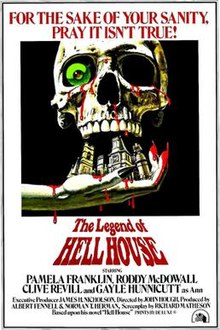
220px-The_Legend_of_Hell_House.jpg

The Legend of Hell House (1973)

Mac Boyle August 11, 2018

Director: John Hough

Cast: Pamela Franklin, Roddy McDowall, Clive Revill, Gayle Hunnicutt, Michael Gough (uncredited)

Have I Seen it Before: Never. Never even knew it existed until a few weeks ago.

Did I Like It: Yes, but I’m beginning to have certain reactions to the genre which may hamper my overall enthusiasm.

To facilitate the discussion on “Beyond The Cabin in The Woods,” a podcast on which I’ve been serving on the panel, I have watched four “haunted house” movies in the last two months. This may match my lifetime average, as I have only sparse memories of other entries in the genre, aside from the lackluster Winchester (2018) which I had watched for the same reason.

Of those four (Thir13en Ghosts (2001), The Haunting (1963), and House on Haunted Hill (1959)), The Legend of Hell House stands above the rest. The problem with too many haunted house movies is that there is an implicit rule that dictates nothing happens for a certain period of time, to introduce some measure of doubt as to whether ghosts can exist at all. In The Haunting, that null period takes place over the entire course of the picture. It never fully commits to a position about the existence of ghosts, and thus, the film is a woeful bore. 

In The Legend of Hell House, this doubt is dispensed with quite rapidly. Yes, Dr. Barrett (Clive Revill) is brought into these series of events to bring proof of life after death, but both this quest and the doubt about the supernatural are dropped within minutes. There’s something wrong with this house from the get-go, and the film wastes no time having good, clean, masochistic fun with the possibilities.

Certainly, the film can’t help but live within its more pulpy roots. Any film with Roddy McDowall isn’t particularly interested in elevating the material, but as far as haunted house movies go, I’d recommend starting here.

Tags The Legend of Hell House, 1973, 1970s, John Hough, Pamela Franklin, Roddy McDowall, Clive Revill, Gayle Hunnicutt, Michael Gough
Comment
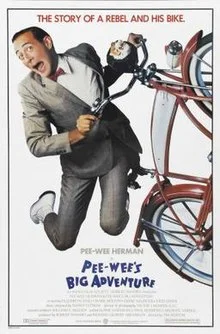
220px-Peeweebigadventure.jpg

Pee-Wee's Big Adventure (1985)

Mac Boyle August 6, 2018

Director: Tim Burton

Cast: Paul Reubens, Elizabeth Daily, Mark Holton, Diane Salinger

Have I Seen it Before: Many, Many Times.

Did I Like It: There’s a reason Pee-Wee and Tim Burton have hung around in our natural consciousness. It is this movie.


It’s so rare that a movie can be so steeped in old sensibilities (Bob Hope road pictures, Bond movies, Godzilla, Beach Party pictures, and Chaplin’s Little Tramp can all be found in the DNA) and blaze such a trail for movie comedies yet to come. From Jay and Silent Bob Strike Back (2001) to Gremlins 2: The New Batch (1990, and another favorite), to even <this movie>, Big Adventure’s influence is all around us.

The first few minutes of the movie are so chockfull of imagination (and low budget animation to boot!) that upon first viewing, one couldn’t help but be forgiven for assuming that the movie won’t let up from there. 

Yes, Batman (1989) is what cemented Burton’s reputation as the occasional maker of undisputed box office charm, but both this and Ed Wood (1994) (his two films that I think age the best) tell us that his first and main love were the sensibilities of weird B-pictures. I wished he would keep making films like this, instead of the watered down gothic fantasies that he must think Hollywood demands of him. The fact that Danny Elfman doesn’t write more scores like this is kind of depressing as well.

Pee-Wee’s relationship with his bike is such a purely Spielbergian idea, but refracted through the lenses of Burton and Reubens, are able to go in far more wry directions. I remember being a boy and looking at my bike like that, even if it couldn’t do all of the things that Pee-Wee’s rig could. If I sold the rights to my life story, I’d probably want James Brolin circa 1985 to play me, too. The movie celebrates the obsessive, the spazzy, and the myopic elements within us all, and never loses sight of the fun in the journey.

If you haven’t seen it yet, I don’t want to hear your excuses. But what? Everyone I know has a big “but…” C’mon, Simone. Let’s talk about your big “but.”

Tags Pee-Wee's Big Adventure, 1985, 1980s, Tim Burton, Paul Reubens, Elizabeth Daily, Mark Horton, Diane Salinger, Comedy, Adventure
Comment
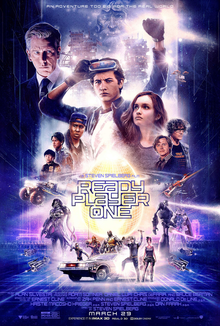
Ready_Player_One_(film).png

Ready Player One (2018)

Mac Boyle August 5, 2018

Director: Steven Spielberg

Cast: Tye Sheridan, Olivia Cooke, Ben Mendelsohn, T.J. Miller

Have I Seen it Before: Yes. In the theater. In 3d and IMAX. I’m not sure why I did that.

Did I Like It: Sure… Let’s go with that.

First bit of business when discussing this film. Yes, I read the book. It was shortly after its release. I thought it was fine, if slightly forgettable. Others have been very down on the work of the book. I neither fully agree or disagree with them. I also read author’s Ernest Cline’s second novel, Armada, which I really hated. I hated Armada so much that after listening to the audio book, I disliked narrator Wil Wheaton a little bit. The stink was that bad.

Early in the development of Ready Player One, there appeared to be a very real possibility that Robert Zemeckis (Back to the Future (1985), Who Framed Roger Rabbit (1988)) appeared to be a lock for the director’s chair. This seemed like the right choice. With Roger Rabbit, he proved ages ago he could juggle an army of cameos from a disparate array of intellectual properties. That should have sealed the deal right there. With attempts like Polar Express (2004), Beowulf (2007), and A Christmas Carol (2009) he proved that—if by trail-and-error alone—he had more experience than Peter Jackson or James Cameron with the motion capture the film would require. Even if he would be forced to work with the DeLorean Time Machine again, that would only a small drop of self-referential-itis, a word I’ve just made up.

Instead, and with some degree of surprise, Steven Spielberg agreed to direct. Considering the film is steeped in 80s pop culture, this is sort of like hiring Pope Pius XII to make The Ten Commandments (1956)*. Too much self-referentialism—another word I apparently just made up—can be a bad thing. 

Thankfully, Spielberg is indisputably more of a master of the cinema than Cline is of the novel, so the movie flies above the source material. Wherein the book makes extensive references to WarGames (1983), the reality that Spielberg trying to do an extensive homage to John Badham fell by the wayside in favor of a scene borrowing from Kubrick’s The Shining (1980). Spielberg reaching for Kubrick makes a lot more sense.

Ultimately, Spielberg made the best version of this story possible. He’s made far better movies in recent year, most frequently when he eschews the pop sensibilities of his earlier career, and he’ll probably make better movies still. Ultimately? Give Lincoln (2012) or even The Post (2017) a look, and also give a look to all the other properties that prop this one up.


*Any person possessing a problem with that analogy should email complaints@partyapocalypse.com, an email address that—to date—does not exist.

Tags Ready Player One, 2018, 2010s, tye sheridan, olivia cooke, ben mendelsohn, tj miller
Comment
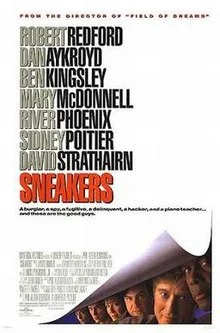
220px-Sneakersmovie.jpg

Sneakers (1992)

Mac Boyle August 1, 2018

Director: Phil Alden Robinson

Cast: Robert Redford, Dan Aykroyd, Ben Kingsley, Mary McDonnell

Have I Seen It Before: No (sort of)

Did I Like It? Not really.

The movie comes from a very high pedigree. The cast sells itself. Honestly, if Redford is in a movie, isn't there a certain benefit of the doubt written into the picture? Phil Alden Robinson had just come off Field of Dreams (1989), the one movie featuring Kevin Costner that everybody seems to like. It's only now that we no longer have James Horner around that every time one of his scores echo forth, does it seem like discovering a lost treasure. Walter F. Parkes and Lawrence Lasker had already brought their skills to similar subject matter in WarGames (1982).

And that's where things don't quite work out. Where WarGames had a sense of fun to it, even when flirting with the end of Western Civilization and the fundamental futility therein. This movie plays dour and aloof. I'm not even an automatic naysayer of dour and aloof, but this one failed to bring me in. I'm even vaguely certain that I had tried to watch this movie at some point in the past, but neglected to get through the process. Had I not happened to be tempted to start these writings with this viewing, I may not have made it through here. The cast is fine, but not great. It is only a desire not to speak ill of the dead that keeps me from wondering what the big deal was about some people in the 80s and 90s. I'll leave you to contemplate that. Even that much feels pretty catty.

Also, and this may be just a nitpick, but I just don't understand how a movie post-1985 can get away with shooting so obviously in the Universal backlot. I know that's the Hill Valley Clock Tower. Everyone knows it is the Hill Valley Clock Tower. You're not fooling anyone.

Tags Sneakers, Phil Alden Robinson, Robert Redford, Dan Aykroyd, River Phoenix, Sidney Poitier, 1992, 1990s, Comedy
Comment
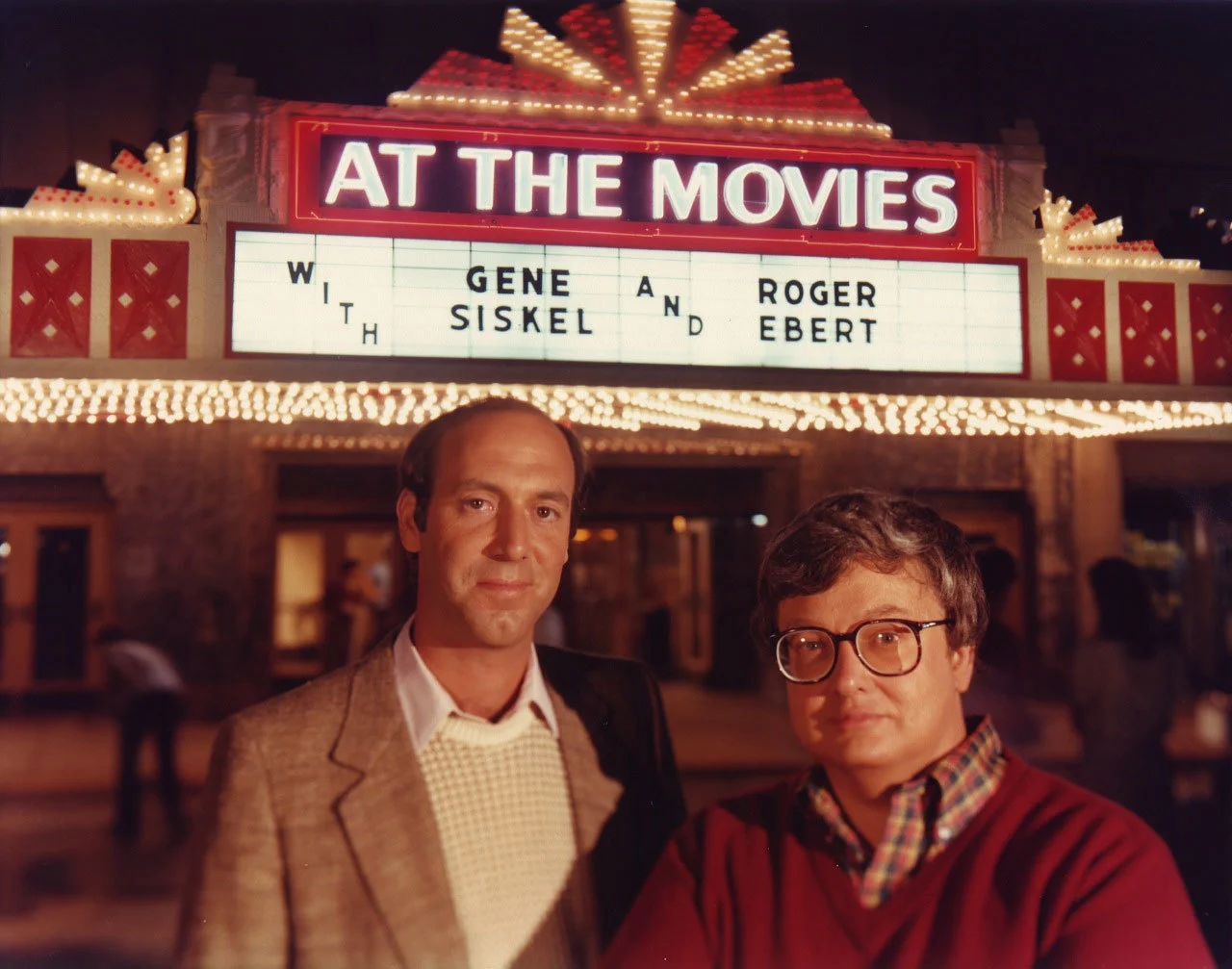
siskel-and-ebert-defend-star-wars-in-great-1983-interview.jpg

What This Is

Mac Boyle August 1, 2018

Hello, if you're puttering around this site, you're already aware that it has two blogs with current posts (three, if you count the RSS podcast feed for The Fourth Wall).

The first, Bloggy B. Bloggington, DDS, received weekly updates of the "anything goes" format. After writing in that space for two years, I had done nearly 80,000 words of writing. Sadly, none of it really goes together. It can't make a book that I put out there in the world. At least, it wouldn't make a very good one.

The second has ambitions to be something else. In If A Story In This Blog Goes Over 1000 Words, This Whole Website Will Explode, I've endeavored to write a new flash fiction story every week (taking a break every 9 weeks, because a human being can only do so much, or so my therapist keeps telling me). I hope to get a book of flash out of the prospect (tentatively titled If A Story In This Book Goes Over 1000 Words, This Whole Book Will Explode). I'm six months in and only kind of regret the whole prospect, although in a definite plus it has forced me into a much more disciplined approach to short fiction.

Now, here a third official blog. As of late, I've watched a lot of old Siskel and Ebert clips. It's slowly become an obsession. I've even read Ebert's first book of hated films, appropriately titled I Hated, Hated, Hated This Movie. I'm a little shocked Siskel never wrote a book before he passed. I've watched Life Itself, and thought it was equal parts haunting and effecting.

So, I decided to try my own hand at the criticism game. I also want to document the movies I see, as the list keeps growing and parts of it become less memorable with time. So here you'll see brief entries about movies as I watch them. Some of them might be new movies I watched, others might be old favorites. The entries themselves won't be long, as I can't rationally have this take time away from other writing. Maybe it could make a book at some time, maybe not. For now, I'm not even going to actually list the blog on the site. This might change with time, but for now, if you've found this, you're unusually gifted at searching site directories, and have given almost as much, if not more thought to my work than I have. Good job?

Tags introduction, not a review
Comment
  • A Blog About Watching Movies (AKA a Blog in Search of a Better Title)
  • Older
  • Newer

Powered by Squarespace

Party Now, Apocalypse Later Industries

Where creativity went when it said it was going out for cigarettes.

Where creativity went when it said it was going out for cigarettes.