Party Now, Apocalypse Later Industries

Where creativity went when it said it was going out for cigarettes.
  • Home
  • BOOKS
    • THE ONCE AND FUTURE ORSON WELLES
    • IF ANY OF THESE STORIES GOES OVER 1000 WORDS...
    • ORSON WELLES OF MARS
    • THE DEVIL LIVES IN BEVERLY HILLS
    • A LOSS FOR NORMALCY
    • RIGHT - A NOVEL OF POLITICS
  • PODCASTS
    • Beyond the Cabin in the Woods
    • THE HOLODECK IS BROKEN
    • THE FOURTH WALL
    • As The Myth Turns
    • FRIENDIBALS! - TWO FRIENDS TALKING ABOUT HANNIBAL LECTER
    • DISORGANIZED! A Criminal Minds Podcast
  • MOVIE REVIEWS
  • BLOGS AND MORE
    • Bloggy B Bloggington III, DDS
    • THE HOLODECK IS BROKEN BLOG
    • REALLY GOOD MAN!
  • Home
    • THE ONCE AND FUTURE ORSON WELLES
    • IF ANY OF THESE STORIES GOES OVER 1000 WORDS...
    • ORSON WELLES OF MARS
    • THE DEVIL LIVES IN BEVERLY HILLS
    • A LOSS FOR NORMALCY
    • RIGHT - A NOVEL OF POLITICS
    • Beyond the Cabin in the Woods
    • THE HOLODECK IS BROKEN
    • THE FOURTH WALL
    • As The Myth Turns
    • FRIENDIBALS! - TWO FRIENDS TALKING ABOUT HANNIBAL LECTER
    • DISORGANIZED! A Criminal Minds Podcast
  • MOVIE REVIEWS
    • Bloggy B Bloggington III, DDS
    • THE HOLODECK IS BROKEN BLOG
    • REALLY GOOD MAN!

A Blog About Watching Movies (AKA a Blog in Search of a Better Title)

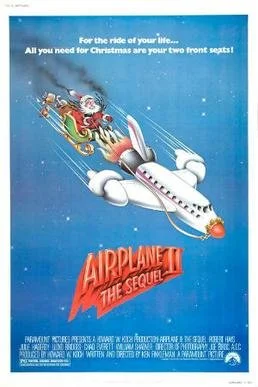
Airplane II: The Sequel

Mac Boyle August 28, 2024

Director: Ken Finkleman


Cast: Robert Hays, Julie Hagerty, Lloyd Bridges, William Shatner


Have I Seen It Before: Oh, sure. An extended cameo from Shatner actually led me to prefer this over the original Airplane! (1980) when I was a kid.


Did I Like It: But kids are idiots. Everything is tired here. The jokes are the same. Anything new is mostly jam-packed into the film’s opening minutes. I caught myself laughing at the courtesy van for Air Iran, even though it’s not a great joke, per se. Jokes about Ronald Reagan’s senility work now, but I can’t give extra credit for something being accidentally funnier than it had any right to originally be.


Leslie Nielsen, Robert Stack, and even Kareem Abdul-Jabbar steer clear, and it’s not exactly like Sonny Bono is an adequate consolation prize. Those that remain try their best to keep things breezy, but they are largely repeating old gags with only the slightest variation. Hagerty understands the assignment and remains adorable, while there are several times Hays looks at the camera, as if to beg us not to make the film a success to keep him from the threatened indignities of an Airplane III.


And yet…


The parts with Shatner still kind of hold up. He’s playing a character similar enough to Kirk that we all get the joke, but different enough that Paramount would have to cut one more check to Roddenberry. It’s largely some tame gags, but he is game and understands we’re laughing at him more than with him. He’s at the heights of his cinematic charms, having also had Star Trek II: The Wrath of Khan (1982) under his belt earlier in the year. I’ll be honest, my most guileless laugh in the whole movie came when Shatner’s character was gently shoved into the outer orbit of a nervous breakdown at the sight of a glass tube with an array of blinking red lights. Those things were built for The Wrath of Khan but are recognizable to any Trek fan for being reused ad infinitum for decades in the franchise.

Tags airplane 2: the sequel (1982), ken finkleman, robert hays, julie hagerty, lloyd bridges, william shatner
Comment

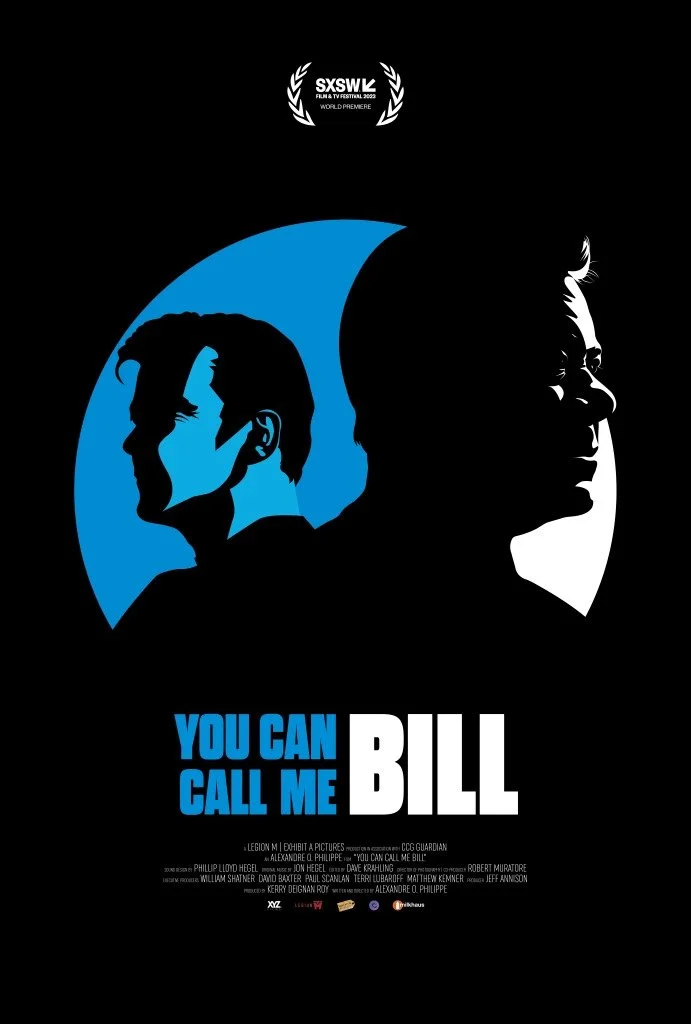
You Can Call Me Bill (2023)

Mac Boyle April 13, 2024

Director: Alexandre O. Phillippe


Cast: William Shatner


Have I Seen It Before: No.


Did I Like It: But I went into the thing pretty sure that it didn’t have anything new to say about the man who once played James T. Kirk. That may not be a fair criticism from or for a general audience, but we’ve got to remember that somewhere out there is a home video footage of me in the 90s unwrapping one of Shatner’s numerous ghostwritten memoirs and you could have sworn the book played Mario, for the reaction it got out of me*.


There’s also the weird effects that The Holodeck is Broken has had on me in these last few years. Well into my 30s, I would have said Shatner—even with all his well-documented prickliness—was one of the people I most admired. Something about watching Star Trek: The Original Series in recent years has made both the man and the inevitable first line of his obituary a little less special than it once was.


So what can this movie do for me, and what can it do for you?


For one thing, it isn’t only a rehash of his career highlights. It isn’t only a meditation on the. Cadence. We've. Allcometoknowsowell.


It’s a conversation with a man who’s presence has been large than life, but realizes that by any rationale measure his life is coming to an end. It is rambling, sure. One gets the sense that this was like sitting in the production offices while he tried to articulate what he wanted Star Trek V: The Final Frontier (1989) to actually be about. There are moments that seem as if self-awareness was not something for which he never felt much need.


But it was surprising, and it is heartfelt, far more so than any work of autobiography Shatner has ever attempted before. On that front alone, it is certainly worth a look.


*It was Star Trek Movie Memories, and regardless of whether or not Shatner ever even read the book, or if an ounce of it approaches even minimal accuracy, I still really like that book.

Tags you can call me bill (2023), alexandre o phillippe, william shatner
Comment

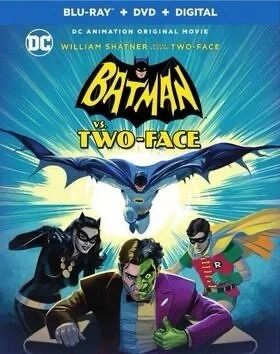
Batman vs. Two-Face (2017)

Mac Boyle September 18, 2021

Director: Rick Morales

Cast: Adam West, Burt Ward, William Shatner, Julie Newmar

Have I Seen it Before: Oh, sure. I was right on top of getting this when it came out on disc.

Did I Like It: The one missing element of 1966 Batman TV series was its treatment of that singular villain in the Rogue’s Gallery, Two-Face. Harlan Ellison wrote a treatment for an eventual episode to feature the great bifurcated one*, and the name bandied about for the role was none other than a famous-but-not-quite-that-famous Clint Eastwood. Had NBC picked up the show, we might very well have seen that come to pass.

But forget all that. Eastwood’s not the man to play the role against West and Ward. If nothing else, putting James T. Kirk in his prime against the Caped Crusader was the best possible casting move in any direct-to-DVD animated film I could ever imagine.

…as I type that, it feels like damning the film with faint praise, but I assure you, it isn’t.

This film extends everything that worked (and a few of the things that didn’t work out so hot; sorry, Burt Ward) about Batman: Return of the Caped Crusaders (2016). It also manages to make more extensive use of Jeff Bergman’s narrator, doing his best impression of the late producer William Dozier. The manic humor may be diminished ever so slightly as the regular rogue’s gallery becoming supporting characters and the story desperately tries to give Harvey (Shatner) some pathos to play.

But these are extraordinarily minor complaints for a film which easily clears its modest goals. There was no reason to expect any more time spent with Adam West as Batman, to say nothing of seeing that version of the character venturing into previously untouched material. Were Mr. West still with us, I would have been up for a new bright, campy adventure with those two every year or so.


*It was produced as a comic book, that I had to spend a minute search for and plan on re-reading as soon as possible. It’s pretty unrelated to the story presented in this film, otherwise Ellison. just might have sued the production into oblivion.

Tags batman vs. two-face (2017), batman movies, dc animated movies, rick morales, adam west, burt ward, julie newmar, william shatner
Comment
220px-Star_Trek_II_The_Wrath_of_Khan.png

Star Trek II: The Wrath of Khan (1982)

Mac Boyle February 17, 2020

Director: Nicholas Meyer


Cast: William Shatner, Leonard Nimoy, DeForest Kelley, Ricardo Montalbán


Have I Seen it Before: Hoo, boy. Long established in my family lore is the screening my mother went to at a second-run theater in the summer of 1984. As the USS Reliant exploded in a wave of the Genesis Effect, I—a learned elder, as far as fetuses were concerned—decided to give my ma a bit of a break and cut it out with the kicking and whatnot. It’s entirely possible that while some babies were exposed to classical music or the neurosis and bitterness of their parents in utero, I absorbed the bombastic score of James Horner and the sneering villainy of Khan Noonien Singh (Montalbán) as the foundation of my very being.


The first time I remember watching the movie while sentient was on a feeble VHS copy. I couldn’t have been more than ten years old and spent the rest of the day giddily recounting the plot to anyone who would listen. This time, my poor suffering mother got the raw end of the deal and had to hear a ten-year-old’s impression of a Ceti eel.


During this particular screening, I was able to lip sync every line of dialogue. I even felt the need to argue with several of the trivia questions before the feature presentation. Because they were wrong.


Yes. I’ve seen it a couple of times.


Did I Like It: At one point after the nadir of Star Trek: Nemesis (2002) and the particularly wheel-spinning seasons of Star Trek: Enterprise, I wondered quietly whether I actually didn’t care much for Star Trek at all, but was so in love with this film that I was willing to give every other entry in the series a pass because it shared some basic elements with this film.


It is a thrilling story, told at a breakneck pace that still manages to let smaller character moments have their due time. It is about friendship, and aging, and revenge, and sacrifice, and living the first, best destiny you know in your bones. It is told with a startling simplicity that allows fully-steeped fans and newcomers alike to delight in the proceedings. Any time I am trying to create a story on my own, I’m reaching for an experience somewhere in the vicinity of this film.


It is not only my favorite Star Trek film, it is certainly one of my favorite movies of all time. It may be my favorite film of all time, although I tend to blanche at ranking these things so precisely.


Every time I see the film, I notice something new. During this particular screening I noticed that Chekov (Walter Koenig) is not seen on screen after purging himself of the Ceti eel without cotton in his bloodied ear. Also, somehow I had never put together that the Genesis Effect billowing out of the Reliant also caused the Mutara Nebula to collapse in on itself, harnessing the material of the nebula to create the Genesis Planet that would be the setting of most of the action of Star Trek III: The Search For Spock (1984). I honestly don’t know how it has taken longer than my actual lifespan to put that one together. It is a film that keeps on giving.


And yet, it is not a perfect film. The subplot with Midshipman Preston (Ike Eisenmann) doesn’t resonate, and it is only in the director’s cut (first released in 2002) that things are slightly illuminated, although I still don’t understand why Scotty (James Doohan) brought the poor suffering crewman to the bridge first, and not directly to sickbay. Additionally, the effects of the Genesis Cave on the Regula planetoid are alternately a triumph of matte work (back when such a thing was still done) and a completely befuddling choice in animated optical processing. But the flaws give me comfort. Even if I am flawed in my own work, I can still reach for the ideal. 


As with most films, watching it at home on a television is only imitating the experience in many ways. I had the delight to see it a few years ago during a Fathom Event screening. Seeing it projected on the big screen was a blissfully different experience. However, that screening was sparsely populated. This time, I saw it in conjunction with a live event hosted by none other than William Shatner. While the Captain Kirk emeritus was understandably more interested in talking about Star Trek V: The Final Frontier (1989), seeing the film with a packed and enthusiastic crowd was sublime. The cheering for cast members during the opening credits, the polite applause for GOAT writer-director Nicholas Meyer (which I believe he would have found staggeringly appropriate), the laughing at jokes I had long since internalized, and the genuine feeling that accompanied the climax gave every inch of the film a new life, as if it had been goosed by the Genesis Wave itself. I couldn’t help but feel like Kirk at the end. A movie that was old news at my birth was all new again.


I couldn’t help but feel young.

Tags star trek ii: the wrath of khan (1982), star trek movies, nicholas meyer, william shatner, leonard nimoy, deforest kelley, ricardo montalbán
Comment
220px-Star_Trek_The_Motion_Picture_poster.png

Star Trek: The Motion Picture (1979)

Mac Boyle September 16, 2019

Director: Robert Wise

Cast: William Shatner, Leonard Nimoy, DeForest Kelley, James Doohan

Have I Seen it Before: There’s something about this movie that makes it feel like I’ve never quite seen it all the way through. Like they are still making the movie as I’m watching it.

Did I Like it: Now, that above thought could be taken as a dig about its interminable runtime. It’s only just over two hours, but it feels like 40 years passes from the prelude to the final warp effect.

But it’s worse than that. The film’s plodding pace is a matter of accepted film and Trek canon. Given the rampant, directionless egos (mostly in the form of Gene Roddenberry) that tried to come together to make the film, it’s a minor miracle that any moment in the film works, even if the whole isn’t quite the sum of its parts. The movie spends a befuddling amount of time featuring characters looking out windows or at viewscreens, but the expression on the face of Kirk (Shatner) as he sees the newly re-fit Enterprise for the first time is one of the best performances the actor has ever given.

Other movies—and even movies in the science fiction genre—have a similarly deliberate pace. Blade Runner (1982). 2001: A Space Odyssey (1968). When I finally got a chance to see 2001 on the largest screen possible, the film transformed before my eyes. While most of Star Trek was meant for the smaller screen, maybe when I finally saw this first film in the way it was meant to be seen, it would improve.

Sadly, it does not. I’m struck by and expanding realization that Kubrick truly knew what he was doing, as even on the big screen, this film can't embrace the majesty of its more traditional special effects, or the weirdness of its more oblique imagery. The star gate via the monolith is a panic inducing experience, whereas the V’Ger is cheap and predictable. The Discovery seems like a real spaceship, whereas there are shots (and there are many, loving shots) of the Enterprise where the distant edges of the ship blink in and out existence.

How a film could be edited this poorly under the auspices of Wise, one of the greatest editors in the history of the moving picture is beyond me.

Maybe the voyages of the various crews of the Enterprise are better left to the small screen.

Maybe the odd-numbered films aren’t very good.

Tags star trek the motion picture (1979), robert wise, star trek film series, william shatner, leonard nimoy, deforest kelley, james doohan
Comment
Star_Trek_III_The_Search_for_Spock.png

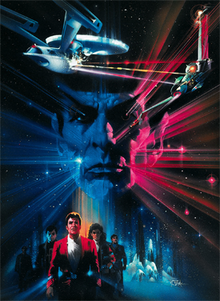
Star Trek III: The Search for Spock (1984)

Mac Boyle September 8, 2019

Director: Leonard Nimoy

Cast: William Shatner, DeForest Kelley, James Doohan, Christopher Lloyd

Have I Seen it Before: What, are you trying to tell me Spock is alive again? 

Yes, of course I’ve seen it.

Did I Like It: Let’s really drill down on something that has been long accepted as cardinal truth of this series.

Even-numbered films are great. Odd-numbered movies are the pits.

And yet, Star Trek Nemesis (2002) is the tenth film in the series and Star Trek Into Darkness (2013) is the twelfth, and they both are the cinematic equivalent of drinking chancey milk that is well-past its due date.

So, too is it with this film. It largely works, and is early enough in the franchise’s motion picture history to conclusively put the even/odd framework about these films in serious doubts.

It’s hard to doubt that it suffers ever so slightly by having to follow the series apex, Star Trek II: The Wrath of Khan (1982), but that does feel like an unfair judgment. Nemesis and Into Darkness tried to steal various aspects of plot and pacing from that far-better film, and never quite rise to the level of competent mimicry. 

Here, Nimoy appears to be aware of his potential shortcomings as a first-time director (a self-awareness that William Shatner never quite mastered five years later in Star Trek V: The Final Frontier [1989]) and tries to learn his craft before attempting to master it. Therefore, the film echoes more of a feeling or motif from the previous film. This may be in no small part due to James Horner returning to produce the score, but every frame of the film feels as if it is a companion piece to Khan, not a blind attempt to replicate it.

It helps that this film has its own story to tell. Part mystic resurrection tale, part classic duke-it-out-with-the-Klingons episode from the original series, and just enough of a heist story to keep things interesting.

Another element of note is to remember that—along with this film’s follow-up, Star Trek IV: The Voyage Home (1986)—introduce so many elements to Trek that will be load bearing for many years to come. The Excelsior and the Klingon Bird-of-Prey are first glimpsed here. The models of both ships are reused by Trek shows well into the twenty-first century, and much of the footage of the new enemy ship is reused for nearly the same length of time.

Also, one can’t help but dwell on the casting for the supporting roles. The studio balked at the idea of Christopher Lloyd playing Commander Kruge, the heavy. They could not move past the image of the actor as Reverend Jim on Taxi. Knowing a thing or two about being type-cast from appearances on a TV show, Nimoy insisted. One wonders if he would have ever been on the radar of Robert Zemeckis when Back to the Future (1985) began filming around the time fo the film’s release. I don’t want to live in that world. In fact, I want to live in a world with the most possible performances by Christopher Lloyd as possible, so I’ll be damned if I view this as one of the typical odd-numbered Trek films.

Tags star trek iii: the search for spock (1984), star trek movies, leonard nimoy, william shatner, deforest kelley, james doohan, christopher lloyd
Comment

Star Trek IV: The Voyage Home (1986)

Mac Boyle August 21, 2019

Director: Leonard Nimoy

Cast: William Shatner, Leonard Nimoy, DeForrest Kelley, Catherine Hicks

Have I Seen it Before: Honestly? I really think this was the first piece of Star Trek I ever watched. For any number of years, my only copy of the film was on VHS recorded off the broadcast of the film on March 28th, 1993. I know this because the movie was interrupted every few minutes with an add for the 65th Academy Awards the next night. Not the best way to watch a movie repeatedly, but there it is.

Did I Like It: It’s an even numbered movie, right? It’s written—at least partially—by Nicholas Meyer, right?

As I mentioned before, this was—to my memory—the first piece of Star Trek I had ever taken in. As anyone who knows me can attest, that moment proved seminal to me, and as such it can’t be denied that The Voyage Home is perhaps the perfect gateway piece of Star Trek ever constructed. The Wrath of Khan (1982) may be the superior film, and some of the J.J. Abrams movies may possess a more self-assured modern blockbuster feel, but this is the one that is a straight ahead crowd-pleasing comedy.

And every inch of the film is devoted to that effect. Large portions of the screenplay were cannibalized from material that didn’t make it into Meyer’s fish-out-of-water Time After Time (1979). The score—by Leonard Rosenman—is a jaunty skip through San Francisco of the 1980s. It’s exactly the right score for this kind of movie, and I say this while maintaining that Rosenman’s score for Robocop 2 (1990) is perhaps the most incorrect score ever attached to a particular movie. Even the ingenue role played by Catherine Hicks was originally written for Eddie Murphy, although one imagines there was a fair amount of re-writing to make the transfer the roles between the two performers.

It’s also a comedy that likely wouldn’t work under any other circumstances. Nimoy and the writers had an intimate understanding of—if not Trek lore—the beating heart of what made Trek continue to work. The jokes spring out of the chemistry between the characters, and I challenge anyone to find another comedy film wherein the characters have twenty years of interplay to inform their reactions. I’ll wait here in the park for your answer. See? That hypothetical film just doesn’t exist.

Tags star trek iv the voyage home (1986), star trek film series, time travel movies, leonard nimoy, william shatner, deforrest kelley, catherine hicks
Comment
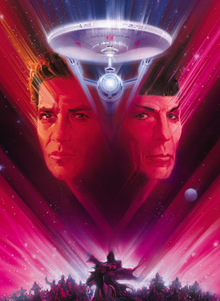
220px-Star_Trek_V_The_Final_Frontier.png

Star Trek V - The Final Frontier (1989)

Mac Boyle August 16, 2019

Director: William Shatner

Cast: William Shatner, Leonard Nimoy, DeForrest Kelley, Laurence Luckinbill

Have I Seen it Before: Sybok, please…

Did I Like It: This is the deep dark question that ever Star Trek fan must reckon with. Many don’t reckon with it at all and are content to write it off as forever the worst film in the entire series. These people clearly have never seen Star Trek Nemesis (2002). Clearly.

That being said, one cannot deny that the film is riddled with problems. Do they stem from a studio unwilling to let the vision for the film come to life or other production limitations that no filmmaker could have overcome? Or is the film weighed down by a director who just didn’t understand the material (despite being an integral part of that material for over twenty years)?

As with so many things, there appears to be an either/or choice in this case. Shatner, in his first and only attempt to direct a major motion picture, had lofty ideas that Paramount grew increasingly disinterested in as production marched along. A Writer’s Guild strike in 1988 didn’t help matters, either. And yet, I always got the impression that Shatner was never terribly interested in making a Star Trek film, but aptly understood that after Nimoy parlayed work on Star Trek III: The Search for Spock (1984) and Star Trek IV: The Voyage Home (1986) into a solid directing career, this was his chance to branch out.

The film suffers from all of these problems, and there are elements that never quite gel.

It’s starts with… an obliterated desert pockmarked with steaming holes? And that’s supposed to be the extended Lawrence of Arabia (1962). That Shatner wanted to make the Lawrence of Star Trek films that deep-dives into the big questions of the universe is admirable, but it’s hard to blame Paramount for wanting another Voyage Home or Star Trek II: The Wrath of Khan (1982), and trying to gently redirect things. It’s also worth noting that the search for God was the basic framework for an early version of what became Star Trek: The Motion Picture (1979), and everyone involved blanched at the notion then, but cooler heads did not prevail here.

The power Sybok holds over his people and eventually the Enterprise crew is amorphous and ill-defined, not unlike the Temporal Nexus in Star Trek Generations (1994). It’s a common trait of the least engaging films in the series that the fundamental problem is that the plot just doesn’t work.

There are things that irritate the deep-canon Star Trek fan, but others might not notice. Quadrants are huge. It takes decades to traverse them, but this crew makes it to the center of the galaxy in (suddenly, inexplicably) in less than reel of film. Large swaths of the crew turn on Captian Kirk on a dime. Also, not for nothing, everything about that scene in the turbolift shaft doesn’t make sense. There’s no way the USS Enterprise, NCC-1701-A has that many decks, and they increase in number as you go down, not up.

Sigh.

Now that I’ve beaten up on the film in most of the familiar ways, and a few I hope aren’t as obvious, let’s go way off the path of accepted Trek dogma (and become the laughing Vulcan inside each of us?) and praise the movie for what it gets right.

If—at it’s core—the original series is truly about the friendship between Kirk, Spock, and McCoy, then this film does a profound job of having those three characters live within that friendship. 

The score is fantastic. Jerry Goldsmith returns to the series for the first time since The Motion Picture. His rousing score is often the best part of any of the films/shows he’s associated with, and the fact that Paramount spared no expense here definitely elevates the more groan-worthy moments. One wonders if the film works even less without the music, and the studio relented to the idea of a more majestic score to try to rescue things.

That’s… it on the good stuff, as it turns out. So, the film doesn’t really work, as it turns out. But it is two hours with some version of the original Star Trek cast. We don’t get those every couple of years, so let’s ease up on the movie, shall we? Again, I guarantee it’s better than Nemesis.
Tags star trek v: the final frontier (1989), star trek movies, william shatner, leonard nimoy, deforrest kelley, laurence luckinbill
Comment
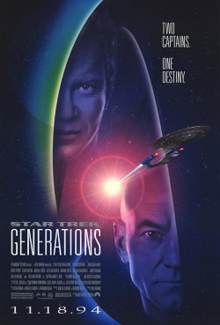
S07-Star_Trek_Generations-poster_art.png

Star Trek: Generations (1994)

Mac Boyle July 9, 2019

Director: David Carson

Cast: Patrick Stewart, Brent Spiner, William Shatner, Whoopi Goldberg

Have I Seen it Before: I saw it before I ever saw it. More on that in a minute.

Did I Like It: It’s exactly what we the fans probably wanted from a first Next Generation film, but it may be that we don’t really know what we want, as the film ultimately winds up a disappointment.

I feel this film far more than I think about it, and I think that’s the fundamental truth about it. 

It is the summer of 1994. Star Trek: The Next Generation has just gone off the air with an epic, perfectly-formed final episode that doesn’t really serve as a finale. All of the characters—in true TV fashion—haven’t changed. The TV audience—including 9-year-old me—are fine with that. We know that while this is the end of the weekly adventures of the crew of the USS Enterprise NCC-1701-D, and we wouldn’t have to wait long to see them again.

And so we come into the first Next Generation film with a list of things that the show had never quite addressed. Could the saucer section of the Enterprise act as an escape pod for the rest of the ship and—if need be—land safely on a planet? Who were the people that served aboard the presumably Excelsior-class Enterprise-B? What could possibly bring down the Enterprise-D? What happened to James T. Kirk (Shatner) after Star Trek VI: The Undiscovered Country (1991)? Was he still alive in the 24th century, the time of Picard (Stewart) and company*?

This film lives in a unique space in my brain. At a Star Trek Convention that summer, I managed to get a hold of the screenplay for the film for twenty dollars. It was such a wild boon, knowing what was going to happen in a movie months before its release. I was transfixed, and have been perhaps compulsively interested in screenwriting ever since**. I was struck by the interplay between Captain Kirk and Picard, two men who could understand something about each other that almost no one else could. I took the destruction of the Enterprise-D as a hit to the gut. That ship was the safest of safe places for seven years, and in this watching I was struck by the despair of the kids being evacuated during the destruction scene (even though that evacuation doesn’t really make any sense) still manages to hit me.

And with all of this fundamentally interesting stuff, the film just doesn’t work.

The time travel is all over the place, even more starkly noticeable as the film comes sandwiched between two of the better time travel stories the franchise has ever done, the aforementioned final episode “All Good Things…” and the next Next Generation film, Star Trek: First Contact (1996). 

The inclusion of not the whole original crew in the first reel, but instead just Scotty (James Doohan) and Chekov (Walter Koenig) feels off. The parts were clearly written for Bones and Spock, but instead the 90’s version of a control-F was done by way of a re-write. Why was Chekov so interested in taking over the medical care of the Lakul survivors? Why was he recruiting nurses out of the reporters? It boggles the mind why this scene didn’t get another pass, or there wasn’t a more concerted effort to make Nimoy, Kelley and the rest of the remaining crew more happy with the prospect of one last hurrah.

I can’t hate the film, but it is absolutely impossible to get over it’s more glaring flaws. Which, for an even-numbered film in the era when the even/odd dichotomy of Star Trek films still mattered, that’s not so bad.

Really? Had they not already made the episode in their third season, a re-worked version of “Yesterday’s Enterprise” might have been the perfect framework for a Kirk meets Picard story.

And it would have allowed the entire original crew to actually have things to do in the film, enough so that the actors might have been inspired to show up.


*Indeed, entire sections of the Star Trek: The Next Generation Technical Manual by Rick Sternbach and Michael Okuda and the first edition of the Star Trek Encyclopedia by Michael and Denise Okuda are devoted to some of these questions, to the point where I think those authors could have made a level-headed pitch at a story-by credit on this film. How do I know all of this? It was a weird childhood and there may have been some—properly researched, mind you—fan fiction written there in the 90s. Lay of me.

**It should bear mentioning that I also got a glimpse of the screenplay for Star Trek Nemesis (2002) months before that film was released via a leak on the internet and was filled with a melancholy that could only be countered by the hope that the film would improve in the directing or the editing. It wasn’t. It was somehow worse than the flimsy script. So, point for Generations on being an entertaining read, if an uneven final product.

Tags star trek generations (1994), david carson, patrick stewart, william shatner, brent spiner, whoopi goldberg, star trek film series
Comment
MV5BMjc4Nzk5MDY0OV5BMl5BanBnXkFtZTgwODQ3MjQ0NjE@._V1_UY268_CR9,0,182,268_AL_.jpg

Chaos On The Bridge (2014)

Mac Boyle April 21, 2019

Director: William Shatner*

Cast: William Shatner, D.C. Fontana, David Gerrold, Maurice Hurley, Rick Berman

Have I Seen it Before: Yes, but I’ve been tearing through (for reasons) what I affectionately call “Showrunner Porn” so here I am again.

Did I Like It: It’s got some stylistic choices I can’t quite wrap my head around, for a relatively short treatment of the subject, it is refreshingly honest about the lurching creation/slow march to near-perfection of one of the greatest television series in history.

Is Gene Roddenberry the pop philosopher of a bright future for humanity? Was he a kinder, gentler L. Ron Hubbard without the dogma and membership fees? The Great Bird of The Galaxy?

Or was he a drunk, drugged out louse who left a series of burned and bitter people in his wake,  only in pursuit of a writing body of work that is best when he is the least directly involved?

At the risk of Trekkie apostasy, I tend to believe the latter. This film—fairly, I will admit—posits the idea that he was both the Saint and the False Prophet. It presents an unusually honest picture of what the production of Trek, and Roddenberry himself, was actually like. There’ve been plenty of books on the subject and at that level of honesty—very few of them authorized by Paramount, mind you—but it is rare to get many of the players themselves being so honest about the process on camera.

Speaking of players, that yields an opportunity to dwell upon my only qualm about the film. It is shot and scored not like a film about the inner workings of television, but like the b-roll of a poker broadcast. It’s such a thin, tenuous connection, tying to a rather genius bluff that the studio president won against Roddenberry, but I suppose it’s not entirely besides the point. It’s such an odd, pervasive choice. It doesn’t remove the virtues of the film, but it does distract and muddy the waters.


*Shatner is credited as director, and the DGA doesn’t exactly faff around, but I have a hard time believing that the man who would be Kirk has ever been that interested in The Next Generation, but it is certainly clear that he hosts the movie.

Tags chaos on the bridge (2014), william shatner, dc fontana, david gerrold, maurice hurley, rick berman
Comment
220px-Star_Trek_VI-poster.png

Star Trek VI: The Undiscovered Country (1991)

Mac Boyle January 1, 2019

Director: Nicholas Meyer

Cast: William Shatner, Leonard Nimoy, DeForrest Kelley, Kevin Spacey Christopher Plummer*

Have I Seen it Before: Well, this is the first film in the Star Trek series I’ve reviewed, so unless we happen to be dealing with a new release, it’s a pretty safe bet that I’ve seen it before.

Did I Like It: It might objectively be the best Star Trek film of all time. Does that mean it is the best Star Trek film of all time, or even the best Star Trek film directed by Nicholas Meyer? Well, that’s a different story.

I’ve written a couple of times in these reviews about timelessness in films. It’s appropriate to broach the subject of the film, because the notion was put into my head by Meyer, and he perfects the reach for a timeless quality in this film. Beyond a few scant special effects that might have been a little ahead of their time, there’s not really an aspect of this movie, from the music, to the cinematography, all the way to the hair styles, there is almost nothing about this film that restricts it to being made in the early 1990s. It’s a marvel to behold, and a phenomenon that Meyer’s other great space-opera Star Trek II: The Wrath of Khan (1982) can’t even claim, even though that is one of my all-time top five movies.

Even the one element that threatens to make the film strictly of its time manages to transcend. Clearly a parable about the end of the Soviet Union (with just a pinch of Watergate-esque intrigue thrown in for good measure), the film is clearly commenting about the end of the 80s and the beginning the 90s. The Klingons have their own version of Chernobyl, unrelenting hostilities are coming to an unfathomable end, and the old guard is to varying degrees uncomfortable with the forthcoming future, or the titular undiscovered country**. But I think it may be a byproduct of living in a political era that could—politely—called “interesting” that the macro machinations of the galaxy here can’t help but feel relevant to the here and now. This is when Star Trek often works the best, and it shows.


* Could you imagine? Don’t. #2017jokesfiresale

** Which is a strange title for this film, if treated to any further scrutiny. The Wrath of Khan was originally called The Undiscovered Country, and as it is an allusion to Hamlet, and specifically death, it feels more appropriate to that film. Here, it is essentially saying that the sometime arduous road to peace only ends in death. Ominous. Mad ominous, folks. 

Tags star trek vi: the undiscovered country, star trek film series, nicholas meyer, william shatner, leonard nimoy, deforrest kelley, christopher plummer
Comment

Powered by Squarespace

Party Now, Apocalypse Later Industries

Where creativity went when it said it was going out for cigarettes.

Where creativity went when it said it was going out for cigarettes.