Party Now, Apocalypse Later Industries

Where creativity went when it said it was going out for cigarettes.
  • Home
  • BOOKS
    • THE ONCE AND FUTURE ORSON WELLES
    • IF ANY OF THESE STORIES GOES OVER 1000 WORDS...
    • ORSON WELLES OF MARS
    • THE DEVIL LIVES IN BEVERLY HILLS
    • A LOSS FOR NORMALCY
    • RIGHT - A NOVEL OF POLITICS
  • PODCASTS
    • Beyond the Cabin in the Woods
    • THE HOLODECK IS BROKEN
    • THE FOURTH WALL
    • As The Myth Turns
    • FRIENDIBALS! - TWO FRIENDS TALKING ABOUT HANNIBAL LECTER
    • DISORGANIZED! A Criminal Minds Podcast
  • MOVIE REVIEWS
  • BLOGS AND MORE
    • Bloggy B Bloggington III, DDS
    • THE HOLODECK IS BROKEN BLOG
    • REALLY GOOD MAN!
  • Home
    • THE ONCE AND FUTURE ORSON WELLES
    • IF ANY OF THESE STORIES GOES OVER 1000 WORDS...
    • ORSON WELLES OF MARS
    • THE DEVIL LIVES IN BEVERLY HILLS
    • A LOSS FOR NORMALCY
    • RIGHT - A NOVEL OF POLITICS
    • Beyond the Cabin in the Woods
    • THE HOLODECK IS BROKEN
    • THE FOURTH WALL
    • As The Myth Turns
    • FRIENDIBALS! - TWO FRIENDS TALKING ABOUT HANNIBAL LECTER
    • DISORGANIZED! A Criminal Minds Podcast
  • MOVIE REVIEWS
    • Bloggy B Bloggington III, DDS
    • THE HOLODECK IS BROKEN BLOG
    • REALLY GOOD MAN!

A Blog About Watching Movies (AKA a Blog in Search of a Better Title)

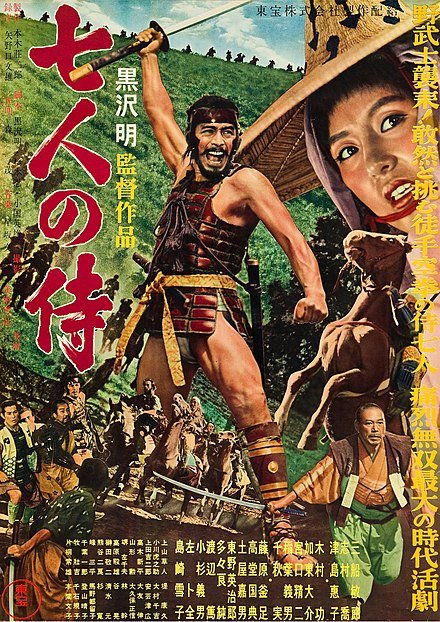
Seven Samurai (Shichinin no Samurai) (1954)

Mac Boyle November 27, 2024

Director: Akira Kurosawa


Cast: Toshiro Mifune, Takashi Shimura, Keiko Tsushima, Isao Kimura


Have I Seen It Before: Oh, sure. That time in every boy’s life when he wants to insist to the world that he’s seen all the right movies* inevitably led me to this one. At the time, I found it interminable and tried to just nod along when others raved about its fundamental qualities.


Yes, this is going to be one of those reviews where I spend at least part of our time not reviewing the movie at hand, and more reviewing my simultaneous adolescent pretension and insecurity.


Did I Like It: It is still very, very long. So long that the intermission in the middle feels less like a reprieve and more like just one more way to extend the runtime.


This is not to say I didn’t enjoy the film more than I did twenty-plus years ago. It’s influence on subsequent films can’t be denied. The performances are terrific, especially Takashi Shimura as the leader of the seven. There’s always a risk that the samurai might start to blend together as the adventure unfurls, but each is distinctive in their personality and how they come across on camera. The scope is undeniably epic.


So epic, in fact, that an American might get a little lost in the proceedings. I get the sense that this is arguably Kurosawa’s most beloved film because it is so quintessentially Japanese. This is more than just a simple adventure story, but a sprawling meditation on Japanese cultural identity. It can feel a little loaded to the uninitiated. That’s all right, I am perfectly content to be a polite guest within this film.


So, where does that leave us so far as a recommendation? I’d honestly start with Yojimbo (1961) or Sanjuro (1962). If you are at all meant to have a taste for the adventure films of Kurosawa, this will light the fire. From there, The Hidden Fortress (1958) will continue to hook you. After that, you might be ready for the feast that is Seven Samurai.**


*That impulse doesn’t really go away, apparently…


**Yeah, I noticed that those are in ascending length, too. Americans can’t entirely help being American.
Tags seven samurai (1954), akira kurosawa, toshiro mifune, takashi shimura, keiko tsushima, isao kimura
Comment

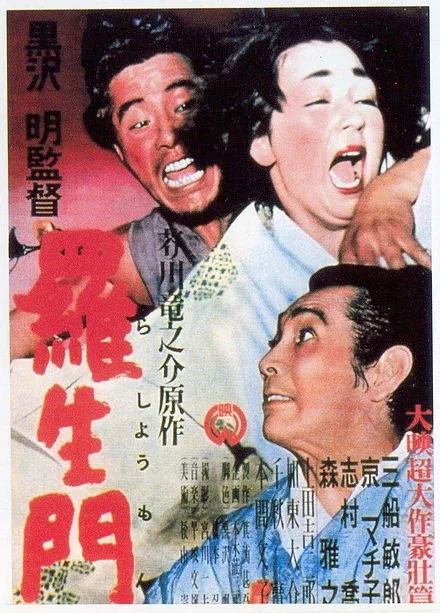
Rashomon (1950)

Mac Boyle January 8, 2024

Director: Akira Kurosawa


Cast: Toshiro Mifune, Machiko Kyō, Masayuki Mori, Takashi Shimura


Have I Seen It Before: Never. I have, however, watched at least five sitcom episodes over the last thirty years, so based on the law of averages alone, I’m familiar with the effect.


Did I Like It: There’s probably a warning that might need to be attached to any review of this film. No, it’s not that it’s sub-titled. Get comfortable with reading a movie. Not only are you limiting yourself, but do you ever miss really watching a movie without looking down at your phone? I’ve seen the future of active watching, and it is subtitled. No, this is a warning that, sight-unseen, one might be forgiven for thinking that this is another samurai adventure story in the vein of Yojimbo (1961), Seven Samurai (1954), or The Hidden Fortress (1958). It is a drama, and a harrowing one, but definitely one worth watching.


Ok, so I’m not 100 percent sure if the Japanese generally are just better than us cinematically, or if Kurosawa is better than everyone cinematically, but it is definitely one or the other. Thematically, there is something so central to the western identity that says “I am right, you are wrong” that every single Rashomon-rip off* hints that there is an objective truth and one of the story-tellers is right, and the others are wrong. What Kurosawa does is be content that everyone—victim and criminal; dead or living—has an equal level to their own delusion and deception.


*For all the shameless copying of the form done in American television, I can’t immediately think of a lot of American films that truck in the same construction. Vantage Point (2008), I guess, but that’s more of a question of what an individual can see, not so much a description of what they’re willing or able to see. So odd the divide on the device. Someone—please, not me—should write a paper on it.

Tags rashomon (1950), akira kurosawa, toshiro mifune, machiko kyō, masayuki mori, takashi yamazaki
Comment

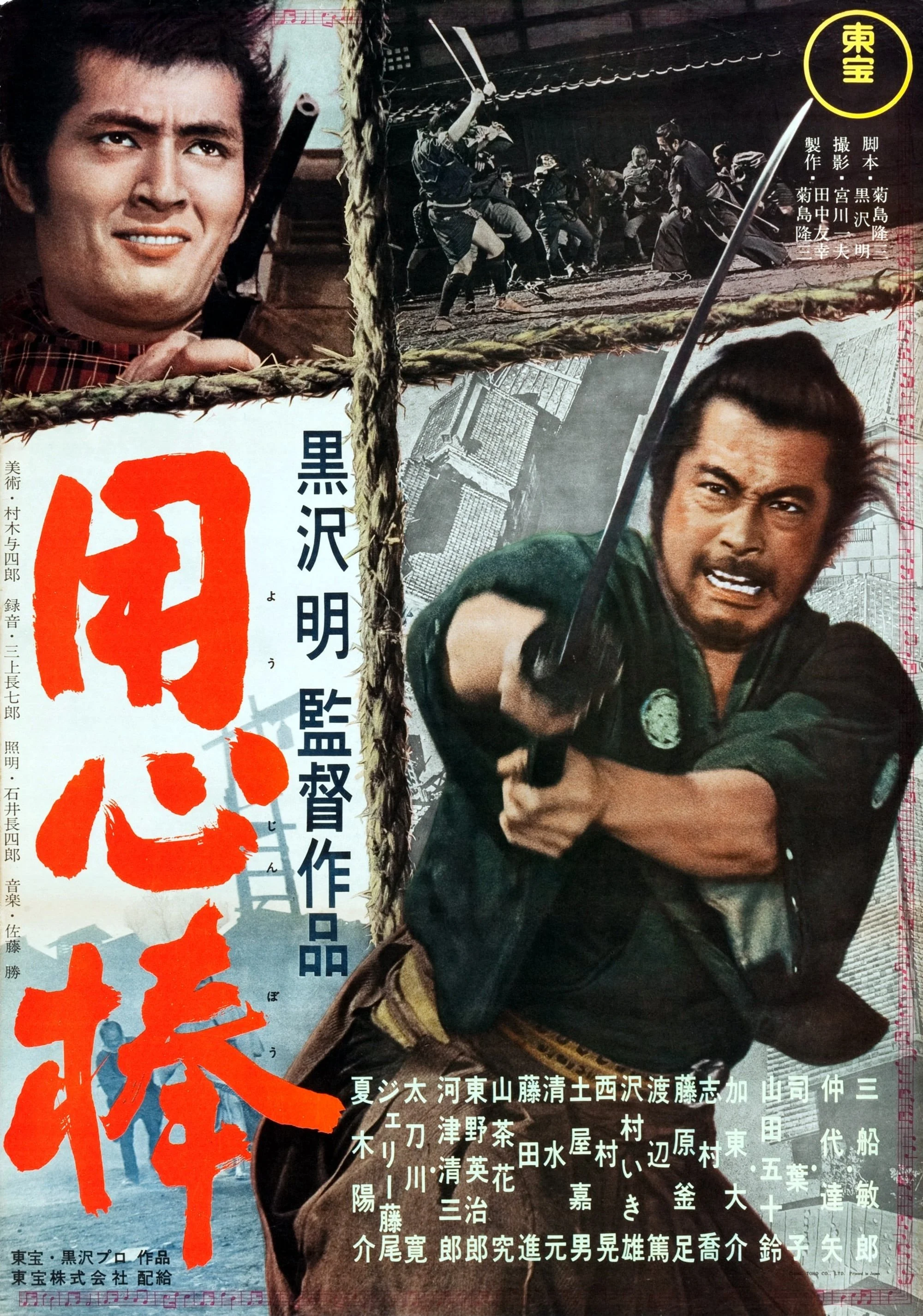
Yojimbo (1961)

Mac Boyle September 8, 2023

Director: Akira Kurosawa

Cast: Toshiro Mifune, Tatsuya Nakadai, Yoko Tsukasa, Isuzu Yamada

Have I Seen it Before: Never, but like the siren call of whatever makes sirens call (wouldn’t we want to call it a mermaid call, if that’s what we mean?), if a movie is projected in 35mm, I’ll be there. Thankfully, I’ve managed to fill this year with more 35mm screenings than in any year in recent memory.

Did I Like It: Samurai movies are from a foundational genre in my movie watching life. I think, after a screening of Seven Samurai (1954) that just never quite connected with me (yes, I know I need to give it another shot; it’s on the list) that the entire canon never really felt like a priority.

What a shame too, because so many things I admire about more recent films owe their influence directly to Kurosawa, and this film is no exception. It has the clean, ruthless efficiency of an early Carpenter film. It has the undercurrent of somewhat demented humor that made the films of Richard Donner or Joe Dante* so great. It harnesses the same scope of strong, silent heroes set against colorful characters of all stripes that were these films not to exist, Clint Eastwood would have remained a bit player in late-age Universal monster movies, and George Lucas’ work would have just descended into senseless optical fireworks**.

I liked it so much that I want to see it again as soon as possible (35mm or no), want to track down both Last Man Standing (1996)—and American remake from Walter Hill—and the film’s sequel Sanjuro (1962). Seven Samurai moves to the top of the to-watch list as well…

*One might argue that Dante owes more to James Whale, but I’d distrust anyone that says that there isn’t at least a bit of Kurosawa there.

**It might have eventually done just that, but there is certainly plenty of Kuwabatake Sanjuro (Mifune) in even later characters like Qui-Gon Jinn and Din Djarin. Mifune was even Lucas’ first choice for Obi-Wan Kenobi in Star Wars - Episode IV: A New Hope (1977), but the sword master begged off thinking that the whole affair would make light of his previous work.

Tags yojimbo (1961), akira kurosawa, toshiro mifune, tatsuya nakadai, yoko tsukasa, isuzu yamada
Comment
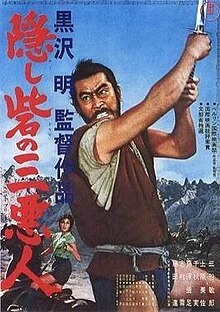
220px-The_Hidden_Fortress_poster.jpg

The Hidden Fortress (Kakushi-Toride No San-Akunin) (1958)

Mac Boyle December 22, 2019

Director: Akira Kurosawa


Cast: Toshiro Mifune, Misa Uehara, Minoru Chiaki, Kamatari Fujiwara


Have I Seen it Before: Never, although its legend as the spine of Star Wars – Episode IV: A New Hope (1977) has always lingered in the back of my mind. I’ve struggled with enjoying Kurosawa films, as I found Seven Samurai (1954) a bit of a chore to get through when I was 17. My tastes… may have expanded since then. I need to broaden my horizons.


Did I Like It: I guess I should probably start this film with a confession. I watched this while trying to complete the rest of my reviews for the Star Wars saga that I was going to post tonight. As such, I only occasionally was able to focus on the subtitles for the Japanese dialogue. I didn’t catch much of the plot, or at least the details therein.


But the film still works, and that’s probably the element most worth analysis. The feelings of the characters and the visuals that surround them are far more central to the film. It would have worked as a silent film. The dialogue is incidental to the enjoyment of the film. I can see where Lucas felt the influence of this film as he went about constructing A New Hope. Indeed, the early scripts for his film (and the comic that was eventually created based on that early material) are filled with the samurai sensibility of Kurosawa’s most popular films, like this. 


It’s almost like, by the time Lucas got the opportunity to make his Buck Rogers by way of a samurai sensibility film, he would have probably preferred to make it a silent film altogether. He probably spent the rest of his career wishing he never had to write a line of dialogue.


Which would explain some of the problems he had with the prequels. Hey-yo.


But enough about the films that came after The Hidden Fortress, let’s talk about the film itself. It is vibrant and funny the tableaus of each shot are each a painting unto themselves, even when they are largely showing arid, sandy landscapes.


Sound familiar? Okay, I’ll stop.

Tags the hidden fortress (1958), akira kurosawa, toshiro mifune, misa uehara, minoru chiaki, kamatari fujiwara
Comment

Powered by Squarespace

Party Now, Apocalypse Later Industries

Where creativity went when it said it was going out for cigarettes.

Where creativity went when it said it was going out for cigarettes.