Party Now, Apocalypse Later Industries

Where creativity went when it said it was going out for cigarettes.
  • Home
  • BOOKS
    • THE ONCE AND FUTURE ORSON WELLES
    • IF ANY OF THESE STORIES GOES OVER 1000 WORDS...
    • ORSON WELLES OF MARS
    • THE DEVIL LIVES IN BEVERLY HILLS
    • A LOSS FOR NORMALCY
    • RIGHT - A NOVEL OF POLITICS
  • PODCASTS
    • Beyond the Cabin in the Woods
    • THE HOLODECK IS BROKEN
    • THE FOURTH WALL
    • As The Myth Turns
    • FRIENDIBALS! - TWO FRIENDS TALKING ABOUT HANNIBAL LECTER
    • DISORGANIZED! A Criminal Minds Podcast
  • MOVIE REVIEWS
  • BLOGS AND MORE
    • Bloggy B Bloggington III, DDS
    • THE HOLODECK IS BROKEN BLOG
    • REALLY GOOD MAN!
  • Home
    • THE ONCE AND FUTURE ORSON WELLES
    • IF ANY OF THESE STORIES GOES OVER 1000 WORDS...
    • ORSON WELLES OF MARS
    • THE DEVIL LIVES IN BEVERLY HILLS
    • A LOSS FOR NORMALCY
    • RIGHT - A NOVEL OF POLITICS
    • Beyond the Cabin in the Woods
    • THE HOLODECK IS BROKEN
    • THE FOURTH WALL
    • As The Myth Turns
    • FRIENDIBALS! - TWO FRIENDS TALKING ABOUT HANNIBAL LECTER
    • DISORGANIZED! A Criminal Minds Podcast
  • MOVIE REVIEWS
    • Bloggy B Bloggington III, DDS
    • THE HOLODECK IS BROKEN BLOG
    • REALLY GOOD MAN!

A Blog About Watching Movies (AKA a Blog in Search of a Better Title)

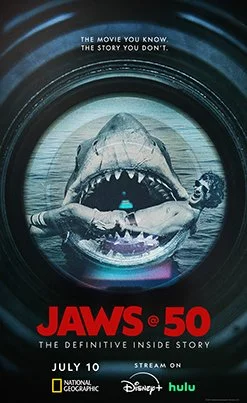
Jaws @ 50: The Definitive Inside Story (2025)

Mac Boyle August 20, 2025

Director: Laurent Bouzereau

Cast: Steven Spielberg, Peter Benchley, Janet Maslin, Emily Blunt

Have I Seen It Before: This is definitely the kind of review where answering that question first might prove to jump into the meat of the review before its time.

Did I Like It: The opening minutes—and, indeed, the trailer—to this documentary both recognizes the challenge it has in front of us, and poses an intriguing question which will fuel the next hour and a half.

Is there anything you haven’t said about Jaws (1975)?

If there is truly anything that hasn’t been said about that point of origin for the modern blockbuster, I can’t fathom what it is, and Spielberg, too, find the question both intriguing and daunting.

Does the film actually reveal much new about Jaws. Not… really. The old hits are touched on, sure. Benchley’s book is startlingly different than the book, especially when it isn’t dealing with its titular shark*. The shark didn’t work, then it did, necessitating that we see as little of it as possible, to great effect. If Richard Dreyfuss** could throw a punch, it is entirely possible he and Robert Shaw would have killed one another. People were terrified of the water in the late 70s, and took it out on otherwise unassuming sharks.

It’s not nearly the revelation that the thesis question presents. That’s ultimately because there may not be much new to say about the subject after all. A vignette where Spielberg lightly admits to a modicum of PTSD in the years after the experience is a new depth into a subject that was already known.

Also, Emily Blunt is a pretty huge fan of the movie. I’m fully willing to admit I didn’t know that going in.

*Lora and I read it definitely, and the biggest revelation there is that Spielberg was elevating material before anyone even realized what he was capable of.

**If memory serves, there’s a drop or two of bad blood between the once and future Hooper and Spielberg, perhaps explaining why he only appears in the film via stock footage from the behind-the-scenes featurette when the film was first released on DVD.

Tags jaws @ 50: the definitive inside story (2025), laurent bouzereau, steven spielberg, peter benchley, janet maslin, emily blunt
Comment

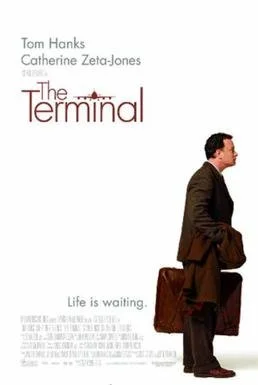
The Terminal (2004)

Mac Boyle March 27, 2024

Director: Steven Spielberg

Cast: Tom Hanks, Catherine Zeta-Jones, Stanley Tucci, Chi McBride

Have I Seen it Before: Oh, sure. One of those movies I saw during a summer in Fort Worth where I saw everything, mainly because what else does one do in Fort Worth*.

Did I Like It: I seem to remember in my recent review of 1941 (1979) that I wonder what Spielberg’s career might have become if he his first comedy had been either funny or a hit. It took him the better part of twenty years to come back around to it, but he found the right combination to try again. Sure, one might argue that Always (1989) and Catch Me If You Can (2002)** are comedies, but neither is played largely for laughs.

Harnessing the pure charm which made Frank Capra’s films work, Spielberg finds the right tone. And by that pure charm, I mean having Jimmy Stewart in the film is that right combination. Given that Stewart died in 1997, putting Tom Hanks to work got the same effect done.

That all sounds like I might be denigrating the movie with some faint praise, but Spielberg utilizes some real craft to make such a gentle film feel like it is effortless. Coordinating the large set—what? airports weren’t wild about film companies shooting in their international terminals a couple years after 9/11?—to make it always seem interesting and almost never forces me to focus on just how much a multi-story Borders Bookstore ages the whole thing is something more people should be analyzing to death.

*This doesn’t even try to cover all the other summers where I committed to see anything and everything that came out. Maybe there just isn’t anything to do in Texas or Oklahoma.

**Looking over the filmography Spielberg made both Indiana Jones and the Last Crusade (1989) and Minority Report (2002) in the same year as each of those examples. The man may not be human.

Tags the terminal (2004), steven spielberg, tom hanks, catherine zeta-jones, stanley tucci, chi mcbride
Comment

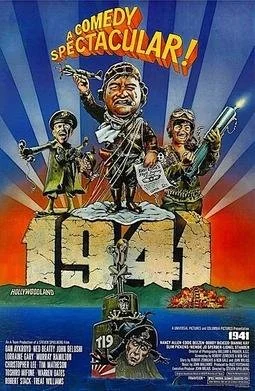
1941 (1979)

Mac Boyle January 24, 2024

Director: Steven Spielberg


Cast: Dan Aykroyd, Ned Beatty, John Belushi, Lorraine Gary


Have I Seen It Before: Yes. I have the strongest memory of sitting in my bedroom and watching the thing on VHS. Why wouldn’t I have done so? Spielberg? Check. Aykroyd and Belushi? More check. Script by Robert Zemeckis and Bob Gale? Yet more check.


Did I Like It: Well, I suppose Coppola went to Vietnam, and Spielberg decided to instead go to Santa Barbara… Both of them probably thought on some level that they were going to war in their own way.


Spielberg was absolutely right in understanding that he was two-ish decades away from being ready to handle a serious war movie, and so went lighter with the whole affair. Thank God he got the idea that he could do a big, John Landis (if not out-and-out ZAZ-style) comedy out of his system here, or we might have been forced to endure Bill Murray as Indiana Jones or something unfathomably awful by the time he came around to Saving Private Ryan (1998).


And I say this all without trying to say that the film isn’t worth a look. Spielberg is working with that same “Gee, Sammy Fabelman loves movies more than the rest of us ever could” energy that made virtually every other film he’s ever made a classic. The John Williams score is exactly what any reasonable person would want out of one of his score. If the film had stuck with the collective imagination a little (probably a lot) more than it did, it might have joined the pantheon of his great works.


It's just not very funny. I can’t remember laughing once during the thing. That’s okay, there are plenty of great films that aren’t particularly funny. Zemeckis and Gale harnessed similar energy in Romancing the Stone (1984), and yes, even in Back to the Future (1985). Spielberg, certainly in this era, is the absolute, undisputed king of light pop entertainments. But it is impossible for a viewer to look at Aykroyd, Belushi, or even John Candy and think they are supposed to laugh. And when those laughs come, there isn’t a whole lot else to say.

Tags 1941 (1979), steven spielberg, dan aykroyd, ned beatty, john belushi, lorrain gary
Comment

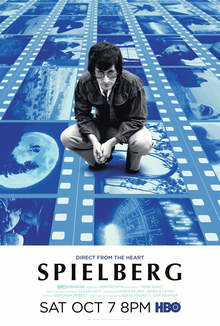
Spielberg (2017)

Mac Boyle July 9, 2023

Director: Susan Lacy

Cast: Steven Spielberg*

Have I Seen it Before: Never. Had been on my HBOMax to-watch list (or whatever the hell they called it) for years. Now that HBOMax is dead (long live, Max, apparently), and I’ve now watched The Fabelmans (2022) three times in as many months, the urge to finally view it became near overwhelming.

Did I Like It: Even that proved to be a several days long project. Not because the documentary is tough to get through. Quite to the contrary. I saw two minutes of this thing and it was so immediately beguiling that I felt guilty continuing without Lora.

Normally I view a documentary with a very specific list of criteria. First, is it professionally made? Does the sound all go together, and was it filmed with equipment indicative of someone trying to make money off of the endeavor, or someone with home video equipment who didn’t know any better. (It is sometimes more challenging for a film to clear this hurdle than one might think.) This certainly clears that, with HBO’s money backing it up and what appears to be a modicum of cooperation from the subject, one would imagine that the filmmakers wouldn’t deign to cheap out.

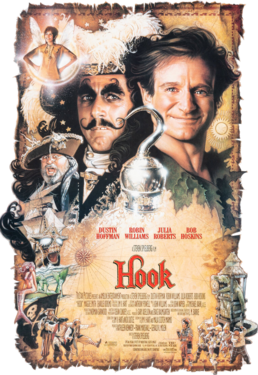
Does it have an unusual or surprising level of access to the subject? As mentioned earlier, Spielberg does sit down for some talking heads, although they appear to be taken over time and very well could be pulled from electronic press kits from any number of movies, but we also have footage of Spielberg blocking scenes from Bridge of Spies (2015)… which, now that I think about it, very well could have come from that film’s EPK. Might give this one an incomplete on this front. It isn’t like the movie dwells on any of Spielberg’s relative missteps. 1941 (1979) is given a moment to show Spielberg’s fallibility, but Hook (1991), and Indiana Jones and the Kingdom of the Crystal Skull (2008) are given the briefest of b-roll appearances, although I’ve always felt that a very honest documentary about the fourth Indiana Jones entry would be worth its own feature length documentary.

Does the film remember it is trying to tell a story? Here is where the film truly shines. Is a lot of this also covered by The Fabelmans, sure, but depicting Spielberg as a gifted man with a fair amount of doubts and insecurities about himself—to say nothing of giving the production of Schindler’s List (1993)—is where the film becomes truly fascinating, and more than worth a recomendation.

*Normally, I would put the first four billed stars of a film. This usually makes listing documentaries a little difficult. Here, where the is only a single central figure, and brief talking heads by everyone else, it is doubly so.

Tags spielberg (2017), susan lacy, steven spielberg
Comment

The Fabelmans (2022)

Mac Boyle November 30, 2022

Director: Steven Spielberg

Cast: Michelle Williams, Paul Dano, Seth Rogen, Gabriel LaBelle

Have I Seen it Before: Nope.

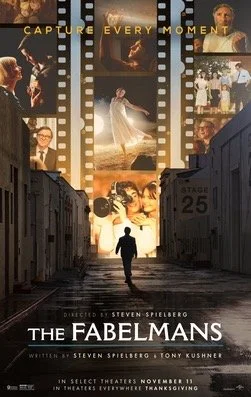
Did I Like It: I’ve been noticing a weird blowback against this movie since its release, and it’s worth a little bit of analysis before I get into my own feelings on it. Some of it is the natural knee jerk reaction—with a twist of schadenfreude—to a film from the once (and future?) king of the box office landing with a dull thud on its opening weekend. Then again, any media release is going to attract bad faith conservative grumblings, so it’s entirely possible that we’ll never again see a film which avoids the aforementioned blowback.

But do you want to hear why I think the movie rubs some people the wrong way? One might argue that the film’s story is far too episodic for a major American release. One might even argue that there is a degree of solipsism in Spielberg’s attempt to make himself the unassailable hero of one of his films. I don’t think any of that is the issue. I really think the issue is that nearly every cinephile labors—to varying levels of intensity—that given the right circumstances, they could have been Spielberg. That his ascendency to the highest order of popular culture was a product of circumstance or luck. The thing is, if this film has any degree of a sober view of who Sammy Fabelman (LaBelle)/Spielberg is, not one of has the ability to see through problems of filmmaking with such ingenious solutions. Not one of us loves movies so much that the only thing that will bring us comfort during times of extreme emotional strife is the clicking of an 8mm camera. Not one of us had any hope of becoming Spielberg.

Oddly enough, I find that comforting. I’ll do you one better: I have half a mind to go see the film again. Maybe we all should. I’m real worried about this Spielberg kid. If we don’t come out for his movies now, I’m not sure what will happen.

Tags the fabelmans (2022), steven spielberg, michelle williams, paul dano, seth rogen, gabriel labelle
Comment

Jaws (1975)

Mac Boyle June 21, 2022

Director: Steven Spielberg

Cast: Roy Scheider, Richard Dreyfuss, Robert Shaw, Lorraine Gary

Have I Seen it Before: Oh, sure. No less, the poster is up in my living room*. As I type that, it’s more shocking than anything else that I haven’t re-watched in the four years since I’ve started these reviews.

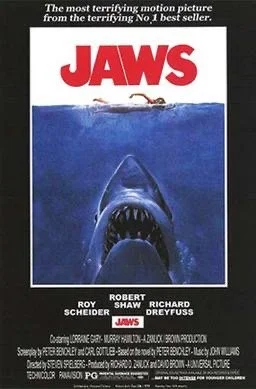
Did I Like It: There’s plenty for someone to love about this movie even from a distance. The cinematography is as good as anything has ever been. Every frame of the movie has nearly perfect construction, which is all the more impressive when one considers that the entire film actively tried to shake itself apart from the beginning principal photography. As a first major release for Spielberg, the film proves beyond all doubt that he could turn disasters into hits. I’d submit that any of his New Hollywood cohorts would have collapsed under the pressure of making the film. Coppola? Lucas? Hopper? We never would have heard from Hopper again if he had to deal with the shark.

“The shark looks fake” is a hoary cliche of a joke, but it can really only be leveled at the sequels. Whether it is because of Spielberg’s inherent sense (brought to full bear in Jurassic Park (1993)) to avoid showing us the monster for as long as possible, or if that sensibility came about because the shark was an unreliable diva, the shark makes maximum impact when he finally does emerge from the water.

The score is arguably John Williams’ simplest, but it might also be among his most iconic. Not bad for what on first blush is just a cacophony of piano and bowed strings.

But the real secret power of the film—and one that many big movie entertainments did not try to emulate—are the performances. The movie may never be deep, profound drama, but each of the three main leads behaves in the film in a memorable way. When it’s now several days since I re-viewed the film, and I still can’t get “Show Me The Way To Go Home” out of my head, that may be undeniable proof that the movie is only kind of about a shark.

*Along with the iconic art deco poster for The Rocketeer (1991). There’s a certain odd symmetry between them, with both Cliff Secord and Bruce the Shark staring at a hook for hanging plantss that predates our buying of this house.

Tags jaws (1975), steven spielberg, roy scheider, richard dreyfuss, robert shaw, lorraine gary
Comment

Minority Report (2002)

Mac Boyle June 4, 2022

Director: Steven Spielberg

Cast: Tom Cruise, Colin Farrell, Samantha Morton, Max von Sydow

Have I Seen it Before: Oh, sure.

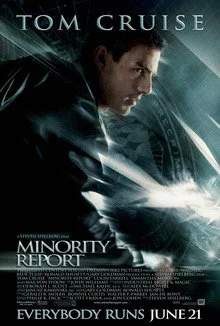
Did I Like It: When Spielberg dies, this won’t be even in the top ten films mentioned as his most memorable. In any retrospective of the Philip K. Dick adaptations, this film probably won’t be one of the first ones mentioned. Considering Tom Cruise will likely continue reaching for cinematic excellence after he has grown beyond the use of his physical body to await Xenu’s return, there’s a very real possibility this won’t even rank in the top thousand memorably Cruise roles*.

And, for the life of me, I can’t quite figure out why any of those things are true.

It is far and beyond the best adaptation of Dick’s work ever produced, and yes, I count Blade Runner (1982) in that equation (although I don’t care for it, which I understand already renders me suspect) and Total Recall (1990) (which I ultimately kind of like). It takes a kernel of an idea—which is all Dick was ever really good for—and flushes it out into an actual story that sticks with you.

There’s not a genre which Spielberg hasn’t conquered, so it’s almost a tragedy that he hasn’t done more hard-boiled detective stories. He didn’t even need to include any of the Dick-ish trappings present here.

Cruise may still be working through his post-Mission: Impossible II (2000) malaise, but he’s approaching his later day renaissance with the vigor even his detractors must grant him.

*As I type that, I feel like I’m being unfair to Scientology. I might have saved this revelation for my eventual review of Top Gun: Maverick (2022), but I’m struggling to think of any religion not built on a foundation of abuse. Only one religion has its adherents speaking out against the horrors of motion blurring on HD TV sets. So, even though it might not bring me the kind of power of a Cruise or the horrors of a Kirstie Alley, I may need to keep a more open mind.

Tags minority report (2002), steven spielberg, tom cruise, colin farrell, samantha morton, max von sydow
Comment
IMG_0073.jpeg

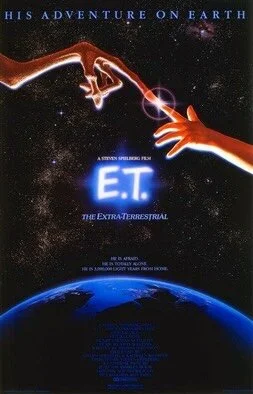
E.T. the Extra-Terrestrial (1982)

Mac Boyle April 8, 2021

Director: Steven Spielberg

Cast: Dee Wallace, Henry Thomas, Peter Coyote, Drew Barrymore

Have I Seen it Before: Oh, sure. Find me the child of the 80s/90s who hasn’t seen the film, and I’ll show you a pod person. My wife, Lora, in fact, may have been so over-saturated by the film as an impressionable child, she finds the creature frightening and repellant now.

Did I Like It: Which is a real problem in our house, as for my money it is Spielberg’s best film. Yes, honey, even ahead of Jurassic Park (1993). It single-handedly set the standard and defined the aesthetic of cinematic spectacle not just for its generation, but quite possibly for all time. Hard not to be struck by just how much Super 8 (2011) slavishly toils in E.T.’s shadow. Gremlins (1984) shifts the setup from sweet and heartfelt to the chaotic and mischievious*. The less said about Mac and Me (1988), the better. Hell, even Transformers (2007) (but not any of the sequels, aside from Bumblebee (2018)) tries to harness the “boy and his dog alien pal” current that fueled the proceedings here.

And there’s a reason that it has inspired that level of imitation. One hesitates in using the term “purity” with a story featuring white people in the suburbs, but the simplicity and pure pathos that Spielberg brings to bear here hits like a ton of bricks every time. It works for anyone who has ever had a pet. It works It works as a child as a simple adventure story. It works for adults who feel they might have hit a wall and are disappointed that the world might not be as fantastic as it might have seemed when young.

It just works. 

My only qualm regarding the film is that, for the DVD I own, we are still subject to the 2002 special edition, complete with walkie-talkies in lieu of guns and other CGI effects that aren’t nearly as magical as the material from the original. I think Spielberg would agree with me there. Between this, shooting digitally, and some of the later Indiana Jones stuff, I think Spielberg spent most of the 2000s being bullied by George Lucas into things he wouldn’t have otherwise done, and has spent the last ten years trying to shed himself of those less-than-stellar decisions.

Trust your instincts, Steve. I’ll even buy the more recent Blu Ray releases of this film, so I never have to see another walkie-talkie as long as I live.


*While Gremlins 2: The New Batch (1990) remains one of the greatest films ever, but I digress...

Tags e.t. the extra terrestrial (1982), steven spielberg, dee wallace, henry thomas, peter coyote, drew barrymore
Comment
IMG_0059.jpeg

Close Encounters of the Third Kind (1977)

Mac Boyle March 6, 2021

Director: Steven Spielberg

Cast: Richard Dreyfuss, Teri Garr, Melinda Dillon, François Truffaut

Have I Seen it Before: Yes. It’s not been a staple of the Spielberg canon for me, and that might have something to do with, at it’s core, the film being about a father who will stop at nothing to not be a father anymore. I think Spielberg would probably agree with that assessment.

Did I Like It: I think I’m more up for the film now, and that may be tied to how it is now less about a man who can’t wait to be free of his kids and wife*, and more about a man in his thirties who maybe didn’t have things work out them. Something extraordinary happens, and it is all he can do to hold on to that sense of wonder.

Which, for some reason, I can relate to now. I won’t spend much time analyzing why, precisely. 

One could spend some time dwelling on the technical skill on display here, but how many ways can anyone say that Spielberg knows what he’s doing with a movie? Each frame is pristine, the editing is flawless, and by some miracle, the special effects still work over forty years later. Every Spielberg movie is a worthy cinematic experience**, and here in his prime Amblin phase, each entry into his filmography is an unparalleled celluloid confection.

In times past, I’ve talked about what separated Spielberg from his closest contemporary (as far as this era is concerned), George Lucas. Lucas made great movies generally when the sword of Damocles was swinging right above his head. By the time The Empire Strikes Back (1980) came out, Lucas didn’t have anything to worry about. Aside from a handful of films directed by Spielberg himself, he never quite got it right again. Spielberg on the other hand is the more natural director, and never stopped making worthy films. That being said, there is something special about Spielberg’s films that might very well have fallen apart at the seams, but still managed to miraculously came together. Jaws (1975), with its mercurial shark is that way. This film, with a studio nearly going bankrupt during production, a producer being fired, and by my count 6 separate directors of photography before we even start talking about a second unit, this film is another.

If, like me, this is not one of your favorite Spielberg films, it might be time to come home. It’s probably time for Roy Neary to come home, too.

Actually, it’s probably way too late for that.


*It is still about that, but stay with me, folks.

**Yes, even 1941 (1979).

Tags close encounters of the third kind (1977), steven spielberg, richard dreyfuss, teri garr, melinda dillon, françois truffaut
Comment
IMG_0048.jpeg

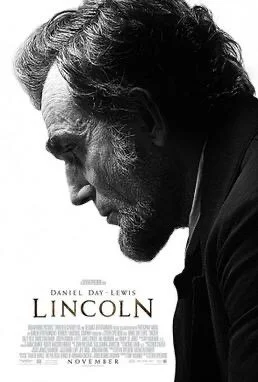
Lincoln (2012)

Mac Boyle January 20, 2021

Director: Steven Spielberg

Cast: Daniel Day Lewis, Tommy Lee Jones, Sally Field, David Strathairn

Have I Seen it Before: I poured over Team of Rivals in the winter of 2012. This movie claims to be based on the Doris Kearns Goodwin tome (more on that in a bit), and I desperately wanted to get through it before seeing the movie. It was a weird time

Today (if you’ll note the publishing date of this review) that time feels both like it was ages ago and it was just yesterday.

Did I Like It: I think there is only one criticism to level against the movie, and it is a slight sliver of false advertising. Despite the credit given to the Goodwin book, the book is nearly 1000 pages, and the passing of the 13th Amendment—the main thrust of the film’s storyline—takes up an entire paragraph. It isn’t based on the book. As I recently indicated in my review of Selma (2014), film is often a poor substitute for true history. This film is barely based on the book. If you want that real history, go read Team of Rivals, as it is easily one of the best books I’ve read in the last ten years.

Now, that is all to say the film—when judged on the merits of being a film—is quite stellar. It didn’t make it into my list of favorite movies from the 2010s, but that is no sin. The story of passing the amendment gives Lincoln the film character an easily formable arc, while perhaps losing something of a true portrait of Lincoln the man and leader. 

The film is surprising funny at times, and heartbreaking on more than few occasions, just as by all contemporaneous reports, Lincoln himself was. One might be tempted to lampoon the intense focus Daniel Day Lewis brings to his roles, one cannot argue with the results on the screen. While Team of Rivals gives the reader the illusion of having known and worked with Lincoln, this film does give of having been in his presence.

Tags lincoln (2012), steven spielberg, daniel day-lewis, tommy lee jones, sally field, david strathairn
Comment
220px-War_of_the_Worlds_2005_poster.jpg

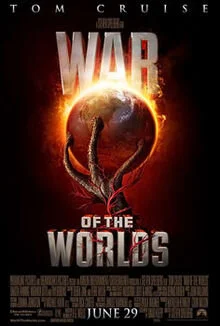
War of the Worlds (2005)

Mac Boyle September 20, 2020

Director: Steven Spielberg


Cast: Tom Cruise, Dakota Fanning, Miranda Otto, Tim Robbins


Have I Seen it Before: Yes.


Did I Like It: Recently, I’ve been reading up on UFOlogy, for reasons. A chapter in the book I’m looking at currently (which isn’t very good) takes a turn into the War of the Worlds broadcast of 1938. Naturally, I have some thoughts on that subject. However, in this book I was kind of mystified that the incident was only looked at through the prism of its effect on mass hysteria, which is incidentally somewhat disputed in recent discussions of the incident… That doesn’t really have anything to do with UFOlogy, so why are they discussing it?


Then again, that preceding paragraph has nothing to do with the film we’ve come here to discuss. Why am I bringing it up? The author of that book brings up actor Frank Readick, but not Orson Welles? I mean, really?


This film is far more in tune with the most famous adaptation of the original H.G. Wells novel. That’s the connection. Welles put his Martian invaders in the heart of New Jersey, and so does Spielberg. I like that a lot. Otherwise, the film is that interesting beast of being two seemingly disparate things. It is after the original era of Spielberg’s heyday. Let’s call it the true Amblin era. Close Encounters of the Third Kind (1977). E.T. The Extra-Terrestrial (1982). Jurassic Park (1993). He now almost exclusive works in prestige drama. Schindler’s List (1993). Amistad (1997). The Post (2017) comes to mind as a recent example. This film, along with his other Tom Cruise collaboration, Minority Report (2002), takes place in that later era, but is still high-concept genre entertainment. 


It’s almost as if this film is the spiritual successor to Close Encounters, now that I think about that. The earlier film featured a man shedding all parental obligation in light of visitors from another world. Every interview I’ve ever seen with Spielberg on the subject of Close Encounters indicates he regretted that move, and this is his atonement*.

*I’m very tempted, but ultimately thought better of ending this review wondering if he will ever atone for Indiana Jones and the Kingdom of the Crystal Skull (2008), especially now that he won’t be directing the next film in the series. It felt too snarky, especially in the context of a review for a film I legitimately enjoyed. Also, that film would be an example of a full-throttle attempt to go back to the Amblin era, and we all know how that worked. So, now it will be a footnote.

Tags war of the worlds (2005), steven spielberg, tom cruise, dakota fanning, mirando otto, tim robbins
Comment
Jurassic_Park_poster.jpg

Jurassic Park (1993)

Mac Boyle October 28, 2019

Director: Steven Spielberg

Cast: Sam Neill, Laura Dern, Jeff Goldblum, Richard Attenborough

Have I Seen It Before?: I mean, I’m a child of the 90s and I like movies. How would I have gotten through my life without this movie?

Did I like it?: It’s only gotten better over the years.

I came to a revelation during my recent review for Indiana Jones and the Kingdom of the Crystal Skull (2008). With this film, Spielberg exorcised most of the populist impulses that had made his career. Sure, you have this film’s sequel, The Lost World (1997), and the aforementioned fourth Indiana Jones film, but those both seemed like chores Spielberg relented to, rather than films he was that interested in making. Double that sentiment for Ready Player One (2018). Perhaps he was indulging a return to form with the animated The BFG (2016), but I’ll let you know when I get around to seeing it.

But what a valedictory run this is. Every element works and became the standard for blockbuster movies to the present. The special effects have mostly not aged in over 25 years. I say that, but what I mean is that the physical effects (mostly by Stan Winston) still look like real things, which will keep this film working decades from now. The leading-edge computer images fare a little less well. Large tableaus of dinosaurs interacting with (read: eating) each other work pretty well, but any time ILM uses their tools to venture into the undiscovered country of the close-up, or if their sprites and polygons deign to interact with humans, the seams begin to show. It’s hard to be too critical of either Spielberg or the movie for this, as they were trying things that had never been tried before. However, with the knowledge that George Lucas saw this film and decided his own technology had finally elevated to the point where he could go back and make his long-gestating Star Wars prequels, well… the judgment of movie history might have

My wife points to this as John Williams best score, and I’m at a loss to argue the point. I’m also at a loss to come up with a theme that Williams has written since that was as memorable as the march he concocted with this movie. Everybody behind the scenes was going for broke here, it seems.

And yet the thing I am most tickled by during this, quite possibly my 100th viewing of the film—are the non-tech questions. The movie may be peak-Jeff Goldblum, and even when his character, Ian Malcolm, is vacillating quickly between smarm and snark, one can’t help but be amused by him. The movie might have worked had it just been him, and if Jurassic World: Fallen Kingdom (2018) had gone for that, it might have been a lot more satisfying.

Tags Jurassic Park (1993), steven spielberg, jurassic park movies, sam neill, laura dern, jeff goldblum, richard attenborough
Comment
220px-Kingdomofthecrystalskull.jpg

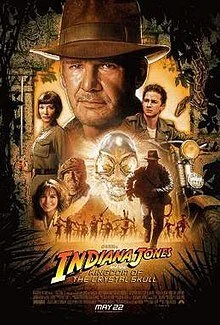
Indiana Jones and the Kingdom of the Crystal Skull (2008)

Mac Boyle October 28, 2019

Director: Steven Spielberg

Cast: Harrison Ford, Shia LaBeouf, Cate Blanchett, Karen Allen

Have I Seen It Before?: I was there on that delightful spring day in 2008, wearing a leather jacket and fedora. I’m not sure how I feel about that admission, but I am reasonably certain that it is my fondest wish that I never do anything like that ever again.

Did I like it?: It seems like a superfluous question, but let’s get into it, shall we?

As with any film George Lucas became involved with after Indiana Jones and the Last Crusade (1989), there is a profound antipathy that courses through the populace.

And yet, when it comes to this movie, I really want to like it. I do. I’m pretty sure I do. I’m not one of the people who were completely turned off by the notion of Dr. Jones (Ford) running from Soviets before running afoul of a flying saucer. I’m more certain than I have of anything else in the history of film that if the fourth film tried to bend over backwards to give us even more Nazis, then the complaints about this film would have been even more caustic. I do wish that Spielberg and company (well, let’s face it, mainly Lucas) had gone for broke and had that familiar fedora’d silhouette look out into space. If they truly wanted to take a deep dive into 50s Sci-Fi movies, there was plenty of territory left unexplored.

That all being said, the story is actually kind of engaging. The cat and mouse game between Indy and the communists is more than enough to keep things lively, and fans of the series should be mostly on board with the movie.

Then why doesn’t the movie work?

I think there is some mix of two motivations behind the film’s listless quality: boredom and spite.

Each of the essential triumvirate (Lucas, Spielberg, and Ford) of the Indiana Jones series must have endured endless questions over the preceding twenty years about when Indiana might go on the hunt again. I can imagine that the questions got irritating. This movie certainly stopped most of us from asking about a fifth film. If that was the goal, then mission accomplished.

Lucas has long since seemed bored with the idea of popular filmmaking by the time this film came out, and that apathy was confirmed when—at the earliest opportunity—he sold the entire shop at the first opportunity to allegedly make small experimental films he doesn’t plan on showing to anyone.

Ford engaged in acting by way of sleepwalking for every film after Air Force One (1997) and before Star Wars: The Force Awakens (2015). Some might argue in good faith about that range, but few would argue that this fourth entry that previously so catered to ever strength he had as a movie star, is now the nadir of Ford wandering aimless in and out of various films.

Spielberg, too, seems as if he had expended any and all excitement for the big entertainments that made him his bones were exhausted by Jurassic Park (1993). To make an action movie now must feel like a chore on par with The Lost World: Jurassica Park (1997). There are plenty of more serious films that he seems far more interested in making.

And right there, while Lucas bears the brunt of the blame for the resulting movie, there really should be plenty of blame to spread around. Sure, the film has the anti-septic, CGI-heavy feeling of the Star Wars prequels, which feels even more off when Indiana Jones was always the far more analog cousin of that galaxy far, far away. But Spielberg and Ford could have still zeroed in on something special, if that was what interested them.

Maybe they still will.

Tags indiana jones and the kingdom of the crystal skull (2008), indiana jones movies, steven spielberg, harrison ford, shia labeouf, cate blanchett, karen allen
Comment

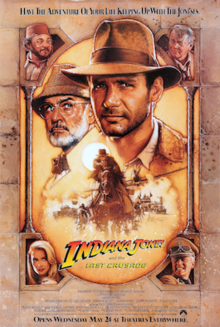
Indiana Jones and the Last Crusade (1989)

Mac Boyle September 7, 2019

Director: Steven Spielberg

Cast: Harrison Ford, Sean Connery, Alison Doody, Julian Glover

Have I Seen it Before: I’m reasonably sure that I did not see it in the theater when it was released. I have a weird encyclopedic memory of movies I saw from 1989-1990. I would imagine most movie buffs have such a memory of the movies they saw when they were about that age.

But I surely ran a VHS copy of this movie down to the nub in the years since. I even skipped a lecture of Chemistry 1 to go grab the trilogy (and back then, it was a trilogy) when it was first released on DVD.

Did I Like It: Back in those days, I think I might have been convinced that it was the greatest of all the Indiana Jones films. 

I don’t think that any more. I certainly don’t think it is the worst of the series, but we’ll get to that later. After both the creators and the public decided (and I believe wrongly) that Indiana Jones and the Temple of Doom (1984) was a failed experiment, Lucas, Spielberg and company opted for what I’m sure was a course correction to make the third film in the series more like the original Raiders of the Lost Ark (1981).

And the film so desperately wants to be Raiders. The story is once again about Indiana (Ford) reconciling with someone from his past by making them his partner. In Raiders, he reconnects with old lover Karen Allen, here he makes amends with his father in the form of Sean Connery. The Nazis are back in full force, which is a sentence I write with unfortunate frequency in this last half of the first decade of the 21st century. Even the font chosen for the opening titles is directed to the sole goal of making the audience feel like this is going to be like the Indy adventure that they liked at first blush.

Now, it helps that what the film lacks in originality, it more than makes up for in charm. It’s likely the missing ingredient in Indiana Jones and the Kingdom of the Crystal Skull (2008). That film wants to be Raiders, too, but it doesn’t have Sean Connery giving one of the most blissfully nerdy performances of any movie star. For a screen presence that was so thoroughly contingent on machismo, making Indy’s father an aloof bookworm who fells Nazis with an umbrella, some seagulls and some well-remembered Charlemagne. It also helps that this was in the time pre-Air Force One (1997) when Ford spent a number of years sleeping through every film in which he starred. He eventually corrected this notion by the time Star Wars: The Force Awakens (2015), and maybe we’ll get one more charming outing with Henry Jones Jr. in our future.

Tags indiana jones and the last crusade (1989), indiana jones movies, steven spielberg, harrison ford, sean connery, alison doody, julian glover
1 Comment
220px-Indiana_Jones_and_the_Temple_of_Doom_PosterB.jpg

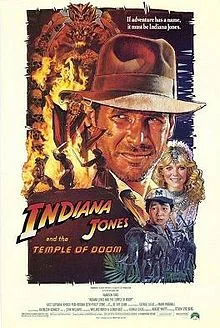
Indiana Jones and the Temple of Doom (1984)

Mac Boyle September 2, 2019

Director: Steven Spielberg

Cast: Harrison Ford, Kate Capshaw, Amrish Puri, Ke Huy Quan

Have I Seen it Before: Is it possible I’ve seen this movie more than Raiders of the Lost Ark (1981)? It seems unlikely, but I can’t rule it out.

Did I Like It: Yes. Fight me if you must, but I think this is the best of the Jones sequels/prequels.

First of all, it would be myopic at best to not admit that there are some things about the film that had not aged well, and were a probably a bit much at the time of release. Willie Scott (Capshaw) is not exactly the stuff that strong female heroes are made of, but at the same time one has to give credit to Capshaw for playing the role without once reaching for the easy milieu of ironic detachment. There had to be a sense among her and the filmmakers that the character would grate on people’s nerves, but that didn’t stop her from swinging for the fences.

Similarly, the depiction of Indian people varies pretty wildly from the “sorta okay” to the “eek, is everybody else seeing what I’m seeing?” Again, one wants to write off the rougher parts of the film to intentional choice on the part of Spielberg and Lucas, but in this case, that might be reductive. The portrayal of both Hinduism and Indian people in general is sometimes insensitive, but it does appear that most Indian characters are actually played by people of Indian decent. If we’re grading the 80s on a curve, this move may still get a passing grade. I’m looking in your direction, Short Circuit (1986).

All of this being accepted, the film still follows that cardinal rule of sequeldom*: don’t let up on the pace. From the first musical number in the Club Obi-Wan, the film never lets up until the Sankara stones are finally put back in their rightful place. Now that I think about, that musical number is a mission statement for the entire film. While “Anything Goes” is in and of itself as a good a thesis for the film, the mere idea that “Raiders 2” would ope up with Busby Berkley style musical number let the audience know—even if they weren’t 100 percent on board with the plan—that Spielberg was firmly control of what was happening, and if we trusted him, we would be in for the ride of our life.

It’s a shame that the film wasn’t as widely accepted in its time as it should have been. Had it been, each Indiana Jones adventure might have been a new, weird venture into the unknown, instead of warmed-over leftovers from Raiders. 

*I guess, actually prequeldom, but unless you’re paying real attention to the year stamped in the titles, there is not a whiff of what usually reeks in a prequel.

Tags indiana jones and the temple of doom (1984), indiana jones movies, steven spielberg, harrison ford, kate capshaw, amrish puri, ke huy quan
Comment
220px-Raiders_of_the_Lost_Ark.jpg

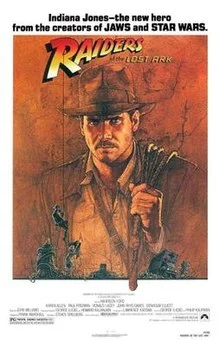
Raiders of the Lost Ark (1981)

Mac Boyle September 2, 2019

Director: Steven Spielberg

Cast: Harrison Ford, Karen Allen, Paul Freeman, John Rhys-Davies

Have I Seen it Before: Come on…

Did I Like It: What’s not to love?

Is this the greatest action movie of all time? Probably. Now, inevitably when something is unassailably great, somebody somewhere will try to take a shot at it out of nowhere.

Cut to these early years of the twenty-first century, and every goon with a blog will want to inform you of the Blessed Good News about how Indiana Jones (Ford) has absolutely no impact on the plot of the film that made him famous.

They would say that regardless of Jones’ presence, the Nazis would have found the Ark and would have  

Except that they wouldn’t be right. Never mind that the criticism seems to stem from an episode of The Big Bang Theory. Ironic that negating one of the most proactive characters in cinematic history comes from a show stubbornly committed to keeping it’s casual sketches of characters in permanent stasis, but I digress.

I maintain that—as de Führer is an impatient man—the Nazi expedition at Tanis would have been scrapped after Belloq (Freeman) and company were puttering around with no results. Now, you might say that the Toht (Ronald Lacey) would have been able to recover the headpiece to the Staff of Ra from Marion (Allen) without burning his hand in the process, allowing the Nazis to correctly construct the staff and get the accurate location to the Well of Souls. But I tend to think that Marion wasn’t about to let the only item of value/connection to her dead father out of her hands, or to some damn dirty nazi, and the film supports that she had the wherewithal to resist effectively.

So, Indiana ensures that he delays the Nazis don’t find the Ark timely, and no one may have found it at all. Had the Ark not been found, Toht, Belloq, and Dietrich (Wolf Kahler) would have continued to be a scourge on the Earth. Indiana Jones ensured that the Ark is locked away in anonymity for all time, and ensured that the world had a few fewer Nazis in the process. Show some goddam respect.

I might take a deeper dive into the collective mentality that leads a society to shit all over the few great things in existence, but that would be giving more credit to the people who would pass being persnickety for criticism. They don’t need me validating them, apparently they need Indiana Jones and the Kingdom of the Crystal Skull (2008).

Tags raiders of the lost ark (1981), indiana jones movies, steven spielberg, harrison ford, karen allen, paul freeman, john rhys-davies
Comment
Twilight_Zone_-_The_Movie_(1983)_theatrical_poster.jpg

Twilight Zone: The Movie (1983)

Mac Boyle January 5, 2019

Director: John Landis, Steven Spielberg, Joe Dante, George Miller

Cast: Vic Morrow (RIP), John Lithgow, Scatman Crothers, Dan Aykroyd

Have I Seen it Before: I think it’s probably safe to say that I’ve 

Did I Like It: You get four chances to like it, and I would say I get the job done about half the time.

The text of this review appeared previously in a blog post entitled “Do You Want to See Something *Really* Morbid? Why the Ends Almost Never Justify the Means” published on 07/02/17.

I’m a big fan of The Twilight Zone. I’m such a big fan of the show that I’ve been known to suggest fisticuffs whenever the honor of Rod Serling is impugned*. “To Serve Man,” “Nightmare at 20,000 Feet”, “Time Enough at Last”. These are truly great episodes of television.

And yet, efforts to re-capture the magic of the original TV show have often floundered. Sure Zone inspired a pinball machine that is the absolute pinnacle of that art form, but both attempts to bring the television series back—in 1985 and 2002—are less than memorable. Maybe the advent of color removed all magic from the concept**.

When the movie powerhouse of Steven Spielberg and John Landis attempted to make an anthology film based on the series, the reaction to the film was equally tepid. 

In some cases obliquely, and in others much more directly, Twilight Zone: The Movie (1983) offers remakes of four classic episodes of the TV series to varying degrees of effectiveness, and for that matter, sheer horror. 

The strongest segment among them is the last: a manic, claustrophobic redux of the Richard Matheson classic “Nightmare at 20,000 Feet” with John Lithgow as a naturally neurotic replacement for William Shatner. The gremlin on the wing of the plane in this version is far less laughable than the demented Lamb Chop of the original episode, and is more a terrifying, self-aware wraith ready to set up a homestead in your nightmares.

Moving backwards both in chronology and quality, Kathleen Quinlan stars in a re-constructed “It’s a Good Life”, the tale of a young boy with nigh-omnipotent powers and the destruction he leaves in his wake. Joe Dante (Gremlins, Innerspace) brings his penchant for cartoonish malevolence to bear here, but it is an aptitude that doesn’t come to full fruition until Gremlins 2: The New Batch (1990). The ending Dante and company choose for the tale—wherein the kindly school teacher (Quinlan) tries to temper the god-boy’s misanthropy—falls short of the ending that appears in the original episode and skews a little too close to the happy-happy Spielbergian ideal so prevalent in the 80s.

Which makes sense, given that Spielberg’s own entry for the film is such a concentrated package of pathos that it almost warrants a dosage of Humalog packaged with every DVD. Scatman Crothers gives a group of residents at an old folks home the opportunity to reclaim their childhood, quite literally. It’s precious. And that’s all fine. Spielberg’s gonna Spielberg, especially pre-The Color Purple (1985), but you should at least be prepared.

And then there’s director John Landis’ (Animal House, The Blues Brothers) opening entry in the movie. It’s the least conceptually sound of all four stories. One imagines that this is because it has the least to do with one of the original TV episodes. Bill Connor (Vic Morrow) is an unrepentant racist and basket case who finds himself tumbling through time. With each Quantum Leap like jump, he finds himself as a different oppressed minority. At the end, he watches his friends shrug through his disappearance as he is taken away to a concentration camp in Nazi-era Europe.

It’s kind of a muddled mess, although it does have the virtue of having the classic hopeless-turn-as-moral ending that made the TV series famous. There is a reason both for its messiness and its bleak ending. It’s more horrifying than any moment in the finished film, I assure you. 

I made reference to the incident in <last week’s blog>, but in the early hours of July 23, 1982, on the final night of filming for the segment, an accident occurred that took the lives of three actors.

Accounts vary, but these are the generally accepted facts. The final shooting involved a massive sequence that would find Morrow’s character saving two Vietnamese children from a village under attack by American helicopters, after which he would be redeemed and return to his life reformed after only a half-hour or so of trauma. 

With a helicopter hovering nearby and explosions igniting all around them, Morrow crawls out into a small lake with a child in each arm. One of the pyrotechnic explosions caused the rear rotor on the helicopter to fail. The craft spun out of control and crashed into the nearby lake. The pilot and other crew members on board the chopper survived with minor injuries. On the ground, the helicopter decapitated Morrow and one of the child actors, 7-year-old Myca Dinh Le, and crushed the other child actor, 6-year-old Renee Shin-yi Chen. Rolling cameras from at least three different angles caught the whole sequence of events. The internet has archived this footage for all time, because of course it has. Several industrious online editors have even managed to enhance the footage frame-by-frame, because of course they have. I don’t recommend seeking out the footage for yourself. Just… Trust me.

Under “normal” circumstances, this would be a horrifying tragedy, but it gets worse from there. Some insist that Landis—in complete disregard of any semblance of safety—tried to order the lethal helicopter to an altitude even lower than the already dangerous 25 feet it maintained above the ground. Landis denies this, and instead points to the error of a special effects technician and a mis-timed explosion as the sole causes for the accident. The producers and director further disregarded safety and labor laws in a number of other ways. Child actors weren’t supposed to work in such close proximity to that degree of pyrotechnics; the filmmakers did anyway. Child actors weren’t supposed to work at such a late hour; the filmmakers paid their parents under the table. Landis copped to this much but, again, insists to this day that those factors had nothing to do with the actual accident.

NTSB inquiries labeled the event an accident, although they significantly changed their rules regulating helicopters on film sets. Civil cases took several years to settle with the families, while Landis and four other crew members were placed on trial for manslaughter. Amid some degree of controversy in the pre-OJ world, the five were acquitted of any criminal wrongdoing.

Even if I accept Landis’ side of the story and that every moment of the incident was beyond any reasonable control, I can’t imagine having blood on my hands for one of my own silly projects, regardless of how it turned out. Maybe it’s a shocking, potentially overwhelming story, but whenever I think about the Twilight Zone movie and the accident that accompanied it, I try to find some object lesson in the events. Maybe it’s that being creative is great, but being a human being is probably far more important.


*Don’t believe me? I issued just such a challenge on Friday. Twice. I will defend Mr. Serling’s honor, so help me Krom.

**To be fair, I think conversion away from black and white not only diminished attempts at remaking the Zone, but television, film, photography, and the entirety of human civilization. I’m willing to admit I might be alone there.
Tags twilight zone: the movie (1983), john landis, steven spielberg, joe dante, george miller, vic morrow, John Lithgow, scatman crothers, dan aykroyd
Comment

Powered by Squarespace

Party Now, Apocalypse Later Industries

Where creativity went when it said it was going out for cigarettes.

Where creativity went when it said it was going out for cigarettes.