Party Now, Apocalypse Later Industries

Where creativity went when it said it was going out for cigarettes.
  • Home
  • BOOKS
    • THE ONCE AND FUTURE ORSON WELLES
    • IF ANY OF THESE STORIES GOES OVER 1000 WORDS...
    • ORSON WELLES OF MARS
    • THE DEVIL LIVES IN BEVERLY HILLS
    • A LOSS FOR NORMALCY
    • RIGHT - A NOVEL OF POLITICS
  • PODCASTS
    • Beyond the Cabin in the Woods
    • THE HOLODECK IS BROKEN
    • THE FOURTH WALL
    • As The Myth Turns
    • FRIENDIBALS! - TWO FRIENDS TALKING ABOUT HANNIBAL LECTER
    • DISORGANIZED! A Criminal Minds Podcast
  • MOVIE REVIEWS
  • BLOGS AND MORE
    • Bloggy B Bloggington III, DDS
    • THE HOLODECK IS BROKEN BLOG
    • REALLY GOOD MAN!
  • Home
    • THE ONCE AND FUTURE ORSON WELLES
    • IF ANY OF THESE STORIES GOES OVER 1000 WORDS...
    • ORSON WELLES OF MARS
    • THE DEVIL LIVES IN BEVERLY HILLS
    • A LOSS FOR NORMALCY
    • RIGHT - A NOVEL OF POLITICS
    • Beyond the Cabin in the Woods
    • THE HOLODECK IS BROKEN
    • THE FOURTH WALL
    • As The Myth Turns
    • FRIENDIBALS! - TWO FRIENDS TALKING ABOUT HANNIBAL LECTER
    • DISORGANIZED! A Criminal Minds Podcast
  • MOVIE REVIEWS
    • Bloggy B Bloggington III, DDS
    • THE HOLODECK IS BROKEN BLOG
    • REALLY GOOD MAN!

A Blog About Watching Movies (AKA a Blog in Search of a Better Title)

Rosemary’s Baby (1968)

Mac Boyle September 8, 2023

Director: Roman Polanski

Cast: Mia Farrow, John Cassavetes, Ruth Gordon, Sidney Blackmer,

Have I Seen it Before: Yes? I really do want to say that I caught it on some TCM screening over the years, but everything about it aside from the haunting lullaby at the beginning and flashes of the ending had slipped from my memory. Is it possible I had only seen clips? I’d like to think not.

Did I Like It: Nothing like Mia Farrow showing up in a film to make one wonder if I shouldn’t be supporting this kind of thing. The soon-to-be-recorded episode of Beyond the Cabin in the Woods will likely focus at least some of its time on whether it is possible to enjoy art separated from the artist. It may be impossible to ethically completely divorce the art from the artist, but it might be possible to be fascinated by the art.

Honestly, I’m not detecting a lot of Polanski in the film itself. Hell (no pun intended), with William Castle producing, I’m surprised movie theaters in the 60s weren’t rigged to make you think you were having a liaison with the devil while the movie played. Having read Ira Levin’s novel before viewing the film as part of my podcast prep, this is more an act of transcription than adaptation. Aside from the protracted debate in the opening chapters about which apartment the Woodhouse’s would choose*, and just how many siblings Rosemary (Farrow) has and just how estranged she is from them, nearly every word of the original text is here.

Which is great, because when the film isn’t being genuinely terrifying during the final revelation and impregnation scene, it’s a deeply unsettling march through alternating paranoia and true sinister actions that should be detected, if we in fact were aware that we were in a horror story.

I might have a few quibbles with the casting. Farrow is fine, if a little too restrained (it’s both a flaw of the novel and film that it doesn’t earn Rosemary’s acceptance of what has happened to her) for what is going on around her. I also didn’t see Cassavetes as Guy when I was reading. He seemed so restrained in the book, that I honestly started to imagine John Cazale as the character. Book Guy is so aloof, that the leading man quality of Cassavetes feels wrong. Although, to be fair, it’s hard to get any indication that he’s ever been honest with that kind of discordance going on.

*Real estate decisions are, in fact, the least interesting elements of any story. I will not be taking questions at this time.
Tags rosemary’s baby (1968), roman polanski, mia farrow, john cassavetes, ruth gordon, sidney blackmer
Comment
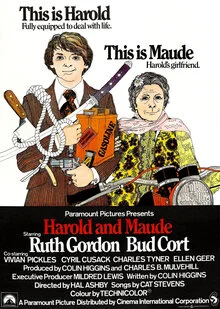
Harold_and_Maude_(1971_film)_poster.jpg

Harold and Maude (1971)

Mac Boyle January 30, 2020

Director: Hal Ashby

Cast: Ruth Gordon, Bud Cort, Vivian Pickles, Charles Tyner

Have I Seen It Before?: No.

Did I like it?: Yes…

But I do wonder if it is one of those instances where a film’s music single-handedly makes the rest of the film watchable. There are several absurdist—almost cartoonish—moments of mayhem on display, and they bring a smile to one’s face, even when they turn the morbidity up to eleven. I laughed much harder than I had any right to when Maude (Gordon) tells a Motorcycle Cop (Tom Skerritt, apparently using a different credit and trying to hide out), “Don’t get officious. You’re not yourself when you’re officious. That is the curse of a government job.”

Harold and Maude trucks (or more appropriately, stole cars) in the same era of late-adolescent ennui that permeated The Graduate (1967). So much so, that the two films have surprisingly similar taglines on their posters, but this film far more effectively rejects the suburban yuppiness that The Graduate is either resigned to or fails to ultimately surpass. Benjamin Braddock appears doomed at the end of the older film, whereas Harold (Cort) has experienced loss far more tragic but is more positively affected by what had happened during the film.

This is all to say that the film is perfectly charming. But would I have been anywhere near as swept away if—as Ashby had originally intended—Elton John’s music had filled the film’s soundtrack instead of Cat Stevens? That’s not even a knock against John’s discography, but I do watch this movie and am instantly in the mind of that one spring many years ago where I couldn’t stop listening to “Tea of the Tillerman.” It was prime “being Harold” time for me. Had the film tied its fate to songs like “Levon” or “Your Song” I don’t think the film—or those songs—would have been as well-remembered as they are.

Tags harold and maude (1971), hal ashby, bud cort, ruth gordon, vivian pickles, charles tyner
Comment

Powered by Squarespace

Party Now, Apocalypse Later Industries

Where creativity went when it said it was going out for cigarettes.

Where creativity went when it said it was going out for cigarettes.