Party Now, Apocalypse Later Industries

Where creativity went when it said it was going out for cigarettes.
  • Home
  • BOOKS
    • THE ONCE AND FUTURE ORSON WELLES
    • IF ANY OF THESE STORIES GOES OVER 1000 WORDS...
    • ORSON WELLES OF MARS
    • THE DEVIL LIVES IN BEVERLY HILLS
    • A LOSS FOR NORMALCY
    • RIGHT - A NOVEL OF POLITICS
  • PODCASTS
    • Beyond the Cabin in the Woods
    • THE HOLODECK IS BROKEN
    • THE FOURTH WALL
    • As The Myth Turns
    • FRIENDIBALS! - TWO FRIENDS TALKING ABOUT HANNIBAL LECTER
    • DISORGANIZED! A Criminal Minds Podcast
  • MOVIE REVIEWS
  • BLOGS AND MORE
    • Bloggy B Bloggington III, DDS
    • THE HOLODECK IS BROKEN BLOG
    • REALLY GOOD MAN!
  • Home
    • THE ONCE AND FUTURE ORSON WELLES
    • IF ANY OF THESE STORIES GOES OVER 1000 WORDS...
    • ORSON WELLES OF MARS
    • THE DEVIL LIVES IN BEVERLY HILLS
    • A LOSS FOR NORMALCY
    • RIGHT - A NOVEL OF POLITICS
    • Beyond the Cabin in the Woods
    • THE HOLODECK IS BROKEN
    • THE FOURTH WALL
    • As The Myth Turns
    • FRIENDIBALS! - TWO FRIENDS TALKING ABOUT HANNIBAL LECTER
    • DISORGANIZED! A Criminal Minds Podcast
  • MOVIE REVIEWS
    • Bloggy B Bloggington III, DDS
    • THE HOLODECK IS BROKEN BLOG
    • REALLY GOOD MAN!

A Blog About Watching Movies (AKA a Blog in Search of a Better Title)

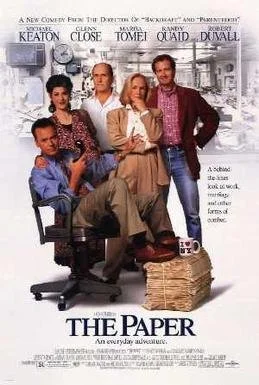
The Paper (1994)

Mac Boyle September 13, 2024

Director: Ron Howard

Cast: Michael Keaton, Glenn Close, Marisa Tomei, Randy Quaid

Have I Seen it Before: Yes. I did go through a period—I think it was early in the days when I started getting DVDs from Netflix (kids, ask your parents)—where I watched all of the movies Keaton made instead of Batman Forever (1995). Essentially this and Speechless (1994)*. It felt like it might be therapeutic, but it really wasn’t.

Did I Like It: This does a great job of doing that very simple thing which films aren’t all that interested in anymore: allowing a film to live or die by showing as authentically as possible people at work. Aaron Sorkin trucks in this and almost exclusively this. Mid-budget dramas and comedies used to make this sort of thing an art. Historical implications aside, All The President’s Men (1976) is an absolute symphony of this quality. There may be something to setting the film in a Newspaper that really makes the whole thing come together.

It’s a quietly thrilling thing to see in this day and age, when the most frequent job I get to imagine myself having (I do greatly enjoy imagining myself in some other job) while watching modern films is to be a superhero. It’s not so much that the Marvel movies are ruining cinema, it’s that there is something to be said for inspiring people to do things actual human beings do.

That said, the film might be just a bit too slight for its own good. Is Ron Howard ultimately the most breezy of his contemporaries that—aside from a stray Apollo 13 (1995) or A Beautiful Mind (2001)—any film is going to feel thinner than it might from another director? Is it the fact that a Randy Newman score just makes things so light that I can’t help but think we should be looking at something computer animated? Is it the fact that Randy Quaid is here at all? Probably a mixture of both.

*The true film for which Keaton abandoned Gotham City. Keaton and Geena Davis play political speechwriters who fall in love only to have Christopher Reeve cause them problems? Why isn’t that my favorite film of all time. Probably because its more than a little hard to find. But this review isn’t about Speechless.
Tags the paper (1994), ron howard, michael keaton, glenn close, marisa tomei, randy quaid
Comment

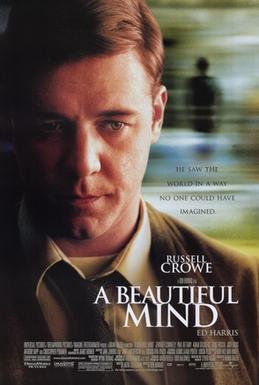
A Beautiful Mind (2001)

Mac Boyle April 29, 2024

Director: Ron Howard


Cast: Russell Crowe, Ed Harris, Jennifer Connelly, Paul Bettany


Have I Seen It Before: Oh, sure. Hell, there was a stretch there in the early 2000s where watching the movie, or listening to the score (that carried over to the 2020s, now that I think about it) were just about the only thing that could get me through any sort of brain freeze on a school project. That’s probably less than healthy, now that I’m really thinking about it.


Did I Like It: The odd thing about revisiting media that you know well but haven’t taken in more than a few years, there are things you never noticed before that now you can’t help but fixate on. Think Danny Pudi being one of the Santos campaign staffers in the last season of The West Wing, like the whole show was a Community prequel this whole time, and I never noticed. Here, Anthony Rapp—not the wide-eyed kid from Adventures in Babysitting (1987) mind you, but a discernably grown Rapp—runs around as one of Nash’s (Crowe) mathematician colleagues, and I’m left wondering someone is going to break the Prime Directive before everything is said and done. It really shouldn’t be difficult to separate an actor from the role with I most identify them, but when they were stealthily there the whole time, it’s just spooky.


Is that a sufficient criticism of the movie? Probably not, but it is the “new thought” I had to share, to be sure. Howard does tend to be the most journeyman among his elite level of filmmaking peers, and this is one of those examples. Strip away the James Horner score, the Roger Deakins cinematography, and most of the performances, and what you have is not much more evolved than a TV movie-of-the-week from days of old.

But how can you strip that many elements away from a film before you make assess it. Time may have been altogether kind to it, but it still tugs at all of the emotions that it wants to target.

Tags a beautiful mind (2001), ron howard, russell crowe, ed harris, jennifer connelly, paul bettany
Comment

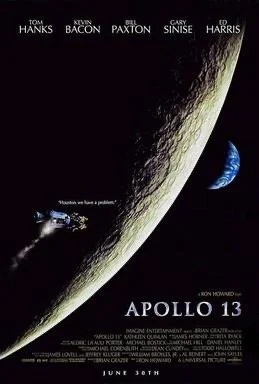
Apollo 13 (1995)

Mac Boyle September 4, 2022

Director: Ron Howard

Cast: Tom Hanks, Bill Paxton, Kevin Bacon, Kathleen Quinlan

Have I Seen it Before: Oh, sure. In fact, taking the movie in at 11 on VHS* feels like the first—or at least one of the first—movies meant for grown ups that really captured my imagination. It sent me into one of several periods over the last thirty years where I became obsessed with the space program, or at least that era before NASA decided to putter around in low Earth orbit for all eternity**.

Did I Like It: I’m smack dab in one of those periods where the Apollo program absolutely fascinates me. It’s entirely the fault of the Apple TV+ series For All Mankind, which has rapidly become one of my favorite television series ever. By its very nature, the show guarantees that we’re never going to know what’s going to happen at any given moment.

Even if I hadn’t already seen the movie several times over the years, I’d know exactly what happens by the end.

And yet, it is still thrilling. That may be partly because the story—without any Hollywood embellishments (of which there were few, judging by the Jim and Marilyn Lovell commentary track on the DVD—is just that thrilling. Everything that could have gone wrong on humanities third attempt to land on the moon did go wrong, and yet astronauts Lovell (Hanks), Haise (Paxton), and Swigert (Bacon) still return home at the end.

Also, and I really didn’t think this was going to be the case nearly thirty years after the film, but the special effects still work. The launch sequence is still insanely thrilling, and there isn’t even any inherent tension at that point in the film. The journey for the free-return trajectory to the moon depicts a lot of subtle details of the flight (chiefly debris from the explosion following the spacecraft through most of its arduous journey) that I honestly hadn’t noticed on previous viewings. Lora indicated one shot didn’t hold up as much as the others, where Ken Mattingly (Gary Sinise) watches the launch. She was right, but it didn’t even occur to me until after we were done watching that the film might have any technical flaws at all.

*How did we ever live like such animals? It boggles the mind.

**I know we’re trying to get back into the actual exploration of space beyond our planet, but as I type this Artemis I failed it’s second launch attempt in half as many weeks, I’ll believe it when I see it.

Tags apollo 13 (1995), ron howard, tom hanks, bill paxton, kevin bacon, kathleen quinlan
Comment

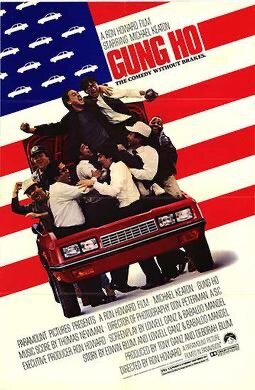
Gung Ho (1986)

Mac Boyle June 12, 2021

Director: Ron Howard

Cast: Michael Keaton, Gedde Watanabe, George Wendt, Mimi Rogers

Have I Seen it Before: Actually, I don’t think I have. Odd, I know. I would have thought that Clean and Sober (1988) is the only Keaton film I had managed to avoid, and that’s mainly because I had heard it was a stone-cold bummer. Maybe I’ll come around to it eventually.

Did I Like It: Right from the outset, you’re probably anticipating that I’m going to give this movie more credit than it might be worth, and you might be right. Had anybody else played the role of Hunt Stevenson, the thorough blandness of the film might have been unavoidable. The film isn’t quite funny enough for a Bill Murray. It’s also not quite edgy enough for an Eddie Murphy*. With Keaton, he’s able to be just relatable enough (while also seeming like he could become unglued at any minute) that I enjoyed the film despite itself. There’s also plenty to be said for a film that gives Gedde Watanabe the opportunity to be something more than the caricature he’s most famous for in films like Sixteen Candles (1984) and UHF (1989). 

And yet, there is still that blandness at its core. It attempts to be a Capra film or a new age (which itself feels quaint), but between every technical choice throughout the film, the entire affair is so dated, one needs only look at a few scant seconds of it without any other context to guess when it was made. I would say that Howard was so committed to the ambition of proving himself as a director outside of his notoriety as a child star that he forgot to get much of a POV. I’d say that he grew out of that once people started forgetting about Opie, but even his best films betray a journeyman quality to his work.


*A quick search indicates both turned down the role.

Tags gung ho (1986), ron howard, michael keaton, gedde watanabe, george wendt, mimi rogers, the michael keaton theory
Comment

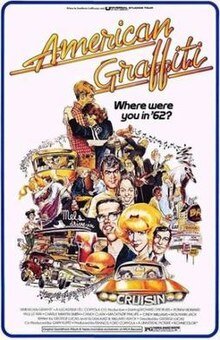
American Graffiti (1973)

Mac Boyle December 22, 2019

Director: George Lucas


Cast: Richard Dreyfuss, Ron Howard, Paul Le Mat, Charles Martin Smith


Have I Seen it Before: Yeah, a couple of times.


Did I Like It: It’s another odd duck from Lucas before he reached his true destiny. With THX 1138 (1971), he embraced every nihilistic impulse he must have had as a film student, and here he takes a completely left turn and manages to sing-handedly create the teen comedy genre that John Hughes would continue to perfect in the following decade.


He’s still trying to create interesting soundscapes in his films. THX is a cacophony of an evil future, and this a similarly overwhelming wave of adolescent noise. That instinct started to disappear with Star Wars – Episode IV: A New Hope (1977) and was all but gone by the time Star Wars – Episode VI: Return of the Jedi (1983) rolled around, that had disappeared.


Is it possible between the dourness of THX and the crowd-pleasing qualities of Star Wars, this is the kind of film we could have expected from Lucas when he was happy? I suppose not, as he also later made More American Graffiti (1979). It was not a success and continued to haunt him almost twenty years later when he made an off-hand comment about it during the making-of documentary of Star Wars – Episode I: The Phantom Menace (1999). 


Lucas so thoroughly nails this movie that even though I was a teenager forty years after these Modesto teens moved on to their adult lives, I am filled with nostalgia for my own days. Why doesn’t someone make the film about a bunch of kids running around trying to make a film themselves without any actual resources to back them up.


Guess I should probably make something like that myself.


God, this filmmaker has an ability to make me want to do things outside of my comfort zone. Usually it’s trying to find a heated-plasma sword and hoard religious artifacts. Is there any higher sign of a great filmmaker? Good on ya, Lucas.

Tags american graffiti (1973), george lucas, richard dreyfuss, ron howard, paul le mat, charles martin smith
Comment

Powered by Squarespace

Party Now, Apocalypse Later Industries

Where creativity went when it said it was going out for cigarettes.

Where creativity went when it said it was going out for cigarettes.