Party Now, Apocalypse Later Industries

Where creativity went when it said it was going out for cigarettes.
  • Home
  • BOOKS
    • THE ONCE AND FUTURE ORSON WELLES
    • IF ANY OF THESE STORIES GOES OVER 1000 WORDS...
    • ORSON WELLES OF MARS
    • THE DEVIL LIVES IN BEVERLY HILLS
    • A LOSS FOR NORMALCY
    • RIGHT - A NOVEL OF POLITICS
  • PODCASTS
    • Beyond the Cabin in the Woods
    • THE HOLODECK IS BROKEN
    • THE FOURTH WALL
    • As The Myth Turns
    • FRIENDIBALS! - TWO FRIENDS TALKING ABOUT HANNIBAL LECTER
    • DISORGANIZED! A Criminal Minds Podcast
  • MOVIE REVIEWS
  • BLOGS AND MORE
    • Bloggy B Bloggington III, DDS
    • THE HOLODECK IS BROKEN BLOG
    • REALLY GOOD MAN!
  • Home
    • THE ONCE AND FUTURE ORSON WELLES
    • IF ANY OF THESE STORIES GOES OVER 1000 WORDS...
    • ORSON WELLES OF MARS
    • THE DEVIL LIVES IN BEVERLY HILLS
    • A LOSS FOR NORMALCY
    • RIGHT - A NOVEL OF POLITICS
    • Beyond the Cabin in the Woods
    • THE HOLODECK IS BROKEN
    • THE FOURTH WALL
    • As The Myth Turns
    • FRIENDIBALS! - TWO FRIENDS TALKING ABOUT HANNIBAL LECTER
    • DISORGANIZED! A Criminal Minds Podcast
  • MOVIE REVIEWS
    • Bloggy B Bloggington III, DDS
    • THE HOLODECK IS BROKEN BLOG
    • REALLY GOOD MAN!

A Blog About Watching Movies (AKA a Blog in Search of a Better Title)

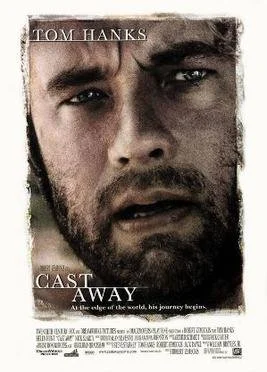
Cast Away (2000)

Mac Boyle August 11, 2024

Director: Robert Zemeckis


Cast: Tom Hanks, Helen Hunt, Nick Searcy, Chris Noth


Have I Seen It Before: Oh, boy. How much time do you have? I’m reasonably sure I saw it three times in the theater. I can remember so clearly being at my first job—sacking groceries for a now defunct purveyor of “fine” foods—being told that they had over-scheduled for the shift and needed someone to clock out. They had barely gotten the sentence out by the time I was already walking to my car, and heading to screening #2*.


And yet, for some reason, I have not seen it in… I don’t know how long. I’m going to guess its been about twenty years.


Did I Like It: I spent so much time writing about my experiences with watching the film in the far flung past, what more is there to say? It’s a rather brilliant way to make a movie, leaning into the central problem of trying to depict a man stranded on an island and just make two separate shoots out of the thing. Can any other actor hold a film all by himself for as long as Hanks does here? Everything is working to the film’s favor.

Some might complain about an ending that tries to put a bow on everything, but I couldn’t disagree more. The real movie for me starts when Noland (Hanks) gets back to the civilized world. He had to be so terrified that he would only make things worse by trying to leave the island once it became even remotely possible. And when he returns, the reality of the situation is not all he imagined (or had to imagine) it to be. But then he is free to live any kind of life he might imagine in that final moment. Leaving the island paid off. Some might say he goes immediately back to the angel wing girl (Lari White) and that puts too much of a bow on things. I think he might do that. But the point is he can do whatever he wants.


*I said once recently that “leaving work early to go see a movie” is my love language, and it not only goes back that far. I was not-yet six and my first time seeing Back to the Future – Part III (1990) (something about Zemeckis films released in years ending in “0”, I guess… Don’t bring up The Witches (2020), please.) was probably the incident which wrinkled my brain in such a way, and I wasn’t even the one taking off of work for it.

Tags cast away (2000), robert zemeckis, tom hanks, helen hunt, nick searcy, chris noth
Comment

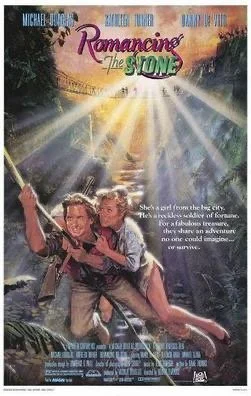
Romancing the Stone (1984)

Mac Boyle January 21, 2023

Director: Robert Zemeckis

Cast: Michael Douglas, Kathleen Turner, Danny DeVito, Alfonso Arau

Have I Seen it Before: Oh, sure, but it’s probably been twenty years or more. Before motion capture carried the day, I was a Zemeckis completist.

Did I Like It: There’s a unique pleasure in not keeping a movie generally beloved—and, indeed, I remember liking—in regular rotation. I would give almost anything to see something like Back to the Future (1985)* with new eyes. Thankfully, I took to this film with only the dimmest of memories, and it was essentially like I was taking it in for the first time.

The story unfurls with such a breathless confidence that I’m surprised it isn’t taught as an example in screenwriting books, and it’s a real bummer that more work from Diane Thomas—including a supposedly lost draft of a haunted house-centric third Indiana Jones film—didn’t see the light of day before her untimely death.

The screenplay could blow away in the wind if the chemistry between Douglas and Turner wasn’t enough to sell entire movies on their own. There are few pairings on screen who are more fun to kind of/sort of hate each other. Don’t believe me? Just take a look at The War of the Roses (1989).

The film is probably a little less ageless than Zemeckis’ other epics of the 80s, and I can’t understand why/how Alan Silvestri was talked into a sax and synth-heavy score. Honest to God, the whole film sounds like the opening titles for an episode of Siskel & Ebert. I’m not even opposed to that in these circumstances, I just know that a different approach might have moved the film from merely charming to truly timeless. I know all the principals involved can ultimately do better.

That is a minor complaint, when so much of the film works so thoroughly, but it might just keep me from re-watching it too soon. Maybe in twenty years or so I can take it the movie in again as if it was almost new.

*Which would not exist without this film, as Zemeckis’ main claim to fame prior to ‘84 was being at least partly responsible for the only flops with which Steven Spielberg was associated.

Tags romancing the stone (1984), robert zemeckis, michael douglas, kathleen turner, danny devito, alfonso arau
Comment
4A9D2A3F-E49E-4D4F-B4B5-AD6EC5C98D0D.jpeg

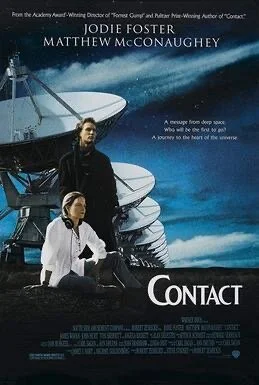
Contact (1997)

Mac Boyle November 22, 2020

Director: Robert Zemeckis

Cast: Jodie Foster, Matthew McConaughey, James Woods, John Hurt

Have I Seen it Before: Certainly. However, this particular screening came about after the recent news that the Arecibo Observatory in Puerto Rico is being decommissioned after suffering recent structural difficulties. Lora mentioned such news was doubly sad, as it was the location for the opening scenes of the film. I insisted that the film actually started with Jodie Foster discovering the Vega signal at the Very Large Array in New Mexico.

She was right; I was wrong. I apparently hadn’t remembered the film in much detail. It’s entirely possible that I have clearer memories of the trailer than I did of the film itself. And it wasn’t exactly like I saw it once in the theater and haven’t looked at it since. I’m pretty sure I’ve seen at least once in the last ten years. The human mind is weird.

Did I Like It: I’m happy to report that my lack of memory for the film had nothing to do with its quality. Far before Zemeckis decided to be content with being the least interesting filmmaker addicted to the WETA workshop, he was able to follow up the cultural permeation of Forrest Gump (1994) and the singular crowd-pleasing qualities of Back to the Future (1985) with the kind of meaty, thoughtful science fiction movie that best recommends the genre. Films that were common in an age of 2001: A Space Odyssey (1968) and Planet of the Apes (1968)* and are rare enough now, give or take an Arrival (2016) or two**.

McConaughey may be a member of that breed of movie stars who is almost entirely personality. That’s not necessarily a bad thing, especially here where Foster is allowed to give the far more nuanced and interesting performance. Had it been another actor portraying her love interest (or, for that matter, a less confident screen presence than Foster herself) Zemeckis and the studio might have been tempted to let the man overpower the woman in the frame. 

How many science fiction films lead one to talk about the performances as the central feature?


*Between those two and the superlative second season of the original Star Trek, sci-fi may not have seen a better tonnage crossed with quality year than the year Apollo 8 finally moved the idea of landing on the moon from the purely theoretical to the imminently possible. 

**You may want to bring up Interstellar (2014), but for my money Inception (2010) was far more thought-provoking.

Tags contact (1997), robert zemeckis, jodie foster, matthew mcconaughey, james woods, john hurt
Comment
74EABB84-9890-4565-B181-DCA126F47957.png

The Witches (2020)

Mac Boyle November 1, 2020

Director: Robert Zemeckis

Cast: Anne Hathaway, Octavia Spencer, Stanley Tucci, Chris Rock

Have I Seen it Before: Nope. Oddly enough, had 2020 turned out like some kind of normal year, I probably would not have felt much of an impetus to watch it, but as I apparently have already paid for the movie with my HBO subscription, then I might as well take the plunge.

Did I Like It: So let us begin with the headline. The new remake of The Witches is not the earworm the original adaptation of the film became. It will likely be forgotten pretty quickly as everyone associated with the film has done better work before and will likely to better work in the future.

And that’s not the worst thing in the world.

I actually applaud the film for not trying to re-create the “girl trapped in a painting” scene featured in both the book and the original film. It’s the most memorable part of that previous movie, and any attempt to recreate it is a fool’s errand. When the Society for the Prevention of Cruelty to Children displays a tableau with child statues in the hotel, I did wonder if there were actual kids trapped in those figures, though.

Changing the setting to the American south of the 1960s is a dollop of inspiration, adding a layer of more banal—and unsettlingly real—evil to the proceedings. It would have been nice for that subtext to have been brought to the surface just a bit more, but keeping the setting in England and Norway would have been simply more of the same.

This new film also tries to correct for past mistakes, by (spoiler alert) keeping the hero (Jahzir Kadeem Bruno as a child and new mouse, Chris Rock as his older self) a mouse at the end of the story. Sadly, this film can’t quite pull the trigger on the bittersweet quality of Roald Dahl’s work. In the book, it’s clear our hero will only live for a few more years, to say nothing of the realization that poor Bruno Jenkins (Codie-Lei Eastick) was probably killed by his mousephobic parents. Here, it looks like our hero may live far longer than any other mouse, and Bruno gets to join him and Grandma (Spencer) in their witch-hunting adventures. Perhaps the truly downer endings in children’s literature will never find their way out of the pages of books. Only the bookish kids can be trusted with the reality that sometimes bad things happen.

The rest of the movie is, unfortunately, a litany of disappointments. 

I’m as certain as I can be without a confession to this effect, but it sounded not only like Alan Silvestri phones his score in, but that the entirety of his orchestrations were culled from deleted tracks he wrote for any number of Avengers movies.

It’s always nice to see—or at least hear—Kristen Chenoweth in a film. And yet, her role as another human transformed into a mouse before the events of the film feels too forced in before it turns out she isn’t going to be given anything to do. A girl-mouse is a fine enough idea—why not make the hero female? Only boys can plaintively wail “Grandma!” and do the legwork of getting the mouse-maker formula into the witches’ soup?

Tags the witches (2020), robert zemeckis, anne hathaway, octavia spencer, stanley tucci, chris rock
Comment
220px-Movie_poster_who_framed_roger_rabbit.jpg

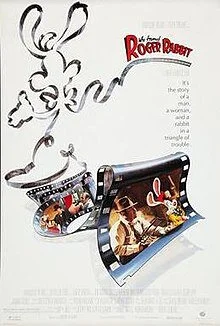
Who Framed Roger Rabbit (1988)

Mac Boyle July 11, 2020

Director: Robert Zemeckis


Cast: Bob Hoskins, Christopher Lloyd, Charles Fleischer, Stubby Kaye


Have I Seen it Before: I’m a child of the 1990s and I had a VCR. What do you think?


Did I Like It: One would naturally want to dwell in this review on the technology on display here. Animated characters had interacted with live action performances before, in films like Song of the South (1946) and Mary Poppins (1964) (both from Disney, incidentally). However, they never interacted quite so believably before or since. Animated characters rustle through their environment. Water splashes, blinds rustle, and chairs rotate when they come in contact with Roger and company. It’s a subtle, relatively low-tech addition to the process, but adds so much.


This is also a baffling cross-corporation crossover. When would you ever see Donald and Daffy Duck play a duet on the piano? Or Mickey Mouse and Bugs Bunny engage in conversation? Or any character owned by Warner Bros. appearing within 100 miles of a Disney production? It’s a testament to the baffling things Steven Spielberg could get done with just the weight of his mere involvement in a movie. I can’t imagine that such a convergence could ever happen again. It’s probably for the best that any sequel—variously rumored to be a war movie, or a domestic drama with Roger (Fleischer) and Jessica (various performers depending on the context, but primarily Kathleen Turner) in the 1950s—never came together.


Other movies attempted to fit a similar mold in the ensuing years. Cool World (1992), Space Jam (1996), and Looney Tunes: Back in Action (2003) all tried to merge real people and cartoon characters to varying degrees of commercial and critical success. Why do those films disappear into ambivalence and this film stands the test of time? Honestly, the story that underlines the whole thing (a tale about a private eye uncovering a plot to eradicate LA’s public transit system in favor of the freeway that will inevitably take it over) actually works under its own merits. The character work is solid. It may all be in the mold of Chinatown (1974), but it doesn’t skimp in the craft department simply because it is an homage.

Tags who framed roger rabbit (1988), robert zemeckis, bob hoskins, christopher lloyd, charles fleischer, stubby kaye
Comment

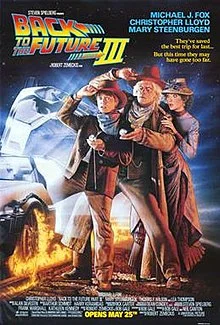
Back to the Future Part III (1990)

Mac Boyle August 20, 2019

Director: Robert Zemeckis

Cast: Michael J. Fox, Christopher Lloyd, Mary Steenburgen, Thomas F. Wilson

Have I Seen it Before: It is May, 1990. I am 5, going on 6. I don’t remember much about the world at that time, but I do remember having watched a VHS copy of Back to the Future Part II (1989) or about the 900th time, and being flooded with a cavalcade of TV spots for the forthcoming Part III. It was a wild time to be alive, having not seen all of the Back to the Future films. Today, I can’t quite wrap my head around it.

My dad comes home early from work. We pile into the car. I want to say I’m not aware of where we are going, but nearly 30 years since, my memory may not be ebbing, but it is smoothing out in the details. We go to the Annex 7.

We see Back to the Future Part III. 

I’ve thought about that particular screening at least once a month for the rest of my life. After the Annex 7 fell in favor of the Palace 12 (which in turn fell to the unrelenting force of indifference), I’ve wanted little more in life than to go back to the Annex 7 to watch anything. As it stands, I’ve got a real bad habit of leaving work early to go see movies, desperately trying to capture that feeling.

Flash forward a few months, and the film is released on video. It wasn’t quite priced to own yet, but rental places (they were kind of like Redboxes that you went inside; kids, ask your parents) would let you borrow it for a few days. To this day, one of the great creature comforts in life is some Chicken McNuggets and a viewing of this movie.

Set the time circuits ahead even a few more months. Now with a copy of Part III to call my very own—and perhaps single-handedly putting the brick and mortar movie rental business on the path to ruin—my aunt and uncle had come to visit. Looking at the small army of video tapes sitting on a shelf, they asked if they could borrow my copy of Part III, as they hadn’t seen it yet. The thought that I could share my excitement about movies with people was a revelation, and yet another high that I keep trying to chase as I type these words.

One final stop before we destroy this infernal contraption: Over a decade later, when I tried to made my first foray into forging a film of my own, I could think of no other piece of music to evoke the feeling of ending a long journey that you wouldn’t have given up for all the world. Thus, as we say goodbye to Really Good Man in The Adventures of Really Good Man (2002), the main theme of this film plays softly in the background.

There are few movies that are more central to my feelings about the movies than this particular film.

So, yes, to answer your question, I’ve seen Back to the Future Part III.

Did I Like It: In my review of Part II, I did indicate that as the years have gone by, my feelings about the sequels to Back to the Future (1985) have ebbed. The first film is about as perfect a story as exists in film, whereas the sequels are more consumed with self-consciously re-creating beats from the original film. Here that package is a little more satisfying, as it feels like the characters—mainly Marty (Fox)—attempt and are largely successful in breaking out of old patterns. The common complaint against Part II—that it isn’t a complete story—is quickly rectified here.

It’s also a brilliant way to make a western at a time in Hollywood when even Clint Eastwood (the biggest yellow-belly in the west) was not making cowboy pictures. Evoking the best of John Ford, the joy the filmmakers had in making something a little bit different pops out of every moment that takes place in the 19th century. Some might say that putting cowboys in the final installment of a teenage time travel comedy was a choice too far out of left field. I guarantee you, each and every person who says

And yet, I do have some qualms. The entire film is predicated on the established fact that Doc Brown (Lloyd) can’t repair the Time Machine in 1885 due to unsuitable replacement parts. What does Doc do the moment that Marty goes back to the future? Builds a Time Machine out of a train car. That doesn’t even begin to deal with why the Time Machine needed to be pushed up to 88 miles per hour, when it Part II it is clearly shown that while the flux capacitor activates at that speed, and yet can be overridden if enough electricity is sent through the Delorean’s mechanisms. I’ll admit that this may not be the most useful place for that discussion, and at least should have been a part of my review for Part II.

More likely, I’ve seen these films so many times that I’ve analyzed every moment of them beyond what one might consider rational.

And despite these logical inconsistencies, I love the film. Now, my prolonged answer to the question “had I ever seen it” might have something to do with that. And still, any time someone has an unkind word about the film, I get a brief flash of irrational irritation. Maybe I can’t be objective about it. Maybe I don’t want to be.
Tags back to the future part iii (1990), back to the future movies, time travel movies, robert zemeckis, michael j fox, christopher lloyd, mary steenburgen, thomas f wilson
Comment
220px-Back_to_the_Future_Part_II.jpg

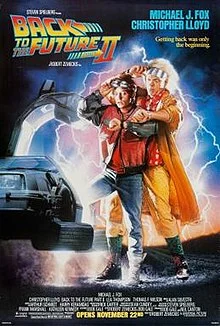
Back to the Future Part II (1989)

Mac Boyle August 20, 2019

Director: Robert Zemeckis

Cast: Michael J. Fox, Christopher Lloyd, Lea Thompson, Elizabeth Shue

Have I Seen it Before: It was probably on constant repeat in my house throughout the 90s. I would try to venture a guess as to how many times I’ve seen it, but I’d need a team of MIT mathematicians to crack the final number.

Did I Like It: That’s the real question, isn’t it?

Almost immediately upon release, the film was dismissed as somewhat incomplete. Even director Zemeckis eventually claimed that in the mad marathon to make this film and Back to the Future Part III (1990) in quick succession, Part II got the short shrift. 

After the final film in the series (hear me, Universal? Final.) was released, Part II got a slight re-evaluation, and was damned with a healthy dollop of faint praise. No longer an incomplete story, it was viewed as Act II of a larger story.

And that’s where we are now. I’ve been on the record in years past saying that the Back to the Future trilogy is the greatest six-hour movie that could theoretically exist. After repeat (and I do mean repeat watchings), I’ve changed my mind a little bit. While the original Back to the Future is one of the more tightly constructed stories ever committed to film, the fat on the sequels begin to show.

Whereas the first film is a masters class in set up and payoff, culminating in real change for the characters, the sequels are too often committed to the notion of repeating gags from the previous film, and having Marty (Fox) consistently run afoul of his own irrational hate for being called a chicken. 

Now, don’t get me wrong, those elements do work to some degree. The repeating elements—if viewed through any other prism than it reeks of studio notes to have the movies superficially resemble the original—could be looked at as a motif of the characters struggling to learn from their own past, and thus doomed to repeat it, regardless of their ability to travel amidst the fourth dimension. Someone could write a pretty in-depth analysis of this reading of the sequel from a Buddhist perspective, but please, don’t let it be me. And those motifs are only dropped when Marty—a character who diligently avoids anything resembling an arc throughout the whole trilogy—finally lets go of his ego.

It’s just not as tight as the first film, but then again few sequels are. But, to judge the series—and by extension, this film—against the other big trilogies (Star Wars, Indiana Jones, heck, even Star Trek’s II-IV), Part II delivers on the promise to be the darker entry. It becomes clear that any progress the characters made in the original film is tenuous, and could be torn asunder by their own complacency and a few well-timed bullets.

Also, there’s an entire plot wherein a hapless, mean-spirited oaf falls ass-backwards into becoming a casino and real estate tycoon (and by extension, one of the most powerful men in America), so you can’t get much darker than that.

But, I think the bigger test of the middle-entry of a trilogy is whether or not it is the breakneck adventure of the trilogy. The Empire Strikes Back (1980), Indiana Jones and the Temple of Doom (1984) and Star Trek III: The Search for Spock (1984) begin their stories and do not let up until the closing credits and the faint hope of a part three rings through our imaginations, all the while bringing their characters so close to the breaking point, that the catharsis of a conclusion is all that remains. On that front, Back to the Future Part II more than delivers. While one may want more of a complete story out of the proceedings, you can’t argue with the adventure of the pacing on this one.

Tags back to the future part ii (1989), back to the future movies, time travel movies, robert zemeckis, michael j fox, christopher lloyd, lea thompson, elizabeth shue
Comment

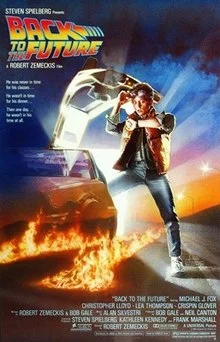
Back to the Future (1985)

Mac Boyle August 19, 2019

Director: Robert Zemeckis

Cast: Michael J. Fox, Christopher Lloyd, Lea Thompson, Crispin Glover

Have I Seen it Before: My parents like to tell a story about me—a little more than a week before my first birthday—enraptured by the movie as it played at the Admiral Twin Drive-in. That night I may have fallen asleep before the movie was over, but I assure you that I’ve more than made up for it since then.

Did I Like It: Can a movie live in your soul? Can a single film dictate a vast majority of one person’s aesthetic to the point where one becomes ever so slightly concerned that the only cogent thoughts he has ever had 

Can a film be perfect?

Yes, yes it can. The film doesn’t waste a single moment in its story-telling. Every moment builds on the developments that precede it. The time travel logic is unassailable, and that’s not something I can say for many time travel movies, including some of the sequels that follow this movie.

Look, if you came here looking for some kind of sober, level-headed admission of flaw in the film, then there’s the door.

But I could spend some time talking about some of the great parts of the film that don’t get enough credit. Lea Thompson might appear to be relegated to a basic ingénue role, but in reality she is the film’s secret weapon. I challenge you to name an actress who could on a dime turn from defeated, alcoholic housewife, to randy teenager, and still somehow stay maternal the whole time. You might come up with a Meryl Streep out there in the world who could make those changes with the same skill, but I guarantee there has never been and never will be a performer who could take all of those qualities, play a number of scenes where she unknowingly lusts after her son, and not make the film a pitch-black dark comedy in the process. Hell, she made large swaths of Howard the Duck (1986) watchable. That she is not one of the most heralded screen presences of all time is beyond me. Maybe she had enough sense to not want that kind of scrutiny. Maybe Lea Thompson is just too good for the movies.

But even all that seems superfluous when we’re talking about a prime candidate for my personal canon of greatest films of all time. If you haven’t seen it, I don’t understand what you have been doing with your time. If you have seen it and aren’t as enamored of it as the preceding words would insist, I don’t know what to do with you. You should go rewatch it and do it correctly this time. If you are as in love with this movie as I am, you should still rewatch it. There are few things in life which are more enjoyable.

Tags back to the future (1985), time travel movies, back to the future movies, robert zemeckis, michael j fox, christopher lloyd, lea thompson, crispin glover
Comment

Powered by Squarespace

Party Now, Apocalypse Later Industries

Where creativity went when it said it was going out for cigarettes.

Where creativity went when it said it was going out for cigarettes.