Party Now, Apocalypse Later Industries

Where creativity went when it said it was going out for cigarettes.
  • Home
  • BOOKS
    • THE ONCE AND FUTURE ORSON WELLES
    • IF ANY OF THESE STORIES GOES OVER 1000 WORDS...
    • ORSON WELLES OF MARS
    • THE DEVIL LIVES IN BEVERLY HILLS
    • A LOSS FOR NORMALCY
    • RIGHT - A NOVEL OF POLITICS
  • PODCASTS
    • Beyond the Cabin in the Woods
    • THE HOLODECK IS BROKEN
    • THE FOURTH WALL
    • As The Myth Turns
    • FRIENDIBALS! - TWO FRIENDS TALKING ABOUT HANNIBAL LECTER
    • DISORGANIZED! A Criminal Minds Podcast
  • MOVIE REVIEWS
  • BLOGS AND MORE
    • Bloggy B Bloggington III, DDS
    • THE HOLODECK IS BROKEN BLOG
    • REALLY GOOD MAN!
  • Home
    • THE ONCE AND FUTURE ORSON WELLES
    • IF ANY OF THESE STORIES GOES OVER 1000 WORDS...
    • ORSON WELLES OF MARS
    • THE DEVIL LIVES IN BEVERLY HILLS
    • A LOSS FOR NORMALCY
    • RIGHT - A NOVEL OF POLITICS
    • Beyond the Cabin in the Woods
    • THE HOLODECK IS BROKEN
    • THE FOURTH WALL
    • As The Myth Turns
    • FRIENDIBALS! - TWO FRIENDS TALKING ABOUT HANNIBAL LECTER
    • DISORGANIZED! A Criminal Minds Podcast
  • MOVIE REVIEWS
    • Bloggy B Bloggington III, DDS
    • THE HOLODECK IS BROKEN BLOG
    • REALLY GOOD MAN!

A Blog About Watching Movies (AKA a Blog in Search of a Better Title)

What About Bob? (1991)

Mac Boyle July 26, 2025

Director: Frank Oz

Cast: Bill Murray, Richard Dreyfuss, Julie Hagerty, Charlie Korsmo

Have I Seen it Before: Oh, sure. Relatively sure I saw it in theaters.

Did I Like It: If pressed, I would say that the peak period of Bill Murray probably started with the famous Saturday Night Live sketch where he admitted that he wasn’t really doing so great on the show*, and goes up to about Scrooged (1988). His current era is a bit more reserved and attracts some awards, give or take a handful Ghostbusters legacy sequels. Then there’s that middle era, where he was a holy terror to everyone he worked with. Starting here, and culminating with him not being asked back for a second Charlie’s Angels film.

What we have here is a basic, even erring on the side of too-broad-for-its-own good comedy. This is especially true in the third act, where the wide-release sensibility prevents the story from reaching its natural conclusion, where Dreyfuss strangles the life out of Murray, and instead culminates in a comedy of error that sees Dreyfuss blow his own house up.

What the film has going for it is that it is perhaps the perfect matchup of two actors who make it a point not to get along with people. Their chemistry is palpable and might very well have propelled a far less competent screenplay to be just as watchable. What we may all have missed in that is that a far less competent director than Oz would have had no hope at all of keeping this all together. He doesn’t get nearly enough credit for his work behind the camera, in favor of his work as a puppeteer.

*One might make the argument for the moment when he called Chevy Chase a “medium talent” back stage and then got into a physical altercation, but we mostly have to imagine how that one played out.
Tags what about bob? (1991), frank oz, bill murray, richard dreyfuss, julie hagerty, charlie korsmo
Comment

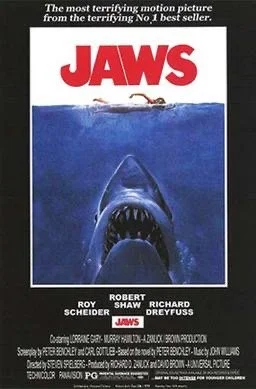
Jaws (1975)

Mac Boyle June 21, 2022

Director: Steven Spielberg

Cast: Roy Scheider, Richard Dreyfuss, Robert Shaw, Lorraine Gary

Have I Seen it Before: Oh, sure. No less, the poster is up in my living room*. As I type that, it’s more shocking than anything else that I haven’t re-watched in the four years since I’ve started these reviews.

Did I Like It: There’s plenty for someone to love about this movie even from a distance. The cinematography is as good as anything has ever been. Every frame of the movie has nearly perfect construction, which is all the more impressive when one considers that the entire film actively tried to shake itself apart from the beginning principal photography. As a first major release for Spielberg, the film proves beyond all doubt that he could turn disasters into hits. I’d submit that any of his New Hollywood cohorts would have collapsed under the pressure of making the film. Coppola? Lucas? Hopper? We never would have heard from Hopper again if he had to deal with the shark.

“The shark looks fake” is a hoary cliche of a joke, but it can really only be leveled at the sequels. Whether it is because of Spielberg’s inherent sense (brought to full bear in Jurassic Park (1993)) to avoid showing us the monster for as long as possible, or if that sensibility came about because the shark was an unreliable diva, the shark makes maximum impact when he finally does emerge from the water.

The score is arguably John Williams’ simplest, but it might also be among his most iconic. Not bad for what on first blush is just a cacophony of piano and bowed strings.

But the real secret power of the film—and one that many big movie entertainments did not try to emulate—are the performances. The movie may never be deep, profound drama, but each of the three main leads behaves in the film in a memorable way. When it’s now several days since I re-viewed the film, and I still can’t get “Show Me The Way To Go Home” out of my head, that may be undeniable proof that the movie is only kind of about a shark.

*Along with the iconic art deco poster for The Rocketeer (1991). There’s a certain odd symmetry between them, with both Cliff Secord and Bruce the Shark staring at a hook for hanging plantss that predates our buying of this house.

Tags jaws (1975), steven spielberg, roy scheider, richard dreyfuss, robert shaw, lorraine gary
Comment
IMG_0059.jpeg

Close Encounters of the Third Kind (1977)

Mac Boyle March 6, 2021

Director: Steven Spielberg

Cast: Richard Dreyfuss, Teri Garr, Melinda Dillon, François Truffaut

Have I Seen it Before: Yes. It’s not been a staple of the Spielberg canon for me, and that might have something to do with, at it’s core, the film being about a father who will stop at nothing to not be a father anymore. I think Spielberg would probably agree with that assessment.

Did I Like It: I think I’m more up for the film now, and that may be tied to how it is now less about a man who can’t wait to be free of his kids and wife*, and more about a man in his thirties who maybe didn’t have things work out them. Something extraordinary happens, and it is all he can do to hold on to that sense of wonder.

Which, for some reason, I can relate to now. I won’t spend much time analyzing why, precisely. 

One could spend some time dwelling on the technical skill on display here, but how many ways can anyone say that Spielberg knows what he’s doing with a movie? Each frame is pristine, the editing is flawless, and by some miracle, the special effects still work over forty years later. Every Spielberg movie is a worthy cinematic experience**, and here in his prime Amblin phase, each entry into his filmography is an unparalleled celluloid confection.

In times past, I’ve talked about what separated Spielberg from his closest contemporary (as far as this era is concerned), George Lucas. Lucas made great movies generally when the sword of Damocles was swinging right above his head. By the time The Empire Strikes Back (1980) came out, Lucas didn’t have anything to worry about. Aside from a handful of films directed by Spielberg himself, he never quite got it right again. Spielberg on the other hand is the more natural director, and never stopped making worthy films. That being said, there is something special about Spielberg’s films that might very well have fallen apart at the seams, but still managed to miraculously came together. Jaws (1975), with its mercurial shark is that way. This film, with a studio nearly going bankrupt during production, a producer being fired, and by my count 6 separate directors of photography before we even start talking about a second unit, this film is another.

If, like me, this is not one of your favorite Spielberg films, it might be time to come home. It’s probably time for Roy Neary to come home, too.

Actually, it’s probably way too late for that.


*It is still about that, but stay with me, folks.

**Yes, even 1941 (1979).

Tags close encounters of the third kind (1977), steven spielberg, richard dreyfuss, teri garr, melinda dillon, françois truffaut
Comment

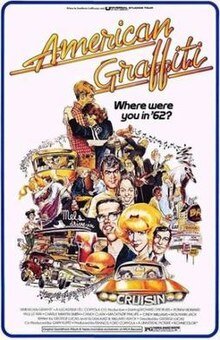
American Graffiti (1973)

Mac Boyle December 22, 2019

Director: George Lucas


Cast: Richard Dreyfuss, Ron Howard, Paul Le Mat, Charles Martin Smith


Have I Seen it Before: Yeah, a couple of times.


Did I Like It: It’s another odd duck from Lucas before he reached his true destiny. With THX 1138 (1971), he embraced every nihilistic impulse he must have had as a film student, and here he takes a completely left turn and manages to sing-handedly create the teen comedy genre that John Hughes would continue to perfect in the following decade.


He’s still trying to create interesting soundscapes in his films. THX is a cacophony of an evil future, and this a similarly overwhelming wave of adolescent noise. That instinct started to disappear with Star Wars – Episode IV: A New Hope (1977) and was all but gone by the time Star Wars – Episode VI: Return of the Jedi (1983) rolled around, that had disappeared.


Is it possible between the dourness of THX and the crowd-pleasing qualities of Star Wars, this is the kind of film we could have expected from Lucas when he was happy? I suppose not, as he also later made More American Graffiti (1979). It was not a success and continued to haunt him almost twenty years later when he made an off-hand comment about it during the making-of documentary of Star Wars – Episode I: The Phantom Menace (1999). 


Lucas so thoroughly nails this movie that even though I was a teenager forty years after these Modesto teens moved on to their adult lives, I am filled with nostalgia for my own days. Why doesn’t someone make the film about a bunch of kids running around trying to make a film themselves without any actual resources to back them up.


Guess I should probably make something like that myself.


God, this filmmaker has an ability to make me want to do things outside of my comfort zone. Usually it’s trying to find a heated-plasma sword and hoard religious artifacts. Is there any higher sign of a great filmmaker? Good on ya, Lucas.

Tags american graffiti (1973), george lucas, richard dreyfuss, ron howard, paul le mat, charles martin smith
Comment

Powered by Squarespace

Party Now, Apocalypse Later Industries

Where creativity went when it said it was going out for cigarettes.

Where creativity went when it said it was going out for cigarettes.