Party Now, Apocalypse Later Industries

Where creativity went when it said it was going out for cigarettes.
  • Home
  • BOOKS
    • THE ONCE AND FUTURE ORSON WELLES
    • IF ANY OF THESE STORIES GOES OVER 1000 WORDS...
    • ORSON WELLES OF MARS
    • THE DEVIL LIVES IN BEVERLY HILLS
    • A LOSS FOR NORMALCY
    • RIGHT - A NOVEL OF POLITICS
  • PODCASTS
    • Beyond the Cabin in the Woods
    • THE HOLODECK IS BROKEN
    • THE FOURTH WALL
    • As The Myth Turns
    • FRIENDIBALS! - TWO FRIENDS TALKING ABOUT HANNIBAL LECTER
    • DISORGANIZED! A Criminal Minds Podcast
  • MOVIE REVIEWS
  • BLOGS AND MORE
    • Bloggy B Bloggington III, DDS
    • THE HOLODECK IS BROKEN BLOG
    • REALLY GOOD MAN!
  • Home
    • THE ONCE AND FUTURE ORSON WELLES
    • IF ANY OF THESE STORIES GOES OVER 1000 WORDS...
    • ORSON WELLES OF MARS
    • THE DEVIL LIVES IN BEVERLY HILLS
    • A LOSS FOR NORMALCY
    • RIGHT - A NOVEL OF POLITICS
    • Beyond the Cabin in the Woods
    • THE HOLODECK IS BROKEN
    • THE FOURTH WALL
    • As The Myth Turns
    • FRIENDIBALS! - TWO FRIENDS TALKING ABOUT HANNIBAL LECTER
    • DISORGANIZED! A Criminal Minds Podcast
  • MOVIE REVIEWS
    • Bloggy B Bloggington III, DDS
    • THE HOLODECK IS BROKEN BLOG
    • REALLY GOOD MAN!

A Blog About Watching Movies (AKA a Blog in Search of a Better Title)

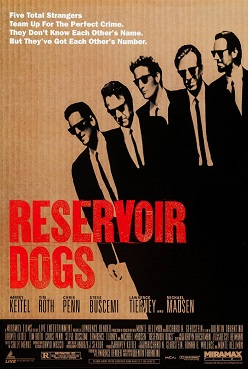
Reservoir Dogs (1992)

Mac Boyle October 21, 2024

Director: Quentin Tarantino

Cast: Harvey Keitel, Tim Roth, Chris Penn, Steve Buscemi

Have I Seen it Before: Oh, sure. You don’t live in the dorms for any stretch of the mid-2000s without taking in all of the Tarantino library.

Did I Like It: This is probably the Tarantino film I’m least inclined to re-visit, but I think I’ve spent more than a few years being unfair in that regard. My memory of the film is that it was always a bit simplistic. That isn’t necessarily a mark against the film. Given the resources Tarantino was working with, the film didn’t really have any hope of being more of a prototype for what Tarantino would eventually have in store for us.

The film is infinitely more complex than my memory gave it credit. Tarantino introduces himself to the movie-going world with the same kind of unhinged, borderline-bonkers plot construction he would later perfect* in Pulp Fiction (1994).

You may be like me and mostly remember the opening diner scene where the characters disassemble Madonna’s “Like a Virgin” or the torture scene complete with a needle drop of “Stuck in the Middle with You.” But the entire story keeps its secrets from us for as long as it wants to, and not a second longer, and only reveals them not when the flow of the ill-fated heist demands it, but when it will mean the most to us in our journey with the characters.

You might be like some of the critics of the age who are irretrievably turned off by the use of language and the violence. The immediate answer to those complaints is that you’re likely to have a devil of a time with the rest of Tarantino’s films, but I would add on to say that every line of dialogue is built to reveal character, even when those characters are helplessly awful. As far as the violence is concerned, I suppose I understand the complaints about violence in Tarantino’s films, but whereas light PG-13 depict violence as bloodless, barely notable events, it is difficult to say that Tarantino treats his violence blithely. Every drop of blood is bled from wounds that hurt, and that means more than finding a character amidst a maelstrom of bullets and blades only to come out with a scratch.

*And subsequently abandon, It’s a little disappointing that Tarantino never really continued his experiments with non-linear narratives, but then one supposes that if you start experimenting, and then perfect it in the next outing, are there really any experiments left to do?
Tags reservoir dogs (1992), quentin tarantino, harvey keitel, tim roth, chris penn, steve buscemi
Comment
IMG_0057.jpeg

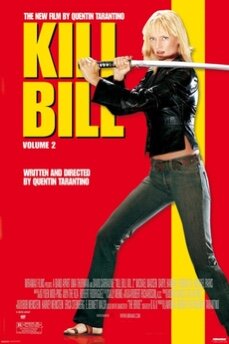
Kill Bill: Volume 2 (2004)

Mac Boyle February 27, 2021

Director: Quentin Tarantino

Cast: Uma Thurman, David Carradine, Michael Madsen, Daryl Hannah

Have I Seen it Before: Yes. Although for some reason this one is stuck in my memory less than Kill Bill: Volume 1 (2003).

Did I Like It: And I wonder why that is. My immediate, instinctual answer is to say that as a college student when these were released, the first film somehow seeped into the consciousness of a certain kind of guy a bit more than this one.

Which is a shame, because (and forgive me if this next assertion dares to offend your delicate sensibilities) this is the better film. I might be inclined to think that my scant memory of the film made the surprises fresher and more pleasurable, but I think it’s more than that. The story here is tighter, the characters less broad, and the thrills are just as potent (which is only partially attributed to the reflexive cringing I experience after witnessing the repeated self-mangling of Uma Thurman’s hands.

Ultimately, I’m struggling to think of a film with a more potent (or even one to rival this film’s) feeling of catharsis in the aftermath of the climax. We feel the vindication of Kiddo (Thurman) so viscerally, we are very nearly relieved of Budd’s (Madsen) assertion at the top of the film—and I paraphrase—that she deserves to die just as much as the villains.

Here’s the conclusion I think I’m going to stick with. While the first film has plenty of thrills, and it could have suffered from being simply connective tissue in larger sagas like Back to the Future - Part II (1989)*, it is ultimately just a trailer for the far more satisfying conclusion contained herein.


* Which I still like, for the record, and about which I will not hear an unkind word.

Tags kill bill: volume 2 (2004), quentin tarantino, uma thurman, david carradine, michael madsen, daryl hannah
Comment
IMG_0055.jpeg

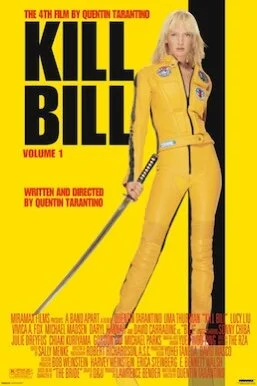
Kill Bill: Volume 1 (2003)

Mac Boyle February 15, 2021

Director: Quentin Tarantino

Cast: Uma Thurman, Lucy Liu, Vivica A. Fox, Sonny Chiba

Have I Seen it Before: I wouldn’t say kung fu movies are a mainstay in my movie watching diet, so the prospect of this one didn’t insist on itself way-back-when. On spec, it was the film which inspired every brain-dead fool on my dorm floor to buy and display cheap samurai swords. Taken solely as the sum total of its parts the film should be irritating. And yet, I can’t recall a movie winning me over faster than when this one mentioned an old Klingon proverb in its opening seconds.

Did I Like It: That last remark I made really should say it all. Is there anyone who can bake together disparate parts that might not have been very good on their own—and certainly have no business going together—into a package so ceaselessly entertaining? The unflinching violence of the fights—which, surely, may not be to everyones taste—is one thing, but I’m really here for the little things. How can one not like a movie that injects a club owner who looks like Charlie Brown just for the joy of it?

And this isn’t even a complete movie, just the flashier parts Miramax would let Tarantino put forward, before the more introspective and emotional Kill Bill — Volume 2 (2004). It jumps around—hardly new for Tarantino—offers no real sense of catharsis at the end, and only holds itself together through the use of voice over narration. Honestly, if any other filmmaker had handled the same material or themes, the end result would have been the most irritating movie of all time.

Maybe I need to give all of these things another chance. I look at the Origin of O-Ren and wonder if I’ve been spending my whole life being wrong about Anime. For my money, that takeaway—the desire to steep oneself in the ingredients Tarantino has used—is the best possible feeling after one of his movies. That he has me even marginally interested in anime is a feat at which decades worth of friends have steadfastly failed.

Tags kill bill: volume 1 (2003), quentin tarantino, uma thurman, lucy liu, vivica a fox, sonny chiba
Comment
Death_Proof_USA_Poster.png

Death Proof (2007)

Mac Boyle October 15, 2020

Director: Quentin Tarantino


Cast: Kurt Russell, Rosario Dawson, Zoë Bell, Rose McGowan


Have I Seen it Before: Yes. But I honestly have no memory of Planet Terror (2007) the other half of the Grindhouse double feature.


Did I Like It: Which I think speaks volume for this film. I wrote about Jackie Brown (1997) recently that it was the most anonymous of Tarantino’s films, whereas this is the exact opposite. From the opening shot of a woman’s feet* all the way to the cameo of Big Kahuna Burger, this a concentrated dose of Tarantino. If you’re disinclined to like his work, then the film never has a chance.


Thankfully, I’m inclined to the opposite, so the film works, if not to the delirious highs of something like Once Upon A Time…In Hollywood (2019). What holds it down from true greatness is the format. Tarantino has always been interesting in committing homage to exploitation films of the 1970s, but he has always been remixing those elements to create new, vibrant art. Here, he is trying to make one of those films that he so enjoyed. The stark cutting would have riddled films of the genre, but that is part of the environment through which we see those films. Here, it is artificial, and to much less effect. Death Proof is a worthy experiment, if not the crown jewel of the man’s work.


That being said, the stunt work—the film’s entire reason for existing—is exquisite, and of a type we are not likely to ever see in films again. That alone is worth the price of admission, or the purchase of a DVD.


*One wonders if at a certain point Tarantino gleefully steered that motif into parody. We all laugh about the man’s foot fetish, but I start to think it may have been overblown. Then, I pop in one of his films and… Damn. That dude really enjoys filming women’s feet. More power to him, but it’s hard not to see the auteur in those shots.

Tags death proof (2007), grindhouse, quentin tarantino, kurt russell, rosario dawson, zoë bell, rose mcgowan
Comment

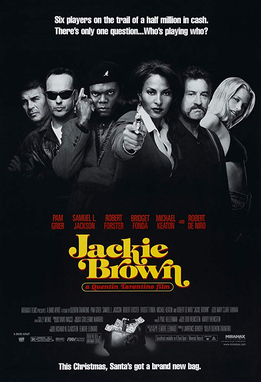
Jackie Brown (1997)

Mac Boyle October 13, 2020

Director: Quentin Tarantino

Cast: Pam Grier, Samuel L. Jackson, Robert Forster, Robert De Niro

Have I Seen it Before: Yes.

Did I Like It: But that’s the interesting thing. I don’t think it would be a terribly controversial opinion to call this Tarantino’s least memorable film. It’s certainly a different type of film from Tarantino’s other projects. It’s more linear than anything else from him, with the plot unfolding form A to B to C in such a coherent order (until the third act, a little bit) that if it weren’t for the close up of ladies feet, one would be forgiven for not realizing Tarantino is directing at all. It’s the only adaptation Tarantino has done—from a novel by Elmore Leonard—but I’m still a little bit surprised that the story of Jackie (Grier) didn’t get thrown into the Tarantino narrative blender.

But, that’s not a bad thing, the lack of memorability and relative anonymity of it all. I’ve watched Once Upon a Time... In Hollywood (2019) about a half a dozen times in the year since its release. It’s terrific, naturally, but the little moments and touches of the film that make Tarantino have become quite familiar over such a short amount of time. The same can be said about Pulp Fiction (1994) and either of the Kill Bill films. So, it’s an extra treat to rediscover this movie every once in a while. It’s almost like getting a new Tarantino movie every once in a while when you really weren’t expecting one. It may not meet some of the delirious highs of some of his other films, but even with its minor status, I can’t readily think of a better film from 1997.

Plus, Michael Keaton is in the movie, and frequent readers of this space know I’m prepared to give any movie a pass if Michael Keaton is in it.

Tags jackie brown (1997), quentin tarantino, pam grier, samuel l jackson, robert forster, robert de niro
Comment
220px-Once_Upon_a_Time_in_Hollywood_poster.png

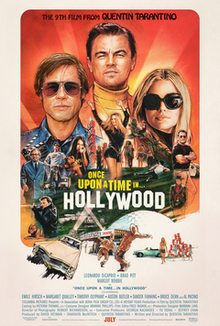
Once Upon a Time in... Hollywood (2019)

Mac Boyle July 29, 2019

Naturally, spoilers for a recent release follow. Read at your own discretion.

Director: Quentin Tarantino

Cast: Leonardo DiCaprio, Brad Pitt, Margot Robbie, Kurt Russell*

Have I Seen it Before: No. New release, and Tarantino always keeps things fresh within certain parameters, although I’m absolutely certain I’ve seen shots of feet like that before. Damn, does that man love feet. If he does end up making a Star Trek film—as looks to be a strong possibility as his tenth and allegedly final film—be prepared to see some Starfleet officers out of their boots.

Did I Like It: I’m still processing a lot of it, but yeah, what’s not to like with Tarantino?

Every movie of his has been like hanging out with a much cooler older brother who has seen every movie you should. It also helps that he is skilled enough to distill all of those wonderful things into expertly crafted entertainments in their own right.

And it’s that feeling that continues here, but with less emphasis. There are deep dives into the wonders of B+ Spaghetti Westerns and 60s action-adventure TV, and it is all a delight. Tarantino loves the 60s, and through the course of the film I cannot help but share his love. The milieu also does a remarkable job of establishing the kickass bonafides of Cliff Booth (Pitt) by having him drop kick Bruce Lee (Mike Moh) into the side of nearby sedan. It also removes the potential for any future about if Booth or Lee would win in a fight. 

There have been no shortage of hot takes about the level of violence in the film. Most of them somehow have the nerve to sound surprised that Tarantino would deign to feature elevated levels of violence in his films. It’s pretty clear that if these people weren’t born yesterday, they’ve certainly been asleep for the better part of thirty years.

Even so, the violence is different here than anything we’ve seen from Tarantino before. For one thing—along with the language—it is remarkably restrained, until it isn’t. The worst examples of violence are perpetrated against women, which in and of itself is problematic, but at the same time Pitt and DiCaprio viciously murder two of the more unrepentant killers in modern history, Susan Atkins and Patricia Krenwinkel (along with their companion Charles “Tex” Watson). 

But then again—just like with Tarantino’s Inglorious Basterds (2009)—history is turned on its ear, and by the time Manson’s assassins meet their grisly end, they’ve really only broken and entered (that’s the past tense of breaking and entering, right?). 

It’s certainly given me more complex things to think about than the cathartic end of Adolf Hitler in Basterds. 

And all of that leave me with even more interesting things to consider. With Helter Skelter thwarted before it could get off the ground, how does that change the makeup of pop culture? Does Manson (Damon Herriman) and his family pick themselves up, brush themselves off, and start all over again? With Manson’s prophecies fully disproven, does the family unravel, leaving old Charlie a wandering racist vagabond, without his infamy to fuel his hateful ego? Does Sharon Tate become the delightful screen presence that her brief time in front of the camera hinted at, or will she become a side note in cinematic history? That pretty lady who was once married to Roman Polanski?

Could that be the takeaway? Everybody in Hollywood is destined to be a little less famous than they would like to be? I’m content to think that isn’t the thesis, because ultimately this is Tarantino, and his latest film fulfills its promise by being a symphony of strange and unusual things. I could unpack every element, but I would need several thousand more words and at least another screening or two before I could hope to do it justice. It will stick with you long after the director of the Red Apple cigarette commercial calls “cut.” And—assuming you’re into Tarantino—you’ll like it, too.


*It proved more difficult than I might have otherwise thought to come up with a fourth billed actor, as nearly every other actor and character is a cypher throughout the movie. Even Manson, arguably the only catalyst for a plot in the film, appears for maybe a minute, and does precisely nothing. The award has to go to Russell, since he also pulls narration duty.

Tags once upon a time in hollywood (2019), quentin tarantino, leonardo dicaprio, brad pitt, margot robbie, kurt russell
Comment
Pulp_Fiction_(1994)_poster.jpg

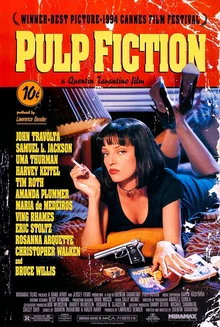
Pulp Fiction (1994)

Mac Boyle February 9, 2019

Director: Quentin Tarantino

Cast: John Travolta, Samuel L. Jackson, Uma Thurman, Bruce Willis

Have I Seen it Before: I’m a pop culture junkie who grew up in the 90s. Had I not seen the film, it’d be sort of like a Catholic not know the catechism.

Did I Like It: Let’s put it this way: I made the fewest notes for this film of all of the reviews I have written. 

Could anyone—and I do mean anyone—construct a screenplay like Tarantino did for this movie, and not have it be immediately dismissed as confusing pile of racist, self-referential garbage? I think one need only look at some of the other films that cropped up in the grunge-adjacent independent scene around it—Kevin Smith’s Clerks (1994) comes chiefly to mind—or the other fragmented crime movies that launched in its wake—Suicide Kings (1997), a film I only have the faintest memories of loathing, comes to mind in that category—to realize that no, you cannot simply reverse engineer the deft touch that Tarantino has brought to each of his films.

Pulp Fiction is a film that beggars belief. It shouldn’t be, and yet it is. Even those who might detract from it in the past (it has certainly aged better than some of the above mentioned contemporaries), complaining that it is too lurid, or too violent for its own good seem to miss the point. Yes, there might not be a film in all of creation that shows drug use so lovingly as this does, but it also, with the OD of Mia (Thurman) brings it all back down to Earth. Drugs are bad, mmmkay? So, too, is it with the violence. When people are killed, yes the carnage is vivid, but the violence is either integral to the plot or given its proper weight under the circumstances. Mr. Wolf’s appearance in the film if Marvin (Phil LaMarr) didn’t have his little accident? I’m also often struck by the awful, real toll of the gunplay between Marsellus (Ving Rhames) and Butch (Willis) before they run afoul of Zed (Peter Greene) and company. Anyone who accuses Tarantino of glibness is focusing too much on the cheeseburgers and the foot rubs, if you ask me.

As I said above, my thoughts on the film are ultimately rather few. It is the superlative entry of its time and place, and if you haven’t watched it, well then you’re just… Where’s Uma Thurman when you need her to draw a square for you?

Tags pulp fiction (1994), quentin tarantino, John Travolta, uma thurman, bruce willis, samuel l jackson
Comment

Powered by Squarespace

Party Now, Apocalypse Later Industries

Where creativity went when it said it was going out for cigarettes.

Where creativity went when it said it was going out for cigarettes.