Party Now, Apocalypse Later Industries

Where creativity went when it said it was going out for cigarettes.
  • Home
  • BOOKS
    • THE ONCE AND FUTURE ORSON WELLES
    • IF ANY OF THESE STORIES GOES OVER 1000 WORDS...
    • ORSON WELLES OF MARS
    • THE DEVIL LIVES IN BEVERLY HILLS
    • A LOSS FOR NORMALCY
    • RIGHT - A NOVEL OF POLITICS
  • PODCASTS
    • Beyond the Cabin in the Woods
    • THE HOLODECK IS BROKEN
    • THE FOURTH WALL
    • As The Myth Turns
    • FRIENDIBALS! - TWO FRIENDS TALKING ABOUT HANNIBAL LECTER
    • DISORGANIZED! A Criminal Minds Podcast
  • MOVIE REVIEWS
  • BLOGS AND MORE
    • Bloggy B Bloggington III, DDS
    • THE HOLODECK IS BROKEN BLOG
    • REALLY GOOD MAN!
  • Home
    • THE ONCE AND FUTURE ORSON WELLES
    • IF ANY OF THESE STORIES GOES OVER 1000 WORDS...
    • ORSON WELLES OF MARS
    • THE DEVIL LIVES IN BEVERLY HILLS
    • A LOSS FOR NORMALCY
    • RIGHT - A NOVEL OF POLITICS
    • Beyond the Cabin in the Woods
    • THE HOLODECK IS BROKEN
    • THE FOURTH WALL
    • As The Myth Turns
    • FRIENDIBALS! - TWO FRIENDS TALKING ABOUT HANNIBAL LECTER
    • DISORGANIZED! A Criminal Minds Podcast
  • MOVIE REVIEWS
    • Bloggy B Bloggington III, DDS
    • THE HOLODECK IS BROKEN BLOG
    • REALLY GOOD MAN!

A Blog About Watching Movies (AKA a Blog in Search of a Better Title)

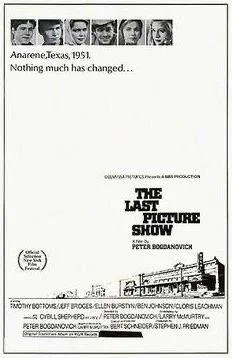
The Last Picture Show (1971)

Mac Boyle February 8, 2022

Director: Peter Bogdanovich

Cast: Timothy Bottoms, Jeff Bridges, Ellen Burstyn, Cybill Shepherd

Have I Seen it Before: Yes. I have the most fleeting of memories of catching it on TCM at some point in the early `00s or late `90s. At the time, it didn’t really connect with me. That was likely because I was living through my own, twisted variation of the story at the time, in so much as I was young and so singularly obsessed with my life as it presented itself at that moment.

Did I Like It: It must have been difficult to be Peter Bogdanovich. He came to filmmaking by way of film history, and chiefly as an acolyte of Orson Welles. Here, he was viewed as a young auteur who may never outpace this early success. Toward the end of his career, he was still talking about Welles, and even committing his anecdotes to film, with The Cat’s Meow (2001). Here, too, he became so enmeshed in McMurtry’s world, that he left his wife for the ingenue he had discovered to play Jacy Farrow, the most calamitous temptress in southern literature since Scarlett O’Hara. He’s always been a filmmaker dictated to by others; a passenger in his own career.

But, as with the discovery of Shepherd, Bogdanovich is swinging for the fences in every aspect of the film. Ever actor is perfectly cast (I hesitate to single any particular performer out for attention, but I will say that when I read that Cloris Leachman won the Oscar for Best Supporting Actress, I may have visibly nodded, even though no one was in the room at the time) The cinematography is stark, wielding the stark contrasts of black and white photography far more clearly than any color photography could ever hope to… It all brings to mind one other, young filmmaker who was able t ogive everything to a film so early in their career.

Even now, I can’t help but compare him to Orson Welles. It must have been hard to be Peter Bogdanovich.

Tags the last picture show (1971), peter bogdanovich, timothy bottoms, jeff bridges, ellen burstyn, cybill shepherd
Comment
MV5BMjEwNzExNzU2Ml5BMl5BanBnXkFtZTgwMjIyNDI0NjM@._V1_UX182_CR0,0,182,268_AL_.jpg

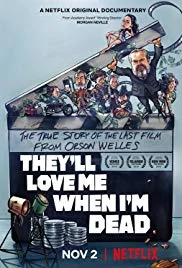
They'll Love Me When I'm Dead (2018)

Mac Boyle August 5, 2019

Director: Morgan Neville

Cast: Peter Bogdanovich, Oja Kodar, Orson Welles, Steve Ecclesine

Have I Seen it Before: Pieces of F for Fake (1973), The Other Side of the Wind (2018), and The Battle Over Citizen Kane (1996) abound, so ultimately, if you’ve seen one (or in this case, three) documentary about or inspired by Orson Welles, then you’ve probably seen them all.

Did I Like It: I’m on the record not thinking much of The Other Side of the Wind. I’m prepared to write most of it off to the film being just too experimental for its own good, and even more prepared to write off the parts of the film that don’t work to the fact that the finished product is only partially Orson’s. It also doesn’t help that a the cavalcade of egos haunted the film long after Welles’ “death*” and the byzantine path the film took to release may have diminished any true auteur quality the picture might have hoped for in a world when it was released in Welles’ lifetime.

And so I come to this film with a lot more interest than I did in that which inspired it. There’s much more drama in the failing of the film than in the film itself. Fusing Fake and Wind, this film comes together much more coherently than either. As a byproduct, It becomes it slightly less magical than Fake, but a little easier to swallow than Wind.

What’s more? It makes me want to watch Wind again. If this is truly the way to understand Welles in his own voice, then it might be necessary. Maybe that makes this movie nothing more than an extended trailer for Wind, but if that is the beginning and end of its ambition, then it more than ably attained its goals. 


*What one of my books presupposes is… Maybe he didn’t? #stayonbrand

Tags they'll love me when i'm dead (2018), morgan neville, peter bogdanovich, oja kodar, orson welles, steve ecclesine
1 Comment
220px-Film_Poster_for_The_Other_Side_of_the_Wind.jpg

The Other Side of the Wind (2018)

Mac Boyle August 4, 2019

Director: Orson Welles

Cast: John Huston, Oja Kodar, Peter Bogdanovich, Susan Strasberg

Have I Seen it Before: Never. Even better still, I’ve devoted more than a little of my life’s work to the notion that I would never see it, and that the film might not actually exist.

Did I Like It: There’s plenty to like. There’s plenty that befuddles. There’s plenty that disappoints.

In short, it is an Orson Welles film.

After Citizen Kane (1941), Welles never got full dominion over a film project. Towards the end of his career, he was cobbling together film projects from whatever favors and hustle he had left. Like the last film released in his lifetime, F for Fake (1973), this posthumous release feels profoundly stitched together like the cinematic equivalent of a frayed, but lovingly stitched together quilt.

In Fake, the discordant quality gave the film a quality of having a protracted conversation with Welles, bobbing along with the history and passions that might flit through his mind at any given moment. Here, whether because the end result is at best an indirect product from Welles, or because the limited format just doesn’t serve a fictional narrative, the results are more muddled.

Welles was smart enough to know the limitations of his resources, and manages to create the context of a film that could have this disjointed structure, a fly-on-the-wall mockumentary shot mostly by eager film students (one imagines you couldn’t swing your arms in early 70s LA and find such a group of cinephiles) about a legendary film director (Huston) at the height of his legend, but the end of his career. So, even when the film isn’t particularly interested in making sense, it at least has some kind of logical consistency.

The figure of Jake Hannaford is certainly the most interesting, but illusive figure in the film. Is he a shade of Huston, the actor portraying him? He has the gate, tone, mannerisms, and some of the background, sure, but that seems to pat of an answer, and Huston doesn’t seem like the kind of man who would have enough sense of humor about himself to appear in something akin to a farce wherein he is largely the butt of the joke.

Is he the figure the film would present to us? A musing as to what Hemingway would have been like had he gone into stagecraft and bull fighting instead of writing and bull fighting? There are certainly enough trappings that one would be forgiven for thinking so.

Is Hannaford Welles himself? Almost certainly, and there is just enough of the other two possibilities to disingenuously—and probably unsuccessfully—put people off the scent. Most of Welles’ protagonists, from Kane through the corrupt cop Quinlan of Touch of Evil (1958) were a bit Welles. Any other argument doesn’t hold a whole lot of water.

What also doesn’t hold a lot of water is Hannaford’s film-within-the-film. It’s clear he’s trying to ape the style of European art films that surrounded his exile, but in the attempt to satirize there’s not much to it, where those other films at least have a reason to exist. It’s clear that—between this and Fake—that he is enamored of his mistress, Kodar, but here presence always feels more boring than it should be, which is impressive considering her role is essentially pornographic. He also hinges a significant performance out of an actress who isn’t really an actress (Cathy Lucas), merely in an attempt to take a shot at longtime frenemy Peter Bogdanovich and his relationship with Cybill Shepherd. I’ll allow for the possibility that I may not get the joke, but especially where Kodar is concerned it feels like a betrayal of his previous aesthetic insistence that sex could only exacerbate the fakeness of a narrative film. That may be the problem: the whole film is too misogynistic and lionizing of that misogyny—when it isn’t barely holding together as an actually movie—to fully recommend. 
Tags the other side of the wind (2018), orson welles, john huston, oja kodar, peter bogdanovich, susan strasberg
Comment

Powered by Squarespace

Party Now, Apocalypse Later Industries

Where creativity went when it said it was going out for cigarettes.

Where creativity went when it said it was going out for cigarettes.