Party Now, Apocalypse Later Industries

Where creativity went when it said it was going out for cigarettes.
  • Home
  • BOOKS
    • THE ONCE AND FUTURE ORSON WELLES
    • IF ANY OF THESE STORIES GOES OVER 1000 WORDS...
    • ORSON WELLES OF MARS
    • THE DEVIL LIVES IN BEVERLY HILLS
    • A LOSS FOR NORMALCY
    • RIGHT - A NOVEL OF POLITICS
  • PODCASTS
    • Beyond the Cabin in the Woods
    • THE HOLODECK IS BROKEN
    • THE FOURTH WALL
    • As The Myth Turns
    • FRIENDIBALS! - TWO FRIENDS TALKING ABOUT HANNIBAL LECTER
    • DISORGANIZED! A Criminal Minds Podcast
  • MOVIE REVIEWS
  • BLOGS AND MORE
    • Bloggy B Bloggington III, DDS
    • THE HOLODECK IS BROKEN BLOG
    • REALLY GOOD MAN!
  • Home
    • THE ONCE AND FUTURE ORSON WELLES
    • IF ANY OF THESE STORIES GOES OVER 1000 WORDS...
    • ORSON WELLES OF MARS
    • THE DEVIL LIVES IN BEVERLY HILLS
    • A LOSS FOR NORMALCY
    • RIGHT - A NOVEL OF POLITICS
    • Beyond the Cabin in the Woods
    • THE HOLODECK IS BROKEN
    • THE FOURTH WALL
    • As The Myth Turns
    • FRIENDIBALS! - TWO FRIENDS TALKING ABOUT HANNIBAL LECTER
    • DISORGANIZED! A Criminal Minds Podcast
  • MOVIE REVIEWS
    • Bloggy B Bloggington III, DDS
    • THE HOLODECK IS BROKEN BLOG
    • REALLY GOOD MAN!

A Blog About Watching Movies (AKA a Blog in Search of a Better Title)

Killers of the Flower Moon (2023)

Mac Boyle October 21, 2023

Director: Martin Scorsese

Cast: Leonardo DiCaprio, Robert De Niro, Lily Gladstone, Jesse Plemons

Have I Seen it Before: nope, and as I type this, neither have you. I managed to finagle my way into a press screening on Wednesday. I even had a notion to finish the review before the film was officially released on Friday, but…

Did I Like It: I honestly needed a bit of time to really come to a reasonable opinion about the film. The phrase “this is Scorsese’s best movie since Goodfellas (1990)” (including the obligatory citation of the year of the film) kept wandering through my head. One does not want to lean to closely on hyperbole, but:

This is Scorsese’s best movie since Goodfellas (1990). I’ve liked everything he’s done, as he is the only guardian angel left of the movies, it seems. People like to turn their nose up at The Departed (2006), but I loved the hell out of that movie. I’d even be willing to watch the first two-thirds of New York Stories (1989) if the opportunity presented itself, I even enjoyed The Irishman (2019), despite violating the rules of how we were all supposed to take in the film as I watched it in pieces on my phones when I had the time.

Here, too, we are asked for something of a time commitment, as the film clocks in at 3 hours 45 minutes, but there’s not a moment where this feels like it is asking too much from us. The performances are pitch-perfect throughout, with Gladstone and Plemons being revelations. It is unflinching. It is upsetting. There is a stretch (largely after Plemons character enters the film) that it becomes one of film’s greatest absurdist tragicomedies. It all ends in a sequence you will likely never see coming, but from which you will come away thinking it was the absolute perfect way to drive the themes home and to wrap up the storylines.

It’s everything you could want from a Scorsese movie, and it manages to surprise you throughout. Go see it as soon as possible, and do so on the big screen. If for no other reason than there is very little of the year left, I can’t possibly fathom a scenario in which this is not my favorite film of the year.
Tags killers of the flower moon (2023), martin scorsese, leonardo dicaprio, robert de niro, lily gladstone, jesse plemons
1 Comment

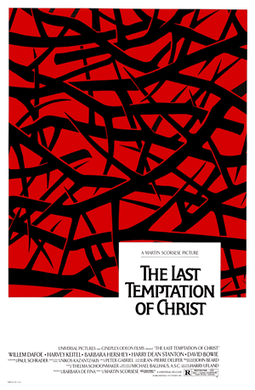
The Last Temptation of Christ (1988)

Mac Boyle August 20, 2022

Director: Martin Scorsese

Cast: Willem Dafoe, Harvey Keitel, Barbara Hershey, Harry Dean Stanton

Have I Seen it Before: Never. Chalk it up to another another cinematic blind spot. As a blissful non-Christian I’m neither offended by the film’s creative liberties and abandonment of the gospels, nor am I particularly moved by the subject matter in the first place. From a distance, I feel almost the same way about the film as I would The Passion of the Christ (2004). I really have to be “in the mood” for a picture about a crucifiction, and I rarely—if ever—am. The key difference is that Scorsese on spec is much more apt to get me “in that mood” than Gibson, or even Jeffrey Hunter, for that matter.

Did I Like It: The film is clearly well made. It would be foolish in the extreme to question the bona fides of Scorsese. The beginning and the ending are undeniably fascinating. Depicting the moral grey area of Jesus (Dafoe) is a revelation that might actually invite a viewer to move beyond the ethical vacuum that Christianity can sometimes create in its followers. Faith alone is nearly worthless if you are more than willing to bring your carpentry skills to bear on a full array of crucifixes. The ending, where Jesus is given something resembling a choice in his fate makes his sacrifice have even some kind of meaning, even for this particular non believer.

The middle, however, could be counted among any other depictions of the life of Jesus one might find. The film is almost too devout at the core, that it once again becomes meaningless. It’s ultimate reverence (and, for that matter, Peter Gabriel score weighing everything down in an 80s milieu) for its subject material keeps me further from the subject matter.

Maybe it should have been more irreverent? That might have cut through my cynicism and gotten me on board. The zealots don’t know a good thing when they have it heading straight for them.

Tags the last temptation of christ (1988), martin scorsese, willem dafoe, harvey keitel, barbara hershey, harry dean stanton
Comment
220px-The_Irishman_poster.jpg

The Irishman (2019)

Mac Boyle December 18, 2019

Director: Martin Scorsese


Cast: Robert De Niro, Al Pacino, Joe Pesci, Ray Romano


Have I Seen it Before: No, but it took several days to get through the film. So, yes I went against Scorsese’s wishes and watched it essentially as a miniseries, and I watched it almost exclusively on my phone. I’m not sure Scorsese gets to dictate the terms in which his films are watched anymore.


Which brings us to his recent comments about current popular filmmaking, specifically those films in the Marvel Cinematic Universe. He dismisses them as not really cinema, and even went so far as to say that they shouldn’t be shown in cinemas.


Is it possible to disagree with him, and not blame him for having the opinion in the first place.


If I were Scorsese, and I had made a career out of a litany of prestige films, the shifting of the movie business to favor what would have been B-movie material during his formative and prime years would feel a little disconcerting. It means that his material of choice is now receiving the resources of B productions.


Thankfully, he is still getting the resources—if not the exhibition he once had—to tell the kind of stories he wants to tell.


Did I Like It:  Oh, I guess you came to this review wondering about that part. Sure. What’s not to love? Pacino and De Niro taking a swing at not slumming it for the first time in what feels like forever? Scorsese working in the genre that made his bones, so to speak? The long-prophesied return of Joe Pesci? Hell, make the movie six hours next time. I’ll show up. One might quibble with the under-utilized Anna Paquin—and even I’m a little befuddled by her near-prop status—but it is a minor quibble with an otherwise ornate tapestry of mob goodness. It feels elegiac, but I think that is a remark on De Niro’s character, and its stretching to apply it to Scorsese himself. I think he’s got plenty of great films still left within him.


Now if only he could get the same kind of presence in cinemas as some of the Marvel movies, maybe we could all get along again and enjoy watching De Niro shoot people in the face.

Tags the irishman (2019), martin scorsese, robert de niro, al pacino, joe pesci, ray romano
Comment
220px-The_Aviator_(2004).png

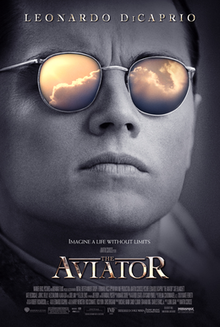
The Aviator (2004)

Mac Boyle November 30, 2019

Director: Martin Scorsese


Cast: Leonardo DiCaprio, Cate Blanchett, Kate Beckinsale, Alan Alda


Have I Seen it Before: Yes, but it’s becoming abundantly clear that I may only remember about 10% of movies I saw in the mid-aughts. In some cases, that’s great. In other cases, I wished I only remembered about 10% of everything that happened in the mid-aughts.


Did I Like It: Yes. Way better than the 10% I remembered watching.


On first blush it doesn’t feel like DiCaprio is the right casting for Howard Hughes. He’s too boyish, even now in his middle age. Thus, the film wisely only hints at the broken man the tycoon would eventually become. It also doesn’t opt for a happy, if truncated ending, a la Ed Wood (1994) that leaves their doomed protagonist on top. Hughes is a doomed man here, and that would have to be the essential quality in bringing the character to the screen, something that Warren Beatty never quite captured in his long gestating picture about Hughes, Rules Don’t Apply (2016).


Thus, as the brash young man who needed the last two film cameras in all of Hollywood, DiCaprio is perfectly selected. With the possible exception of Cate Blanchett ably impersonating Katharine Hepburn, the other performances tend to blend into the background. This might read as criticism, especially given the high number of stars that round out the cast, but the electric quality of DiCaprio’s Hughes makes his inevitable fall that much more tragic.


Stylistically, it is an odd film for Scorsese. He embraces the computer tools of the era to display Hughes’ daring flights. It puts the camera where it might otherwise not want to go, but it also ages the proceedings in a way I can’t imagine Scorsese wanted when he set out to make the film. All too often DiCaprio looks like an actor sitting on a soundstage, rather than someone flying a plane only he believes will reach the air.

Tags the aviator (2004), martin scorsese, leonardo dicaprio, cate blanchett, kate beckinsale, alan alda
Comment
220px-Kingofcomedy.jpg

The King of Comedy (1983)

Mac Boyle November 16, 2019

Director: Martin Scorsese

Cast: Robert De Niro, Jerry Lewis, Sandra Bernhard, Diahnne Abbott

Have I Seen It Before?: Yes, but so much of it had disappeared from my memory, like some kind of dream that didn’t mean all that much. If you had asked me what I remembered from the film when Joker (2019) quite aptly put it back in our collective consciousness, I would have only been able to reach for long sequences of Robert De Niro waiting in Jerry Lewis’ reception area.

Did I like it?: I’m thrilled to report that my failure to remember much of the movie owes more to my fleshy, insignificant brain than to any problem with the film itself.

It’s hard to deny this film’s influence on Joker. I mean, look at that poster. The structure is almost totally aped from it. The thing that the new film changes is how it ends. In films today (and TV shows, now that I’m thinking about shows like Breaking Bad, and to a much lesser extent Dexter), people who do bad things need to suffer some kind of comeuppance, even if their descent into depravity is the closest these characters come to self actualization.

Here, Rupert Pupkin (De Niro) is just as ruthless as Walter White, just as mentally unmoored as Arthur Fleck, and just as oblivious to the world as Dexter Morgan. And yet, as this film ends, Pupkin is on top. He goes to prison for a flash, but the world loves him. It turns out he’s far funnier than we were led to believe. The world was actually keeping him down, as it turns out.

How the hell am I supposed to feel at the end of the film?

After John Hinckley cited Taxi Driver (1976) as the muse for his violence, it’s sort of a marvel that Scorsese would continue to tell stories about disaffected madmen in the few years immediately after the Reagan assassination attempt. It wasn’t like Salinger started writing the ongoing adventures of Holden Caulfield (or anything) after Catcher in the Rye.

Tags the king of comedy (1983), martin scorsese, rober de niro, jerry lewis, sandra bernhard, diahnne abbott
Comment
Gangs_of_New_York_Poster.jpg

Gangs of New York (2002)

Mac Boyle November 6, 2019

Director: Martin Scorsese

Cast: Leonardo DiCaprio, Daniel Day-Lewis, Cameron Diaz, Jim Broadbent

Have I Seen It Before?: Never. I’ve been kind of on a Scorsese jag lately. Thanks, Joker (2019), I guess.

Did I like it?: Yes, but to qualify that statement I will say I watched during spare moments on my phone. Thus, I’m almost entirely sure that I did not watch the film in the way Scorsese intended to take it in, nor can I weigh in as to whether or not the movie is too long.

I’m a bit awestruck that this film ever got released. It is the meeting point of three of the most wildly controlling forces in American cinema, director Scorsese, star Day-Lewis, and producer Harvey Weinstein*. That it was only delayed for a year is something of a small miracle. That most—not all, mind you—of those delays owed to 9/11 is utterly flabbergasting, especially when one considers that there’s only a single shot that could be thematically related to the incident.

Does the end product end up compromised? No, not for the most part. Day-Lewis chews through every scene he has, and as I imagine with every film in which he has appeared, he is allowed to do whatever the hell he wants. The tone of the movie around him, however warbles between the kind of deliberate crime drama Scorsese has made his life’s work, and the kind of four-quadrant easily digestible pablum dressed up in the disguise of prestige drama that was Weinstein’s second favorite hobby. It’s designed so meticulously constructed toward the goal of evoking the history it fictionalizes that one can’t help but admire and often awe at the craft on display. And yet, the music feels so all over the place in a desperate attempt to nab one more nomination for best song for Miramax’s campaign money.

Legend has it that a work print/director’s cut exists and that it allegedly feels more focused. Scorsese insists that the final cut is his director’s cut. This may be one of the only times in his output that I wish for the former, but begrudgingly accept the latter.


*Naturally, Weinstein has plenty of problems other than being a control freak, but I can’t be the first one to tell you that, right?

Tags gangs of new york (2002), martin scorsese, leonardo dicaprio, daniel day-lewis, cameron diaz, jim broadbent
Comment
220px-Taxi_driver_movieposter.jpg

Taxi Driver (1976)

Mac Boyle October 29, 2019

Director: Martin Scorsese

Cast: Robert De Niro, Jodie Foster, Cybil Shepard, Albert Brooks

Have I Seen It Before?: Never. They’re coming to take my official film snob membership card as I type this.

Did I like it?: It’s an experience, but I’d have to be a certain kind of person (read: Hinckley) to say I really enjoyed it.

The movie is such an insistent attempt to make a film that eschews the usual trappings of Hollywood entertainment, but Bernard Hermann’s score (his last, he passed away before the wide release of the film) bubbles through the movie. If you were only listening to the proceedings instead of watching, you’d be forgiven for thinking it was a romantic comedy in the early goings. Between that and the whole cowboy motif and homages to The Searchers (1956) it’s hard not to see this movie as the story of a man—and perhaps a culture at large—warped by exposure to cowboy stories that never fully came to grips with the violence that surrounds them.

And then there’s that ending. 

I’m so constantly annoyed by the rash of youtube videos “explaining” the ending of like, every film released. They’re boring bordering on odious. I don’t need an explanation of Joker (2019). It’s pretty straight ahead, if wobbly. For that matter, why would anyone need the ending of a movie like Spider-Man: Far From Home (2019) explained. Most—if not all—current movies are as straight ahead in their proceedings as your basic fairy tale.

But I digress. I’ll be damned if at the end of this movie I didn’t want to rush to the internet and have the true nature of our final moments with Bickle spoon-fed to me. Thankfully—blissfully, even—there is no concrete answer. Both Scorsese and screenwriter Paul Schrader acknowledge the interpretation that after Bickle guns down the gangsters, synapses fire in his mind for the last time and he imagines a world where he ended up a hero, but maintain that their intension was to display the irony of a monster like their main character slipping into a hero’s role purely by luck, with the knowledge that he will be nowhere near that lucky the next time. I like that version of the ending better; it inflames the imagination.

Tags taxi driver (1976), robert de niro, martin scorsese, jodie foster, cybill shepherd, albert brooks
Comment

Powered by Squarespace

Party Now, Apocalypse Later Industries

Where creativity went when it said it was going out for cigarettes.

Where creativity went when it said it was going out for cigarettes.