Party Now, Apocalypse Later Industries

Where creativity went when it said it was going out for cigarettes.
  • Home
  • BOOKS
    • THE ONCE AND FUTURE ORSON WELLES
    • IF ANY OF THESE STORIES GOES OVER 1000 WORDS...
    • ORSON WELLES OF MARS
    • THE DEVIL LIVES IN BEVERLY HILLS
    • A LOSS FOR NORMALCY
    • RIGHT - A NOVEL OF POLITICS
  • PODCASTS
    • Beyond the Cabin in the Woods
    • THE HOLODECK IS BROKEN
    • THE FOURTH WALL
    • As The Myth Turns
    • FRIENDIBALS! - TWO FRIENDS TALKING ABOUT HANNIBAL LECTER
    • DISORGANIZED! A Criminal Minds Podcast
  • MOVIE REVIEWS
  • BLOGS AND MORE
    • Bloggy B Bloggington III, DDS
    • THE HOLODECK IS BROKEN BLOG
    • REALLY GOOD MAN!
  • Home
    • THE ONCE AND FUTURE ORSON WELLES
    • IF ANY OF THESE STORIES GOES OVER 1000 WORDS...
    • ORSON WELLES OF MARS
    • THE DEVIL LIVES IN BEVERLY HILLS
    • A LOSS FOR NORMALCY
    • RIGHT - A NOVEL OF POLITICS
    • Beyond the Cabin in the Woods
    • THE HOLODECK IS BROKEN
    • THE FOURTH WALL
    • As The Myth Turns
    • FRIENDIBALS! - TWO FRIENDS TALKING ABOUT HANNIBAL LECTER
    • DISORGANIZED! A Criminal Minds Podcast
  • MOVIE REVIEWS
    • Bloggy B Bloggington III, DDS
    • THE HOLODECK IS BROKEN BLOG
    • REALLY GOOD MAN!

A Blog About Watching Movies (AKA a Blog in Search of a Better Title)

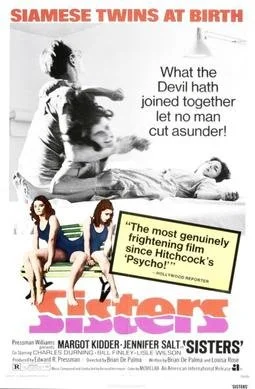
Sisters (1972)

Mac Boyle October 21, 2024

Director: Brian De Palma

Cast: Margot Kidder, Jennifer Salt, Charles Durning, Bill Finley

Have I Seen it Before: Never. The film always exists just on my periphery, being a fan of De Palma’s later work as I am. Always on the lookout for more movies to cover on Beyond the Cabin in the Woods, but I have long since learned that I probably need to see the movie before I actually recommend it to the others.

Did I Like It: So, then this review attempts to tackle two questions. First, am I going to push for it to be covered by the show, and do I recommend it for the movie viewer at large. It’s entirely possible for a film to not quite live up to the horror genre entirely, but still be a necessary film, or even a film worth your time.

I’m of a somewhat conflicted mind on both questions. The film plays with slasher conventions—indeed, before the genre really exists outside of Psycho (1960)—in a way that keeps things interesting, especially for the film’s first half. If that first half had been the whole movie, you’d probably be hearing a charming back and forth unpacking the film sometime next year, but I would have already told you to go watch it.

But, unfortunately, every film that has a a strong first half has to be judged at least partially on the basis of its second half as well. The really great thrillers sell themselves on their second half, and this one becomes too jarringly unfocused to really get behind. When the film is less about a man meeting a woman to whom he’s attracted, only to find her home life to be a horror show is good. The investigative journalist who just happens to see the murder take place might feel a little clockworky, but it does deftly set up her challenge to get authorities to believe her. Then things become a little less Psycho and a little more some variation of later Halloween sequels. That might ring a little unfair, and while the final scenes are visually interesting, they can’t help but weigh down the thrills by buttressing them with excessive backstory.

Tags sisters (1972), brian de palma, margot kidder, jennifer salt, charles durning, bill finley
Comment

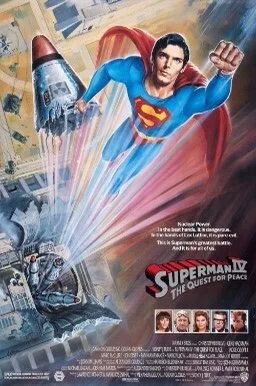
Superman IV: The Quest For Peace (1987)

Mac Boyle May 16, 2021

Director: Sidney J. Furie

Cast: Christopher Reeve, Gene Hackman, Margot Kidder, Mariel Hemingway

Have I Seen it Before: A couple of times, mystifyingly.

Did I Like It: Oh, boy... Where to start? Before we get into any of the myriad details, here’s the big, unfortunately reality of this film:

It is worse than the universally reviled Batman & Robin (1997).

Yes, Batman & Robin is a mostly wrong-headed*, somewhat cheap affair, but it is at least a complete film, which undeniably has a point of view and the full support of its studio at the time.

Superman IV isn’t even finished. Some of the most baffling editing choices exist in this film, and the special effects are nearly uniformly awful. There is one shot of Superman (Reeve, doing his best here, but even some of the pristine sense of the borders between Clark Kent and the Man of Steel are gone) flying toward the camera that is used at least ten times. It is such a terribly rendered process shot, made all the worse by the fact that I am reasonably sure it was actually shot for Superman III (1983). 

There have been some disappointing big-franchise films in recent years—Star Wars: Episode IX: The Rise of Skywalker (2019) and Justice League (2017) come to mind—but anyone (including me) who has complained about those films needs to sit through this thing and witness just how far a franchise can fall. In Superman (1978), we believed a man could fly. Here, I still can’t quite bring myself to believe that the studio actually released this in theaters. Fantastic Four (1994) was never intended to be released, and it still has a touch of movie magic to it.

There’s a temptation to say that the story might be able to rise above the production shortcomings, but I don’t buy that argument much. Reeve’s passion for nuclear disarmament fitfully comes through in a couple of scenes, but the rest of the film is wall-to-wall b-movie cliche, punctuated by two of the singularly most baffling moments in cinematic history.

The film spends a sequence trying to recreate the magic of Superman and Lois Lane’s (Margot Kidder, walking through the film in a daze, which makes her seem like the only person in the production who knows whats going on) fly through the air in the original film. To do so, the film retcons the “memory-wipe kiss” from Superman II (1980) (admittedly, one of the weaker parts of that film), indicating the memory-wipe didn’t work and says Lois just chose not to say anything about her knowledge of Superman’s identity. They fly. Can You Read My Mind? The whole bit. Although it is, obviously, much worse. They land. Then Superman kisses her and wipes her memory again. It’s a staggeringly bad choice, and I have a hard time believing that at least some version of this fumble-to-end-all-fumbles didn’t appear in the script.

This all culminates in Superman’s final battle with Nuclear Man (voiced by Gene Hackman, who you can begin to sense is starting his fifteen year journey to not wanting to be a movie actor anymore, but physically performed by Mark Pillow, who I believe was never heard from again) where they play a little tug of war in outer space with seemingly mortal human Lacy Warfield (Mariel Hemingway). She breathes fine during the whole event, after which Superman takes her... somewhere in the vicinity of the planet Earth, after which the character is never heard from again. Ed Wood would have stopped that thinking in its tracks.

But then again, that scene could be related to the editing. Maybe the space sequences were meant to take place within Earth’s atmosphere, and more lost background plates are at play here...

You know it’s a bad film when you can never quite tell whether the script or the complete lack of production values are what is completely obliterating the experience. In some reviews for films I didn’t care for, I try to look for some bright spot, or at least some worse film to compare it to and put everything in perspective. Unfortunately, the film I often reach for in those comparisons is Superman IV: The Quest For Peace. It is, without a doubt, the worst superhero film ever made.


*It is often unfairly maligned as a gay movie, and if that weren’t unfair to begin with, but I’ve had a revelation recently that it has been more formative for LGBTQ people of my generation growing up than I ever would have thought.
Tags superman iv: the quest for peace (1987), sidney j furie, christopher reeve, gene hackman, margot kidder, mariel hemingway
Comment

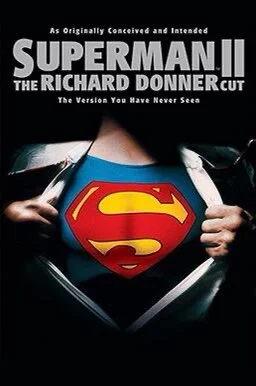
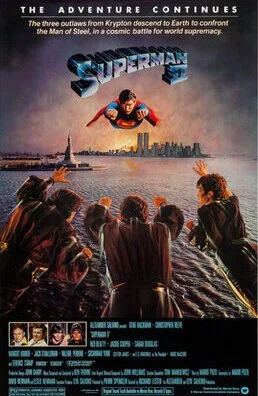
Superman II: The Richard Donner Cut (2006)

Mac Boyle May 16, 2021

Director: Richard Donner

Cast: Christopher Reeve, Margot Kidder, Gene Hackman, Terrence Stamp

Have I Seen it Before: Oh, sure. 

Did I Like It: I’ve taken my fair share of potshots at Zack Snyder’s Justice League (2021) but I legitimately think the framework for this long-lost director’s cut of a DC superhero movie would have been a better outcome for that more recent situation. Out of necessity (decades passing, and a number of the key players passing away), the cut is cobbled together from the material already available. Some sequences key sequences are built from rough footage and screen tests. Had they just released the disparate footage that Zack Snyder had shot—and not shot a lot of extraneous nonsense with Martian Manhunter.

Does that cobbled together quality detract from the experience? Does it somehow make the more polished theatrical cut of the film a better film?

The answer is a resounding no on both fronts. The rough edges only make the film more fascinating. That they were able to make a watchable film out of forgotten film canisters which were—at that point—thirty years old is something of a small miracle. The wobbliest example is the scene where Lois Lane (Kidder) finally proves that Clark Kent (Reeve) is the Man of Steel is actually taken from their final audition for the roles, and to hear Donner tell the tale, you can actually see the moment where Reeve earned himself the job and the definitive on-screen portrayal of the character was born. The fact that that moment is given some context, and isn’t just b-roll on a behind-the-scenes featurette is nearly reason enough for this new version of the film to exist.  

And ultimately, I think this is the better version of the film pound for pound. The weird moment in the theatrical film where Superman throws what appears to be a cellophane version of his emblem at one of the villains (a moment so silly, I doubted it actually existed for a moment, and had to google to confirm) is gone. Gone too is the super-kiss which wiped Lois’ memory and set everything back to zero. Those are already some fundamental improvements to an experience which was, admittedly, pretty good to begin with.

In it’s place is a re-setting of the “spinning time into reverse” trick, which works even less than it does in Superman (1978). Jackie Cooper’s toothpaste returning into its tube is a neat gag, but the only time when “everything that happened in the movie you just watched didn’t really happen” worked, it was The Wizard of Oz (1939). Maybe Inception (2010). It’s clear that Donner and company never really had their ending worked out, and all the sudden influx of cash from Warner Bros. after the fact wasn’t going to fix that.

Also, the story of Superman’s sacrifice of his powers in favor of his love for Lois doesn’t quite make sense. It’s improved with the restoration of recordings of Brando as Jor-El into the cut, as the weird bald Kryptonian bald guy in the theatrical cut and Superman’s mom never quite fit. The film is still never quite able to earn both the power of the sacrifice itself, and the speed with which it is reversed so Superman can propel himself into the third act, where he has to do final battle with General Zod (Stamp) and his cronies.

But both of those complaints are going to be present in some form of the theatrical cut, so I can’t really fault this film when it improves somethings, if it never quite fixes some other insurmountable things.

Tags superman II: the richard donner cut (2006), superman movies, richard donner, christopher reeve, margot kidder, gene hackman, terrence stamp
Comment
220px-Superman_ver1.jpg

Superman (1978)

Mac Boyle August 15, 2020

Director: Richard Donner

Cast: Marlon Brando, Gene Hackman, Christopher Reeve, Margot Kidder

Have I Seen It Before?: Any number of times. It is, incidentally, the only film that I’ve owned two copies of at the same time. I have it on blu-ray, along with the Donner cut of Superman II (1980, although that cut was released in 2006). I also have a DVD set that includes the theatrical cuts of all four films in the Reeve series. I keep that set only for completions sake to have the theatrical cut of II, and Superman III (1983) and Superman IV: The Quest for Peace (1987). Thus, I have the first movie in the same version twice, simply because I can’t bring myself to buy another copy of The Quest For Peace in another format.

Is anyone still reading after all of that?

Did I like it?: On paper, this movie is the perfect alchemy of everything that made big studio films great in the 1970s. Marlon Brando “stars,” but really makes enough money for the rest of his life for a couple days’ worth of work. John Williams’ score finishes the one-two punch he started with Star Wars – Episode IV: A New Hope (1977). And much of the same production team and facility that made the Roger Moore era of Bond movies the pure cinematic confections that they were is on full display here. It is big budget entertainment done perfect. It certainly goes on the list of movies I regret watching for the first time via a VHS copy.

And much of the intangibles justifiably recommend the film, and unfortunately inspire a spiral of increasingly icky sequels to come. Christopher Reeve so thoroughly inhabits the role (and yet somehow, third-billing) of the Last Son of Krypton that everyone else who has attempted has been varying degrees of pale imitations, from the likable if slight Brandon Routh in Superman Returns (2006) to, well Dean Cain. The less said about Dean Cain, the better off we all are. Including Dean Cain. Gene Hackman cuts a deliciously roguish figure as Lex Luthor, especially when stacked up against the woefully mis-cast Jesse Eisenberg, and the completely unwatchable Kevin Spacey. Margot Kidder is the right type of performer for Lois Lane, but ever since the DVD/Blu Ray documentaries put into my head that Stockard Channing was in contention for the role, I can’t help but think they may have missed the mark ever so slightly.

But there are some things that work on the nerves, despite the film’s legendary status. Some of the miniature work is obviously miniature work, which serves to undercut the epic scope of the movie, but that the film delivers on its promise to make one believe a man can fly tends to forgive any technical details which may have aged more aggressively.

And still, that sequence where Lois performs “Can You Read My Mind?” as a poem recitation while she and Superman are in mid-flight sets my teeth on edge every time I watch it. It might be hyperbole to say it is my least favorite thing that has ever been in a movie I otherwise like, but it wouldn’t be much of an exaggeration.

Tags superman (1978), superman movies, richard donner, marlon brando, gene hackman, christopher reeve, margot kidder
Comment

Powered by Squarespace

Party Now, Apocalypse Later Industries

Where creativity went when it said it was going out for cigarettes.

Where creativity went when it said it was going out for cigarettes.