Party Now, Apocalypse Later Industries

Where creativity went when it said it was going out for cigarettes.
  • Home
  • BOOKS
    • THE ONCE AND FUTURE ORSON WELLES
    • IF ANY OF THESE STORIES GOES OVER 1000 WORDS...
    • ORSON WELLES OF MARS
    • THE DEVIL LIVES IN BEVERLY HILLS
    • A LOSS FOR NORMALCY
    • RIGHT - A NOVEL OF POLITICS
  • PODCASTS
    • Beyond the Cabin in the Woods
    • THE HOLODECK IS BROKEN
    • THE FOURTH WALL
    • As The Myth Turns
    • FRIENDIBALS! - TWO FRIENDS TALKING ABOUT HANNIBAL LECTER
    • DISORGANIZED! A Criminal Minds Podcast
  • MOVIE REVIEWS
  • BLOGS AND MORE
    • Bloggy B Bloggington III, DDS
    • THE HOLODECK IS BROKEN BLOG
    • REALLY GOOD MAN!
  • Home
    • THE ONCE AND FUTURE ORSON WELLES
    • IF ANY OF THESE STORIES GOES OVER 1000 WORDS...
    • ORSON WELLES OF MARS
    • THE DEVIL LIVES IN BEVERLY HILLS
    • A LOSS FOR NORMALCY
    • RIGHT - A NOVEL OF POLITICS
    • Beyond the Cabin in the Woods
    • THE HOLODECK IS BROKEN
    • THE FOURTH WALL
    • As The Myth Turns
    • FRIENDIBALS! - TWO FRIENDS TALKING ABOUT HANNIBAL LECTER
    • DISORGANIZED! A Criminal Minds Podcast
  • MOVIE REVIEWS
    • Bloggy B Bloggington III, DDS
    • THE HOLODECK IS BROKEN BLOG
    • REALLY GOOD MAN!

A Blog About Watching Movies (AKA a Blog in Search of a Better Title)

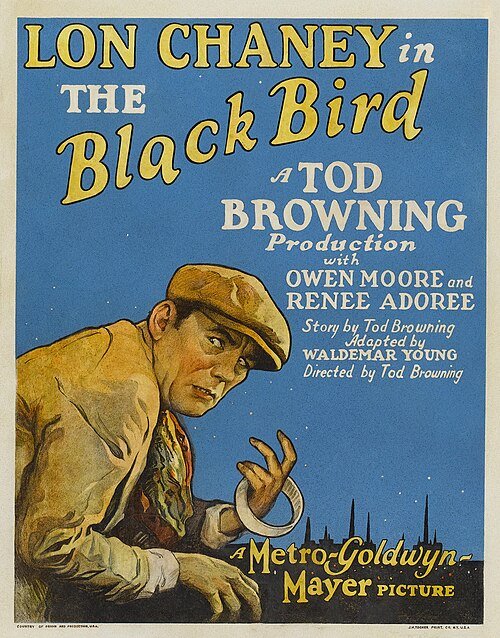
The Blackbird (1926)

Mac Boyle February 15, 2026

Director: Tod Browning

Cast: Lon Chaney, Owen Moore, Renée Adorée, Doris Lloyd

Have I Seen it Before: Never.

Did I Like It: Two things are immediately striking me as fundamentally wrongheaded about the film*.

First, its plot is far too convoluted, so much so that I think the material would still produce headaches in… well, me… if it were produced as a talkie. There’s the handicapped saint, his no-account criminal of a brother (Chaney, in both roles), and then another criminal running around. It seems like they all love the same French girl, and the police are singularly unable to tell any of the three of them apart, until the plot basically resolves itself.

More importantly, however, is my deep belief that Chaney was fundamentally miscast in the role, or his abilities were fundamentally underused. This man with a thousand faces really has one face here, but we are supposed to believe that Chaney simply contorting his lim is tapping into some kind of grand cinematic magic…

When it isn’t. There isn’t two roles. I feel okay spoiling a 100-year-old film, but the dual role is a ruse, and the whole affair—if you’ll let me go back to complaining about the plot—ends with Chaney’s character having prettended to be crippled so much that he is now actually afflicted, and so severely, that he will die within minutes.

All I’m saying is that if Chaney could have been at least the man of two faces, I might have been able to sit in the theater and marvel how they pulled off such a feat in the early days of cinema. The film couldn’t offer even that much.

*I’m still enough of a neophyte at film criticism, that I feel gunshy dismissing a film I didn’t quite enjoy, simply because it was made by talent I have enjoyed elsewhere (Browning, Chaney). Both of them are long since dead, so I can’t imagine my dim enthusiasm will somehow discourage them from doing better next time.
Tags the blackbird (1926), tod browning, lon chaney, owen moore, renée adorée, doris lloyd
Comment

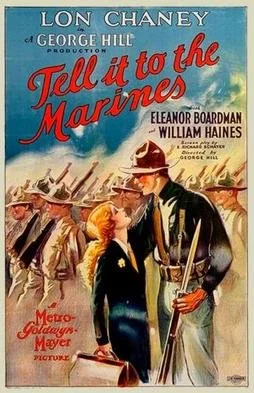
Tell It To The Marines (1926)

Mac Boyle November 19, 2023

Director: George W. Hill

Cast: Lon Chaney, William Haines, Eleanor Boardman, Eddie Gribbon

Have I Seen it Before: Never.

Did I Like It: We once again play another round of the perennial game in these reviews: What genres in a silent movie age at all well*? So far we’ve decided that comedy is usually a pretty good bet. Horror and Science Fiction can have its charms, if for no other reason than to even try fanciful genres prior to 1927 virtually ensured that the production design is a cut above. Drama? Probably not. Mystery? Even less likely.

Now we come to patriotic melodrama, and as somebody who didn’t serve in the military, the experience of watching the film definitely feels like spending a little over an hour and a half patiently listening to the explanation of an inside joke, only to be told at the end of it, “Well, you had to be there.” Take my thoughts for what they were worth, but there were more than a few hearty chuckles from some of the other people in the theater during Veteran’s Day weekend.

That being said, there are a few elements that recommend the film. Footage after the Marine recruits are shipped out are of a sufficiently epic scope that either the filmmakers went a step above what might have been good enough so far as production value, or that director George W. Hill and editor Blanche Sewell made especially apt choices in matching stock footage to their scenarios. Additionally, Chaney’s performance and aesthetic (in sharp contrast to his more famous horror roles) looks like he could be a drill sergeant today, or at least a believable one in a movie today.

*Some of you out there might be of the mind that any film in black and white—to say nothing of any film released before the advent of synchronized sound—isn’t worth another look. You’re wrong. I’m sure I’m very found of you if you’ve made it to this site, but you’re wrong.

Tags tell it to the marines (1926), george w. hill, lon chaney, william haines, eleanor boardman, eddie gribbon
Comment

Powered by Squarespace

Party Now, Apocalypse Later Industries

Where creativity went when it said it was going out for cigarettes.

Where creativity went when it said it was going out for cigarettes.