Party Now, Apocalypse Later Industries

Where creativity went when it said it was going out for cigarettes.
  • Home
  • BOOKS
    • THE ONCE AND FUTURE ORSON WELLES
    • IF ANY OF THESE STORIES GOES OVER 1000 WORDS...
    • ORSON WELLES OF MARS
    • THE DEVIL LIVES IN BEVERLY HILLS
    • A LOSS FOR NORMALCY
    • RIGHT - A NOVEL OF POLITICS
  • PODCASTS
    • Beyond the Cabin in the Woods
    • THE HOLODECK IS BROKEN
    • THE FOURTH WALL
    • As The Myth Turns
    • FRIENDIBALS! - TWO FRIENDS TALKING ABOUT HANNIBAL LECTER
    • DISORGANIZED! A Criminal Minds Podcast
  • MOVIE REVIEWS
  • BLOGS AND MORE
    • Bloggy B Bloggington III, DDS
    • THE HOLODECK IS BROKEN BLOG
    • REALLY GOOD MAN!
  • Home
    • THE ONCE AND FUTURE ORSON WELLES
    • IF ANY OF THESE STORIES GOES OVER 1000 WORDS...
    • ORSON WELLES OF MARS
    • THE DEVIL LIVES IN BEVERLY HILLS
    • A LOSS FOR NORMALCY
    • RIGHT - A NOVEL OF POLITICS
    • Beyond the Cabin in the Woods
    • THE HOLODECK IS BROKEN
    • THE FOURTH WALL
    • As The Myth Turns
    • FRIENDIBALS! - TWO FRIENDS TALKING ABOUT HANNIBAL LECTER
    • DISORGANIZED! A Criminal Minds Podcast
  • MOVIE REVIEWS
    • Bloggy B Bloggington III, DDS
    • THE HOLODECK IS BROKEN BLOG
    • REALLY GOOD MAN!

A Blog About Watching Movies (AKA a Blog in Search of a Better Title)

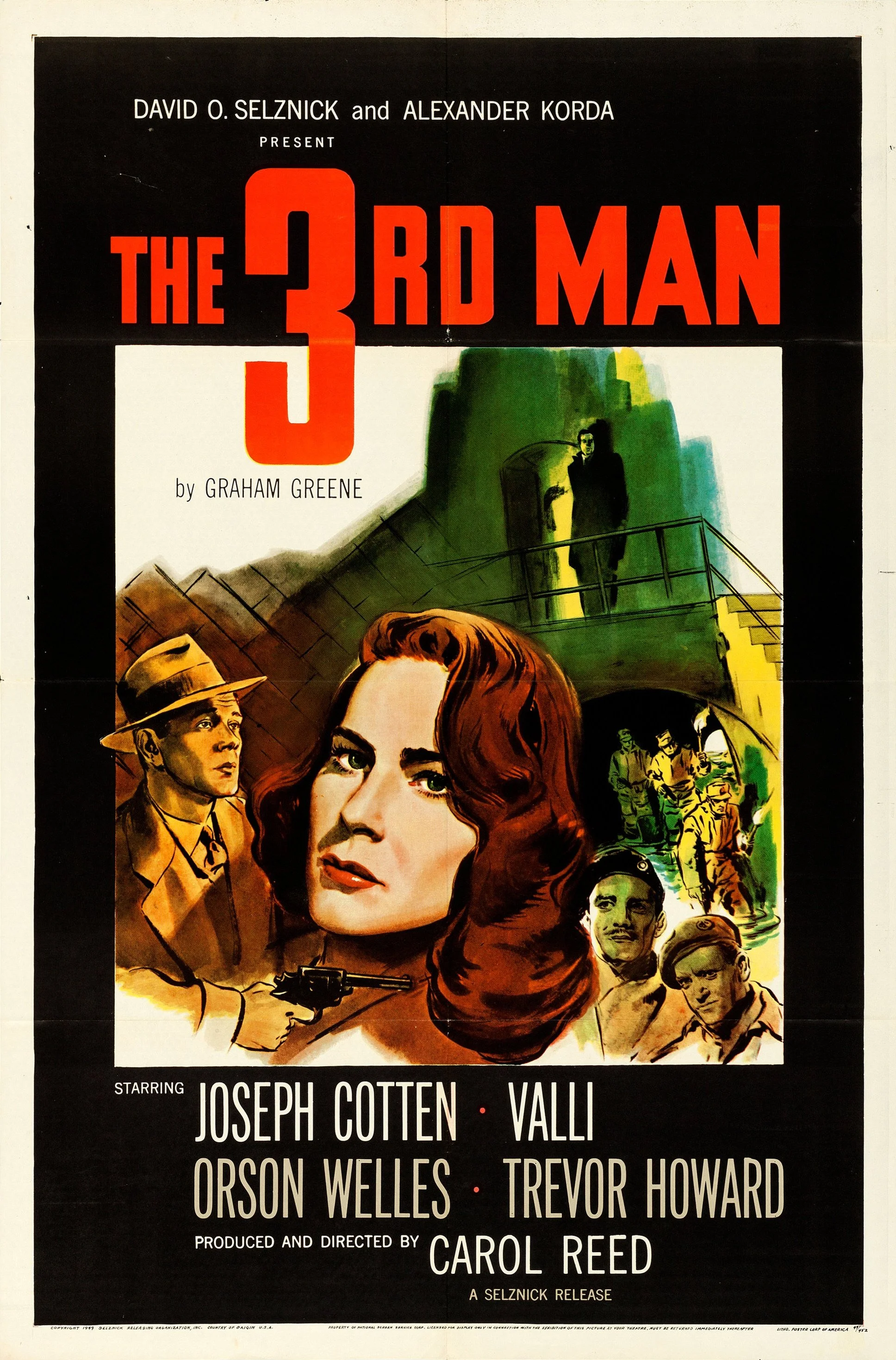
The Third Man (1949)

Mac Boyle July 11, 2023

Director: Carol Reed

Cast: Joseph Cotten, Alida Valli, Orson Welles, Trevor Howard

Have I Seen it Before: Oh, sure. You don’t write three—count ‘em, three—books about Orson Welles without wandering into this one a few times. Still not entirely sure why I didn’t include it in the massive Orson Welles re-watch I did before publishing The Once and Future Orson Welles, other than the fact that Welles didn’t direct the movie. But it should have been, right under scenes from Citizen Kane (1941), its scenes from this one that always make it into quick and dirty Welles retrospectives, along with radio clips from the War of the Worlds, or maybe a commercial or two for Paul Masson.

Did I Like It: When you think of the cream of the crop of film noir, you might want to swing your rhetorical arms for Peter Lorre, or Edward G. Robinson (really, there is a fine line between a gangster movie and film noir, although that Venn diagram can resemble an oval), but this is the A-list standard of the genre.

The cast is perfect, and I’m only kind of talking about Welles. You put a-list talent in a movie, and nearly any genre can transcend. Or, at least, it used to. Throw in a score that flies in the face of every convention, and you’re practically guaranteed to have a classic on your hands.

I was talking with another writer in recent years. They wrote crime novels (or, at least, tried to) and railed at how The Third Man’s crime story doesn’t quite add up. I get talked at a lot—or at least, more frequently than average—about Orson Welles films, and it often starts to resemble the grown ups in Peanuts cartoons trying to talk to me. But here, I could kind of see his point, Martins (Cotten) search for what happened to Harry Lime (Welles) meanders a bit in the middle, to where true enthusiasts of the genre might indeed lose patience.

But you know what? I’ll tell you what I told him. Why does that matter? So much Film Noir is all about mood, and between this film’s zither music and Welles eventual entrance into the picture, there’s more than enough mood to go around. The plot is fine, but it is absolutely not the reason you should have shown up in the first place.

Tags the third man (1949), carol reed, joseph cotten, alida valli, orson welles, trevor howard
Comment

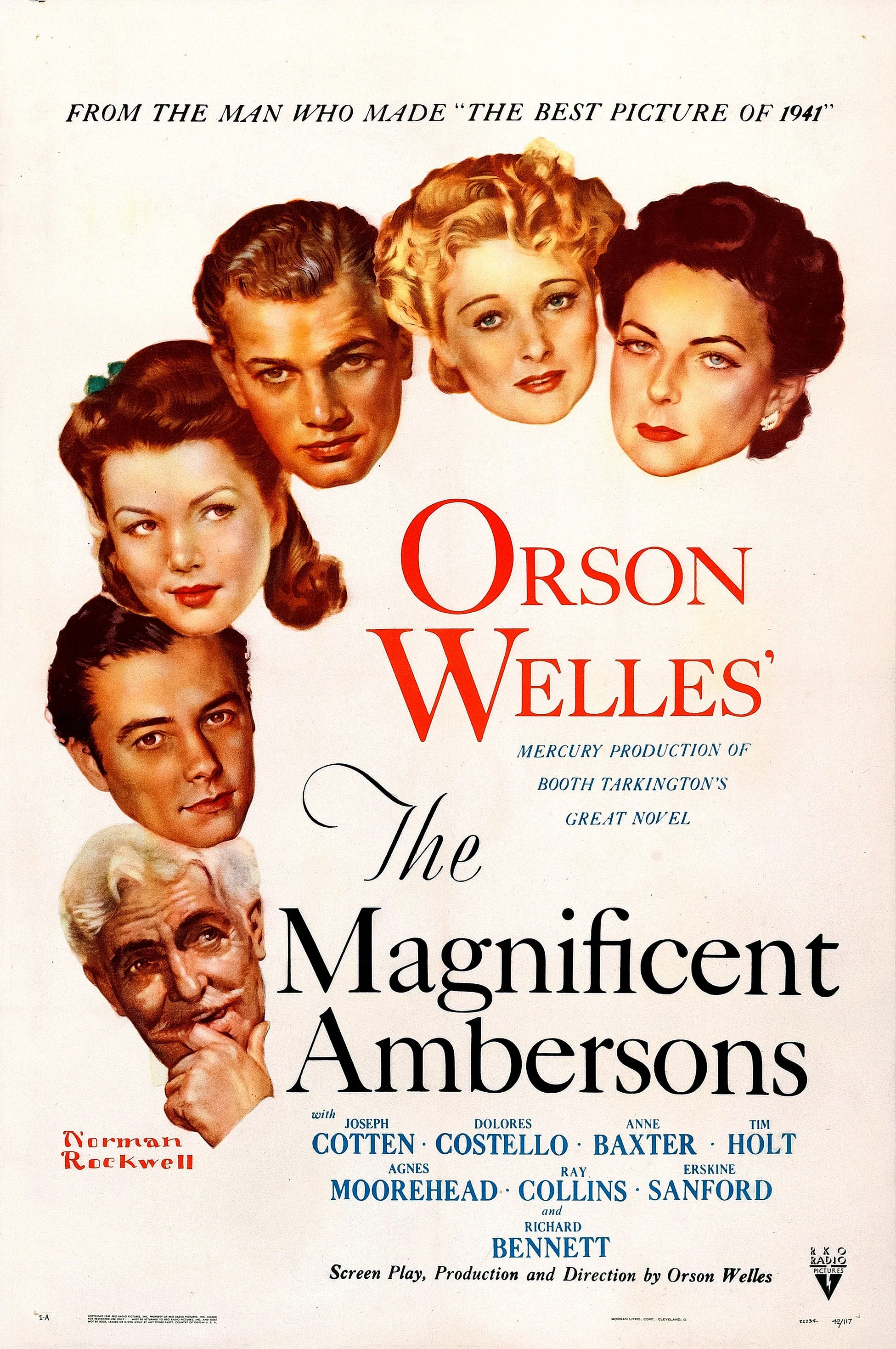
The Magnificent Ambersons (1942)

Mac Boyle January 8, 2022

Director: Orson Welles

Cast: Joseph Cotten, Dolores Costello, Anne Baxter, Tim Holt*

Have I Seen it Before: Yes, but it’s been a number of years. I was probably a teenager when I first watched it, because, I was, ultimately, that teenager.

Did I Like It: I may be a bad fan of the films of Orson Welles, despite my compulsive need to do homework on the subject. I’ve never fully bought in to the great tragedy of Ambersons. When I first saw it, the whole affair seemed just a bit to twee to get truly invested in, and what’s more, I couldn’t possibly imagine an ending different from the one presented in the theatrical cut.

So I return to the film now. My eye—to say nothing of my taste—is a little more sophisticated. Perhaps the experience will be a bit different now.

And it is, sort of. The story of the Ambersons and their tragedy is just a bit too precious for me, still. In all fairness, it had that quality when I finally brought myself to read the Booth Tarkington novel a few years back, in an effort to gai na bit more insight into the Welles mindset.

But that’s not the point of this film, or any early Welles film, ultimately. Content is incidental. Had he bowed to studio pressure and made War of the Worlds as a feature after he was brought to Hollywood, it would have been the technique behind that story that made a classic film. Citizen Kane (1941) is much the same way. And so is Ambersons. 

Which is what makes the truncated ending so odd to me now. The film has long stretches that are just as vibrant and unexpected as Kane, but it’s all punctuated by one of the more blandly staged scenes of the era. It sticks out like a sore thumb. I really don’t know why a studio would have taken a film away from Welles, especially during this period**. A Welles film not directed by Welles misses the entire point of the exercise.


*For all of the film’s issues, I’ll never understand why Welles himself didn’t play the adult George. He was still the right age at the time. Then again, my main complaint about depictions of Welles in the 30s and 40s is that he always seems far older than a man in his 20s. Maybe he was never very boyish. It would be hard to go from even the younger version of Kane to someone so impish.

**All right, I kind of get it. Any responsible leader of business would probably have a hard time giving Welles a blank check twice at that point in time.

Tags the magnificent ambersons (1942), orson welles, joseph cotten, dolores costello, anne baxter, tim holt
Comment

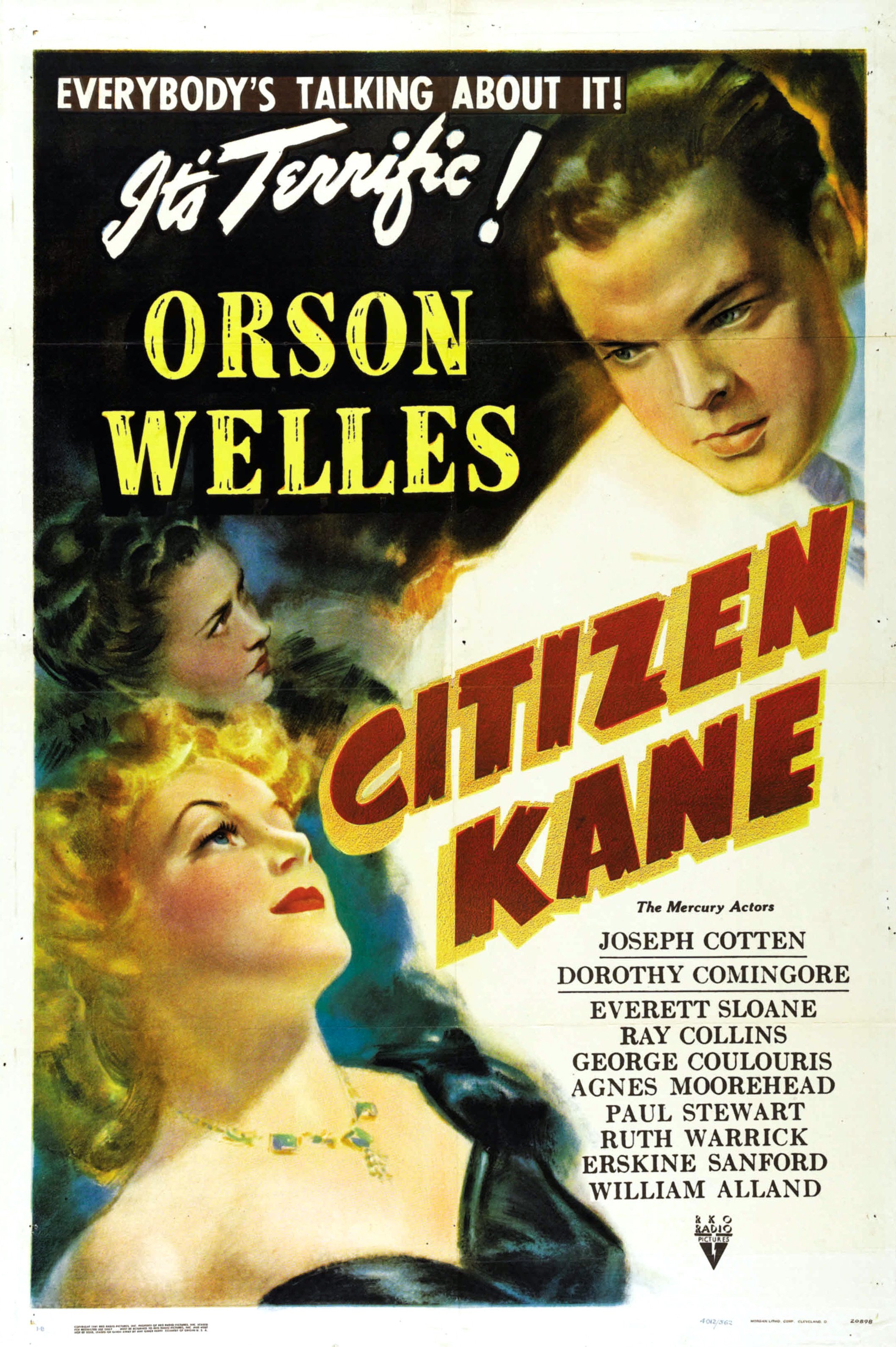
Citizen Kane (1941)

Mac Boyle January 8, 2022

Director: Orson Welles

Cast: Orson Welles, Joseph Cotten, Dorothy Comingore, Everett Sloane

Have I Seen it Before: Silly question at this point, right?

Did I Like It: I usually get a bit trigger-shy when writing up a review of any unusually iconic film. What is left to say about some films? This goes doubly for a film like this. 

I could write about the story of the making of the film, arguably more famous than the film itself. In an oblique way, I probably already have. I could write about the psychology on display, but that would probably not cover the 300-word minimum of these reviews. 

There’s probably a book someone (please, not me) somewhere (please, somewhere else) somewhen (please, let’s give it a few years) should write about how its allegedly Donald Trump’s favorite movie, which only really tells me that—in addition to all manner of things—the former president doesn’t understand 

On that note, it’s usually not a bad idea to distrust practically anyone—save for perhaps the recently departed Peter Bogdanovich*—who claims this is their favorite film. Met with a rather infamous degree of commercial hostility on its initial release, its not hard to imagine that far fewer people have actually seen it than claim to have done so**. 

So, about the film. I think Welles would be the first to admit that the story is on the main, fairly melodramatic. Big tycoon careens through his life, pretty much destroying everything he even thinks about touching, and in the end it’s largely because he never wanted to be rich and just wanted to spend a little more time with his sled.

Sad, yes. Earth shattering? Hardly. It helps that the film’s plot is constantly in a state of deconstructing and reconstituting itself, but even that only pushes the film into the unusual-but-not-quite-unique realm. Any film interested in tapping into the literary attributes of novels*** would opt for a similar structure. Kurosawa comes to mind.

The true strengths of the film, which go far beyond anything having to do with the sled lie with the technical craft on display. While the true possibility—and, clearly, the horrible potential—of silent film was ushered by The Birth of a Nation (1915) and for my money, perfected by Modern Times (1936), sound film had wallowed as not much more than turgid recordings of stage productions. See Dracula (1931) and yes, even—with all its strengths—The Great Dictator (1940). This film finally made the argument for the sound picture (barely ten years after the technology was seemingly perfected) by showing what all of the tools of cinema could do if brought to bear. Deep focus, optical printing, miniature, matte paintings, all are harnessed to tell a story not of fantasy, but of human tragedy. Few think of Citizen Kane as a special effects film, but that’s what it is. One of the key scenes where Kane (Welles) fires his old friend Jed Leland (Cotten) is heralded as a great example of deep focus, but that’s not what’s happening. The two characters are shot at different times, and optically forged together in a single frame of film. People complain about our highly technological style of making films where actors don’t ever have to be in the same room, but they’ve been innovating those methods for 80 years! It’s even COVID compliant!

That’s the film’s secret: it is a great film. It demands to be studied and learned about for its cinematic attributes. If you haven’t seen it, I’m not sure how you’ve made it this far on the site, but you should. If you’ve seen it before, it never really took hold with you, and you love cinema, then you need to see it again. And again. And read books about it. Then listen to the commentary tracks on the DVD. Go back to it as often as possible. I know I have.


*During my rewatch of the film this week, I did the regular film, and the commentary track from Roger Ebert, but somehow didn’t take in Bogdanovich’s track. May have to make amends for that sometime soon.

**I was on a podcast once where I had joked about never seeing the film. One of the other people on the panel cried, as if it finally connected us, “Me too!” They were aware of my other work. They had even reacted to my social media posts when I went to a 75th anniversary screening back in 2016. They were (and one imagines, still are) an idiot. I didn’t think that my review of this film would end up as a compare and contrast of my irritation with this person, and a few comments of Trump, but here we are, 2021.

***Has anyone ever tried to novelize Kane? Feels vaguely sacrilegious to even entertain such an idea, but it could be an interesting intellectual exercise. Let’s make that another project I should never again entertain. 
Tags citizen kane (1941), orson welles, joseph cotten, dorothy comingore, everett sloane
Comment

Powered by Squarespace

Party Now, Apocalypse Later Industries

Where creativity went when it said it was going out for cigarettes.

Where creativity went when it said it was going out for cigarettes.