Party Now, Apocalypse Later Industries

Where creativity went when it said it was going out for cigarettes.
  • Home
  • BOOKS
    • THE ONCE AND FUTURE ORSON WELLES
    • IF ANY OF THESE STORIES GOES OVER 1000 WORDS...
    • ORSON WELLES OF MARS
    • THE DEVIL LIVES IN BEVERLY HILLS
    • A LOSS FOR NORMALCY
    • RIGHT - A NOVEL OF POLITICS
  • PODCASTS
    • Beyond the Cabin in the Woods
    • THE HOLODECK IS BROKEN
    • THE FOURTH WALL
    • As The Myth Turns
    • FRIENDIBALS! - TWO FRIENDS TALKING ABOUT HANNIBAL LECTER
    • DISORGANIZED! A Criminal Minds Podcast
  • MOVIE REVIEWS
  • BLOGS AND MORE
    • Bloggy B Bloggington III, DDS
    • THE HOLODECK IS BROKEN BLOG
    • REALLY GOOD MAN!
  • Home
    • THE ONCE AND FUTURE ORSON WELLES
    • IF ANY OF THESE STORIES GOES OVER 1000 WORDS...
    • ORSON WELLES OF MARS
    • THE DEVIL LIVES IN BEVERLY HILLS
    • A LOSS FOR NORMALCY
    • RIGHT - A NOVEL OF POLITICS
    • Beyond the Cabin in the Woods
    • THE HOLODECK IS BROKEN
    • THE FOURTH WALL
    • As The Myth Turns
    • FRIENDIBALS! - TWO FRIENDS TALKING ABOUT HANNIBAL LECTER
    • DISORGANIZED! A Criminal Minds Podcast
  • MOVIE REVIEWS
    • Bloggy B Bloggington III, DDS
    • THE HOLODECK IS BROKEN BLOG
    • REALLY GOOD MAN!

A Blog About Watching Movies (AKA a Blog in Search of a Better Title)

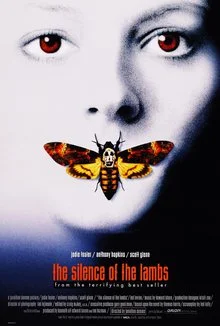
The Silence of the Lambs (1991)

Mac Boyle May 24, 2022

Director: Jonathan Demme

Cast: Jodie Foster, Anthony Hopkins, Scott Glenn, Ted Levine

Have I Seen it Before: One doesn’t start a Hannibal Lecter (Hopkins) podcasts without coming across this one at some point in their past.

Did I Like It: Can a review of this film over thirty years after its release add anything new to the discourse about it? Probably not, aside from the need to say that whatever you remember about the film, it’s better than that memory feebly maintains.

It’s such a singular cinematic experience that our episode of Friendibals did kinda, sorta descend into an effuse-fest.

And I’m actually okay with that! The movie is that good, and stands far and ahead above any other attempt to bring the character to life, with the exception of—against all odds—the tv series Hannibal.

But after that bloom of rediscovering the film withers even slightly (it’s been several days since I screened the movie and recorded the episode), are their complaints that I can reach for?

A reflexive criticism I could see is that it, at the most basic level, implies some very not-nice things about transgender people. The film doesn’t do nearly enough (or at least as much as Thomas Harris’ novel) to make explicit that Jame Gumb’s (Levine) is a monster who thinks he is a transgender, not that trans people are akin to monsters.

That all might be forgiven, and a degree of nuance is on display here, if only the film weren’t so good that it isn’t just an extremely good way to spend two hours, but that it singlehandedly re-defined the serial killer genre through the present. We could (and I, inevitably, will) talk about the glut of Hannibal Lecter sequels and prequels we got in result to the film’s ubiquity*, but nearly every serial killer movie in the last thirty years. Just look at Instinct (1999), a movie I was only 50% certain I was remembering correctly before looking it up. Any film featuring crime of any sort absorbed the sounds, but not the language of this film. Just look at Ace Ventura: Pet Detective (1994). There’s a mean-spirited, at best, but ultimately hatefully violent myopic discourse regarding the trans community now, and while it would be exceptionally reductive to blame that all on this film, every stunted attempt by filmmakers to give their monsters more dimension for three decades might very well have done so.

If only the film weren’t so good.

*Another thing I forgot during the podcast: In the book and in Ted Tally’s screenplay, the iconic muzzle placed on Lecter was written as a hockey mask. One could imagine why that didn’t survive to the final cut.

Tags the silence of the lambs (1991), hannibal lecter movies, jonathan demme, jodie foster, anthony hopkins, scott glenn, ted levine
Comment
4A9D2A3F-E49E-4D4F-B4B5-AD6EC5C98D0D.jpeg

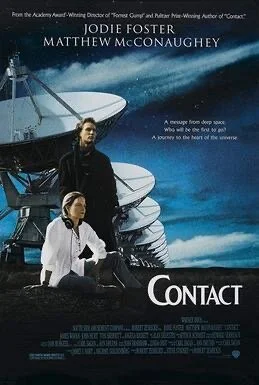
Contact (1997)

Mac Boyle November 22, 2020

Director: Robert Zemeckis

Cast: Jodie Foster, Matthew McConaughey, James Woods, John Hurt

Have I Seen it Before: Certainly. However, this particular screening came about after the recent news that the Arecibo Observatory in Puerto Rico is being decommissioned after suffering recent structural difficulties. Lora mentioned such news was doubly sad, as it was the location for the opening scenes of the film. I insisted that the film actually started with Jodie Foster discovering the Vega signal at the Very Large Array in New Mexico.

She was right; I was wrong. I apparently hadn’t remembered the film in much detail. It’s entirely possible that I have clearer memories of the trailer than I did of the film itself. And it wasn’t exactly like I saw it once in the theater and haven’t looked at it since. I’m pretty sure I’ve seen at least once in the last ten years. The human mind is weird.

Did I Like It: I’m happy to report that my lack of memory for the film had nothing to do with its quality. Far before Zemeckis decided to be content with being the least interesting filmmaker addicted to the WETA workshop, he was able to follow up the cultural permeation of Forrest Gump (1994) and the singular crowd-pleasing qualities of Back to the Future (1985) with the kind of meaty, thoughtful science fiction movie that best recommends the genre. Films that were common in an age of 2001: A Space Odyssey (1968) and Planet of the Apes (1968)* and are rare enough now, give or take an Arrival (2016) or two**.

McConaughey may be a member of that breed of movie stars who is almost entirely personality. That’s not necessarily a bad thing, especially here where Foster is allowed to give the far more nuanced and interesting performance. Had it been another actor portraying her love interest (or, for that matter, a less confident screen presence than Foster herself) Zemeckis and the studio might have been tempted to let the man overpower the woman in the frame. 

How many science fiction films lead one to talk about the performances as the central feature?


*Between those two and the superlative second season of the original Star Trek, sci-fi may not have seen a better tonnage crossed with quality year than the year Apollo 8 finally moved the idea of landing on the moon from the purely theoretical to the imminently possible. 

**You may want to bring up Interstellar (2014), but for my money Inception (2010) was far more thought-provoking.

Tags contact (1997), robert zemeckis, jodie foster, matthew mcconaughey, james woods, john hurt
Comment
220px-Taxi_driver_movieposter.jpg

Taxi Driver (1976)

Mac Boyle October 29, 2019

Director: Martin Scorsese

Cast: Robert De Niro, Jodie Foster, Cybil Shepard, Albert Brooks

Have I Seen It Before?: Never. They’re coming to take my official film snob membership card as I type this.

Did I like it?: It’s an experience, but I’d have to be a certain kind of person (read: Hinckley) to say I really enjoyed it.

The movie is such an insistent attempt to make a film that eschews the usual trappings of Hollywood entertainment, but Bernard Hermann’s score (his last, he passed away before the wide release of the film) bubbles through the movie. If you were only listening to the proceedings instead of watching, you’d be forgiven for thinking it was a romantic comedy in the early goings. Between that and the whole cowboy motif and homages to The Searchers (1956) it’s hard not to see this movie as the story of a man—and perhaps a culture at large—warped by exposure to cowboy stories that never fully came to grips with the violence that surrounds them.

And then there’s that ending. 

I’m so constantly annoyed by the rash of youtube videos “explaining” the ending of like, every film released. They’re boring bordering on odious. I don’t need an explanation of Joker (2019). It’s pretty straight ahead, if wobbly. For that matter, why would anyone need the ending of a movie like Spider-Man: Far From Home (2019) explained. Most—if not all—current movies are as straight ahead in their proceedings as your basic fairy tale.

But I digress. I’ll be damned if at the end of this movie I didn’t want to rush to the internet and have the true nature of our final moments with Bickle spoon-fed to me. Thankfully—blissfully, even—there is no concrete answer. Both Scorsese and screenwriter Paul Schrader acknowledge the interpretation that after Bickle guns down the gangsters, synapses fire in his mind for the last time and he imagines a world where he ended up a hero, but maintain that their intension was to display the irony of a monster like their main character slipping into a hero’s role purely by luck, with the knowledge that he will be nowhere near that lucky the next time. I like that version of the ending better; it inflames the imagination.

Tags taxi driver (1976), robert de niro, martin scorsese, jodie foster, cybill shepherd, albert brooks
Comment

Powered by Squarespace

Party Now, Apocalypse Later Industries

Where creativity went when it said it was going out for cigarettes.

Where creativity went when it said it was going out for cigarettes.