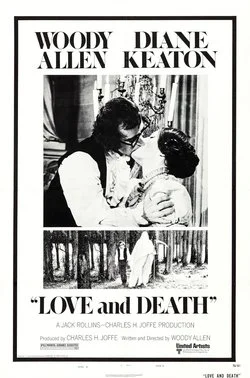
Director: Woody Allen
Cast: Woody Allen, Diane Keaton, Jessica Harper, James Tolkan
Have I Seen It Before: Ok. So, here’s what happened. Two years before even starting these movies reviews, I went to go see Cafe Society (2016). And I have yet to watch a Woody Allen movie since. I suddenly felt like I had a grown past his frantic romanticizing of infidelity. I may have grown up.
And then the accusations against him from the 90s were renewed again. Where I had previously hidden behind the “He was never charged” defense, the notion that it was less a lack of charges and more a lack of wherewithal on the part of prosecutors to get bring charges, I never really looked back.
Then Diane Keaton died. She had defended him in the ensuing years, which was never quite good, but she was great in other movies for years, and I had a hankering to watch one of her movies.
And, damn it, I missed this one. Time was, I had watched it at least once a year. Although not even remotely a Christmas movie, the score adapted from Prokofiev just feels like Christmas in my head.
Although probably not anymore.
Did I Like It: As much as one can still “enjoy his earlier, funnier films” this one does still hold up. Filled with enough references to Russian literature and non sequitur to nimbly switch gears between the silly and the profound, I found myself laughing frequently. One forgets how on equal footing Allen and Keaton were as performers, and she is far more than “the girl” in this movie. I’m glad I picked this one as a RIP Keaton screening, as opposed to Annie Hall (1977) or, worse yet, Manhattan (1979).
And yet…
Someone once described Manhattan—where Woody in his early forties dates a seventeen year old (Mariel Hemingway)—as the filmmakers version of the O.J. Simpson book If I Did It. That’s pretty funny, because its mostly true. In my naïveté of several hours ago, I figured I was safe of having to seriously process whether or not Allen is just a creep, or a thorough monster.
Then Keaton’s Sonja goes to seek wisdom from Father Andre (Leib Lensky) after Boris (Allen) has grown inexplicably suicidal. Senile because insanity is the film’s default point of mockery, the priest tells her the secret to longevity and life is “blonde twelve year old girls, two of them whenever possible.”
Sonja expresses her disappointment (not horror) with the Priest, as if he had said something uncouth, and proceeds with the absurdity of the story.
Blech. Doubt I’ll be coming back to this one any time soon. He’s probably confessed a little bit throughout most of his films. Best to leave them where they are. Maybe try The Godfather - Part II (1974) if you’re feeling some Diane Keaton nostalgia.
