Party Now, Apocalypse Later Industries

Where creativity went when it said it was going out for cigarettes.
  • Home
  • BOOKS
    • THE ONCE AND FUTURE ORSON WELLES
    • IF ANY OF THESE STORIES GOES OVER 1000 WORDS...
    • ORSON WELLES OF MARS
    • THE DEVIL LIVES IN BEVERLY HILLS
    • A LOSS FOR NORMALCY
    • RIGHT - A NOVEL OF POLITICS
  • PODCASTS
    • Beyond the Cabin in the Woods
    • THE HOLODECK IS BROKEN
    • THE FOURTH WALL
    • As The Myth Turns
    • FRIENDIBALS! - TWO FRIENDS TALKING ABOUT HANNIBAL LECTER
    • DISORGANIZED! A Criminal Minds Podcast
  • MOVIE REVIEWS
  • BLOGS AND MORE
    • Bloggy B Bloggington III, DDS
    • THE HOLODECK IS BROKEN BLOG
    • REALLY GOOD MAN!
  • Home
    • THE ONCE AND FUTURE ORSON WELLES
    • IF ANY OF THESE STORIES GOES OVER 1000 WORDS...
    • ORSON WELLES OF MARS
    • THE DEVIL LIVES IN BEVERLY HILLS
    • A LOSS FOR NORMALCY
    • RIGHT - A NOVEL OF POLITICS
    • Beyond the Cabin in the Woods
    • THE HOLODECK IS BROKEN
    • THE FOURTH WALL
    • As The Myth Turns
    • FRIENDIBALS! - TWO FRIENDS TALKING ABOUT HANNIBAL LECTER
    • DISORGANIZED! A Criminal Minds Podcast
  • MOVIE REVIEWS
    • Bloggy B Bloggington III, DDS
    • THE HOLODECK IS BROKEN BLOG
    • REALLY GOOD MAN!

A Blog About Watching Movies (AKA a Blog in Search of a Better Title)

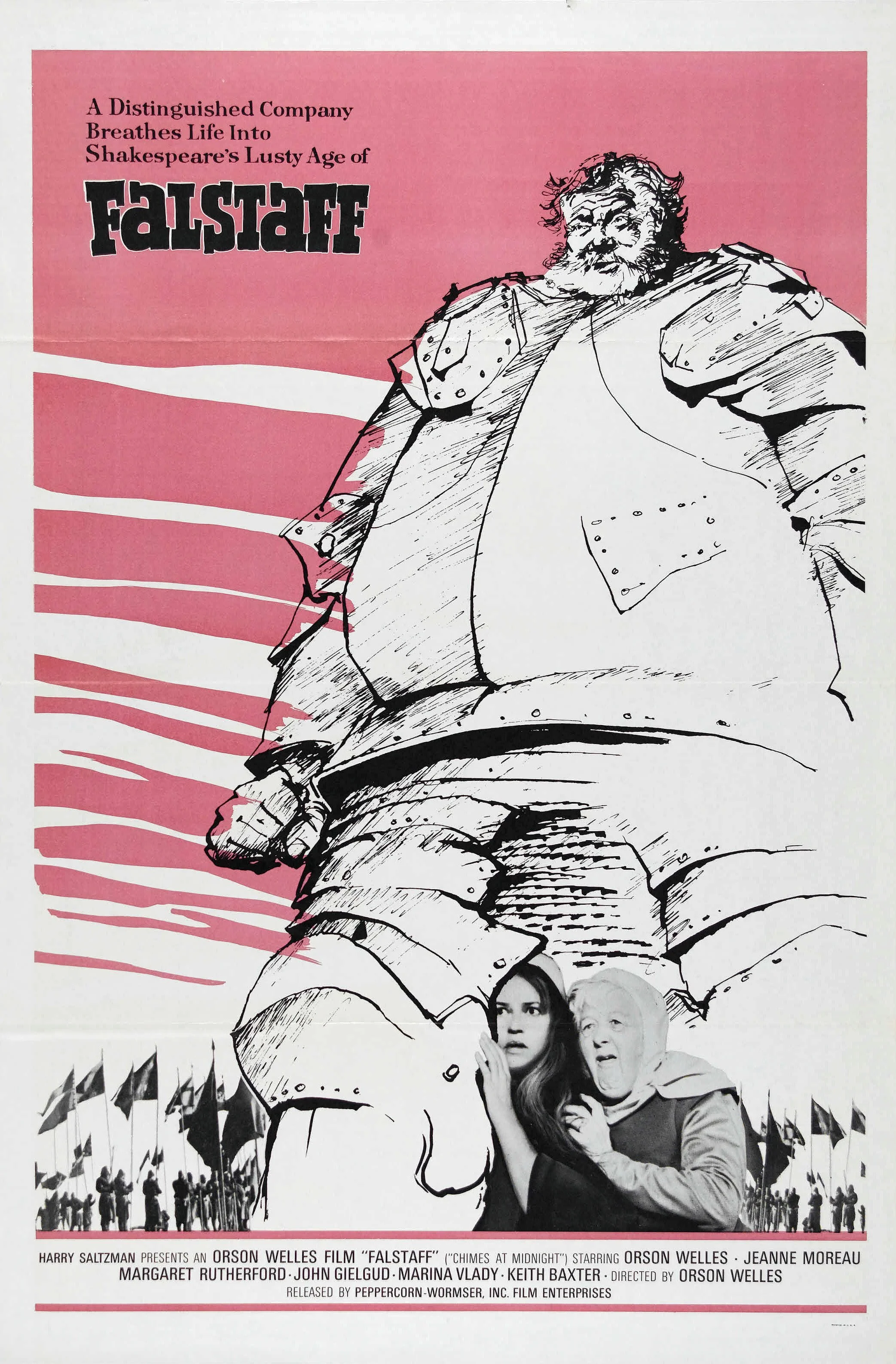
Chimes at Midnight (1965)

Mac Boyle February 8, 2022

Director: Orson Welles

Cast: Orson Welles, Jeanne Moreau, Margaret Rutherford, John Gielgud

Have I Seen it Before: Never. As I type this, this is the last of the films directed by Welles that I’m catching. I know. I’m unforgivably late to a party I myself was largely throwing.

Did I Like It: Welles struggled mightily to bring cinematic vitality to the works of the Bard, sometimes succeeding wildly, (Macbeth (1948)) and sometimes not accomplishing all of his goals as well as the audience might hope (Othello (1951); your mileage may vary).  Here, to play Flastaff—through all his adventures in the Shakespeare Cinematic Universe—was his lifelong ambition. Where as the Moor he was tragically, unavoidably miscast, here it not only seemed as if Welles always wanted to play Shakespeare’s great fool, his entire life may have been orchestrated to give him the opportunity.

The film’s virtues do not stop there. I’ve never thought of Welles as an action director in any sense of the word, but the Battle of Shrewsbury might feel as if it is both too disjointed and goes on too long for the sake of a modern audience, but I would push back against that myopic conclusion. The battle feels real and not some sort of pop culture confection. Film audiences would have likely forgiven Welles for sticking to the stentorian speechmaking, or for succumbing to a bubble gum aesthetic during this sequence, but if there was one thing that Welles ensured he did in his films—even after he was cobbling them together with no resources to speak of—it was to consistently punish those who come to his films with any preconceptions of how a film ought to behave.

Another element that I couldn’t help be struck by: the cinema—at least, the cinema as wielded by Welles—can capture more resolutely the banal tragedy of death better than the stage could ever hope to. His Macbeth and Othello have it as well, but here it is all the more potent. The tale of Falstaff isn’t necessarily meant to be a tragedy, necessarily. But after all the king-making and merry wive-ing is over, he is merely a wooden casket slowly being taken away by horse cart. All people, Welles included*, are heading to such an anticlimactic fate.


*But what this book presupposes is…
Tags chimes at midnight (1965), orson welles, jeanne moreau, margaret rutherford, john gielgud
Comment

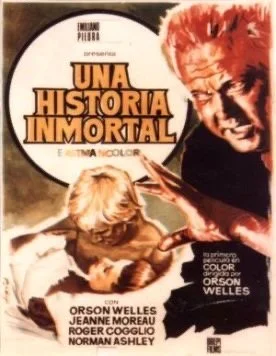
The Immortal Story (1968)

Mac Boyle January 30, 2022

Director: Orson Welles

Cast: Jeanne Moreau, Orson Welles, Roger Coggio, Norman Eshley

Have I Seen it Before: Never. Honestly, this one has always felt like a minor work (perhaps owing to its runtime?) and flew resolutely below my radar.

Did I Like It: I immediately made some assumptions that this would be firmly in that pantheon of latter-day Welles films (along the lines of both F for Fake (1973) and The Other Side of the Wind (2018)) where it must have been made with such a guerrilla mentality that they almost appear cobbled together via 16mm and 8mm film stock, even home video. As his film career well and truly wore out, Welles was cobbling together films from anything he could reach for.

Thus my reactions to the first few minutes (and largely the rest of the film) were filled with pleasant surprises. The opening shot in Macao (Spain, with some Chinese signs strewn about; Welles lived there and had long since struggled to get a production in the US) was made with such a clean, pristine quality, I was immediately certain that this was a film Orson had left unfinished after his death in 1985, and some well-meaning lunkhead got it into their mind to try and release the finished material in something resembling a completed form (for more on this phenomenon, see my review of the released version of Welles’ Don Quixote (1992)).

But it wasn’t. For most of the runtime (slight thought it might be) I thought the film could have been shot at any time. Certainly, the old-age makeup used on Welles during the production are dim, especially when compared to the efforts which still hold up from Citizen Kane (1941). That could be tied directly to the use of color cinematography, for which Welles never really cared. Why Welles really needed any old-age makeup at that point in his life is also a bit beyond me, though.

For one, brief moment (emphasis on the brief). Welles was able to marshal the meager resources he had at his disposal and make an honest-to-God film. One wonders what the man might have been able conjure had he lived a little longer.

Tags the immortal story (1968), orson welles, jeanne moreau, roger coggio, norman eshley
Comment

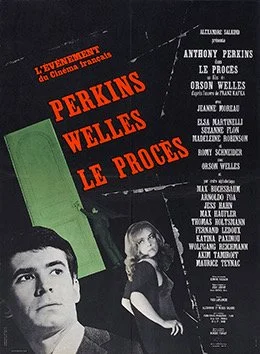
The Trial (1962)

Mac Boyle January 23, 2022

Director: Orson Welles

Cast: Anthony Perkins, Orson Welles, Jeanne Moreau, Romy Schneider

Have I Seen it Before: Never. Hey, some of them have slipped under the radar, and when it comes to a director like Welles, the further on you get in the filmography, the less the DVD/Blu Ray releases are shown love, and the less we may be getting out of the film all together.

Did I Like It: Welles once called it his best movie. We can debate as to whether or not he really believed that, or if he was making the proclamation defensively, whether because of the muted response the film received originally, or whether he was so desperate to move public opinion away from Citizen Kane (1941). 

I think he had to be defensive about it all. To be certain, all of the scenes have that trademark Welles vitality that is only truly noticeable when the contrasting authors of The Magnificent Ambersons (1942) are experienced. Camera angles are arch, people talk over people (unheard of, even this late in Welles career) and everything moves with a vitality that proves once again Welles was never content to just let a scene play out in the manner in which any other, ordinary and mortal director would be content.

Here’s the thing, though. The “pinscreen” opening might have had some unusual quality in the time it was released, but here it feels like a powerpoint presentation masquerading as cinema. I grant that might be more about the time in which I am writing this review than the reality of the quality of the film itself, but I can’t write these words in another time. The beginning becomes a further albatross because it suggests that the entire film is meant to be a dream. I’m not sure if that actually is Welles’ intent or not, but it would certainly explain the films more impressionistic impulses, but then we are left with a question that is unavoidable:

How long can a film sustain itself if it is all meant to be a dream? Do we dream sustained for two hours? Does my current era lack the attention span to allow for a dream that goes on that long? The film certainly has more interest in questions than answers, but if I’m spending the entire time asking the wrong questions, am I the problem, or is it the film?

Tags the trial (1962), orson welles, anthony perkins, jeanne moreau
Comment

Powered by Squarespace

Party Now, Apocalypse Later Industries

Where creativity went when it said it was going out for cigarettes.

Where creativity went when it said it was going out for cigarettes.