Party Now, Apocalypse Later Industries

Where creativity went when it said it was going out for cigarettes.
  • Home
  • BOOKS
    • THE ONCE AND FUTURE ORSON WELLES
    • IF ANY OF THESE STORIES GOES OVER 1000 WORDS...
    • ORSON WELLES OF MARS
    • THE DEVIL LIVES IN BEVERLY HILLS
    • A LOSS FOR NORMALCY
    • RIGHT - A NOVEL OF POLITICS
  • PODCASTS
    • Beyond the Cabin in the Woods
    • THE HOLODECK IS BROKEN
    • THE FOURTH WALL
    • As The Myth Turns
    • FRIENDIBALS! - TWO FRIENDS TALKING ABOUT HANNIBAL LECTER
    • DISORGANIZED! A Criminal Minds Podcast
  • MOVIE REVIEWS
  • BLOGS AND MORE
    • Bloggy B Bloggington III, DDS
    • THE HOLODECK IS BROKEN BLOG
    • REALLY GOOD MAN!
  • Home
    • THE ONCE AND FUTURE ORSON WELLES
    • IF ANY OF THESE STORIES GOES OVER 1000 WORDS...
    • ORSON WELLES OF MARS
    • THE DEVIL LIVES IN BEVERLY HILLS
    • A LOSS FOR NORMALCY
    • RIGHT - A NOVEL OF POLITICS
    • Beyond the Cabin in the Woods
    • THE HOLODECK IS BROKEN
    • THE FOURTH WALL
    • As The Myth Turns
    • FRIENDIBALS! - TWO FRIENDS TALKING ABOUT HANNIBAL LECTER
    • DISORGANIZED! A Criminal Minds Podcast
  • MOVIE REVIEWS
    • Bloggy B Bloggington III, DDS
    • THE HOLODECK IS BROKEN BLOG
    • REALLY GOOD MAN!

A Blog About Watching Movies (AKA a Blog in Search of a Better Title)

Bye Bye Birdie (1963)

Mac Boyle September 7, 2025

Director: George Sidney

Cast: Janet Leigh, Dick Van Dyke, Ann-Margret, Maureen Stapleton

Have I Seen It Before: I feel like I have seen those episodes of Mad Men where they try to cannibalize this movie for the very first Diet Pepsi* commercial. Does that count?

Did I Like It: There’s something vaguely unsettling about the movie at its very core, as if it were the natural conclusion of someone trying to make a gender-swapped Lord of the Flies.

Maybe it’s just that I get the sense that there was a version of this film—and certainly the broadway play—where Kim (Ann-Margret) is something of a second-tier character, and the story is really about Rosie (Leigh) and Albert (Van Dyke).

That film could have been a nice romantic comedy centering on two of the more charming personalities to ever be in a movie. That isn’t the film as presented.

As it stands, the teenage girls swarm over the characters of the film like locusts. I don’t even think the film is being fair to the phenomenon of adolescence, or even the phenomenon of adolescence in the late 1950s which it is seeming to satirize. But these girls are frightening. There isn’t even a frolicking chase to keep things light, as in A Hard Day’s Night (1964). These girls won’t be bough, bullied, reasoned, or negotiated with. They just want to consume this music star, Conrad Birdie** (Jesse Pearson), even if they’re not entirely sure what consuming him might be. There might not have been any need for Carpenter to re-make Village of the Damned (1960), this production got the job done only three years after the original.

No wonder Van Dyke and Leigh get pushed out of almost every frame they’re in. And it might be contrary to say so, but the film is poorer for it.

*Or Patio, if you’re nasty.

**While we’re on the subject, Birdie is clearly supposed to be a stand-in for Elvis, but named to spoof Conway Twitty, who ended up becoming the schmaltziest kind of country crooner. His beg legacy is a running gag on Family Guy. At least The Beatles and Elvis had some good songs…
Tags bye bye birdie (1963), george sidney, janet leigh, dick van dyke, ann-margret, maureen stapleton
Comment

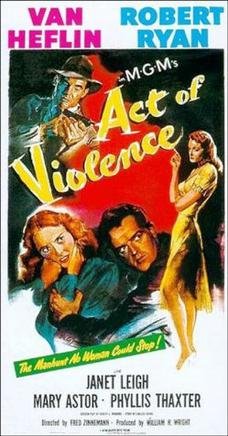
Act of Violence (1948)

Mac Boyle April 22, 2024

Director:  Fred Zinnemann


Cast:  Van Heflin, Robert Ryan, Janet Leigh, Mary Astor


Have I Seen It Before: Never.


Did I Like It: It’s a perfectly formed movie for what it is, so much so that I worry I may not have any greater insight about it. It offers no easy answer as to who might be considered heroic and who might not, and it is sort of jarring to see anyone have the same kind of reservations and angst about fighting in World War II that one would assume didn’t enter American life until the second half of the 20th century, but you take all of that in from reading a below average plot summary of the film.


But presentation is worth more than what we sometimes think it is. Displayed in 35mm is automatically a feature that will make the film appointment viewing for me, I think my record is pretty clear on that. But something dawned on me during this viewing that hadn’t really crystalized in other 35mm screenings at Circle Cinema. Sometimes their projection is a little wonky. A reel will change, and the new reel kicks in not quite aligned with the screen, taking a moment to re-orient itself. A flaw, sure, but a charming one. This screening did remarkably well in this regard, but the frame was still not quite right. The top of the frame bled ever so slightly into the ceiling. When, as tends to happen in a black and white noir film, a wobbly light fixture dangles from the ceiling and the movie, and causes the light to dance inside the room. I look around in these moments and something dawns on me. When a film is projected in black and white, the theater itself is reflected in those same shades of grey (minus an emergency exit sign or two). The border between the unreal and the real became thinner in that moment. Even when a little wonky, film is just better than any digital format you might be able to find.


That all may sound like the film couldn’t hold on to my attention, but it did. The flaws in the presentation only ensnared me further into the film.

Tags act of violence (1948), fred zinnermann, van heflin, robert ryan, janet leigh, mary astor
Comment

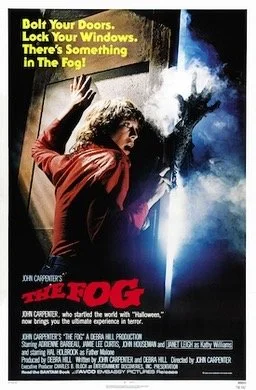
I could live to be 1000 years old, and I’ll never be completely sure that the lady on this poster is Barbeau or Curtis. And neither will you.

The Fog (1980)

Mac Boyle March 16, 2023

Director: John Carpenter

Cast: Adrienne Barbeau, Jamie Lee Curtis, John Houseman, Janet Leigh

Have I Seen it Before: Oh, sure. It’s not like there were Carpenter movies other than Assault on Precinct 13 (1976) that I have been spending all of these years missing.

Did I Like It: Here’s the problem: I never felt like I got this one entirely. It isn’t a slasher movie, but it wasn’t like people were going to give Carpenter big movie money in 1980 on the heels of Halloween (1978) for anything without stabbings. It’s a ghost story, one supposes, but those ghosts—when they aren’t silent guys who stab things—take the form of one of the most slowly moving, easily avoidable natural phenomena of which I can readily think.

Carpenter himself didn’t feel like the film worked on first blush, and who am I to argue with the master? It isn’t all that scary. Also, there’s no Donald Pleasance in sight, and there really is no excuse for a Carpenter movie to not have Donald Pleasance prior to 1995*. Most damningly, much of the third act groans from the weight of explaining just what is within that fog, and why it wants to wreak just that much havoc. Carpenter at his best, and certainly his two previous films benefit from a ruthless minimalism in their thrills. Maybe this motif was rendered against his better judgment, or perhaps the demands of the horror marketplace and success diminished him for a moment. Ultimately, it’s not so much a case of the difficult second album, but more of a case of the difficult second album about which anyone could be bothered to pay attention.

And yet, it is a Carpenter film and can never be fully dismissed. First of all, he scored the thing, and as much as I might lament him not directing anymore, the fact that he is still producing scores is a throughly satisfying consolation prize. Secondly, even though the fog and what lives within it never quite work, I recognize an idea of unknowable horror that exists in his previous work and that he continues to reckon with. It will never be top tier Carpenter, but him on his worst day (The Ward (2010) not withstanding) is better than almost anybody of his or anyone else’s era.

*Is there a correlation between Pleasance’s passing and the Carpenter’s severe waning interest in continuing to make movies? I’m not seeing a lack of one, to be sure. Not even an injection of Kurt Russell in his life could keep things from eventually unravelling.

Tags the fog (1980), john carpenter, adrienne barbeau, jamie lee curtis, john houseman, janet leigh
Comment

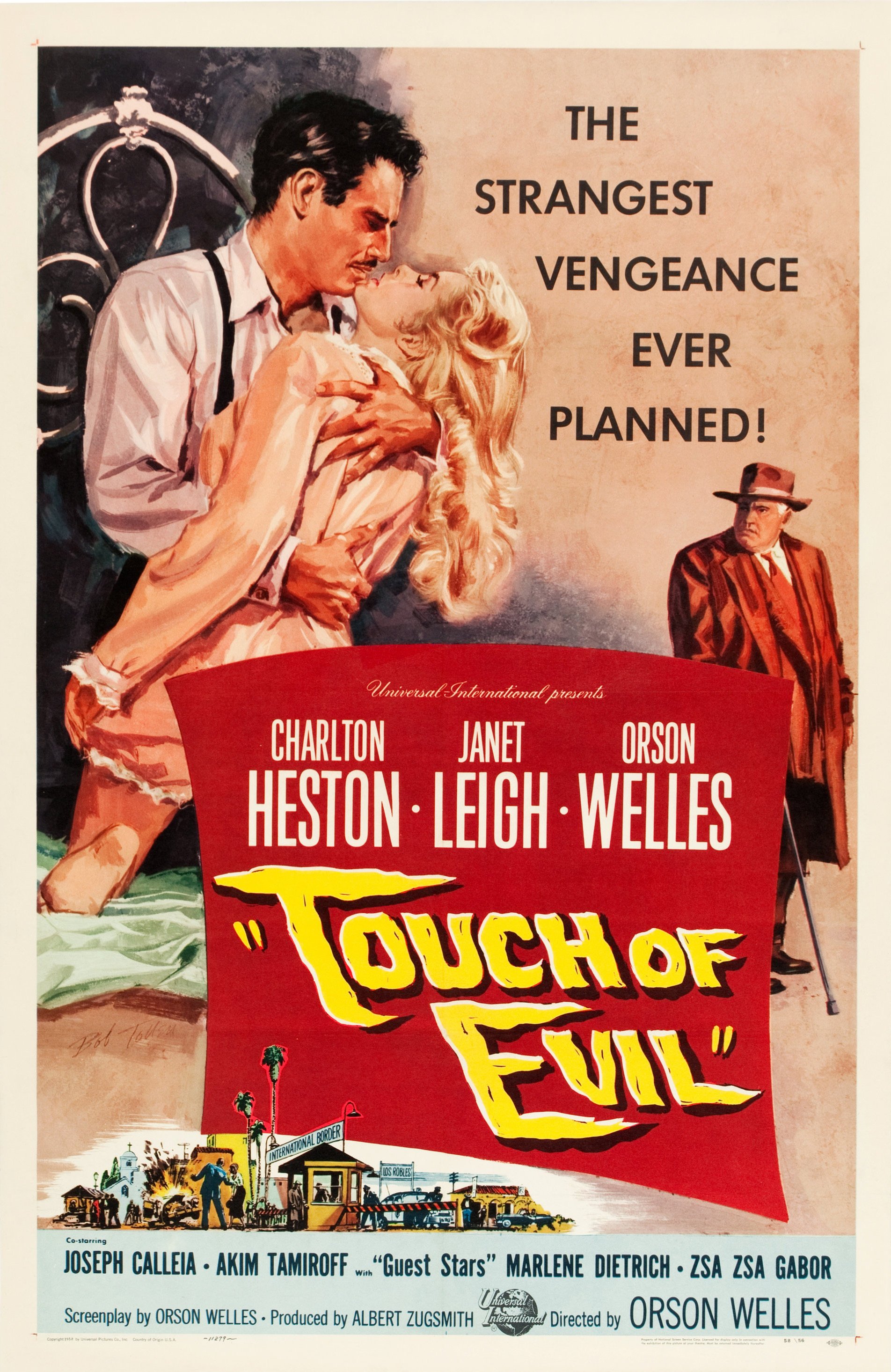
Touch of Evil (1958)

Mac Boyle December 12, 2021

Director: Orson Welles

Cast: Charlton Heston, Janet Leigh, Marlene Dietrich, Orson Welles

Have I Seen it Before: Oh, sure. But I’m relatively certain I haven’t seen it since release of the restored version in 2008, which brought the film closer to the version detailed in Welles’ long-ignored notes made after Universal took the film away from him*.

Did I Like It: There are two things that stick in my mind most about this, one of Welles’ few studio-backed films. First, the conversation in Ed Wood (1994) between Wood (Johnny Depp) and Welles (Vincent D’Onofrio, but voiced by Maurice LaMarche**) where Welles complains that he’s about to make a thriller at Universal, and they’re insisting he cast “Charlton Heston as a Mexican.” Even Wood wouldn’t go that far. Essentially, this movie has all the trappings of a B-movie, and that is by no means meant as a dig. Gleeful, energetic, and as innovative as the form will allow (as directed by one of the few verifiable genius to have ever helmed a picture), it still is probably aggressively mis-cast, and every moment is meant to tantalize. It’s not art; it is pure entertainment.

And just as there’s nothing wrong with a film being a B-picture, there’s also nothing wrong with it being made for the sole purpose of entertainment. That’s because the second thing that always sticks in my mind about the movie is that opening shot. If ever a movie about corruption and explosions could reach for art, it was under this man and it would be this movie.


*If there’s one thing Orson Welles knew how to do, it was get a film taken away from him.

**Incidentally—and you know I’ve given this question at least an inch of thought—this is the best casting of Welles ever.

Tags touch of evil (1958), orson welles, charlton heston, janet leigh, marlene dietrich
Comment
F1A582C1-9C91-4BC7-9F12-061EBAC8C2E9.jpeg

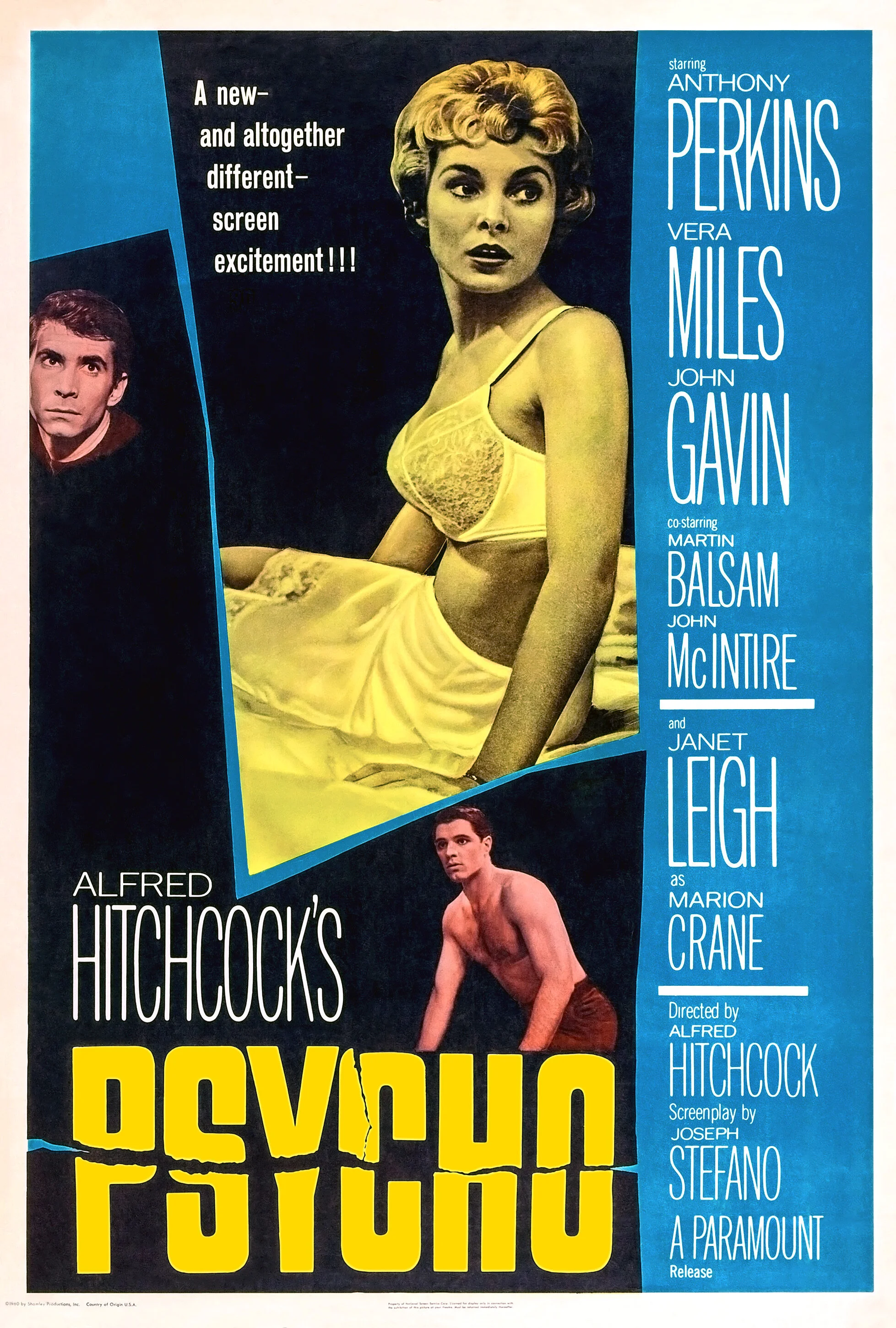
Psycho (1960)

Mac Boyle December 26, 2020

Director: Alfred Hitchcock

Cast: Anthony Perkins, Janet Leigh, Vera Miles, John Gavin

Have I Seen it Before: Please... Is it weird that I view this movie as cinematic comfort food? I’m reasonably sure Hitchcock didn’t mean it to be so.

Did I Like It: I don’t think there’s enough written—except by me—about how Psycho is, at it’s core, the greatest B movie ever produced. The budget is nearly non-existent, especially in relation to Hitchcock’s immediately preceding production, North By Northwest (1959). The biggest star in the movie (and one hopes this isn’t exactly a spoiler) is killed before the plot truly gets running.

And that plot is, objectively, a muddled mess. In any other circumstances, a story that begins about a woman (Leigh) making a run for it with thousands of dollars of her employers money, only to veer wildly into the events after her sudden murder.

In another time, and another place, and most importantly, with another filmmaker at the helm, the film would have become a salacious, forgettable thriller that would have dropped off the face of the earth the instant drive-in movie theaters became all but extinct.

But we’re talking about Hitchcock here. In his hands, it single-handedly launches the slasher genre, inspiring an army of lesser sequels, homages, and echoes. The plot that shouldn’t work is a pure mis-direction fueled magic trick. We trust Hitch to tell us a story of the woman on the run, and after everything changes, we can never feel settled for the rest of the picture, or for any movie ever again. 

Or, maybe, it has nothing to do with trust. Hitchcock works on a level few, if any of us, can fathom. This film is arguably his most famous, and he makes the whole thing seem effortless. It is a marvel to watch each and every time I have spun it in my Blu Ray player.

Tags psycho (1960), alfred hitchcock, anthony perkins, janet leigh, vera miles, john gavin, hitchcock movies
Comment

Powered by Squarespace

Party Now, Apocalypse Later Industries

Where creativity went when it said it was going out for cigarettes.

Where creativity went when it said it was going out for cigarettes.