
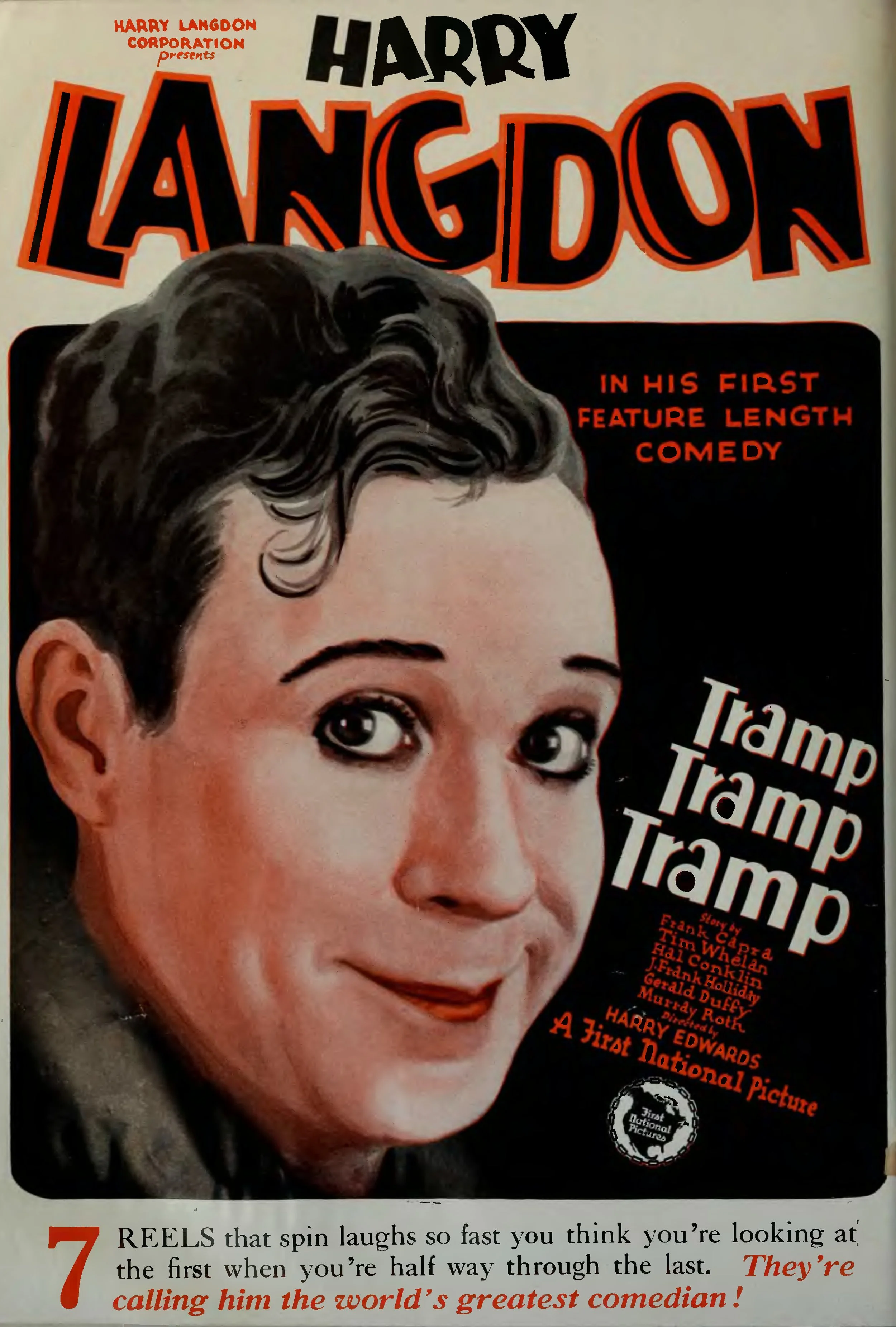
Director: Harry Edwards
Cast: Harry Langdon, Joan Crawford, Edwards Davis, Tom Murray
Have I Seen it Before: Never.
Did I Like It: Let me guess. You’ve clicked on this review assuming that this was going to be a Chaplin movie, didn’t you? If I wasn’t weirdly zeroed in on Chaplin’s features, I probably would have thought the same thing.
There are certainly enough qualities to make this similar to any number of silent comedy features, including those produced by Chaplin. Mistaken identity, hapless marching straight through danger as if it doesn’t really exist, and a vein of populist wish fulfillment with the downtrodden pure hero coming into great riches. The whole thing tends to the episodic, as most of the screen comedians of the era (including Chaplin, for that matter) had not yet worked out how to maintain things for over an hour without starting and stopping things constantly.
Langdon does offer a bit of a different energy from his contemporaries, which is good, but it also leads to the film’s chief, glaring problem. He is childlike, where Chaplin and Buster Keaton were sad clowns, and Harold Lloyd had a more wry detachment from the chaos which surrounded him (although I may be responding to the glasses there). It’s a unique flavor that probably appealed more to kids of the era, and which kept me from too much thinking him just a knockoff of his contemporaries.
And yet, the whole thing ends—completely divorced from any tie to the footrace which propels the loose plot—with several minutes of Langdon playing his own character’s newborn infant son, just mugging as a baby. As much as I’ve written about some silent comedy features not having the idea of a feature plot quite nailed down yet, this almost seemed like they were filming the entire movie live, realized they needed to run a bit longer on time, and slapped a diaper on Langdon, hoping for either the best or that the audience would already be grabbing their coats by then.