Party Now, Apocalypse Later Industries

Where creativity went when it said it was going out for cigarettes.
  • Home
  • BOOKS
    • THE ONCE AND FUTURE ORSON WELLES
    • IF ANY OF THESE STORIES GOES OVER 1000 WORDS...
    • ORSON WELLES OF MARS
    • THE DEVIL LIVES IN BEVERLY HILLS
    • A LOSS FOR NORMALCY
    • RIGHT - A NOVEL OF POLITICS
  • PODCASTS
    • Beyond the Cabin in the Woods
    • THE HOLODECK IS BROKEN
    • THE FOURTH WALL
    • As The Myth Turns
    • FRIENDIBALS! - TWO FRIENDS TALKING ABOUT HANNIBAL LECTER
    • DISORGANIZED! A Criminal Minds Podcast
  • MOVIE REVIEWS
  • BLOGS AND MORE
    • Bloggy B Bloggington III, DDS
    • THE HOLODECK IS BROKEN BLOG
    • REALLY GOOD MAN!
  • Home
    • THE ONCE AND FUTURE ORSON WELLES
    • IF ANY OF THESE STORIES GOES OVER 1000 WORDS...
    • ORSON WELLES OF MARS
    • THE DEVIL LIVES IN BEVERLY HILLS
    • A LOSS FOR NORMALCY
    • RIGHT - A NOVEL OF POLITICS
    • Beyond the Cabin in the Woods
    • THE HOLODECK IS BROKEN
    • THE FOURTH WALL
    • As The Myth Turns
    • FRIENDIBALS! - TWO FRIENDS TALKING ABOUT HANNIBAL LECTER
    • DISORGANIZED! A Criminal Minds Podcast
  • MOVIE REVIEWS
    • Bloggy B Bloggington III, DDS
    • THE HOLODECK IS BROKEN BLOG
    • REALLY GOOD MAN!

A Blog About Watching Movies (AKA a Blog in Search of a Better Title)

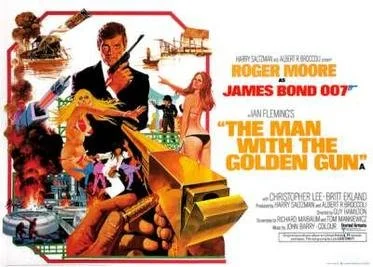
The Man With the Golden Gun (1974)

Mac Boyle December 15, 2024

Director: Guy Hamilton


Cast: Roger Moore, Christopher Lee, Britt Ekland, Maud Adams


Have I Seen It Before: Oh, sure. Oddly enough, I think this may be the film in the canon I’ve seen the least. (Octopussy (1983) may be in close competition).


Did I Like It: I’m honestly not sure why that’s the case, as I tend to be a bit of a contrarian about Moore’s time in the tuxedo and Walther PPK. This is almost universally reviled as Moore’s worst at-bat (usually uttered in the same breath with A View To A Kill (1985).


But I really like (well… sort of like) A View To A Kill, and dare I say I liked large swaths of this one, too. It might be the villain at the center of it all. Christophers Walken and Lee were born to play Bond villains, and acquit themselves well. Throw in the fact that Lee’s Scaramanga has a ruthless, simple ambition and plan (at least in the first half of the film) that makes it one of the more solid Fleming adaptations starring Moore.


Even when the film settles into the old hoary Bond cliches, it’s not all bad. There’s a Macguffin of a device that makes solar power work which is somehow simultaneously silly on its own and so of-the-moment that it must have felt passe by the time The Spy Who Loved Me (1977) arrived in theaters. I may owe Tomorrow Never Dies (1997) an apology for the side-eye I gave it when I remembered that the whole plot hinged on a GPS device.


The theme song, sung by Lulu and with music by the Bond music GOAT John Barry is dismissed so perpetually (even by Barry himself) but after having the other Bond themes on regular re-play, I found it one oddly fresh again. Sure, it’s lyrics are a listing of various plot elements, but that can be fun, too. If we didn’t have this title theme, we might not have had the various rap tracks recounting movie plots throughout the 80s and 90s. Lulu walked so Partners in Kryme could run. If you know, you know.


I’m honestly not entirely sure why both View and this one are consistently ranked at the bottom of Moore’s efforts.


Then I see Sherriff J.W. Pepper (Clifton James). Again, apparently. Where he might have made sense in Live and Let Die (1973) (I’m being generous here) it’s a real bummer to find him becoming not only a recurring character here, but just a little bit of a partner in crime (or kryme) for a moment. I can’t explain away Pepper, but I’ll be damned if I didn’t crack a smile when his wife (Jay Sidow) wants to buy a Hong Kong Elephant trinket and he grumbles “Elephants! We’re Democrats, Maybelle.”

I didn’t think I would be this forgiving as I march through Moore’s films. Could this possibly hold up? Oh, no… (checks notes) I’m going to have to review Moonraker (1979) now, aren’t I?
Tags the man with the golden gun (1974), james bond series, guy hamilton, roger moore, christopher lee, britt ekland, maud adams
Comment

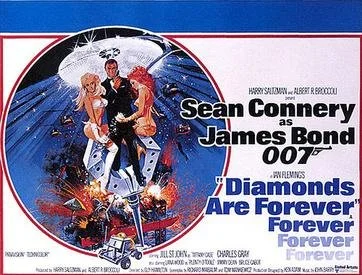
Diamonds Are Forever (1971)

Mac Boyle December 7, 2024

Director: Guy Hamilton

Cast: Sean Connery, Jill St. John, Charles Gray, Lana Wood

Have I Seen it Before: Sure.

Did I Like It: There’s a moment in the TV series Timeless, which I didn’t really enjoy, where the timeline gets altered and there are more Sean Connery-starring Bond movies than there were in our timeline. That part I found delightful. So, it is supremely strange that I find myself in the strange position of wishing that Connery had been in the series more, and somehow wishing that he had been in one less entry.

The movie already runs at a bit of a deficit, as it is trying even harder than most to ape the singular success of Goldfinger (1964). It probably isn’t nearly as egregious as A View to A Kill (1985) in that regard—that movie nearly did a find and replace of Goldfinger’s script—but it is a terrible impulse of the franchise to imitate the the third entry.

But that’s not the real problem. The problem is Connery himself. Lore around the movie indicated that Connery didn’t want to be there, despite the huge payday, and its difficult to not see that in his listless final (authorized, non-video game) performance as the superspy. He looks tired, and significantly older than he did in You Only Live Twice (1967) and even later in Never Say Never Again (1983).

Then again, the film’s screenplay doesn’t give him much to work with. The opening—usually the best part of even the worst films in the series—at least seems nominally propelled from the ending of On Her Majesty’s Secret Service (1969) with Bond (Connery) searching for revenge against Blofeld (Gray). Anything less would have felt like a cheat, but when it turns out that Blofeld survived Bond’s ministrations in the third act of the film, it isn’t a horrifying revelation for Bond. It’s barely a plot point.

Tags diamonds are forever (1971), james bond series, guy hamilton, sean connery, jill st john, charles gray, lana wood
Comment
220px-Live_and_Let_Die-_UK_cinema_poster.jpg

Live and Let Die (1973)

Mac Boyle April 15, 2020

Director: Guy Hamilton


Cast: Roger Moore, Yaphet Cotto, Jane Seymour, Geoffrey Holder


Have I Seen it Before: Yeah…


Did I Like It: And so, we renew my vow to not be all that into the Roger Moore reign behind the wheel of the Aston Martin from Q Branch (or, as he so often inexplicably drives, a Lotus Esprit).


Things start off on a rocky note. One wants to give credit to Moore for making the dauntingly bold gambit of taking over for Sean Connery, especially when the last fellow to try that has spent most of the last fifty years pilloried for his efforts. But when the assignment from M comes not during a meeting at MI-6. This precludes the possibility of this new Bond having his moment with Desmond Llewellyn’s Q, which makes it hard to accept this as a Bond film at all, even if the gun barrel sequence helps. But far more unsettling is tiny little farce that plays out while Bond is trying to keep M (Bernard Lee) from realizing that he has a woman over. It’s so, un-Bondian. The literary Bond or even Connery’s Bond (and let’s get real, Lazenby wouldn’t give a shit, either) wouldn’t be so coy about relations with a woman. Maybe The Saint would be that precious, and that’s probably the problem.


But let’s talk about Racism! The film makes that fatal flaw of several of Moore’s later outings by trying to imitate another genre, in this case the blaxploitation films of the 1970s. But when the film is exclusive authored by white filmmakers, all we get here are the trappings, but none of the authentic style. 


But more importantly, let’s talk about sexism! Now that may seem like a strange criticism for a Bond movie. If I wasn’t budgeting for a certain amount of sexism, I probably should have watched a film from some other series. But every black man seems to be cunning, when the few scant women of color—mainly Rosie Carver (Gloria Hendry)—screech and faint their way through the movie. I can roll my eyes at the Stacy Suttons and Christmas Joneses of the world as much as the next guy, as their faux over capability beggars all believability, but a little bit of agency wouldn’t hurt, especially when by this point the series had a plenty of relatively self-possessed heroines. Even Jane Seymour has more of a certain serene aptitude about her.


That whole penultimate act, though… And that’s before I even approach the unslightly beginning of what would become the epic tragedy that is Sherriff J.W. Pepper (Clifton James). Roaring through the marshes of Louisiana is not exactly the Baccarat (or Poker) table at the Royale, but a Bond movie needs to be a little more exotic than that. Even Diamonds Are Forever (1971) brought Bond down to the banal world of the United States, but at least had the good sense of placing him in Las Vegas, a place I might believe to see a character like Bond. And here, Bond lifts himself out of his dilemma with Mr. Big’s (Cotto) henchmen with all of the lethality of Bugs Bunny.


Your individual feelings about this film will likely be tied directly to how you feel about Moore as Bond. Thus, if he’s your man with the License To Kill, then this is likely to be a highlight. For me, it’s just a portent of far worse things to come.

Tags live and let die (1973), james bond series, guy hamilton, roger moore, yaphet kotto, jane seymour, geoffrey holder
Comment
220px-Goldfinger_-_UK_cinema_poster.jpg

Goldfinger (1964)

Mac Boyle March 28, 2020

Director: Guy Hamilton

Cast: Sean Connery, Honor Blackman, Gert Fröbe, Shirley Eaton*

Have I Seen It Before?: Many, many times.

Did I like it?: This may not be my favorite Connery-led Bond film. That will always be with From Russia With Love (1963). But it is hard to deny that this film has been the far more influential entry to the rest of the series. 

One can see why EON productions spent most of the next forty years trying desperately to re-capture the magic of this film. Every ounce of it works**. The villain (Fröbe) and his henchmen (Harold Sakata) have just the right degree of hairbrained schemes and legitimate menace. For a man my age, the women in the film are beautiful in a sort of historical sense, but every one of them is memorable. And then there is Bond himself. Still lethal and cunning in the frame of Connery, there is a sense of bemusement in his face as the proceedings reach for the ridiculously sublime that is so charming here that you almost want to stop it from becoming an unstoppable brush fire by the time Roger Moore takes on the role.

The heirs to Broccoli have spent a lot of time saying that when they set out on a new 007 adventure they always venture to make Goldfinger, but sometimes are left with the reality that they made Thunderball (1965) instead. I would take a different tack and say they should (and in recent years have with more frequency) tried to make From Russia With Love, but all-too-often they ended up making Moonraker (1979) instead.


*Weird side note about Ms. Eaton. In a weird attempt by the collective world to make the uber-fantasy of the Bond films reality, there was an urban legend about how not just Jill Masterson, but Eaton herself also died because skin suffocation due to the gold paint. In truth, Ms. Eaton is alive to this day, but the dark cloud over the film once inspired my mother to warn me about the dangers of painting your entire body. To this day, I have no clue why she needed to tell me that, but I suppose the things parents wanted to warn their children about in the 1990s were going to seem weird either way.

**I’d change that to litres, but large swaths of the film take place in America, so the metric system is just going to have to sit in the ejector seat.

Tags goldfinger (1964), james bond series, guy hamilton, sean connery, honor blackman, gert fröbe, shirley eaton
Comment

Powered by Squarespace

Party Now, Apocalypse Later Industries

Where creativity went when it said it was going out for cigarettes.

Where creativity went when it said it was going out for cigarettes.