Party Now, Apocalypse Later Industries

Where creativity went when it said it was going out for cigarettes.
  • Home
  • BOOKS
    • THE ONCE AND FUTURE ORSON WELLES
    • IF ANY OF THESE STORIES GOES OVER 1000 WORDS...
    • ORSON WELLES OF MARS
    • THE DEVIL LIVES IN BEVERLY HILLS
    • A LOSS FOR NORMALCY
    • RIGHT - A NOVEL OF POLITICS
  • PODCASTS
    • Beyond the Cabin in the Woods
    • THE HOLODECK IS BROKEN
    • THE FOURTH WALL
    • As The Myth Turns
    • FRIENDIBALS! - TWO FRIENDS TALKING ABOUT HANNIBAL LECTER
    • DISORGANIZED! A Criminal Minds Podcast
  • MOVIE REVIEWS
  • BLOGS AND MORE
    • Bloggy B Bloggington III, DDS
    • THE HOLODECK IS BROKEN BLOG
    • REALLY GOOD MAN!
  • Home
    • THE ONCE AND FUTURE ORSON WELLES
    • IF ANY OF THESE STORIES GOES OVER 1000 WORDS...
    • ORSON WELLES OF MARS
    • THE DEVIL LIVES IN BEVERLY HILLS
    • A LOSS FOR NORMALCY
    • RIGHT - A NOVEL OF POLITICS
    • Beyond the Cabin in the Woods
    • THE HOLODECK IS BROKEN
    • THE FOURTH WALL
    • As The Myth Turns
    • FRIENDIBALS! - TWO FRIENDS TALKING ABOUT HANNIBAL LECTER
    • DISORGANIZED! A Criminal Minds Podcast
  • MOVIE REVIEWS
    • Bloggy B Bloggington III, DDS
    • THE HOLODECK IS BROKEN BLOG
    • REALLY GOOD MAN!

A Blog About Watching Movies (AKA a Blog in Search of a Better Title)

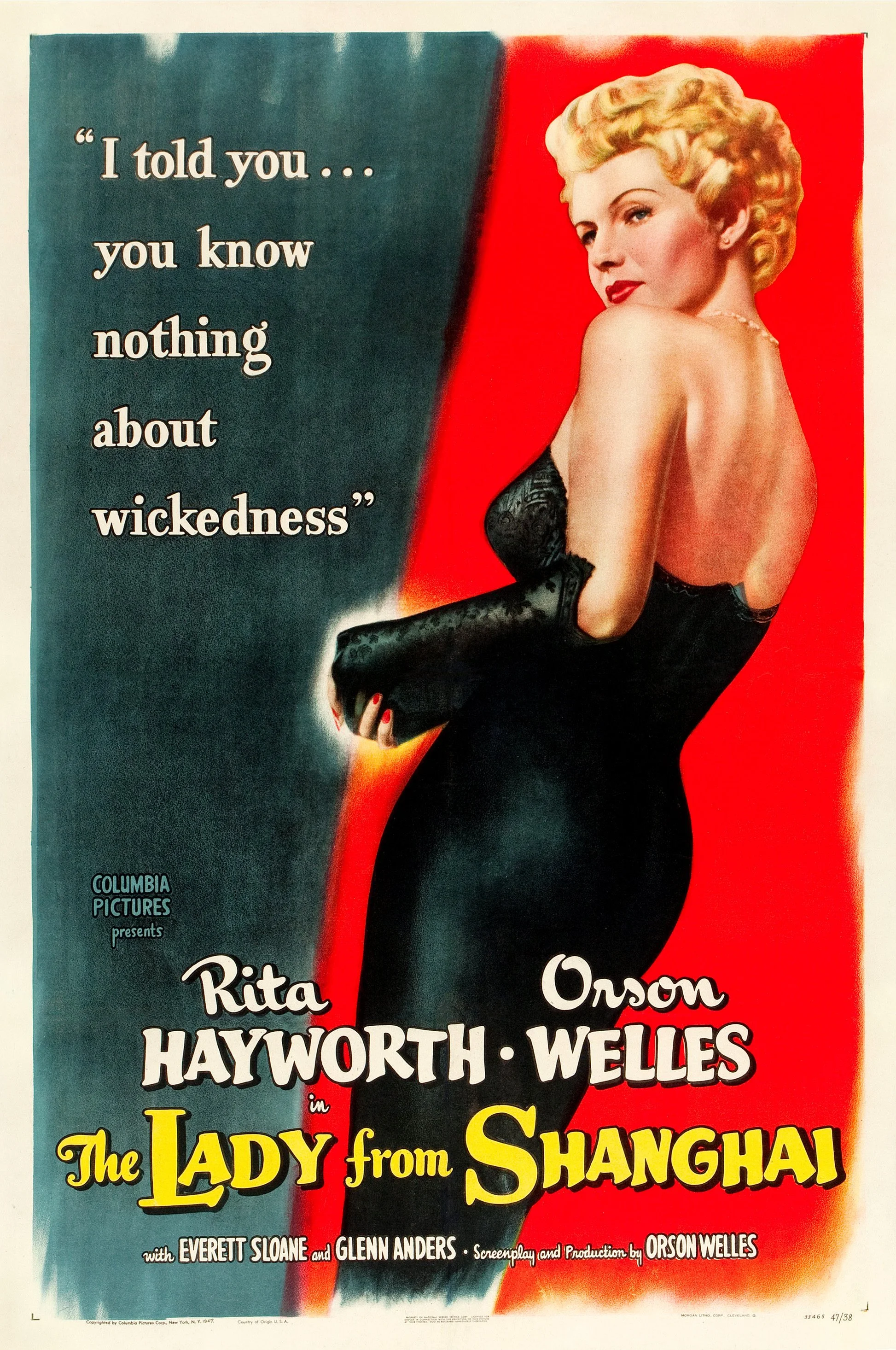
The Lady From Shanghai (1947)

Mac Boyle January 12, 2022

Director: Orson Welles

Cast: Rita Hayworth, Orson Welles, Everett Slaone, Glenn Anders

Have I Seen it Before: Oh, sure.

Did I Like It: Certainly, Citizen Kane (1941) is the film for which Orson Welles is chiefly remembered, but I’ll be damned if this isn’t his best movie. Many of Welles films, theatrical productions and radio broadcasts are intellectual exercises. His name is made in displays of clever form. The stories themselves are incidental. Now, here he’s working with a very basic noir story: Rough and tumble boy more tough than smart meets girl who may very well be descended from sharks. Two or three dead bodies later, and everyone wishes they hadn’t met in the first place.

But this had to be one that Welles felt more than he thought about, and I mean that in the very best way possible. Produced as the marriage between Welles and Hayworth was coming to an end, that alone is worth the above assessment. So many screen pairings of famed Hollywood couples happen when the couple is just starting to fall in love. If what they feel at that moment is real (far from a guarantee), and if they can translate any of that igniting passion to on-screen chemistry (which hardly ever happens) then that display inevitably feels self-conscious on the part of the performers, even if that self-consciousness is only on the part of us as the audience. Seeing a film capturing an—even relatively amicable—end is fascinating and highly unusual**.

Beyond that, and in the best example of what noir tries to do, every piece of the film seems designed to keep the audience off balance, if not outright confuse them, culminating in the famed house-of-mirrors sequence at the film’s climax. Some have complained about that, but I contend its the film’s greatest strength. We’re not supposed to feel like things are adding up. Why else would Welles have had Hayworth chop off most of her hair and dye what remained blonde?


*Although there is at least an argument to be made that he is better known to future generations as the inspiration for Maurice LaMarche’s portrayal of The Brain… And even that reference may not be all that hip for the kids of today, which is a complete shame.

**The only other example I can readily think of would be Woody Allen’s Husbands and Wives (1992)… And there wasn’t anything amicable about that. Infinitely more fascinating on that front, but you probably ought not hold your breath for me writing a review on that film.
Tags the lady from shanghai (1947), orson welles, rita hayworth, everett sloane, glenn anders
Comment

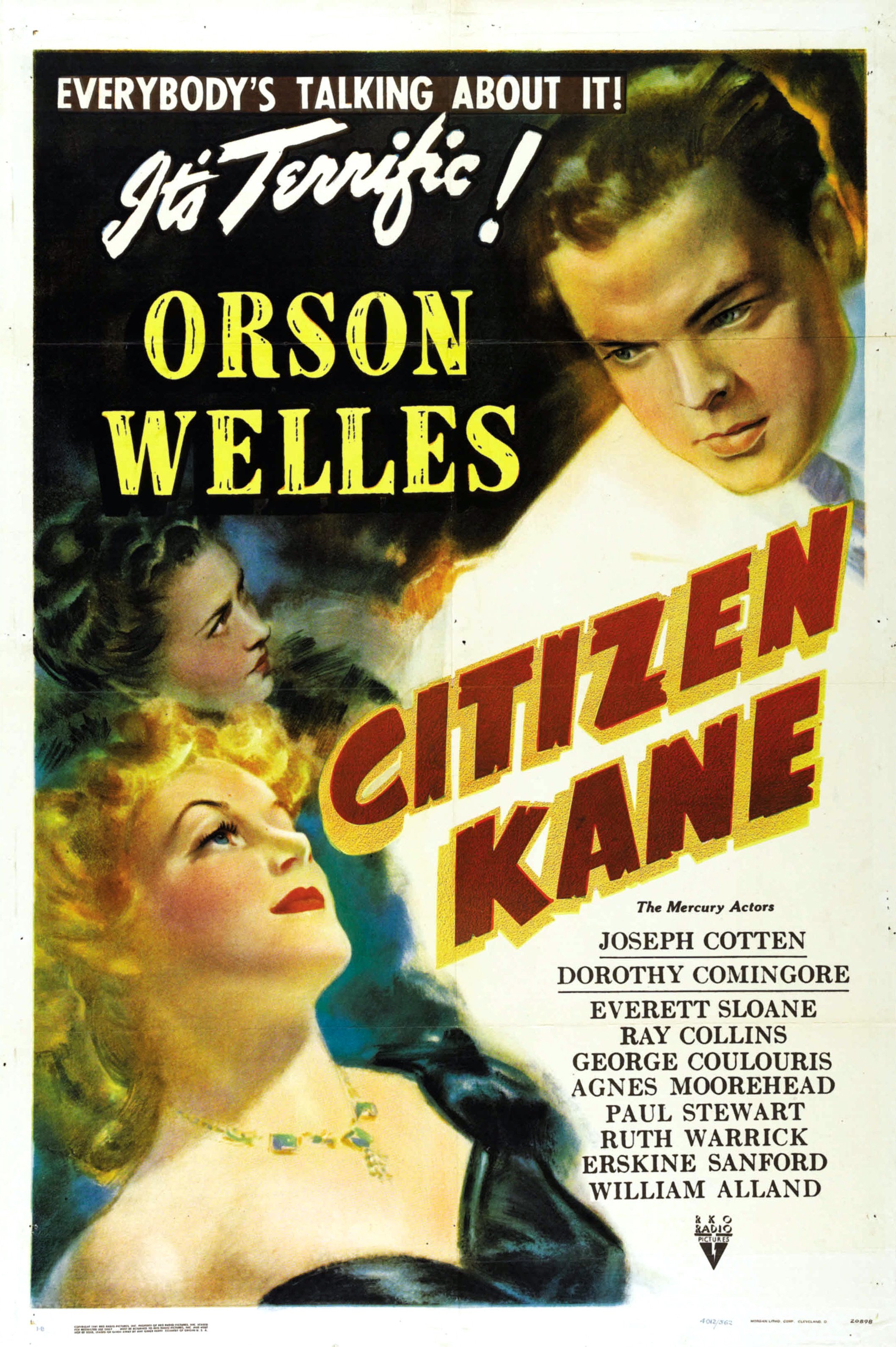
Citizen Kane (1941)

Mac Boyle January 8, 2022

Director: Orson Welles

Cast: Orson Welles, Joseph Cotten, Dorothy Comingore, Everett Sloane

Have I Seen it Before: Silly question at this point, right?

Did I Like It: I usually get a bit trigger-shy when writing up a review of any unusually iconic film. What is left to say about some films? This goes doubly for a film like this. 

I could write about the story of the making of the film, arguably more famous than the film itself. In an oblique way, I probably already have. I could write about the psychology on display, but that would probably not cover the 300-word minimum of these reviews. 

There’s probably a book someone (please, not me) somewhere (please, somewhere else) somewhen (please, let’s give it a few years) should write about how its allegedly Donald Trump’s favorite movie, which only really tells me that—in addition to all manner of things—the former president doesn’t understand 

On that note, it’s usually not a bad idea to distrust practically anyone—save for perhaps the recently departed Peter Bogdanovich*—who claims this is their favorite film. Met with a rather infamous degree of commercial hostility on its initial release, its not hard to imagine that far fewer people have actually seen it than claim to have done so**. 

So, about the film. I think Welles would be the first to admit that the story is on the main, fairly melodramatic. Big tycoon careens through his life, pretty much destroying everything he even thinks about touching, and in the end it’s largely because he never wanted to be rich and just wanted to spend a little more time with his sled.

Sad, yes. Earth shattering? Hardly. It helps that the film’s plot is constantly in a state of deconstructing and reconstituting itself, but even that only pushes the film into the unusual-but-not-quite-unique realm. Any film interested in tapping into the literary attributes of novels*** would opt for a similar structure. Kurosawa comes to mind.

The true strengths of the film, which go far beyond anything having to do with the sled lie with the technical craft on display. While the true possibility—and, clearly, the horrible potential—of silent film was ushered by The Birth of a Nation (1915) and for my money, perfected by Modern Times (1936), sound film had wallowed as not much more than turgid recordings of stage productions. See Dracula (1931) and yes, even—with all its strengths—The Great Dictator (1940). This film finally made the argument for the sound picture (barely ten years after the technology was seemingly perfected) by showing what all of the tools of cinema could do if brought to bear. Deep focus, optical printing, miniature, matte paintings, all are harnessed to tell a story not of fantasy, but of human tragedy. Few think of Citizen Kane as a special effects film, but that’s what it is. One of the key scenes where Kane (Welles) fires his old friend Jed Leland (Cotten) is heralded as a great example of deep focus, but that’s not what’s happening. The two characters are shot at different times, and optically forged together in a single frame of film. People complain about our highly technological style of making films where actors don’t ever have to be in the same room, but they’ve been innovating those methods for 80 years! It’s even COVID compliant!

That’s the film’s secret: it is a great film. It demands to be studied and learned about for its cinematic attributes. If you haven’t seen it, I’m not sure how you’ve made it this far on the site, but you should. If you’ve seen it before, it never really took hold with you, and you love cinema, then you need to see it again. And again. And read books about it. Then listen to the commentary tracks on the DVD. Go back to it as often as possible. I know I have.


*During my rewatch of the film this week, I did the regular film, and the commentary track from Roger Ebert, but somehow didn’t take in Bogdanovich’s track. May have to make amends for that sometime soon.

**I was on a podcast once where I had joked about never seeing the film. One of the other people on the panel cried, as if it finally connected us, “Me too!” They were aware of my other work. They had even reacted to my social media posts when I went to a 75th anniversary screening back in 2016. They were (and one imagines, still are) an idiot. I didn’t think that my review of this film would end up as a compare and contrast of my irritation with this person, and a few comments of Trump, but here we are, 2021.

***Has anyone ever tried to novelize Kane? Feels vaguely sacrilegious to even entertain such an idea, but it could be an interesting intellectual exercise. Let’s make that another project I should never again entertain. 

Tags citizen kane (1941), orson welles, joseph cotten, dorothy comingore, everett sloane
Comment

Powered by Squarespace

Party Now, Apocalypse Later Industries

Where creativity went when it said it was going out for cigarettes.

Where creativity went when it said it was going out for cigarettes.