Party Now, Apocalypse Later Industries

Where creativity went when it said it was going out for cigarettes.
  • Home
  • BOOKS
    • THE ONCE AND FUTURE ORSON WELLES
    • IF ANY OF THESE STORIES GOES OVER 1000 WORDS...
    • ORSON WELLES OF MARS
    • THE DEVIL LIVES IN BEVERLY HILLS
    • A LOSS FOR NORMALCY
    • RIGHT - A NOVEL OF POLITICS
  • PODCASTS
    • Beyond the Cabin in the Woods
    • THE HOLODECK IS BROKEN
    • THE FOURTH WALL
    • As The Myth Turns
    • FRIENDIBALS! - TWO FRIENDS TALKING ABOUT HANNIBAL LECTER
    • DISORGANIZED! A Criminal Minds Podcast
  • MOVIE REVIEWS
  • BLOGS AND MORE
    • Bloggy B Bloggington III, DDS
    • THE HOLODECK IS BROKEN BLOG
    • REALLY GOOD MAN!
  • Home
    • THE ONCE AND FUTURE ORSON WELLES
    • IF ANY OF THESE STORIES GOES OVER 1000 WORDS...
    • ORSON WELLES OF MARS
    • THE DEVIL LIVES IN BEVERLY HILLS
    • A LOSS FOR NORMALCY
    • RIGHT - A NOVEL OF POLITICS
    • Beyond the Cabin in the Woods
    • THE HOLODECK IS BROKEN
    • THE FOURTH WALL
    • As The Myth Turns
    • FRIENDIBALS! - TWO FRIENDS TALKING ABOUT HANNIBAL LECTER
    • DISORGANIZED! A Criminal Minds Podcast
  • MOVIE REVIEWS
    • Bloggy B Bloggington III, DDS
    • THE HOLODECK IS BROKEN BLOG
    • REALLY GOOD MAN!

A Blog About Watching Movies (AKA a Blog in Search of a Better Title)

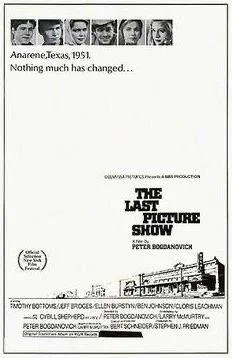
The Last Picture Show (1971)

Mac Boyle February 8, 2022

Director: Peter Bogdanovich

Cast: Timothy Bottoms, Jeff Bridges, Ellen Burstyn, Cybill Shepherd

Have I Seen it Before: Yes. I have the most fleeting of memories of catching it on TCM at some point in the early `00s or late `90s. At the time, it didn’t really connect with me. That was likely because I was living through my own, twisted variation of the story at the time, in so much as I was young and so singularly obsessed with my life as it presented itself at that moment.

Did I Like It: It must have been difficult to be Peter Bogdanovich. He came to filmmaking by way of film history, and chiefly as an acolyte of Orson Welles. Here, he was viewed as a young auteur who may never outpace this early success. Toward the end of his career, he was still talking about Welles, and even committing his anecdotes to film, with The Cat’s Meow (2001). Here, too, he became so enmeshed in McMurtry’s world, that he left his wife for the ingenue he had discovered to play Jacy Farrow, the most calamitous temptress in southern literature since Scarlett O’Hara. He’s always been a filmmaker dictated to by others; a passenger in his own career.

But, as with the discovery of Shepherd, Bogdanovich is swinging for the fences in every aspect of the film. Ever actor is perfectly cast (I hesitate to single any particular performer out for attention, but I will say that when I read that Cloris Leachman won the Oscar for Best Supporting Actress, I may have visibly nodded, even though no one was in the room at the time) The cinematography is stark, wielding the stark contrasts of black and white photography far more clearly than any color photography could ever hope to… It all brings to mind one other, young filmmaker who was able t ogive everything to a film so early in their career.

Even now, I can’t help but compare him to Orson Welles. It must have been hard to be Peter Bogdanovich.

Tags the last picture show (1971), peter bogdanovich, timothy bottoms, jeff bridges, ellen burstyn, cybill shepherd
Comment
220px-Taxi_driver_movieposter.jpg

Taxi Driver (1976)

Mac Boyle October 29, 2019

Director: Martin Scorsese

Cast: Robert De Niro, Jodie Foster, Cybil Shepard, Albert Brooks

Have I Seen It Before?: Never. They’re coming to take my official film snob membership card as I type this.

Did I like it?: It’s an experience, but I’d have to be a certain kind of person (read: Hinckley) to say I really enjoyed it.

The movie is such an insistent attempt to make a film that eschews the usual trappings of Hollywood entertainment, but Bernard Hermann’s score (his last, he passed away before the wide release of the film) bubbles through the movie. If you were only listening to the proceedings instead of watching, you’d be forgiven for thinking it was a romantic comedy in the early goings. Between that and the whole cowboy motif and homages to The Searchers (1956) it’s hard not to see this movie as the story of a man—and perhaps a culture at large—warped by exposure to cowboy stories that never fully came to grips with the violence that surrounds them.

And then there’s that ending. 

I’m so constantly annoyed by the rash of youtube videos “explaining” the ending of like, every film released. They’re boring bordering on odious. I don’t need an explanation of Joker (2019). It’s pretty straight ahead, if wobbly. For that matter, why would anyone need the ending of a movie like Spider-Man: Far From Home (2019) explained. Most—if not all—current movies are as straight ahead in their proceedings as your basic fairy tale.

But I digress. I’ll be damned if at the end of this movie I didn’t want to rush to the internet and have the true nature of our final moments with Bickle spoon-fed to me. Thankfully—blissfully, even—there is no concrete answer. Both Scorsese and screenwriter Paul Schrader acknowledge the interpretation that after Bickle guns down the gangsters, synapses fire in his mind for the last time and he imagines a world where he ended up a hero, but maintain that their intension was to display the irony of a monster like their main character slipping into a hero’s role purely by luck, with the knowledge that he will be nowhere near that lucky the next time. I like that version of the ending better; it inflames the imagination.

Tags taxi driver (1976), robert de niro, martin scorsese, jodie foster, cybill shepherd, albert brooks
Comment

Powered by Squarespace

Party Now, Apocalypse Later Industries

Where creativity went when it said it was going out for cigarettes.

Where creativity went when it said it was going out for cigarettes.