Party Now, Apocalypse Later Industries

Where creativity went when it said it was going out for cigarettes.
  • Home
  • BOOKS
    • THE ONCE AND FUTURE ORSON WELLES
    • IF ANY OF THESE STORIES GOES OVER 1000 WORDS...
    • ORSON WELLES OF MARS
    • THE DEVIL LIVES IN BEVERLY HILLS
    • A LOSS FOR NORMALCY
    • RIGHT - A NOVEL OF POLITICS
  • PODCASTS
    • Beyond the Cabin in the Woods
    • THE HOLODECK IS BROKEN
    • THE FOURTH WALL
    • As The Myth Turns
    • FRIENDIBALS! - TWO FRIENDS TALKING ABOUT HANNIBAL LECTER
    • DISORGANIZED! A Criminal Minds Podcast
  • MOVIE REVIEWS
  • BLOGS AND MORE
    • Bloggy B Bloggington III, DDS
    • THE HOLODECK IS BROKEN BLOG
    • REALLY GOOD MAN!
  • Home
    • THE ONCE AND FUTURE ORSON WELLES
    • IF ANY OF THESE STORIES GOES OVER 1000 WORDS...
    • ORSON WELLES OF MARS
    • THE DEVIL LIVES IN BEVERLY HILLS
    • A LOSS FOR NORMALCY
    • RIGHT - A NOVEL OF POLITICS
    • Beyond the Cabin in the Woods
    • THE HOLODECK IS BROKEN
    • THE FOURTH WALL
    • As The Myth Turns
    • FRIENDIBALS! - TWO FRIENDS TALKING ABOUT HANNIBAL LECTER
    • DISORGANIZED! A Criminal Minds Podcast
  • MOVIE REVIEWS
    • Bloggy B Bloggington III, DDS
    • THE HOLODECK IS BROKEN BLOG
    • REALLY GOOD MAN!

A Blog About Watching Movies (AKA a Blog in Search of a Better Title)

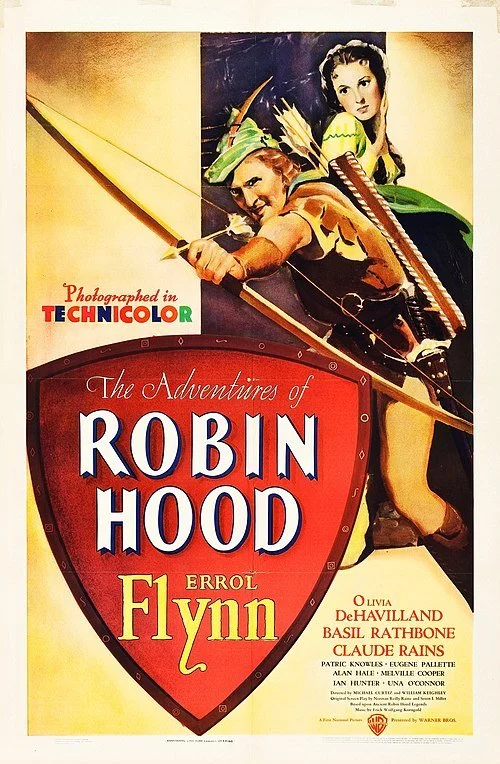
The Adventures of Robin Hood (1938)

Mac Boyle December 25, 2025

Director: Michael Curtiz, William Keighley

Cast: Errol Flynn, Olivia de Haviland, Basil Rathbone, Claude Rains

Have I Seen it Before: I’m horrified beyond my normal capacity for horror that I haven’t.

Did I Like It: There’s a bit of a problem with Robin of Locksley (Flynn) as we venture further into the deeply cynical waters of the twenty-first century. We’re obsessed, pretty much from the first script meeting for Robin Hood: Prince of Thieves (1991), with making Robin Hood some semi-real figure in British history*, and making that history reflect our own. Kevin Costner needed to be the spoiled rich kid who’s childishness is obliterated by the insanity of Vietnam**… er, the Crusades, while Russell Crowe was a world-weary soldier that…

When did Robin Hood become a monolithic commentary on the the horrors of the world after the Kennedy assassination? Even Cary Elwes is content to sit and be content to comment on the unravelling of the English myth. Why can’t a Robin Hood film just be about a guy in a cap and with green tights*** who laughs in the face of danger and is prepared with equal parts of archery and swordsmanship to entertain us for at least 90 minutes?

Perhaps it can no longer be such because Errol Flynn mastered that image of England’s greatest archer so thoroughly, that we don’t even need to debate if there’s any point in doing a traditional interpretation of the hero anymore. Anything that follows this perfectly crafter adventure film would have to be content with dwelling in the arena of post-modern droning bores or parody.

*Accent optional.

**I might even be one of the few people who kind of like Prince of Thieves, and even my appreciation for that humdrum actioner is diminished when I realize for all of its straining attempts to bring Robin and his Merry Men into something relevant for a modern movie audience, it is stealing large chunks out of the plot this film created out of the legend.

***All right, Mel Brooks may have managed to cut through the sudden self-seriousness of the character, but the point still remains.

Tags the adventures of robin hood (1938), michael curtiz, william keighley, errol flynn, olivia de haviland, basil rathbone, claude rains
Comment

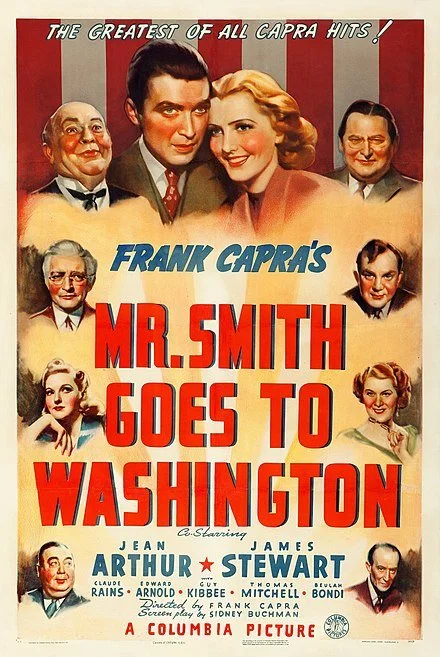
Mr. Smith Goes To Washington (1939)

Mac Boyle August 1, 2024

Director: Frank Capra

Cast: Jimmy Stewart, Jean Arthur, Claude Rains, Edward Arnold

Have I Seen it Before: Oh, sure. It’s been a couple of years. I’m reasonably sure that the last time I watched it was probably 2008. I’m going to take that as a positive omen and not dwell on it much further.

Did I Like It: I always feel as if I’m on uneven footing when I embark on reviewing a movie so classic that everyone has seen a few minutes of, and almost everyone hasn’t actually seen the whole movie. How can I convince you to see it if you’ve not already seen it? More importantly, is there anything new—I’d settle for unusual—to say about it?

I suppose the thing I’m most struck by is not the heart-on-the-sleeves optimistic patriotism, or the pure “aw, shucks” energy that was encased in a shell that looked like Jimmy Stewart. I’m most struck by the things that Capra and Company might have said about America in the years leading up to World War II, but either couldn’t or might never have thought to say.

In an effort to reach for a timeless quality, the film doesn’t seem to acknowledge that the world at large is mid-disaster at the time. I’m sure a Boy Scout camp is a great idea when Europe is swinging hard towards fascism. There’s a layer of optimism beyond Smith’s (Stewart) wielding of the filibuster in that. A cynic in 1939 might try to hedge their bets and allow for the possibility that western civilization was nearing its sell by date.

This is also a profoundly white movie. An absolute infant of a traditionalist might blink at that observation, but you can’t help but focus on the dejected faces of porters in the train station sequences, but the ret of the film has people of color throughout. They’re in the background, as if they are waiting in the background of America. Maybe Capra is trying to say something additional that the one-two punch of the Hays Code and Harry Cohn would have never let get to the surface.

Maybe I’m wanting to see it in the film. Maybe I’m wanting to see that in the world.

Tags mr. smith goes to washington (1939), frank capra, james stewart, jean arthur, claude rains, edward arnold
Comment

The Wolf Man (1941)

Mac Boyle January 22, 2022

Director: George Waggner

Cast: Lon Chaney Jr., Claude Rains, Bela Lugosi, Warren William

Have I Seen it Before: Oh, sure. Although my strongest memories of the film probably come from a Universal Monsters coloring book I got in the early 90s. I had some really great times with that coloring book. Now I wish I had just gone over it in grey and black and hadn’t used any of the other colors…

Did I Like It: Interesting that Chaney is perhaps the saddest-sack movie star who ever lived (imagine if he had ever played Willy Loman), and somehow Forrest Gump-ed his way into being the Nick Fury of the Universal Monsters, that first shared cinematic universe. 

He’s certainly affecting in that capacity, and managed to do so over the course of five films in the roll, the longest sustained run in the Universal canon, and it still feels like the horror series is a something of a priority for the studio, even if James Whale has since retired from the motion pictures and the peak of the series is now firmly in the past. Yes, the entire affair has a bit of a feel of a TV special (see the opening titles), but the photography is interesting, and the ending where Sir John (Rains) unknowingly killed his son is deeply and tragic, and the film certainly reaches for a “less is more” aesthetic with its werewolf transformation.

And yet, by about minute 56 in the film, I’m bored. That’s not a great sign, considering that the film will be over in just over 10 more minutes. Chaney’s pathos cannot hope to hold up in comparison to that of Karloff, and the atmosphere is largely perfunctory, which leave it in the shadow of even Dracula (1931), which is saying quite a bit.

Tags the wolf man (1941), universal monsters, george waggner, lon chaney jr, claude rains, bela lugosi, warren william
Comment
220px-CasablancaPoster-Gold.jpg

Casablanca (1942)

Mac Boyle October 15, 2020

Director: Michael Curtiz


Cast: Humphrey Bogart, Ingrid Bergman, Paul Henreid, Claude Rains


Have I Seen it Before: Yes. Although my most immersive experience with the film was a casual dining restaurant that existed in Oklahoma City several years ago that tried to incorporate the film as its theme, but in reality, just played the movie over and over again on numerous TV screens while you ate. It was… odd. I want to say the place was called Rick’s Café American, but I could be wrong, and Google is decidedly unhelpful on the subject. The restaurant is gone now.


Did I Like It: How do you even begin to criticize a film that is so sewn into the identity of American film? It’s review-proof, right? 


And that is strange because, objectively, there’s nothing particularly special about the filmmaking craft on display. It is a well-constructed melodrama in its writing, but still melodrama. It doesn’t have the complex plotting and characterization of Citizen Kane (1941), or the visual splendor of The Wizard of Oz (1939) or Gone with the Wind (1939). It is a little bit of a mystery why the film rose from the pack of other Hollywood films of the era and has become one of the most well-regarded films of all time, to the point where people try to make ill-advised theme restaurants out of it.


It’s got to be in the star power of Bergman and Bogart. This film may be the most potent dose of screen star as personality ever made. They have perfect chemistry together, and each has a screen persona that is effortless and perfectly formed. It seems like every leading actor over the next eighty years, from Harrison Ford to (ick) Woody Allen has at time tried to channel Bogart, and while there is thankfully a little more variety in the arena of leading ladies, I have a hard time imagining that any woman who has had her name above a title would blanche at the idea of summoning their inner Bergman. That’s why what the film is most strongly remembered not for its story of Nazi tinged Morocco, or even the music that is infused into the Warner Bros. vanity card to this day, but Rick and Ilsa’s goodbye at the end of that film.


Come to think of it, that might be the only scene they might have actually been playing at that strange restaurant long ago. It was certainly the only part for which I looked up from my burger.

Tags casablanca (1942), michael curtiz, humphrey bogart, ingrid bergman, paul henreid, claude rains
Comment

Powered by Squarespace

Party Now, Apocalypse Later Industries

Where creativity went when it said it was going out for cigarettes.

Where creativity went when it said it was going out for cigarettes.