Party Now, Apocalypse Later Industries

Where creativity went when it said it was going out for cigarettes.
  • Home
  • BOOKS
    • THE ONCE AND FUTURE ORSON WELLES
    • IF ANY OF THESE STORIES GOES OVER 1000 WORDS...
    • ORSON WELLES OF MARS
    • THE DEVIL LIVES IN BEVERLY HILLS
    • A LOSS FOR NORMALCY
    • RIGHT - A NOVEL OF POLITICS
  • PODCASTS
    • Beyond the Cabin in the Woods
    • THE HOLODECK IS BROKEN
    • THE FOURTH WALL
    • As The Myth Turns
    • FRIENDIBALS! - TWO FRIENDS TALKING ABOUT HANNIBAL LECTER
    • DISORGANIZED! A Criminal Minds Podcast
  • MOVIE REVIEWS
  • BLOGS AND MORE
    • Bloggy B Bloggington III, DDS
    • THE HOLODECK IS BROKEN BLOG
    • REALLY GOOD MAN!
  • Home
    • THE ONCE AND FUTURE ORSON WELLES
    • IF ANY OF THESE STORIES GOES OVER 1000 WORDS...
    • ORSON WELLES OF MARS
    • THE DEVIL LIVES IN BEVERLY HILLS
    • A LOSS FOR NORMALCY
    • RIGHT - A NOVEL OF POLITICS
    • Beyond the Cabin in the Woods
    • THE HOLODECK IS BROKEN
    • THE FOURTH WALL
    • As The Myth Turns
    • FRIENDIBALS! - TWO FRIENDS TALKING ABOUT HANNIBAL LECTER
    • DISORGANIZED! A Criminal Minds Podcast
  • MOVIE REVIEWS
    • Bloggy B Bloggington III, DDS
    • THE HOLODECK IS BROKEN BLOG
    • REALLY GOOD MAN!

A Blog About Watching Movies (AKA a Blog in Search of a Better Title)

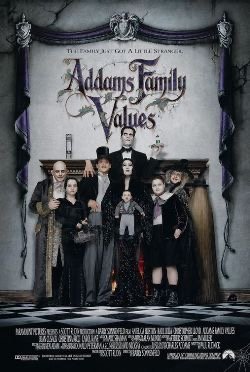
Addams Family Values (1993)

Mac Boyle December 12, 2021

Director: Barry Sonnenfeld

Cast: Anjelica Huston, Raul Julia, Christopher Lloyd, Joan Cusack

Have I Seen it Before: Oh, sure.

Did I Like It: Now, this is more like it. One doesn’t immediately think of this film in that vaunted pantheon of sequels that far outpaced their predecessor, but this film maintains everything that worked about the first film. The lively performances remain, augmented by the addition of the always-welcome Carol Kane and Joan Cusack. Anjelica Huston and Raul Julia continue to imbue their roles with respectively droll menace and manic energy, that its hard to believe Julia had only a year left to live. The delightfully (if you’ll forgive the expression) kooky production design is here as well and completely undiminished. But this sequel places those parts that worked amidst a story that is far more coherent, and much more adroit in its humor. This is the family Addams perfected. It boggles the mind that—aside from the fact that they are a recognizable property—why they ever tried to go back to this well after this.

Both A and B plots here cover keep things so lively, that I’m not entirely certain which is the A and which is the B. Debbie Jellinsky (Cusack) bringing terror and matrimony in equal measure fuels everything else that happens, but the horror Wednesday (Christina Ricci, who faces the unfortunate reality of making her most iconic impact on cinema before reaching the age of 18) faces at the grim Camp Chippewa could have easily maintained a feature-length runtime on its own merits. 

All this typing about the Addams Family today, and all I want to do is play the pinball machine. I keep thinking I’m above cross-corporate synergy, but tie-ins from the 90s still have the ability to draw my attention. I find it blindingly frustrating I don’t already have that table loaded on to my iPad.

Tags addams family values (1993), barry sonnenfeld, anjelica huston, raul julia, christopher lloyd, joan cusack
Comment

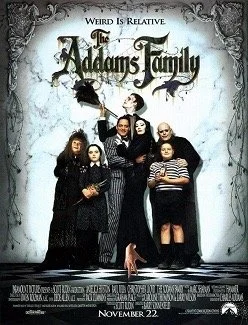
The Addams Family (1991)

Mac Boyle December 12, 2021

Director: Barry Sonnenfeld

Cast: Anjelica Huston, Raul Julia, Christopher Lloyd, Christina Ricci

Have I Seen it Before: Sure. It’s hard to think of this film as marketed to anyone other than children, and I would have been right in the sweet spot for that. How man TV-shows-turned-into-movies did I sit through in the `90s? How many of them were foisted on us by Paramount? I don’t even want to come up with a list.

Did I Like It: Is it possible for a movie to function on just performances and art direction, to the point where its entirely possible there never was a shooting script? I’d say there are about fifteen minutes of plot in the film’s 99 minute runtime, and that quarter of an hour doesn’t quite fit together. I’d dwell more on the question of whether the man played by Christopher Lloyd in this movie truly is Fester Addams, but the movie seems only marginally interested in answering the question, so why should I spend any more time on it?

That might indicate something is rotten at the core of the movie, but wall-to-wall the performances are fantastic. Any time one of these film-based-on-prior-IP, comparisons to the prior performers are natural, but aside from John Astin vs. Raul Julia, is there really any thinking of the cast from the TV show when watching this movie? What’s more, any time some new version of The Addams Family (I’m looking in your direction, the two recent computer-animated fils, which at least appear closer to the original cartoons by Charles Addams in The New Yorker) comes down the pike, are we not comparing those interlopers to the cast assembled here? Huston feels born to play the role in a way not seen before or since, with the possible exception of Patrick Stewart as Charles Xavier in X-Men (2000). Although largely a character actor who plays variations on the same theme whether he’s a psychotic cartoon, disgraced nuclear scientist, or a Klingon, Lloyd presents a new energy here. And Christina Ricci makes a compelling case for being the most interesting of the early-90s child stars here, imbibing Wednesday with the right proportions of menace and inquisitiveness. Without those qualities, the film likely would have collapsed in on itself, to say nothing of the eventual sequel.

I guess it is enough for the film to run solely on performance, but they have to be just that good to overcome any other weaknesses.

Tags the addams family (1991), barry sonnenfeld, anjelica huston, raul julia, christopher lloyd, christina ricci
Comment
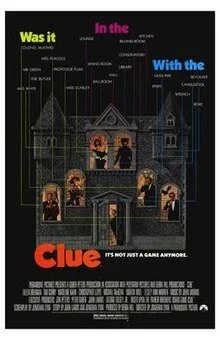
220px-Clue_Poster.jpg

Clue (1985)

Mac Boyle August 27, 2020

Director: Jonathan Lynn


Cast: Eileen Brennan, Tim Curry, Madeline Kahn, Christopher Lloyd


Have I Seen it Before: Yes…


Did I Like It: How do you broach the subject of writing about a nearly universally loved film, when you don’t like it even a little bit?


Don’t go, don’t go. We can talk about it, right? 


I like the cast. Some of them have appeared in some of my very favorite films of all time. Christopher Lloyd, who I adore, sleepwalks through the film, in sharp contrast to Tim Curry who is probably too frantic here for his own good. The late, great Madeline Kahn can’t help but shine, with her “flames” speech being my biggest laugh during the film.


Yes, I didn’t laugh much during the film, and if you’re not laughing while watching a comedy, that’s pretty much the beginning and end of it. There’s some wordplay, which I’m always in favor of, but the dialogue is spit out with an almost sleepy indifference (Kahn notwithstanding). 


But the problems for me go deeper than the fact that I didn’t think the film is all that funny, and it goes to the core gimmick that has cemented the film in most peoples memories, the multiple endings. While it would have been an intriguing prospect to see the film multiple times and having a different experience in the theater, but after it moves into home media, we are subjected to all three endings in quick succession*, which makes the true messiness at the core of the movie hard to ignore. How can a mystery work if it truly, deeply, doesn’t matter who was the murderer/murderers? Communism may be a red herring, but in this Schrödinger’s mystery, everything is a red herring. Hardly seems worth it.


Also, what the hell does Cluedo mean? Why do people call it that outside of the country?


* DVDs and Blu-Rays give the viewer the option to view only one ending at random, but that hardly seems like the same thing.

Tags clue (1985), jonathan lynn, eileen brennan, tim curry, madeline kahn, christopher lloyd
Comment
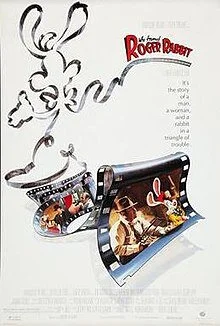
220px-Movie_poster_who_framed_roger_rabbit.jpg

Who Framed Roger Rabbit (1988)

Mac Boyle July 11, 2020

Director: Robert Zemeckis


Cast: Bob Hoskins, Christopher Lloyd, Charles Fleischer, Stubby Kaye


Have I Seen it Before: I’m a child of the 1990s and I had a VCR. What do you think?


Did I Like It: One would naturally want to dwell in this review on the technology on display here. Animated characters had interacted with live action performances before, in films like Song of the South (1946) and Mary Poppins (1964) (both from Disney, incidentally). However, they never interacted quite so believably before or since. Animated characters rustle through their environment. Water splashes, blinds rustle, and chairs rotate when they come in contact with Roger and company. It’s a subtle, relatively low-tech addition to the process, but adds so much.


This is also a baffling cross-corporation crossover. When would you ever see Donald and Daffy Duck play a duet on the piano? Or Mickey Mouse and Bugs Bunny engage in conversation? Or any character owned by Warner Bros. appearing within 100 miles of a Disney production? It’s a testament to the baffling things Steven Spielberg could get done with just the weight of his mere involvement in a movie. I can’t imagine that such a convergence could ever happen again. It’s probably for the best that any sequel—variously rumored to be a war movie, or a domestic drama with Roger (Fleischer) and Jessica (various performers depending on the context, but primarily Kathleen Turner) in the 1950s—never came together.


Other movies attempted to fit a similar mold in the ensuing years. Cool World (1992), Space Jam (1996), and Looney Tunes: Back in Action (2003) all tried to merge real people and cartoon characters to varying degrees of commercial and critical success. Why do those films disappear into ambivalence and this film stands the test of time? Honestly, the story that underlines the whole thing (a tale about a private eye uncovering a plot to eradicate LA’s public transit system in favor of the freeway that will inevitably take it over) actually works under its own merits. The character work is solid. It may all be in the mold of Chinatown (1974), but it doesn’t skimp in the craft department simply because it is an homage.

Tags who framed roger rabbit (1988), robert zemeckis, bob hoskins, christopher lloyd, charles fleischer, stubby kaye
Comment
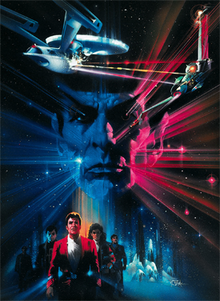
Star_Trek_III_The_Search_for_Spock.png

Star Trek III: The Search for Spock (1984)

Mac Boyle September 8, 2019

Director: Leonard Nimoy

Cast: William Shatner, DeForest Kelley, James Doohan, Christopher Lloyd

Have I Seen it Before: What, are you trying to tell me Spock is alive again? 

Yes, of course I’ve seen it.

Did I Like It: Let’s really drill down on something that has been long accepted as cardinal truth of this series.

Even-numbered films are great. Odd-numbered movies are the pits.

And yet, Star Trek Nemesis (2002) is the tenth film in the series and Star Trek Into Darkness (2013) is the twelfth, and they both are the cinematic equivalent of drinking chancey milk that is well-past its due date.

So, too is it with this film. It largely works, and is early enough in the franchise’s motion picture history to conclusively put the even/odd framework about these films in serious doubts.

It’s hard to doubt that it suffers ever so slightly by having to follow the series apex, Star Trek II: The Wrath of Khan (1982), but that does feel like an unfair judgment. Nemesis and Into Darkness tried to steal various aspects of plot and pacing from that far-better film, and never quite rise to the level of competent mimicry. 

Here, Nimoy appears to be aware of his potential shortcomings as a first-time director (a self-awareness that William Shatner never quite mastered five years later in Star Trek V: The Final Frontier [1989]) and tries to learn his craft before attempting to master it. Therefore, the film echoes more of a feeling or motif from the previous film. This may be in no small part due to James Horner returning to produce the score, but every frame of the film feels as if it is a companion piece to Khan, not a blind attempt to replicate it.

It helps that this film has its own story to tell. Part mystic resurrection tale, part classic duke-it-out-with-the-Klingons episode from the original series, and just enough of a heist story to keep things interesting.

Another element of note is to remember that—along with this film’s follow-up, Star Trek IV: The Voyage Home (1986)—introduce so many elements to Trek that will be load bearing for many years to come. The Excelsior and the Klingon Bird-of-Prey are first glimpsed here. The models of both ships are reused by Trek shows well into the twenty-first century, and much of the footage of the new enemy ship is reused for nearly the same length of time.

Also, one can’t help but dwell on the casting for the supporting roles. The studio balked at the idea of Christopher Lloyd playing Commander Kruge, the heavy. They could not move past the image of the actor as Reverend Jim on Taxi. Knowing a thing or two about being type-cast from appearances on a TV show, Nimoy insisted. One wonders if he would have ever been on the radar of Robert Zemeckis when Back to the Future (1985) began filming around the time fo the film’s release. I don’t want to live in that world. In fact, I want to live in a world with the most possible performances by Christopher Lloyd as possible, so I’ll be damned if I view this as one of the typical odd-numbered Trek films.

Tags star trek iii: the search for spock (1984), star trek movies, leonard nimoy, william shatner, deforest kelley, james doohan, christopher lloyd
Comment

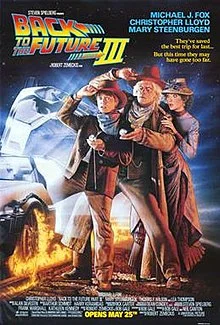
Back to the Future Part III (1990)

Mac Boyle August 20, 2019

Director: Robert Zemeckis

Cast: Michael J. Fox, Christopher Lloyd, Mary Steenburgen, Thomas F. Wilson

Have I Seen it Before: It is May, 1990. I am 5, going on 6. I don’t remember much about the world at that time, but I do remember having watched a VHS copy of Back to the Future Part II (1989) or about the 900th time, and being flooded with a cavalcade of TV spots for the forthcoming Part III. It was a wild time to be alive, having not seen all of the Back to the Future films. Today, I can’t quite wrap my head around it.

My dad comes home early from work. We pile into the car. I want to say I’m not aware of where we are going, but nearly 30 years since, my memory may not be ebbing, but it is smoothing out in the details. We go to the Annex 7.

We see Back to the Future Part III. 

I’ve thought about that particular screening at least once a month for the rest of my life. After the Annex 7 fell in favor of the Palace 12 (which in turn fell to the unrelenting force of indifference), I’ve wanted little more in life than to go back to the Annex 7 to watch anything. As it stands, I’ve got a real bad habit of leaving work early to go see movies, desperately trying to capture that feeling.

Flash forward a few months, and the film is released on video. It wasn’t quite priced to own yet, but rental places (they were kind of like Redboxes that you went inside; kids, ask your parents) would let you borrow it for a few days. To this day, one of the great creature comforts in life is some Chicken McNuggets and a viewing of this movie.

Set the time circuits ahead even a few more months. Now with a copy of Part III to call my very own—and perhaps single-handedly putting the brick and mortar movie rental business on the path to ruin—my aunt and uncle had come to visit. Looking at the small army of video tapes sitting on a shelf, they asked if they could borrow my copy of Part III, as they hadn’t seen it yet. The thought that I could share my excitement about movies with people was a revelation, and yet another high that I keep trying to chase as I type these words.

One final stop before we destroy this infernal contraption: Over a decade later, when I tried to made my first foray into forging a film of my own, I could think of no other piece of music to evoke the feeling of ending a long journey that you wouldn’t have given up for all the world. Thus, as we say goodbye to Really Good Man in The Adventures of Really Good Man (2002), the main theme of this film plays softly in the background.

There are few movies that are more central to my feelings about the movies than this particular film.

So, yes, to answer your question, I’ve seen Back to the Future Part III.

Did I Like It: In my review of Part II, I did indicate that as the years have gone by, my feelings about the sequels to Back to the Future (1985) have ebbed. The first film is about as perfect a story as exists in film, whereas the sequels are more consumed with self-consciously re-creating beats from the original film. Here that package is a little more satisfying, as it feels like the characters—mainly Marty (Fox)—attempt and are largely successful in breaking out of old patterns. The common complaint against Part II—that it isn’t a complete story—is quickly rectified here.

It’s also a brilliant way to make a western at a time in Hollywood when even Clint Eastwood (the biggest yellow-belly in the west) was not making cowboy pictures. Evoking the best of John Ford, the joy the filmmakers had in making something a little bit different pops out of every moment that takes place in the 19th century. Some might say that putting cowboys in the final installment of a teenage time travel comedy was a choice too far out of left field. I guarantee you, each and every person who says

And yet, I do have some qualms. The entire film is predicated on the established fact that Doc Brown (Lloyd) can’t repair the Time Machine in 1885 due to unsuitable replacement parts. What does Doc do the moment that Marty goes back to the future? Builds a Time Machine out of a train car. That doesn’t even begin to deal with why the Time Machine needed to be pushed up to 88 miles per hour, when it Part II it is clearly shown that while the flux capacitor activates at that speed, and yet can be overridden if enough electricity is sent through the Delorean’s mechanisms. I’ll admit that this may not be the most useful place for that discussion, and at least should have been a part of my review for Part II.

More likely, I’ve seen these films so many times that I’ve analyzed every moment of them beyond what one might consider rational.

And despite these logical inconsistencies, I love the film. Now, my prolonged answer to the question “had I ever seen it” might have something to do with that. And still, any time someone has an unkind word about the film, I get a brief flash of irrational irritation. Maybe I can’t be objective about it. Maybe I don’t want to be.
Tags back to the future part iii (1990), back to the future movies, time travel movies, robert zemeckis, michael j fox, christopher lloyd, mary steenburgen, thomas f wilson
Comment
220px-Back_to_the_Future_Part_II.jpg

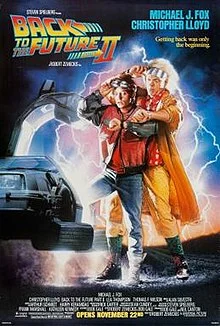
Back to the Future Part II (1989)

Mac Boyle August 20, 2019

Director: Robert Zemeckis

Cast: Michael J. Fox, Christopher Lloyd, Lea Thompson, Elizabeth Shue

Have I Seen it Before: It was probably on constant repeat in my house throughout the 90s. I would try to venture a guess as to how many times I’ve seen it, but I’d need a team of MIT mathematicians to crack the final number.

Did I Like It: That’s the real question, isn’t it?

Almost immediately upon release, the film was dismissed as somewhat incomplete. Even director Zemeckis eventually claimed that in the mad marathon to make this film and Back to the Future Part III (1990) in quick succession, Part II got the short shrift. 

After the final film in the series (hear me, Universal? Final.) was released, Part II got a slight re-evaluation, and was damned with a healthy dollop of faint praise. No longer an incomplete story, it was viewed as Act II of a larger story.

And that’s where we are now. I’ve been on the record in years past saying that the Back to the Future trilogy is the greatest six-hour movie that could theoretically exist. After repeat (and I do mean repeat watchings), I’ve changed my mind a little bit. While the original Back to the Future is one of the more tightly constructed stories ever committed to film, the fat on the sequels begin to show.

Whereas the first film is a masters class in set up and payoff, culminating in real change for the characters, the sequels are too often committed to the notion of repeating gags from the previous film, and having Marty (Fox) consistently run afoul of his own irrational hate for being called a chicken. 

Now, don’t get me wrong, those elements do work to some degree. The repeating elements—if viewed through any other prism than it reeks of studio notes to have the movies superficially resemble the original—could be looked at as a motif of the characters struggling to learn from their own past, and thus doomed to repeat it, regardless of their ability to travel amidst the fourth dimension. Someone could write a pretty in-depth analysis of this reading of the sequel from a Buddhist perspective, but please, don’t let it be me. And those motifs are only dropped when Marty—a character who diligently avoids anything resembling an arc throughout the whole trilogy—finally lets go of his ego.

It’s just not as tight as the first film, but then again few sequels are. But, to judge the series—and by extension, this film—against the other big trilogies (Star Wars, Indiana Jones, heck, even Star Trek’s II-IV), Part II delivers on the promise to be the darker entry. It becomes clear that any progress the characters made in the original film is tenuous, and could be torn asunder by their own complacency and a few well-timed bullets.

Also, there’s an entire plot wherein a hapless, mean-spirited oaf falls ass-backwards into becoming a casino and real estate tycoon (and by extension, one of the most powerful men in America), so you can’t get much darker than that.

But, I think the bigger test of the middle-entry of a trilogy is whether or not it is the breakneck adventure of the trilogy. The Empire Strikes Back (1980), Indiana Jones and the Temple of Doom (1984) and Star Trek III: The Search for Spock (1984) begin their stories and do not let up until the closing credits and the faint hope of a part three rings through our imaginations, all the while bringing their characters so close to the breaking point, that the catharsis of a conclusion is all that remains. On that front, Back to the Future Part II more than delivers. While one may want more of a complete story out of the proceedings, you can’t argue with the adventure of the pacing on this one.

Tags back to the future part ii (1989), back to the future movies, time travel movies, robert zemeckis, michael j fox, christopher lloyd, lea thompson, elizabeth shue
Comment

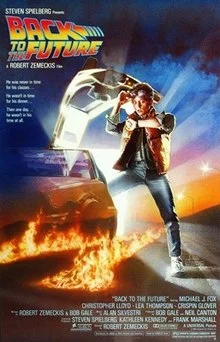
Back to the Future (1985)

Mac Boyle August 19, 2019

Director: Robert Zemeckis

Cast: Michael J. Fox, Christopher Lloyd, Lea Thompson, Crispin Glover

Have I Seen it Before: My parents like to tell a story about me—a little more than a week before my first birthday—enraptured by the movie as it played at the Admiral Twin Drive-in. That night I may have fallen asleep before the movie was over, but I assure you that I’ve more than made up for it since then.

Did I Like It: Can a movie live in your soul? Can a single film dictate a vast majority of one person’s aesthetic to the point where one becomes ever so slightly concerned that the only cogent thoughts he has ever had 

Can a film be perfect?

Yes, yes it can. The film doesn’t waste a single moment in its story-telling. Every moment builds on the developments that precede it. The time travel logic is unassailable, and that’s not something I can say for many time travel movies, including some of the sequels that follow this movie.

Look, if you came here looking for some kind of sober, level-headed admission of flaw in the film, then there’s the door.

But I could spend some time talking about some of the great parts of the film that don’t get enough credit. Lea Thompson might appear to be relegated to a basic ingénue role, but in reality she is the film’s secret weapon. I challenge you to name an actress who could on a dime turn from defeated, alcoholic housewife, to randy teenager, and still somehow stay maternal the whole time. You might come up with a Meryl Streep out there in the world who could make those changes with the same skill, but I guarantee there has never been and never will be a performer who could take all of those qualities, play a number of scenes where she unknowingly lusts after her son, and not make the film a pitch-black dark comedy in the process. Hell, she made large swaths of Howard the Duck (1986) watchable. That she is not one of the most heralded screen presences of all time is beyond me. Maybe she had enough sense to not want that kind of scrutiny. Maybe Lea Thompson is just too good for the movies.

But even all that seems superfluous when we’re talking about a prime candidate for my personal canon of greatest films of all time. If you haven’t seen it, I don’t understand what you have been doing with your time. If you have seen it and aren’t as enamored of it as the preceding words would insist, I don’t know what to do with you. You should go rewatch it and do it correctly this time. If you are as in love with this movie as I am, you should still rewatch it. There are few things in life which are more enjoyable.

Tags back to the future (1985), time travel movies, back to the future movies, robert zemeckis, michael j fox, christopher lloyd, lea thompson, crispin glover
Comment

Powered by Squarespace

Party Now, Apocalypse Later Industries

Where creativity went when it said it was going out for cigarettes.

Where creativity went when it said it was going out for cigarettes.