Party Now, Apocalypse Later Industries

Where creativity went when it said it was going out for cigarettes.
  • Home
  • BOOKS
    • THE ONCE AND FUTURE ORSON WELLES
    • IF ANY OF THESE STORIES GOES OVER 1000 WORDS...
    • ORSON WELLES OF MARS
    • THE DEVIL LIVES IN BEVERLY HILLS
    • A LOSS FOR NORMALCY
    • RIGHT - A NOVEL OF POLITICS
  • PODCASTS
    • Beyond the Cabin in the Woods
    • THE HOLODECK IS BROKEN
    • THE FOURTH WALL
    • As The Myth Turns
    • FRIENDIBALS! - TWO FRIENDS TALKING ABOUT HANNIBAL LECTER
    • DISORGANIZED! A Criminal Minds Podcast
  • MOVIE REVIEWS
  • BLOGS AND MORE
    • Bloggy B Bloggington III, DDS
    • THE HOLODECK IS BROKEN BLOG
    • REALLY GOOD MAN!
  • Home
    • THE ONCE AND FUTURE ORSON WELLES
    • IF ANY OF THESE STORIES GOES OVER 1000 WORDS...
    • ORSON WELLES OF MARS
    • THE DEVIL LIVES IN BEVERLY HILLS
    • A LOSS FOR NORMALCY
    • RIGHT - A NOVEL OF POLITICS
    • Beyond the Cabin in the Woods
    • THE HOLODECK IS BROKEN
    • THE FOURTH WALL
    • As The Myth Turns
    • FRIENDIBALS! - TWO FRIENDS TALKING ABOUT HANNIBAL LECTER
    • DISORGANIZED! A Criminal Minds Podcast
  • MOVIE REVIEWS
    • Bloggy B Bloggington III, DDS
    • THE HOLODECK IS BROKEN BLOG
    • REALLY GOOD MAN!

A Blog About Watching Movies (AKA a Blog in Search of a Better Title)

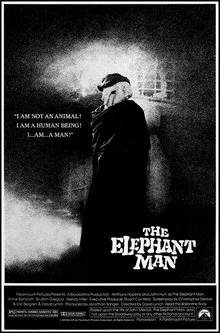
The Elephant Man (1980)

Mac Boyle June 28, 2025

Director: David Lynch

Cast: Anthony Hopkins, John Hurt, Anne Bancroft, Freddie Jones

Have I Seen it Before: I think so? It would have to have been long enough ago that I spent most of my time watching it not remembering large swaths of what I was seeing.

Did I Like It: It may be a controversial opinion, but I tend to think that Lynch is at his best when he’s a little pinned in by the constraints of commercial filmmaking*. Eraserhead (1977) is—is admittedly intentionally—sort of hard to watch and love. The Straight Story (1999) is probably his best movie**.

So it is here that things are the best of all possible worlds, where Lynch is forced to make a movie a wide audience might see, but is allowed to indulge his instincts a little bit, as a treat. When I’m talking about Lynch’s instincts, I’m not even referring to the makeup job that transformed John Hurt*** into John Merrick. That’s the part that tries to relate to the audience on their own terms. The entire film is an empathy sandwich, real human emotions nestled in between two thin amounts of absurdism****. Where Eraserhead’s symphony of absurdism is directed toward discomfort, The Elephant Man is aimed towards our compassion.

And it works.

The weirdness comes in only at the beginning and the end, where we are treated to an abstract view of Merrick’s conception (I think; we are dealing with Lynch here) and his death. But even that last part is life-affirming.

*You and I both are immediately thinking of a notable exception in Dune (1984), but what is a hot take without an obvious, glaring exception?

**At this point, I should probably just launch a “hot takes about the career of David Lynch” blog, no?

***Completely off topic, but could you imagine what it would have been like if Hopkins had played the War Doctor? The things my mind will drift towards…

****Maybe it’s more of an emotional panini?
Tags the elephant man (1980), david lynch, anthony hopkins, john hurt, anne bancroft, freddie jones
Comment

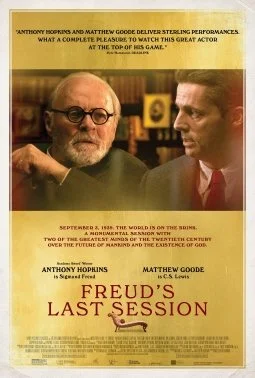
Freud's Last Session (2023)

Mac Boyle February 16, 2024

Director: Matthew Brown


Cast: Anthony Hopkins, Matthew Goode, Liv Lisa Fries, Jodi Balfour


Have I Seen It Before: Never. I barely managed to catch the last screening here in town.


Did I Like It: There’s a challenge at the core of the movie, and at the risk of oversimplifying, it might be boiled down to this: Is the entirety of human experience governed by God or by sex?


What if you’re of the opinion—and maybe in fact live in a time that has nearly uniformly decided—that both conclusions are a little bit preposterous?


The pitch of letting these two titans of a differing worldview then falls flat, but what I was ultimately struck by how much I found Lewis (Goode) to be a likable chap, not unlike the Jesuits that people The Exorcist (1973)*. Religious, sure, but still existing in the world, acknowledging that doing so is to accept that doubt may be the thing which binds the universe together. In short, he’s someone you could still have a conversation with, and he might even have an ability to read the room and know when someone isn’t in the market for proselytism. In even shorter, he is not of the tedious, glassy-eyed variety.

I’ve got a couple more reasons to do it, but I’ve actually started to read The Lion, The Witch, and the Wardrobe after resolutely spending the better part of forty years avoiding it. It’s… fine.

And the more I think about the movie, it’s probably… fine, too. One would imagine that we would have largely moved on from the slavish adaptation of plays for the screen after we figured out how to move the camera around when its tied to sound equipment. Everything about this movie reeks of transcription over adaptation, working more as a conversation than a dramatized or visually interesting story.

Maybe I need to really break down and watch Shadowlands (1993). Let’s not get ahead of ourselves.

*It’s entirely possible I am working overly hard to misunderstand the point of that novel, that movie, and for that matter, everything about C.S. Lewis.

Tags freud's last session (2023), matthew brown, anthony hopkins, matthew goode, liv lisa fries, jodi balfour
Comment

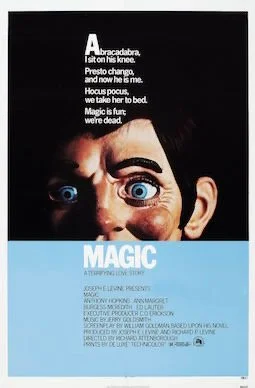
Magic (1978)

Mac Boyle February 12, 2023

Director: Richard Attenborough

Cast: Anthony Hopkins, Ann-Margret, Burgess Meredith, Ed Lauter

Have I Seen it Before: Never. A Cabin movie, but one I only pushed for after seeing Siskel and Ebert (mostly; Roger had some reservations) about it on and old episode of their show).

Did I Like It: Yes, to a point. Hopkins is exceptionally effective as both ventriloquist and dummy, made all the better as before The Silence of the Lambs (1991), he didn’t feel the need to play “Anthony Hopkins, certified movie maniac.” This is a role which—had it been made after Lambs—would have lent itself to a typical Hopkins schtick. It’s a shame that all too often he has to play similar characters now, but there is not an ounce of self-consciousness here. For someone who made large parts of his fame and fortune off of the personae of a gleeful killer, it is an interesting counterpoint to see him play someone who is as horrified—if not more so—than the audience by the increasing violence in his life. He even manages to evoke a pretty competent ventriloquist, which is no mean feat for someone who hasn’t spent years training for that type of performance. I’ll allow for the possibility that some of this was accomplished via ADR, so at worst, the sound editors did a superlative job. Burgess Meredith and Ann-Margret do end up playing only slight variations on their established screen personae, but I would be hard pressed to say having them around in a movie hurts the proceedings

The plot, however, is where I’m left with something of bad taste in my mouth. There’s the final moments when Peggy (Margret) returns to the cabin, which feels too cute of an ending for my taste, but I’m willing to forgive that. I think the moment might have been more effective had we seen her re-enter the Cabin (and just before she could give voice to her horror) or just before she started saying anything and we see her walking into the cabin might have been more effective.

What I really have a problem with is two scenes that are positively load-bearing on the plot. In the key encounter where Greene (Meredith) tells Corky that if he can go without the dummy for five minutes, then he doesn’t need help, Corky can’t make it thirty seconds, indicating an undercurrent of compulsion in his psychosis. Later on, Corky takes a ride in a fishing boat with Duke (Ed Lauter) and can go without Corky for several scenes which are just as harrowing and stressful for the man. The plot is double dealing, and even if I could blame only William Goldman*, but Attenborough was certainly within his rights to make even the psychotic logic of that a little more cogent.

*Man, between this and my review for The Princess Bride (1987), these reviews are quickly becoming a microcosm of a feud with Goldman. I probably need to cleanse the system and take in Misery (1990) as quickly as possible.

Tags magic (1978), richard attenborough, anthony hopkins, ann-margret, burgess meredith, ed lauter
Comment

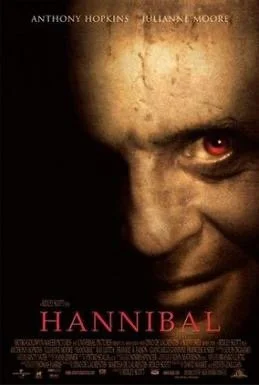
Hannibal (2001)

Mac Boyle July 11, 2022

Director: Ridley Scott

Cast: Anthony Hopkins, Julianne Moore, Ray Liotta, Frankie R. Faison

Have I Seen it Before: Sure. I wasn’t yet 17 when the film was release, but perpetually looking about five years older than I really am, I was able to buy a ticket for myself without much scrutiny at all.

And yet, I couldn’t even begin to guess when I last saw the film. For someone who’s taken to a <Hannibal Lecter podcast> in recent months, it’s odd just how little this film has lived in my memory all these years.

Did I Like It: For the first half of the film, I was struck by how faithful an adaptation this was of the original Thomas Harris novel. I’m not certain if that’s the most thorough praise, as Harris’ third Lecter novel isn’t quite his weakest entry, but it’s far, far from his strongest.

For what it is, things could be a lot worse. Is it a satisfying successor to The Silence of the Lambs (1991)? Certainly not, but then again, neither was the novel, so Scott and company are  at least hitting their target here. Performances are all around pretty good. Moore accomplishes the unenviable task of equating herself well, while having to be either the George Lazenby or Roger Moore to Jodie Foster’s Sean Connery. An uncredited Gary Oldman disappears into his part as the non-charming monster of the piece, but one can’t help but wonder if original choice Christopher Reeve might have made the proceedings even more unsettling than they already were. Hopkins himself—the main attraction—doesn’t feel like he is trying to eliminate the need for him to reprise the role again (Red Dragon (2002), I’m looking in your direction) and keeps the hammier parts of Lecter, but just barely.

The final act of the film, however is where a bad taste is left in my mouth. It is a thorough exercise in the practice of half measures. Starling and Lecter couldn’t become lovers, sure, although with the departure of Moore, maybe they could. The eventual comeuppance of Mason Verger is a great deal more satisfying in the novel, and trying to make Starling anything other than a tragic hero in this story is a flex that the preceding two hours can’t quite support. We’ll just have to take comfort in the knowledge that we did get to see Ray Liotta eat his own brain for a little bit.

Tags hannibal (2001), hannibal lecter movies, ridley scott, anthony hopkins, julianne moore, ray liotta, frankie r faison
Comment

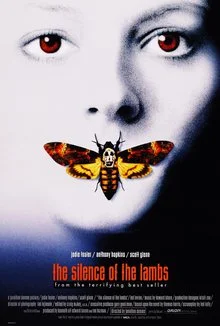
The Silence of the Lambs (1991)

Mac Boyle May 24, 2022

Director: Jonathan Demme

Cast: Jodie Foster, Anthony Hopkins, Scott Glenn, Ted Levine

Have I Seen it Before: One doesn’t start a Hannibal Lecter (Hopkins) podcasts without coming across this one at some point in their past.

Did I Like It: Can a review of this film over thirty years after its release add anything new to the discourse about it? Probably not, aside from the need to say that whatever you remember about the film, it’s better than that memory feebly maintains.

It’s such a singular cinematic experience that our episode of Friendibals did kinda, sorta descend into an effuse-fest.

And I’m actually okay with that! The movie is that good, and stands far and ahead above any other attempt to bring the character to life, with the exception of—against all odds—the tv series Hannibal.

But after that bloom of rediscovering the film withers even slightly (it’s been several days since I screened the movie and recorded the episode), are their complaints that I can reach for?

A reflexive criticism I could see is that it, at the most basic level, implies some very not-nice things about transgender people. The film doesn’t do nearly enough (or at least as much as Thomas Harris’ novel) to make explicit that Jame Gumb’s (Levine) is a monster who thinks he is a transgender, not that trans people are akin to monsters.

That all might be forgiven, and a degree of nuance is on display here, if only the film weren’t so good that it isn’t just an extremely good way to spend two hours, but that it singlehandedly re-defined the serial killer genre through the present. We could (and I, inevitably, will) talk about the glut of Hannibal Lecter sequels and prequels we got in result to the film’s ubiquity*, but nearly every serial killer movie in the last thirty years. Just look at Instinct (1999), a movie I was only 50% certain I was remembering correctly before looking it up. Any film featuring crime of any sort absorbed the sounds, but not the language of this film. Just look at Ace Ventura: Pet Detective (1994). There’s a mean-spirited, at best, but ultimately hatefully violent myopic discourse regarding the trans community now, and while it would be exceptionally reductive to blame that all on this film, every stunted attempt by filmmakers to give their monsters more dimension for three decades might very well have done so.

If only the film weren’t so good.

*Another thing I forgot during the podcast: In the book and in Ted Tally’s screenplay, the iconic muzzle placed on Lecter was written as a hockey mask. One could imagine why that didn’t survive to the final cut.

Tags the silence of the lambs (1991), hannibal lecter movies, jonathan demme, jodie foster, anthony hopkins, scott glenn, ted levine
Comment

Red Dragon (2002)

Mac Boyle April 8, 2022

Director: Brett Ratner

Cast: Anthony Hopkins, Edward Norton, Ralph Fiennes, Harvey Kietel

Have I Seen it Before: Oh, sure. For some reason I can’t remember if I saw this or Manhunter (1986) first, but I think it might have been this one, as I saw it in the theater during my halcyon days as a high school senior, and I’m almost certain I didn’t see Manhunter until college. But who can remember anymore? My memory palace is for shit, if you’ll forgive my rudeness.

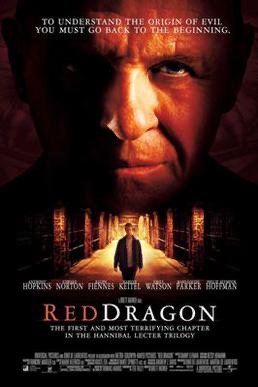
Did I Like It: No discussion of this film—as the eventual episode of Friendibals will attest—can be complete without dwelling on one topic before any others. No, it isn’t the inevitable comparisons of William Petersen vs. Edward Norton (they’re both fine; Petersen is more demonstrably mad around the edges), Ralph Fiennes vs. Tom Noonan (Fiennes feels more developed, but that might owe more to the script than anything else), Mann vs. Ratner (Mann is always stylish to the fault, so much so to the point that his films feel dated minutes after they’re released, while I don’t think Ratner has had an artistic ambition greater than calling “action” and “cut” when he’s supposed to), and ultimately Cox vs. Hopkins (the pictures for Hopkins’ obituary will inevitably include Lecter, although he feels bored and overly hammy here, whereas Cox relaxes into his evil).

While an analysis of all of these topics will give a pretty good picture of where this film lies not only against its previous adaptation, but among the rest of the Lecter series and serial killer films as a whole, the one topic that must, without a doubt be discussed is Mrs. Doubtfire (1993).  Yes, that one. The one with Pierce Brosnan*.

While going through the Leeds home, Graham (Norton) looks through a drawer of VHS tapes, before watching their home movies and staring at, but never really seeing the way he will catch the Tooth Fairy (Fiennes). Among the tapes area copy of Jaws (1975), which makes sense as it is also a Universal Release, the artwork features nothing that might run afoul of likeness rights, and most importantly, clearly something that would be available on home video “several years” after Graham runs afoul of Lecter in the film’s prologue.

But why the hell is Mrs. Doubtfire there? Are we saying this film takes place in (at the earliest) 1994? What does this say about when The Silence of the Lambs (1991) or, for that mater Hannibal (2001) take place?

I may have missed the point of the whole thing, but if I can zero in on that for most of the film’s runtime—in a series that’s main stock and trade is characters noticing things and making connection which not everyone else might—then maybe it’s the film’s—and really, Ratner’s—fault for not getting Doubtfire out of the Leeds’ house. I submit to you that, for all his journeymen level work and the cast’s impressive ability to elevate the proceedings, Brett Ratner missed the point, not I.


*Am I remembering that right? Was Pierce Brosnan in Mrs. Doubtfire. I’m almost sure he was, and I kind of don’t want to go look it up to find out.

Tags red dragon (2002), brett ratner, hannibal lecter movies, anthony hopkins, edward norton, ralph fiennes, harvey keitel
Comment

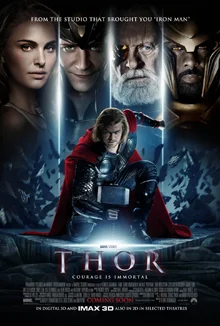
Thor (2011)

Mac Boyle May 1, 2019

Director: Kenneth Branagh

Cast: Chris Hemsworth, Natalie Portman, Tom Hiddleston, Anthony Hopkins

Have I Seen it Before: Less frequently than I had originally thought. Aside from Iron Man (2008) I really have not re-watched much of the Phase One MCU films.

Did I Like It: I think I liked it at the time of the premiere, but in light of far more entertaining uses of the character, I’m not sure it has aged as well as some of the other Phase One-ers.

This film is at odds with itself, or at least my reaction to it is at odds with itself. 

On one hand, it is a highly staged cgi-drowned tale of Kings and their realms. This is probably what caused the powers behind Marvel studios to think of Kenneth Branagh as the director, and what may have drawn the Shakespeare adapter-in-chief to the project. This is a fine, but quickly boring aesthetic on which to base a film. One need look to the more focused—and infinitely more forgettable—sequel, Thor: The Dark World (2013) for how far such stodgy staging will get you.

The other half of the film is even more baffling. Groaning under budget constraints at a time where a shared Marvel universe wasn’t necessarily a guaranteed way to print money, the rest of the film plays out in a nearly abandoned New Mexican town, with a few scant explosions, and one CGI robot thing. A far cry from the epic films we expect from the studio now. This is all to say that half of this film looks cheap. TV cheap. Like Agents of SHIELD during seasons when everyone stopped watching cheap. It’s such an odd relic of an era for these films that seems like it took place a million years ago.

But, the MCU—and more importantly Thor, Odinson continued—and there are charms in the film that allowed the experiment to continue. What it lacks in the traditional whiz-bang blockbuster magic, it more than makes up for in engaging performances. Chris Hemsworth threatened the world with his movie star charms in J.J. Abrams’ Star Trek (2009), and while the goofy comedian behind the manhunk doesn’t come into full bloom until Thor: Ragnarok (2017), we see pieces of the once and future Ghostbuster Secretary Kevin here. Similarly, Natalie Portman sheds the Padme Amidala of it all and—while it’s not exactly heavy lifting in the film—convincingly engages in a screen romance.

i suppose it says something about the Marvel movies that they are supremely watchable in their initial release, but seem quaint as the movies only improve. Imagine a world where Avengers: Endgame (2019) feels quaint. I’m already exhausted.

Tags thor (2011), kenneth branagh, chris hemsworth, natalie portman, anthony hopkins, tom hiddleston, marvel movies, thor movies
Comment
220px-Bram_Stoker's_Draula_(1992_film).jpg

Bram Stoker's Dracula (1992)

Mac Boyle January 6, 2019

Director: Francis Ford Coppola

Cast: Gary Oldman, Winona Ryder, Anthony Hopkins, Keanu Reeves

Have I Seen it Before: I’m sorry, I got distracted by the question. I heard a voice whispering for me to see him, whatever that means.

Did I Like It: At this point, I may be burned out on the Dracula mythos (for any number of reasons). But even so, this movie is interested in doing a lot things not necessarily seen before in Dracula films, that I think it all holds together.

First of all, this movie is a marvel of casting. Between Cary Elwes, Winona Ryder, Anthony Hopkins, Richard E. Grant, and Billy “The Motherfuckin’ Rocketeer” Campbell, the call sheet is like a mid-90s party and everyone is invited. 

Even Keanu Reeves, who history and assumption assumes is miscast in the role of Jonathan Harker equates himself well in the proceedings, if his British accent is occasionally wavering, but not in a Kevin Costner sort of way. Gary Oldman is a well-oiled acting machine, bringing vivid life to all of the dread count’s various shades. The only member of the cast who seems in over their head is Sadie Frost as the ill-fated Lucy Westerna. One can’t help but wonder if a bigger star, like a Michelle Pfeiffer* or Julia Roberts** might have offered a more memorable performance.

The movie that surrounds these performances feels a little long, even though it comes in at just a little bit over two hours. This may be a byproduct of the Coppola aesthetic. Still, there is a playful quality about the film. Beginning with an aesthetic pulled directly from F.W. Murnau’s Nosferatu (1992), slowly but surely transitioning into a more modern (or at least, modern for the time) monster movie with sumptuous photography and makeup work meant to startle more than inspire dread. Coppola loves movies so dearly, and he wants us to love this one too. His efforts at seduction are mostly, if not entirely successful.


*Although in that universe, we would have likely been deprived of her performance in Batman Returns, and I don’t think that is a Faustian bargain I am willing to make.

**Which I’m not that in favor of, mainly because Julia Roberts has been and always will be a frightful bore. Prove me wrong.

Tags bram stoker's dracula (1992), dracula movies, francis ford coppola, gary oldman, winona ryder, keanu reeves, anthony hopkins
Comment
220px-Mask_of_zorro.jpg

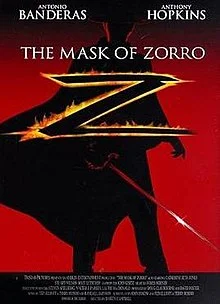
The Mask of Zorro (1998)

Mac Boyle September 23, 2018

Director: Martin Campbell

Cast: Anthony Hopkins, Antonio Banderas, Catherine Zeta-Jones, the stuntman for Anthony Hopkins (who I think we can all agree deserves a lot more credit than he’s gotten so far)

Have I Seen it Before: Oh, sure.

Did I Like It: I like it a lot. Had it not been followed by one of the most indifferent sequels in history with The Legend of Zorro (2005), it might be remembered as a more seminal film today.

Anthony Hopkins might not be just a great actor, but also one of the more underrated movie stars in the history of cinema. Sure, he can play Hannibal Lecter and various near-Hannibals with aplomb, but the fact that such a pointedly English actor could convincingly the wit and swashbuckling bravura of Mexican California’s greatest hero. Antonio Banderas as his heir presumptive is pretty intuitive, but the star of Remains of the Day (1993)? On spec, I don’t see it, and yet, he delivers. He delivers so well that the movie lives and dies by his presence. Just see the aforementioned Legend to see how such a film without Hopkins can only generate a lifeless quality.

And yet, while he is the strongest link in the chain, there is one part of the conceit of Hopkins-as-Zorro that takes one out of the movie. At the time of filming in 1997, Hopkins was already 60. It’s pretty clear in the early goings—when Diego’s Zorro is repelling the Spanish oppressors— that he isn’t doing his own stunts.

It’s a minor quibble in movie that works by its own standards. The plot actually tracks for the most part. The bad guys are dastardly. The good guys play out their revenges in a gallant sort of way. The action is all of the firey explosion and clanging saber variety, with nary a pixel of computer generated imagery.  Which also puts it in that rare breed of films that ages in such a way that—without further context—you wouldn’t necessarily guess when it was made*. What more can really be expected of a movie?


* Unless of course you count the obligatory love ballad over a James Horner melody that places it firmly in the shadow of James Cameron’s Titanic (1997), but that is only over the end credits, and should hardly count against the film as a whole.

Tags the mask of zorro, martin campbell, anthony hopkins, antonio bandera, catherine zeta-jones, 1990s, 1998
Comment

Powered by Squarespace

Party Now, Apocalypse Later Industries

Where creativity went when it said it was going out for cigarettes.

Where creativity went when it said it was going out for cigarettes.