Party Now, Apocalypse Later Industries

Where creativity went when it said it was going out for cigarettes.
  • Home
  • BOOKS
    • THE ONCE AND FUTURE ORSON WELLES
    • IF ANY OF THESE STORIES GOES OVER 1000 WORDS...
    • ORSON WELLES OF MARS
    • THE DEVIL LIVES IN BEVERLY HILLS
    • A LOSS FOR NORMALCY
    • RIGHT - A NOVEL OF POLITICS
  • PODCASTS
    • Beyond the Cabin in the Woods
    • THE HOLODECK IS BROKEN
    • THE FOURTH WALL
    • As The Myth Turns
    • FRIENDIBALS! - TWO FRIENDS TALKING ABOUT HANNIBAL LECTER
    • DISORGANIZED! A Criminal Minds Podcast
  • MOVIE REVIEWS
  • BLOGS AND MORE
    • Bloggy B Bloggington III, DDS
    • THE HOLODECK IS BROKEN BLOG
    • REALLY GOOD MAN!
  • Home
    • THE ONCE AND FUTURE ORSON WELLES
    • IF ANY OF THESE STORIES GOES OVER 1000 WORDS...
    • ORSON WELLES OF MARS
    • THE DEVIL LIVES IN BEVERLY HILLS
    • A LOSS FOR NORMALCY
    • RIGHT - A NOVEL OF POLITICS
    • Beyond the Cabin in the Woods
    • THE HOLODECK IS BROKEN
    • THE FOURTH WALL
    • As The Myth Turns
    • FRIENDIBALS! - TWO FRIENDS TALKING ABOUT HANNIBAL LECTER
    • DISORGANIZED! A Criminal Minds Podcast
  • MOVIE REVIEWS
    • Bloggy B Bloggington III, DDS
    • THE HOLODECK IS BROKEN BLOG
    • REALLY GOOD MAN!

A Blog About Watching Movies (AKA a Blog in Search of a Better Title)

Godfather_part_ii.jpg

The Godfather Part II (1974)

Mac Boyle January 21, 2019

Director: Francis Ford Coppola

Cast: Al Pacino, Robert de Niro, Diane Keaton, John Cazale

Have I Seen it Before: At 202 minutes, it is quite a commitment, and yet I make that commitment as often as I possibly can.

Did I Like It: What kind of sociopath would I be if I said no? 

Of course, The Godfather Part II is a great film. There is no reasonable way to deny this, and I wouldn’t try to do so, even if I wanted to. What’s more, anything that could be written about this film has already been done so. It is a dense, rich meal of intrigue, tragedy, and machismo. Coppola’s output may have fluctuated fairly wildly with his fortunes in Hollywood, but when his story is done he will have still made several truly great films, and a couple of bottles of affordable, yet drinkable wine.

And so, on my twentieth or so screening of this film, I am mostly struck by little moments or feelings as the film unfurls. 

Pacino’s unrelenting, patient ruthlessness. He is equal parts cautionary tale and towering example of not taking shit from anyone. It’s the final eerily quiet performance from the man before he started shouting in Dog Day Afternoon and has yet to stop. Actually, I suppose he starts #yellingpacino in this movie in a few scenes, primarily when confronted with the attack on his Tahoe compound and later when he is confronted with the fact that, despite his machiavellian perfection in ealing with the underworld, Kay Corleone (Keaton) sees right through him and will not abide his opportunistic evil.

James Caan’s cameo in the final scene, along with the pointedly unknowable absence of Marlon Brando. Paramount, Coppola, and Brando could not come to any sort of an accord to get him to make the small appearance, but if you ask me, Michael’s story is more complete if he is completely removed from his father for the runtime.

And speaking of tragedies with fathers, the small moment of this film that sticks with me forever is seldom written about, but for my money is the linchpin of not just the film, but the entire Corleone saga. The family boards a train leaving Sicily and Vito (De Niro) tells his youngest son to, “Say goodbye, Michael.” Can’t distill the series down more perfectly than that.
Tags the godfather part ii (1974), al pacino, robert de niro, diane keaton, john cazale, 1970s
Comment
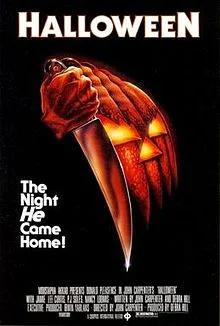
Halloween_(1978)_theatrical_poster.jpg

John Carpenter's Halloween (1978)

Mac Boyle October 11, 2018

In my nearly fevered anticipation for the forthcoming rebootquel Halloween (2018), I thought I might re-watch all of the original series(es). My gushing in this entry leads me to think that I may not have the strength to suffer through Rob Zombie again, to say nothing of Paul Rudd. We’ll see.

Director: John Carpenter’s John Carpenter

Cast: Donald Pleasance, Jamie Lee Curtis, Nancy Loomis, and (ahem.) P.J. Soles.

Have I Seen it Before: I’ve at least seen it as many times as Anchor Bay has released it on either DVD or Blu Ray, so that’s got to put it somewhere in the 100s.

Did I Like It: Oh, how do I count the ways?

It will be supremely difficult to write thoughtful reviews about some of my greatest-of-all-time movies. John Carpenter’s Halloween is one of them. The acting is sublimely modulated cheese, especially with the world’s supreme scene chewer Donald “I SHOT HIM SIX TIMES” Pleasance. The cinematography is perfect. Each frame harnesses a perfect sublime banality, that when the horror really kicks into high gear, the tension is there, but there’s also a palpable sense of tragedy at the same time. The music is so beyond perfect that it a) completely removes any pretext at criticism I might hope to reach for, b) makes the film without this music unimaginable, and c) elevates the sequels and (ugh) remakes into (on average) watchability.

And all of it was made with next to nothing. It is an unbelievable achievement that no amount of sequels, copy-cats or (again, ugh) remakes could hope to replicate, nor ruin.

Now, the long arm of legacy is what this film consistently has to fight against, but if you can put yourself in the mindset of someone living in a universe where the other films don’t exist (a feat which I think is going to become significantly easier in a few weeks), the film is even more unnerving. Here Michael Myers (Will Sandin as a child, Tony Moran unmasked as the adult Myers, and Nick Castle as the form commonly referred to as “The Shape”) isn’t the Freshman Abnormal Psych paper of the latest Rob Zombie films, the scion of the Cult of Thorn, Laurie’s brother, Jamie’s uncle, or budding Dangertainment star*. He was purely a kid—and he could have been any kid you knew growing up—who one day picked up a really sharp knife and never looked back. He slithers through the vast majority of the movie simply watching his prey, and when the moment comes, he zeroes in to take what he wants, simply because he wants it, and should therefore be entitled. He is every man, and if we’ve learned anything recently, he cannot be stopped.

That’s the movie I love, and if you don’t… Well, then fuck you, Rob Zombie.

That may be harsh, but it’s not like I don’t totally mean it. Totally.


*God, when you really unpack Halloween: Resurrection (2002), the more of a headache it becomes.

Tags halloween (1978), halloween series, john carpenter, jamie lee curtis, donald pleasance, nancy loomis, pj soles, 1970s, 1978
Comment
220px-Carrieposter.jpg

Carrie (1976)

Mac Boyle October 3, 2018

Director: Brian De Palma

Cast: Sissy Spacek, Amy Irving, Nancy Allen, Pig’s Blood Travolta*

Have I Seen it Before: I’m almost sure that I have, but I can’t point to when I might have done so. I definitely remember reading the book, if that helps.

Did I Like It: Well, clearly the memorability of the book over the movie should tell us something.

I like Brian De Palma. I really do. I think The Untouchables (1987) is about as great a movie as is ever to exist. Once one has worked out just what the hell is happening in Mission: Impossible (1996), it’s a pretty enjoyable spy thriller. 

And I want to like Carrie. I really do. I get the feeling I wanted to like Carrie just as much as De Palma himself wanted to like the film. Unfortunately, he only seems to be interested in certain parts of the film. 

The climax is the kind of confluence of conflicting POVs that have become De Palma’s bread and butter. While through cultural osmosis, we’ve all seen the moment when Carrie (Spacek) is brought to her semi-final humiliation, but it’s the Rube Goldberg machinations that lead up to that moment and eventually tear everything apart that makes the sequence worth remembering.

Everything else tends to play out with the subtlety and wit of an after-school special. The score—by Pino Donaggio—is all over the place, when it isn’t shamelessly and artlessly aping Bernard Hermann’s score for Psycho (1960). 

And of course, De Palma does seem to be awfully interested in footage of naked women, and there is plenty of it. I’m not a prude, but the tableaus De Palma puts together makes me think that he may not have been the one to properly understand and tell this story. To be fair, King may not have been either, but I digress. I have not seen the 2013 remake, the fact that a woman directed the film does tend to recommend it on at least one level.


*Little known fact, the blood dumped on Carrie during the film’s infamous climax was played by John Travolta’s cousin.

Tags Carrie (1976), Brian De Palma, Sissy Spacek, Amy Irving, Piper Laurie, John Travolta, 1970s, 1976
Comment
220px-The_Legend_of_Hell_House.jpg

The Legend of Hell House (1973)

Mac Boyle August 11, 2018

Director: John Hough

Cast: Pamela Franklin, Roddy McDowall, Clive Revill, Gayle Hunnicutt, Michael Gough (uncredited)

Have I Seen it Before: Never. Never even knew it existed until a few weeks ago.

Did I Like It: Yes, but I’m beginning to have certain reactions to the genre which may hamper my overall enthusiasm.

To facilitate the discussion on “Beyond The Cabin in The Woods,” a podcast on which I’ve been serving on the panel, I have watched four “haunted house” movies in the last two months. This may match my lifetime average, as I have only sparse memories of other entries in the genre, aside from the lackluster Winchester (2018) which I had watched for the same reason.

Of those four (Thir13en Ghosts (2001), The Haunting (1963), and House on Haunted Hill (1959)), The Legend of Hell House stands above the rest. The problem with too many haunted house movies is that there is an implicit rule that dictates nothing happens for a certain period of time, to introduce some measure of doubt as to whether ghosts can exist at all. In The Haunting, that null period takes place over the entire course of the picture. It never fully commits to a position about the existence of ghosts, and thus, the film is a woeful bore. 

In The Legend of Hell House, this doubt is dispensed with quite rapidly. Yes, Dr. Barrett (Clive Revill) is brought into these series of events to bring proof of life after death, but both this quest and the doubt about the supernatural are dropped within minutes. There’s something wrong with this house from the get-go, and the film wastes no time having good, clean, masochistic fun with the possibilities.

Certainly, the film can’t help but live within its more pulpy roots. Any film with Roddy McDowall isn’t particularly interested in elevating the material, but as far as haunted house movies go, I’d recommend starting here.

Tags The Legend of Hell House, 1973, 1970s, John Hough, Pamela Franklin, Roddy McDowall, Clive Revill, Gayle Hunnicutt, Michael Gough
Comment

Powered by Squarespace

Party Now, Apocalypse Later Industries

Where creativity went when it said it was going out for cigarettes.

Where creativity went when it said it was going out for cigarettes.