Party Now, Apocalypse Later Industries

Where creativity went when it said it was going out for cigarettes.
  • Home
  • BOOKS
    • THE ONCE AND FUTURE ORSON WELLES
    • IF ANY OF THESE STORIES GOES OVER 1000 WORDS...
    • ORSON WELLES OF MARS
    • THE DEVIL LIVES IN BEVERLY HILLS
    • A LOSS FOR NORMALCY
    • RIGHT - A NOVEL OF POLITICS
  • PODCASTS
    • Beyond the Cabin in the Woods
    • THE HOLODECK IS BROKEN
    • THE FOURTH WALL
    • As The Myth Turns
    • FRIENDIBALS! - TWO FRIENDS TALKING ABOUT HANNIBAL LECTER
    • DISORGANIZED! A Criminal Minds Podcast
  • MOVIE REVIEWS
  • BLOGS AND MORE
    • Bloggy B Bloggington III, DDS
    • THE HOLODECK IS BROKEN BLOG
    • REALLY GOOD MAN!
  • Home
    • THE ONCE AND FUTURE ORSON WELLES
    • IF ANY OF THESE STORIES GOES OVER 1000 WORDS...
    • ORSON WELLES OF MARS
    • THE DEVIL LIVES IN BEVERLY HILLS
    • A LOSS FOR NORMALCY
    • RIGHT - A NOVEL OF POLITICS
    • Beyond the Cabin in the Woods
    • THE HOLODECK IS BROKEN
    • THE FOURTH WALL
    • As The Myth Turns
    • FRIENDIBALS! - TWO FRIENDS TALKING ABOUT HANNIBAL LECTER
    • DISORGANIZED! A Criminal Minds Podcast
  • MOVIE REVIEWS
    • Bloggy B Bloggington III, DDS
    • THE HOLODECK IS BROKEN BLOG
    • REALLY GOOD MAN!

A Blog About Watching Movies (AKA a Blog in Search of a Better Title)

220px-Between_Two_Ferns_film_poster.png

Between Two Ferns The Movie (2019)

Mac Boyle October 28, 2019

Director: Scott Aukerman

Cast: Zach Galifanakis, Lauren Lapkus, Ryan Gaul, Jiavani Linayao

Have I Seen It Before?: No. Yes, I know I’m behind.

Did I like it?: Uhh… Yeah, I think so?

It never seemed like the crown jewel of the internet video empire Funny or Die would have been able to lend itself at all to a feature, but then again people probably said the same thing about Wayne’s World (1992) back in the day, so what do we know?

Now, I don’t think this film is quite the revelation of the best translations from sketch to feature that are out there. It’s perhaps trying a little too much to be a riff on Waiting for Guffman (1997) with an absurdist streak to be as surprisingly unhinged as the original videos were, but it is amiable enough.

Naturally, things work the best when Galifanakis (Galifanakis*) is interviewing celebrities during segments for the (now fictional) show. An extended sequence at the cable-access station where the show is produced fitfully introduces other characters that will join Galifanakis on his quest. It might have been better to see more of these people, but my dismissal as too much like either Wayne’s World or Waiting for Guffman would have been only more acute.

The movie doesn’t end so much as the run time elapses, and that may be its fatal flaw. More tension as Galifanakis tried to fight his instincts while interviewing Gal Gadot (Gal Gadot**) would have been more satisfying. Instead, Galifanakis perfunctorily turns back to his old show, and the fact that the film doesn’t really have an ending is played off as something that might be a joke, except it’s the least funny part of the film. The sour taste is somewhat ameliorated by the outtakes of the film, which are more amusing than anything else in the last few minutes of the film proper.


*That’s a little annoying that I have to type that twice to be correctly writing about film, but then again, I would imagine that both Galifanakis the man and Galafanakis the character are probably fine with that.

**Sigh.

Tags between two ferns the movie (2019), scott aukerman, zach galifinakis, lauren lapkus, ryan gaul, jiavania linayao
Comment
Jurassic_Park_poster.jpg

Jurassic Park (1993)

Mac Boyle October 28, 2019

Director: Steven Spielberg

Cast: Sam Neill, Laura Dern, Jeff Goldblum, Richard Attenborough

Have I Seen It Before?: I mean, I’m a child of the 90s and I like movies. How would I have gotten through my life without this movie?

Did I like it?: It’s only gotten better over the years.

I came to a revelation during my recent review for Indiana Jones and the Kingdom of the Crystal Skull (2008). With this film, Spielberg exorcised most of the populist impulses that had made his career. Sure, you have this film’s sequel, The Lost World (1997), and the aforementioned fourth Indiana Jones film, but those both seemed like chores Spielberg relented to, rather than films he was that interested in making. Double that sentiment for Ready Player One (2018). Perhaps he was indulging a return to form with the animated The BFG (2016), but I’ll let you know when I get around to seeing it.

But what a valedictory run this is. Every element works and became the standard for blockbuster movies to the present. The special effects have mostly not aged in over 25 years. I say that, but what I mean is that the physical effects (mostly by Stan Winston) still look like real things, which will keep this film working decades from now. The leading-edge computer images fare a little less well. Large tableaus of dinosaurs interacting with (read: eating) each other work pretty well, but any time ILM uses their tools to venture into the undiscovered country of the close-up, or if their sprites and polygons deign to interact with humans, the seams begin to show. It’s hard to be too critical of either Spielberg or the movie for this, as they were trying things that had never been tried before. However, with the knowledge that George Lucas saw this film and decided his own technology had finally elevated to the point where he could go back and make his long-gestating Star Wars prequels, well… the judgment of movie history might have

My wife points to this as John Williams best score, and I’m at a loss to argue the point. I’m also at a loss to come up with a theme that Williams has written since that was as memorable as the march he concocted with this movie. Everybody behind the scenes was going for broke here, it seems.

And yet the thing I am most tickled by during this, quite possibly my 100th viewing of the film—are the non-tech questions. The movie may be peak-Jeff Goldblum, and even when his character, Ian Malcolm, is vacillating quickly between smarm and snark, one can’t help but be amused by him. The movie might have worked had it just been him, and if Jurassic World: Fallen Kingdom (2018) had gone for that, it might have been a lot more satisfying.

Tags Jurassic Park (1993), steven spielberg, jurassic park movies, sam neill, laura dern, jeff goldblum, richard attenborough
Comment
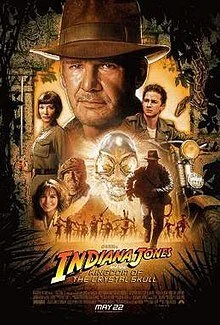
220px-Kingdomofthecrystalskull.jpg

Indiana Jones and the Kingdom of the Crystal Skull (2008)

Mac Boyle October 28, 2019

Director: Steven Spielberg

Cast: Harrison Ford, Shia LaBeouf, Cate Blanchett, Karen Allen

Have I Seen It Before?: I was there on that delightful spring day in 2008, wearing a leather jacket and fedora. I’m not sure how I feel about that admission, but I am reasonably certain that it is my fondest wish that I never do anything like that ever again.

Did I like it?: It seems like a superfluous question, but let’s get into it, shall we?

As with any film George Lucas became involved with after Indiana Jones and the Last Crusade (1989), there is a profound antipathy that courses through the populace.

And yet, when it comes to this movie, I really want to like it. I do. I’m pretty sure I do. I’m not one of the people who were completely turned off by the notion of Dr. Jones (Ford) running from Soviets before running afoul of a flying saucer. I’m more certain than I have of anything else in the history of film that if the fourth film tried to bend over backwards to give us even more Nazis, then the complaints about this film would have been even more caustic. I do wish that Spielberg and company (well, let’s face it, mainly Lucas) had gone for broke and had that familiar fedora’d silhouette look out into space. If they truly wanted to take a deep dive into 50s Sci-Fi movies, there was plenty of territory left unexplored.

That all being said, the story is actually kind of engaging. The cat and mouse game between Indy and the communists is more than enough to keep things lively, and fans of the series should be mostly on board with the movie.

Then why doesn’t the movie work?

I think there is some mix of two motivations behind the film’s listless quality: boredom and spite.

Each of the essential triumvirate (Lucas, Spielberg, and Ford) of the Indiana Jones series must have endured endless questions over the preceding twenty years about when Indiana might go on the hunt again. I can imagine that the questions got irritating. This movie certainly stopped most of us from asking about a fifth film. If that was the goal, then mission accomplished.

Lucas has long since seemed bored with the idea of popular filmmaking by the time this film came out, and that apathy was confirmed when—at the earliest opportunity—he sold the entire shop at the first opportunity to allegedly make small experimental films he doesn’t plan on showing to anyone.

Ford engaged in acting by way of sleepwalking for every film after Air Force One (1997) and before Star Wars: The Force Awakens (2015). Some might argue in good faith about that range, but few would argue that this fourth entry that previously so catered to ever strength he had as a movie star, is now the nadir of Ford wandering aimless in and out of various films.

Spielberg, too, seems as if he had expended any and all excitement for the big entertainments that made him his bones were exhausted by Jurassic Park (1993). To make an action movie now must feel like a chore on par with The Lost World: Jurassica Park (1997). There are plenty of more serious films that he seems far more interested in making.

And right there, while Lucas bears the brunt of the blame for the resulting movie, there really should be plenty of blame to spread around. Sure, the film has the anti-septic, CGI-heavy feeling of the Star Wars prequels, which feels even more off when Indiana Jones was always the far more analog cousin of that galaxy far, far away. But Spielberg and Ford could have still zeroed in on something special, if that was what interested them.

Maybe they still will.

Tags indiana jones and the kingdom of the crystal skull (2008), indiana jones movies, steven spielberg, harrison ford, shia labeouf, cate blanchett, karen allen
Comment
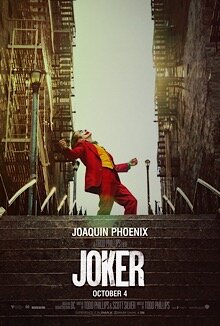
Joker_(2019_film)_poster.jpg

Joker (2019)

Mac Boyle October 21, 2019

Director: Todd Phillips

Cast: Joaquin Phoenix, Robert De Niro, Zazie Beetz, Frances Conroy

Have I Seen It Before?: That’s the real question, isn’t it?

Did I like it?: Wow, just the one-two punch with the really tough questions, huh?

I had a temptation to write two separate reviews for this movie, one unrelentingly positive, the other abjectly negative. The film had spawned so many hot takes even before its wide release that adding anything to the discourse started to feel like a mix of disingenuous and redundant.

There is a fundamental flaw in the idea of trying to explain the Joker. Part of his disturbing appeal lies in the fact that he eschews origin. The comics are steadfastly bumfuzzled as to where The Joker even has a name. Alan Moore’s superlative The Killing Joke even casts a vote for the notion that The Joker himself can’t even remember how he became like this (a notion hinted at by Heath Ledger in The Dark Knight [2008]). Trying to explain who he is by giving him a name and a series of events to go wrong to push him into murderous clowning takes away from the essential spark of the character.

Before you start, yes, I know Batman (1989) tried to give similar dimension to the character by way of Jack Nicholson, but I’m allowed to love a movie despite its flaws. I’m allowed to live with some contradictions.

There is no way this film would work even fitfully if it weren’t for Suicide Squad (2016) and Jared Leto. Much as it pains me to give credit to Leto for anything outside of Dallas Buyers Squad (2013), but that ill-considered adventure effectively nullified the question of should anyone play this character after Heath Ledger’s mesmerizing turn. So, thanks, Jared. As it stands Phoenix gives a performance to rival—although I think I will land on not-quite surpass—Ledger’s. He certainly has committed to the part (far more than others associated with the movie committed to their roles, but I’m getting ahead of myself), and the anguish he contorts his face into during his flare ups of pathological laughter add a dimension to the character at a time when one would have been forgiven for assuming that there was nothing left to mine in the Clown Prince of Crime.

The sequence where Arthur/Joker (Phoenix) finally arrives on the panel of Murray Franklin’s (De Niro) talk show is about as good as any handful of minutes of Jokerdom from Cesar Romero to the present. The tension is palpable. The movie itself wants to telegraph the punch that Arthur will kill himself live on TV, Budd Dwyer-style. Anyone who’s read The Dark Knight Returns had to have been like me, and wondering how he was going to kill everyone in that television studio. When he puts a slug in De Niro’s face and chest, it’s genuinely surprising.

I wish I could say as much for the rest of the film. The clown’s uprising spreads throughout Gotham on that same evening, culminating in—you guessed it—the murder of Thomas and Martha Wayne. If I have to see that woman drop her pearls on a wet alleyway one more time, I think I may lose my mind. Including the TV series Gotham this is the sixth—count it, sixth—time I’ve had to watch that same exact scene, and there really aren’t a lot of ways to stage those events.

It’s the first crumbling piece in the façade that is the entire movie. Phoenix may be doing great work, but every other ounce of the movie and every word out of director Todd Phillips’ mouth has been a real bummer. Yes, it’s sort of new to bring the early-Scorsese sensibility to the superhero film, but it is still not far removed from films that have already been made. Phillips is—to borrow a phrase from Star Trek IV: The Voyage Home (1986)—imitating the sounds, but not the language of those films. He’s even gone record to insist that the film should not be taken seriously, because he wasn’t trying to say anything with it. Such a cop-out feebly tries to absolve him from any negative impact on society, but it also nullifies the entire movie.

It’s lazy, and it’s dumb. While there are parts of the film that work despite itself, it can never truly achieve escape velocity from that unfortunate reality.

Now, this is all to say that I saw a story (it was admittedly click-bait-y) that hinted that after this film’s somewhat surprising box office success, Warner Bros. may be wanting to further branch out into weird one-off films, including an adaptation of Batman Beyond with Michael Keaton as Old Man Wayne. If that comes to pass, everything is forgiven, Todd. You gave me what I always wanted, despite yourself. Kind of like Jared Leto.

Tags joker (2019), batman movies, todd phillips, joaquin phoenix, robert de niro, zazie beetz, frances conroy
Comment
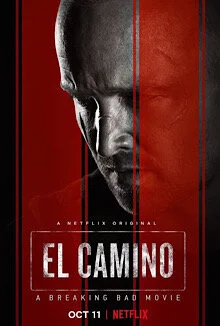
El_camino_bb_film_poster.jpg

El Camino - A Breaking Bad Movie (2019)

Mac Boyle October 21, 2019

Director: Vince Gilligan

Cast: Aaron Paul, Jesse Plemons, Krysten Ritter, Charles Baker

Have I Seen It Before?: Never, but one could have imagined large chunks of it.

Did I like it?: Yes. As the movie continues to simmer in my brain (as I type this, it’s been about a weeks since I watched it) I think I even like the parts I may not have been so sure about on first blush.

The predominant opinion I’ve seen put out in the world is that this dip back into the world of “Breaking Bad” is well made, but unnecessary. Naturally, this inspires more than a few entities out in the internet to insist that nothing is “necessary” save for political upheaval, healthcare, and tacos.

I tend to disagree with both camps when I say that after everything that happened to Jesse Pinkman (Paul) in the final season of “Breaking Bad,” his either success or failure at a redemption story is a missing, but vital part of his story. Sure, the catharsis on display as Jesse primal screams his way out of the white supremacist’s compound has some satisfaction about it, but when the story of the original series boils down to a fundamentally bad person—Walt (Bryan Cranston)—who occasionally did good things (largely in his past) and a fundamentally good person who has a habit of doing bad things, I still want to see who the secret hero of the series will become.

Necessary and unnecessary may be the wrong terms to fling around, but more Jesse is vital, and that’s why Gilligan decided to bring us back.

Now, the question becomes, does the film work? There is quite a bit of fan service, far more than “Better Call Saul” has ever been interested in. Some might see this as a weakness, and even I wonder if someone who had never seen the TV series would get much out of the film at all. But I did see—and love—the show, so the fan service works for me. Especially the brief interstitial moment where we see the fate of the storefronts for Saul Goodman’s legal practice and Los Pollos Hermanos. Cameos abound. The Badger (Matt Jones) and Skinny Pete (Baker) sitcom should be the next step in this saga’s evolution. Seeing Walt leap of a hotel room with that same shark-like gaze we followed against our better judgment for five years was a thrill. And it was fitting that one of the final emotional beats comes courtesy of Jane (Ritter). I can’t divorce myself from a fan of the show, so all of these moments are intriguing.

But the ending feels odd, from a pacing point of view. By the time the end credits snap into place, I think I literally asked out loud “Is that it?” I’m not sure why I felt so greedy, as any time with Pinkman was bonus time. Maybe I wanted him to have to fight through to his freedom until the last minute? More likely, I was so transfixed by the rest of the movie, I wasn’t thinking about where the end to the story should be. It’s rare that something could have demanded my complete and unadulterated attention from my couch like this. The last time that probably happened, now that I think about it, was the last time I saw Jesse Pinkman.

Tags el camino a breaking bad movie (2019), vince gilligan, aaron paul, jesse plemons, krysten ritter, charles baker
Comment
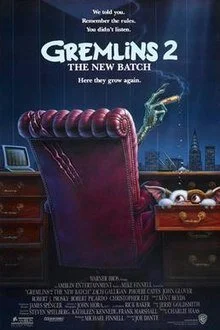
220px-Gremlins2poster.jpg

Gremlins 2: The New Batch (1990)

Mac Boyle September 18, 2019

Director: Joe Dante

Cast: Zach Galligan, Phoebe Cates, John Glover, Tony Randall

Have I Seen it Before: Oh, my yes.

Did I Like It: It is without a doubt one of my top five movies of all time. It is a strong contender for my favorite movie of all time. If you’re about to say to me that the original Gremlins (1984) is better, I don’t want to hear it.

There may be films in existence that are more deliberately created works of art. There may be stories that are crafted with more precision. But there is absolutely not one film in the century-plus existence of the format that is more in line—nay, likely created—my particular aesthetic, than Gremlins 2: The New Batch.

I love every inch of this film. I could run down the elements that light my imagination on fire, right down to something I only noticed during this screening: the guys in hazmat suits shoveling Gremlins remains into barrels. I want to know what happened to those barrels. I would go through all of those little touches, but you should really stop reading this website right now and watch the movie, regardless of whether or not you’ve never seen it before, seen it long ago, or watch it at least once every couple of years like I do.

One moment that floors me every time I see it, though, before I move on to some final thoughts. The day after Billy (Galligan) is arrested at Clamp Tower and his fiancé (Cates) bails him out, we cut to a police station. A normal film would have just given us that moment of exposition to get the two heroes back into the tower. This film spends several seconds dwelling on what appear to be a group of mime criminals being escorted from a paddy wagon. These mime have not been a part of the story up until this moment. They are not of any consequence to the rest of the story, and indeed, are never heard (or, I suppose, seen) from again. This is Joe Dante and the Gremlins aesthetic. Never let a moment go by that couldn’t be filled with a gag.

I love this movie, and you should, too.

Gremlins fandom tends to fall into two different camps, those who prefer the original, and those who know the sequel is the completely bonkers, objectively superior movie. I will immediately and irrevocably like a person less if they trash on this movie. In most cases when someone dislikes a movie I enjoy, I can rationalize that reasonable people can have different tastes. In this case, if someone does not like this movie, they are proclaiming their dislike for something so deep in my marrow, that we’ll never be the same again.

Tags gremlins 2: the new batch (1990), gremlins movies, joe dante, zack galligan, phoebe cates, john glover, tony randall
Comment
220px-A_Nightmare_on_Elm_Street_2_-_Freddy's_Revenge_(1985)_theatrical_poster.jpg

A Nightmare on Elm Street 2: Freddy's Revenge (1985)

Mac Boyle September 18, 2019

Director: Jack Sholder

Cast: Mark Patton, Kim Myers, Robert Rusler, Robert Englund

Have I Seen it Before: I think so? Honestly, during this screening it became abundantly clear that if I had seen it before, much of the movie had slipped into dim memory.

Did I Like It: In a word, no.

When one realizes that it had to be less than twelve months between the studio issuing the edict that this film was to be made and its release to theaters (it was released exactly 52 weeks after the release of the last film), one can see that the whole affair is rushed. A few special effect gags are lovingly rendered, but the film is bereft of anything resembling a believable performance, any sort of suspenseful tension, or anything resembling a story that even by the time the film had been released hadn’t been done plenty of times before.

I’ve never been the biggest fan of the original A Nightmare on Elm Street (1984), as I thought the story was a little too pat. One might have also looked at Heather Langenkamp’s performance and been left wanting, but in light of this film, it feels like I owe much of the first film an apology for not fully embracing it as much I should have.

That is not to say that Freddy’s Revenge is completely unworthy of any further analysis. Long heralded as a cult film for the gay community.

And it’s hard to deny the elements that some would call subtext. Jesse (Patton) is clearly struggling with issues far beyond the demon that haunts his dreams. Additionally, every other character in the film—with the possible exception of Lisa (Myers)—has a much clearer awareness of Jesse as a person than he does.

One wants to come away from the film attached to that higher virtue, but a quick scan of the circumstances under which the film was made only muddies the waters further. The screenwriter, David Chaskin, for years insisted that no gay subtext was intended. Apparently he never watched the final film, or for that matter, read the screenplay. Patton has said that those elements of the films were highlighted in part because of Patton’s own (at the time) closeted sexuality, and the idea that as the AIDS epidemic just began creep into the cultural consciousness, a film about a gay character would be inherently scarier. In short, if you would suggest to the main audience of these films (adolescent boys) that they might be gay, too, then there would be at least something to unsettle said audience, when the craft of the rest of the film was never going to measure up.

I’m not sure I can give any extra points to a film if it’s one redeeming virtue is so callous and calculating.

Tags a nightmare on elm street 2: freddy's revenge, jack sholder, mark patton, kim myers, robert rusler, robert englund, freddy krueger movies
Comment
220px-Star_Trek_The_Motion_Picture_poster.png

Star Trek: The Motion Picture (1979)

Mac Boyle September 16, 2019

Director: Robert Wise

Cast: William Shatner, Leonard Nimoy, DeForest Kelley, James Doohan

Have I Seen it Before: There’s something about this movie that makes it feel like I’ve never quite seen it all the way through. Like they are still making the movie as I’m watching it.

Did I Like it: Now, that above thought could be taken as a dig about its interminable runtime. It’s only just over two hours, but it feels like 40 years passes from the prelude to the final warp effect.

But it’s worse than that. The film’s plodding pace is a matter of accepted film and Trek canon. Given the rampant, directionless egos (mostly in the form of Gene Roddenberry) that tried to come together to make the film, it’s a minor miracle that any moment in the film works, even if the whole isn’t quite the sum of its parts. The movie spends a befuddling amount of time featuring characters looking out windows or at viewscreens, but the expression on the face of Kirk (Shatner) as he sees the newly re-fit Enterprise for the first time is one of the best performances the actor has ever given.

Other movies—and even movies in the science fiction genre—have a similarly deliberate pace. Blade Runner (1982). 2001: A Space Odyssey (1968). When I finally got a chance to see 2001 on the largest screen possible, the film transformed before my eyes. While most of Star Trek was meant for the smaller screen, maybe when I finally saw this first film in the way it was meant to be seen, it would improve.

Sadly, it does not. I’m struck by and expanding realization that Kubrick truly knew what he was doing, as even on the big screen, this film can't embrace the majesty of its more traditional special effects, or the weirdness of its more oblique imagery. The star gate via the monolith is a panic inducing experience, whereas the V’Ger is cheap and predictable. The Discovery seems like a real spaceship, whereas there are shots (and there are many, loving shots) of the Enterprise where the distant edges of the ship blink in and out existence.

How a film could be edited this poorly under the auspices of Wise, one of the greatest editors in the history of the moving picture is beyond me.

Maybe the voyages of the various crews of the Enterprise are better left to the small screen.

Maybe the odd-numbered films aren’t very good.

Tags star trek the motion picture (1979), robert wise, star trek film series, william shatner, leonard nimoy, deforest kelley, james doohan
Comment
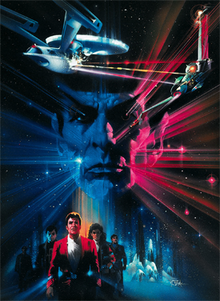
Star_Trek_III_The_Search_for_Spock.png

Star Trek III: The Search for Spock (1984)

Mac Boyle September 8, 2019

Director: Leonard Nimoy

Cast: William Shatner, DeForest Kelley, James Doohan, Christopher Lloyd

Have I Seen it Before: What, are you trying to tell me Spock is alive again? 

Yes, of course I’ve seen it.

Did I Like It: Let’s really drill down on something that has been long accepted as cardinal truth of this series.

Even-numbered films are great. Odd-numbered movies are the pits.

And yet, Star Trek Nemesis (2002) is the tenth film in the series and Star Trek Into Darkness (2013) is the twelfth, and they both are the cinematic equivalent of drinking chancey milk that is well-past its due date.

So, too is it with this film. It largely works, and is early enough in the franchise’s motion picture history to conclusively put the even/odd framework about these films in serious doubts.

It’s hard to doubt that it suffers ever so slightly by having to follow the series apex, Star Trek II: The Wrath of Khan (1982), but that does feel like an unfair judgment. Nemesis and Into Darkness tried to steal various aspects of plot and pacing from that far-better film, and never quite rise to the level of competent mimicry. 

Here, Nimoy appears to be aware of his potential shortcomings as a first-time director (a self-awareness that William Shatner never quite mastered five years later in Star Trek V: The Final Frontier [1989]) and tries to learn his craft before attempting to master it. Therefore, the film echoes more of a feeling or motif from the previous film. This may be in no small part due to James Horner returning to produce the score, but every frame of the film feels as if it is a companion piece to Khan, not a blind attempt to replicate it.

It helps that this film has its own story to tell. Part mystic resurrection tale, part classic duke-it-out-with-the-Klingons episode from the original series, and just enough of a heist story to keep things interesting.

Another element of note is to remember that—along with this film’s follow-up, Star Trek IV: The Voyage Home (1986)—introduce so many elements to Trek that will be load bearing for many years to come. The Excelsior and the Klingon Bird-of-Prey are first glimpsed here. The models of both ships are reused by Trek shows well into the twenty-first century, and much of the footage of the new enemy ship is reused for nearly the same length of time.

Also, one can’t help but dwell on the casting for the supporting roles. The studio balked at the idea of Christopher Lloyd playing Commander Kruge, the heavy. They could not move past the image of the actor as Reverend Jim on Taxi. Knowing a thing or two about being type-cast from appearances on a TV show, Nimoy insisted. One wonders if he would have ever been on the radar of Robert Zemeckis when Back to the Future (1985) began filming around the time fo the film’s release. I don’t want to live in that world. In fact, I want to live in a world with the most possible performances by Christopher Lloyd as possible, so I’ll be damned if I view this as one of the typical odd-numbered Trek films.

Tags star trek iii: the search for spock (1984), star trek movies, leonard nimoy, william shatner, deforest kelley, james doohan, christopher lloyd
Comment

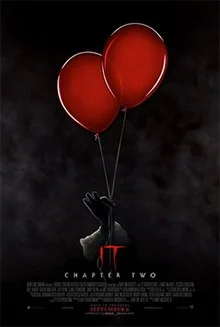
IT - Chapter Two (2019)

Mac Boyle September 7, 2019

Director: Andy Muschietti

Cast: Jessica Chastain, James McAvoy, Bill Hader, Isaiah Mustafa

Have I Seen it Before: New release, opening weekend. And yet… It’s all looking a bit familiar.

Did I Like It: I’m sad to report that my ultimate answer will be: Only sort of.

And I’m left wondering why that is. IT - Chapter One (2017) worked so thoroughly, I’m wondering if King’s original story inherently runs out gas if left to its natural conclusion. The original television miniseries adaptation of IT (1990) may have been one of the cheaper Canadian productions ever committed to films, but Tim Curry’s original performance as Pennywise the clown inspired a generation of coulrophobia, but if we as children all watched the two-night event to the end, we may have been freed of our anxiety when we realized the monster is nothing more than a poorly animated spider.

And so, we’re left here at the end of this film with a… poorly animated spider.

The new cast only kind of works, and their stories are just a tad too disjointed to make them believable as the driving force for this movie. The film around them never gels together as the ensemble piece it should be. Their current situations are zipped through with as much speed as possible, which continues to limit their ability to be fully-formed people. It also adds a layer of—Beverly’s (Chastain) own situation not withstanding—skepticism about marriage that one would normally find in a Woody Allen movie.

Even the children, who were largely a revelation in the film, are a distracting presence in this film, for the most part. The CGI Eddie Kaspbrak (does Jack Dylan Grazer even appear in this film?) easily ranks as one of the more unsettling creatures in the film, which only somewhat damns the creature design through the rest of the film.

There are parts of the film that work. The opening scene depicting the gruesome death of Adrian Mellon (Xavier Dolan) is exactly the nauseating form of banal evil that Derry should be known for. It’s discomforting in every measurable way, but it’s a shame that the creeping evil at the very heart of the town is never really addressed beyond this opening scene.

Each scene with Pennywise (Bill Skarsgård) is a symphony of horror that leaves this reviewer clenching in all of the right places, but they are few and far between. The film should really get a failing grade for presenting itself as the killer clown movies to end all killer clown movies only occasionally features its killer clown. The projector scene in Chapter One has no peak-terror equivalent in this entry, and only makes the film approach levels of forgettability that rivals the characters jumbled childhood memories. 

Much praise has been given to Bill Hader for his performance as the adult Richie Tozier. I for one think that Isaiah Mustafa as the adult Mike Hanlon brought a vigilant intelligence to the role that was sorely missing from the script of Chapter One. They both deserve every amount of that approval, and I don’t even have a counterpoint to negate that praise. So, in an effort to get the end of this review to be on a happy, positive note (one of the more drilled-to-death jokes in the movie), I think Mustafa should play Batman now. 

Tags it - chapter two (2019), andy muschietti, jessica chastain, james mcavoy, bill hader, isaiah mustafa
Comment

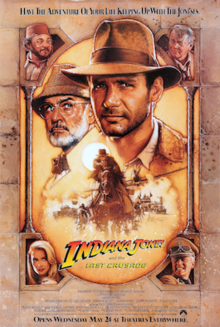
Indiana Jones and the Last Crusade (1989)

Mac Boyle September 7, 2019

Director: Steven Spielberg

Cast: Harrison Ford, Sean Connery, Alison Doody, Julian Glover

Have I Seen it Before: I’m reasonably sure that I did not see it in the theater when it was released. I have a weird encyclopedic memory of movies I saw from 1989-1990. I would imagine most movie buffs have such a memory of the movies they saw when they were about that age.

But I surely ran a VHS copy of this movie down to the nub in the years since. I even skipped a lecture of Chemistry 1 to go grab the trilogy (and back then, it was a trilogy) when it was first released on DVD.

Did I Like It: Back in those days, I think I might have been convinced that it was the greatest of all the Indiana Jones films. 

I don’t think that any more. I certainly don’t think it is the worst of the series, but we’ll get to that later. After both the creators and the public decided (and I believe wrongly) that Indiana Jones and the Temple of Doom (1984) was a failed experiment, Lucas, Spielberg and company opted for what I’m sure was a course correction to make the third film in the series more like the original Raiders of the Lost Ark (1981).

And the film so desperately wants to be Raiders. The story is once again about Indiana (Ford) reconciling with someone from his past by making them his partner. In Raiders, he reconnects with old lover Karen Allen, here he makes amends with his father in the form of Sean Connery. The Nazis are back in full force, which is a sentence I write with unfortunate frequency in this last half of the first decade of the 21st century. Even the font chosen for the opening titles is directed to the sole goal of making the audience feel like this is going to be like the Indy adventure that they liked at first blush.

Now, it helps that what the film lacks in originality, it more than makes up for in charm. It’s likely the missing ingredient in Indiana Jones and the Kingdom of the Crystal Skull (2008). That film wants to be Raiders, too, but it doesn’t have Sean Connery giving one of the most blissfully nerdy performances of any movie star. For a screen presence that was so thoroughly contingent on machismo, making Indy’s father an aloof bookworm who fells Nazis with an umbrella, some seagulls and some well-remembered Charlemagne. It also helps that this was in the time pre-Air Force One (1997) when Ford spent a number of years sleeping through every film in which he starred. He eventually corrected this notion by the time Star Wars: The Force Awakens (2015), and maybe we’ll get one more charming outing with Henry Jones Jr. in our future.

Tags indiana jones and the last crusade (1989), indiana jones movies, steven spielberg, harrison ford, sean connery, alison doody, julian glover
1 Comment
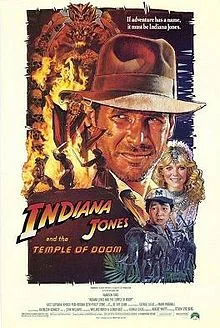
220px-Indiana_Jones_and_the_Temple_of_Doom_PosterB.jpg

Indiana Jones and the Temple of Doom (1984)

Mac Boyle September 2, 2019

Director: Steven Spielberg

Cast: Harrison Ford, Kate Capshaw, Amrish Puri, Ke Huy Quan

Have I Seen it Before: Is it possible I’ve seen this movie more than Raiders of the Lost Ark (1981)? It seems unlikely, but I can’t rule it out.

Did I Like It: Yes. Fight me if you must, but I think this is the best of the Jones sequels/prequels.

First of all, it would be myopic at best to not admit that there are some things about the film that had not aged well, and were a probably a bit much at the time of release. Willie Scott (Capshaw) is not exactly the stuff that strong female heroes are made of, but at the same time one has to give credit to Capshaw for playing the role without once reaching for the easy milieu of ironic detachment. There had to be a sense among her and the filmmakers that the character would grate on people’s nerves, but that didn’t stop her from swinging for the fences.

Similarly, the depiction of Indian people varies pretty wildly from the “sorta okay” to the “eek, is everybody else seeing what I’m seeing?” Again, one wants to write off the rougher parts of the film to intentional choice on the part of Spielberg and Lucas, but in this case, that might be reductive. The portrayal of both Hinduism and Indian people in general is sometimes insensitive, but it does appear that most Indian characters are actually played by people of Indian decent. If we’re grading the 80s on a curve, this move may still get a passing grade. I’m looking in your direction, Short Circuit (1986).

All of this being accepted, the film still follows that cardinal rule of sequeldom*: don’t let up on the pace. From the first musical number in the Club Obi-Wan, the film never lets up until the Sankara stones are finally put back in their rightful place. Now that I think about, that musical number is a mission statement for the entire film. While “Anything Goes” is in and of itself as a good a thesis for the film, the mere idea that “Raiders 2” would ope up with Busby Berkley style musical number let the audience know—even if they weren’t 100 percent on board with the plan—that Spielberg was firmly control of what was happening, and if we trusted him, we would be in for the ride of our life.

It’s a shame that the film wasn’t as widely accepted in its time as it should have been. Had it been, each Indiana Jones adventure might have been a new, weird venture into the unknown, instead of warmed-over leftovers from Raiders. 

*I guess, actually prequeldom, but unless you’re paying real attention to the year stamped in the titles, there is not a whiff of what usually reeks in a prequel.

Tags indiana jones and the temple of doom (1984), indiana jones movies, steven spielberg, harrison ford, kate capshaw, amrish puri, ke huy quan
Comment
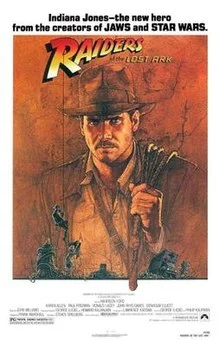
220px-Raiders_of_the_Lost_Ark.jpg

Raiders of the Lost Ark (1981)

Mac Boyle September 2, 2019

Director: Steven Spielberg

Cast: Harrison Ford, Karen Allen, Paul Freeman, John Rhys-Davies

Have I Seen it Before: Come on…

Did I Like It: What’s not to love?

Is this the greatest action movie of all time? Probably. Now, inevitably when something is unassailably great, somebody somewhere will try to take a shot at it out of nowhere.

Cut to these early years of the twenty-first century, and every goon with a blog will want to inform you of the Blessed Good News about how Indiana Jones (Ford) has absolutely no impact on the plot of the film that made him famous.

They would say that regardless of Jones’ presence, the Nazis would have found the Ark and would have  

Except that they wouldn’t be right. Never mind that the criticism seems to stem from an episode of The Big Bang Theory. Ironic that negating one of the most proactive characters in cinematic history comes from a show stubbornly committed to keeping it’s casual sketches of characters in permanent stasis, but I digress.

I maintain that—as de Führer is an impatient man—the Nazi expedition at Tanis would have been scrapped after Belloq (Freeman) and company were puttering around with no results. Now, you might say that the Toht (Ronald Lacey) would have been able to recover the headpiece to the Staff of Ra from Marion (Allen) without burning his hand in the process, allowing the Nazis to correctly construct the staff and get the accurate location to the Well of Souls. But I tend to think that Marion wasn’t about to let the only item of value/connection to her dead father out of her hands, or to some damn dirty nazi, and the film supports that she had the wherewithal to resist effectively.

So, Indiana ensures that he delays the Nazis don’t find the Ark timely, and no one may have found it at all. Had the Ark not been found, Toht, Belloq, and Dietrich (Wolf Kahler) would have continued to be a scourge on the Earth. Indiana Jones ensured that the Ark is locked away in anonymity for all time, and ensured that the world had a few fewer Nazis in the process. Show some goddam respect.

I might take a deeper dive into the collective mentality that leads a society to shit all over the few great things in existence, but that would be giving more credit to the people who would pass being persnickety for criticism. They don’t need me validating them, apparently they need Indiana Jones and the Kingdom of the Crystal Skull (2008).

Tags raiders of the lost ark (1981), indiana jones movies, steven spielberg, harrison ford, karen allen, paul freeman, john rhys-davies
Comment
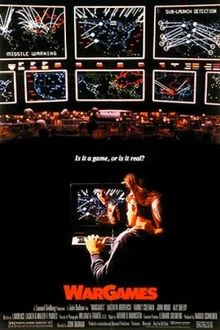
220px-Wargames.jpg

WarGames (1983)

Mac Boyle August 31, 2019

Director: John Badham

Cast: Matthew Broderick, Ally Sheedy, Dabney Coleman, John Wood

Have I Seen it Before: Many, many times. Long ago was the time that I dreamed of nothing more than a IMSAI computer rig the likes of which David Lightman (Broderick) wields in this film. One would think that I’d be happy with a far more powerful device that fits in my pocket, but I’m not.

Did I Like It: Without a doubt.

There’s always a hesitation with anything older than, say, five years. One wonders if it will not only age, but age poorly. One might have found Ace Ventura: Pet Detective (1994) pretty funny (although, one would have been ten-years-old at the time), but now it is one of the more pointedly transphobic films ever committed to screen. All of Woody Allen’s movies are out, even the ones he hasn’t made yet. The less said about American Beauty (1999), the better off we all are.

And then there are films that—while not mired in the backward thinking of their day—can not overcome the aesthetic trapping of their age. A film like Forbidden Planet (1956) might be trying to tell us a story of the far-flung 23rd century, but you need to take a look at only a few seconds of the film to guess when it was made and be accurate within a few years. Few films even try for an ageless quality about them, and even fewer succeed.

I’m happy to report that WarGames happily transcends the earlier issue. The characters feel real, even if the situations around them occasionally veer into the farfetched. There’s not an attitude on display that feels mired in the myopia of the age. It even manages to fly in the face of the Reagan-era Star Wars mentality, distrusting the computers that would eventually run every facet of our lives.

Now, as far as aesthetically transcending the time in which it is made, WarGames gleefully clings to the time in which it was made. How could it not? The computers—although capable of doing things just beyond their reach at the time—are filled with the kind of pre-Macintosh clunkiness. One imagines that after the events of this film, Lightman found the first Macintoshes to come off the assembly line to be glossy, annoying toys. I also like to think that he just kept upgrading his IMSAI and still uses it to this day, but then again, I’m a dreamer. If you were unaware of when this film was made before playing it, you’d be able to guess as to it’s origins within a few years margin of error, but that is why it has miraculously stood the test of time. Just try to affect a robotic voice and say “The only way to win is not to play.”

Most people are right on board with that idea. If they’re not, they should be.

Tags wargames (1983), john badham, matthew broderick, ally sheedy, john wood, dabney coleman
Comment
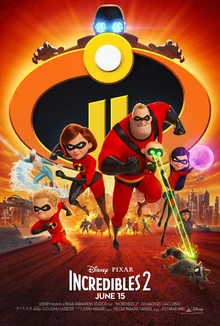
The_Incredibles_2.jpg

Incredibles 2 (2018)

Mac Boyle August 31, 2019

Director: Brad Bird

Cast: Craig T. Nelson, Holly Hunter, Sarah Vowell, Samuel L. Jackson

Have I Seen it Before: Nope. Not sure why I went a whole year missing the film, but it a year that also included Spider-Man: Into the Spider-Verse (2018), I can see how things might have gotten a little crowded.

Did I Like It: Sure. Here’s the thing, the film is absolutely well-made and Brad Bird continues to cement his reputation as a first among equals in the Pixar pantheon. The 60s-tinged timelessness has not lost an ounce of its luster from the original film, the voice acting is—as always—spectacular, and the story follows that sacred rule of sequeldom: don’t let up on the pace.

But as I’m watching it, I wonder if I am less enveloped by this film as I was the original—or Bird’s other Pixar entry Ratatouille (2007)—as I become consumed by such an obtuse line of thinking about what is being presented to me, that I may be forcing myself outside of the film for much of the runtime

So, what’s that obtuse thought? I’m so glad you asked.

The film is the most succinct repudiation of Ayn Randianism and Objectivism that we are likely to find. 

Let me finish.

In years past, there has been some thinking that Bird was at least marginally sympathetic to Rand’s views. He has dismissed the idea as lazy criticism, and while I agree, that non-denial doesn’t exactly negate the interpretation. Especially in the original The Incredibles (2004), Bird’s stories are peppered with characters who have exceptional talents, but are put upon by a society less special than them. If that’s not a template for a Randian hero, then I don’t know what is.

Here, though the Parr family is still yearning to live in a world that will let them be who they were born to be, but things are quite a bit different. It is only when the villain of the piece, the Screenslaver (Catherine Keener, although I suppose that is something of a spoiler) puts Mr. Incredible (Nelson, who with John Ratzenberger might be the only people in this process who would be sympathetic to Rand), Elastigirl (Hunter), and Frozone (Jackson) under mind control that they declare their exceptionalism has made the world treat them unfairly, and that their revenge will be the removal of that specialness.

Furthermore, once things are back the way they should be, Elastigirl—the true hero of the piece—saves the villain regardless of her contempt for Supers. This film makes the point that exceptionalism should be nurtured in people, but the exceptional should use their abilities in service of society, even when that society doesn’t appreciate them.

Something tells me Rand would probably have a problem with that last thought.

Tags incredibles 2 (2018), pixar films, brad bird, craig t nelson, holly hunter, sarah vowell, samuel l jackson
Comment
The_Incredibles.jpg

The Incredibles (2004)

Mac Boyle August 29, 2019

Director: Brad Bird

Cast: Craig T. Nelson, Holly Hunter, Jason Lee, Samuel L. Jackson

Have I Seen it Before: Oh, sure.

Did I Like It: What’s not to like?

Criticism of a Pixar film (certainly in the era pre-Cars (2006) feels like sort of a moot point. While the computer technology used to make their films were in their adolescence, if not infancy, the films were such undertaking that it was impossible not to churn out a finished product without having fully considered it from every angle. 

The writing is impeccable, because they took the time to iron out any difficulties they may have had in the early goings. 

The production design is flawless because they had to take the time to make every inch of their worlds from nothing. 

And every voice performance ad infinitum well in advance, so any false moment or out of context reaction could be ironed out before the movie hit cinemas.

So, what else is left to talk about in a film that so effectively zeroes in on exactly what it wants to be in every aspect of it’s being? The choices that got Pixar to this point.

I suppose I most marvel at the disparate choices made in this film specifically. In a dream team of filmmaking talent, Brad Bird was and is first among greats. A lesser filmmaker would have been content with the story he had concocted, but Bird makes the film an eclectic celebration of the Silver Age of comics he clearly loved the most. Not content to simply mimic the style, say, of the Adam West Batman TV series (which would have been a totally understandable and enjoyable choice in and of itself), Bird makes the world of his characters a celebration of the 60s (and leaning most heavily into the pre-Roger Moore James Bond pictures of the era), throws in just a bit of manic Andy Warhold energy, and at the same time makes the world feel as modern as it felt in the early 2000s, but timeless enough to feel fresh nearly fifteen years later.

The film is an aesthetic wonder living among a catalogue of aesthetic wonders. As I type this, I’m suddenly thinking that it might be Pixar’s greatest achievement stylistically to date. Other films like the Toy Story sequels or Inside Out may more effectively tap into the heart of the moviegoer, but every frame—every pixel—of this film is a symphony of deeply considered animated art.

Tags the incredibles (2004), brad bird, craig t nelson, holly hunter, jason lee, samuel l jackson
Comment

Star Trek IV: The Voyage Home (1986)

Mac Boyle August 21, 2019

Director: Leonard Nimoy

Cast: William Shatner, Leonard Nimoy, DeForrest Kelley, Catherine Hicks

Have I Seen it Before: Honestly? I really think this was the first piece of Star Trek I ever watched. For any number of years, my only copy of the film was on VHS recorded off the broadcast of the film on March 28th, 1993. I know this because the movie was interrupted every few minutes with an add for the 65th Academy Awards the next night. Not the best way to watch a movie repeatedly, but there it is.

Did I Like It: It’s an even numbered movie, right? It’s written—at least partially—by Nicholas Meyer, right?

As I mentioned before, this was—to my memory—the first piece of Star Trek I had ever taken in. As anyone who knows me can attest, that moment proved seminal to me, and as such it can’t be denied that The Voyage Home is perhaps the perfect gateway piece of Star Trek ever constructed. The Wrath of Khan (1982) may be the superior film, and some of the J.J. Abrams movies may possess a more self-assured modern blockbuster feel, but this is the one that is a straight ahead crowd-pleasing comedy.

And every inch of the film is devoted to that effect. Large portions of the screenplay were cannibalized from material that didn’t make it into Meyer’s fish-out-of-water Time After Time (1979). The score—by Leonard Rosenman—is a jaunty skip through San Francisco of the 1980s. It’s exactly the right score for this kind of movie, and I say this while maintaining that Rosenman’s score for Robocop 2 (1990) is perhaps the most incorrect score ever attached to a particular movie. Even the ingenue role played by Catherine Hicks was originally written for Eddie Murphy, although one imagines there was a fair amount of re-writing to make the transfer the roles between the two performers.

It’s also a comedy that likely wouldn’t work under any other circumstances. Nimoy and the writers had an intimate understanding of—if not Trek lore—the beating heart of what made Trek continue to work. The jokes spring out of the chemistry between the characters, and I challenge anyone to find another comedy film wherein the characters have twenty years of interplay to inform their reactions. I’ll wait here in the park for your answer. See? That hypothetical film just doesn’t exist.

Tags star trek iv the voyage home (1986), star trek film series, time travel movies, leonard nimoy, william shatner, deforrest kelley, catherine hicks
Comment

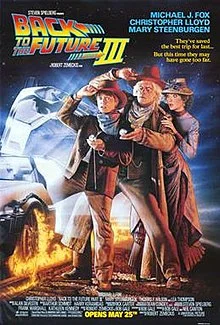
Back to the Future Part III (1990)

Mac Boyle August 20, 2019

Director: Robert Zemeckis

Cast: Michael J. Fox, Christopher Lloyd, Mary Steenburgen, Thomas F. Wilson

Have I Seen it Before: It is May, 1990. I am 5, going on 6. I don’t remember much about the world at that time, but I do remember having watched a VHS copy of Back to the Future Part II (1989) or about the 900th time, and being flooded with a cavalcade of TV spots for the forthcoming Part III. It was a wild time to be alive, having not seen all of the Back to the Future films. Today, I can’t quite wrap my head around it.

My dad comes home early from work. We pile into the car. I want to say I’m not aware of where we are going, but nearly 30 years since, my memory may not be ebbing, but it is smoothing out in the details. We go to the Annex 7.

We see Back to the Future Part III. 

I’ve thought about that particular screening at least once a month for the rest of my life. After the Annex 7 fell in favor of the Palace 12 (which in turn fell to the unrelenting force of indifference), I’ve wanted little more in life than to go back to the Annex 7 to watch anything. As it stands, I’ve got a real bad habit of leaving work early to go see movies, desperately trying to capture that feeling.

Flash forward a few months, and the film is released on video. It wasn’t quite priced to own yet, but rental places (they were kind of like Redboxes that you went inside; kids, ask your parents) would let you borrow it for a few days. To this day, one of the great creature comforts in life is some Chicken McNuggets and a viewing of this movie.

Set the time circuits ahead even a few more months. Now with a copy of Part III to call my very own—and perhaps single-handedly putting the brick and mortar movie rental business on the path to ruin—my aunt and uncle had come to visit. Looking at the small army of video tapes sitting on a shelf, they asked if they could borrow my copy of Part III, as they hadn’t seen it yet. The thought that I could share my excitement about movies with people was a revelation, and yet another high that I keep trying to chase as I type these words.

One final stop before we destroy this infernal contraption: Over a decade later, when I tried to made my first foray into forging a film of my own, I could think of no other piece of music to evoke the feeling of ending a long journey that you wouldn’t have given up for all the world. Thus, as we say goodbye to Really Good Man in The Adventures of Really Good Man (2002), the main theme of this film plays softly in the background.

There are few movies that are more central to my feelings about the movies than this particular film.

So, yes, to answer your question, I’ve seen Back to the Future Part III.

Did I Like It: In my review of Part II, I did indicate that as the years have gone by, my feelings about the sequels to Back to the Future (1985) have ebbed. The first film is about as perfect a story as exists in film, whereas the sequels are more consumed with self-consciously re-creating beats from the original film. Here that package is a little more satisfying, as it feels like the characters—mainly Marty (Fox)—attempt and are largely successful in breaking out of old patterns. The common complaint against Part II—that it isn’t a complete story—is quickly rectified here.

It’s also a brilliant way to make a western at a time in Hollywood when even Clint Eastwood (the biggest yellow-belly in the west) was not making cowboy pictures. Evoking the best of John Ford, the joy the filmmakers had in making something a little bit different pops out of every moment that takes place in the 19th century. Some might say that putting cowboys in the final installment of a teenage time travel comedy was a choice too far out of left field. I guarantee you, each and every person who says

And yet, I do have some qualms. The entire film is predicated on the established fact that Doc Brown (Lloyd) can’t repair the Time Machine in 1885 due to unsuitable replacement parts. What does Doc do the moment that Marty goes back to the future? Builds a Time Machine out of a train car. That doesn’t even begin to deal with why the Time Machine needed to be pushed up to 88 miles per hour, when it Part II it is clearly shown that while the flux capacitor activates at that speed, and yet can be overridden if enough electricity is sent through the Delorean’s mechanisms. I’ll admit that this may not be the most useful place for that discussion, and at least should have been a part of my review for Part II.

More likely, I’ve seen these films so many times that I’ve analyzed every moment of them beyond what one might consider rational.

And despite these logical inconsistencies, I love the film. Now, my prolonged answer to the question “had I ever seen it” might have something to do with that. And still, any time someone has an unkind word about the film, I get a brief flash of irrational irritation. Maybe I can’t be objective about it. Maybe I don’t want to be.
Tags back to the future part iii (1990), back to the future movies, time travel movies, robert zemeckis, michael j fox, christopher lloyd, mary steenburgen, thomas f wilson
Comment
220px-Back_to_the_Future_Part_II.jpg

Back to the Future Part II (1989)

Mac Boyle August 20, 2019

Director: Robert Zemeckis

Cast: Michael J. Fox, Christopher Lloyd, Lea Thompson, Elizabeth Shue

Have I Seen it Before: It was probably on constant repeat in my house throughout the 90s. I would try to venture a guess as to how many times I’ve seen it, but I’d need a team of MIT mathematicians to crack the final number.

Did I Like It: That’s the real question, isn’t it?

Almost immediately upon release, the film was dismissed as somewhat incomplete. Even director Zemeckis eventually claimed that in the mad marathon to make this film and Back to the Future Part III (1990) in quick succession, Part II got the short shrift. 

After the final film in the series (hear me, Universal? Final.) was released, Part II got a slight re-evaluation, and was damned with a healthy dollop of faint praise. No longer an incomplete story, it was viewed as Act II of a larger story.

And that’s where we are now. I’ve been on the record in years past saying that the Back to the Future trilogy is the greatest six-hour movie that could theoretically exist. After repeat (and I do mean repeat watchings), I’ve changed my mind a little bit. While the original Back to the Future is one of the more tightly constructed stories ever committed to film, the fat on the sequels begin to show.

Whereas the first film is a masters class in set up and payoff, culminating in real change for the characters, the sequels are too often committed to the notion of repeating gags from the previous film, and having Marty (Fox) consistently run afoul of his own irrational hate for being called a chicken. 

Now, don’t get me wrong, those elements do work to some degree. The repeating elements—if viewed through any other prism than it reeks of studio notes to have the movies superficially resemble the original—could be looked at as a motif of the characters struggling to learn from their own past, and thus doomed to repeat it, regardless of their ability to travel amidst the fourth dimension. Someone could write a pretty in-depth analysis of this reading of the sequel from a Buddhist perspective, but please, don’t let it be me. And those motifs are only dropped when Marty—a character who diligently avoids anything resembling an arc throughout the whole trilogy—finally lets go of his ego.

It’s just not as tight as the first film, but then again few sequels are. But, to judge the series—and by extension, this film—against the other big trilogies (Star Wars, Indiana Jones, heck, even Star Trek’s II-IV), Part II delivers on the promise to be the darker entry. It becomes clear that any progress the characters made in the original film is tenuous, and could be torn asunder by their own complacency and a few well-timed bullets.

Also, there’s an entire plot wherein a hapless, mean-spirited oaf falls ass-backwards into becoming a casino and real estate tycoon (and by extension, one of the most powerful men in America), so you can’t get much darker than that.

But, I think the bigger test of the middle-entry of a trilogy is whether or not it is the breakneck adventure of the trilogy. The Empire Strikes Back (1980), Indiana Jones and the Temple of Doom (1984) and Star Trek III: The Search for Spock (1984) begin their stories and do not let up until the closing credits and the faint hope of a part three rings through our imaginations, all the while bringing their characters so close to the breaking point, that the catharsis of a conclusion is all that remains. On that front, Back to the Future Part II more than delivers. While one may want more of a complete story out of the proceedings, you can’t argue with the adventure of the pacing on this one.

Tags back to the future part ii (1989), back to the future movies, time travel movies, robert zemeckis, michael j fox, christopher lloyd, lea thompson, elizabeth shue
Comment

Back to the Future (1985)

Mac Boyle August 19, 2019

Director: Robert Zemeckis

Cast: Michael J. Fox, Christopher Lloyd, Lea Thompson, Crispin Glover

Have I Seen it Before: My parents like to tell a story about me—a little more than a week before my first birthday—enraptured by the movie as it played at the Admiral Twin Drive-in. That night I may have fallen asleep before the movie was over, but I assure you that I’ve more than made up for it since then.

Did I Like It: Can a movie live in your soul? Can a single film dictate a vast majority of one person’s aesthetic to the point where one becomes ever so slightly concerned that the only cogent thoughts he has ever had 

Can a film be perfect?

Yes, yes it can. The film doesn’t waste a single moment in its story-telling. Every moment builds on the developments that precede it. The time travel logic is unassailable, and that’s not something I can say for many time travel movies, including some of the sequels that follow this movie.

Look, if you came here looking for some kind of sober, level-headed admission of flaw in the film, then there’s the door.

But I could spend some time talking about some of the great parts of the film that don’t get enough credit. Lea Thompson might appear to be relegated to a basic ingénue role, but in reality she is the film’s secret weapon. I challenge you to name an actress who could on a dime turn from defeated, alcoholic housewife, to randy teenager, and still somehow stay maternal the whole time. You might come up with a Meryl Streep out there in the world who could make those changes with the same skill, but I guarantee there has never been and never will be a performer who could take all of those qualities, play a number of scenes where she unknowingly lusts after her son, and not make the film a pitch-black dark comedy in the process. Hell, she made large swaths of Howard the Duck (1986) watchable. That she is not one of the most heralded screen presences of all time is beyond me. Maybe she had enough sense to not want that kind of scrutiny. Maybe Lea Thompson is just too good for the movies.

But even all that seems superfluous when we’re talking about a prime candidate for my personal canon of greatest films of all time. If you haven’t seen it, I don’t understand what you have been doing with your time. If you have seen it and aren’t as enamored of it as the preceding words would insist, I don’t know what to do with you. You should go rewatch it and do it correctly this time. If you are as in love with this movie as I am, you should still rewatch it. There are few things in life which are more enjoyable.

Tags back to the future (1985), time travel movies, back to the future movies, robert zemeckis, michael j fox, christopher lloyd, lea thompson, crispin glover
Comment
  • A Blog About Watching Movies (AKA a Blog in Search of a Better Title)
  • Older
  • Newer

Powered by Squarespace

Party Now, Apocalypse Later Industries

Where creativity went when it said it was going out for cigarettes.

Where creativity went when it said it was going out for cigarettes.