
Party Now, Apocalypse Later Industries

Where creativity went when it said it was going out for cigarettes.
  • Home
  • BOOKS
    • THE ONCE AND FUTURE ORSON WELLES
    • IF ANY OF THESE STORIES GOES OVER 1000 WORDS...
    • ORSON WELLES OF MARS
    • THE DEVIL LIVES IN BEVERLY HILLS
    • A LOSS FOR NORMALCY
    • RIGHT - A NOVEL OF POLITICS
  • PODCASTS
    • Beyond the Cabin in the Woods
    • THE HOLODECK IS BROKEN
    • THE FOURTH WALL
    • As The Myth Turns
    • FRIENDIBALS! - TWO FRIENDS TALKING ABOUT HANNIBAL LECTER
    • DISORGANIZED! A Criminal Minds Podcast
  • MOVIE REVIEWS
  • BLOGS AND MORE
    • Bloggy B Bloggington III, DDS
    • THE HOLODECK IS BROKEN BLOG
    • REALLY GOOD MAN!
  • Home
    • THE ONCE AND FUTURE ORSON WELLES
    • IF ANY OF THESE STORIES GOES OVER 1000 WORDS...
    • ORSON WELLES OF MARS
    • THE DEVIL LIVES IN BEVERLY HILLS
    • A LOSS FOR NORMALCY
    • RIGHT - A NOVEL OF POLITICS
    • Beyond the Cabin in the Woods
    • THE HOLODECK IS BROKEN
    • THE FOURTH WALL
    • As The Myth Turns
    • FRIENDIBALS! - TWO FRIENDS TALKING ABOUT HANNIBAL LECTER
    • DISORGANIZED! A Criminal Minds Podcast
  • MOVIE REVIEWS
    • Bloggy B Bloggington III, DDS
    • THE HOLODECK IS BROKEN BLOG
    • REALLY GOOD MAN!

A Blog About Watching Movies (AKA a Blog in Search of a Better Title)

220px-Star_Trek_V_The_Final_Frontier.png

Star Trek V - The Final Frontier (1989)

Mac Boyle August 16, 2019

Director: William Shatner

Cast: William Shatner, Leonard Nimoy, DeForrest Kelley, Laurence Luckinbill

Have I Seen it Before: Sybok, please…

Did I Like It: This is the deep dark question that ever Star Trek fan must reckon with. Many don’t reckon with it at all and are content to write it off as forever the worst film in the entire series. These people clearly have never seen Star Trek Nemesis (2002). Clearly.

That being said, one cannot deny that the film is riddled with problems. Do they stem from a studio unwilling to let the vision for the film come to life or other production limitations that no filmmaker could have overcome? Or is the film weighed down by a director who just didn’t understand the material (despite being an integral part of that material for over twenty years)?

As with so many things, there appears to be an either/or choice in this case. Shatner, in his first and only attempt to direct a major motion picture, had lofty ideas that Paramount grew increasingly disinterested in as production marched along. A Writer’s Guild strike in 1988 didn’t help matters, either. And yet, I always got the impression that Shatner was never terribly interested in making a Star Trek film, but aptly understood that after Nimoy parlayed work on Star Trek III: The Search for Spock (1984) and Star Trek IV: The Voyage Home (1986) into a solid directing career, this was his chance to branch out.

The film suffers from all of these problems, and there are elements that never quite gel.

It’s starts with… an obliterated desert pockmarked with steaming holes? And that’s supposed to be the extended Lawrence of Arabia (1962). That Shatner wanted to make the Lawrence of Star Trek films that deep-dives into the big questions of the universe is admirable, but it’s hard to blame Paramount for wanting another Voyage Home or Star Trek II: The Wrath of Khan (1982), and trying to gently redirect things. It’s also worth noting that the search for God was the basic framework for an early version of what became Star Trek: The Motion Picture (1979), and everyone involved blanched at the notion then, but cooler heads did not prevail here.

The power Sybok holds over his people and eventually the Enterprise crew is amorphous and ill-defined, not unlike the Temporal Nexus in Star Trek Generations (1994). It’s a common trait of the least engaging films in the series that the fundamental problem is that the plot just doesn’t work.

There are things that irritate the deep-canon Star Trek fan, but others might not notice. Quadrants are huge. It takes decades to traverse them, but this crew makes it to the center of the galaxy in (suddenly, inexplicably) in less than reel of film. Large swaths of the crew turn on Captian Kirk on a dime. Also, not for nothing, everything about that scene in the turbolift shaft doesn’t make sense. There’s no way the USS Enterprise, NCC-1701-A has that many decks, and they increase in number as you go down, not up.

Sigh.

Now that I’ve beaten up on the film in most of the familiar ways, and a few I hope aren’t as obvious, let’s go way off the path of accepted Trek dogma (and become the laughing Vulcan inside each of us?) and praise the movie for what it gets right.

If—at it’s core—the original series is truly about the friendship between Kirk, Spock, and McCoy, then this film does a profound job of having those three characters live within that friendship. 

The score is fantastic. Jerry Goldsmith returns to the series for the first time since The Motion Picture. His rousing score is often the best part of any of the films/shows he’s associated with, and the fact that Paramount spared no expense here definitely elevates the more groan-worthy moments. One wonders if the film works even less without the music, and the studio relented to the idea of a more majestic score to try to rescue things.

That’s… it on the good stuff, as it turns out. So, the film doesn’t really work, as it turns out. But it is two hours with some version of the original Star Trek cast. We don’t get those every couple of years, so let’s ease up on the movie, shall we? Again, I guarantee it’s better than Nemesis.

Tags star trek v: the final frontier (1989), star trek movies, william shatner, leonard nimoy, deforrest kelley, laurence luckinbill
Comment
220px-The_Stranger_(film).jpg

The Stranger (1946)

Mac Boyle August 11, 2019

Director: Orson Welles

Cast: Edward G. Robinson, Loretta Young, Orson Welles, Philip Merivale

Have I Seen it Before: The answer to that question may be longer than the review itself.

I bought a copy of this film on DVD many years ago. Life happened, I bought other DVDs, and somehow I never got around to watching it. At some point, it became a weird totem in my life. On the verge of some great life change, I would finally break down and watch it. Cut to four years later, an old life is falling apart around me and I’m on the eve of starting a job that may well end up filling the rest of my life.

Now, this next part—an ironies of all ironies—is going to sound like diversion, but it’s all part of the story: this is the only film Welles directed that was bonafide box office hit upon its release. Despite that financial success, it’s also the only Welles film that not only slipped into the public domain, but so lapsed while Welles was still alive.

Since The Stranger is in public domain, the DVD copy turned out to be absolute garbage. It’s a copy of a copy of a copy of a VHS version that was pulled from a 16mm print that had probably seen better days in the 90s when it was originally created. Flummoxed beyond all reason that I had waited so long to watch what turned out to be a trash release from a fly-by-night DVD label, I threw the disc in the trash*.

Actually, I threw it out a window in a fit. Not wanting to litter, I went out and retrieved it from the yard before eventually throwing it in the trash.

This is all to say that I’ve only seen about ten minutes of the movie in the past.

But enough about my struggles to find a decent copy of the film or Welles’ historical struggles in the movie business, a topic I could—and have and will—go on about at length. Let’s talk about the movie.

Did I Like It: Now, I can say that—despite the shoddy quality of the presentation*—the film is one hell of a firecracker. 

The notion that a prominent Nazi war criminal might now seem like a historical oddity (or at least it did until the last few years, but I digress), but in 1946 when this film was released, it’s easy to imagine people emerging from a theater not 100% sure their neighbors or even their spouses might be refugees of the third reich.

Which, I suppose would account for much of the paranoia that permeated America over the next several decades. 

But seriously, though, that moment where Kindler/Rankin idly draws a swastika on a telephone pad is one of the more deliciously subtle displays of archvillainy in the movies. By the time he’s casually telling his new bride that he intends to kill her, it’s lethal believability is unassailable.

This film, along with Touch of Evil (1958) and The Lady of Shanghai (1947) cement Welles’ credentials as a thriller filmmaker among the ranks of Hitchcock. It’s more of a tragedy that the Hollywood system was so intent on limiting the man, he might have made more films in this vein and had a truly unrivaled catalogue of work as his legacy.


*And it is truly odious. The film ends and a laughable commercial for the fly-by-night DVD imprinter is immediately run, along with credits for that commercial. There’s even a little watermark that occasionally appears throughout the film, which makes me feel like I discovered the movie on late-night cable. All right, I suppose that quality has something resembling charm.

Tags the stranger (1946), orson welles, edward g robinson, loretta young, phillip merivale
Comment
MI_–_Fallout.jpg

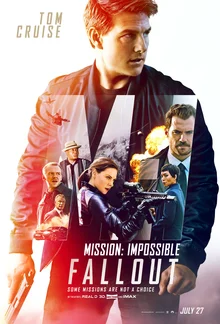
Mission: Impossible -- Fallout (2018)

Mac Boyle August 11, 2019

Director: Christopher McQuarrie

Cast: Tom Cruise, Henry Cavill*, Ving Rhames, Rebecca Ferguson

Have I Seen it Before: Certainly.

Did I Like It: I was a little down on Mission: Impossible - Rogue Nation (2015) as by that fifth entry in the series, the sameness that plagued the television series was starting to just bubble to the surface. The prospect of the series now settling into a regular cast and a regular director only increased the fear that said sameness would be the order of the day for the foreseeable future.

I’m happy to report that it appears McQuarrie may be just getting warmed up, but at the moment, he is content to make subtle changes to the tried and true format. Giving Hunt and company recurring heavy (Sean Harris) at first blush feels like more descending into monotony, but for this series it is a breath of fresh air. 

Up until this point, Hunt has been presented as an unassailable movie spy. Here, it’s sort of delightful, a measure more realistic, and includes an added dimension of suspense into the final set piece that it appears Hunt has no clue how to fly a helicopter, but must do so anyway. One might spend some spell of time after seeing the film wondering how Hunt could have been in the line of work that he was for as long as he had and not get more expert in the operation of various types of vehicles, but that time would be ill spent, and I don’t recommend it.

Even if the promise of these new elements reverts back to the mean while McQuarrie is at the helm, the hand at the wheel is steady enough that I will still enjoy entries in this series, even if they don’t continue to try and surprise.


*Will it ever be possible to look at Cavill’s mustache in this film and not revel in the reality that it is pointedly one thing that made Justice League (2017) a bizarre, unlovable Frankenstein’s Monster of a film? I think not.

Tags mission: impossible - fallout (2018), mission: impossible movies, christopher mcquarrie, tom cruise, henry cavill, ving rhames, rebecca ferguson
Comment
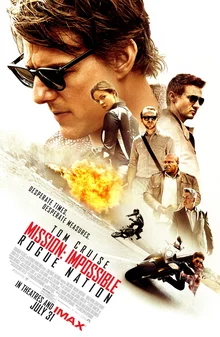
Mission_Impossible_Rogue_Nation_poster.jpg

Mission: Impossible -- Rogue Nation (2015)

Mac Boyle August 11, 2019

Director: Christopher McQuarrie

Cast: Tom Cruise, Jeremy Renner, Simon Pegg, Rebecca Ferguson

Have I Seen it Before: Oddly enough, I think this is one film in the series that I somehow missed in the theater, thus I’m remembering it the least upon this screening.

Did I Like It: Yeah…

On that note, I’ve come to some conclusions about the Mission: Impossible series as a whole. Like the television series that begat it, the movies suffer ever so slightly when watched in succession. The format is relatively unchanging, especially after the series fell under the auspices of J.J. Abrams and his company, Bad Robot effective with Mission: Impossible III (2006). There is little variation in these films. Sure, the ubiquitous “your mission, should you choose to accept it” scene in this film harkens back to its televised analog roots, before pulling the rug out from under us and enveloping super spy Ethan Hunt (Cruise) into a web of villainy before the first reel is over. That’s refreshing and does its level headed best to renew interest in this new story.

From there, however, that twist doesn’t hold up. It gives way to yet another survey of internal difficulties in the CIA that Hunt will nullify with his brazenness. What’s more, the proceedings have continued to grow a little pat in other ways. There are masks. Tom Cruise dangles from improbable heights. Ving Rhames shows up. There’s a throwaway reference to the first film that floats in the air for an instant before evaporating just as quickly as it arrived. Incidentally, those scant references are usually my favorite part of one of these movies, Cruise conscientiously defying the forces of gravity be damned.

All of that isn’t even meant as a criticism of this film or the series as a whole, really. This film, too, is a pleasant way to spend two hours. It may be better to do so every couple of years and then not think too much about it afterwards.

At the time of this writing, McQuarrie is hard at work on the seventh and eighth film in the series, his third and fourth. This series once was a showcase for great (or in some cases, potentially great) directors to play around in a tried and true genre. Now that McQuarrie is here to stay, let’s hope he gets bored and decides to throw us a few more curveballs in the process.

Tags mission: impossible - rogue nation (2015), christopher mcquarrie, tom cruise, jeremy renner, simon pegg, rebecca ferguson, mission: impossible movies
Comment
MV5BNjgyNDU5MTQ4OV5BMl5BanBnXkFtZTgwODI3MzY3MjE@._V1_UX182_CR0,0,182,268_AL_.jpg

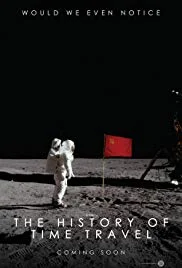
The History of Time Travel (2014)

Mac Boyle August 5, 2019

Director: Ricky Kennedy

Cast: Ben Everett, Daniel W. May, Elizabeth Lestina, Garland Buffalo

Have I Seen it Before: I’m surprised I didn’t write it myself.

Did I Like It: I should have loved it.

And yet…

Artificially aging digital footage shot less than five years ago doesn’t make it look like archival footage. It doesn’t make it look like anything more than an attempt at filmmaking via a snapchat aesthetic. The faking of newspapers fares even worse. The less said about expert talking heads who are clearly actors reciting lines, the better. It fundamentally sours any attempt at verisimilitude, and the entire conceit behind a mockumentary is to manufacture verisimilitude. 

And yet…

This movie is constructed exactly as it should be. As I was watching, I was concerned that this would just be a little alternate history ditty, like C.S.A.: The Confederate State of America (2004)  with a flux capacitor. I was prepared to be disappointed.

And then things begin to change within the movie. Time itself changes as the movie unfurls.

As it begins, it’s almost so subtle you’re not sure it’s even happening. The story of the invention of the time machine becomes more and more tragic the more it is changed. The countries on a globe behind one of the experts become increasingly red. Museum pieces change, especially newspapers begin to change. Nixon wins in 1960, but doesn’t live throughout his term. 

By the time we see a picture of Hillary Clinton on the wall of a general’s office (which only a few minutes ago had Barack Obama), it’s too late. We’re already within this web of time changing shenanigans.

And then things stop changing. And then they change back to the way we remember things to have unfolded. I’m left wanting. It could have been far more engaging if things only continued to unravel, or at least unravelled in far more mind-bending ways before the toothpaste is put back in the tube and pandora’s box is once again close.

So, do I like this movie? Well, I’m sure there are timelines in which I can fully recommend it, and yet again other timelines where I hate it. The timeline we are stuck in is somewhere between a delight and limp cinematic soufflé, and so is this movie.

Tags the history of time travel (2014), ricky kennedy, ben everett, daniel w may, elizabeth lestina, garland buffalo
Comment
MV5BMjEwNzExNzU2Ml5BMl5BanBnXkFtZTgwMjIyNDI0NjM@._V1_UX182_CR0,0,182,268_AL_.jpg

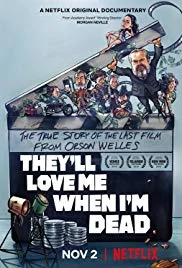
They'll Love Me When I'm Dead (2018)

Mac Boyle August 5, 2019

Director: Morgan Neville

Cast: Peter Bogdanovich, Oja Kodar, Orson Welles, Steve Ecclesine

Have I Seen it Before: Pieces of F for Fake (1973), The Other Side of the Wind (2018), and The Battle Over Citizen Kane (1996) abound, so ultimately, if you’ve seen one (or in this case, three) documentary about or inspired by Orson Welles, then you’ve probably seen them all.

Did I Like It: I’m on the record not thinking much of The Other Side of the Wind. I’m prepared to write most of it off to the film being just too experimental for its own good, and even more prepared to write off the parts of the film that don’t work to the fact that the finished product is only partially Orson’s. It also doesn’t help that a the cavalcade of egos haunted the film long after Welles’ “death*” and the byzantine path the film took to release may have diminished any true auteur quality the picture might have hoped for in a world when it was released in Welles’ lifetime.

And so I come to this film with a lot more interest than I did in that which inspired it. There’s much more drama in the failing of the film than in the film itself. Fusing Fake and Wind, this film comes together much more coherently than either. As a byproduct, It becomes it slightly less magical than Fake, but a little easier to swallow than Wind.

What’s more? It makes me want to watch Wind again. If this is truly the way to understand Welles in his own voice, then it might be necessary. Maybe that makes this movie nothing more than an extended trailer for Wind, but if that is the beginning and end of its ambition, then it more than ably attained its goals. 


*What one of my books presupposes is… Maybe he didn’t? #stayonbrand

Tags they'll love me when i'm dead (2018), morgan neville, peter bogdanovich, oja kodar, orson welles, steve ecclesine
1 Comment
Mission_impossible_ghost_protocol.jpg

Mission: Impossible - Ghost Protocol (2011)

Mac Boyle August 4, 2019

Director: Brad Bird

Cast: Tom Cruise, Jeremy Renner, Simon Pegg, Paula Patton

Have I Seen it Before: As my reviews for the other movies in this series have already mentioned, I’m a sucker for Tom Cruise dangling improbably from things. As he ages, he hasn’t slowed down. It may be the single greatest argument for Scientology (or, at least, the elite levels of Scientology) that is out there. One can not argue with results. But, to answer the question, I’ll probably be there opening weekend until Cruise is well into his 70s, or if he becomes completely Clear, whichever happens first.

At it’s most basic, good storytelling is a study in obstacle. Get somebody stuck up in a tree, and show how they get down, and that’s about as tight of a story as one can tell. With that in mind, there may be no better graduate level course in this theory than the Dubai sequence of this film. A typical Mission story would have the IMF under the leadership of Ethan Hunt (Cruise) fooling the assassins and the arms dealers. 

Passing through the prism of Brad Bird’s brain, complications pile onto complications to the point where Hunt is climbing the tallest building ever conceived of by man one handed, while a sand storm looms in the distance, and everything else in the scheme is going completely wrong as well.

Here, we have a filmmaker so thoroughly in command of his craft allowed to work magic in a major motion picture franchise. Brad Bird is a better, more pure filmmaker than J.J. Abrams, and possible even De Palma. Whereas Bird’s worst film,

While the rest of the film might be standard action fare, every shot in that hotel is so thrilling, that the memory of a TV show that was once about occasional freelance spies running operations that were essentially heists disappears. Mission: Impossible has now delivered on the ambition that the series has reached for since the original film. We have an American James Bond, and that American 007’s films are on average far better on average than the output of the thing they were trying to mimic. Maybe that quality will ebb, but if it takes twenty or thirty films, that’s going to be plenty of fun in the meantime.

Tags mission: impossible - ghost protocol (2011), mission: impossible movies, brad bird, tom cruise, jeremy renner, simon pegg, paula patton
Comment
220px-Film_Poster_for_The_Other_Side_of_the_Wind.jpg

The Other Side of the Wind (2018)

Mac Boyle August 4, 2019

Director: Orson Welles

Cast: John Huston, Oja Kodar, Peter Bogdanovich, Susan Strasberg

Have I Seen it Before: Never. Even better still, I’ve devoted more than a little of my life’s work to the notion that I would never see it, and that the film might not actually exist.

Did I Like It: There’s plenty to like. There’s plenty that befuddles. There’s plenty that disappoints.

In short, it is an Orson Welles film.

After Citizen Kane (1941), Welles never got full dominion over a film project. Towards the end of his career, he was cobbling together film projects from whatever favors and hustle he had left. Like the last film released in his lifetime, F for Fake (1973), this posthumous release feels profoundly stitched together like the cinematic equivalent of a frayed, but lovingly stitched together quilt.

In Fake, the discordant quality gave the film a quality of having a protracted conversation with Welles, bobbing along with the history and passions that might flit through his mind at any given moment. Here, whether because the end result is at best an indirect product from Welles, or because the limited format just doesn’t serve a fictional narrative, the results are more muddled.

Welles was smart enough to know the limitations of his resources, and manages to create the context of a film that could have this disjointed structure, a fly-on-the-wall mockumentary shot mostly by eager film students (one imagines you couldn’t swing your arms in early 70s LA and find such a group of cinephiles) about a legendary film director (Huston) at the height of his legend, but the end of his career. So, even when the film isn’t particularly interested in making sense, it at least has some kind of logical consistency.

The figure of Jake Hannaford is certainly the most interesting, but illusive figure in the film. Is he a shade of Huston, the actor portraying him? He has the gate, tone, mannerisms, and some of the background, sure, but that seems to pat of an answer, and Huston doesn’t seem like the kind of man who would have enough sense of humor about himself to appear in something akin to a farce wherein he is largely the butt of the joke.

Is he the figure the film would present to us? A musing as to what Hemingway would have been like had he gone into stagecraft and bull fighting instead of writing and bull fighting? There are certainly enough trappings that one would be forgiven for thinking so.

Is Hannaford Welles himself? Almost certainly, and there is just enough of the other two possibilities to disingenuously—and probably unsuccessfully—put people off the scent. Most of Welles’ protagonists, from Kane through the corrupt cop Quinlan of Touch of Evil (1958) were a bit Welles. Any other argument doesn’t hold a whole lot of water.

What also doesn’t hold a lot of water is Hannaford’s film-within-the-film. It’s clear he’s trying to ape the style of European art films that surrounded his exile, but in the attempt to satirize there’s not much to it, where those other films at least have a reason to exist. It’s clear that—between this and Fake—that he is enamored of his mistress, Kodar, but here presence always feels more boring than it should be, which is impressive considering her role is essentially pornographic. He also hinges a significant performance out of an actress who isn’t really an actress (Cathy Lucas), merely in an attempt to take a shot at longtime frenemy Peter Bogdanovich and his relationship with Cybill Shepherd. I’ll allow for the possibility that I may not get the joke, but especially where Kodar is concerned it feels like a betrayal of his previous aesthetic insistence that sex could only exacerbate the fakeness of a narrative film. That may be the problem: the whole film is too misogynistic and lionizing of that misogyny—when it isn’t barely holding together as an actually movie—to fully recommend. 

Tags the other side of the wind (2018), orson welles, john huston, oja kodar, peter bogdanovich, susan strasberg
Comment
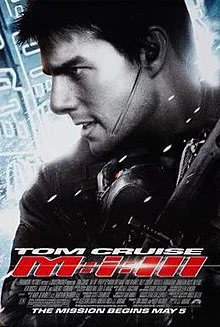
220px-Mission_Impossible_III.jpg

Mission: Impossible III (2006)

Mac Boyle August 3, 2019

Director: J.J. Abrams

Cast: Tom Cruise, Philip Seymour Hoffman, Ving Rhames, Michelle Monaghan

Have I Seen it Before: Sure. Look, some people are down on Cruise as a person, but for the most part he isn’t interested in making a bad movie, so I’m there when that improbably ageless face is plastered on a movie poster.

Did I Like It: Yes, but at the same time…

I remember thinking after I initially saw this movie in the theater that this is a movie series that has found its perfect calibration. Some have said that the plot of the first Mission: Impossible (1996) was too byzantine (it isn’t, but it may take a viewing or two to fully enjoy), and that Mission: Impossible II (2000) was as insubstantial and dumb as a movie as is likely to ever be made (it is), whereas this one blends the stunt show qualities of the latter with the actual spy fun of the former.

That’s true, but it all feels less somehow after it’s had a decade to simmer in my head. Abrams makes his directorial debut here. There is nary a lens flare to be found, which undercuts a lot of dunderheaded criticism of his cinematic output, even if the lens flares have never bothered me as much as others. He has brought his TV skills to bear here, offering the closest thing to an Alias: The Motion Picture as we are likely to get.

I just wished I liked Alias more. It’s a fine show, but it never lit my imagination on fire, and so it is also with this film. The stunts are here. The intrigue is here. I just wish that the ambition to bring some of the better qualities of the television series to the big screen had stayed. I wish the films were closer to a heist movie, and less an attempt to give the world an American James Bond. I also wish that the IMF team was less an elite team of CIA employees and more of the disparate team of skilled civilian contractors that Phelps and team were. The previous films don’t aim for this, but it struck me more here. What we have here is certainly better than the nadir of the second film, but there is still a lot of material left to be mined. Unfortunately, the success of the this entry and subsequent attempts in a similar mold indicate that that is probably not going to happen any time soon.

Tags mission: impossible iii (2006), mission: impossible movies, jj abrams, tom cruise, ving rhames, philip seymour hoffman, michelle monaghan
Comment
220px-MissionImpossiblePoster.jpg

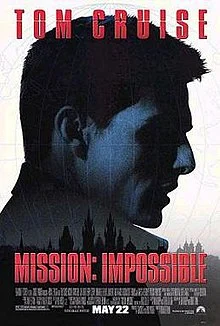
Mission: Impossible (1996)

Mac Boyle August 3, 2019

Director: Brian de Palma

Cast: Tom Cruise, Ving Rhames, Jon Voight, Emmanuelle Béart

Have I Seen it Before: The time is May, 1996. Having just escaped the gulag of the 5th grade, I am now facing the indignity of watching the movie from the backseat of my mom’s Volvo, my head contorted to try to piece together what was happening, and only intermittently succeeding. My neck hurts just thinking about the first time I saw the movie. Whatever anyone says, kids, drive-ins are meant to be enjoyed from the front seat.

Did I Like It: I think most of America didn’t need my mother’s sensible station wagon to be left somewhat befuddled by the plot. Modern audience, too, might be lost in the peak-90s tech that moves the plot along. It is truly amazing that a film exists where equal wait and suspense is given to an exploding helicopter as it is to a deep dive into usenet groups.

But for my money, while the series found an interesting groove thanks to later entries (the less said about the flimsy and tonally strange M:I-2 (2000), the better), this first film ages the best. It just needs a few viewings to keep straight the various chess moves that force the aforementioned helicopter into a TGV tunnel.

The original TV show—before Mission: Impossible became synonymous with Tom Cruise improbably hanging from things—was always a cat and mouse game. The show wasn’t always great, as is evidenced by the few times I’ve attempted to binge-watch episodes of the 1966-1973 series—but the true genius behind the film is where the audience is part of the cat and mouse game. Indeed, de Palma may have been the only director who could have pulled off this quality. We’re not sure—aside from Cruise—who we can trust. More often than not, our assumptions are not rewarded. Emilio Estevez is in the picture! He’s a movie star, maybe not on the caliber of Cruise, but he’s a delight in those hockey movies with the ducks in them, surely, he’s going to stick around. Nope. He doesn’t even get the Goose treatment of dying as the set-up to the third act. 

The team is on a mission that goes disastrously in that first reel, but ah ha! The film’s first surprise? The heroes of the piece are the target of an entirely different IMF team. This back and forth goes pretty much up until the last act, when just as it feels as if the bad guys are getting away with the whole thing, Ethan Hunt (Cruise) pulls off one more mask and the plot, mostly comes together. For the most part, is a remarkably thoughtful deconstruction of the source material, especially for a movie that based on a TV show that was content to repeat plots whole-cloth and hope no one would notice.

But that does lead to one interesting question: why does the film work better on repeat viewings? I think the answer may lie in a false attempt at suspense in the the third act. After Hunt and Phelps (Voight) are reunited, it’s absolutely clear that Phelps has been the traitor all along. De Palma takes us through Hunt’s piecing together what happened. And yet, the final scenes on the train try their damndest to obscure the identity of Job. Given that Hunt’s one strategic flaw is not wanting to believe until the last moment that Claire (Béart) has also been playing both sides, had that sequence leaned more into that question, or if the mystery of Job’s identity had been kept obscured until the last possible moment, maybe people wouldn’t have felt so discombobulated by the film on first blush.

Or maybe I just have some issues with my Mom’s late, sainted Volvo that I’m still working through…

Tags mission: impossible (1996), mission: impossible movies, Brian De Palma, tom cruise, jon voight, ving rhames, emmanuelle beart
Comment
220px-Once_Upon_a_Time_in_Hollywood_poster.png

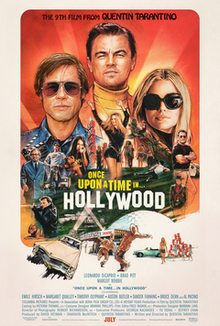
Once Upon a Time in... Hollywood (2019)

Mac Boyle July 29, 2019

Naturally, spoilers for a recent release follow. Read at your own discretion.

Director: Quentin Tarantino

Cast: Leonardo DiCaprio, Brad Pitt, Margot Robbie, Kurt Russell*

Have I Seen it Before: No. New release, and Tarantino always keeps things fresh within certain parameters, although I’m absolutely certain I’ve seen shots of feet like that before. Damn, does that man love feet. If he does end up making a Star Trek film—as looks to be a strong possibility as his tenth and allegedly final film—be prepared to see some Starfleet officers out of their boots.

Did I Like It: I’m still processing a lot of it, but yeah, what’s not to like with Tarantino?

Every movie of his has been like hanging out with a much cooler older brother who has seen every movie you should. It also helps that he is skilled enough to distill all of those wonderful things into expertly crafted entertainments in their own right.

And it’s that feeling that continues here, but with less emphasis. There are deep dives into the wonders of B+ Spaghetti Westerns and 60s action-adventure TV, and it is all a delight. Tarantino loves the 60s, and through the course of the film I cannot help but share his love. The milieu also does a remarkable job of establishing the kickass bonafides of Cliff Booth (Pitt) by having him drop kick Bruce Lee (Mike Moh) into the side of nearby sedan. It also removes the potential for any future about if Booth or Lee would win in a fight. 

There have been no shortage of hot takes about the level of violence in the film. Most of them somehow have the nerve to sound surprised that Tarantino would deign to feature elevated levels of violence in his films. It’s pretty clear that if these people weren’t born yesterday, they’ve certainly been asleep for the better part of thirty years.

Even so, the violence is different here than anything we’ve seen from Tarantino before. For one thing—along with the language—it is remarkably restrained, until it isn’t. The worst examples of violence are perpetrated against women, which in and of itself is problematic, but at the same time Pitt and DiCaprio viciously murder two of the more unrepentant killers in modern history, Susan Atkins and Patricia Krenwinkel (along with their companion Charles “Tex” Watson). 

But then again—just like with Tarantino’s Inglorious Basterds (2009)—history is turned on its ear, and by the time Manson’s assassins meet their grisly end, they’ve really only broken and entered (that’s the past tense of breaking and entering, right?). 

It’s certainly given me more complex things to think about than the cathartic end of Adolf Hitler in Basterds. 

And all of that leave me with even more interesting things to consider. With Helter Skelter thwarted before it could get off the ground, how does that change the makeup of pop culture? Does Manson (Damon Herriman) and his family pick themselves up, brush themselves off, and start all over again? With Manson’s prophecies fully disproven, does the family unravel, leaving old Charlie a wandering racist vagabond, without his infamy to fuel his hateful ego? Does Sharon Tate become the delightful screen presence that her brief time in front of the camera hinted at, or will she become a side note in cinematic history? That pretty lady who was once married to Roman Polanski?

Could that be the takeaway? Everybody in Hollywood is destined to be a little less famous than they would like to be? I’m content to think that isn’t the thesis, because ultimately this is Tarantino, and his latest film fulfills its promise by being a symphony of strange and unusual things. I could unpack every element, but I would need several thousand more words and at least another screening or two before I could hope to do it justice. It will stick with you long after the director of the Red Apple cigarette commercial calls “cut.” And—assuming you’re into Tarantino—you’ll like it, too.


*It proved more difficult than I might have otherwise thought to come up with a fourth billed actor, as nearly every other actor and character is a cypher throughout the movie. Even Manson, arguably the only catalyst for a plot in the film, appears for maybe a minute, and does precisely nothing. The award has to go to Russell, since he also pulls narration duty.

Tags once upon a time in hollywood (2019), quentin tarantino, leonardo dicaprio, brad pitt, margot robbie, kurt russell
Comment
220px-Glory_(1989_film)_poster.jpg

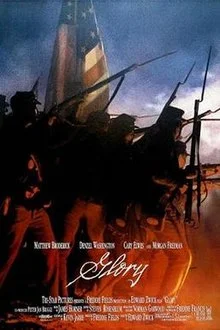
Glory (1989)

Mac Boyle July 22, 2019

Director: Edward Zwick

Cast: Matthew Broderick, Denzel Washington, Cary Elwes, Morgan Freeman

Have I Seen it Before: I got two eyes, a heart, and had cable in the 90s, didn’t I?

Did I Like It: Remember when we could just like blatant Oscar bait movies instead of thinking we’re so savvy that if we can identify the intent behind something, then it must automatically be bad.

Were Glory—the fitfully true story of Colonel Robert Gould Shaw (Broderick) and the 54th Massachusetts Infantry Regiment—to be made today, the backlash would be brewing before any nominations for the Academy Award were even announced. There are large swaths that are emotionally manipulative, sure, but it tries to jam the complex context of both Shaw as a man and the racial attitudes of the time into a package just over two hours long. 

Thankfully, it was made in the era in which it was—and it didn’t win too many awards (I’m looking in your direction Forrest Gump (1994))—that we are free to enjoy it for what it is: a stirring war story. It never forgets to entertain, and if it ends up being, morally admirable in the process, that’s fine too.

My only complaints with the film would have to be with the presentation. I’m always up for seeing a beloved film on the big screen, but I’m relatively sure most films made before 2001 should never be converted to to 4K*. The seams show. every shot Washington or Broderick take in the film’s final scenes looks like a hole poked in their uniform, drizzled with a bit of red tempra paint. 

Some of the increased resolution does actually help the film. The detailed and what appears to be accurate production design comes to life on a large screen with as much resolution as possible. And, also to be fair, there are some parts that are weighed down by subpar editing. To my count there were no fewer than three instances of a soldier being shot in the face, and we are shown the musket firing, only to quickly cut to the soldier holding their face in pain. Maybe that’s what happens when someone is shot in the face by a musket (I don’t think it is, but am not really interested in researching the point), but the technique only serves to distract when used that many times.

I offer quibble but remain steadfast in my recommendation of the film. That scene before the big battle where all of the soldiers are singing? Doesn’t get much better than that.


*Oddly enough, the only exception to this notion that comes to mind: 2001: A Space Odyssey (1968).

Tags glory (1989), edward zwick, matthew broderick, denzel washington, cary elwes, morgan freeeman
Comment
Tig_(film).jpg

Tig (2015)

Mac Boyle July 21, 2019

Director: Kristina Goolsby, Ashley York

Cast: Tig Notaro, Stephanie Allynne, Sarah Silverman, Zach Galifinakis

Have I Seen it Before: I’ve heard many of the jokes and I was aware of the story behind them, but I hadn’t seen the movie before.

Did I Like It: On spec, the documentary details Notaro’s journey from C.Diff diagnosis through her mothers death and eventually through the gauntlet of cancer feels like it might be unseemly. A documentary produced by the subject will have a tough time not being an act of self-promotion.

And yet, it never feels that way.  What protects the film from a feeling of voyeurism? Primarily the film benefits from having a built-in arc for its main character. Notaro has plenty to overcome in the process of a very short time. In a scripted film, it might feel too much for a character, whereas in a documentary we as the audience will accept such an odyssey. What other option do we have?

Maybe it’s the reality that Notaro is one of the funniest people currently living, and so the proceedings are above all else funny. But I really think it is more than that. There is something fundamental to her persona that ensures she is not hungry for the attention that such a documentary would bring. She is living her life, but she would much rather you laugh at her material.

And then again, essential to her comedy is an honesty that might be considered oversharing in someone less adept at making comedic hay out of the misery that threatened to end her. And maybe that’s why the film works where other, similar documentaries feel tone deaf. It is a perfect synthesis of her comedic sensibilities into a different format. Trying to modify the context and soul of something into a completely different delivery system is a tall order. It almost always fails. It’s success here is both a testament to the resiliency of the subject and her comedy.

Tags tig (2015), kristina goolsby, ashley york, tig notaro, stephanie allynne, sarah silverman, zach galifinakis
Comment
Deadpool_2_poster.jpg

Deadpool 2 (2018)

Mac Boyle July 15, 2019

Director: David Leitch

Cast: Ryan Reynolds, Josh Brolin, Morena Baccarin, Zazie Beetz

Have I Seen it Before: Yep.

Did I Like It: Yes. Could have definitely been a drag, but it fires on all cylinders, and even… Well, give me a second on that thought.

Let’s start our discussion with a few questions. How many comedy sequels are just as good as the predecessor? I’ll wait. Like, maybe Bill and Ted’s Bogus Journey (1991)? Debatable. Gremlins 2: The New Batch (1990)? I’d give a resounding, even combative yes here, but would you even place that series exclusively in the realm of comedy? 

Let’s widen the lens a little bit. How many comedy sequels are even watchable? Ghostbusters 2 (1989)? Some would say no, but I think they’re wrong. Anchorman 2: The Legend Continues (2014)? Again arguable, but it’s hard not to notice the precipitous drop in quality.

For each of these possible answers, there are just as many that are absolute train wrecks. Caddyshack II (1988). Blues Brothers 2000 (1998, for some reason). The Whole Ten Yards (2004). Analyze That (2002). More Fockers than you can shake a tree at.

Okay, now let’s ask the question that seems silly on spec: How many comedy sequels are better than their original?

Yeah, I’m having a hard time coming up with anything. Which makes this follow-up all the more miraculous. While the original Deadpool (2016) was a shock and a surprise, given that mainstream culture had next to no awareness of the character beyond a pale imitation injected into the perfectly forgettable X-Men: Origins: Wolverine (2009). But here, the manic sense of fun pulled directly from the source material is not watered-down and in fact intensified.

The beating, weepy heart of Deadpool/Wade Wilson (Ryan Reynolds, the sing movie star most in touch with his id) is on full display, miraculously giving him an emotional arc while still managing to keep his edge sharp. He defends abused kids, he loves the people around him fully, and still manages to teabag Josh Brolin in the process.

If the character does end up a casualty of Disney’s acquisition of 20th Century Fox, that’d be a shame. A third movie would really be something else.

Tags deadpool 2 (2018), deadpool movies, x-men movies, non mcu marvel movies, david leitch, ryan reynolds, josh brolin, morena baccarin, zazie beetz
Comment

Ralph Breaks The Internet (2018)

Mac Boyle July 13, 2019

Director: Rich Moore, Phil Johnston

Cast: John C. Reilly, Sarah Silverman, Gal Gadot, Taraji P. Henson

Have I Seen it Before: It definitely represents a trend in animated sequels, but no, I missed it in the theaters.

Did I Like It: Look…

There’s nothing inherently wrong with the sequel to Wreck it Ralph (2012). The humor is on-point, if—at times—a little like grabbing for low-hanging fruit when it comes to the mercurial nature of the internet. The action set pieces and other animation are clever, as are the sequences involving the bevy of Disney Princesses…

And that might be part of the problem. Far be it for me to drag someone for thinking too much and feeling too little in the context of a story, but I think lthe problem here is that the original had such a perfectly constructed emotional through-line for its main character. In the original film, Ralph (Reilly) must come to accept who he is if he is to ever hope to be the person—and have the life—he wants.

That’s powerful stuff for any movie, much less one aimed at children that—when you scratch away enough layers—is ultimately an exercise in advanced brand synergy. Here, the closest we get to an emotional arc is the need for Ralph to be a more supportive friend. It’s along the same lines of what happened in The Lego Movie 2: The Second Part (2019), where the incisive deconstruction of the nature of creativity is sidelined by a message for kids to be nicer to their siblings. It’s a fine ideal, and I suppose it may be unfair for every movie in a franchise to try to re-wrinkle my brain, but I can’t not remark on the fact that—while not embarrassing and still quite entertaining—things just aren’t the same any more.

However, if the film’s loftier ideas can somehow be incepted into a generation of children through an otherwise entertaining picture, then that might actually have a positive impact on human society, so who am I to really judge? Maybe it’s far better than I’m giving it credit.

Tags ralph breaks the internet (2018), disney movies, rich moore, phil johnston, john c reilly, sarah silverman, gal gadot, taraji p henson
Comment

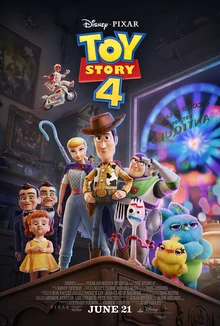
Toy Story 4 (2019)

Mac Boyle July 13, 2019

Director: Josh Cooley

Cast: Tom Hanks, Tim Allen, Annie Potts, Tony Hale

Have I Seen it Before: Never. Honestly wasn’t even sure I wanted to see it. I mean, the story ended with Toy Story 3 (2010), right?

Did I Like It: I’m absolutely baffled by the realization that—without this story—the story of Sheriff Woody (Hanks) would be tragically incomplete.

I’ll do you one better than that and issue an even more bold statement about this movie:

Woody’s odyssey is the single greatest Buddhist story since Groundhog Day (1993). Think about it. Really, the Toy Story series up until this point is about being locked in a cycle of suffering. Woody and company are in danger of becoming lost. Through their own cleverness, and by defeating some kind of dark heavy (in the guise of Sid, Stinky Pete, or Lotso) are once again back in the arms of a kid, and once again left to contemplate their inevitable planned obsolescence.

It’s always thrilling and more often than not heart-warming, but it is inevitably destined to repeat itself. Even the transfer from Andy to Bonnie that got the characters a new lease on life only begins the cycle again.

It is only when Woody is able to let go of his attachments that he is able to find any sort of evergreen peace and happiness. He even let’s Buzz take the lead role with Bonnie nee Andy’s toys, a prospect that drove Woody to attempted murder in years past. It’s a profound emotional journey that would be impressive in any film, much less the fourth entry in a franchise twenty-five years old. And it is the men this time that are afforded what might have in a previous era been the more feminine emotional (or at least more sensitive) journey. Even Buzz (Allen) who gets comparatively little to do is trying to find his inner voice, paying some comedic dividends. It’s the women who are the action heroes. Even the supposed heavy in Gabby Gabby (Christina Hendricks) isn’t thoroughly a villain and gets to enjoy the fruits of a world that was never really a zero sum game.

Instead of being an afterthought, this (now we can all say final, right?) entry in the series is perhaps the most thought-provoking animated film I’ve ever seen.

Although I’m a little miffed that my super-duper special complete toy-box blu ray collection of the first three films is going to have to find someway to get along with a copy of this movie on my shelf. A minor complaint.

Tags toy story 4 (2019), josh cooley, tom hanks, tim allen, annie potts, tony hale, disney movies
Comment
220px-Little_women_poster.jpg

Little Women (1994)

Mac Boyle July 11, 2019

Director: Gillian Armstrong

Cast: Winona Ryder, Kirsten Dunst, Claire Danes, Christian Bale

Have I Seen it Before: Any joke here would feel off, so I’ll just say no.

Did I Like It: Sure! What’s not to like.

Obviously, any adaptation of Louisa May Alcott will be light on plot. To add plot to the proceedings would be either unsettling or profane. And so, the film must rely on the chemistry between the actresses to fuel the movie that surrounds them.

And they do. They are helped by the fact that their characters are intelligent where they might have been irritating. Plenty of smart, self-possessed women have been inspired by any mixture of the March girls, and those are the kind of people around which I would want to spend time.

That moment near the end where Jo stares with nervous, nearly despairing anticipation at her just-completed first novel, and the bubbling ecstasy when the book comes back printed are feelings both  I and many of my friends have surely felt. The movie is filled with these moments of true emotion. It’s a tall order for a movie to function with only these moments to elevate it. In lesser hands, it would have been frightfully dull. Here, it is vibrant. I wish I could make something one day that didn’t need bells and whistles. 

The score is jaunty, although the blaring trumpets did leave me wondering which scenes were taking place at Christmas and which were taking place when Kirsten Dunst metamorphosed into Samantha Mathis. The photography is sumptuous without being needlessly showy, and the sets and locations feel like what one would imagine the 19th century to be. Maybe that one element is actually draped in Hollywood fakery, but it displays this with such confidence that the spirit of the March girls comes forth in the film.

Tags little women (1994), gillian armstrong, winona ryder, Kirsten Dunst, claire daines, christian bale
Comment
220px-Godzilla_–_King_of_the_Monsters_(2019)_poster.png

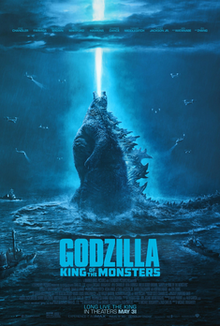
Godzilla: King of the Monsters (2019)

Mac Boyle July 11, 2019

Director: Michael Dougherty

Cast: Kyle Chandler, Vera Farmiga, Millie Bobby Brown, Bradley Whitford

Have I Seen it Before: Na. And I was kind of looking forward to it, too.

Did I Like It: Ah, well… Just another cinematic disappointment for the summer of 2019.

At it’s core, this latest Godzilla movie is a family drama about a divorced parents as they try to raise children under trying circumstances. It’s a tame one at that, a story that has been played out before in a nearly infinite amount of melodramas and have been coopted as the narrative spine of more than a few other big budget movies. ET: The Extra-Terrestrial (1982), and the larger portion of the Jurassic Park franchise comes to mind. 

Such a routine story is not enough to support an entire movie. The only more-than neutral thing I can say about it is that Brown appears believable as a child of Chandler and especially Farmiga). With nothing else to keep the movie afloat, the spectacle of such a movie must rise to the challenge. 

And that’s where things really fall apart.

For one thing, there’s shockingly little Godzilla in the movie. The titular character spends most of the first half missing, and a large part of the second half sleeping off an ass kicking. If that weren’t enough, most of the running time is dominated by characters doing one of several things things. 1) Staring in awestruck wonder at something happening a considerable distance away. 2) Arguing about how much nuclear energy will either destroy or juice up Godzilla. 3) Muttering about some arcane piece of Godzilla lore.

And here is where the film leaps from being underwhelming to be more confidently annoying. The entire film is like being stuck in a conversation with someone well-steeped in the lore of the franchise, and can’t seem to talk about anything else. I’m not sure what I wanted out of a Godzilla movie, but it wasn’t this.

Tags godzilla: king of the monsters (2019), michael dougherty, kyle chandler, vera farmiga, millie bobby brown, bradley whitford
Comment
220px-Matinee2.jpg

Matinee (1993)

Mac Boyle July 11, 2019

Director: Joe Dante

Cast: John Goodman, Cathy Moriarty, Simon Fenton, Omri Katz

Have I Seen it Before: Many long years ago, it was one of those movies that I absolutely wanted to go to see, and indulgent parents allowed for it, as Goodman was a pleasing weekly presence on TV at the time… and… um, that’s still true, as it turns out.

Did I Like It: Absolutely. It’s a perfect tragedy that both Charlie Haas doesn’t get to write major motion pictures anymore, and that Joe Dante isn’t directing like he was in the 80s and 90s.

While not as manic as the other film that assembled this director/producer/screenwriting team—Gremlins 2: The New Batch (1990)—it is still a sweet movie that plays to my own tastes beautifully. Loving movies, even/especially the bad ones, and the places where they are played, all while the world is coming apart at the seams. 

It’s a special thing when a filmmaker can go to work, and as the viewer I can get the sense that we’d get along pretty well, with are tastes being so perfectly aligned.

There’s one scene that’s about as good as anything else gets. Goodman describing the magic of a theater. And yet, the film never forgets to have a fun time. Both films-within-films are delightful running gags, but The Shook-Up Shopping Cart—the less prominent of the two side-productions is a blissfully absurdist gag amid an otherwise mainstream film.

One wonders if they could have leaned into that more, as the film was ultimately doomed to be a drag on poor Universal’s resources. Naturally, no one knew that at the time, and there really isn’t any reason that the film shouldn’t have been one of the big moneymakers of the year.

Tags matinee (1993), joe dante, john goodman, cathy moriarty, simon fenton, omri katz
Comment
220px-Midsommar_(2019_film_poster).png

Midsommar (2019)

Mac Boyle July 11, 2019

Director: Ari Aster

Cast: Florence Pugh, Jack Reynor, William Jackson Harper, Will Poulter

Have I Seen it Before: In pacing and plotting, yes. Many times. In terms of visual style coupled with this plotting, I can’t imagine anyone’s seen anything like it. 

Did I Like It: I’ve come to the conclusion that degrees of “liking” or even any discussion of what humans might normally understand as pleasure are not the right terms to use when it comes to a film by Ari Aster. The film is incredibly well-made, and your emotions will be precisely where Mr. Aster wants them at any given time.

I was not as excitable about Aster’s first film, Hereditary (2018). as many other people were. While it was clear that Aster was bringing considerable skill to bear in the effort, the film was just too pitch-black in its mood. There is no respite. Things get worse and worse, get infinitely bleak, and then manage to find a little bit more to drain out of the available pool of human warmth.

It was almost as if Aster clearly had steeped himself in the very best of the horror genre but wasn’t interested in his audience having any sort of fun during the process. It’s a missing vital ingredient, like sitting down to eat the finest chocolate cake ever conceived of by human beings, and instead only being served a supply of—albeit the best—semi-sweet chocolate.

I completely understand that I would be in the minority on that opinion, but at the same time it does feel like in this—his second film—Aster either received that criticism from elsewhere, or felt the same about his freshman effort going into the sophomore. Midsommar is still filled to the brim with human misery both physical and existential, but it is also genuinely funny and ends with a sense of genuine—if morbid—catharsis of which Hereditary was pointedly disinterested.

Even with these brief flashes of relief, Aster has not let go of his brutal filmmaking instincts. It is an arduous journey, one that should not be undertaken alone, as much of a fan as I am of going to the theater on one’s own. For a little added perspective, this film is the only experience I’ve ever had where I felt the need to take anxiety medication after it was over. Consider yourself warned. Have fun.

Tags midsommar (2019), ari aster, florence pugh, jack reynor, william jackson harper, will poulter
Comment
  • A Blog About Watching Movies (AKA a Blog in Search of a Better Title)
  • Older
  • Newer

Powered by Squarespace

Party Now, Apocalypse Later Industries

Where creativity went when it said it was going out for cigarettes.

Where creativity went when it said it was going out for cigarettes.