Party Now, Apocalypse Later Industries

Where creativity went when it said it was going out for cigarettes.
  • Home
  • BOOKS
    • THE ONCE AND FUTURE ORSON WELLES
    • IF ANY OF THESE STORIES GOES OVER 1000 WORDS...
    • ORSON WELLES OF MARS
    • THE DEVIL LIVES IN BEVERLY HILLS
    • A LOSS FOR NORMALCY
    • RIGHT - A NOVEL OF POLITICS
  • PODCASTS
    • Beyond the Cabin in the Woods
    • THE HOLODECK IS BROKEN
    • THE FOURTH WALL
    • As The Myth Turns
    • FRIENDIBALS! - TWO FRIENDS TALKING ABOUT HANNIBAL LECTER
    • DISORGANIZED! A Criminal Minds Podcast
  • MOVIE REVIEWS
  • BLOGS AND MORE
    • Bloggy B Bloggington III, DDS
    • THE HOLODECK IS BROKEN BLOG
    • REALLY GOOD MAN!
  • Home
    • THE ONCE AND FUTURE ORSON WELLES
    • IF ANY OF THESE STORIES GOES OVER 1000 WORDS...
    • ORSON WELLES OF MARS
    • THE DEVIL LIVES IN BEVERLY HILLS
    • A LOSS FOR NORMALCY
    • RIGHT - A NOVEL OF POLITICS
    • Beyond the Cabin in the Woods
    • THE HOLODECK IS BROKEN
    • THE FOURTH WALL
    • As The Myth Turns
    • FRIENDIBALS! - TWO FRIENDS TALKING ABOUT HANNIBAL LECTER
    • DISORGANIZED! A Criminal Minds Podcast
  • MOVIE REVIEWS
    • Bloggy B Bloggington III, DDS
    • THE HOLODECK IS BROKEN BLOG
    • REALLY GOOD MAN!

A Blog About Watching Movies (AKA a Blog in Search of a Better Title)

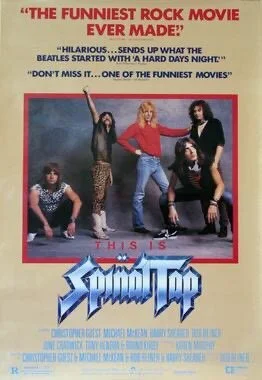
This Is Spinal Tap (1984)

Mac Boyle June 18, 2021

Director: Rob Reiner

Cast: Christopher Guest, Michael McKean, Harry Shearer, Rob Reiner

Have I Seen it Before: Oh, sure. A small note about this screening though. I stumbled upon a factory-sealed DVD at a used dealer at the Flea Market. That’s unusual enough, but the case hailed from an era when DVDs were frequently stolen commodities (kids, ask your parents) and the case had not one, not two, but three security seals on every open end. Those things were annoying to take off in the early aughts, but the glue on these suckers had two decades to seal, and I nearly had to rent a sledgehammer to get to the chewy movie at the center.

Did I Like It: By this point, the mockumentary has been played out to death. TV shows upon TV sows have used the format, and the instant one used that milieu and wasn’t any good, the magic was probably gone.

But this is something special. It didn’t invent the wheel as far as mockumentary comedies go. For that, we’d have to (but probably shouldn’t) look at least a year earlier to Woody Allen’s Zelig (1983), or maybe even as far back as his Take The Money and Run (1969). 

Or maybe the better precursor to what we have here is A Hard Day’s Night (1964), because not only does this film tap into that precisely correct demented vein of absurdity that is the lifeblood of every great comedy, but the music also works. That’s directly tied to the unusual skills of Messrs. Guest, McKean, and Shearer. They are at the top of their game here comedically and they could have made an honest shot at being rock stars, had they possessed that ambition. Hell, look to A Mighty Wind (2003) and those three men could have made decent-bordering-on-great musicians of any genre.

As with most comedies, it’s never the most memorable lines that make the film truly great. You can talk about “this one goes to eleven” forever, but it’s the briefest pause the band takes before offering their reaction to “shit sandwich” that I think is both so insanely funny and so pathetically human.

Also, you can’t go wrong with a few dead drummers and a Stonehenge megalith. It’s easily the broadest comedy of which Guest is at the forefront, but anyone’s got a problem with that is the type of person who would let “shit sandwich” get printed in a magazine.
Tags this is spinal tap (1984), rob reiner, christopher guest, michael mckean, harry shearer
Comment

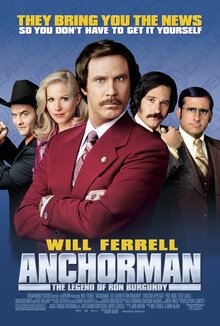
Anchorman: The Legend of Ron Burgundy (2004)

Mac Boyle June 18, 2021

Director: Adam McKay

Cast: Will Ferrell, Christina Applegate, Paul Rudd, Steve Carrell

Have I Seen it Before: Seeing this film for the first time in the summer of 2004 was one of those special screenings. I don’t remember laughing that hard at a movie before, and I can’t think of a time since, either. 

Did I Like It: But that’s the thing about a comedy. It can age horribly, not just because the jokes are from a different time, but because the version of you that enjoyed the film so much is an increasingly dim memory.

Who would have thought that a review for a movie that insists “San Diego” means “a whale’s vagina”?

I watch the film now and I have some mildly positive feelings about it, but that’s still largely memories of that summer 17 years ago. Maybe the film is just a bit too quotable. With so many movies that land on the tips of the tongues of every frat guy in the western world, the film may have grown tired and old by New Year’s Day 2005. 

That’s a shame, because I remember this film delighting me beyond all measure. Now, it’s mildly diverting background noise. It’s probably not fair to judge the films on those terms. McKay and Judd Apatow probably didn’t count on the film being so loved in the instant of its release that there would be thousands of Facebook groups within the year called “I’m kind of a big deal”, they certainly didn’t bargain for a guy staring down the barrel of his 40th birthday occasionally feeling wistful for 20.

The soundtrack—where Ferrell, in character as Burgundy uncontrollably weeps throughout “Shannon”—has still got to be as funny as it was back then, right?

Tags anchorman: the legend of ron burgundy (2004), adam mckay, will ferrell, christina applegate, paul rudd, steve carrell
Comment

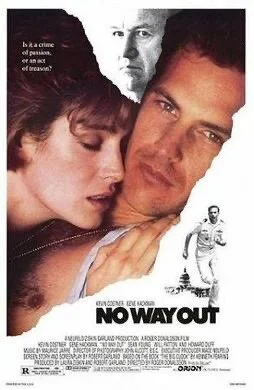
No Way Out (1987)

Mac Boyle June 12, 2021

Director: Roger Donaldson

Cast: Kevin Costner, Gene Hackman, Will Patton, Sean Young

Have I Seen it Before: It lived on cable in the 90s. Most people probably saw the last few minutes—which pretty much negates the need to see the movie at all—before catching an airing of something else.

Did I Like It: The question becomes during a normal screening of the film: Does it earn it’s ending? 

On the tragic vibe it occasionally goes for, I’m going to say no. The relationship between Farrell (Costner), and Atwell (Young) is not so much established as it is preposterous revved from 0-60 in the span of the first reel. I’m not kidding. Scene 1: They Meet and don’t care much for each other. Scene 2: They have sex. Scene 3: They are so ridiculously in love that when she dies, his emotional distress makes more sense…

…except, it doesn’t. It’s all a ruse. Maybe Farrell got in too deep to keep up his cover (last chance for spoilers) as a Soviet agent, but there’s not a hint or an ounce of suspicion that he isn’t who he says he is until his handlers start speaking Russian?

I guess the ending doesn’t really work for me on any front. Even if it were a surprise, it’s too out of left field. As is the sudden shift in motivation when Pritchard (Patton) that allows the movie to swing wildly toward something resembling a resolution to its plot.

There’s at least some of the trappings of an 80s tech-thriller that I’m here for, and the film incorporates location shooting in Washington DC better than most films, but when it’s central reason for existing falls apart under the slightest scrutiny, that should tell us all something, right?

Tags no way out (1987), roger donaldson, kevin costner, gene hackman, will patton, sean young
Comment

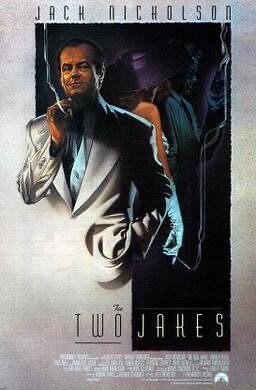
The Two Jakes (1990)

Mac Boyle June 12, 2021

Director: Jack Nicholson

Cast: Jack Nicholson, Harvey Keitel, Meg Tilly, Madeline Stowe

Have I Seen it Before: Never. It’s always been sort of a random fascination for me, given that it was the essentially forgotten sequel to Chinatown (1974), but it’s always managed to remain elusive, what with it being uncelebrated and never appearing on a streaming service. To my knowledge, I had never even laid hands on a DVD copy of it until recently, and with that morbid curiosity taking thrall, I had to have it.

Did I Like It: I don’t think I’d get a lot of pushback when I put Jack Nicholson as one of the greatest movie stars of all time. Many may not believe that my judgment there isn’t exclusively tied to Batman (1989), but I assure you it is not.

He’s not much of a director. It’s not his fault. Throughout his career, he did his level-headed best to not take the task on all that much. This ilm only came about because by all indications this film should have languished in development hell before ceasing to exist, like the third in the Gittes trilogy did after this film was received with a collective shrug.

Nicholson’s performance is fine here, but I can’t help but feel he’s distracted. Although, to be fair, I wonder whether I would think that if I didn’t know he also directed. The screenplay from Robert Towne is constructed with the same level of craft he brought to all of his scripts, and which made Chinatown one of the most celebrated—and studied—examples of the form. The direction, however, is merely competent. There is nothing wrong, but there is no artistry, mainly because Jack was the last man left to direct it, not because he had a burning desire to do so.

Curiosity sated. Would I recommend you watch the movie yourself? Only if you must, which I did.

Tags the two jakes (1990), jack nicholson, harvey keitel, meg tilly, madeline stowe
Comment

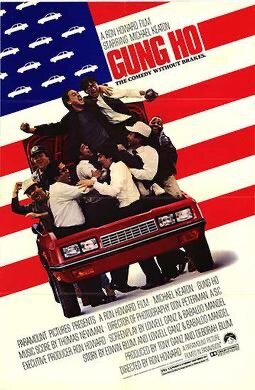
Gung Ho (1986)

Mac Boyle June 12, 2021

Director: Ron Howard

Cast: Michael Keaton, Gedde Watanabe, George Wendt, Mimi Rogers

Have I Seen it Before: Actually, I don’t think I have. Odd, I know. I would have thought that Clean and Sober (1988) is the only Keaton film I had managed to avoid, and that’s mainly because I had heard it was a stone-cold bummer. Maybe I’ll come around to it eventually.

Did I Like It: Right from the outset, you’re probably anticipating that I’m going to give this movie more credit than it might be worth, and you might be right. Had anybody else played the role of Hunt Stevenson, the thorough blandness of the film might have been unavoidable. The film isn’t quite funny enough for a Bill Murray. It’s also not quite edgy enough for an Eddie Murphy*. With Keaton, he’s able to be just relatable enough (while also seeming like he could become unglued at any minute) that I enjoyed the film despite itself. There’s also plenty to be said for a film that gives Gedde Watanabe the opportunity to be something more than the caricature he’s most famous for in films like Sixteen Candles (1984) and UHF (1989). 

And yet, there is still that blandness at its core. It attempts to be a Capra film or a new age (which itself feels quaint), but between every technical choice throughout the film, the entire affair is so dated, one needs only look at a few scant seconds of it without any other context to guess when it was made. I would say that Howard was so committed to the ambition of proving himself as a director outside of his notoriety as a child star that he forgot to get much of a POV. I’d say that he grew out of that once people started forgetting about Opie, but even his best films betray a journeyman quality to his work.


*A quick search indicates both turned down the role.

Tags gung ho (1986), ron howard, michael keaton, gedde watanabe, george wendt, mimi rogers, the michael keaton theory
Comment

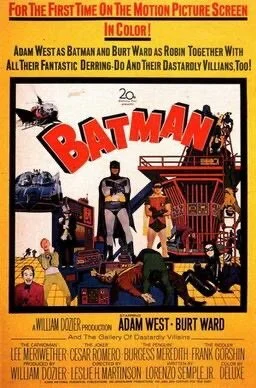
Batman (1966)

Mac Boyle June 4, 2021

Director: Leslie H. Martinson

Cast: Adam West, Burt Ward, Lee Meriwether, Cesar Romero

Have I Seen it Before: Oh, man... Many, many times. Before it was released on DVD, I made do with a WGN broadcast of the film I had recorded in the summer of 1989. That screening truncated the beginning and cut entirely the scene where Batman (West) calls the Pentagon.

I had no idea what I was missing.

Did I Like It: At various times, it has been more than a little bit fashionable for Batman fans to look down their noses on the Adam West iteration of the character. There are few elements of Batman fandom—with the possible exception that every film Ben Affleck has appeared in is a criminally under-appreciated gem—that annoy me more. Adam West’s hero isn’t tortured, and he always plays fair. He is a hipster adventurer, and anyone who says the mythos of the Caped Crusader doesn’t have room for that particular hue doesn’t understand the sheer adaptability of the character which has made him a mainstay of the superhero genre for 80-plus years.

He’s also deeply, unalterably, perhaps even insanely funny. There’s room for that, too, and tragically, that is the part that Clooney’s effort in Batman & Robin (1997) never utilized. If Clooney forced himself to read every translation on an elevator button before pressing “up,” he might be the version of the hero we all were clamoring for in the forthcoming Flashpoint, but alas.

I don’t even mean to only say that West is funny relative to the rest of the Batman canon. He is supremely funny in the context of screen comedians at large. I would put the “somedays you just can’t get rid of a bomb” up there with the greatest of all time.

The film’s sense of adventure is—and someone is going to shake their head when I type this, I just know it—far greater than any other live-action feature-length version of the character. Keaton and his successors restricted themselves to a very limited stretch of Gotham (those parts which could easily fit into a backlot), Bale upgraded to a city which felt like a real place (largely, because it was), and Affleck was mostly fixated on his mother (which is saying a lot for the character), West’s Batman reckons with a world writ large, that is still somehow brought to life on nothing more than a TV budget. The film reached for a wider canvas, and therefore could underwrite expenses for the associated TV show, amplifying its scope in the process. We’d have been stuck with just a Batmobile on the show if this film hadn’t seen fit to place their characters in a larger world.

If you’re a Batman fan and not an unapologetic fan of this film, then you’re lying about one of those things. I don’t make the rules; I just enforce them.

Tags batman (1966), batman movies, leslie h martinson, adam west, burt ward, lee meriwether, cesar romero
Comment

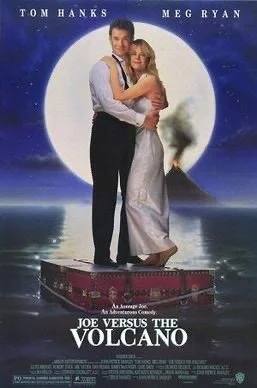
Joe Versus The Volcano (1990)

Mac Boyle May 24, 2021

Director: John Patrick Shanley

Cast: Tom Hanks, Meg Ryan, Lloyd Bridges, Robert Stack

Have I Seen it Before: Yes. Although I can’t remember how it all ends, for some reason. That’s probably the best way to rediscover a film, now that I think about it.

Did I Like It: It’s certainly a charmingly weird film, I cannot deny it that. Starting with frames filled with dream-like production design from Bo Welch—hinting at the work he would do in a few years in Batman Returns (1992)—this world is not our own, and yet there are any number of moments that feel distressingly real, although most of those have to do with the horrifying drudgery of Joe’s (Hanks, being imminently Hanksy, even in a slightly off-beat milieu) job.

The secret weapon for the film is Meg Ryan, surprisingly enough. While she has always been a charming presence on film, she’s always felt more like a movie star. Here, she fully embraces the weird on display and very nearly disappears behind two distinct characters, before giving the people who showed up on date night the Meg Ryan we all know with her third character in the film. So few leading ladies are given the opportunity to to flex their craft, it’s one of the film’s stronger elements.

The one element about which I think I might truly bring myself to complain about the film is that the ending is something of an anti-climax. The volcano spits both the leads out, they figure out that Joe hasn’t been dying this whole time, and they sail off into the sunset. That may be why I can’t remember the ending; there isn’t much of one. It is a minor complaint, but might help to explain why the film never quite seeped into our collective thoughts the ways other films with this degree of talent have.

Tags joe versus the volcano (1990), john patrick shanley, tom hanks, meg ryan, lloyd bridges, robert stack
Comment

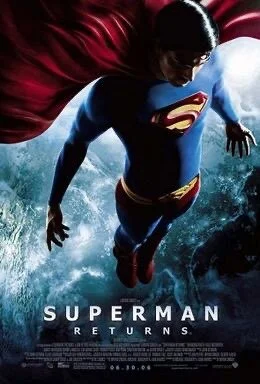
Superman Returns (2006)

Mac Boyle May 24, 2021

Director: Bryan Singer

Cast: Brandon Routh, Kate Bosworth, James Marsden, Kevin Spacey

Have I Seen it Before: Oh, sure. What else was there to do in 2006?

Did I Like It: I like Superman Returns. I think in many, many ways it is a throwback to another era of blockbuster spectacles, made at a time when every superhero film looked and felt like each other. Also, given that it turns out in addition to being a horrible sexual predator for decades, he is also one of the more undisciplined filmmakers produced by Hollywood in recent memory. Given his inherent sloppiness as a director, it’s a miracle any film he’s ever been associated with came together in any coherent way. That it is also a strangely personal film from a child of adoption about parentage and coming to grips with ones origin makes it worth at least some praise.

But I also dislike a lot of what is going on with the film. In fits and starts, it reaches to be the missing third movie in the Christopher Reeve series. I, too, have an affection for Superman (1978) and its sequel, so it’s slavish devotion to the work of Richard Donner is appreciated. It just doesn’t go for broke on the attempt. John Williams’ march is back in fine form, refrains from the planet Krypton make occasional cameos, and we even get a few tastes of “Can You Read My Mind,” and thankfully, no one takes a crack at a spoken-word rendition. But the musical motifs for Lex Luthor (Spacey, more ick easily available) are completely new and utterly bland. The failure of the score is made all the more frustrating by the fact that the new cues are courtesy of frequent Singer collaborator John Ottman, a composer whose work I’ve enjoyed in the past. 

The space zoomy opening titles are straight out of the Donner films, Marlon Brando is conjured into the film using footage left over from Superman II, and the Fortress of Solitude that informs the film’s MacGuffin is straight out of John Barry’s original production design, but made impressively more alive by the special effects of the time. But the visual trappings stop there. Singer could have gone for broke and had this film look like a product of the late 70s and early 80s. Instead, it’s obviously a film made in the mid-2000s, and had abandoned all hope of being timeless halfway through opening weekend.

Brandon Routh gets short shrift as the title character. He’s since proven himself an amiable presence on TV, and here he equates himself better than we all remember with the imminently unfair task of “being Christopher Reeve.” Kate Bosworth, on the other hand, not only channels nothing of Margot Kidder, she also practically sleepwalks through the role of Lois Lane, a choice which really should have put her at the bottom of the casting director’s list of potential choices for the role.

The film is just too flawed in key ways to fully recommend, and yet can’t be completely dismissed, either. Both the production of the film, and my reaction to it, are ultimately exercises in half measures.

Tags superman returns (2006), bryan singer, superman movies, brandon routh, kate bosworth, james marsden, kevin spacey
Comment

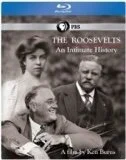
The Roosevelts: An Intimate History (2014)

Mac Boyle May 24, 2021

Director: Ken Burns

Cast: Paul Giamatti, Edward Hermann, Meryl Streep, John Lithgow

Have I Seen it Before: We watched the first couple of parts as they aired, but we were moving into this house as it aired, and lost track of the series until quite recently after I got hooked up with PBS app and its comprehensive Ken Burns collection.

Did I Like It: Once again, it becomes somewhat impossible to effectively criticize Burns’ work. Within the framework of his genre, he is the best at what he does. Each film is immaculate, and I have seen more than a few imitators in the historical documentary, and it is imminently possible (in fact, likely the default) to screw it up.

So then this rumination must go to the subject, or in this case, subjects. With Burns’ fair eye, all three Roosevelts of particular note (Teddy, Franklin, and Eleanor) are given full credit for their strengths. With all seven parts running the viewer just shy of fourteen hours, it would have been a significant blunder for some key element of any of the three lives to be assessed. They each so fully engaged with their lives and the worlds in which they found themselves, that many, but not all sins can be forgiven.

They’re failures are given a substantial analysis as well. Teddy (it will truly be difficult to refer to the subjects with due deference, so I assume the reader will forgive undue familiarity) nearly completely whiffed on any degree of courage where race relations were concerned. Franklin was at his heart far too pragmatic to bring a foolproof reworking of the social contract and a perfect peace to a post-war world before succumbing to the ravages of infantile paralysis. That doesn’t even begin to cover the myopic, cowardly internment of Japanese-Americans. Even Eleanor viewed it as a necessity, and it is one of the few times she was confronted with a question of moral right and failed to meet the occasion. Had she been clearer-headed on that, and as steadfast as she had been on everything else, she could have very well turned her husband around on the matter.

Tags the roosevelts: an intimate history (2014), ken burns, ken burns films, paul giamatti, edward hermann, meryl streep, john lithgow
Comment

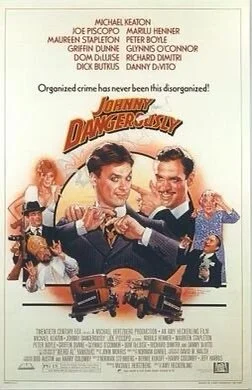
Johnny Dangerously (1984)

Mac Boyle May 24, 2021

Director: Amy Heckerling

Cast: Michael Keaton, Joe Piscopo, Marilu Henner, Peter Boyle

Have I Seen it Before: I can reach into memories of the distant past to a screening on cable. Is this the last movie I saw for the first time on cable? I certainly can say that I’m probably never going to see another movie for the first time on cable. It’s almost sad...

Did I Like It: I think I’m under an obligation—with the amount of writing I’ve done about the films of Michael Keaton—to say that I unequivocally do like the film.

And yet...

Everyone here (yes, even Piscopo) feels like they’re working against their strengths. In an attempt to be a Mel Brooks/ZAZ-esque take on gangster films of the, Amy Heckerling feels more at home with the more grounded comedies that made up the eventual highs of her career in Clueless (1995) and Fast Time At Ridgemont High (1982). That’s not a terribly bad mark against her as a director, as the ZAZ team eventually became involved in hum-drum fare like Mafia! (1998) and things so foul on spec, they’re not even worth watching in the first place, like An American Carol (2008). Even Brooks whiffed out in the end. Dracula: Dead and Loving It (1995) was certainly a sour end. Hell, plenty of people like Robin Hood: Men In Tights (1993) and Spaceballs (1987) but neither have ever done much for me.

I’m stalling, I know. Is Keaton any good in the film? It’s always a delight to see him, but he’s playing the role largely straight here, with none of the anarchic qualities that introduced him to movie audiences in Night Shift (1982) and he perfected in Beetlejuice (1988). It’s hard to say that I don’t particularly care for a Michael Keaton picture, but if I’m not laughing, and he’s distressingly bland in the whole thing, it’s hard not to confront reality.

Tags johnny dangerously (1984), amy heckerling, michael keaton, the michael keaton theory, joe piscopo, marilu henner, peter boyle
Comment

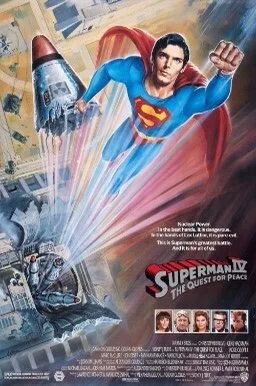
Superman IV: The Quest For Peace (1987)

Mac Boyle May 16, 2021

Director: Sidney J. Furie

Cast: Christopher Reeve, Gene Hackman, Margot Kidder, Mariel Hemingway

Have I Seen it Before: A couple of times, mystifyingly.

Did I Like It: Oh, boy... Where to start? Before we get into any of the myriad details, here’s the big, unfortunately reality of this film:

It is worse than the universally reviled Batman & Robin (1997).

Yes, Batman & Robin is a mostly wrong-headed*, somewhat cheap affair, but it is at least a complete film, which undeniably has a point of view and the full support of its studio at the time.

Superman IV isn’t even finished. Some of the most baffling editing choices exist in this film, and the special effects are nearly uniformly awful. There is one shot of Superman (Reeve, doing his best here, but even some of the pristine sense of the borders between Clark Kent and the Man of Steel are gone) flying toward the camera that is used at least ten times. It is such a terribly rendered process shot, made all the worse by the fact that I am reasonably sure it was actually shot for Superman III (1983). 

There have been some disappointing big-franchise films in recent years—Star Wars: Episode IX: The Rise of Skywalker (2019) and Justice League (2017) come to mind—but anyone (including me) who has complained about those films needs to sit through this thing and witness just how far a franchise can fall. In Superman (1978), we believed a man could fly. Here, I still can’t quite bring myself to believe that the studio actually released this in theaters. Fantastic Four (1994) was never intended to be released, and it still has a touch of movie magic to it.

There’s a temptation to say that the story might be able to rise above the production shortcomings, but I don’t buy that argument much. Reeve’s passion for nuclear disarmament fitfully comes through in a couple of scenes, but the rest of the film is wall-to-wall b-movie cliche, punctuated by two of the singularly most baffling moments in cinematic history.

The film spends a sequence trying to recreate the magic of Superman and Lois Lane’s (Margot Kidder, walking through the film in a daze, which makes her seem like the only person in the production who knows whats going on) fly through the air in the original film. To do so, the film retcons the “memory-wipe kiss” from Superman II (1980) (admittedly, one of the weaker parts of that film), indicating the memory-wipe didn’t work and says Lois just chose not to say anything about her knowledge of Superman’s identity. They fly. Can You Read My Mind? The whole bit. Although it is, obviously, much worse. They land. Then Superman kisses her and wipes her memory again. It’s a staggeringly bad choice, and I have a hard time believing that at least some version of this fumble-to-end-all-fumbles didn’t appear in the script.

This all culminates in Superman’s final battle with Nuclear Man (voiced by Gene Hackman, who you can begin to sense is starting his fifteen year journey to not wanting to be a movie actor anymore, but physically performed by Mark Pillow, who I believe was never heard from again) where they play a little tug of war in outer space with seemingly mortal human Lacy Warfield (Mariel Hemingway). She breathes fine during the whole event, after which Superman takes her... somewhere in the vicinity of the planet Earth, after which the character is never heard from again. Ed Wood would have stopped that thinking in its tracks.

But then again, that scene could be related to the editing. Maybe the space sequences were meant to take place within Earth’s atmosphere, and more lost background plates are at play here...

You know it’s a bad film when you can never quite tell whether the script or the complete lack of production values are what is completely obliterating the experience. In some reviews for films I didn’t care for, I try to look for some bright spot, or at least some worse film to compare it to and put everything in perspective. Unfortunately, the film I often reach for in those comparisons is Superman IV: The Quest For Peace. It is, without a doubt, the worst superhero film ever made.


*It is often unfairly maligned as a gay movie, and if that weren’t unfair to begin with, but I’ve had a revelation recently that it has been more formative for LGBTQ people of my generation growing up than I ever would have thought.

Tags superman iv: the quest for peace (1987), sidney j furie, christopher reeve, gene hackman, margot kidder, mariel hemingway
Comment

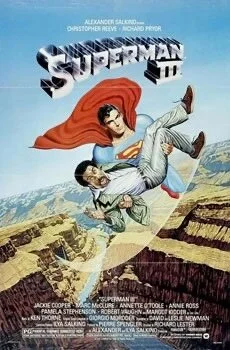
Superman III (1983)

Mac Boyle May 16, 2021

Director: Richard Lester

Cast: Christopher Reeve, Annette O’Toole, Richard Pryor, Robert Vaughn

Have I Seen it Before: Yes.

Did I Like It: Along with Supergirl (1984), this film is a cheap, sort of depressing affair. It constantly reminds one that the high highs of Superman (1978) are far in the past. And yet, both films have aged better than their initial reputations, thanks in no small part to the absolutely stunning disaster of a film that is Superman IV: The Quest for Peace (1987).

Unfortunately, this film has a little bit more going against it. As much as it benefits from how terrible its successor it is, it is made worse by the over-validation of the theatrical cut of Superman II (1980). There is much in that film to love, but re-hiring Lester to direct this film implied that all of his contributions to II were the right choices, when everything about that film that works came from the work of Richard Donner before he was fired by the Salkinds. That ignominious firing and the ensuing fallout relegates Margot Kidder to nothing more than a cameo, and it very nearly feels like she’s only accidentally in the film at all. 

It also forces Gene Hackman out of the film entirely, in favor of a character that I would bet a substantial amount of money had been Lex Luthor in earlier drafts, and the filmmakers couldn’t be bothered to fundamentally change the character to some other type of villain. They could have gone for something truly different, like Brainiac or even followed through on the beginnings of Bizarro that they have here, and really let Reeve play the villain and the hero.

But they didn’t

The resulting film is a wall-to-wall festival of camp. It is only fitfully funny in its larger physical comedy set pieces, and largely falls flat during any other attempts at banter or bits straight out of a sitcom. Yes, I do still believe a man can fly here; they hadn’t yet gotten the idea to slash the budget to shreds. Reeve is doing good work here, and his fights with a darker version of himself are the highlight of the film, if only they could have appeared in a different film.

This also, for reasons passing anything resembling understanding, is essentially a Richard Pryor movie. I’m going to reach for a potentially unpopular opinion and say that while Pryor is absolutely one of the great stand-up comics of all time, he was never much of a movie actor. He’s not terribly funny here, either, so despite his prominent presence in the film, he is just one more joke that doesn’t quite land.

Tags superman iii (1983), richard lester, christopher reeve, annette otoole, richard pryor, robert vaughn, superman movies
Comment

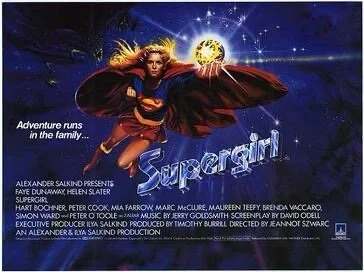
Supergirl (1984)

Mac Boyle May 16, 2021

Director: Jeannot Szwarc

Cast: Helen Slater, Faye Dunaway, Hart Bochner, Peter O’Toole

Have I Seen it Before: During a summer day in 1997 I went to an Albertsons, got a dozen pieces of fried chicken, and rented all five of the Super-movies for ten dollars. It was a simpler time. They had good chicken.

Did I Like It: I remembered shockingly little of the film, aside from the fact that Christopher Reeve is resolutely not in it, aside from one photograph. I’d say his wisdom was on track avoiding the movie, but then he went ahead and got involved with Superman IV: The Quest for Peace (1987), but that’s a discussion for a different time. His conspicuous, awkward absence from the entirety of the film automatically hamstrings the affair. Even if the other elements of the film had been immaculate, there would be an illegitimacy to the whole thing without he who first made us believe a man could fly.

Honestly, it’s reputation is probably unearned, and sort of like Superman III (1983), the film was reviled in its time, but is the beneficiary of comparisons with the last film in the Reeve-series. 

Sure, it is a little hung up with painting Kara Zor-El (Slater) as a doe-eyed innocent in the mold of a Disney movie, where her cousin would always seem like he was in control of the situation, even, when he was pretending to be Clark Kent. And yet, somehow and inexplicably, there is no transition from arriving on Earth to being Supergirl fully-formed. 

Great (O’Toole) and mostly okay actors (Dunaway) are clearly slumming their way through a script so weighed down by preposterous sci-fi talk that the story, such as it is, even managed to lose me in the early minutes.

There is plenty to complain about in the film. The Salkinds display once again that the more direct control they have over the fate of the super-franchise, the more disappointing things become. But, the movie is a real movie, and the money spent makes its way to the screen. Jerry Goldsmith’s score is one of the few super-scores that doesn’t feel the need to slavishly worship at the altar of John Williams. For several sustained moments, I do believe a girl can fly. And if that weren’t enough, I was legitimately craving Popeye’s Chicken after the run time. If that doesn’t make the film at least a partial success, I don’t know what would.

Tags supergirl (1984), superman movies, jeannot szwarc, helen slater, faye dunaway, hart bochner, peter o’toole
Comment

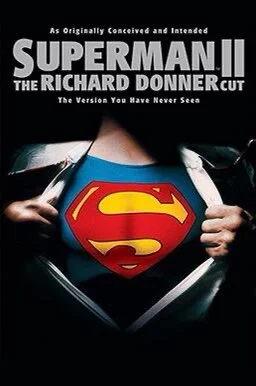
Superman II: The Richard Donner Cut (2006)

Mac Boyle May 16, 2021

Director: Richard Donner

Cast: Christopher Reeve, Margot Kidder, Gene Hackman, Terrence Stamp

Have I Seen it Before: Oh, sure. 

Did I Like It: I’ve taken my fair share of potshots at Zack Snyder’s Justice League (2021) but I legitimately think the framework for this long-lost director’s cut of a DC superhero movie would have been a better outcome for that more recent situation. Out of necessity (decades passing, and a number of the key players passing away), the cut is cobbled together from the material already available. Some sequences key sequences are built from rough footage and screen tests. Had they just released the disparate footage that Zack Snyder had shot—and not shot a lot of extraneous nonsense with Martian Manhunter.

Does that cobbled together quality detract from the experience? Does it somehow make the more polished theatrical cut of the film a better film?

The answer is a resounding no on both fronts. The rough edges only make the film more fascinating. That they were able to make a watchable film out of forgotten film canisters which were—at that point—thirty years old is something of a small miracle. The wobbliest example is the scene where Lois Lane (Kidder) finally proves that Clark Kent (Reeve) is the Man of Steel is actually taken from their final audition for the roles, and to hear Donner tell the tale, you can actually see the moment where Reeve earned himself the job and the definitive on-screen portrayal of the character was born. The fact that that moment is given some context, and isn’t just b-roll on a behind-the-scenes featurette is nearly reason enough for this new version of the film to exist.  

And ultimately, I think this is the better version of the film pound for pound. The weird moment in the theatrical film where Superman throws what appears to be a cellophane version of his emblem at one of the villains (a moment so silly, I doubted it actually existed for a moment, and had to google to confirm) is gone. Gone too is the super-kiss which wiped Lois’ memory and set everything back to zero. Those are already some fundamental improvements to an experience which was, admittedly, pretty good to begin with.

In it’s place is a re-setting of the “spinning time into reverse” trick, which works even less than it does in Superman (1978). Jackie Cooper’s toothpaste returning into its tube is a neat gag, but the only time when “everything that happened in the movie you just watched didn’t really happen” worked, it was The Wizard of Oz (1939). Maybe Inception (2010). It’s clear that Donner and company never really had their ending worked out, and all the sudden influx of cash from Warner Bros. after the fact wasn’t going to fix that.

Also, the story of Superman’s sacrifice of his powers in favor of his love for Lois doesn’t quite make sense. It’s improved with the restoration of recordings of Brando as Jor-El into the cut, as the weird bald Kryptonian bald guy in the theatrical cut and Superman’s mom never quite fit. The film is still never quite able to earn both the power of the sacrifice itself, and the speed with which it is reversed so Superman can propel himself into the third act, where he has to do final battle with General Zod (Stamp) and his cronies.

But both of those complaints are going to be present in some form of the theatrical cut, so I can’t really fault this film when it improves somethings, if it never quite fixes some other insurmountable things.

Tags superman II: the richard donner cut (2006), superman movies, richard donner, christopher reeve, margot kidder, gene hackman, terrence stamp
Comment

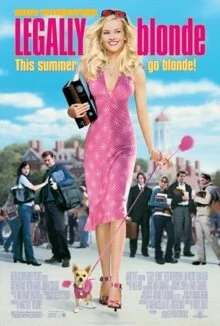
Legally Blonde (2001)

Mac Boyle May 6, 2021

Director: Robert Luketic

Cast: Reese Witherspoon, Luke Wilson, Selma Blair, Matthew Davis

Have I Seen it Before: I think so? Like, somewhere in last twenty years I would have to have seen it, right?

Did I Like It: Look, let’s not mince words. This is another one of those instances where Lora wanted to watch something, and I was amenable, mainly because I had a new set of Lego with which to tinker. I promised when I began these reviews that as long as I didn’t fall asleep through the screening, I would go ahead and write a review.

So, here we are.

The above seems to indicate I want to dismiss the film, and that’s not entirely true. This is not cosmetic snobbishness. I’d feel this way about any movie where the protagonist bravely decides to go to law school. I’m never going to buy into that scenario. To quote Elle Woods (Witherspoon), “You’ve got the wrong girl.”

Sure, it’s a slight comedy with not a lot of ambition written into the idea. The plot is cookie cutter to the point where it feels like a pre-written chapter in a screenwriting book that people buy to avoid, you know, actually writing... As I write this, my only reason for suspecting that I have seen the film before was that I saw the perm-based resolution of the plot coming a mile away.

At the same time, it manages to succeed at what it strives for far more than it’s normally given credit. It would be so easy for Elle Woods to be an absolute nightmare of a person, rendering her struggles cathartic. Yet, the film deftly avoids making her awful. She’s never judgmental, she always helps people around her, and a key to the success of the film, she largely earns her status as an underdog, despite her absolutely pure privilege. Some of that is probably Witherspoon’s performance, but more than a little bit of it has to be that screenplay which doesn’t try to reinvent the wheel. 

Tags legally blonde (2001), robert luketic, reese witherspoon, luke wilson, selma blair, matthew davis
Comment

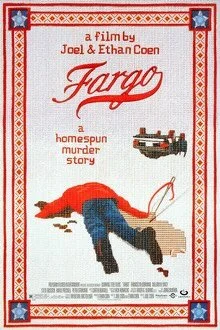
Fargo (1996)

Mac Boyle May 4, 2021

Director: Joel Coen

Cast: Frances McDormand, William H. Macy, Steve Buscemi, Peter Stormare

Have I Seen it Before: Oof. Buckle up on this one.

I first saw the movie in perhaps the worst way possible, on TNT airings in the late 90s. And Goddamn it if the film still doesn’t work when every flash of violence is truncated and every use of the word “fuck” is replaced with the wonderful euphemism “frooz.”

When the customer (Gary Houston) who is berating Jerry Lundegaard (Macy) calls him a “froozing liar,” that is as memorable a moment as I’m likely to encounter in film.

Although the cutaway to Showalter (Buscemi) and Grimsrud (Stormare) with the hookers always felt strange when all we were showed was them watching The Tonight Show.

But isn’t like I’m still watching a version of the film which is cut down to allow the maximum number of basketball games to be broadcast on a given day. The movie became all the better on DVD and Blu Ray in the following years, but here’s the weird thing:

Before this last weekend, I honestly can’t remember if I’ve ever seen it in the theater. I’m thinking there might have been a 20th anniversary screening five years ago at the Circle Cinema, but I can’t be completely sure. During a time where there were plenty of movie screenings, they do all tend to blend together.

Which brings us to this weekend. It’s been a year since I’ve been inside a theater, and with two full doses of Moderna running through my veins, it was time to come back. Wide releases are still in drips and drabs, and I just didn’t want my first trip back to be for Godzilla vs Kong (2021) or, God forbid, Mortal Kombat (2021), so I went ahead and waited until a verifiably great movie.

Oh, to be back at a theater. The bright light of an unseasonably hot spring day, giving way to the cool darkness of the inside, only release me back into the daylight. The posters and massive displays for upcoming releases...

And the popcorn. Oh, it was a moment of revelation when I realized just how different movie theater popcorn is from the microwavable stuff I’ve been using to fool myself in the time of COVID. I’d go on about the experience, but I’m nearly 400 words into this review, and I haven’t really talked about the film itself. I’ll just say thank you, Fargo. It’s good to be back.

Did I Like It: Aside from the sundry ways I’ve taken in the film, the thing I’m always struck by when watching it is a big question:

Who is the protagonist of the movie? Marge Gunderson (McDormand) or Lundegaard? Gunderson is the clear hero of the movie; by the time she shows up the plot is driven forward exclusively by her. On the other hand, she doesn’t show up in the film until roughly halfway through the runtime. To not introduce the protagonist until halfway through the film flies in the face of conventional screenwriting wisdom. It shouldn’t work like this, but somehow it does. The only other film I can think of that has such a schizophrenic relationship to its protagonist and doesn’t come across as hopefully amateurish is Psycho (1960).

Lundegaard, on the other hand is there from the first frame. He’s the one who’s got a desire, a plan, and is a bit of a stranger in a strange land. Thus, his—just as much as Marge’s—story is the hero’s story, even if it all collapses in on itself in well-deserved tragedy and comeuppance. 

An argument can be made for either. Depending on when I see the movie, I go either way. It makes it a pretty fresh experience every time, or far fresher than a 25-year-old movie has any right to be.

The next big question central to understanding the film is that of the sad story of Mike Yanagita (Steve Park). I’ve talked to any number of people, and seen a number of written pieces on the film that deem it as nearly flawless, but that Marge’s meeting with Yanagita at the Radisson is a weird non sequitur that serves no purpose.

Wrong.

Marge would have never taken a second look at Lundegaard’s increasingly thorny nest of lies, if she hadn’t been confronted with the complete falsehood that was Yanagita. The story doesn’t happen without it. Jerry just might have gotten away with it, even though the plan would have still been a disaster the moment that cop ate it in Brainerd. Without Mike Yanagita, the whole story falls apart. Mike Yanagita is load bearing, and there isn’t a wasted moment in this entire movie.

Tags fargo (1996), joel coen, frances mcdormand, william h macy, steve busemi, peter stormare
Comment

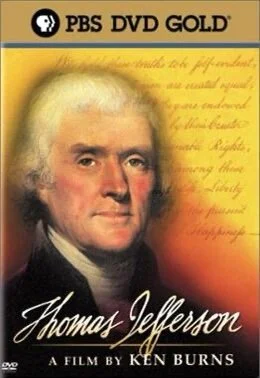
Thomas Jefferson (1997)

Mac Boyle April 30, 2021

Director: Ken Burns

Cast: Ossie Davis, Sam Waterston, Blythe Danner*, Philip Bosco

Have I Seen it Before: I want to say yes? Sometime in my misspent youth, I must have had a history teacher who had run out of energy and let this one run its course.

Did I Like It: There’s exceptionally little one can reasonably say about the craft of Ken Burns. At what he does, he is the absolute best. There is not a single flaw in any of his productions I have seen to date**. One might call his films long, but it’s hard to make that argument stick, when the films are intended to be viewed over multiple days (I’m looking in you direction, Zack Snyder...) One might dare to call them dray and boring, but I’m not sure I want to associate with such people, and would frankly rather you leave the site if that describes you.

So, what does one review about Burns’ films? It’s hard not to be tempted by the inclination to review the subject. Was Thomas Jefferson the genius of his (and possibly all) time? Was he a man of lofty words, but a depraved need to use the human beings around him? Was he both?

History evaluated—with the help of DNA evidence—subsequent to the production of this documentary created a consensus that he fathered the children of Sally Hemings. The film considers the possibility, but comes to no firm conclusions. He did use the people he owned, and he could not be bothered to fight the institution of slavery in any meaningful way. He saw the possibilities of the future needing to set aside the dogmas of his age, but that stance has fueled insurrectionists of today, just as much as it has liberalization of our laws.

For all of his brilliance, he failed at his ideals. The film is, therefore, a fascinating deep dive into one of America’s great enigmas.

On the rather trivial side of things, I am struck by the fact that Jefferson spent himself into penury, and did so almost exclusively in the process of buying too many books. That’s an all-too human failing which I could see myself falling into. I also can’t help but think his mind would have been blown by the prospect of a Kindle.


*And also Gwyneth too, briefly, while we’re at it, reading text from one of Jefferson’s granddaughters. It was undeniably a weird moment.

**And considering after the recent airing of Hemingway (2021), I bought into the PBS Passport hook, line and sinker, I will likely be taking in more of his oeuvre.

Tags thomas jefferson (1997), ken burns, ken burns films, ossie davis, sam waterston, blythe danner, philip bosco
Comment
IMG_0078.jpeg

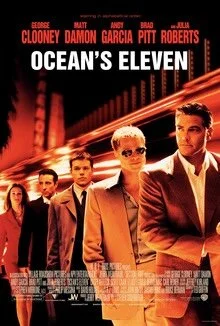
Ocean’s Eleven (2001)

Mac Boyle April 25, 2021

Director: Steven Soderbergh

Cast: George Clooney, Matt Damon, Brad Pitt, Andy Garcia

Have I Seen it Before: Oh, sure.

Did I Like It: What is the goal of a movie like this? Soderbergh is at the helm, so one might think—without any other information—that something highbrow is in the offing. But no, this film has no ambition greater than the original Ocean’s 11 (1960). Be as cool as possible with as many stars as you can get in the same room at the same time.

Thus, the movie might be the most successful film Soderbergh has ever made.

The film refreshed the heist picture, injecting it with enough of the same action which made the Mission: Impossible franchise such an action staple. Come to think of it, that series didn’t really get its stuff together until several years after this movie was release. The influence probably goes the other way, in all honesty. I started out this review not needing more from the film than what it delivers at face value, but it probably has a lot more to answer for in the modern sense of what action movies have become.

But it’s the little things which have brought me back to the film over and over again. Has there ever been a better way to order a drink than when Clooney orders whiskey? He drops in on Tess (Julia Roberts, overpowered in the film, but I’ve never thought she had much charisma in anything, so it actually works out for the best) and orders a whiskey and a whiskey. I just... I don’t even like whiskey, and if I ever live to be half as cool as that, I’ll have used my time wisely.

Maybe more independently-minded purveyors of more complicated pieces of cinematic fare. Soderbergh here might be slumming it, but with his perfunctory work, he does far better than most filmmakers content to just work in popcorn fare. Maybe Ingmar Bergman should have made a Rock Hudson/Doris Day comedy. Sergei Eisentstein should have made a Chaplin comedy. Maybe Martin Scorsese

No, that shouldn’t happen. This movie’s still worth a look if you haven’t taken it in already, and it’s better than you probably remember.

Tags ocean’s eleven (2001), ocean’s movies, steven soderbergh, george clooney, matt damon, brad pitt, andy garcia
Comment
220px-Memento_poster.jpg

Memento (2000)

Mac Boyle April 22, 2021

Director: Christopher Nolan 


Cast: Guy Pearce, Carrie-Anne Moss, Joe Pantoliano, Stephen Toblowsky


Have I Seen it Before: Yes, but it’s been years. My DVD case has a crack in it, and it’s entirely possible I’ve gone most of fifteen years without noticing it.


Did I Like It: Which was an integral part of the charm. The film’s plot is so carefully constructed, that unless you know the film backwards (and, I suppose, forwards), there are pleasures and surprises aplenty to rediscover. I’m sitting there vaguely remembering that both Natalie (Moss) and Teddy (Pantoliano) are not who they appear, but just how it all comes together remained beyond my memory until the very end. A movie built on surprises that holds up on multiple viewings is truly a thing to behold.


It almost makes me regret the success Nolan has enjoyed since this film. After Batman Begins (2005) he quickly became the world’s greatest purveyor of the now ubiquitous “trailer noise”*. I’ve enjoyed most of his work post-The Dark Knight (2008), but I can’t help but lament the smaller, deceptively simple work he could have produced had Warner Bros. not let him do whatever his wildest dreams would allow. 


It’s sort of a strange miracle that the film hasn’t become more influential, aside from introducing the idea that if Hollywood could halt its search for a filmmaker who could make a Batman movie which would be an actual detective story. A TV show with this idea could have worked, and been ever-green. I’m shocked it hasn’t become a procedural which somehow had been running on CBS for fifteen years without me noticing. A quick glance at the film’s Wikipedia page insists that a remake is in the works, which, why? Can we remake films which were released after Y2K? It’s seems like a crime.


Maybe if my memory takes a hit, it would be a good idea. Otherwise, I’ll pass.

Tags memento (2000), christopher nolan, guy pearce, carrie-anne moss, joe pantoliano, stephen tobolowsky
Comment
220px-Misery_(1990_film_poster).png

Misery (1990)

Mac Boyle April 22, 2021

Director: Rob Reiner


Cast: James Caan, Kathy Bates, Richard Farnsworth, Frances Sternhagen


Have I Seen it Before: Oh, sure. I never fail to get a little pang of nausea as Untitled goes up in flames. Good argument for the cloud, if ever I heard one. (Says the man who still hand-writes his first drafts…)


Did I Like It: It’s going to feel trite to say “the book was better” but… ahem… The book is better. It’s a picky thing, but Stephen King’s novel is—horrifying though it might be—one of the best books about the love—and perhaps obsession—that is the writing process. After everything Paul Sheldon (Caan) goes through, he does not destroy Misery’s Return. He put real work into the book, and he wasn’t about to let Annie Wilkes (Bates) destroy another book.


Destroying both books may have a certain catharsis for the civilians, but it doesn’t do it for me.


Otherwise, the film is without flaws I can readily identify. Plenty of films try to imitate the trappings of a Hitchcock film, but few can tap into what a Hitchcock movie could do. Rob Reiner doesn’t get nearly enough credit for creating superlative films in disparate genres. I guess people are still stuck on Meathead at the end of the day.


Bates plays the terror of Wilkes not as some kind of boogeyman, which easily could have been the inclination. Instead, she is deeply (probably irretrievably) ill. As much as Paul Sheldon is a prisoner at the Wilkes farm, so too is Annie a prisoner in her own head.


The supporting turns from Farnsworth and Sternhagen might very well be the movie’s secret weapons. Every time they inhabit the frame, we’re instantly disarmed by their folksy charms. It makes the scenes with Wilkes and Sheldon far more harrowing, and Buster’s eventual fate is even more shocking when the two worlds inevitably collide. His small town detective as the engine for the film’s plot walked so that Frances McDormand could run in Fargo (1996).

Tags misery (1990), rob reiner, james caan, kathy bates, richard farnsworth, frances sternhagen
Comment
  • A Blog About Watching Movies (AKA a Blog in Search of a Better Title)
  • Older
  • Newer

Powered by Squarespace

Party Now, Apocalypse Later Industries

Where creativity went when it said it was going out for cigarettes.

Where creativity went when it said it was going out for cigarettes.