Party Now, Apocalypse Later Industries

Where creativity went when it said it was going out for cigarettes.
  • Home
  • BOOKS
    • THE ONCE AND FUTURE ORSON WELLES
    • IF ANY OF THESE STORIES GOES OVER 1000 WORDS...
    • ORSON WELLES OF MARS
    • THE DEVIL LIVES IN BEVERLY HILLS
    • A LOSS FOR NORMALCY
    • RIGHT - A NOVEL OF POLITICS
  • PODCASTS
    • Beyond the Cabin in the Woods
    • THE HOLODECK IS BROKEN
    • THE FOURTH WALL
    • As The Myth Turns
    • FRIENDIBALS! - TWO FRIENDS TALKING ABOUT HANNIBAL LECTER
    • DISORGANIZED! A Criminal Minds Podcast
  • MOVIE REVIEWS
  • BLOGS AND MORE
    • Bloggy B Bloggington III, DDS
    • THE HOLODECK IS BROKEN BLOG
    • REALLY GOOD MAN!
  • Home
    • THE ONCE AND FUTURE ORSON WELLES
    • IF ANY OF THESE STORIES GOES OVER 1000 WORDS...
    • ORSON WELLES OF MARS
    • THE DEVIL LIVES IN BEVERLY HILLS
    • A LOSS FOR NORMALCY
    • RIGHT - A NOVEL OF POLITICS
    • Beyond the Cabin in the Woods
    • THE HOLODECK IS BROKEN
    • THE FOURTH WALL
    • As The Myth Turns
    • FRIENDIBALS! - TWO FRIENDS TALKING ABOUT HANNIBAL LECTER
    • DISORGANIZED! A Criminal Minds Podcast
  • MOVIE REVIEWS
    • Bloggy B Bloggington III, DDS
    • THE HOLODECK IS BROKEN BLOG
    • REALLY GOOD MAN!

A Blog About Watching Movies (AKA a Blog in Search of a Better Title)

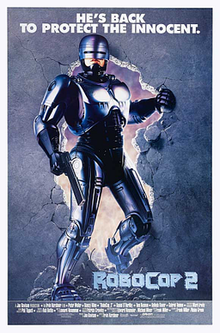
220px-Robo2poster.png

Robocop 2 (1990)

Mac Boyle July 18, 2020

Director: Irvin Kershner

Cast: Peter Weller, Nancy Allen, Daniel O’Herlihy, Tom Noonan

Have I Seen It Before?: A number of times, and usually under protest. More on that later. One memorable screening of the film took plaace on a stormy night in December 2007. People in the area will remember the massive ice storm that made mincemeat out of my town that month. I popped in my DVD of the film the night of that storm. The power went out and stayed that way for the better part of a week to get the power back. After I returned to my apartment from the holidays, it was 2008 before I could put my life back together…

Er… I mean, finish watching the movie.

Did I like it?: Not unlike the flood of Prime Directives that waylay Robo (Weller, in his final appearance in the role; he fled like the R-rating did from the series) in the second act, this film is only a list of ideas, at best.

There are those aforementioned Prime Directives. By implying that nay degree of social consciousness would make policework impossible, the film certainly ages itself, but it’s an interesting commentary (if no less problematic) on the action movies of the era.  People wonder how Frank Miller became such a fascist nutjob over the years, but the seeds were even here, in his mangled screenplay.

The notion that OCP is struggling just as much as the filmmakers in their efforts to make a newer, better Robocop is more meta commentary than Kershner or Miller probably intended, but it still stands.

The film even maintains the absurd television commercials and satire of the original. While the Media Break sequences aren’t quite as sharp here, the sequence where a little league team has its depraved charms. It’s sad that when this one was nowhere near as successful as the original, the various rights holders to the property over the years missed the lesson, and damned the future of law enforcement to the limbo that is PG-13 to this day.

But none of it comes together in any kind of a satisfying package. The original film is so steeped in Campbellian hero myth that it can’t help but stand the test of time. This falls flat. There is no vision here, just a checklist. Irvin Kershner had wild success with Star Wars – Episode V: The Empire Strikes Back (1980), so when Orion needed a sequel, he was the guy to bring in. He never directed another feature after this. The most baffling element of the film is Leonard Rosenman’s score. He must have been on some list due to his work on Star Trek IV: The Voyage Home (1986), but this is such a complete abandonment of the marches put in place by Basil Poledouris, that every time the choir (yes, choir) chants “ROBOCOP!” one can’t help but notice how far the series has gone off course. Even Robocop 3 (1993) managed to course-correct on that front.

Tags robocop 2 (1990), robocop movies, irvin kirshner, peter weller, nancy allen, daniel o'herlihy, tom noonan
Comment
Kingkongposter.jpg

King Kong (1933)

Mac Boyle July 15, 2020

Director: Merian C. Cooper, Ernest B. Schoedsack

Cast: Fay Wray*, Robert Armstrong, Bruce Cabot, Frank Reicher

Have I Seen It Before?: I’m having to guess and say I have. I’ve seen the 2005 remake (but not the 1976 one). I’ve seen every shot of the film that have become ubiquitous of the ape reaching for Fay Wray and being barely contained on Broadway.

Did I like it?: Strip away all the iconic imagery—also try your best not to think about that this was reportedly a favorite film of Adolf Hitler, despite it being banned in Germany during the Third Reich—and this is a very basic, very pulpy story. Some unspeakable thing is out in the jungle. Humans capture it. It escapes. It wreaks havoc, and then is destroyed, despite the chaos not truly being its fault.

It’s unfair to say that age has been unkind to the film. Age has been at least marginally unkind to films like Gone with the Wind (1939) and even Citizen Kane (1941). This one suffers more because—for all its technical innovation—there were decades of trash made with the same tools displayed here. Stop-motion articulated puppets have been duking it out while process shots and trick editing of actual humans trying to react to such phenomena have been playing out for years. When implemented by someone like Harryhausen or even occasionally by Tim Burton, it can have whimsy. All too often, it just looks cheap.

It’s important to remember that while the artistic methods for this film were largely invented here, as well as in The Lost World (1925). Were Willis O’Brien still working in movies, he probably would have moved from stop-motion. He’d be inventing new ways of showing us the impossible.

I’d like to think he’d avoid CGI, though. Then again, I can’t quite imagine what things beyond CGI would be. Might be why I’m not Willis O’Brien, and Willis O’Brien is.


*With a name like that, she was going to become an assassin, a superhero/villain, or a movie star.

Tags king kong (1933), merian c cooper, ernest b schoedsack, fay wray, robert armstrong, bruce cabot, frank reicher
Comment
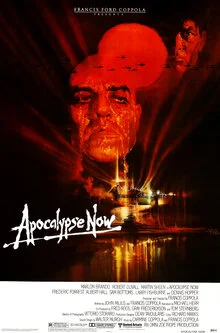
Apocalypse_Now_poster.jpg

Apocalypse Now (1979)

Mac Boyle July 14, 2020

Title: Apocalypse Now (1979)

Director: Francis Ford Coppola

Cast: Martin Sheen, Marlon Brando, Robert Duvall, Dennis Hopper

Have I Seen It Before?: Here’s the weird thing, especially when you consider the name of my company. I think I’ve seen it before. I recently procured a deluxe blu-ray of the film that includes the original theatrical cut from 1979, the Redux version released in 2001, and Hearts of Darkness (which, if I’m being honest, is the real reason I bought the set again). The opening minutes of Redux felt like it was significantly different from the film I remember. But, as I restarted the film with the theatrical cut, it’s largely unchanged so far as the first few minutes are concerned.

I’m honestly not sure what the hell I’ve seen.

Did I like it?: Orson Welles tried to make it, and before any sizable portion of the country would be skeptical about war to make it work. George Lucas was all set to make it, before he ended up becoming an action figure salesman. Only Coppola got it done, and given his output afterwards, it probably broke him far more than we could see at the time.

I’d go into the staggering scope of the film, but that may be a topic more at home in my eventual review for Hearts of Darkness. However, I will note that in the early scenes of the film—before it really has said much about war and the madness therein—where helicopters bob and weave off the coastline is staggering. They don’t—won’t, really—make movies like that anymore. Now such terrible things will look only slightly more realistic than Mario jumping for coins.

And they are terrible things. I can’t think of another war movie that not only makes the view feel what I can only imagine is the violence of war, but the deep, unrelenting insanity of the effort as well. It’s also deeply unsettling to see Martin Sheen this upset about anything, but then again I would feel that way about any of the cast of The West Wing.

Tags apocalypse now (1979), francis ford coppola, martin sheen, marlon brando, robert duvall, dennis hopper
Comment
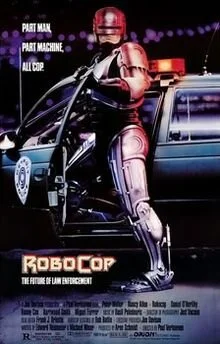
RoboCop_(1987)_theatrical_poster.jpg

Robocop (1987)

Mac Boyle July 13, 2020

Director: Paul Verhoeven

Cast: Peter Weller, Nancy Allen, Ronny Cox, Kurtwood Smith

Have I Seen It Before?: There’s something fascinating about the image of Robocop, as exemplified in the poster above. It enflamed the imagination of this reviewer as a child (and I’m willing to hazard a guess that I wasn’t the only one). Whenever it would air on network TV, it was appointment viewing. By the time I could procure R-rated films (and it is one of the R-iest R-rated films to come down the pike), it was one of the first I got my hands on.

Did I like it?: And it didn’t disappoint. In truth, the reality is that this film makes me angry. There’s a point about three-fourths through the film where I become pointedly depressed that in my own efforts, I’m never going to make anything as good as this. This film is so good that I have infinite patience for anything with the Robocop name on it, even when that patience is continuously tested by an endless series of lame attempts (that steadfastly avoid any understanding of what makes this film so special) to recapture the glory displayed here.

It is equal parts biting satire (that has become increasingly true), and pure Campbellian hero myth. It’s a silly title, but for my money, it’s a perfect movie.

And, yet… Now we live in an era where it is difficult to look at a cop in a film as a hero, much less a tragic one. It’s also an action movie from the 1980s; you can play any random thirty seconds and find a handful of problematic things. Take his prime directives, an attempt at a heroic code:

1.       Serve the Public Trust

2.       Protect the Innocent

3.       Uphold the Law

4.       (CLASSIFIED) Any attempt to arrest an officer of Omni Consumer Products results in shutdown.

The fourth directive is clearly the main fuel of stories involving the characters, but when you dig into it further, his very design is fascist. Everyone is theoretically innocent until proven guilty, but Robocop (Weller) has no problem eviscerating (and castrating) piles of crooks long before they’ve been able to see an attorney. With a logical flaw in his overriding programming, it’s a wonder Robo didn’t join the HAL 9000 in trying to obliterate every full-human being in sight just to make logical sense of the world.

There may be good cops, but the system is not interested in letting them stay good. That the slightest wisps of a human being encased in military hardware can still reach for their own humanity, maybe there is some hope. It is, after all, a fantasy.

Tags robocop (1987), robocop movies, paul verhoeven, peter weller, nancy allen, ronny cox, kurtwood smith
Comment
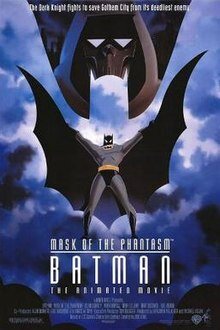
220px-Batman_mask_of_the_phantasm_poster.jpg

Batman: Mask of the Phantasm (1993)

Mac Boyle July 12, 2020

Director:  Eric Radomski, Bruce Timm

Cast: Kevin Conroy, Mark Hamill, Dana Delany, Hart Bochner

Have I Seen It Before?: The VHS copy—I am sadly one of the many dolts who didn’t catch it in the theaters—was part of the haul of a massive tenth birthday shopping spree at Target (it went as high as fifty dollars!), twenty-six years ago today.

Did I like it?: Oh, man. At a time when Schumacher was at the helm of live-action Batman, this was hands-down the greatest feature-length story of the Dark Knight ever produced. Nolan came and the bigger movies got better. This one might have fallen a bit in esteem, but that is patently unfair. It is just as good as the Nolan films, and certainly better than either of the Zack Snyder entries with the character.

It’s equal parts competent whodunit puzzle (and it’s a shame how rarely a Batman story is also a mystery), film noir tragedy, and superhero story, all jammed into a tight 76-minute package. The moodiness that typifies people’s skepticism about Batman (Conroy) is given context (but not explicit explanation) here. He is a product of his own obsession, born in an era that made some brutal sense, but a part of an era where some degree of insanity is the only valid insurance policy. The only reason he continues to be a hero is because that obsession hasn’t completely swallowed him up, despite its best efforts and easier success with others. Other films have tried to harness this truth about the character. This one succeeds. The animation was originally intended for a direct-to-video release, and it shows, but none of us were showing up for Batman: The Animated Series for the feature-quality cels. We came for the writing… and also, it’s what was on the local Fox affiliate at that particular moment.

It also eschews many of the things that can become so de rigueur about Batman stories. At no point in this film does Martha drop her pearls. What’s more, her name isn’t even mention despite Bruce’s parents hovering like a cloud over everything. One of the Rogue’s Gallery doesn’t suck the air out of every moment in the film, either. Joker (Hamill) is here, but he’s a supporting character, a cypher. I’ve always felt the Clown Prince of Crime is like comic book wasabi. A little bit, and the flavor is surprising, perhaps even chaotic. Too much, and your mouths numb aside for the feeling of green horseradish in your mouth. Batman often works best when the supervillains are just part of the scenery; just see The Long Halloween for a master’s course in the subject. Or, better yet, give this film a view. It’s currently on Netflix, but who knows for how long?

Tags batman mask of the phantasm (1993), batman movies, eric radomski, bruce timm, kevin conroy, mark hamill, dana delany, hart bochner
Comment
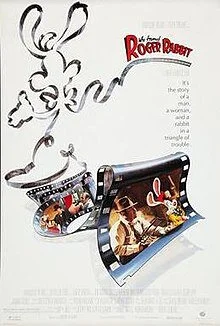
220px-Movie_poster_who_framed_roger_rabbit.jpg

Who Framed Roger Rabbit (1988)

Mac Boyle July 11, 2020

Director: Robert Zemeckis


Cast: Bob Hoskins, Christopher Lloyd, Charles Fleischer, Stubby Kaye


Have I Seen it Before: I’m a child of the 1990s and I had a VCR. What do you think?


Did I Like It: One would naturally want to dwell in this review on the technology on display here. Animated characters had interacted with live action performances before, in films like Song of the South (1946) and Mary Poppins (1964) (both from Disney, incidentally). However, they never interacted quite so believably before or since. Animated characters rustle through their environment. Water splashes, blinds rustle, and chairs rotate when they come in contact with Roger and company. It’s a subtle, relatively low-tech addition to the process, but adds so much.


This is also a baffling cross-corporation crossover. When would you ever see Donald and Daffy Duck play a duet on the piano? Or Mickey Mouse and Bugs Bunny engage in conversation? Or any character owned by Warner Bros. appearing within 100 miles of a Disney production? It’s a testament to the baffling things Steven Spielberg could get done with just the weight of his mere involvement in a movie. I can’t imagine that such a convergence could ever happen again. It’s probably for the best that any sequel—variously rumored to be a war movie, or a domestic drama with Roger (Fleischer) and Jessica (various performers depending on the context, but primarily Kathleen Turner) in the 1950s—never came together.


Other movies attempted to fit a similar mold in the ensuing years. Cool World (1992), Space Jam (1996), and Looney Tunes: Back in Action (2003) all tried to merge real people and cartoon characters to varying degrees of commercial and critical success. Why do those films disappear into ambivalence and this film stands the test of time? Honestly, the story that underlines the whole thing (a tale about a private eye uncovering a plot to eradicate LA’s public transit system in favor of the freeway that will inevitably take it over) actually works under its own merits. The character work is solid. It may all be in the mold of Chinatown (1974), but it doesn’t skimp in the craft department simply because it is an homage.

Tags who framed roger rabbit (1988), robert zemeckis, bob hoskins, christopher lloyd, charles fleischer, stubby kaye
Comment
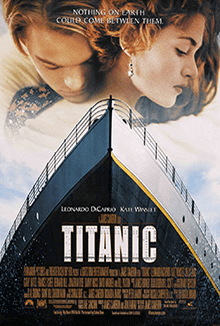
Titanic_(Official_Film_Poster).png

Titanic (1997)

Mac Boyle July 9, 2020

Director: James Cameron

Cast: Leonardo DiCaprio, Kate Winslet, Bill Paxton, Billy Zane

Have I Seen It Before?: I’m relatively sure I came to the film late. In December 1997, the stink of the massive delays with the movie led me—my analysis of the movie business as a thirteen-year-old were not to be dismissed—to insist that Tomorrow Never Dies (1997) would win the box office that particular opening weekend. I may still owe a school chum a couple of Star Wars CCG cards as recompense for my folly.

I did eventually see the film during its unparalleled run at the box office over the next few months. Everyone did. Girls wanted to see the movie. Now, of course, I ended up seeing the movie by myself, but one did want to be conversant in the vernacular of the age.

Not that I was talking with too terribly many girls either.

Ahem.

Did I like it?: There’s an interesting trend with the writer James Cameron. His tastes are pretty basic*. The Terminator (1984) is essentially just a slasher movie. Aliens (1986) is a war movie. True Lies (1994) is a Bond movie merges with what is essentially a family sitcom. Avatar (2009) is a pulp sci-fi novel. Even Terminator 2: Judgment Day (1991) is essentially Shane (1953) with robots. So, too, is this film a very basic romance story. In the hands of any other filmmaker, Cameron’s scripts could be a real drag.

Cameron the filmmaker is at or near the top of his field. I hesitate to think of a filmmaker who has been able to more successfully buck the studio system in favor of his gigantic budgets. Even Orson Welles was only able to pull of the trick once. Cameron does it time and time again. Even when he had to work with a shoestring, he knew better than most how to make each shot work in symbiosis with one another. His words may be pedestrian, but the way he speaks the language of cinema are second to none. The cast is fine, although I don’t think I’d be alone in thinking that DiCaprio’s best work still lay ahead of him, after he was sufficiently freed from the burden of being a teen heartthrob. Package that all together with one of James Horner’s finest scores, and you might not even notice that the film runs over three hours, entering that hallowed ground of movies that had to be split up into two VHS tapes (and even had to run on two discs in the here and now).

But let’s get serious. If Jack (DiCaprio) and Rose (Winslet) hadn’t been making out so close to the crow’s nest, then none of us would be still talking about the damned boat, I’d imagine.

*I know. Who am I to judge?

Tags titanic (1997), james cameron, leonardo dicaprio, kate winslet, bill paxton, billy zane
Comment
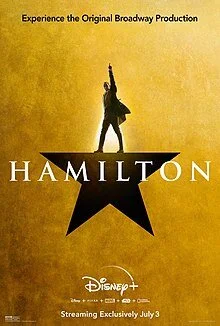
220px-Hamilton_Disney+_poster_2020.jpg

Hamilton (2020)

Mac Boyle July 4, 2020

Director: Thomas Kail*


Cast: Lin-Manuel Miranda, Leslie Odom Jr., Phillipa Soo, Daveed Diggs


Have I Seen it Before: Well that’s a heck of a question in this particular case. I had heard snippets of the soundtrack during its cultural ascension during the far-flung era of 2016. I immediately bought the soundtrack album the day after the cast offered a special announcement of hope when then Vice President-elect Mike Pence attended a show with his daughter. Then President-elect Trump called it—and I’m paraphrasing—the worst thing to happen to a politician in a theater. Which… Well, I’ve read “Our American Cousin,” so the least I could do here was get the album.


Anyway. Loved the soundtrack from that moment. Saw the travelling company production (one of three, if I’m not mistaken) that came through my town.


The Hamilton Mixtape is also in regular rotation on my Apple Music app.


But my wife, she’s the real Hamilfan.


Did I Like It: I would struggle to come up with any piece of art created since the year 2000 that is more of a work of breathtaking brilliance from every angle under which it can be observed. Its simplest, most wide-angle description is a story of two men. One is trying to get the other to be more like him and not throw away his shot. The other is trying to get the first guy to be more like him and wait for it. By the time they’re finally listening to each other, it destroys them.


I could go into each and every song in detail, but they’ve been written about to death. I live for the type-A numbers where Hamilton keeps writing like it’s a psychological defect, for reasons. I’m less into the songs about being a parent, because I’m not one. Every note is brilliant and beautiful, and that’s not even counting each The West Wing reference that Miranda uses to make sure I’m paying attention.


So, there can’t possibly be anything to dislike in this accelerated concert film of several performances in June 2016. You know, before everything happened. You get the original Broadway cast, when that was an astonishingly difficult ticket to procure when they were all still performing the play. There’s a different energy to the performance here, though. At first, I worried that this might have been recorded late in the tenure of this cast, and they were too comfortable with the material. They were rushing it. I thought they may have been trying to get the material into a theatrical running time**, but then realized that the play and the movie are the same length. The intermission is the only thing pared down. Then I realized that this was seeing the real interaction of live theater. This is as close as many of us will get to the Richard Rodgers theater. What more can you expect from what is essentially a concert film.


And yet, there is something missing here. It isn’t the film’s fault; a camera would never be able to fully communicate this aspect of the Hamilton experience. The center of the stage is constantly in motion, a Lazy Susan (ironically enough) of theater. To see it live, it is a mesmerizing display of precision timing and walking backwards. Here, there are several moments that eschew that brilliance in favor of closer shots, and even from the wider shots the choreography doesn’t appear to be the delicate balancing act that it really is.


When it comes right down to it, in order to really experience this thing, you’ll have to go to the theater.


…when theaters are a thing again.


*Pretty much throws the auteur theory into question, doesn’t it? Even though there are a plethora of splendid moving parts in orbit of this piece of theater, is anyone willing to say that Lin-Manuel Miranda is not the author of what we all watched on Disney+? 


**Get this! Typing the phrase “how long” into Google will autofill into “How long is Hamilton?” The internet still can surprise me.

Tags hamilton (2020), thomas kail, lin-manuel miranda, leslie odom jr, phillipa soo, daveed diggs
Comment
220px-Jobs_(film).jpg

Jobs (2013)

Mac Boyle June 20, 2020

Director: Joshua Michael Stern

Cast: Ashton Kutcher, Dermot Mulroney, Josh Gad, Lukas Haas

Have I Seen It Before?: Nope. With all of the Jobs movies coming out of the woodwork in the years after his death, there didn’t seem to be room for the one with the guy from “That 70s Show.”

Did I like it?: Is it important for the cast of a biopic to look like the people they are playing?

If it is, then this film succeeds to a far greater degree than either of the other competing Jobs biopics, Danny Boyle’s <Steve Jobs (2015)> or the comedic iSteve (2013). Asthon Kutcher’s main qualification for being in the film is that he does resemble the younger Jobs. To his credit, he even manages to adopt some of the inflections that we all would hear during Apple product launches. It’s an admirable impression. The film even attempts to drive home this point before the end credits begin by showing various members of the cast next to their real-life counterparts. They certainly took a little extra time to go through SAG membership for the precise look they wanted.

Unfortunately, I don’t think resemblance matters all that much as long as there is some attempt to adapt the life of the subject into an engaging film. It didn’t matter that Joaquin Phoenix bore almost no resemblance to Johnny Cash, with the right haircut anyone could look like Andy Kaufman (including Jim Carrey), and Michael Fassbender is the more affecting of the Steves Job. Boyle’s film certainly has the more vibrant screenplay and is more interested in trying to make its subject into a film character.

This hits all the bests of the Jobs story in the correct order (even though they inexplicably had Wozniak work on the Macintosh, which he didn’t), but can’t spend more than fleeting moment on each beat to fit it all in the constrictive shell of a biopic. It is all surface. I don’t feel like I understand Jobs as a man and a figure any better after this film. For that, you might need to read a book. I don’t quite see Jobs as a character with an arc, either. For that, you’ll have to go with another film.

There’s also plenty of perplexing aesthetic choices, especially with a subject like Jobs at the center of the film. I like REO Speedwagon, but I’ve read the Isaacson biography twice, and I’m reasonably sure that Jobs probably didn’t care for them. There’s enough Bob Dylan in the mix to make sure that we all know the filmmakers know how to read Wikipedia page.

One thing is for certain. Jobs would have hated the font they chose for the end credits. Say what you will about the Danny Boyle film, but they definitely got the design of Steve Jobs right.

Tags jobs (2013), joshua michael stern, ashton kutcher, dermot mulroney, josh gad, lukas haas
Comment
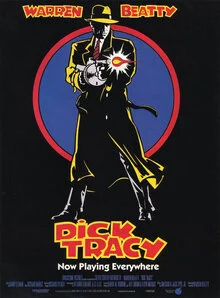
Dick_tracy1.jpg

Dick Tracy (1990)

Mac Boyle June 20, 2020

Director: Warren Beatty

Cast: Warren Beatty, Madonna, Al Pacino, Glenne Headley

Have I Seen It Before?: The film underperformed at the box office in 1990, negating the possibility of future sequels*. That always seemed unusual to me, as the film was everywhere that summer. Toys, McDonalds, TV… And everyone seemed to see it. Including me.

Did I like it?: There’s no denying that Beatty managed to amass all of the best ingredients to accomplish this film. The cast—especially where the villains are concerned—are an absolute wish list for a film like this. There aren’t a lot of movies that feature new, original songs by Stephen Sondheim, but Beatty somehow managed to make it happen, the score is pure Danny Elfman, even when it seems like it was leftover bits from his score for Batman (1990).

There is little doubt that the production design by Richard Sylbert and set decoration by Rick Simpson (which won an Academy Award for Best Art Direction) is sublime, and deceptively simple in its execution. The stark primary colors of nearly every item on display brings the classic feeling of a comic strip to life far more directly than any other film before or since. The matte paintings might age a little, especially whenever the film attempts to merge them with two separate live-action shots, but they still do have a blinking, glitzy life to them that other films of the era could never hope to achieve.

One wants to say that film may not work as well as it could. Beatty clearly has Madonna on the mind, lingering on her for long stretches that leave the film unfocused. The comedy is hit or miss. Ultimately, Tracy is just too square of hero, and probably benefits from police privilege just a bit too much to enjoy in 2020. But that art direction, though. It’s an impressive achievement, even when it fails to fully excite.


*A fate I think it kind of deserves after it took Gremlins 2: The New Batch (1990) out at the knees. It should also bear mentioning that Beatty’s clutching onto the rights to the character have prevented much of anything to be done with the character in the last thirty years.

Tags dick tracy (1990), warren beatty, madonna, al pacino, glenne headley
Comment
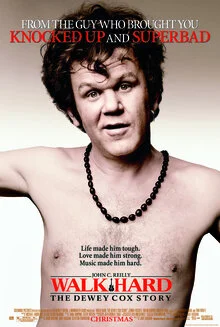
Walk_hard_poster_07.jpg

Walk Hard (2007)

Mac Boyle June 9, 2020

Director: Jake Kasdan


Cast: John C. Reilly, Jenna Fischer, Tim Meadows, Kristen Wiig


Have I Seen it Before: Yep. Somehow, I once had the DVD on my shelf, but I got rid of it at some point, and I can’t quite account for it.


Did I Like It: I really did, for the most part! I liked it so much that I was mystified that the movie had so conclusively dropped off my radar in the years since its release. I even bought tracks of the soundtrack off of iTunes with some long-since abandoned, a fact that I only realized when I self consciously started singing along with some of the songs.


The film itself is in the best tradition of spoofs like Airplane (1980) and The Naked Gun (1988), which is also pretty surprising. For one thing, the Apatow pedigree would be a more realistic comedy like The 40-Year-Old Virgin (2005) and Knocked Up (2007). For another, By the time this film has been released, I had mostly written off the joke as machine gun spoofs, largely because the experiment that was the Scary Movie franchise got out of the lab and flooded us with unwatchable dreck.


As much as the film might entertain, especially in its opening minutes when the tragedy of Cox’s childhood (and the trappings of similar biopics) is writ large, the film does run a little bit out of gas. Call me a sucker for absurdism but redeeming Cox and grounding him back in reality saps the film of its best laughs. A little bit of that manic energy remains until the end, but you can’t quite measure up to a game of chicken with a tractor and a bull.


But that the music in the film works on its own grounds is what makes it a treat to revisit after all this time. Just as soon as the runtime ended on Netflix, I put the soundtrack back on my Apple Music list. Welcome back, Dewey. It’s been a while.

Tags walk hard (2007), jake kasdan, john c reilly, jenna fischer, tim meadows, kristen wiig
Comment
61Id1G9VhZL._AC_UY218_.jpg

Never Give Up, Never Surrender: A Galaxy Quest Documentary (2019)

Mac Boyle June 7, 2020

Director: Jack Bennett


Cast: Sigourney Weaver, Tim Allen, Sam Rockwell, Justin Long


Have I Seen it Before: Nope. It had been on my list of things to watch on Amazon Prime for a while, though.


Did I Like It: It’s a mostly fine film, of a piece with other fan celebration documentaries like Back in Time (2015), Ghostheads (2016), or What We Left Behind (2019). The stars are interviewed. The fans are interviewed. Hopefully a couple of things the viewer didn’t previously know are examined, or at least examined more deeply than they were previously known. Everyone who liked the original thing comes away with a nice warm feeling. It isn’t the cutting edge of documentary, but I can easily think of worse ways to spend an hour and a half.


I had known at one point that the late, great, Harold Ramis had once been on board to direct the film but dropped out. He made Analyze This (1999), a film that would have likely collapsed in on itself without Ramis, so everything worked out. I had no clue that it was largely over the casting of Allen, and it was nice to hear that there were no harsh feelings over the issue, just an honest disagreement.


The debate over the casting of Jason Nesmith/Commander Taggart is the most revelatory information. Ramis’ number one choice of Kevin Kline would have been interesting, as he is a comedic actor of the first order, but his on screen persona has always felt far away from the Shatner energy that Allen would be charged with channeling. Bruce Willis and/or Alec Baldwin might have worked, but only if they believed in the movie. Either one of the sleep walking through the film wouldn’t have worked, and the whole film would probably be unwatchable in the here and now if Mel Gibson fought the rock monster.


The one failing of the film is that it didn’t take a deeper dive in the one subject this film could touch on, and we aren’t likely to see any elaboration on anywhere else. Just before the inimitable Alan Rickman passed away, production was going full speed ahead on a sequel miniseries for Amazon Prime. They talk about briefly, and with appropriate sadness, but What We Left Behind creates hypothetical future material for that series out of nothing. This film doesn’t touch on where the characters ended up and what they would be doing now, and there were even scripts written on that project. It’s a missed opportunity in an otherwise perfectly fine experience.

Tags Never Give Up Never Surrender: A Galaxy Quest Documentary (2019), jack bennett, sigourney weaver, tim allen, sam rockwell, justin long
Comment
220px-Galaxy_Quest_poster.jpg

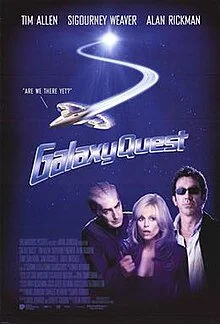
Galaxy Quest (1999)

Mac Boyle June 7, 2020

Director: Dean Parisot


Cast: Tim Allen, Sigourney Weaver, Tony Shaloub, Sam Rockwell


Have I Seen it Before: Oh, come on. What do you think? I saw it opening weekend.


Did I Like It: It’s beloved for the reason. Many people count it among the best Star Trek films, and even a few people place it as number one, ahead of Star Trek II: The Wrath of Khan (1982). That, to me, feels like too much.


The special effects don’t age exceptionally well, yet another casualty of relatively early CGI without a lot of artistry behind them. The space battles and weird phenomena (more on that later) probably wouldn’t pass muster on a Star Trek television series from the same era.


But that hardly matters. The Wrath of Khan is the best version of these films, and large swaths of its VFX footage are pulled directly from the previous film. This film is great great. Every joke lands, and the thought that Tim Allen could give a performance that has any sort of dramatic believability without shielding himself with Pixar’s plastic seems ridiculous, but there he is, making us believe in Nesmith’s anguish at having to be found out as a fraud. The movie absolutely hinges on that scene, and he delivers.


I would say it is inarguably in the top half of Trek films, and just precisely where in the ranking depends on your average. The film precisely hits all of the targets it wishes to satirize, while never looking down on the subject, minus a chomper sequence or two. There are few comedies that work on the same level. A film like Last Action Hero (1993) may aim for the same territory, but struggles to connect on almost every level. The only film I can think of that qualifies is Young Frankenstein (1974). Even Blazing Saddles (1974)* never quite works for me, and I’m imagining most of the world does not want to hear the aggressive shrug I have for Spaceballs (1987).


So why am I not putting it at number 1? Well, primarily, I don’t think I’ll ever let go of my perhaps irrational love of The Wrath of Khan, but more specifically, there is a moment in this film that grates on my nerves and feels like rocks rattling around in my head whenever it plays out. Just at the end, when Tommy Webber (Daryl Mitchell) flies the Protector back to Earth, he says that he has to go through a black hole. Which they then do.


I wouldn’t normally want to reach for the Neal deGrasse Tyson angle of criticism, but that isn’t how wormholes work! Nesmith even asks if there is any objection to going through the black hole, and everyone sort of goes along with it. I do. I have an objection, but they didn’t ask me. Trek and other space opera clearly flies in the face of real science regularly by virtue of its very existence, but that just seemed like a silly moment that doesn’t even function as a joke.


If they had said wormhole, I’d be fine. They edited around Sigourney Weaver saying “fuck,” they couldn’t have fixed this? If it had been, the whole thing might be, as David Mamet of all people claims, one of the few perfect films of all time. As it stands, it is quite excellent.


*Hard to deny that Mel Brooks had a hell of a year in 1974. Regardless of my particular tastes, the only other single calendar year where a single director made two verifiable classics that stand the test of time, is 1939, where both The Wizard of Oz and Gone With The Wind were credited to Victor Fleming. Although the auteur theory was at least two years away from having any undeniable case studies, and he had to abandon the former in order to take over the later. Here’s a good question: why am I spending all of this time on my review of Galaxy Quest talking about this? The world may never know.

Tags galaxy quest (1999), dean parisot, tim allen, sigourney weaver, tony shaloub, sam rockwell
Comment
220px-Hercules_(1997_film)_poster.jpg

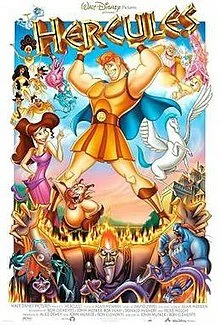
Hercules (1997)

Mac Boyle June 5, 2020

Director: Ron Clements, Jon Musker

Cast: Tate Donovan, Danny DeVito, James Woods, Susan Egan

Have I Seen It Before?: Never. After right about The Lion King (1994), the degree of my familiarity with Disney feature animation becomes spotty at best. Why now? I accidentally scratched my wife’s car, and watching this on Disney+ is my penance.

Did I like it?: And it wasn’t that much of a penance at all. Even in their relative nadir, Walt Disney Feature Animation would never let something out of the lab that was not designed within an inch of its life to entertain as many people as possible. So what’s not to like about the movie? I mean, I think there isn’t a warm-blooded creature still living who could use less James Woods in their lives, but how about those muses? Danny DeVito is always terrific, and you can’t help but smile when you hear Michael Bolton crooning over the end credits (although that might be a bit of historically revisionist criticism, I’ll admit).

There’s an element of Disney animated films that never work too well for me. The cell animation in this film is pretty great, and each character is designed as if they are the relief art on a Greek vase. Cell animation is great. I wish they continued to make more movies like this. But this is an interesting post-Toy Story (1995) era where the Mouse House (and to be fair, any other feature animation of the era) felt the need to fuse computer generated images with their cell-animated characters. It most often happens in action sequences, and it never looks quite right. I am not sure if it was a cost-saving measure, or if there was a sensibility that merging these two styles would be the cutting edge of artistry, but twenty-plus years later, the seams will always show.

Tags hercules (1997), ron clements, jon musker, disney movies, tate donovan, danny devito, james woods, susan egan
Comment
Teenage_Mutant_Ninja_Turtles_III_(1993_film)_poster.jpg

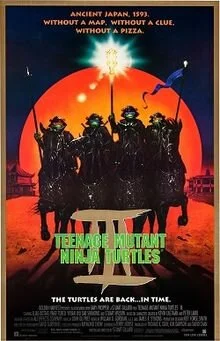
Teenage Mutant Ninja Turtles III (1993)

Mac Boyle June 5, 2020

Director: Stuart Gillard

Cast: Elias Koteas, Paige Turco, Vivian Wu, Sab Shimono

Have I Seen It Before?: I have a very strong memory of seeing it opening weekend at the now-abandoned Super Saver Cinema. I remember really liking it, both the movie and the theater. I’ve spent most of the two years since it closed half-heartedly considering buying the theater. Such a thing would have been a folly and absolutely ruined me. Now all movie theaters are gone.

I miss movie theaters…

Wait. What were we talking about? Oh. Right. Teenage Mutant Ninja Turtles III. Definitely saw it in ’93. Can’t say I remember ever watching it since then, which brings me to…

Did I like it?: It’s difficult to write the review I would be immediately inclined to write this film. A very dear friend of mine claims this movie as his favorite movie of all time. You don’t want to knock that. You don’t. You don’t.

And yet…

From the very first frame where we are reunited with the four turtles, something has gone wrong in the sewers of New York. Clearly, these movies were never designed to elevate (or really even meet) the art of cinema. They were designed to make money. The producers realized—and mostly correctly—that kids will watch movies about these characters regardless of the circumstances. Why would they continue to pay out the premium money for Jim Henson’s Creature Shop, where there might be a scrappier puppet studio out there that would be more than willing to underbid.

And it shows.

The turtles look rubber, not like any kind of biological creature as I might have previously understood them. It’s actually sort of a virtue of a lesser sequel that it makes its predecessors look far better by comparison. One might have believed the Turtles and Shredder could exist previously. Here, we are very pointedly never shown the bottom half of the sensei, because I’m pretty sure they could not or did not build that bottom half for the money that was paid out. The motions of the turtles’ mouth are preposterous, whereas they were getting pretty damned good with Teenage Mutant Ninja Turtles II: The Secret of the Ooze (1991).

The film is more claustrophobic, too. Where previous films attempt to fool the moviegoer into thinking that the film might have been shot in New York. This film is clearly shot in the studio and on a few remote locations. It is in every way a cheaper film.

It is also not without its charms. I’m begrudgingly forced to give credit to the film for not blindly trying to resurrect The Shredder and The Foot Clan (especially after the prior somehow mutated his own weaponry). The setting is completely different, and for better or worse you cannot hang the “more of the same” accusation on this sequel. The scenes in feudal Japan have a certain B-movie samurai charm if you don’t attach a lot of expectations to the proceedings.

Hell, if they had only kept the Henson people on the payroll, the movie might have been an unqualified success and we could have gotten a two or three more of these movies.

I’m not sure that would have been a good thing, though.

Tags teenage mutant ninja turtles iii (1993), teenage mutant ninja turtles movies, stuart gillard, elias koteas, paige turco, vivian wu, sab shimono
Comment
Teenage_Mutant_Ninja_Turtles_II_(1991_film)_poster.jpg

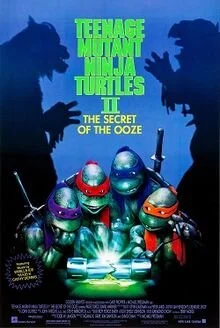
Teenage Mutant Ninja Turtles II: The Secret of the Ooze (1991)

Mac Boyle May 31, 2020

Director: Michael Pressman


Cast: Paige Turco, David Warner, Ernie Reyes, Jr., Toshishiro Obata


Have I Seen it Before: Almost as many times as the original.


Did I Like It: The first film was a huge success, and as often happens, a sequel was rushed into production. The film doesn’t work nearly as well as its predecessor, and ultimately doesn’t have to. It has a very short grocery list of things it needs to accomplish. Turtles arrive. They fight.


Now, some have noted that the violence of those fights is significantly turned down, even going so far as not having the various turtles use their trademark weapons in combat. In an early scene Michelangelo improvises a line of sausage links in lieu of his normal nunchaku. Honestly? The change in combat doesn’t even occur to me when I am watching the film, and I’m only reminded of it when reading about the film after the fact.


One could pick at the thing that happen in the film. Why does the ooze not only cause Shredder to grow, but also change the sharpness, number, and configuration of his blades? Who thought Ernie Reyes Jr.—an accomplished and capable stuntman—needed to try regular acting this time around? Why is the titular “secret of the ooze” actually what the casual viewer would have suspected all along (that it is just improperly disposed of nuclear waste)? Why is Vanilla Ice playing a club near the wharf, or for that matter, why is Vanilla Ice even in this movie in the first place?


One could pontificate on all of those issues and more, but what would be the point? Should we damn a kids movie for not reaching for more than its basest trappings? Even then, there are moments where this film reaches for more than the sum of its parts. Casting David Warner alone classes up the proceedings quite a bit. There’s also that line where Michelangelo reminds himself to drop a line to Ralph Nader. That’s not a line that six-year olds at the time will get. For that matter, here in 2020 it inspired a fifteen minute conversation about Nader’s career as a consumer advocate before he made a name spoiling (yes, you read that right, didn’t think this review was going to be a reignition of twenty-year-old political debates, did you?) elections.


I’ve seen plenty of films purporting to be for grown-ups that don’t inspire that kind of discourse. Just goes to show you that even films like this can hold some surprises.


If only they had kept it up.

Tags teenage mutant ninja turtles ii: the secret of the ooze (1991), teenage mutant ninja turtles movies, michael pressman, paige turco, david warner, ernie reyes jr, toshishiro obata
1 Comment
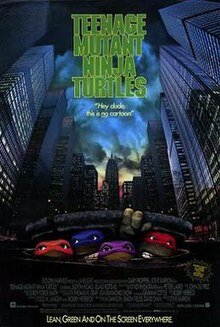
220px-Teenage_Mutant_Ninja_Turtles_(1990_film)_poster.jpg

Teenage Mutant Ninja Turtles (1990)

Mac Boyle May 31, 2020

Director: Steve Barron


Cast: Judith Hoag, Elias Koteas, Corey Feldman, Kevin Clash


Have I Seen it Before: Oh, certainly. In fact, my first viewing of the film became somewhat legendary in my family mythology, but that is mostly because immediately after leaving the theater I puked down an upward moving escalator, thus ruining that particular mall in Dallas forever for a number of people.


But that had little to do with the movie itself, I think.


Did I Like It: A movie based on a cartoon primarily designed to sell action figures that was itself based on a comic book that was a spoof of 80s Daredevil comics* is going to have a hard time producing a film that would be worth watching at all. 


So, it’s saying something that this may be the best big-screen version of the turtles we are going to see. The puppet work from Jim Henson’s Creature Shop (it was one of the last projects Henson worked on before his untimely passing) is remarkable, almost bringing an air of believability to a concept that happily has nothing to do with reality. The mouths of the various creatures don’t quite match up with the voice actors looped in later, but it wasn’t exactly like the cartoons looked like they were pontificating lovingly on the subjects of ninjutsu and pizza. On that front it actually makes the film a pretty solid adaptation of the cartoons, although the more far out concepts like the technodrome and Krang would have to wait for this century and Teenage Mutant Ninja Turtles: Out of the Shadows (2016).


The film also works where others might have failed by pulling off its most significant illusion and convincing film goers that it actually takes place in New York City. With the massive puppetry work on display, large part of the film had to be filmed in the controlled environment of a studio, but with judiciously edited second unit photography, the film still feels like it takes place in a pre-Giuliani NYC with a crime rate spiraling out of control and a sewer system you might not want to jump into on first invitation.


*Look it up. Just once in a live-action adaptation of Daredevil, I would like to see the young Matt Murdock carrying a box of innocent looking turtles before he gets radioactive waste splashed on his face.

Tags teenage mutant ninja turtles (1990), teenage mutant ninja turtles movies, steve barron, judith hoag, elias koteas, corey feldman, kevin clash
Comment
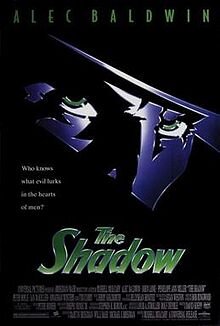
220px-Shadowpost.jpg

The Shadow (1994)

Mac Boyle May 24, 2020

Director: Russell Mulcahy

Cast: Alec Baldwin, John Lone, Penelope Ann Miller, Peter Boyle

Have I Seen It Before?: Oh, sure. I’m still kind of befuddled why this film didn’t take fire in 1994 like it might have. There are troubles with the film, to be sure (more on that later), but there are several far worse film that captured the imagination of America’s youth. It sure captured mine. I bought up all the Shadow action figures I could get a hold of, and grabbed as many tapes of old Shadow radio shows as I could, igniting my interest in both Orson Welles and radio drama.

Now that I think about it, this film has quite a lot to answer for.

Did I like it?: Let’s dwell on the positives, shall we? I think the only thing that separated Alec Baldwin from a long run as a verifiable leading man is a run of bad luck. In this film he is equal parts menacing, funny, and charming. Had he been British, he would have made a great Bond. Even though this film kind of falls apart under its own weight, I could have watched a long series of him as Lamont Cranston. I’ll eagerly take 30 Rock as consolation prize, though. The rest of the cast is brilliant. The movie contains Jonathan Winters, Ian McKellan, and Tim Curry without breaking a sweat. Every other bit part (and some of the leads, let’s be honest) ooze b-movie goodness in ever second of screen time.

Jerry Goldsmith’s score is one of his best, and that’s a career that’s included Gremlins (1984), Star Trek: The Motion Picture (1979), and Star Trek: First Contact (1996).

The film looks amazing, from the cinematography through the production design, all the way through the set decoration. I dare say a far more effective art deco nightmare than some of the contemporary Batman films. It manages to make an effective Times Square of the the 1930s using only matte paintings, and the Shadow’s sanctum is one of the cooler sets that is tragically underutilized. The whole world, filled with an evil man forced into redemption—and his agents—is fantastic.

Now, if all of that had been used in service of a storyline that wasn’t held together by very weak string, and further waylaid by what feels like tampering at the editing bay, then we’d be celebrating this film for the delicious pop explosion it could have been.

But then again, so many films stories are flimsy as hell. Who cares? Let’s give this film all of the credit it is due.

Tags the shadow (1994), russell mulcahy, alec baldwin, john lone, penelope ann miller, peter boyle
Comment
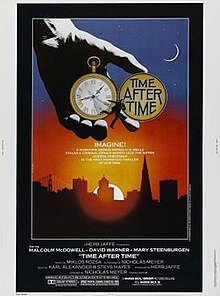
220px-TimeAfterTime79.jpg

Time After Time (1979)

Mac Boyle May 24, 2020

Director: Nicholas Meyer

Cast: Malcolm McDowell, David Warner, Mary Steenburgen, Charles Cioffi

Have I Seen It Before?: Many, many times.

Did I like it?: It’s a solid bet that I’m going to be effusive about anything even tangentially related to Nicholas Meyer, the director of a solid candidate for my favorite film of all time, Star Trek II: The Wrath of Khan (1982). I have a certain soft spot for Volunteers (1985), and I even find some charm in Company Business (1991), even though Meyer largely disowns the film, and I have a hard time getting through it in one sitting.

But this movie is one for the books. As a zealot of the time travel genre, this is in my personal pantheon. I love it without question. I love it so much that I had no choice but to watch the abortive attempt to make a television series out of the concept several years ago. If I ever make something half as good as this movie, my time in creative endeavors will be well-spent.

And it’s odd, even for the year in which it was released, it has a certain antiquated feel. It has far more in common with a film like The Time Machine (1960) than later films like Back to the Future (1985). It even influenced later films, influencing the casting of Back to the Future Part III (1990) and meriting a reference along with other entries of the genre in Avengers: Endgame (2019).

The films strengths rest in the writing and performances. Meyer is physically unable to produce a script that isn’t thoroughly literate. The film ebbs and flows on the philosophies of H.G. Wells, which is only made more ironic when one considers that with his utopian ideals and gentlemanly manor, he is the idealized Star Trek hero in the Gene Roddenberry mold at the center of a film made by a man who tried to revitalize that same genre with newer and fresher interpretations. It doesn’t hurt that left-over ideas from this film helped fuel the eventual screenplay for Star Trek IV: The Voyage Home (1986).

Malcolm McDowell eschews the hostile icon he made of himself in A Clockwork Orange (1971) in favor of a hero who is comedically overpowered by the proceedings, but will not be obliterated by an uncaring world. David Warner is so quietly effective as the mad Jack that to this day I’m delighted when I see him appear in anything.

If you haven’t watched the film before today, please go make arrangements to view it immediately. We can then keep being friends once that deficiency is rectified.

Tags time after time (1979), time travel movies, nicholas meyer, malcolm mcdowell, david warner, mary steenburgen, charles cioffi
Comment
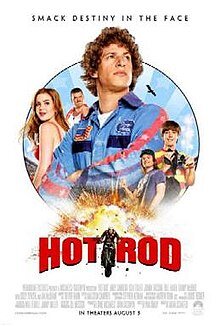
220px-Hot-rod-poster.jpg

Hot Rod (2007)

Mac Boyle May 24, 2020

Director: Akiva Schaffer

Cast: Andy Samberg, Isla Fisher, Jorma Taccone, Bill Hader

Have I Seen It Before?: I have a dim memory of watching it on DVD during some hazy buying jag I went on shortly after the release, and the only thing I can really point to remembering is the “ancestors protect me” chant from earlier in the film, so much so that I could have sworn it appeared throughout the film

Did I like it?: Had the movie come about under its original conception as a Will Ferrell vehicle of the era, it probably wouldn’t have been terribly memorable. Similarly, had it come about later in the storied career of The Lonely Island, people would think that their other films would be better. As it stands, a bland movie about arrested adolescence released in a period where feature comedy was a sea of movies about arrested development, I found myself laughing profoundly at any number of moments. I may be a sucker for non sequitur, and so those moments where the film eschews logic and is content to thumb its nose at its own structure work the best.

I wish those films had been more omnipresent, and I also wish that the filmmakers had been allowed to go deeper with their own voice, as they were with their latest film together, Popstar: Never Stop Never Stopping (2016).

And yet, it’s sort of a strange miracle that the film exists at all. Lorne Michaels used his influence to give complete creative control to comedic voices that had barely gotten SNL sketches on the air at that point. We often complain how safe that show plays it with material, and while there’s some legitimacy to that criticism, it’s hard to deny that Michaels hasn’t spent some of his show business influence to develop new comedic talent.

Tags hot rod (2007), akiva schaffer, andy samberg, isla fisher, jorma taccone, bill hader
Comment
  • A Blog About Watching Movies (AKA a Blog in Search of a Better Title)
  • Older
  • Newer

Powered by Squarespace

Party Now, Apocalypse Later Industries

Where creativity went when it said it was going out for cigarettes.

Where creativity went when it said it was going out for cigarettes.